
Category Archives: Science & Technologies

Solar plant project takes off

A one megawatt scale grid-connected solar power plant commissioned by Swelect Energy Systems Limited under REC scheme at Kuppaepalayam near Coimbatore. The solar arrays are ground mounted with light sensing tracking systems for increasing output. / Photo: K. Ananthan / The Hindu

The plant has been set up under REC

Coimbatore district, which is known for the large number of wind mills, is getting into solar power plants. The district’s renewable energy initiatives now cover solar energy too. A one MW solar power plant has been set up in Coimbatore and the energy generated is supplied to the grid.

Nearly 25 km away from Coimbatore city, at Kuppepalayam near Annur, rows of solar panels placed on a seven acre site are part of the solar energy plant established by Swelect Energy Systems, which was earlier known as Numeric Power Systems.

The plant has both, fixed and tilting solar panels. Swelect has imported the technology from Spain and the panels tilt to capture maximum solar radiation and thus, have optimum energy generation. The company has also established a High Tension line to the nearest sub-station (3.5 km away) to supply the energy generated to the grid.

It took about six months to install and the plant was commissioned in May this year. The plant has been set up under the REC (Renewable Energy Certificate) scheme and the total investment is about Rs. 10 crore.

The plant functions from 6.30 a.m. to 6.30 p.m. and, on an average, 4,000 units of electricity are supplied to the grid every day. “The maximum generation is between 11 a.m. and 3 p.m. There is generation even when there are rains,” says U. Arunachalam of Swelect.

N. Ananthakrishnan, Superintending Engineer of Tamil Nadu Generation and Distribution Corporation, says this is the first large-scale solar power plant in Coimbatore region. Larger supply of solar energy to the grid will give voltage stabilisation.

Mr. Arunachalam adds that solar plants can be established anywhere in the State. Smaller capacity plants on rooftops are also becoming popular.

Swelect is in the process of setting up 1.5 kw solar systems for all the branches of a co-operative sector bank in the State, including the branches in Coimbatore and Erode districts.

Managing Director of Swelect, R. Chellappan, told The Hindu the company has established another one MW solar plant in Sivaganga district. It is looking at setting up 10 MW of solar plants every year across the country.

“We are also actively involved in rooftop installations and have completed more than 1,000 such installations in the country,” he says.

These are mostly for educational institutions, industries and commercial establishments. Power cuts are higher in rural areas of the State. Houses in rural areas with Uninterrupted Power Supply (UPS) systems have potential for solar installations, he adds.

source: http://www.TheHindu.com / Home> News> Cities / by M. Soundariya Preetha / October 22nd, 2012
Looking back in time

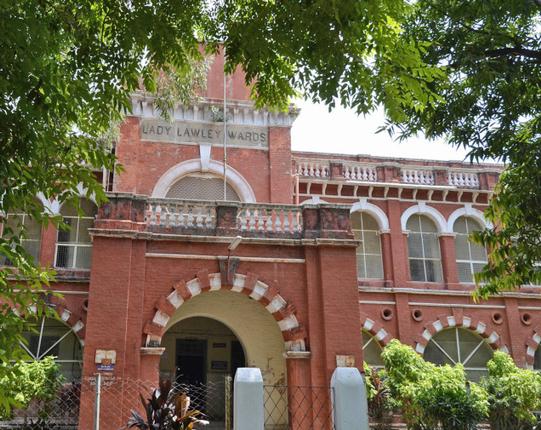
Government Ophthalmic Hospital / Photo: R. Shivaji Rao / The Hindu

ANUSHA PARTHASARATHY scans through the records of the Regional Institute of Opthamology and Government Ophthalmic Hospital, the second oldest eye hospital in the world

he sheltered verandahs and roofed passages that connect an entire campus of red-brick buildings echo the story behind the second oldest eye hospital in the world. Started in 1819, many pieces of the Regional Institute of Opthamology and Government Ophthalmic Hospital’s history lie in the arched corridors of Elliot’s Museum and a black plaque outside its Egmore premises; ‘Government Infirmary for gratuitous treatment of diseases of the eye’.

A board in the garden at the entrance of the hospital clearly mentions the year of founding, second only to Moorfields Eye Hospital in London (established in 1818). On the other side of the road, in the newer campus is director Dr. K. Vasantha’s office. A long wooden board with a list of the names of the hospital’s directors and superintendents hangs on the wall next to her chair.

Dr. Travers, a surgeon in London with the East India Company, was one of the reasons for the setting up of the Madras Eye Infirmary. And Dr. Robert Richardson, another surgeon, came to Madras to establish it in July 1819. It began in Royapettah, on the grounds where the Wesley Church now stands. “It was later somewhere near the Dina Thanthi office, after which it was shifted here,” says Dr. Vasantha. It was a tram shed that it occupied in Egmore from 1820 onwards. The infirmary came to its present location in 1884. In 1888, the infirmary came to be the Government Ophthalmic Hospital.

Lieutenant Colonel R.H. Elliot, who was the superintendent between 1904 and 1913 is a rather popular figure even today. He is credited for the ‘Elliot’s Trephine’, an instrument used in glaucoma surgery. The hospital too was expanded during his tenure, with the Lawley Ward coming into place at its centre. “The hospital started with a couple of buildings and now we have a department for everything related to the eye. The Lawley Ward has been declared a Heritage Building by the Archaeological Department of India,” she says.

Lieutenant Colonel Kirkpatric succeeded Elliot and a school was opened inside the premises in 1919. This block was then called ‘Elliot’s School of Ophthamology’. The ‘Museum of Elliot’ was conceived and opened by Kirkpatric’s successor, Lieutenant Colonel R.E. Wright and has manuscripts dating back to 1819. There are specimens, different models of diseases of the eye and sketches of tropical eye diseases by earlier doctors. These sketches were drawn by a professional artist in a time when cameras were unknown, to document the various symptoms and effects.

“Doctors at this hospital were performing all the surgeries we do today even in those days but only their methods were different,” says Dr. Vasantha, “What has changed is that our incisions are smaller and methods have advanced with better technology.”

The first Indian superintendent, Dr. K. Koman Nayar, assumed charge in 1940. In 1942, the school started offering a Post Graduate Diploma in Ophthamology. Koman Nayar is also remembered for the Iris Repositor that he built.

Dr. R.E.S. Muthayya, the next superintendent, opened the first ‘Eye Bank’ within the premises in 1948. “We now have an entire block that’s just the eye bank,” says Dr. Vasantha. “And the last 30 years has seen a partnership between the Lion’s Club and our hospital, with reference to the eye bank. They maintain the vans which we take around to collect eyes. Dr. Muthayya was also the first to perform a keratoplasty but for some reason, this went unrecorded.”

In 1960, the premises opposite the old campus were acquired for expansion. “It was a garden house which was used as the nurses’ quarter,” Dr. Vasantha explains. In 1962, the School of Optometry was started inside this campus.

The next in line was Dr. E.T. Selvam, who bought the hospital’s first microscope. “We now use these microscopes for all surgeries,” she adds. In 1985, the hospital became a Regional Institute under the National Programme for Control of Blindness. “It was recognised by the Central Government as a centre of excellence. Government Ophthalmologists from all over the country are sent here for training.”

The maze-like passages in the old campus lead to the grand old staircase of the Elliot Building. Beside it is a room from which muffled voices escape through the gaps in the doors. Open them, and the school’s old classroom is still in use but with hand-held microphones and air conditioners. “We’re trying to make sure even the older parts of the building are still in use so that they are maintained and continue to be a part of this hospital,” says a doctor on duty.

source: http://www.TheHindu.com / Home> Arts> History / by Anusha Parthasarathy / October 16th, 2012

NABARD adds more power to solar mission

Subsidy for the scheme increased by 10 per cent

National Bank for Agriculture and Rural Development (NABARD) has enhanced its support to a Central Government scheme to promote solar power.

To promote commercial marketing of solar accessories, Ministry of New and Renewable Energy (MNRE), had launched the Jawaharlal Nehru National Solar Mission with subsidy for solar lighting and small capacity photovoltaic systems, which would be routed through NABARD.

R. Shankar Narayan, National Bank for Agriculture and Rural Development, Assistant General Manager, told The Hindu here on Wednesday that the subsidy for the component had been increased to 40 per cent from the hitherto 30 per cent.

Modified guidelines

The NABARD had formulated the modified guidelines in consultation with MNRE and it would be applicable for all applications financed by banks after March 15. As per the guidelines, the units could be located both in urban and rural areas and the models could be home lighting systems or inverter-based systems capable of handling general AC loads. Beneficiaries were eligible for capital subsidy of 40 per cent.

Loan to manufacturers

The loan would be released directly to manufacturers, who have been approved by the Union Ministry. They have to provide Compact Fluorescent lamps (CFLs) of 9 W/11 W and LED (Light Emitting Diode) for home lighting systems as per specifications and modules prescribed by MNRE.

Of the total project cost, he said that 50 per cent would be covered by the bank loan with enhanced subsidy of 40 per cent and 10 per cent is the beneficiaries’ contribution as per Reserve Bank of India (RBI) norms.

The banks have also been instructed not to charge interest for the subsidy component.

The loans extended by the banks will have a repayment period not exceeding 5 years. The loan repayment period would have a minimum lock in period of 3 years.

He informed that 100 per cent refinance would be provided by NABARD to the implementing banks for the bank loan portion.

All commercial banks and Regional Rural Banks were eligible to cover the financing done on or after 15 March for projects approved by MNRE.

Mr. Shankar Narayan said that effective implementation of the scheme through banks was likely to give a further boost for solar systems in the country. Tamil Nadu Energy Development Agency (TEDA) office located in Madurai could be contacted for further details.

source: http://www.TheHindu.com / Home> News> Cities / by R. Sairam / Madurai, April 12th, 2012

Bharathiar University launches herbal ointment

G. James Pitchai, Vice-Chancellor of Bharathiar University (left) releasing the herbal product of the Department of Botany, 'RuBHeal', at the university in Coimbatore on Thursday. P.V.L. Rao, Director, DRDO-BU-CLS, is in the picture.

G. James Pitchai, Vice-Chancellor of Bharathiar University (left) releasing the herbal product of the Department of Botany, ‘RuBHeal’, at the university in Coimbatore on Thursday. P.V.L. Rao, Director, DRDO-BU-CLS, is in the picture. / The Hindu

The Department of Botany of Bharathiar University launched a herbal ointment ‘RuBHeal’ here on Thursday. The research product is said to have resulted from the use of medicinal wealth found in the Western Ghats. A patent has been filed for it.

Launching the ointment at a national conference on “Phytomedicine” at the university, its Vice-Chancellor G. James Pitchai urged scientists not to restrict research to academics, but extend it to the welfare of society.

“Universities are fertile fields of research. Research should be technologically practical, economically feasible and environmentally safe,” he said.

P.V. Rao, Director of the Defence Research and Development Centre-Bharathiar University-CLS, said economic value of traditional knowledge was often identified as a reason of conserving and documenting cultural practices.

“To rationalise the use of natural resources in the modern healthcare system, it is necessary to explore these systems with scientific approaches,” he said.

M.J. Nanjan, director, TIFAC, JSS College of Pharmacy, Udhagamandalam, said there were many challenges in quality control and standardisation of herbal drugs / traditional medicine. Quality criteria for herbal drugs were based on a clear scientific definition of raw materials.

source: http://www.TheHindu.com / Home> National> TamilNadu / by Staff Reporter / Coimbatore, October 06th, 2012

Nobel laureate studies shrimp to map immune system

Chennai:

French Nobel laureate  Jules A Hoffmann is pushing for a collaboration with Annamalai University to study viral infections in shrimp to understand the human immune system.

Professor Hoffmann of Strasbourg University in France, whose decades-long work on the fruit fly revolutionised the study of the human immune system, has evinced keen interest in studying viral infections in shrimp and identified it as an important research area for joint Indo-France collaboration.

“There are a lot of parallels between the study being undertaken by Annamalai University and the research we did on fruit flies. Since we have experience in this area, we can jointly work with the University to identify constituents of other organisms and gain insights into how the human immune system works,” said Hoffman.

Hoffman, along with Professor Bruce A Beutler, was awarded the Nobel prize in physiology or medicine in 2011 for the discovery of the key principles for the activation of the immune system. The duo discovered receptor proteins that can recognise microorganisms and activate innate immunity which can destroy invading micro organisms. This discovery has made possible the development of new methods for preventing and treating diseases.

The Nobel laureate, who was in the city to participate in the 25 years of celebration of Indo-French Centre for Promotion of Advanced Research (IFCPAR), on Thursday delivered a lecture on ‘Antimicrobial Defence of Drosophila: A Paradigm for Innate Immunity From Flies to Humans’ at Anna University.

Hoffmann also stressed on the need to study infectious diseases and expressed the hope that there would be cures for all kinds of diseases, including HIV and cancer, in the next 10 years.

“When I began my research we lacked enough resources and infrastructure which frequently impeded our study. With advancement in technology over the last decade, we should be able to find cures for all kinds of infectious diseases in the next 10 years or so,” he said.

Praising the progress India had made in the scientific sector, Prof Hoffman said future collaborations with the country could not be ruled out.

source: http://www.timesofindia.indiatimes.com / Home> City> Chennai / TNN / October 12th, 2012

3 Chennai professors among 9 selected for National Science awards, 2012

Chennai:

Three academics from the city are among the nine awardees selected for the Indian National Science Academy Awards, 2012. The INSA Teachers Awards was instituted to value consistent and high levels of teaching in colleges, universities and other higher educational institutions.

Professor of Chemistry department of the Indian Institute of Technology-Madras Dhamdodharan Ragavachari, professor A Subbiah Pandi of Presidency College and professor P Gautam of Anna University have been selected for the award. Professor Dhamodharan, who completed his PhD in UMASS at Amherst in the US, is also a senior Fulbright Research Fellow.

The other awardees are professors Aniruddha Bhalchandra Pandit of the Institute of Chemical Technology, Mumbai; Achuthsankar S Nair of the University of Kerala, Thiruvananthapuram; Anil J Elias of IIT-Delhi; Pratap Kumar Pati of   Guru Nanak Dev University, Amritsar; Raja Ram Yadav of the University of Allahabad; and Shibnath Mazumder of the University of Delhi.

Nominees come from all disciplines of science and technology. The awardees will receive a scroll, a cash award of 50,000 and a one-time book grant of 20,000.

source: http://www.timesofindia.indiatimes.com / Home> City> Chennai / TNN, October 09th, 2012

New tea clone released for commercial production

Coonoor (Tamil Nadu):

The Tea Research Foundation (TRF) Saturday released for commercial production a new tea clone, which is superior in quality, has more leaves and can be harvested mechanically.

“The new clone, termed TRF-5, has high yield potential, can survive a dry spell and is suitable for mechanised harvesting,” TRF director P. Mohan Kumar told IANS here.

Developed after extensive trials and field testing in select estates, the TRF-5 is a hybrid product of biclonal progenies.

“TRF-5 is suited to replace the aged or diseased seeding populations and for the re-plantation scheme of the Tea Board under the special purpose tea fund (SPTF),” Kumar said after releasing the variety at the planters’ annual conference here.

As the research arm of the United Planters’ Association of South India (Upasi), the foundation has identified six compatible graft partners to develop new bushes from the TRF-5 clones.

“Of the five clones we have developed in the past two decades, the TRF-5 has the second highest average yield – 6,126 kg per hectare as against 7,797 kg by TRF-1, which was released in 2000 for commercial production,” Kumar asserted.

The foundation has started distributing the new clone cuttings to estates in Tamil Nadu and Kerala to raise the plants for plucking as Orthodox or CTC (crush, tear and curl) leaves.

“We are registering TRF-5 with the Tea Board as an accepted clone for new planting or re-planting by small growers as well as large estates,” Kumar pointed out.

The foundation plans to first sell about 500-1,000 cuttings of TRF-5 to each tea garden in the three southern states and ship them to north-east estates after a couple of years.

According to the Tea Board estimates, about 50 percent of the 120,181 hectares across south India will be undergoing re-plantation during the next 5-10 years once the old plants (bushes) cross 50 years.

“TRF-5 will be one of the many clones we have developed over the years for re-plantation and rejuvenation of old gardens. In the first cycle of three years, the new clone will yield 2,455 kg per hectare (ha), 4,535 kg/ha in fourth year and 7,225 kg/ha in fifth year,” TRF assistant director R. Victor Ilango said.

To protect the new clone’s intellectual property (IP), the foundation will soon file for patenting it with the regulatory authorities.

“We are waiting for the government to extend the Protection of Plant Varieties Act and Farmers Right Act to plantation crops so that we can file for registering the new clone,” Kumar observed.

The protection will also enable the foundation and nurseries to earn royalty on each cutting of TRF-5 clone.

source: http://www.twocircles.net / Home> India News / September 29th, 2012

Chennai to run for a noble cause

Chennai Runners, a group that promotes running in Chennai for the past six years announced The Wipro Chennai Marathon (TWCM) 2012 to be held at IIT Madras on December 2, 2012. The inaugural marathon, which would cover 42 km, is expected to have around 5,000 runners participating in the event. Wipro Technologies will be the title sponsor along with Apollo hospitals and United Way of Chennai.

This year, the marathon, TWCM 2012, promises to provide runners with technology support such as RFID-based (Radio-frequency identification) timing technology.

Speaking on the occasion V P Senthil Kumar, race director, Chennai Marathon said, “It has been our vision to host one of the world’s best marathons in Chennai. With Wipro as our title and technology partner, we can see a fruition of our vision. We are convinced that their support and expertise in the technology arena will help us heighten the race-day experience for the participants.”

Lakshmi Naryanan, chairman of United Way Chennai, said, “United Way is proud to be associated with The Wipro Chennai Marathon 2012. The Chennai marathon is for creating livelihood for physically challenged men and women. We will do the running for them, so that they can better run their lives.”

Chennai Runners, founded in 2006, is an informal group of people who share a passion for running, is over 1,000 people strong now. The group has conducted several half marathons including 10 km and 5 km events in the past few years and has now associated with Wipro to bring a world class marathon event to Chennai.

United Way of Chennai works for the increased quality of life of the underprivileged in the areas of health, education and livelihood.

Show Space, an event management organisation based out of Chennai has been roped in and is actively involved in managing and promoting the Wipro Chennai Marathon

source: http://www.ibnlive.in.com / Home> South> Southern News > Chennai / The New Indian Express, Express News Service / September 20th, 2012

50 more milch cows given away in Trichy

Trichy:

The joint director of animal husbandry department in Trichy, E Chinnadurai, distributed 50 more free milch cows in Thiruvasi village in Lalgudi division to the beneficiaries. For the first time, all the beneficiaries and their companions stayed in the villages on the border of Karnataka and Andhra Pradesh for three days to purchase the right cow. Chinnadurai later claimed that the process had now become foolproof. It was the intermediary officials roped in to help in the purchase of the cattle from the neighbouring states who exploited the norms of the scheme to pocket huge commissions. Chinnadurai had instructed the purchasing team to stay at the villages until the right cow was purchased.

Chinnadurai said that the purchasing team recorded three days of milk yield before the beneficiaries themselves decided to buy them. With the 50 cows distributed in the first week of September, the total number of free cows distributed has gone up to 250, just 100 short of the target of 350 for the current fiscal. Last year, 450 cows were distributed to beneficiaries in nine villages at a cost of Rs 1.55 crore. Similarly, 4,089 goats were distributed to beneficiaries spread over 55 villages in Trichy district at a cost of Rs 5.19 crore. During this fiscal, 4,988 beneficiaries have been distributed goats spread over 81 villages – most of them falling under Srirangam constituency – at a cost of Rs 6.35 crore.

“I have clearly told them that they should keep their hands off the cow that does not yield at least a total of 10 litres of milk a day (five litres each in the morning and evening),” Chinnadura told TOI. Since a number of cows died from the lot of earlier distribution, Chinnadurai has ordered a team of officials including an assistant director of cattle breeding and fodder development, an assistant director from the animal diseases intelligence unit and a clinician to visit at least two villages where the free milch cows and goats were distributed and file an inspection report.

The stringent measures were necessary because in Srirangam, five of the 150 cows purchased from Andhra Pradesh had died in the first week of January, he said.

source: http://www.articles.timesofindia.indiatimes.com / Home>  City> Madurai> Villages / TNN, September 07th, 2012

Offshore wind potential could transform power scene in TN

Wind monitoring masts coming up across Tamil Nadu to assess density

Chennai, August 30th

Tailwinds are spurring on the wind power sector in Tamil Nadu. As is well known, Tamil Nadu is the national champion of wind energy, with 7,055 MW of wind power capacity, or about 40 per cent of all wind power capacity in the entire country. In 2011-12, the wind mills in Tamil Nadu produced 9.7 billion units, accounting for 13 per cent of all the energy fed into the grid. On the basis of this solid foundation, a beautiful edifice of renewable energy is being built in the state.

First, the State is working towards a wind power capacity addition of 6,000 MW by 2017. Indeed, making this happen is a no-brainer. There is a tremendous demand from wind power producers to set up shop in Tamil Nadu, for, unlike what was believed earlier, the onshore potential in the State is far from exhausted. True, the bottleneck today is transmission infrastructure, but it is just a matter of time before that problem is solved.

But the game-changer lies in what is beginning to happen in the seas. The State has a rich offshore wind potential and it is perhaps a recognition of this that the State electricity board’s Chairman Rajeev Ranjan has been appointed the Chairman of a committee that has been formed by the Ministry of New and Renewable Energy to look into the prospects of offshore wind energy in the entire country. “It is evident that offshore wind deployment in Tamil Nadu could become commercially viable despite high costs,” says Mr Ranjan.

It has been estimated that the offshore wind potential off Tamil Nadu coast is as high as 1,27,428 MW. Four companies have submitted proposals for the development of offshore projects in the (range of 500 MW), off the coast of Rameshwaram and Kanyakumari.

The Government of Tamil Nadu has taken special initiatives towards exploring the feasibility for development of coastal wind power projects. The Tamilnadu Energy Development Agency (TEDA) is contemplating entrusting C-WET with a study to assess the wind power density on the entire coast of Tamil Nadu.

DEVELOPMENTS ONSHORE

The State Government has asked TEDA to put up wind monitoring masts at several locations. In consultation with the Centre for Wind Energy Technology, a research body under the Government of India, TEDA has just installed and commissioned two 80-m high wind monitoring masts at Ittarai in Erode district and Vellamadam in Tuticorin district. Another will be installed at the hill station of Yercaud shortly. Further, TEDA and C-WET have jointly finalised 10 more locations in various districts where 100-m high wind masts will be put up.

Despite temporary problems with evacuation, the industry is thronging Tamil Nadu to put up wind mills because the economics work out very favourably here. The tariff has just been hiked to Rs 3.51 a unit and given the windy conditions, power producers obviously find it worthwhile to pitch their mills here.

EVACUATION INFRASTRUCTURE

The only problem the industry fears is evacuation and, as said earlier, this problem is getting solved. How?

The present infrastructure can evacuate about 5,000 MW of wind power. “It is necessary to establish dedicated 765/400 kV and 230 kV substations and associated extra high tension lines in Tirunelveli and Udumalpet areas to accommodate the capacity addition of 3,000 MW that is in the pipeline and to further accommodate 10,800 MW under load flow study,” says Mr Ranjan. Accordingly, the government is in the process of setting up 23 dedicated wind farm substations in Tirunelveli area and 16 dedicated wind farm sub stations in Udumalpet area. The government proposes also to establish “regional load despatch centre” exclusively for monitoring and control of wind generation.

The government is also working on a project to implement a 400 kV wind power corridor. This would comprise setting up of three 400 kV substations and 393 km of 400 kV DC line. The cost of this project has been estimated at Rs 1,076.72 crore.

The State-owned electricity generation and distribution utility, TANGEDCO, has approached the Ministry of New and Renewable Energy for a grant of Rs 4,160 crore out of the National Clean Energy Fund. The Central Electricity Authority has recommended to the Ministry for the release of Rs 2,752 crore for phase-I and Rs 1,408 cror for phase II.

source: http://www.TheHinduBusinessLine.com / Home> News> States / by Hindu Bureau / August 30th, 2012