Category Archives: Uncategorized
28th
27th
26th
25th
A funeral manager who laid orthodoxy to rest
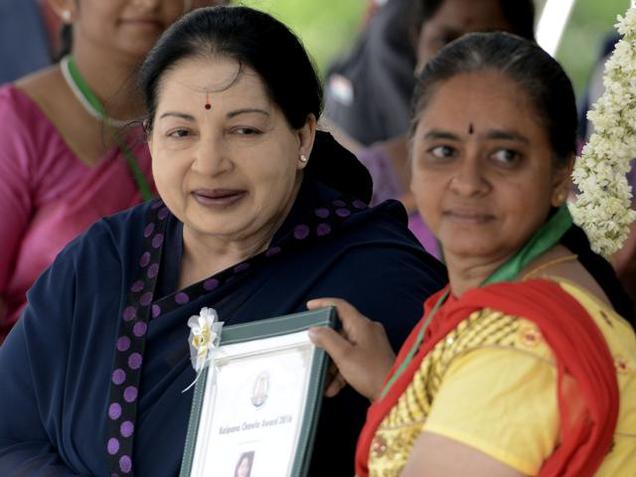
40-year-old Jayanthi took the job of burning bodies at Namakkal electric crematorium
Her workplace is one that women do not normally even visit: a crematorium.
But Jayanthi, of Senthamangalam in Namakkal district, is comfortable managing the town’s crematorium, ignoring invisible barriers of orthodoxy.
The 40-year old has been working as an operator in the electric crematorium since 2013, burning corpses in the face of resistance from some sections.
On Monday, Ms. Jayanthi received the Kalpana Chawla Award for Courage and Daring Enterprise from Chief Minister Jayalalithaa, at the Independence Day celebrations. It was a particularly poignant moment because her mother, who was overjoyed to hear about the award to be conferred on her, died last week. Her father’s death in 2003 brought the first realisation that she had to depend on others for rituals.
Only for men
“We were all sisters, and we had to plead with our male cousins to help us observe certain rituals after my father’s death. I then realised the need to be independent,” she says.
She was working in an orphanage when she found an opening in the crematorium in Namakkal to maintain the campus.
“I thought, why shouldn’t I take that up? It’s the work that matters. I didn’t mind people talking behind my back. I’m happy people now look up to me as an inspiration.”
The mother of twin daughters is happy that her husband is with her on the decision.
“I’m a Brahmin and married a Gounder. Our wedding faced so much criticism. But my father supported me. Initially, my husband didn’t like the idea, but he too came around,” she says.
“I’m happy that my mother was able to hear the good news about this award before she left us,” she says emotionally.
The award includes a cash prize of Rs. 5 lakh, a gold medal and a certificate. Asked about her role model, she says it is Chief Minister Jayalalithaa. “I have seen how much she has achieved in politics despite adversity,” she says.
source: http://www.thehindu.com / The Hindu / Home> National> Tamil Nadu / by Dennis S. Jesudasan / Chennai – August 16th, 2016
200+ years after Cobalt Blue was established, scientist from Chennai discovers YInMn Blue
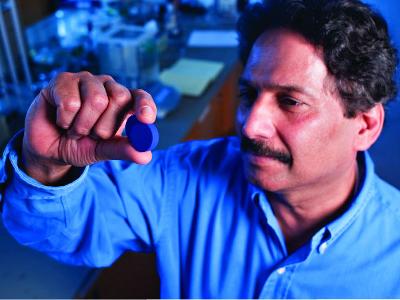
Global recognition isn’t new to Chennai, as namma people have made headlines time and again. The latest to join the list of achievers from Chennai is Dr Mas Subramanian , who has created the world’s newest shade of blue, called YInMn Blue. This vibrant shade is creating quite a buzz among artists ever since it has been licensed for commercial use. We caught up with Subramanian who is currently a chemist at the Oregon State University. He spoke to us about the YInMn Blue, his Tamil roots and more. Excerpts…
Tell us about the discovery of YInMn blue…
It was a serendipitous discovery because we were clearly not looking to create a new pigment. All this happened in 2009 when my team and I were researching on finding new materials for electronic applications. As part of the research, one of my students was doing studies on the magnetic properties of some compounds. And that’s when I noticed the formation of stunningly blue powder while doing experiments. During further tests, we realised that its compounds have properties to keep the colour from fading at all, even when exposed to high temperatures and other conditions. We named it YInMn blue as it is a combination of the names of the elements that make it up — Yttrium, Indium, and Manganese. It needs to be noted that the last commercially viable blue pigment Cobalt Blue was developed in France in 1802, more than two centuries ago.
Why did it take this long for the pigment to be commercialised?
The firm which has obtained the license to commercialise YInMn blue is called Shepherd Color Company. It took couple of years for them to do further tests to confirm that it is durable before commercialising it.
During a time when new colours are created using computer and technology, how do you known that YInMn blue is not a colour which has already been there without anyone actually identifying it?
Colours can be generated by computers, but not colour pigments. Colour pigments are made in laboratories and factories. You can’t make it on a computer and use it to paint buildings.
What are your other areas of interest?
Although I did not learn music formally, I do like Carnatic music. Otherwise, my areas of interests are mostly scientific stuff — designing new materials for electronics, environment and energy conversion.
Have you heard about MS Blue?
I know that MS Blue is named after late Carnatic vocalist MS Subbulakshmi, for, she used to wear saris in that particular colour. I am quite familiar with her music also. My grandmother, too, was a Carnatic vocalist and I remember attending one of the concerts of MS Subbulakshmi in Chennai, while I was young. I still listen to her Sri Venkateswara Suprabhatam recording regularly.
Tell us more about your Tamil roots…
I do visit south India often. I was born at Vallioor in Tirunelveli district, but grew up in Chennai. I went to Ramakrishna Boys High School. I did B.Sc at AM Jain College and MS at the University of Madras. Later, I completed my Ph.D. from Indian Institute of Technology-Madras, before I moved to Texas for post-doctoral research in 1984. I am a vegetarian and still follow Tamil customs at home.
source: http://www.timesofindia.indiatimes.com / The Times of India / News Home> City> Chennai / Ashish Ittyerah Joseph / TNN & Agencies / August 06th, 2016
Cricket, clubs and chai: first Indian managers
Chennai :
Your chances of being hired increased exponentially if you played a game like cricket or hockey. You could get club memberships as part of your ’employee benefits’ and in the first few years of your career, you were not allowed to get married!
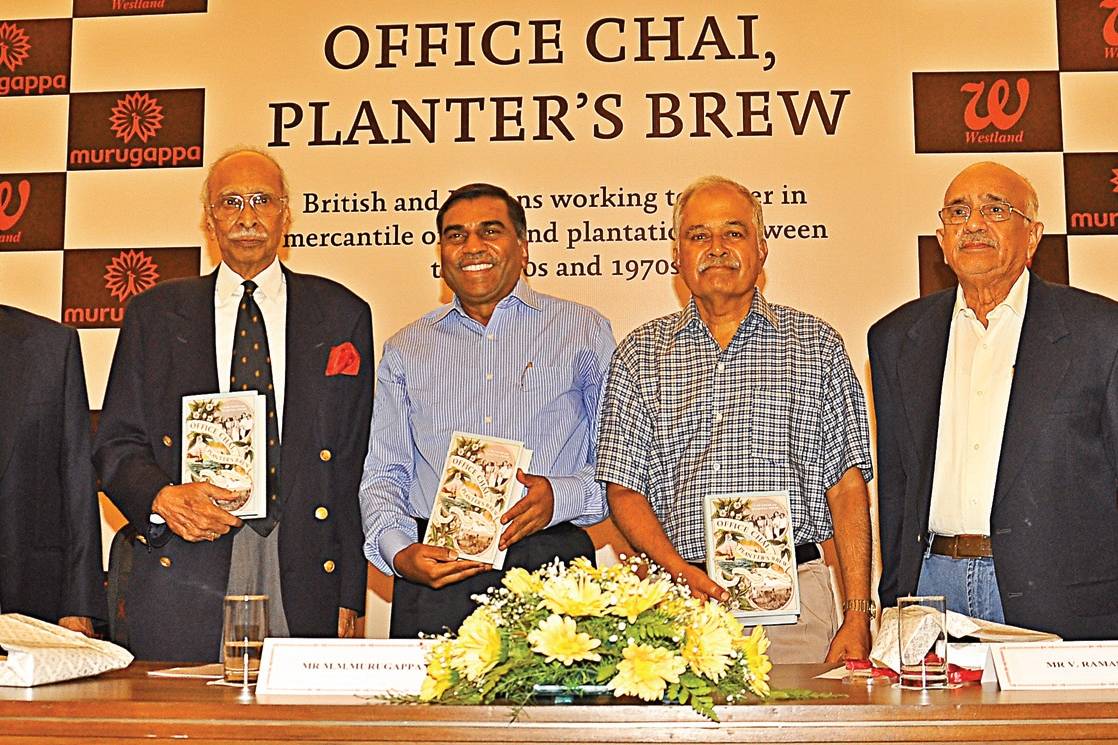
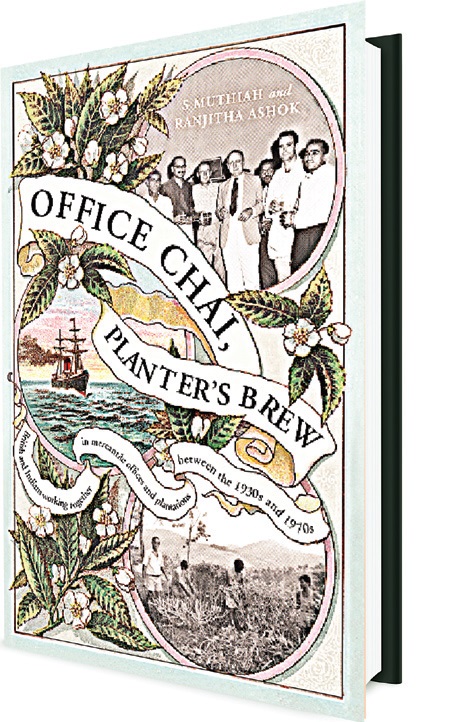
This was the scene in India just before and after independence, when the first Indian company managers were still finding their feet under the British. A newly released book has shed some light on those interesting times. Office Chai, Planter’s Brew was compiled by S Muthiah and Ranjitha Ashok and published by Westland. It weaves together interesting anecdotes from first-hand accounts.
The book contains 50 absorbing accounts of Indians and Britishers working together between the 1930s and 1970s all over the country — Binnys with P.Orr and Sons; Ashok Leyland with Brooke Bond and so on.
This era marked a transition – these Indian managers were the last generation to work closely with the British. “More importantly, they were the first generation of Indian company managers,” says Muthiah. In those days, there was no obsession with college degrees. If they had certain skills, they were likely to make it, he explained. “If they came from a good family, had good manners, good communication skills and played a team sport, they had a good chance of being hired,” he said and added that this method of recruitment deserves to be looked into even today. Involvement in sports like cricket meant you were a team player, and this brought together everyone in the company on a level playing field. Be it an assistant manager or a covenanted assistant and once you reach a certain level, a club membership was a given, initially only to Britishers but later on the privileges were made available to some Indians as well. Be it Gymkhana or Madras Club, you had to be part of a priveleged social circle to get in. Especially, in tea plantations, a club would be attached to the company. “All these clubs still survive,” notes Muthiah.
And those were the times when you had less to worry about. “The Britishers were generally fair at the work place and if you worked hard, you could do well for yourself. Caste or creed did not play a role… and you didn’t have to worry much about things like bribes and corruption, things were smoother,” says Muthiah. Irrespective of what post you held, you had to get your hands dirty on the shop floor. For instance, even if you had a BSc degree, you had to have knowledge of sugar-crushing machine and you had to know how to clean it too!”
Speaking about how things have changed, co-author Ranjitha Ashok says, “There are certainly more women at the work place today, although the numbers are still too small. Technology and communication, including the speed with which you connect with people these days are, along with concepts like e-commerce redefining business and changing working styles and methods.”
Speaking about how they went about compiling stories and getting interviews, Ranjitha recalls, “We started by hoping we’d get enough stories and we managed to get 50! It was amazing how, once we began, stories and people willing to share their experiences surfaced – all of them so supportive of this project. Challenges did not stop with locating names and contacts – things like age and fading memories were also matters of concern.” On the role of women, Ranjitha lamented, “Sadly, women were both underestimated and unrecognised at the work place. But as has always happened in all situations that involve women – they managed to work in the environment around them, displaying that inherent ability to adapt and rise to the occasion.”
She added that women handled all of this very well, in spite of finding suddenly that they had to lead very different lives from the older ladies in their own families. She added that it was remarkable how well they handled it with no role-models to draw upon.
Quirky Times
Britishers couldn’t travel on buses (because it would pull down their status)
Couldn’t get married during the first few years on the job
Informal bosses — one recruit, who went all suited up for his job interview, remembers his interviewer was at a swimming pool wearing shorts, with a bottle of beer sitting right next to him.
source: http://www.newindianexpress.com / The New Indian Express / Home> Cities> Chennai / by Varun B. Krishnan / June 04th, 2016
From palace of rich to hub of learning
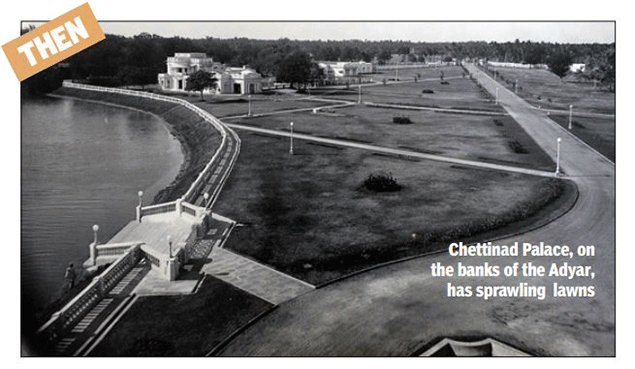
Old-timers remember Chennai as Madras, a city of horse-drawn carriages, lonely streets and men in suits. A TOI series brings recollections from a mix of neighbourhoods
Tall white pillars, long ornate windows and spacious porticos – the exquisite Chettinad Palace which stands along the Adyar estuary with its sprawling lawns and vast terraces was amongst the earliest structures that adorned Raja Annamalaipuram (RA Puram) more than 70 years ago. The magnificent mansion stood solitary, overlooking the Adyar river, as its ivory coloured walls made from Italian marble and limestone bespoke the royalty it housed. Built by wealthy businessman Raja Sir Annamalai Chettiar from Chettinad, the historic marvel is now part of an industrial and educational neighbourhood that buzzes with activity. “The palace was originally to be built opposite the Taj Connemara hotel on Binny road. But Lord Willingdon, the then governor of Madras requested my grandfather to give the land for constructing a club for women as there weren’t any then,” says MeenaMuthiah, Kumara Rani of Chettinad, and granddaughter of Raja Sir Annamalai Chettiar.
This led to the purchase of the expansive 104-acre estate in RA Puram where the palatial structure (the main house) and the smaller quarters, a few yards from the big one, were built.
“Our childhood memories revolve around The Theosophical Society, Kalakshetra campus, Rosary Matric school (then St Thomas Convent), where I studied and, of course, the Adyar river,” says Meena aunty, as she is fondly called.
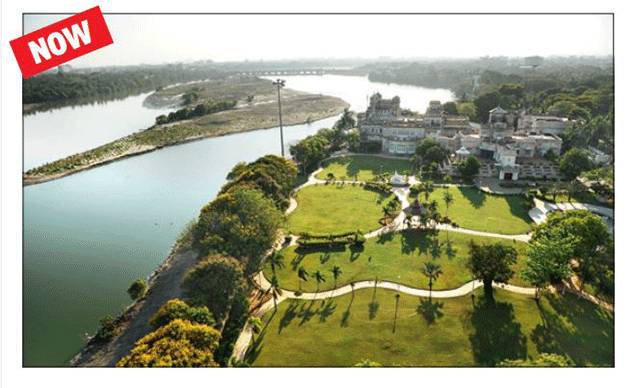
The locality had only a handful of buildings, including Andhra Mahila Sabha, earlier the residence of capitalist Rangachari. “Previously, this neighbourhood was called Adyar. Only in recent times, they renamed it after my grandfather,” says the 81-year-old educationist. Many eminent people have frequented the aristocratic home for high teas and dinners on the lawn.
“Politicians such as Kamaraj and VR Nedunchezhiyan came here often. Thatha used to call the governors by name,” says Muthiah. “But since we were not allowed into these gatherings, we used to peek through the railing on the balcony and see them.”
The scenic landscape and lavish interiors served as an ideal backdrop for many movies including M S Subbulakshmi’s Meera. “The stretch where the Image Auditorium stands was a dairy farm then. We used to do kalamkari printing in a small unit, near the farm,” says Muthiah, reminiscing how well-known social reformer Kamaladevi Chattopadhyay bought material from the unit to take to Bengal. The day-long holiday from the convent typically began with a visit to the library in The Theosophical Society and ended with a game of pandi. “We would often stopover at Rukmani Devi’s house too. And it was athai who encouraged me to start a school inspired by Kalakshetra’s cultural values and the discipline of the convent I went to,” says Muthiah, who founded Chettinad Vidyashram in 1986, on 7 acres of the property.
source: http://www.timesofindia.indiatimes.com / The Times of India / News Home> City> Chennai / Aditi Maithreya / TNN / April 22nd, 2016
Parties make a beeline for Perungamanallur memorial
Madurai :
Members of various political parties paid homage at the Perungamanallur memorial near Usilampatti in Madurai on Sunday, apparently with an eye on the Thevar vote bank. Later in the day, film director Bharathiraja performed a pooja for his next film in memory of the people who were designated as criminal tribes by the British, after paying homage at the memorial.
The Perungamanallur pillar with the burning torch was established in memory of 16 people from the region who were killed by the British on April 3, 1920 because they retaliated against the Criminal Tribes Act. The incident is referred to as the Jallianwala of south India.
Members of the Piramalai Kallar community were brought under the Criminal Tribes Act by the British and they had to submit their finger prints on a daily basis at the local police station so that the police could keep track of their movements. But they decided to fight against this Act and ended up being killed by the British. Many pay homage on this day at the memorial, but this year saw a bigger representation from the political parties as elections are round the corner, and the Kallar form a major portion of the vote bank of this region.
Minister Sellur K Raju, rural district secretary and Madurai mayor V V Rajan Chellappa, MLAs Muthuramalingam, Tamilarasan and Karuppiah, were among the first to visit the memorial at Sedapatti and pay homage.
DMK members led by former assembly speaker Sedapatti Muthiah paid tributes at the memorial.
MDMK leader Vaiko, who paid tributes at the memorial, said he always wanted to respect the acts of valour and people who fought social oppression.
Five members of the All India Forward Bloc (Vallarasu faction), led by their general secretary Ilaiyarasu, who had undertaken a 16-day fast, ended their fast by visiting the memorial on Sunday. Members of the Forward Bloc led by Usilampatti MLA Kathiravan also paid tributes.
The CPM’s urban district secretary Ramakrishnan, members Devaraj, Sellakannu, women’s wing member Muthurani and others visited the memorial. The Congress also had its local representatives, including Usilampatti town president Deepa Pandi, and Murugan paying tributes.
Bharathiraja performed the pooja for his movie ‘Kuttraparambarai’ (criminal tribe) in Usilampatti at a function that was attended by many from the film industry. Tight security arrangements had been made at the venue.
source: http://www.timesofindia.indiatimes.com / The Times of India / News Home> City> Madurai / TNN / April 04th, 2016