Chennai’s very own glass studio

Radhika01CF11jul2018

For the founder of Goli Soda Glass Studio, it is a captivating, understated medium of art

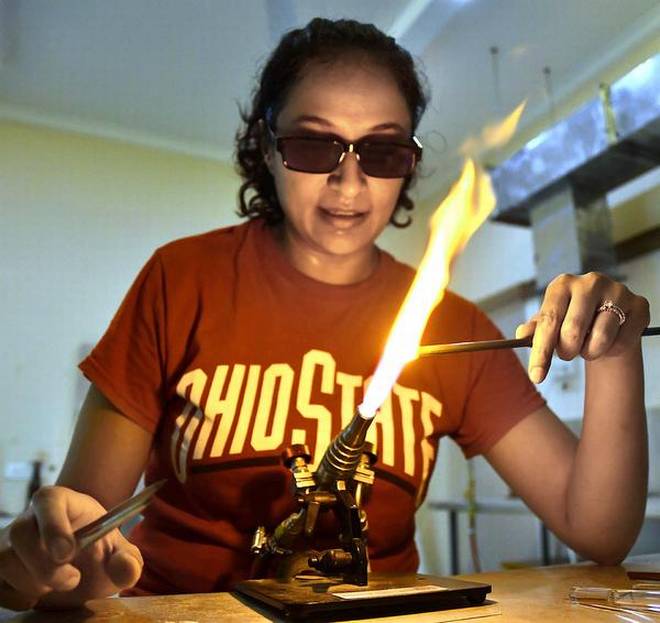
K Radhika remembers staring at the flames of the kiln long before her first glass art class at Ohio State University. “I would go to the classroom and just watch the glass melt in the fire for hours, but never do anything. I used to feel so intimidated,” she recalls. That was back in 2008. Today, the 39-year-old runs her own glass making studio, Goli Soda Glass Studio at Palavakkam.

Having returned to Chennai in 2016, after 20 years of life in the US, Radhika opened the studio last year and has been holding workshops on lamp working. “I think Goli Soda bottles have been our first memory of glass that is quirky and fun,” she says.

When I meet her, she is demonstrating how to join two thin tubes of glass. “You have to make sure that both pieces of glass have the same co-efficiency,” she explains. She later creates even thinner stringers out of the tubes, heating one end and plucking the molten glass out like cheese from a pizza: the stringers harden instantly.

She bends down on her seat, curling the end of a glass stringer in each hand simultaneously, till the fire fuses them to one sphere at the centre. A blue glass pendant with a white petal design inside it lies next to her on a graphite holder, fresh off the flame. The petals look like they are blooming upwards inside the glass. “We call it the implosion technique — creating a lens effect, it’s been very popular for the past 20-30 years,” says Radhika.

She shows us how it’s done, gathering a sphere of glass on one end and flattening it to give it a semi-hemispherical shape. She exposes the base to a light flame simultaneously etching patterns on it with a coloured glass pen. The surface of the sphere is then heated further so that it gathers below the design, lifting it up inside and giving the impression that the design has been frozen in glass mid-implosion.

“The glassmakers of Murano used this technique a lot. It used to be their trade secret once,” says Radhika.

In her other workshops, she teaches her students how to cut and reuse old glass bottles. “You have to give the bottle a thermal shock. It’s basically creating a fault line, heating it along that line and then dunking it in ice cold water to break it,” she explains.

Reduce, reuse, recycle

Radhika sources all her glass by going to the various pubs and bars along ECR, sack in tow. She recycles most of the glass in her studio, throwing away only the unusable pieces.

When she came to Chennai, she was surprised at the lack of a ‘glass community’ in the city. A ‘full-time mom’, as she calls herself, she then decided to run her own studio. “Glass, as a medium, is very exciting and challenging. You only have so much time to finish one piece. It’s not like painting, where you can take a break, come back and paint again. It’s a one-shot thing and if you go wrong, you just have to start all over again,” she says.
Radhika02CF11jul2018

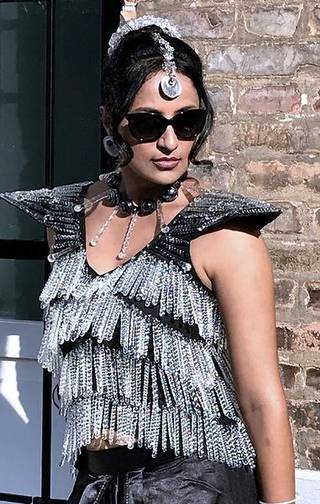
And then of course, there is the captivating beauty of glass, its translucence. Radhika wants people to not think of glass as intimidating. She recently participated in the Glass Conference 2018 at Murano, where designers showcased outfits made majorly out of glass. She fashioned a black V-neck top with icicle-like frills of glass hanging from it. The outfit was completed with a glass necklace and a gajra made of glass flowers that had been sewn together. Says Radhika, “I want to experiment further with glass in traditional Indian clothing. People see glass as this fragile thing. But I want to make it fun!”

K Radhika can be contacted at 9566105313.

source: http://www.thehindu.com / The Hindu / Home> Entertainment> Art / by Sweta Akundi / July 11th, 2018
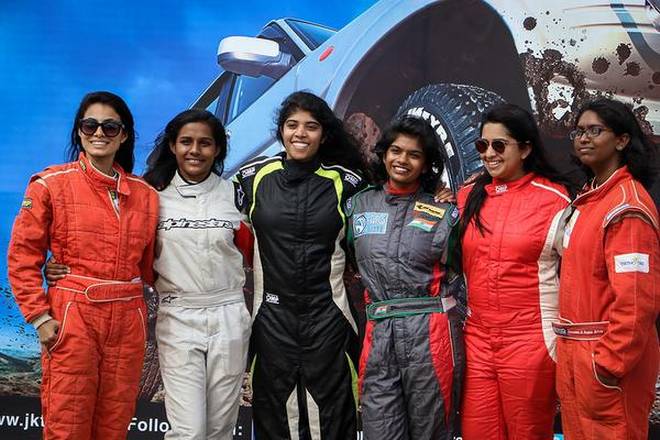
A strong maiden impression by Ahura

Here we go: The Ahura Racing team members strike a happy pose.

Ahura Racing women handled their machines with aplomb

The Ahura Racing women took everybody by storm with their steely show in the LGB Formula 4 class of the JK Tyre championship here on Sunday.

In their maiden outing, the ‘Women in Red’ handled their machines with aplomb to earn a big applause from the crowd.

They showed good speed and a strong race sense but the big boys of racing had them trailing right through. It was still a great show considering the fact that they had minimal track experience.

The girls were thrilled as well. “I was really nervous at the start but that was only for a while,” said Coimbatore’s K.S. Megaa, who clocked the fastest timing among the girls on all three days. “We drove on the wet as well for the first time and now have started to believe that we can do even better,” she added.

Lea Daran said that she had lots of fun. “The feeling was great. I was a bit more cautious on the first day but mixed it up with some aggression today. The passing was a lot easy as well.”

“We are getting better with each passing day and don’t be surprised if we beat the boys. We will beat them for sure with some proper planning and training,” said actor Manisha Kelkar.

“Motorsport in a real big community and I was happy to be a part of it. I liked the way they helped each one of us. It was like being in one big family,” said Hansuja, the youngest in the team.

“We could feel the adrenalin rush in us. It was a unique experience that we will remember for our life time,” said Dr. Ritika Oberoi.

“I had done two wheeler events before but this one was awesome. I wanted to do for some time but I never knew it will come this soon,” Priyamvada Saradhi said.

source: http://www.thehindu.com / The Hindu / Home> Sport> Other Sports / by Rayan Rozario / Coimbatore – July 08th, 2018

I’ve never thought of my synthetic limbs as an obstacle, says motor racer Chetan Korada

Chetan01CF09jul2018

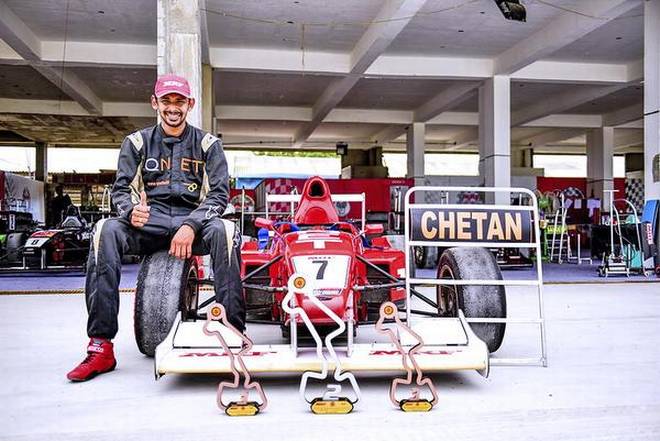
Chennai boy Chetan Korada, perhaps the world’s only motor car racer with synthetic limbs, is ready to step abroad

This is going to be Chetan Korada’s biggest year yet; a year that will see him go international.

“It will be exciting,” he says, rubbing his hands in glee, “I’ll be racing on international tracks at Abu Dhabi, Dubai and Bahrain, which are very different from the ones here in India.”

Korada is not your usual motor racer; the 31-year-old is probably the world’s only motor car racer with synthetic limbs who holds the distinction of winning several series and championships. “I’ve never thought of it as an obstacle. It was never on my mind,” he says, walking up the stairs of his Kilpauk residence and posing for a photograph.

Growing up in the city, sport was always on Korada’s mind. He did dabble in other sports, but realised that racing was his calling a decade ago when he took out an LGB 1300 for a spin.

“Before I sat in the car, my heart was thumping with excitement,” he recalls about that day, “I had prosthetic legs and didn’t know if they would fit. But when I stepped into the vehicle, I could settle in smoothly.” That day remains memorable for Korada, even as his racing career — that includes outings in the JK Tyre FMSCI National Racing Championship, MMS Mini Enduro and the Spring Karting series — enters its 10th year.

Today, Korada looks back at his early childhood as years of determination: ones in which he proved that he was no different from the rest of his friends.

At a very early age, he had to undergo bi-lateral amputation because of his congenital limb deformity, but his inclination towards cars — fuelled by encouragement from his mother and teachers — nudged him to lead a life on the fast lane.

In his initial years in sport, he took great inspiration from Italian Formula One Driver, and paracyclist, Alex Zanardi. “I kept telling myself: if he can do it, I could too. He was a role model.”

Closer home, Korada was following the racing exploits of actor Ajith, who also has a keen interest in the sport.

“I used to like his movies, but when I saw him on the race track in 2007, it was so inspiring…,” he trails off, excited to talk about his favourite star.

He also focussed a lot on his fitness, with Ramji Srinivasan of the city-based QLP Sports helping him out a lot in recent times.

“The folks there know my body better than me,” he says, “Racing demands a lot of physical and mental toughness.”

Korada did look at other careers when he was younger — dabbling in a bit of DJing thanks to his liking for music — but once a racing career looked feasible, he didn’t take a step back.

With such an expensive career, funds might be an issue, but thankfully, he has QNet supporting him on that front. Currently, his sights are set on international racing glory, for which he attended a course with the Formula Masters Testing Programme in Malaysia recently.

“I can’t wait to race on those tracks,” he grins.

source: http://www.thehindu.com / The Hindu / Home> Society / by Srinivasa Ramanujam / July 09th, 2018

Award for ghatam maestro

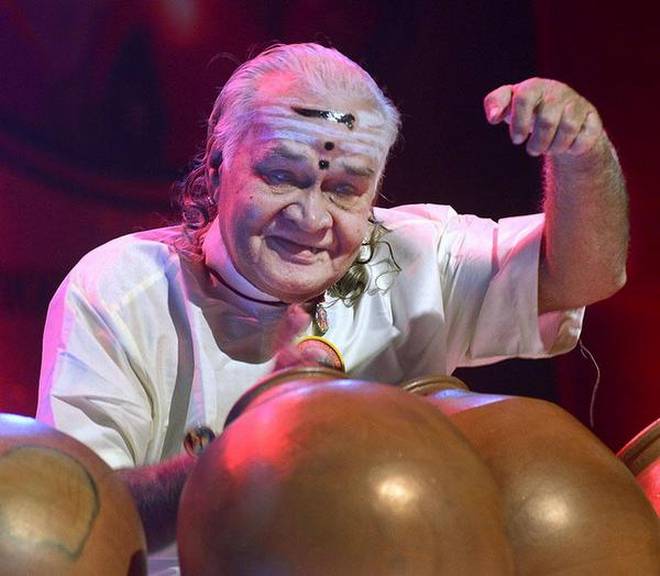
Vikku Vinayakram | Photo Credit: R. Ravindran

Music Academy to honour ‘Vikku’ Vinayakram for outstanding calibre

The Music Academy on Thursday announced a Special Lifetime Achievement Award to be conferred on ghatam maestro T.H. Vinayakram, fondly known as ‘Vikku’ Vinayakram. “The award does not fall under the institution’s annual recognitions and honours. It is conferred, once in a while, on artistes of outstanding calibre who, the Music Academy feels, deserve independent recognition,” said Music Academy president N. Murali.

The award function will be held on October 10. The earlier recipients were dancer Kamala Lakshminarayanan and violinist Lalgudi G. Jayaraman. “I am really happy and deem it as an award for the ghatam, a uba-pakkavadhiyam. It is a real privilege that I have been placed on a par with great dancer Kamala and Lalgudi Jayaraman,” Mr. Vinayakram told The Hindu. He said he was grateful to the Academy for organising the function on a day convenient to him. He has already received the Sangita Kala Acharya Award of the Academy.

“Hailed as the artiste who put the ghatam on the international stage, Mr. Vinayakram is one of the best known faces of percussion from South India,” Mr. Murali said.

Mr. Vinayakram began performing at the age of 13 and went on to accompany top singers of the last generation.

source: http://www.thehindu.com / The Hindu / Home> News> States> Tamil Nadu / by Special Correspondent / Chennai – July 06th, 2018

Novel oral anticoagulants found to minimise stroke risk

Dr. John Eikelboom and Dr. K. Jaishankar. | Photo Credit: G_Krishnaswamy

Govt. has reduced the cost of one of the three drugs currently being prescribed in the country

Novel oral anticoagulants (NOAC) have been found to minimise the risk of stroke in patients with atrial fibrillation (AF) to a large extent. While the Western world has replaced the older drugs with NOAC, the Government of India has reduced the cost of one of the three drugs currently being prescribed in the country by one-third.

“Stroke prevention is a tough job. AF, which is irregular heart beat, is one of the important causes of stroke,” K. Jaishankar, director and mentor, Cardiology and Electrophysiology, MIOT International, told reporters on Wednesday.

“Stroke occurs when AF causes blood clots to form in the heart, and these clots spread to other organs. Among 100 cases of strokes, 15 to 20% are caused by AF,” he said. For almost five decades, Warfarin, a blood thinner, was used for treating patients, he said. “This had several problems such as food and drug interactions. Patients cannot consume green leafy vegetables. It did not go well if they had fever, cold and cough and it had high risk of bleeding,” he added. In the last 10 years, evidence has emerged that NOACs could minimise the risk of stroke, he added. “These have better efficacy, less bleeding side effects and predictable safety profile. The Western world has replaced Warfarin with these drugs,” he pointed out.

While one of the NOACs, Dabigatran arrived in India nearly four years ago, Apixaban and Rivaroxaban were introduced three years ago. The Government of India has reduced the cost of Dabigatran from ₹75 per tablet to ₹25 now. “So, the cost of a day’s course – consisting of two tablets – has been reduced from ₹150 to ₹50,” he said. NOAC is not advisable during pregnancy and in patients with artificial mechanical heart valves and severe kidney failure, Dr. Jaishankar added.

In line with this, John Eikelboom, associate professor, Division of Haematology and Thromboembolism, McMaster University, delivered a lecture on optimising anticoagulation in AF-translating evidence into clinical practice.

source: http://www.thehindu.com / The Hindu / Home> News> Cities> Chennai / by Staff Reporter / Chennai – July 07th, 2018

Anukreethy Vas is Miss India 2018

AnukreethiCF06jul2018

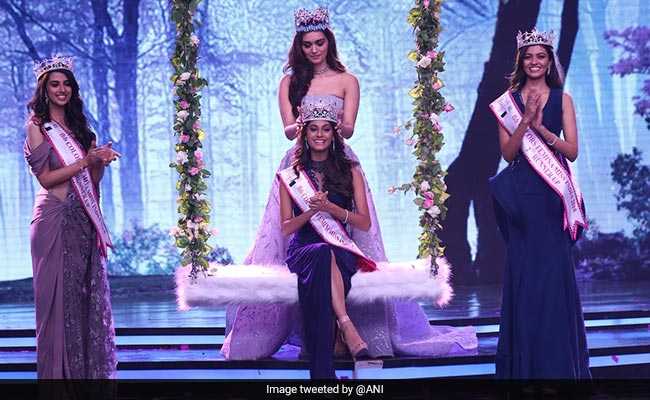
Anukreethy Vas, a 19-year-old college student from Tamil Nadu, has been crowned fbb Colors Femina Miss India 2018 in an extravagant ceremony held here, hosted by filmmaker Karan Johar and actor Ayushmann Khurrana.

Meenakshi Chaudhary (21) from Harayana was declared the first runner-up while Andhra Pradesh’s Shrey Rao Kamvarapu (23) stood as the second runner-up in the beauty competition.

Miss India

✔@feminamissindia

Congratulations to the winners of @fbb_india@ColorsTV Femina Miss India 2018
Co powered by @Sephora_India and @DS_SilverPearls at @DomeIndia

The crowning ceremony saw performances by actors such as Kareena Kapoor Khan, Jacqueline Farnandez and Madhuri Dixit, and also by Miss World 2017 Manushi Chillar.

The judges panel included cricketers K L Rahul and Irfan Pathan, actors Bobby Deol, Malaika Arora and Kunal Kapoor.

source: http://www.thehindu.com / The Hindu / Home> News> National / by PTI / Mumbai – June 20th, 2018

‘Time to strengthen ties with Denmark’

Sankar is Honorary Consul General

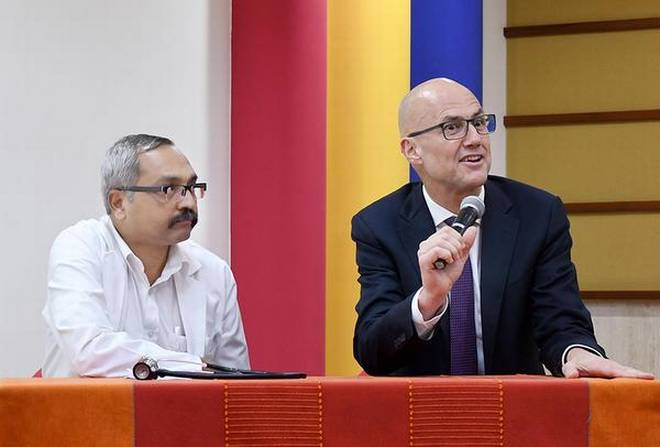
It is time to reshape the role of the honorary consulates of Denmark in India and to build the business-to-business relationship between the two countries, Danish Ambassador to India, Peter Taksoe-Jensen said.

He was speaking at a reception marking the appointment of Vijay Sankar, Deputy Chairman, Sanmar Group, as the Honorary Consul General of the Royal Danish Consulate in Chennai.

Mr. Sankar will be in charge of operations for South India.

Mr. Taksoe-Jensen presented a citation from the Queen of Denmark to Mr. Sankar on the occasion.

The Danish Ambassador said with the relationship between India and Denmark improving now after nearly seven years, it was time to “board the train” to the market of 1.3 billion people.

Archiving records

The Danish Embassy and the Danish National Archives department hope to digitise almost 70 metres of Danish archival records that are in Tamil Nadu.

The embassy is hoping to get funding from private enterprises in Denmark for the venture.

Efforts would also be made to maintain the Governor’s House in Tranquebar by raising funds, the Ambassador said.

source: http://www.thehindu.com / The Hindu / Home> News> Cities> Chennai / by Special Correspondent / Chennai – July 05th, 2018

Madurai herbal healer’s cataract cure gets NIF lift

MoU signed between NIF and Dabur earlier this year

In what could give Indian indigenous medicine a boost, a herbal concoction used by a 60-year-old woman to treat early stage cataract of people in in Tamil Nadu’s Madurai district may soon make its way to market shelves.

This traditional wisdom used by herbal healer Muthulakshmi for decades may be commercialised after Ahmedabad headquartered National Innovation Foundation (NIF) which supports such grassroots innovations has signed an MoU with Dabur Research Foundation earlier this year to develop and commercialise the product.

The herbal medicine which was used to treat early stage cataract patients is currently up for clinical trials and is expected to hit the markets in 6 months.

“We scouted this product with the help of Honey Bee Network, our collective a few years ago. In the past we have validated traditional knowledge and practices of people that are unavailable in classical codified texts with the help of ICMR (Indian Council of Medical Research). We got excellent results with the herb that treats patients with early state cataract after preliminary tests were conducted on this herbal medicine tested with PERD (Pharmaceutical Education & Research Development) Ahmedabad.

Later we signed a co-development agreement (MoU) with Dabur Research Foundation earlier this year for testing and developing the herbal medicine. Dabur also has the first right of refusal and can pay market cost for the technology,” said Vipin Kumar, director & chief innovation Officer(CIO) of NIF-India, an autonomous body of DST, Govt of India.

Kicking off the momentum for indigenous traditional medicine made from a flower and administered by Muthulakshmi to treat cataract patients in her region, may be available commercially in an affordable format after it is developed as a viable herbal product.

“We have signed a broad-based MoU and are working with NIF to develop herbal-based products to treat humans through the non-codified herb. The flower is indigenous and grows widely in the country. However, knowledge of this traditional medicine may be lost if it is not passed on to the people. The formula needs to be checked for efficacy on cells and duplicated and made affordable to poor. Through preliminary data we are trying to see if the extract has the potential to cure and will be conducting a clinical trial on 200 subjects.

We are currently in the process of finalising a chemical centre. The money generated through the IPR or patent of this herbal medicine and its royalty will go to the inventor Muthulakshmi and not to us or the NIF. The product can be commercialised within 3 to 6 months once clinical trials are over. Once the product formulation is complete we would obviously not like to refuse it and bring it at affordable rates as our CSR and try to make it low cost for people,” said Dr Manu Jaggi, chief scientific officer, Dabur Research Foundation.

source: http://www.ahmedabadmirror.com / Ahmedabad Mirror / Home> Ahmedabad> Others / June 29th, 2018

Coimbatore homemakeris Master Chef of T.N.

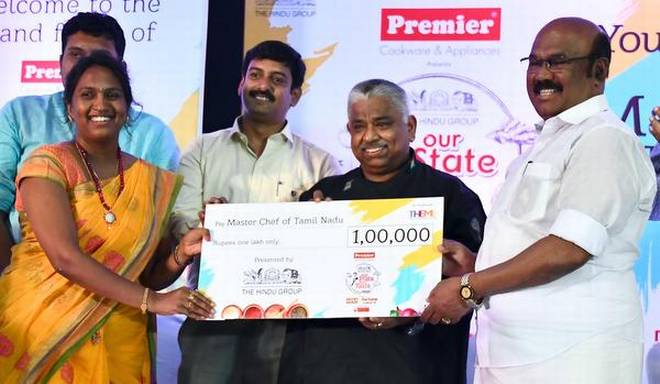
D. Jayakumar, Minister for Fisheries, giving away the first prize to R. Padmapriya at Taramani. | Photo Credit: M. Karunakaran

Padmapriya bagged first prize in The Hindu Group’s ‘Our State-Our Taste’ competition

Padmapriya Radhakrishnan’s Karuveppilai chicken curry, garlic ghee rice and wheat rava kesari won her the first prize in The Hindu Group’s ‘Our State-Our Taste’ competition on Saturday. A very excited Ms. Radhakrishnan, who hails from Coimbatore, said she wanted to try more traditional foods.

“This is a big achievement for me. I want to try out more foods using traditional ingredients. I never eat junk food and I ensure that I give healthy dishes to my son and husband,” said the homemaker who was given the title of ‘Master Chef of Tamil Nadu’ by Fisheries Minister D. Jayakumar.

Vaideki Rammohan, 39, of Rajapalayam, who made ‘varagu arisi saadham’, ‘keerai masiyal’ and ‘paasi parupu payasam’ came in second and the third place went to S. Bagamperiyal, 72, of Thoothukudi, who made ‘iral gravy’, ‘vanjara meen kuzhambu’ and ‘paal payasam’.

Speaking at the finals of the contest that was conducted in 10 districts in the State, Mr. Jayakumar said that food played a major role in shaping the personality of a person. He stressed the need to maintain health and consume healthy foods, especially millets. “Regular exercise and a balanced diet keeps the body fit,” he said, while congratulating The Hindu group for conducting the contest.

Chef Damu, the knowledge partner for the contest, said that among the 10 cities where the contest was held, contestants from Thanjavur, Madurai and Puducherry really did well. “We got to see dishes like ‘Kayiru gola’ (minced meat wound and cooked), ‘takadi’ (rice balls in minced meat gravy) and ‘ukkarai’ being made by participants. These are dishes that have medicinal values but many have forgotten,” he said. Mr. Damu suggested that The Hindu bring out a book of such recipes.

source: http://www.thehindu.com / The Hindu / Home> News> Cities> Chennai / by Special Correspondent / Chennai – June 30th, 2018

City bizman remakes original Constitution, exquisite artwork and all

Vijay Anand has invested the past two years in sourcing the best possible images for each page

Chennai :

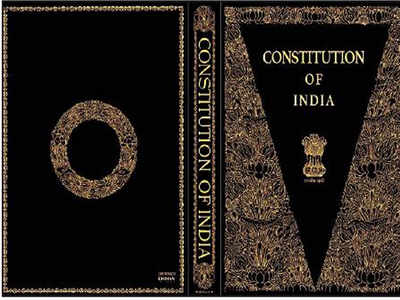
The first edition of the Constitution  of India is a rare piece of art. Professionals from Shantiniketan decorated with exquisite designs the sides of each page of that handwritten publication of what is the world’s longest Constitution. Survey of India offices photolithographed the original on handmade paper but few copies now exist.
But they are making a return. Two years ago, Vijay Anand, an entrepreneur and a member of Chennai Tricolour Initiative, embarked on a journey to recreate the first edition.

“The original is enclosed in a helium-filled case in the Parliament library,” Anand said. “Some copies were handed down from generation to generation and have been lost over the years.”

His search took him to a family in Hosur whose ancestor was part of the constituent assembly in 1950. “They were kind of enough to share the copy they had,” he said. “The book survived through such a long time, albeit with some wear and tear.”

Several years of research told him that sourcing one of the first copies would be nearly impossible. “One of the original copies was auctioned by Sotheby’s for 35 lakh in 2012,” Anand said. “This book is valuable not just because it enshrines the foundations of the republic, but also because of the work that has gone into creating it.”

India’s Constitution has won recognition as one of the rare books of the world and found a place in the Library of Congress in the United States, said historian and Constitution enthusiast Vikram Raghavan. The tome, with all its artwork, commands a tremendous sense of awe and nostalgia for lawyers and students, he added.

Anand has invested the past two years in sourcing the best possible images for each page. A family from Ahmedabad sent him scanned images of a copy that they have. He then had each page hand drawn to recreate the original art. The work has not been easy. Every inch of the illustration and design is manually traced, digitally blown up and coloured. Each page took close to a week to recreate.

“The original is not accessible and it’s as good as gone,” Anand said. “We need one that we can preserve for at least another 100 years.”

He plans to make two versions – one will be a hardcover, the other a leather-bound edition for collectors. The 234-page volume will be published on specialty paper by Chennai Tricolor Initiative Trust. The copies will be available by September, Anand said. Besides limited copies that will be given to those contribute to the Chennai Tricolour Initiative Trust, Anand intends to give copies to schools at a nominal price so they can preserve them in their libraries.

“We want to spur healthy debate in government schools. The idea is to initiate a conversation on the foundation of today’s India, how the government functions. Healthy debates are not just about finding fault but being aware of both sides of the coin,” he said.

Download a remastered version of the preamble at http://bit.ly/2HnNKmN.

source: http://www.timesofindia.indiatimes.com / The Times of India / Home> News> City News> Chennai News / TNN / July 02nd, 2018