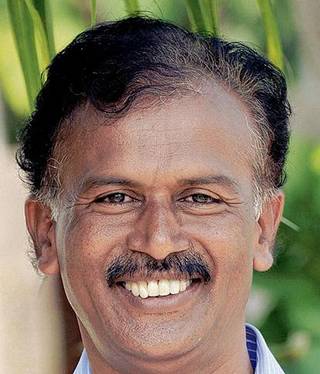
If anyone wants to be a successful farmer, he/she has to run a farm that would yield a daily, weekly, monthly, half-yearly and yearly profit. So, instead of growing crops based on what is fetching good revenue in the market at a particular time, a farmer should learn to plan for a sustained harvest”, says P Saravanan, 43, a progressive farmer from Paluvanchi village in Marungapuri taluk in Trichy district.
Until a few years ago, he had been cultivating paddy and sugarcane alone, which are common in the region. However, there was nothing that made him excited neither in terms of yield nor in terms of revenue. This had made him switch over to vegetables, that too not the hybrid but the native crops, he says.”I switched to crops like brinjal, ladies finger, chillies, which have started to provide a good yield. Despite poor monsoon, I could get very good yield from vegetable cultivation when compared to paddy and sugarcane. Paddy and sugarcane require more quantum of water to cultivate. However, it is not the case of vegetables”, he opined.Though Saravanan is always eying on making a profit, he never compromised cultivating native vegetables. While other farmers are going for hybrid varieties aiming for good yield, he has been cultivating only country seeds.
“I have been cultivating brinjal, ladies finger, chillies and groundnut crops using country seeds, not a hybrid. Though I am only getting half of the yield when compared to a hybrid, I am able to earn revenue equal to what usually a hybrid variety would yield”, Saravanan stated.
If a farmer cultivates hybrid brinjal, say for an example, he could get a yield of 100 kg from an acre. While a country seed can able to get only 50 percent of the yield. However, Saravanan said that he could sell his produce for Rs 20 per kg when a hybrid produce could only fetch Rs 10 per kg, he added.
“Moreover, the cost of fertilizer, pesticides, maintenance cost will eventually come down to country seeds. However, it is not the case for a hybrid. It requires more fertilizer, pesticide and maintenance cost”, says Saravanan.
Saravanan is using cow dung, green manure and goat manure along with micronutrients like Azospirillum, Pseudomonas, and Phosphobacteria instead of using chemical fertilizers and pesticides. So, his large number of the customer base is purely because of the quality and taste of the produce, he said.
“I use the required scientific technologies such as seed nutrient management and water conservation methods in my field. I have established sprinklers to save water. Due to some practical problems, I am not using drip irrigation”, he added.
He said that whether it was a cash crop or food crop, a farmer’s ultimatum was profit. Apart from the yield, a farmer should be able to successfully market his produce.
He should not rely on wholesalers or agents. Only then can he/she could get a better price for his produce. So, the government should create more avenues to facilitate each and every farmer to sell their produce on their own, he further said.
source: http://www.timesofindia.indiatimes.com / The Times of India / News> City News> Trichy News / by D. Vincent Arockiaraj / TNN / May 03rd, 2018
I had meant to write this piece for my April 2nd column, but events overtook me, so it comes as a bit later reminder of new ownership taking over The Hindu on April 1, 1905. In selling it to the paper’s legal adviser, S Kasturiranga Iyengar, M Veeraraghavachariar, a founder who had become sole owner, made sure with a formal notice that this would not be considered an April Fools’ Day story.
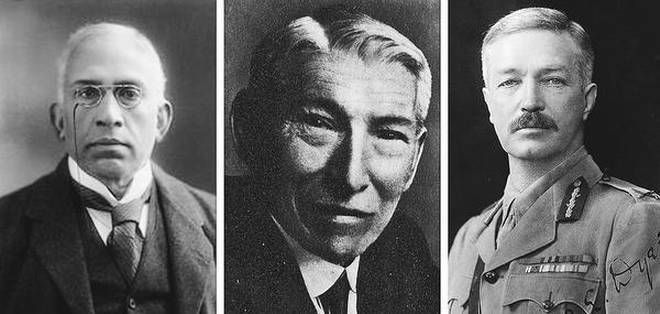
But before that happened, Veeraraghavachariar made one last effort to keep control of the paper. On the advice of Kasturiranga Iyengar, a company with capital of ₹1,20,000 (1200 shares of ₹100 each) was formed with P Rungiah Naidu (Chairman), Dewan Bahadur R Ragoonath Row, P Anandacharlu, C Jambulinga Mudaliar, C Sankaran Nair, TV Seshagiri Iyer and M Tirumalachariar as Directors. Kasturiranga Iyengar was the Legal Adviser and Veeraraghavachariar the Manager. But by 1903 the scheme failed with less than half the shares subscribed. Two years later, on March 18, 1905, Kasturiranga Iyengar announced, “Mr. Sankaran Nair and myself have agreed to purchase The Hindu from Mr. Veeraraghavachariar for ₹75,000,” the latter selling it to them though he had received an offer for ₹5000 more. Sankaran Nair remained a co-owner till 1922.
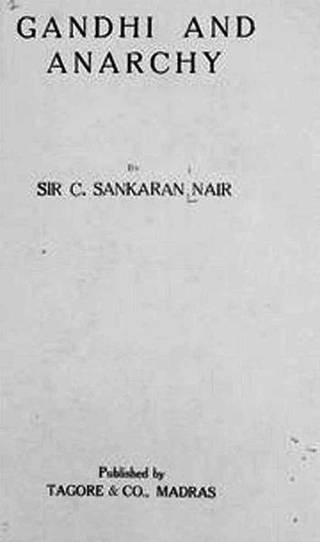
Over the years, there were to be differences between The Hindu and Sir Sankaran, but the break came when they took opposing views on the question of Gandhiji and civil disobedience. Nair even wrote a book, Gandhi and Anarchy, in which he attacked Gandhiji and the Congress. The consequences of the book were unexpected. In it Nair wrote, “Before the reforms it was in the power of the Lieutenant-Governor (Sir Michael O’Dwyer of the Punjab), a single individual, to commit the atrocities in the Punjab we know too well.” This was with reference to the Jallianwala Bagh massacre that Sir Sankaran held was due to O’Dwyer giving the man-on-the-spot, Col. Reginald Dyer, an excessively free hand. O’Dwyer, angered by Nair’s charge, sued for libel in London, which is where Nair had once thought he would file charges against the Authorities for the massacre. Instead, as a member of the Secretary of State for India’s Council, he moved to England, and campaigned for a Royal Commission of Inquiry which led to several civil and military officials being punished for what happened in 1919. “As far as it lay in my power, I was determined to prevent another Jallianwala Bagh in India,” Nair stated of his success.
You win some, you lose some and the lawyer Sankaran Nair found himself paying for his views on Jallianwala Bagh and O’Dwyer. In London, the jury ruled against him after Justice McCardie kept intervening at every stage of the trial asking questions that favoured the plaintiff. O’Dwyer was awarded £500 damages and costs, which came to £7000.
The Hindu, which covered the trial extensively, called it “a hideous mockery,” adding, “almost from the first day when the trial commenced, it was apparent that Sir Sankaran Nair had lost the case.” The paper later wrote, “The case has only served to demonstrate once again that when there is the slightest touch of politics involved for an Indian, justice cannot be expected in an English Court and from an English jury. In such cases both judge and jury become weighted with the cares of empire. No wonder a case which was meant to test whether Sir Michael O’Dwyer was guilty of terrorism, resulted in the finding, altogether gratuitous, that O’Dwyer saved the empire, that justice was not done to Dyer… and that (the Inquiry had got it all wrong…)”
Ironically, the case led to Nair in 1924 wanting to sue The Hindu for libel alleging that it had accused him of “appealing to the Congress leaders in the matter of the suit (filed by Sir Michael O’Dwyer).” Matters were settled out of court.
Sir Sankaran Nair lived in The Palms on Poonamallee High Road and was, with Kasturiranga Iyengar, a member of the Egmore Group of lawyers, rivals of the Mylapore Group, which was mainly Brahmin.
Music maestro’s centenary
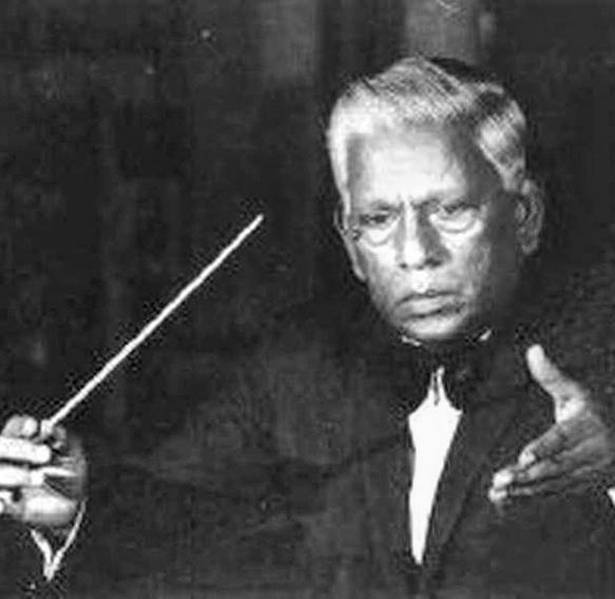
April 27th was the birth centenary of Handel Manuel, Madras’s ‘Mr. Western Classical Music’, (Miscellany, March 19) and it was a grand music event in the Manuel style at St Andrew’s Kirk, with which he was associated for over fifty years as organist and choirmaster.
Born in Tuticorin into an old Nagercoil family, he was named Handel by his music-loving father who thought George Frederic Handel’s Messiah was the greatest piece of Western Classical music ever written. His son lived up to his hopes. An untrained composer, he became an outstanding Classical musician after his time at Madras Christian College. But Handel Manuel was down-to-earth as well: He was Station Director Western Music, Madras.
A part of his legacy includes founding the Madras Philharmonic and Choral Society. And the Handel Manuel Chorus is a memorial to him founded by his younger brother and his wife, flautist Surender and Sarada Schaffter, in 2003. He was also instrumental in writing and augmenting the Western musical notes for the National Anthem. His son Vijay, considered by many the best pianist and bass player in India in his time, worked long with composer Ilayaraja for whom he played the keyboard. Handel Manuel was elected an Honorary Life Member of the Royal School of Church Music, London.
The chronicler of Madras that is Chennai tells stories of people, places, and events from the years gone by, and sometimes, from today.
source: http://www.thehindu.com / The Hindu / Home> Society> History & Culture / by S. Muthiah / April 30th, 2018
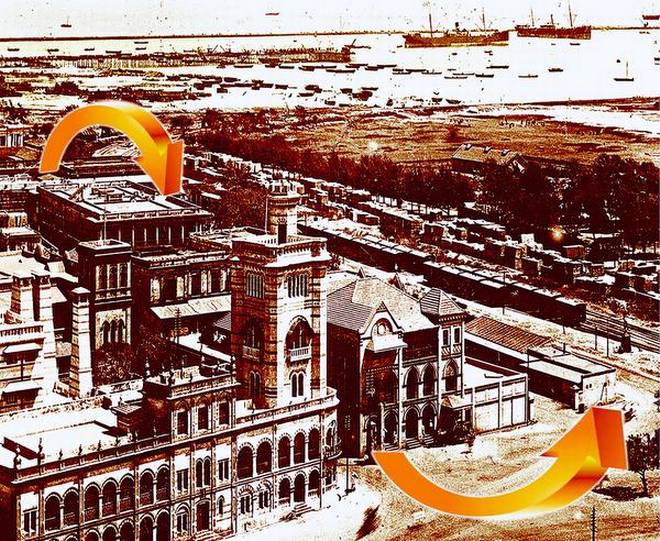
The last of the great British commercial names of the South still in business, Parry & Co, now Indian owned, has a curious historical sidelight that had its beginnings 150 years ago. It’s a story pointing to the firm’s obsession with gold in South India, an item few who know the Parry story would associate with its hard-headed business approach from its founding in 1788.
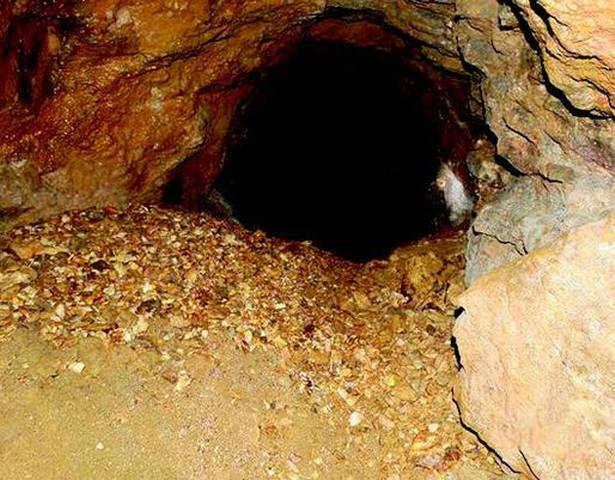
It was a few years before the lure of gold drew Parry’s to it in the 19th Century. The story of that gold began with the coffee blight ruining the planters in the Nilgiris and those who did not give up and go ‘Home’ frantically searching for alternative means of sustenance. Two of them were Australians who had been miners and were planting in the Wynaad near Gudalur. There’s gold in them ther’ hills, they announced in 1868, and the trickle that followed them turned into a gold rush.
The rush began in 1879 following a positive report of gold in the Nilgiris-Wynaad that Bough Smyth, an Australian mining engineer, had submitted to the Government of Madras. But Parry’s were ahead of him. In 1874, the South India Alpha Gold Company was promoted with a capital of £100,000 and Parry’s became its Managing Agents. This was followed by Parry’s seeding the Devala Central Gold Mining Company.
Estates that were being sold for virtually nothing now found their prices sky-rocketing, going for anything between £70 and £ 2600 an acre, as not only planters began to dig for gold but a rash of new companies followed them. It was reported that 41 companies were floated in England with a total capital of £5 million and 44 companies sprang up in Mysore and the Wynaad with a total capital of ₹5,50,000! And the ‘engineers’ they employed, one report has it, were “a quondam baker and a retired circus clown”. Prospectors like these made Devala and Pandalur, near Gudalur, boom towns. Hostelries sprang up, Devala even got a magistrate and Pandalur a racecourse!
Crushing began in 1881 and when one of the biggest companies reported to London that it had found four ounces of gold per ton, investments went through the roof. A few months later it reported that 19 tons had yielded two pennyweights of gold. And the crash began. In 1883, Government reported that the gold mining enterprise in the Wynaad had “almost collapsed”. By the next year, it had collapsed altogether. An 1875 newspaper from as far away as New Zealand had to eat its words: It had predicted “Ooctacamund, the delightful recherché sanatorium on the Neilgherries is to be the new bustling Ballarat (once Australia’s gold mining heart)… There is sure to be an exodus from Melbourne to Madras.” If the Australians had continued coming, they would have found Devala and Pandalur ghost towns. But it must also be stated that were enough traces of gold found to keep prospectors optimistic; one company in 1884 extracted 363 ounces of gold, another over a couple of years found 1174 ounces – the former valued at ₹16,500, the latter at £4500 – a pittance considering the investment.
You would think that with all this experience a company like Parry’s would think twice about gold. But when a prospector called TB Cass came to Parry’s in 1902 with a mining licence in the Nizam’s Hyderabad, Parry’s began sighting gold again. A few years later it floated the Indian Minerals Exploration Company which began operations in 1907. The losses were ₹5 lakh when the company was wound up in 1910 after winding down from 1908, all Parry getting out of it being an almirah that for years remained in Parry’s headquarters!
But Parry’s had not done with gold. A couple of years later, two South African miners turned up at Parry’s Calicut office with gold they said came from the Malabar rivers into which it would have been washed from the Wynaad. And in 1913 Parry’s formed the Pactolus Dredging Syndicate. That was washed away in 1913. Next, in 1916, a Parry’s sugar factory near Vizagapatam reported that it had found gold traces when boring for water. Could they secure the mining rights? A Director replied, “Quite interesting, but I sincerely hope we will not put money into it or even have an interest again in a mining venture.” Before and after, the firm has stuck to green gold (sugarcane and tea) and black gold (manure).
___________________________
A search for a doctor
They still keep finding this column from abroad, this time my correspondent being a Dr David Dance from the UK. He is trying to trace the descendants of a Dr CS Krishnaswami who worked in Rangoon, c. 1911. Working with the Pathological Laboratory there, Assistant Surgeon CSK had with his Chief, Dr Alfred Whitmore, presented a paper on a then new disease called Melioidosis (later Whitmore’s Disease) that D. Dance has been working on for the past 30 years. Dr Dance writes, “I have a fair bit on Whitmore but not Krishnaswami, who I would think returned to Madras on retirement.” Krishnaswami did, for I find in a book written by Burma-born Lakshmi Sundaram that a Dr CSK, who’d been in Burma, used to regularly visit her father who had returned to Madras on retirement. Dr. Dance (David.d@tropmedres.ac) wonders whether any of Dr CSK’s descendants will see this appeal and get in touch. The Doctors Whitmore and CSK had published their findings in the Indian Medical Gazette in July 1912.
__________________________
The chronicler of Madras that is Chennai tells stories of people, places, and events from the years gone by, and sometimes from today
__________________________
source: http://www.thehindu.com / The Hindu / Home> History & Culture / by S, Muthiah / April 23rd, 2018
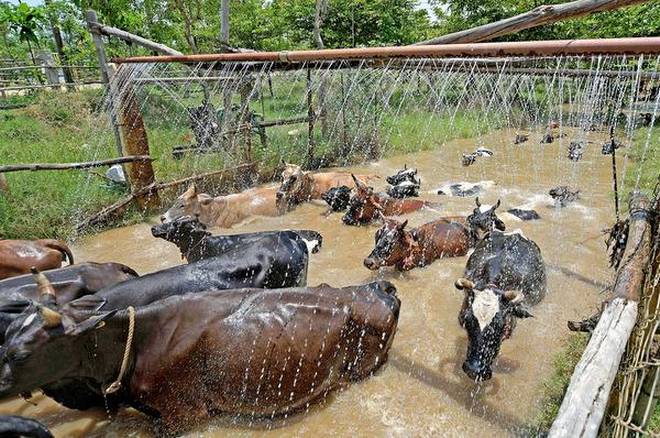
In bliss: Cattle heads enjoy a shower bath under a hot sun at the integrated farm in Pudu Tamaraipatti in Madurai. | Photo Credit: R_ASHOK
‘Unscientific’ innovations at a farm in Pudu Tamaraipatti have impressed veterinarians
The clock shows 5 a.m. Scores of cows come out of their sheds and line up in front of a gate. It is breakfast time. They slowly troop into the fodder area, eat like disciplined children and return. They do not jostle, jump the queue or rough up. And they do not have nose ropes. This is the result of a desi Pavlov-Skinner experiment on animals at a farm in Pudu Tamaraipatti on the Tiruvadavur Road. Earlier, a bell used to ring at 5 a.m. to announce that food is ready.
For What They Say: C. Deivendran of Madurai, who has come up with innovative solutions for common problems of farmers, in his integrated farm at Pudu Tamaraipatti. | Photo Credit: R. Ashok
“We used to ring the bell twice a day to indicate that food is ready. Now the cows come on their own,” says K. Deivendran, who has developed this integrated farm.
The 50-acre farm, which came into existence in 2009, is a story of Deivendran’s experiments with farming. Son of a farmer from Vellayathevanpatti in Theni district, Mr. Deivendran learnt all about agriculture from his parents, brother, friends and those who came to sell their produce at his vegetable commission mandi in Andipatti. “I do not have any scientific knowledge of agriculture. I have developed this farm purely on trial-and-error, applying native wisdom,” says Mr. Deivendran. His “unscientific’ innovations have impressed veterinarians so much that they have come to recommend them for others.
He has saved time and money by dispensing with the nose rope. “Cattle breeding becomes costly if the animals are handled by humans. Here, they enjoy an unfettered life. The nose rope is used only for bulls that are difficult to handle. Our workers touch the cows only for milking,” he says. The cattle enjoy a luxurious bath twice a day, by standing in a row. Even pregnant cows are let out for bathing, which ensures hassle-free delivery. The animals swim through a 15-foot-deep canal and stop for a while to enjoy the shower at one end. The shower removes dirt from the face and head of the animal. Native practice of milking is adopted not to leave any residue that would cause discomfort and disease for the cow in the udder. Even the fodder is not wasted. Green fodder is shredded and placed in special containers that prevent spilling and wastage. Fresh coconut pulp is added to dry fodder, which gives the animals a sheen.
The scene is not different in the poultry and sheep farms. As a value added food, sheep eat popcorn made by roasting maize in hot sand. Chicks drink milk from plates. The birds are not cooped and they rest in the trees at night. “When cattle and birds have a free life, maintenance cost is low,” he says.
Mr. Deivendran has effectively addressed the water issue, which plagues farming. Out of the 10,000 saplings he planted in 2009, 8,000 trees now stand tall. The farm has adopted high density farming. This has brought down evaporation level.
He uses drip system for irrigation by drawing water from nine rainwater harvesting ponds. “Not a drop of water is wasted here. Even waste water is filtered and recycled,” says Mr. Deivendran.
The farm provides free drinking water all round the year through a tap installed outside to residents of Pudu Tamaraipatti, says P. Manikandan, president, MaduraiDistrict (Wet and Dry) Farmers’ Association.
For What They Say: P. Manikandan, president, Madurai District Dry and Wet Land Farmers’ Association. | Photo Credit: R. Ashok
Entry of chemicals is forbidden in this farm, where 25 species of trees are grown, and technology is passe. Only used materials such as casuarina poles, tin sheets and waste plastic are used all over. Free food is offered to all workers three times a day.
According to Mr. Deivendran, farmers should scrupulously maintain profit-and-loss account, as a first step, to make farming a profitable venture.
Pamayan, an organic farmer, during an interview for The Hindu Metroplus, in Madurai. | Photo Credit: R. Ashok
Pamayan, an expert in organic farming, is hopeful that this model can be adopted by any ordinary farmer or as a cooperative venture.
source: http://www.thehindu.com / The Hindu / Home> News> States> Tamil Nadu / by S. Annamalai / Madurai – April 30th, 2018
A city-based start-up, HelloLeads, which is into lead management solution has been recognised as one of the top 20 information and communication technology (ICT) start-ups in India jointly conducted by Associated Chambers of Commerce and Industry of India (Assocham) and the ministry of electronics and information technology. For its efforts, HelloLeads has been lauded for operating from a tier-II city to develop cloud-based marketing solution and promoting socio-economic factors by employing local talents.
“The startup award that we received among 5,000 to 6,000 participants would motivate us to achieve more. The recognition also highlights that start-ups functioning even from tier-II cities can do innovations alike their counterparts in metropolitan besides bringing equitable growth,” Muthukumar Ramalingam, co-founder of the HelloLeads said.
The company said that it has developed a global marketing software model for their clients including small and medium-sized enterprises (SME) and corporate firms to attract potential customers for availing their respective products and services.The startup claimed that educational institutions in Trichy and adjoining areas are yet to provide platforms for students to learn evolving technologies and employability skills that are most sought by start-ups.
“Job creation and to put Trichy on the global map for start-ups are our key plans for which financial support if provided from state and central governments will be helpful,” Manohar Jha, another co-founder of HelloLeads told TOI.
The less than a year old start-up also said that more focus is needed for boosting Trichy’s air connectivity particularly to Bengaluru to attract more investments and to generate employment here. With Trichy also being named in defence corridor plan of Union government to promulgate indigenous production of defence products with Trichy-based MSMEs, HelloLeads shared that the need for start-up that offer global marketing solutions would surge in coming days.
source: http://www.timesofindia.indiatimes.com / The Times of India / News> City News> Trichy News / TNN / April 29th, 2018
Three mobile applications (apps) and technology solutions provided by B.Tech. students of Amrita Vishwa Vidyapeetham won prizes at the Smart India Hackathon 2018, which the Central Government had organised to engage technical students to provide solutions to Central and State government departments to build digital solutions to improve efficiency and plug revenue loss. A release from the institution said three teams of six students each won awards and three others featured in the top 10 teams in India for various ministries.
Android app ‘Niryatak’ was in response to a challenge posed by Ministry of Commerce and Industry. It helped calculate the post-production cost of products being exported and suggested what the selling price should be to get optimum profit.
The second team, Cyber Sena, developed a secure system for the Ministry of Defence to enable easy transfer of data from one network to another through white-listing of pen drives.
The third team developed an app for the Ministry of AYUSH for conversion of Ayurveda unit, the release added.
source: http://www.thehindu.com / The Hindu / Home> News> Cities> Coimbatore / by Staff Reporter / Coimbatore – April 25th, 2018
In 2004, M Sivaguru Prabakaran gave up his dream of pursuing an engineering degree as his family couldn’t afford the money to help him attend counselling session in Chennai.
Prabakaran secured 101st rank among the 990 candidates selected iby the UPSC n CSE 2017.
What followed was an extraordinary tale of grit and determination that took the son of an alcoholic from Melaottankadu village in Pattukottai in Thanjavur district to the platforms of the St Thomas Mount Railway Station and the hallways of IIT Madras. In the near future, as an IAS officer, he could possibly move to the hallowed precincts of Fort St George.
On Friday, Prabakaran secured 101st rank among 9.90 candidates selected by the UPSC in the civil services examination 2017. V Keerthi Vasan (29), L Madhubalan (71) and S Balachander (129) were among the other candidates from Tamil Nadu who made the cut.
When TOI contacted Prabakaran on the phone, he was in the middle of getting congratulatory hugs from roommates at the house they shared in Thirumangalam. “I couldn’t continue my education after Class XII because of my family’s financial situation,” said Prabakaran.
An alcoholic father meant that much of the earning burden fell on his mother and sister, who made ends meet weaving coconut fronds. When he couldn’t pursue engineering, he decided to work to support the family. “I worked as a sawmill operator for two years and did a bit of farming. Whatever money I could muster, I spent some towards my family and saved some for my education. I wasn’t prepared to let go of my dreams,” he said.
‘Tamil Nadu govt’s health department secretary inspired me’
In 2008, after having funded his younger brother’s engineering dreams and his elder sister’s wedding, Prabakaran enrolled in the civil engineering stream at the Thanthai Periyar Government Institute of Technology in Vellore. “My English language skill was not good. I studied in Tamil medium,” Prabakaran said.
It was during this time, he reached Chennai in the hopes of cracking the IIT entrance examination. “A friend referred me to a tutor in St Thomas Mount who trained underprivileged students like me,” he said.
Studying under the tutor during the weekend, Prabakaran would take shelter in the platforms of the St Thomas Mount railway station. He would return to Vellore for the week to attend his college and made a small income working his off hours at a mobile recharge outlet.
He went on to crack the IIT-M entrance and finished his M.Tech programme as a top ranked student in 2014. “I had 9.0 GPA,” said Prabakaran. This was Prabakaran’s fourth attempt at clearing the UPSC exams. He identifies J Radhakrishnan, the Tamil Nadu government’s health department secretary, as an inspiration. “The desire to become an IAS officer was lit in me when I saw Radhakrishnan in 2004. He was the Thanjavur district collector at the time of Kumbakonam school fire tragedy. He was the first IAS officer I ever saw,” said Prabakaran.
Prabakaran hopes to inspire more people from his hometown to follow his lead.
source: http://www.timesofindia.indiatimes.com / The Time of India / News> City News> Chennai News> Schools & Colleges / by Pradeep Kumar / TNN / April 28th, 2018
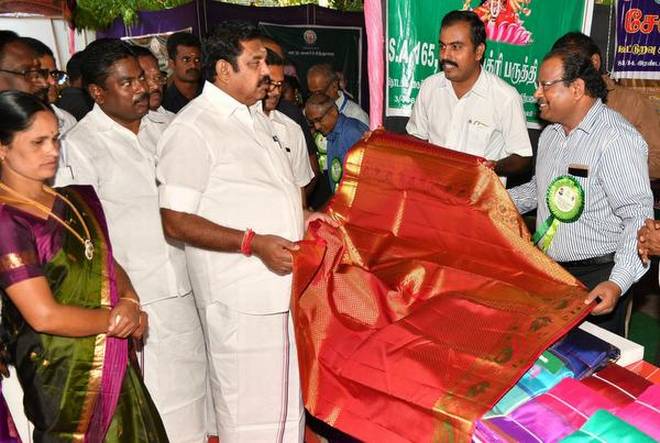
Chief Minister Edappadi K. Palaniswami having a look at a silk sari at an exhibition in Salem on Saturday.
The State Government would set up ‘Seri Tourism’ centre on the hill station of Yercaud for providing all information about sericulture activities in the State, said Edappadi K. Palaniswami, Chief Minister. The project is coming up at an outlay of ₹ 2.50 crore.
Mr. Palaniswami was speaking at a conference of sericulture farmers and entrepreneurs organised by the Sericulture Department here on Saturday.
He said that Tamil Nadu was one of the front running States in sericulture activities in the country. The State Government has earmarked ₹ 148 crore for the same in the last seven years.
The area under mulberry cultivation stood at 46,570 acres beneffitting 24,427 farmers.
The Chief Minister said that the demand for rawsilk in the State stood at 3,000 tonnes, whereas the production was only 1,900 tonnes.
In order to increase the production of raw silk, many schemes were being implemented, he said and asked seri culture farmers to join the initiatives of the government.
The Chief Minister released traffic rules awareness guide brought out by the Transport Department.
He asked people to strictly abide by road rules to bring down fatal accidents in the State. He said that the green corridor planned by the Centre between Salem and Chennai will reduce the travel time between the two cities to three hours.
P. Benjamin, Rural Industries Minister, who presided over the programme, said that a sericulture farmer can earn about ₹ 1.50 lakh per annum from an acre of mulberry crop.
He said that Tamil Nadu was a leader in cocoon productivity, chawkie worms distribution to farmers, and bivoltine silk production.
K. Phanindra Reddy, Principal Secretary, Handlooms, Handicrafts, Textiles and Khadi, said that to encourage farmers, a plantation incentive of Rs. 10,500 per acre and maximum upto five acres is being given to farmers planting high yielding mulberry crops.
In addition, a subsidy of ₹ 30,000 an acre to a maximum of five acres was given to install drip irrigation facility for mulberry. A subsidy of ₹ 87,500 was given for the construction of silkworm rearing house, and farm equipments worth ₹ 52,500 too was provided.
Rohini R. Bhajibhakare, District Collector, said that Salem district has 1,733 sericulture farmers using about 2,740 acres.
S. Semmalai, a former Minister; P.R. Sundaram, MP; P. Sri Venkata Priya, Driector of Sericulture; too spoke.
The Chief Minister opened an exhibition, released a booklet explaining the achievements of the Sericulture Department, and distributed best sericulture farmer awards.
source: http://www.thehindu.com / The Hindu / Home> News> Cities> Coimbatore / by Special Correspondent / Salem – April 28th, 2018
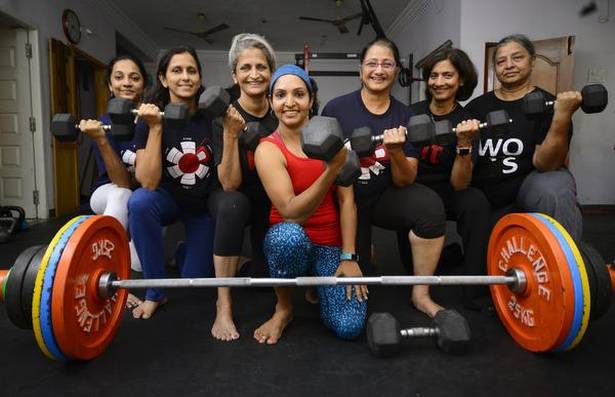
Straight out of a ‘Marvel’ comic. | Photo Credit: R. Ravindran
Behind the rustle of Kancheepuram silk in Chennai is a bunch of women aged 40 to 60 who defy cliches
As I walk into The Unit, a strength and conditioning gym, for my regular class, Srividya Gowri comes up to me, lifts up the sleeve of her T-shirt, and says, “Hey, see my cut.” I am somewhat confused by Gowri’s apparent glee about the ‘cut’ — and by the fact that I cannot see any cuts on her arm. Srividya sees my confusion. “My bicep cut,” she explains. We burst out laughing.
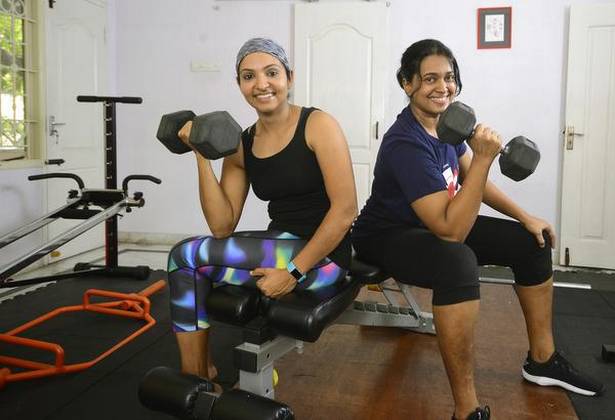
Gowri is 43, the mother of two teenaged daughters, a homemaker, Carnatic singer, and your typical new-age Madras ‘maami’ outside of the gym. Inside the gym though, she is straight out of a Marvel comic, a Peter Parker shedding identities like second skin. Here, she is a ‘bro’, deadlifting 90 kilos and benching 40 kilos. Here, she speaks the language of cuts and reps and brace and form. Here, she transforms into the living, breathing, walking epitome of ‘strong’.
Behind Chennai’s tapestry of sensory clichés — the aroma of filter kaapi, the rustle of Kancheepuram silks, the shimmering Marina, the heat that wilts, the Margazhi that revives — is a group of feisty women who lift weights. They compete. And they defy clichés.
“If women can strap on several kilos to their spine and carry the weight around for nine months, and then some more when the child is three or five, why is it difficult to understand when I shape it properly for you like a barbell? If you are going to lift, you might as well lift with proper form,” says Jyotsna John with her trademark wit. ‘Jo’, as she is called, began The Unit a little over five years ago at a friend’s home and later ran it from the backyard of a school.
I joined The Unit two years ago and by then it had found its own space. It was like I had opened a secret wardrobe to an intoxicating and impossible new world where the smells of rubber and iron merged with the sounds of grunts and groans. Six months later, I participated in my first competition — a State bench press competition — and won gold.
Popping veins
At powerlifting tournaments, there is a sea of men and a tiny island of women. The testosterone in the air is overwhelming and raucous. A stage is set with a table on one side where three members from the Tamil Nadu Powerlifting Association sit, all dressed in white, calling out names and numbers from little slips of paper.
For the uninitiated, the competition is divided based on age and weight, and how much you lift is calculated accordingly. They weigh you in, record your weight and age, ask you what your first lift will be, and then you wait your turn. You are allowed three attempts, and increase your lift with every turn.
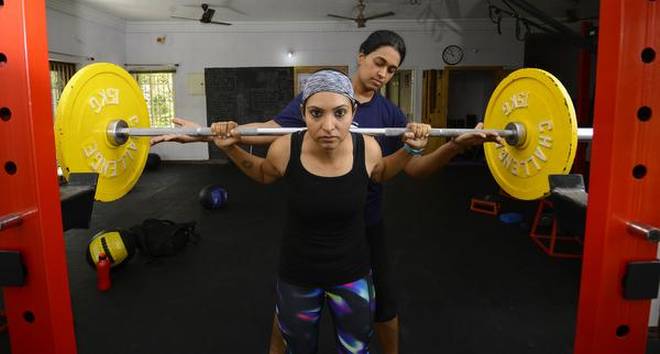
These women speak the language of cuts and reps and brace and form. A training session at The Unit in Chennai. | Photo Credit: R. Ravindran
At the centre of the stage, against a big banner showcasing flexed muscles and popping veins, is the bench (for bench press) or a simple barbell (for deadlifts), or a squat rack (for squats), with 2.5 kilo, 5, 10, 15, 25 kilo plates (and more) lying around looking strangely disconcerting, like uninvited guests. Sitting on a chair up front, back to the audience, is the judge.
At the competition, I remember feeling disoriented, nervous and woefully inadequate. I watched the impossible weights the men were lifting, as awe turned to fear and the fear incapacitated me. I bungled my first attempt — 22.5 kilos. I repeated the weight in my second. I went on to 25 kilos in my third, and that won me the gold.
In India, the belief that women over a certain age cannot lift weights is as deep-rooted as mould on an abandoned building. Add to this the fact that within the powerlifting community, too, women stop once they are married and have children.
Meenal Jalihal, 62, has been strength training at The Unit for a year. “I constantly hear the ‘Oh, if you stop weights you will become fat’ line, but perhaps the most bizarre line I have heard till now is ‘Your uterus will fall out!’ So I just smile and tell them how much I bench (27.5 kilos) and lift (55 kilos), and their jaws drop.” The benefits of powerlifting are many, says Jalihal: “Quality of life improves, your reflexes improve, memory improves, you feel energetic and, most important, especially for women my age, you can sit cross-legged on the floor!”
Gowri agrees. Battling obesity in her teenage years and continuing to battle hyperthyroidism, Gowri found her way to The Unit five years ago to help strengthen and support her running form and iron out (pun unintended) small injuries. “I got a casual invitation from Jo to come for the State bench press competition last year, where I ended up winning a gold in my age and weight category. That feeling was incomparable, and I shifted completely to strength training after that. I find that I am a lot more confident and empowered now.”
In school, Gowri’s nickname was ‘chubby’. “How I wish ‘chubby’ could hear that I am now ‘athletic, fit and toned’,” she says. On her Instagram page, Gowri recently posted a picture of her washboard abs giving all of us, regardless of age, #fitnessgoals.
“Many peoplethink that after 50 there is not much one can do,” says Jalihal. In fact, at the 2018 National Powerlifting Championship held in Coimbatore, during the weigh-in, the man taking down names and categories refused to believe Jalihal was over 60. Incidentally, she won the national gold.
Jo says her intention as a coach is not about creating powerlifters or to get people to compete. “Rather, the focus is on helping you attain whatever goal you have. Usually it is weight loss and that is a great place to start. But there are other uses to strength training and all I do is point you in the right direction, and help you see that there is more to this than just the mirror.”
Jo, whose efforts led to the creation of a separate women’s trophy in competitions, has been selected Assistant Secretary of the Chennai District Powerlifting Association. “The reason we chose Jyotsna for this post was because of the number of women she has introduced to the sport. I remember how in one competition there were more than 20 women from her gym alone. Not only do they lift with good form and heavy weights, but a lot of them have gone on to become champions at the State and district level, and now at the nationals too,” says S. Bhagavathy, Joint Secretary of the Tamil Nadu Powerlifting Association.
Like most women (and men) who find their way to The Unit, I ended up here because of an injury — my knees had taken a hit after my two pregnancies. At 35, I found I couldn’t climb the two floors to my home without a sharp, shooting pain in my left knee, and simple everyday activities left me completely winded. “Men and women have the same quality of muscle in their body, but we have 30% less muscle than men of the same weight and height. With older women, the ability to build muscle slows down. Most people who come to me have injuries and just want a way out of pain,” explains Jo.
Once you discover strength training, it’s like cold water on a summer afternoon — refreshing, invaluable and life sustaining. Sowmya Cotah, 51, a life coach, says she has never been an ‘exercise person’. “My tryst with fitness was sporadic at best until I started to enjoy it. And watching so many women around you powerlift encourages you to give it a shot and then you are hooked,” she says. Cotah also represented the State at the Nationals and won silver. “It’s not winning that matters — because you know that in the Masters category (40-50 years; Masters 2 is 50-60 years) there are so few women participating in India that most times you are assured of a medal. But even to get that medal, you need to lift right and lift well, and then it becomes about how much more you can do the next time; how much you can better yourself.”
Muscling in
Sumitra Ravindranath, 50, an architect, deadlifted 105 kilos at the Nationals to win a bronze. “A year ago, I visited my daughter in Chandigarh and climbed the overbridge at the station with my suitcase, reached the other side of the platform, and then realised I had actually done it,” she says. “I think competing is significant because, at least for me, it is important to know what it feels like to be on stage in front of an audience; to be able to overcome that nervousness and still be able to do your lift. At the Nationals, I actually lifted 110 kilos, but I was so excited I had done that, I dropped it instead of putting it down and the lift was disqualified.”
In Time magazine’s 2017 special edition on ‘The Science of Exercise’, one of the stories looked at the benefits of strength training for women. The story paints a scary picture of how a sedentary lifestyle is making us weaker by the day and how increasing muscle mass is a way to fight that — it leads to denser bones, a necessity especially for women. “If we imagine the bone as a bank account that stores calcium, then you can begin to see how imperative it is to keep that account active,” explains Kannan Pugazhendi, sports physician at the Indian Institute of Sports Medicine. “Women lose a lot of bone mass as they grow older and more so at menopause. And the only way to deposit calcium is through movement, through optimum weight and strength training, so when you begin to lose it, you already have an account to depend on.”
At the end of the day, when I think back to the medal around my neck, it seems so clear — this is what I want. Not the medal itself, but all that it represents: strength of bone and muscle, sure feet on the ground, emotional and physical balance, pride and a sense of achievement, and the incredible language of movement. As Jo says, “What many of these women feel is a huge sense of vindication: ‘Everyone is wrong, I am awesome.’”
____________________________
When not lifting weights of the iron or children kind, the writer edits an art magazine and dabbles in fiction and non-fiction writing.
____________________________
source: http:///www.thehindu.com / The Hindu / Home> Society> Cover Story / by Praveena Shivram / April 28th, 2018