National-level competition for guppy fish held at Pollachi

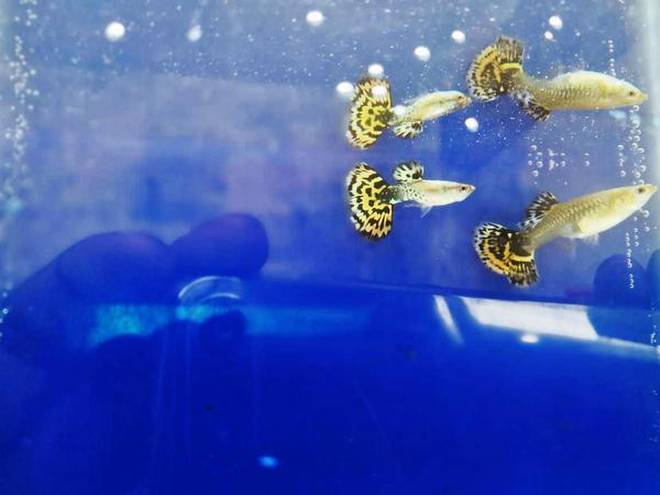
Fishes exhibited at the guppy competition at Pollachi on Saturday. | Photo Credit: HANDOUT_E_MAIL

Nearly 40 varieties of guppy fishes (Poecilia reticulata) from breeders across the country were exhibited at the national-level competition held in various categories at Pollachi on Saturday. Organisers said that it was the first national-level competition for guppy held in the country.

More than 70 breeders from various parts of the country, including Kolkata and New Delhi, took part. The venue was Nikanth Aquaculture at Pollachi.

Breeder A. Prabhu from Chennai was adjudged as grand champion of the competition.

Dinesh P. from Coimbatore, Dinesh Kumar V.L. from Coimbatore, Abjit M. from Kozhikode, and Vimal Kumar V. from Alapuzha won prizes in the best breeder category. Nikanth M.D., and Sagarika M.A. from Pollachi and Riyaz Ahamed from Coimbatore were selected as breeders in the junior category.

Organisers said that Siju Cherian from Cherai in Ernakulam, first person from India to judge international level competitions from June, selected the winners.

Marks were given to the fishes of different varieties based on their body, shapes of dorsal fin, caudal fin, colour and symmetry of patterns on body. Known for feeding mosquito larvae, some varieties of guppy are released in fresh water for controlling mosquito breeding. “The competition was held to boost the local breeders of the fish. As an ornamental fish, guppies have good market value and breeders in States like Kerala are even exporting them. The competition also helped introduce new varieties to breeders here,” said Dinesh Kumar V.L., one of the organisers.

source: http://www.thehindu.com / The Hindu / Home> News> Cities> Coimbatore / by Staff Reporter / Coimbatore – April 16th, 2018

The Serbian connection

Tafe01CF16apr2018

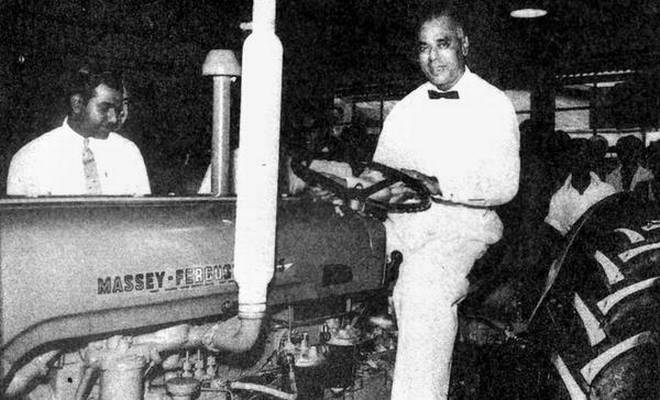
The news that TAFE, India’s second largest tractor manufacturer, has bought the Serbian company Industrija Masina i Traktora (IMT) is the culmination of a 55-year-old relationship that has gone through different phases. It is a story that began with TAFE establishing its offices on January 1, 1961 on Kothari Road after it had been decided that TAFE would thereafter manufacture Massey Ferguson (MF) tractors in India. The TAFE factory opened in Sembiam and the first tractor assembled with components from Coventry was driven out by S Anantharamakrishnan in 1961, watched by his son A Sivasailam who was in charge of TAFE, now one of the most successful flag-bearers of the Amalgamations Group.

But it wasn’t all wine and roses in those early days. The first challenge was posed by IMT who had a 10-year agreement with MF to manufacture tractors in what was then Yugoslavia. India, in those Rupee-payment days, was able to import these IMT-MF tractors, while TAFE was struggling to get foreign exchange to import its CKD components from the UK. Sivasailam’s answer was to go to Yugoslavia. With him went one of his sales representatives in North India, V P Ahuja – who was to make Yugoslavia his home – and they successfully negotiated for IMT-MF components to be regularly supplied to TAFE, meeting Rupee-payment requirements. Slowly business picked up.

The initial imports from IMT were not without their headaches. Yugoslavia used the metric system, India the imperial. TAFE’s technical staff had to devise ways and means to adapt IMT components to TAFE’s requirements. Ahuja (made Chief Liaison Officer, TAFE, in Yugoslavia in 1962) also remembers that while the IMT parts were very good, the factory’s documentation was “terrible”. TAFE would get crates-ful of components but would not know what was packed in what; Ahuja was the problem-solver.

Profits, however, were yet slow in coming. Then came windfall. A World Bank tender called for 3000 tractors to be sold to farmers in the Punjab, where the Green Revolution was taking place, under a financing scheme of the Bank. The Punjab Agro Industries Corporation was to distribute the tractors to farmers who could prove they owned land in the Punjab and nowhere else. TAFE won the tender. Later, even as the deadline for the closure of the scheme neared, TAFE still had 600 tractors on its hands. Sivasailam persuaded the Punjab Government to let the firm sell them to Punjab farmers who owned land in Haryana. And TAFE was on its way.

With the business relationship in Yugoslavia well-settled, Ahuja, who is now Offshore Director, established an agency business for TAFE in Belgrade helping the firm’s export business by representing several Indian auto-product firms in the region. Gradually he also began introducing TAFE tractors, which before long were outselling IMT tractors, even though being more costly but being superior in quality. But, adds Ahuja, we remained “passive sellers throughout because of the Chairman’s regard for IMT.”
Tafe02CF16apr2018

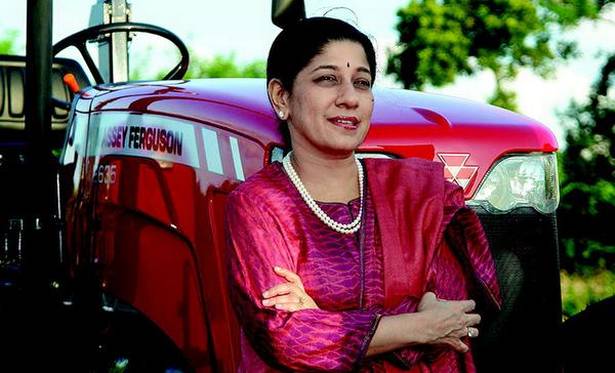
With the break-up of Yugoslavia in the early 1980s, IMT slowly started slipping till it finally closed in 2015. At an auction, Mallika Srinivasan, Sivasailam’s daughter, closed the over 50-year-old circle. IMT tractors will be in the East European market again in a year or so, she promises.

______________________________

Madras’ first American Church

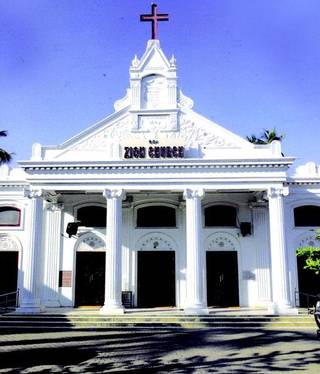
Zion Church I’ve long known as one of Chintadripet’s three landmarks, the other two being the Sathianathan memorial and the Goschen Library. As an architectural precinct it was quite a striking one, inevitably drawing attention to it. What I didn’t know then was that this was the first and only church built by American missionaries in Madras.

The legendary Dr John Scudder, who founded the American Madras Mission after arriving from Jaffna, and the Rev Miron Winslow, his colleague in Jaffna where he started work on the dictionary that is part of Tamil literary history, built a small church in 1847 in the weavers’ settlement after buying the land from a G V Naidu. They named it the Zion Church and it is now in its 170th year, a Church of South India church since independence.
ZionChurchCF16apr2018

In April 1865, the American Mission, then concentrating on the Arcots and Madurai, sold the Church for ₹10,000 to the Church Mission Society, London. Some years later, in 1878, the Church was gifted its bell by the Christian Missionary Society; it is said to be the second oldest church bell in Madras. Another piece of antiquity is the pipe organ which was made in England in 1895. The church was completely renovated in 1995.

Noteworthy has been the long pastoral connection of the Sathianathans/Clarkes with this church. I’ve written about this in the past (Miscellany January 28, 2002) but it deserves retelling. The Rev W T Sathianathan became, in 1862, the Church’s second pastor and its first Indian one. There followed five generations of the family who have preached in the Church. Rev W T, after 30 years of pastoral care there, was followed by his son-in-law W D Clarke. The Rev Clarke was followed after 28 years by his son Samuel S Clarke, who served for about 20 years. He was followed by his son Sundar Clarke, who served a few years and went on to become Bishop of Madras.

In 1995 the Clarke family gathered at the Church to celebrate their connection with it and the service was conducted by Sathianathan Clarke, the great-great-grandson of the Rev W.T. The fifth generation Clarke was visiting after completing a Doctor of Divinity degree at Harvard after a Master’s at Yale.

________________________________

Congratulations to a contributor

The Indian National Science Academy (Delhi) has awarded the prestigious Vulmiri Ramalingaswami Chair for 2018 to my regular contributor on Madras medical history, Dr. Anantanarayanan Raman of Charles Sturt University, New South Wales.

Ramalingaswami was a distinguished medical doctor and Director General of the Indian Council for Medical Research.

At the same time Dr M S Swaminathan was Director General of the Indian Council for Agricultural Research.

Dr Raman will spend July in India, headquartered at the Indian Institute of Science, Bangalore, but travelling around to deliver lectures and conduct workshops. Congratulations, Dr Raman; it couldn’t have been awarded to a more dedicated researcher.

The chronicler of Madras that is Chennai tells stories of people, places, and events from the years gone by, and sometimes, from today.

source: http://www.thehindu.com / The Hindu / Home> Society> History & Culture> Madras Miscellany / by S. Muthiah / April 16th, 2018
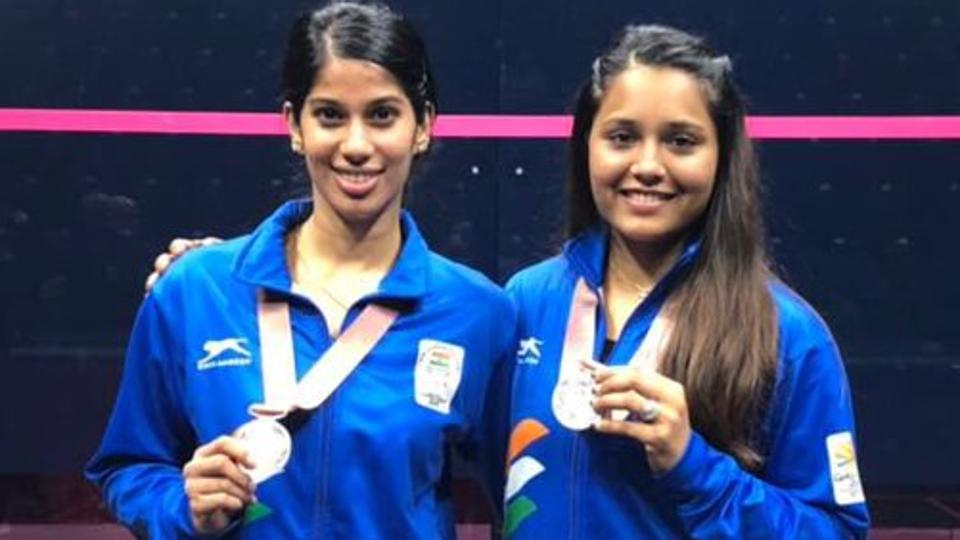
Commonwealth Games 2018 squash: Dipika Pallikal-Joshna Chinappa get silver

Dipika Pallikal and Joshna Chinappa settle for silver in women’s doubles squash final at the 2018 Commonwealth Games.

Dipika Pallikal and Joshna Chinappa lost 9-11, 8-11 in the final of women’s doubles squash at the 2018 Commonwealth Games.(Twitter)

Defending Champions Dipika Pallikal and Joshna Chinappa settle for silver after losing their women’s doubles final match to the New Zealand pair of Joelle King and Amanda Landers-Murphy at the Commonwealth Games 2018 on Sunday.

Pallikal and Chinappa lost the final in straight games 9-11, 8-11 in just over 20 minutes.

Coming into the final the Indian pair had lost just three games in their six matches but lost both of their games in the final to win silver.

Dipika was understandably unhappy with the contentious calls.

“There were some shocking calls as usual, those calls changed the match. They need to be looked at. If they don’t, then the game doesn’t grow,” she said.

“It’s sad to see, the players and game are growing, but the officials they’re not growing at all. It’s harsh for us players,” the player from Chennai added.

Joshna too was disappointed with not winning the gold but found some consolation in the silver.

“It’s great that we could be in the finals, we had a great chance to win. The New Zealanders played really well, we had a few bad calls. It’s disappointing, but it happens, that’s sport. We still managed to get a silver four years later,” she added.

This is India’s and Dipika Pallikal’s second medal in squash at the Games after winning the silver in mixed doubles on Saturday.

source: http://www.hindustantimes.com / Hindustan Times / Home> Sports> Other Sports / by HT Correspondent, Hindustan Times, Gold Coast / April 15th, 2018

Inching towards a half tonne

DyerCF15apr2018

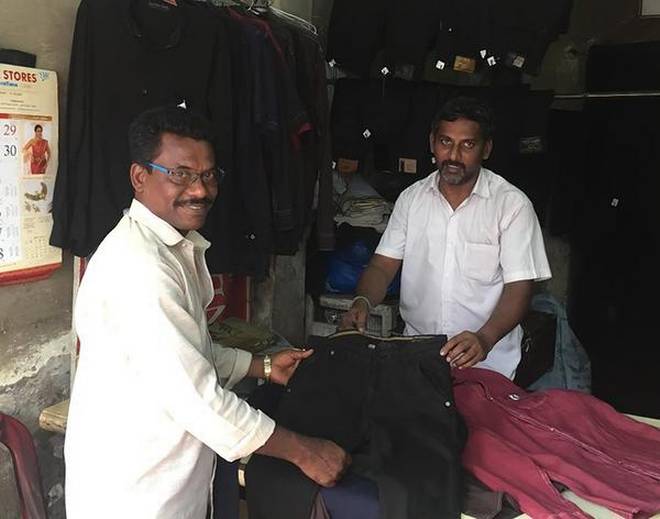
At 49 years, a dyer shop in Royapuram stands testimony to the unfading charm of this craft

J. Suresh, owner of Damodaran Dyeing shop on M.S. Koil Street in Royapuram, has vivid memories of his after-school hours. He would tag along with his mother J. Saroja as she went from door to door to collect clothes, mostly saris, for dyeing. His father V. Jayaraman and elder brother J. Damodaran, after whom the shop is named, would wait at the small rented shop.

This was nearly five decades ago when the dyeing shop had been established. The memories have left an imprint on his mind, like dye on cloth.

Those were the early days of Damodaran Dyeing shop, started in March 1969 with a total investment of Rs. 700.

“Even as a child, I was fascinated with dyes. As my hand would be stained with dyes, my mother would feed me with handfuls of food,” says 45-year-old Suresh, the youngest of four siblings.

Suresh’s forefathers migrated to the city in the late-nineteenth century from Dindugal due to severe drought and crop failure.

As north Madras was then the nucleus of the city, they settled in Old Washermenpet doing all kinds of odd jobs, which included dyeing work. In those days, many street lanes in north Madras had dyeing units that served the weavers in Chintadripet.

In the late 1940s, dyeing units were started in Pallavaram for weavers from Anakaputhur, Pozhichalur and Kundrathur. Jayaraman, Suresh’s father, initially worked in the dyeing units at Pallavaram and then moved to Bombay after independence. And then, in 1969, he established his dyeing shop in Royapuram.

“High rent, shortage of water and high electricity charges are the challenges in continuing the dyeing business. More importantly, dyeing clothes is difficult because we have to spend many hours in hot water during the dyeing process. I am hopeful that my children, one of them is a graduate, will find better jobs,” says Suresh, who can be contacted at 9841237494.

source: http://www.thehindu.com / The Hindu / Home> News> Cities> Chennai / by D. Madhavan / April 13th, 2018

IIT-M students build prototypes

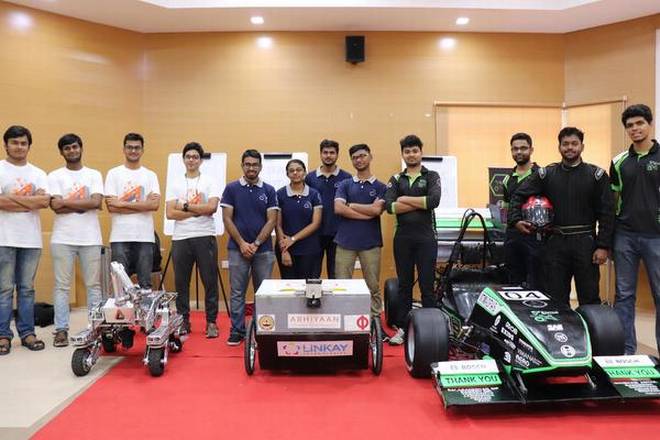
The students along with the prototypes they built for participating in international competitions. | Photo Credit: HANDOUT_E_MAIL

A group of students from the Indian Institute of Technology – Madras have built a Formula race car. And, Team Raftar is the only Indian team to qualify for the Formula Student Germany 2018 competition in July.

The single-seater race car, built from scratch with the support of a senior alumnus, cost ₹15 lakh. The students’ team was supported by BOSCH and MRF.

Another group of students, Team Anveshak, has developed a Mars Rover, which has qualified for the finals of the University Rover Challenge to be held in the Utah desert.

The all-terrain rover, with minor modifications to the design could be used in defence operations and terrain exploration purposes.

The third group of students, Team Abhiyaan, one of the two teams that has qualified for the international robotics event to be held in Oakland University, Michigan, US, has built a robot – an autonomous ground vehicle that can navigate using GPS.

The team’s mission is to create efficient and safe transportation solutions.

The students have developed their products at the Centre for Innovation (CFI), a result of funding by three batches of IIT-M alumni.

Institute director Bhaskar Ramamurthi said the CFI had emerged as the model in the country for fostering hands-on innovation among students. Though the institute offered them support when they participated in international competitions the students had to find their own sponsors, he added.

source: http://www.thehindu.com / The Hindu / Home> News> Cities> Chennai / by Special Correspondent / Chennai – April 14th, 2018

R Madhavan’s Son Vedaant Wins Swimming Bronze Medal For India

“Proud Moment For Sarita (His Wife) And I, As Vedaant Wins His First Medal For India In An International Swim Meet In Thailand Today
VedaantCF13apr2018

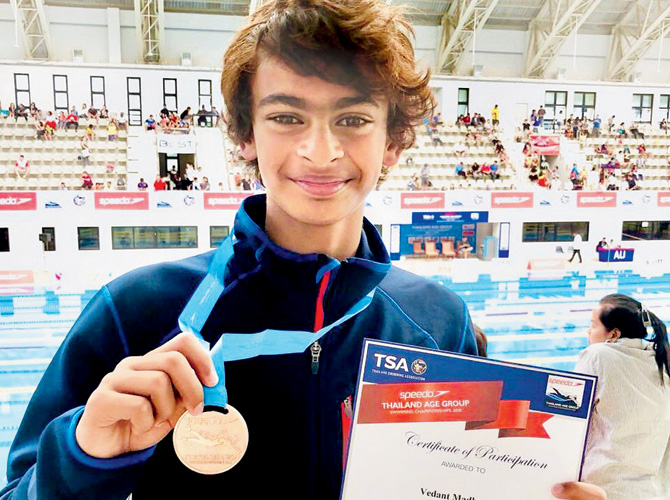
Bollywood actor R Madhavan’s son, Vedaant won a bronze medal for India in the 1500m freestyle at the Thailand Age Group Swimming Championship yesterday.

“Proud moment for Sarita (his wife) and I, as Vedaant wins his first medal for India in an international swim meet in Thailand today. Thank you for all your blessings,” wrote Madhavan on Instagram along with a photograph of his son holding the medal (right) and certificate with the backdrop of a stadium.

Meanwhile, R Madhavan can be seen in the latest web-series Breathe along with Amit Sadh. R Madhavan made his Bollywood debut in the 2001 hit Rehnaa Hai Terre Dil Mein.

source: http://www.mid-day.com / mid-day.com / Home> Sports News> Other Sports News / by mid-day online desk / April 10th, 2018

Kalai Koodam, an art school in Chennai wants to bridge differences in the field of culture

KalaiKoodam01CF12apr2018

Kalai Koodam, an Urur Olcott Kuppam Vizha initiative, is a school for people to learn art in a liberal environment, where boundaries blur and conventions are broken

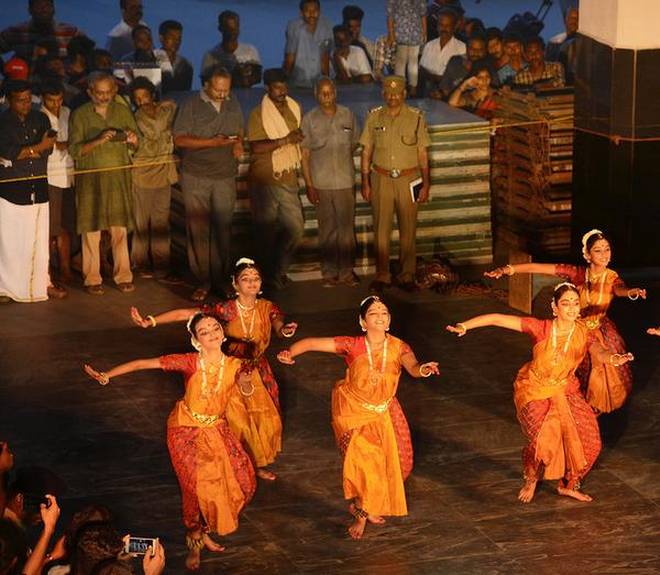
The Urur Olcott Kuppam Vizha (UOKV), Chennai’s popular counter-cultural festival, began with the dream of bringing all types of art and people together, in a single space. The same dream reflects in their next project, the Kalai Koodam — an art school for people of all ages, economic backgrounds and cultural moorings. Vocal music, Bharatanatyam and Paraiattam will be all be taught under one roof.

KalaiKoodam02CF12apr2018

The Kalai Koodam classes will take place at the Thiruvalluvar Community Hall, near Urur Olcott Kuppam, the fishing hamlet, near Besant Nagar. Anyone above eight can take part in these classes. The fee for each class per art form per month is ₹100. Anybody who wants to contribute above the basic fee is welcome to. The money will go into running the Kalaikoodam. The classes will be held on Sundays.

Vocal music classes will not be confined to a particular genre of music, at least in the initial phase. Monali Bala, a musician, UOKV volunteer and manager and administrator of Kalai Koodam says, “The classes aim to develop a love for all kinds of music in children. Over a period of time, the children will gravitate to a particular genre. Only then, will we channel them towards that respective genre.”

This is also an endeavour to cover different kinds of music across the country, apart from Hindustani and Carnatic music — abhangs from Maharashtra or Rabindra sangeet from West Bengal. “And, in Tamil Nadu alone, you have thiruppugazh, bhajanais and folk music. The students are given an exposure to a variety of music cultures,” adds Bala, who handles the music classes. A panel of teachers will be working under Bala, Sheejith Krishna who manages the dance classes and Deepan, who helms the Pariattam classes. When Monali went to the kuppam as part of the vizha volunteering work, she recalls people requesting her for Hindustani music classes. “The demand came from the big migrant diaspora living in the kuppam. Carnatic music also has a popular taking. An older lady called up and stressed she only wanted to learn light music. However, the foundation of these two classical art forms is also strong. The students will definitely be trained in swaras, taken from Hindustani and Carnatic streams.”

KalaiKoodam03CF12apr2018

The idea behind Kalai Koodam aligns with the philosophy of UOKV, Bala points out. “In the last four years, we have been seeing an increased interest in people from all sections in these art forms. People who have never been exposed to the so-called classical arts, wanted to learn them. And, similarly those who had no experience of folk forms, were keen on learning Paraiattam. But there is no school where all these arts are given a same platform. Kalai Koodam aims to bridge this divide.”

The classes begin on April 15. Vocal music classes will be held from 10 am to 11 am, Paraiattam from 11 am to 12.30 pm and Bharatanatyam sessions will be held from 12.30 pm to 1.30 pm, at Kalai Koodam at Community Hall, Thiruvalluvar Nagar, near Besant Nagar.

For details, call 9840357799.

source: http://www.thehindu.com / The Hindu / Home> Entertainment> Art / by Parshathy J. Nath a/ April 11th, 2018

This 45-year-old mom runs a tea stall and marathons

Kalaimani01aCF11apr2018

One is never too old to participate in marathons, says 45-year-old A Kalaimani , an athlete and marathoner. “Opportunities are there for people even up to the age 100 to participate in the Masters athletic championships. This is a sure way to keep oneself fit and ward off ailments, she says.

Kalaimani02CF11apr2018

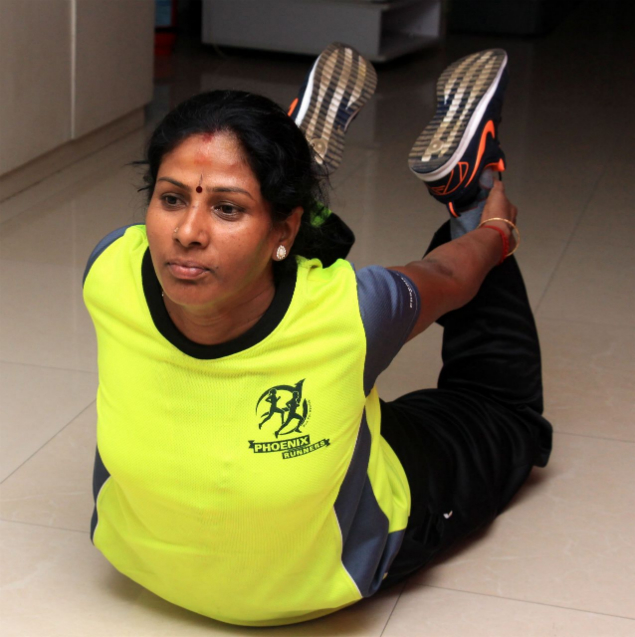
Kalaimani, who runs a tea stall in the city, has been participating in 21-km marathons with her team ‘Phoenix Runners’. She never misses her morning workout sessions; every Sunday she runs for 21 km as part of her practise to achieve her goal, the 41-km marathon. “I want to complete the 41-km marathon in four hours,” said Kalaimani. She has participated in national and state level Masters athletics events and won four gold medals.

Kalaimani, a native of Pudukkotai, had studied up to Class X; in school she used to participate in kabadi and athletics events. She got married when she was 20 to P Azhagu. “I told my husband that I would continue to pursue athletics. He agreed,” she said.

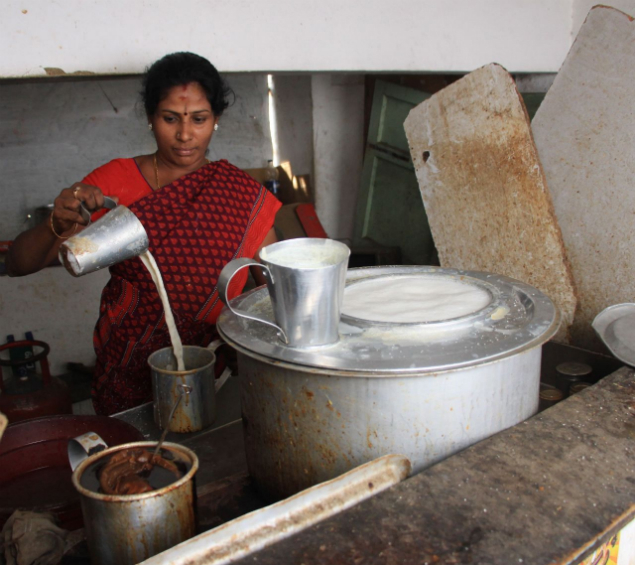
Since marriage, she has been assisting her husband to run the tea shop in Telungu Street – Thomas Street corner in the city. Kalaivani, who is the master in the tea stall, has two sons – A Prabhu, 24, A Prabhakaran, 21, both school van drivers – and A Priyanka, 19, who is studying BSc. “Ten years ago, my husband came to know about Masters athletics events and asked me to participate.
I was not aware about such an event and approached many people. Finally, I was brought under the tutelage of coach Joseph who made me to participate in district, state and national level athletic events for Masters,” she said.

Trained in 400 metres and 800 metres sprinting events, she won three gold medals in a state level athletic meet held at Pugalore in Karur district in December 2017. She also won gold in the 800 metres event in the National Masters Athletic Championship held in Coimbatore in 2014. She won the third place in the 1,500 metres event in the national meet.

I am keen on taking part in marathons. So, I joined the Phoenix Runners team and took training for the marathon. I used to wake up at 4am and prepare breakfast for my family. Around 5am, I used to drop my husband at the tea stall and go for practise. Every Sunday, our team members cover 21km. Now I am taking special practise to run 41km,” she added.

Kalaimani won the first place in the 21-km marathon held at Annur last month. “I want to take part in marathons across the country,” she said.

“Many women who have been active in the athletics circuit sacrifice their dream after marriage for the family. They should come forward and there are lots of opportunities for people of all ages in the Masters athletic championships,” said Kalaimani.
(Photo credit: Jackson)

source: http://www.timesofindia.indiatimes.com / The Times of India / News>City News> Coimbatore News / TNN / April 07th, 2018

Commonwealth Games: India’s gold count doubles at Gold Coast

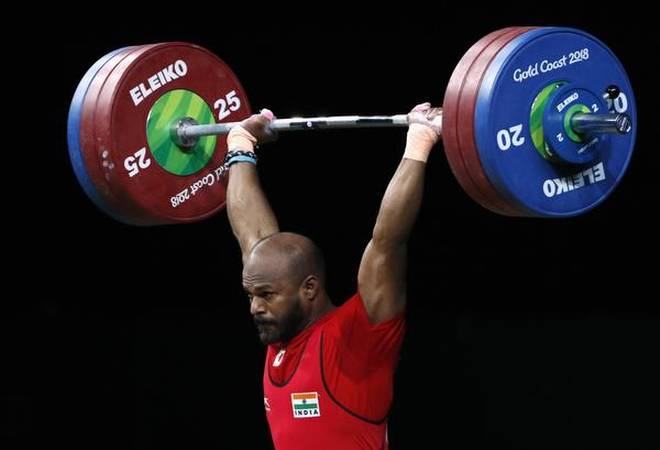
Weightlifting - Gold Coast 2018 Commonwealth Games - Men's 77kg Final - April 7, 2018. Sathish Kumar Sivalingam of India competes. | Photo Credit: Reuters
Weightlifting – Gold Coast 2018 Commonwealth Games – Men’s 77kg Final – April 7, 2018. Sathish Kumar Sivalingam of India competes. | Photo Credit: Reuters

Satish Kumar in 77kg and Venkat Rahul in 85kg give India a double delight

Two young men — Satish Kumar Sivalingam and R. Venkat Rahul — gave India a double, winning the men’s 77kg and 85kg weightlifting titles at the XXI Commonwealth Games at the Carrara Sports Arena 1 here on Saturday.

The two medals took the country’s gold count to four and a total of six, with the silver and bronze won P. Gururaj (56kg) and Deepak Lather (69kg) besides the gold that Mirabai Chanu and Sanjita Chanu won over the last two days.

High expectations

Labelled a heavyweight in the sport, the expectations were high as the third day’s events began. Satish and Venkat shaped up nicely to finish on the top of the podium. The only disappointment was Vandna Gupta (women’s 63kg), who finished fifth.

In the men’s 77kg category, Satish faced a few problems before stamping his class. The 25-year-old from Vellore, Tamil Nadu, had suffered an injury a couple of months ago and with doubts persisting about a possible recurrence, his preparations were low key.

However, into the competition, Satish got into the lead with a lift of 144 in snatch, improving through lifts of 136 and 140, before clinching the gold with 173 in clean and jerk for a total of 317. He was 5kg clear of Jack Oliver (England) who finished second, while Francois Etounde (Australia) took the bronze.

It was understandable that Satish was unable to improve on his gold-winning performance (total of 328) at Glasgow 2014, even as he dedicated the medal to this parents. “They are the greatest source of motivation I have to pursue this sport seriously,” he said.

Venkat, 21, was tied with Don Opeloge of Samoa at 151kg after the first stage (snatch) of the competition, but as Opeloge faltered in clean and jerk, it made things easier for the lifter from Stuartpuram, Andhra Pradesh.

Venkat, who started with 147 in snatch, could only manage an improvement of four kilograms as he failed in his second attempt.

In clean and jerk, he started off with 182kg and getting this right helped him take the lead. Another good lift of 187kg put pressure on his Samoa rival, who wilted.

The results:

Men: 77kg: 1. Satish Kumar Sivalingam (144, 173: 317), 2. Jack Oliver (Eng, 145, 167: 312), 3. Francois Etounde (Aus, 136, 169: 305).

85kg: 1. R. Venkat Rahul (151, 187: 338), 2. Don Opeloge (Sam, 151, 180: 331), 3. Muhammad Mohdad (Mas, 145, 183: 328).

source: http://www.thehindu.com / The Hindu / Home> Sport> Other Sports / by A. Vinod / Gold Coast, April 07th, 2018

2,500-year-old rare circular labyrinth found near Hosur

With a complicated network of paths, labyrinths have been a fertility symbol associated with many cultures

Chennai :

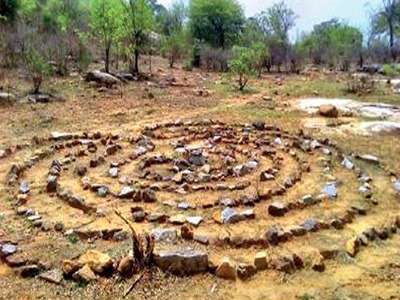
A rare circular labyrinth, about 2,500 years old, has been discovered at Kundhukottai, a remote village 55 km from Hosur in Krishnagiri district. It was after hearing from a shepherd about a strange circle of rocks in Kundhukottai, hero stone expert Sugavana Murugan and archaeological officer of the Krishnagiri Historical Research Centre S Paranthaman set off to the village a week ago. Since the village is situated close to the forest, they trekked more than six km to reach the site, crossing mounds of dry elephant dung on the way.

Soon after the discovery, the duo sent the details with pictures to Jeff Saward, a London-based expert in the field of labyrinths and mazes, for his opinion. After studying it in detail, Saward said it must be more than 2500 years old. With a complicated network of paths, labyrinths have been a fertility symbol associated with many cultures. They represent a unique pattern of consciousness and have been used as meditation tool since the Neolithic period.

“We discovered labyrinths in spiral and rectangular shapes, but this is the first time we have come across one in circle shape. Experts like Saward said it’s one of the oldest forms of labyrinths. We have to study the rocks in detail to find the exact age,” said Sugavana Murugan, who had discovered a rectangular shaped labyrinth in Kambainallur in Dharmapuri and a spiral one in Kundhani in Krishnagiri district in 2014 and 2016 respectively.

People used to worship labyrinths for various reasons. A labyrinth has seven paths and one has to come out through the right path. Even though it is difficult to find one’s way inside a labyrinth, it is believed that those who come out through the right path are blessed by the god. “People used to worship labyrinth to be blessed with a child, or to attain success in their pursuits and for long life for their cattle,” said Murugan.

After verifying the photographs, T Satyamurthy, former superintending archaeologist of the Archaeological Survey of India (ASI), said the labyrinth in circle shape was an interesting discovery. “It’s a promising one. But we have to conduct further excavation on the site to find the age and the actual role played by this labyrinth in the life of people those days,” he said.

The labyrinths and mazes, according to Saward, have been found to be in existence since the Neolithic period. “Maze is a multi-curved category where we have multiple pathways to reach our goal, whereas in labyrinths there is only one pathway which leads inexorably to the goal from the point of entry,“ said Saward, who is editor of `Caerdroia’, the journal of mazes and labyrinths. EOM

source: http://www.timesofindia.indiatimes.com / The Times of India / News> City News> Chennai News / M.T. Saju / TNN / April 10th, 2018