Culmination of work by several people, says Australian Minister
The Indian Institute of Technology – Madras has tied up with the Deakin University of Australia to conduct research in metallurgy and manufacturing materials.
The Centre of Excellence in advanced materials and manufacturing was officially inaugurated on Wednesday by Philip Dalidakis, Minister for Trade and Innovation, Victoria. The partnership with Deakin University happened because of the vision of a group of people. “In 1994, Deakin University reached out to the Indian market. It was the first Australian university to come to India. Today is the culmination of a lot of work by a lot of people,” Mr. Dalidakis said.
The association with Deakin University was the oldest and most developed one, said IIT-M director Bhaskar Ramamurthi. The institute was keen that the centre take forward the relationship to research and development by including the industry and introduce “some really good innovation” that would reach the public.
The centre was housed in the research park “to constantly remind ourselves that the main goal is to achieve the outward thrust toward industry in the form of product and innovation start up,” Mr. Ramamurthi said.
B.S. Murty, professor at the Department of Metallurgical and Materials Engineering at the institute, said the aim was not only to collaborate and have a tripartite programme and work with industry, but also to conduct joint doctoral and masters programmes.
Youngsters would be trained in materials manufacturing and metallurgy and the centre would also sponsor internships. Already, an alumna had offered to sponsor 10 students for internship at the IIT-M, especially from smaller universities in and around the city, he said.
source: http://www.thehindu.com / The Hindu / Home> News> Cities> Chennai / by Special Correspondent / Chennai – March 15th, 2018
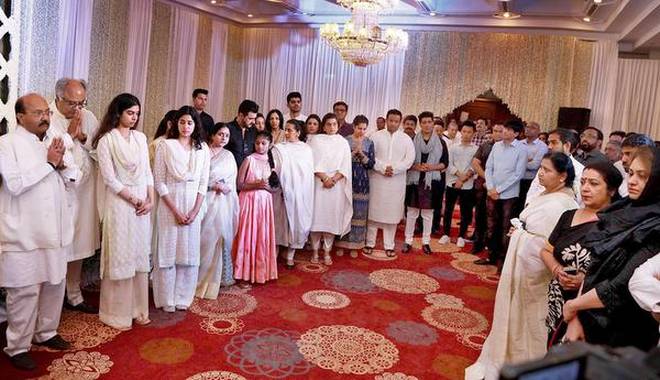
Paying homage: Friends and family members of Sridevi at the meeting on Sunday.
A prayer meeting was organised for actor Sridevi, who died recently, by her family in the city on Sunday evening.
The private meeting saw several members of the Tamil film fraternity attend and offer their condolences. Actors Suriya, Arun Vijay, Prabhu Deva, Jyotika, Meena, Raadika Sarath Kumar and Suhasini Mani Ratnam, fashion designer Manish Malhotra and Lata Rajinikanth were among those who attended the meeting.
Sridevi’s husband Boney Kapoor and their daughters Jhanvi and Khushi had come for the meeting from Mumbai.
Earlier in the day, actor Ajith and his wife Shalini met the family.
The South Indian Artists Association (SIAA) organised a condolence meeting on Sunday morning in which several office-bearers and members, including actors Bhagyaraj, Sivakumar, Sripriya and Ambika were present.
source: http://www.thehindu.com / The Hindu / Home> News> Cities> Chennai / by Staff Reporter / Chennai – March 12th, 2018
Noted historian and retired history professor of MKU R Venkataraman, who used to guide heritage walks and is well known for his lectures on history of Madurai, passed away on Tuesday night due to a heart ailment. He was 85-years-old.
Madurai Chapter of INTACH mourning his death observed that he was highly knowledgeable historian who discovered many ancient Jain sites around Madurai. Though born in Hindu family, he was touched and inspired by the philosophies of Jainism. It is indeed a huge loss not only for Madurai, but for the field of studies, archaeology & history, the forum observed.
“It is a great loss and the history sessions will never be same without him”, commented K P Bharathi, consultant of DHAN’s tourism for development. At 85, Venkataraman was hale and hearty guiding the heritage walk in January but he started falling ill due to high creatinine level. He was admitted in a private hospital twenty days ago and suffered two heart attacks in the ICU. He passed away late Tuesday night and his mortal remains were cremated on Wednesday afternoon.
source: http://www.timesofindia.indiatimes.com / The Times of India / Home> News> City News> Madurai News / TNN / March 08th, 2018
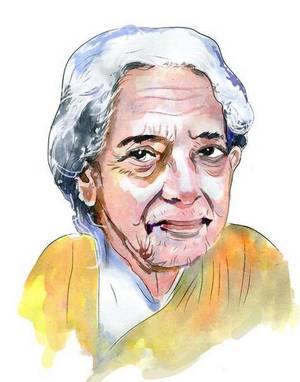
The first Indian woman botanist, E K Janaki Ammal, ought to be more widely known for her huge contributions to science. But she remains unknown within the country and outside academic circles and even our textbooks have failed to teach our children about her glorious scientific history
: Just a fortnight before the International Women’s Day, the John Innes Centre in Norfolk, UK, announced a new scholarship for post-graduate students from developing countries in honour of an Indian woman botanist. Under the scheme, 88 applicants who wish to study plant and microbial sciences can apply in commemoration of the distinguished work and contributions of Dr.E.K.Janaki Ammal who was an international alumni of the leading research and training centre between 1940 and 1945.
A heart warming gesture from an institution abroad, but may be India should have done something similar for the country’s first home grown woman scientist, who went overseas and returned accomplished breaking every caste and gender barrier through her work.
Just take a moment to think where we would be without the inventions of this brilliant mind.
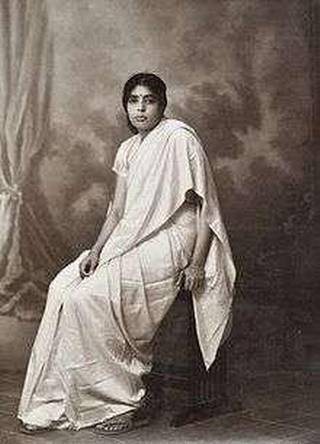
Janaki Ammal in younger days | Photo Credit: Special Arrangement
After laborious crossbreedings in the laboratory of Sugarcane Breeding Institute in Coimbatore in the 1930s, she created the indigenous variety of sweetened sugarcane that we consume today. Till then India was producing sugarcane in abundance and yet importing as they were not as sweet as the ones grown in the Far East.
During the World War II bombings in the 1940s, she continued her phenomenal research into chromosomes of thousands of species of flowering plants at the John Innes Horticultural Institute, Norfolk, where she worked with some of the best names in cytology, genetics and botany . While working on the gorgeous Magnolia, she co-authored The Chromosome Atlas of Cultivated Plants with renowned biologist CD Darlington.
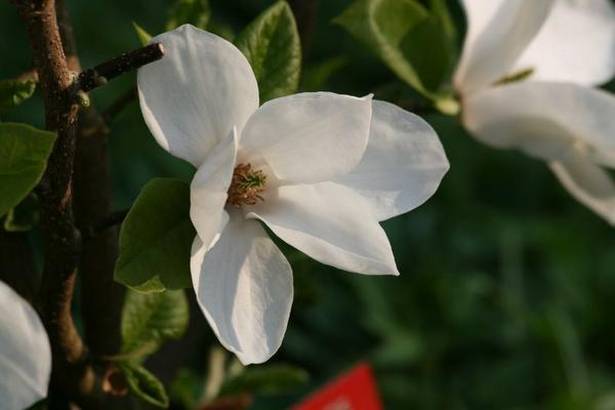
The magnolia saplings she planted on the Battleston Hill in Wisley continue to bloom every Spring and one of the pure white blooms is named after her, the Magnolia kobus Janaki Ammal and apparently only few nurseries in Europe have the variety today.
At a time when most Indian women did not even attend school, she received scholarship and obtained her MS from University of Michigan in 1925 and later returned as the first Indian Oriental Barbour Fellow. She remains one of the few Asian women to be conferred honorary doctorate (DSc. honoris causa) by her alma mater in 1931. There she discovered a new variety of brinjal that exhibited triploidy instead of the normal diploid, where there are two sets of chromosomes in the cells.
The flower Magnolia Kobus Janaki Ammal | Photo Credit: Special Arrangement
At the insistence of Prime Minister Jawaharlal Nehru, she returned to India in the 1950s and restructured the Botanical Society of India travelling to several remote areas of the country in search of the plant lore of the indigenous people and scouting for medicinal plants in her home State, Kerala.
A fascinating figure of the early 20th Century she was. E.K.Janaki Ammal lived a life which perhaps very few women of her time could dream of. The distinguished geneticist, cytologist, global plant geographer studied about ecology and biodiversity too and did not fear to take on the Government as an ardent environmental activist. She played an important role in the protests against the building of a hydro-power dam in Kerala’s Silent Valley in the 1970s. She made a mark with her paper on “Man’s Role in Changing the Face of the Earth” at an international symposium in Princeton in 1955 and two decades later, she was awarded the Padmashri in 1977.
With a profile like hers, Janaki Ammal never got into spotlight. If anything she fought her status as a single woman from a caste considered backward and problems with male mentorship in her field. But she proved through her work that Science knows no caste, gender or social boundaries.
Yet for her extraordinary journey from small town Thalassery to the finest institutions across the world, there is no archive related to her in India. Her papers are available only in hard copy at the Bodleian Library in Oxford, according to Vinita Damodaran, who teaches South Asian History at University of Sussex and has also published a well researched paper on “Gender, race and science in twentieth century India: E.K.Janaki Ammal and the history of science.”
Luckily, the Nikari series of talks held under the banner of ‘Manarkeni’, a Tamil research journal, brings to light the works of lesser known women in different fields. In the previous years, the focus was on women in literature and history. This year it chose science and brought the story of Janaki Ammal to the fore.
The talk delivered by S Krishnaswamy, former professor at the School of Biotechnology, MaduraiKamaraj University, highlighted various stages of Janaki’s career both in India and overseas. “Her career shows that scientists must speak their mind with social consciousness even if it means going against the policies of the government. In today’s context, it becomes necessary to bring achievers like her to the forefront,” he asserts.
Janaki Ammal must have conquered her fears and broke the glass ceiling for a rewarding career in science. “She wanted to be known only through her work. Let her work be known to all successive generations, who have much better opportunities” says Krishnaswamy.
An inspiring role model, Janaki Ammal passed away in 1984 at the age of 87 at Maduravoyal near Chennai, while working in the field laboratory of the Centre for Advanced Study in Botany, Univerity of Madras. She perhaps did not receive the acclaim she deserved but devoted herself to research, opening up a universe of possibilities. Let our children not be bereft of that knowledge. It is worth knowing and remembering leaders in science like Janaki Ammal.
source: http://www.thehindu.com / The Hindu / Home> Society / by Soma Basu / Madurai – March 09th, 2018
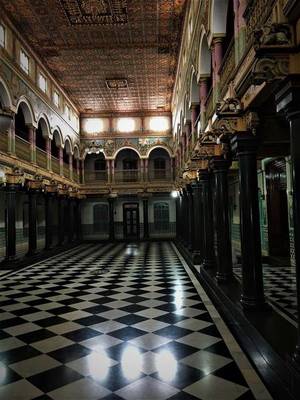
The pillared hall at the Periya Veedu in Athangudi
Despite its popularity, the Chettinad region, known for its architecturally distinct mansions and temples, still throws up surprises for the heritage lover
Chettinad, which gets its name from the cluster of 75-odd villages occupied by the Nattukottai Chettiar community, is known for its splendid mansions and temples.
Visiting Chettinad, also well-known for its antiques, makes for a different kind of outing. Then there are the stories of crumbling yet vibrant mansions, forgotten traditions, and of younger generations that have moved away to other parts of the world.
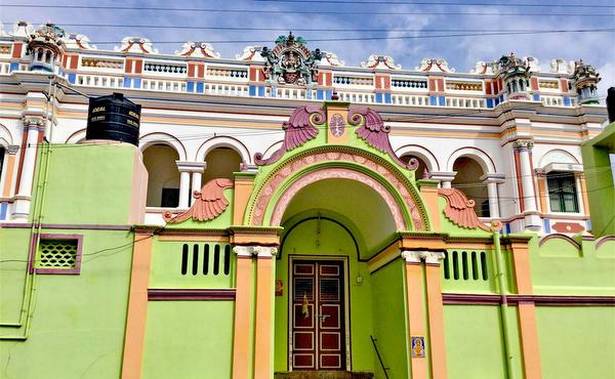
Many of the mansions are unoccupied but far from crumbling, and left in charge of caretakers, who charge a nominal fee to let tourists explore them. Those families that do not wish to throw open their doors to the public, keep their premises under lock and key. But because these mansions tower over the compound walls, it offers the visitor a chance to soak in the exterior beauty of these grand homes. The Chettinad Palace’s exterior, with its stark white walls that contrast with accents in vivid primary colours, is arresting and worth a visit.
The inside world
There are many features that are common to most of these stately structures. The use of coloured glass in the door and window panes, stucco work on the roof fashioned like gods, goddesses, elephants and other mythical beings (colour painted in detail), iron gates painted bright silver, decorative railings and awnings, all contribute to the grand stature of these buildings.
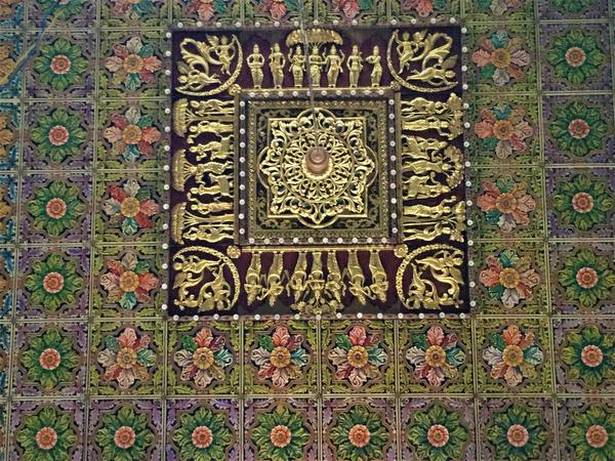
Some of the most opulent mansions in this area are in and around Karaikudi, Kanadukathan, Athangudi and Devakottai. The Periya Veedu at Athangudi is among the most well preserved homes open to the public. From the black-and-white Athangudi tiled flooring to the exquisite ceiling covered in embossed craftsmanship, the place leaves you lost for words. Bevelled glass mirrors from Murano, teak and lacquerware from Burma, vie for attention, as one walks through the mansion. Here and there, there are columns and window frames brightened with flower motifs inspired from Baroque paintings.
CVRM and CVCT house are twin homes belonging to different members of the same family. Only one of them is open for viewing, and the lady who looks after the place points out the various objets d’art and shows the view of the village from the terrace. The large homes belonging to Meenakshi Meyappan and her parents always welcome visitors. The colours of these homes range from the natural brick and weather-aged brown, to those that are gaily painted to include pinks, lilacs and mint.
Temple trail
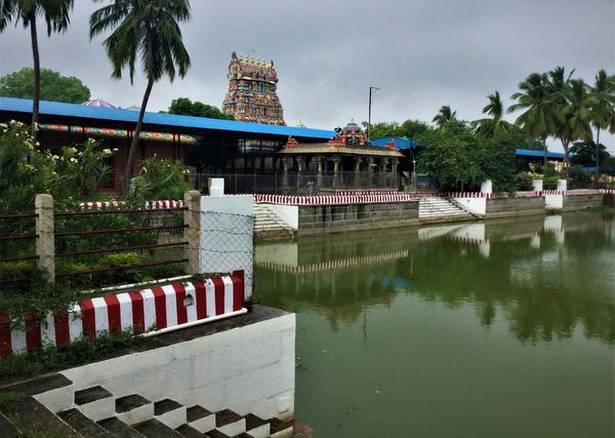
The temple gopurams too carry this sort of vibrancy. The Chettiar families continue to maintain and patronise a large number of temples in the region. The insides of these temples are clean and there is no one demanding alms. The thepakulams beside the temple are well constructed and add to their beauty.
The Pillayarpatti rock temple, home to the famous Karpagavinayagar, attracts a steady stream of people through the day. The Meenakshi Sundareswarar temple (Shiva temple) is being restored, yet is open to visitors. Both temples stand as a proud testament to the stone work done by artisans. The Kundrakudi Murugan temple is another place of worship worth visiting.
source: http://www.thehindu.com / The Hindu / Home> Life & Style> Travel / by Shanthini Rajkumar / March 07th, 2018
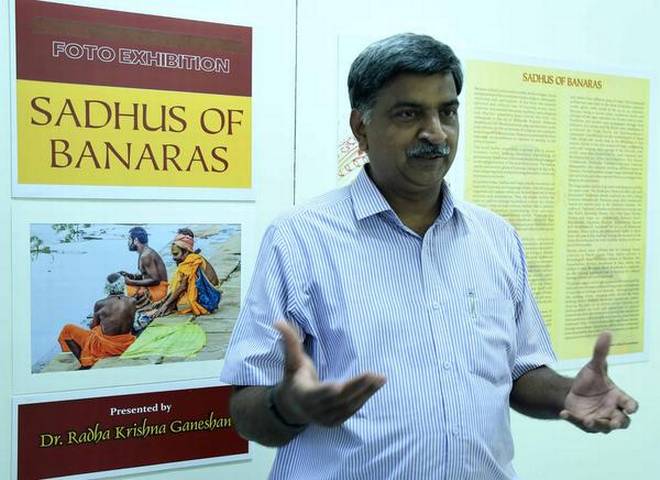
Photo exhibition highlights the life and practices of the sadhus living in the oldest city of the country
For three generations, Radhakrishna Ganeshan’s family, after moving from Tirunelveli, has lived in the holy city of Varanasi. Pursuing his passion for art and music, he graduated from the Banaras Hindu University in Applied Arts from the Faculty of Visual Arts in 1984 and later completed Masters degree in 1986.
Holding several diplomas in disciplines including painting, music, interior decoration, photography and computer designing from the oldest city, Mr. Ganeshan brings to the former French enclave the share of his world through ‘Sadhus of Banaras – Hidden Discovery of the City,’ a photo exhibition at Aurobindo Ashram Gallery on the beach road.
Growing up on the banks of Ganga river in Varanasi, which he calls ‘the city of subjects’, Mr. Ganeshan would be out every Sunday before dawn with his camera, walking through the lanes across 84 ghats in Varanasi to document the lives of sadhus. “In all these ghats, there are different sadhus. Their personalities, practices differ from each other and I am concerned that this heritage would be lost in the fast urbanisation of Varanasi. With industrialisation and tourism attracting thousands, I felt the need to preserve this heritage through photographs,” he says.
This exhibition is the first of his thematic exhibitions where he has tried to capture different moods of the sadhus whose lives are always shrouded in mystery and represents a world of detachment.
The exhibition gives a closer look at the mundane activities of sadhus, capturing the differences in their practices, identifying every sadhu including an aghori, a sanyasi marvadi, a shaiva sadhu, a vaishnava sadhu or a young sadhu with their uniqueness.
There are more than 60 portraits and photographs of sadhus at the photo exhibition organised by the Indira Gandhi National Centre for Arts. The exhibition will be held for a week beginning from March 5.
source: http://www.thehindu.com / The Hindu / Home> News> Cities> Puducherry / by S. Senthalir / Puducherry – March 07th, 2018