Rent a cent, reap a harvest

Chennai:

Red diamonds, he calls them. The fruits of his labour. And since January, Gopinath Jayaraja and his coterie of city farmers have harvested three tonnes of this precious commodity. Incidentally, it has also made his idli-dosa batter taste spectacular.

During Pongal 2017, Jayaraja and friends decided to try their hand at community farming on a leased land near Chengalpet, calling the initiative Valam 1.0, after the organic produce store they run in Chennai. Their first crop — the red diamonds, a native rice grain called poongar. “We sell organic products from our Tirunelveli farm but found customers in Chennai were interested in trying their hand at farming. So, for Valam 1.0, we got people to invest in leasing five acres from a farmer to cultivate rice,” says Jayaraja, who farms part-time, and works full-time at an IT firm.

With 54 investors joining in for round one, Jayaraja has begun preparing ground for Valam 2.0 near Mambakkam. “At the end of the crop cycle, investors share the harvest with everyone taking home a certain amount of organically grown native rice. The idea of farming draws people in. Most of those who put in their money, also put in their time working the land along with the farmer who owns the land,” says Jayaraja.

The Valam collective is one of several mini urban-rural joint ventures cropping up across TN, which not only encourage organic farming and give city-dwellers a chance to explore their entrepreneurial side, but also help rural farmers who are in dire straits financially.

Anything that gives financial respite to farmers is an encouraging trend, believes Dr M Maheswaran, director of research, TN Agricultural University, Coimbatore. “Many from the IT industry are getting into organic farming and collaborating with farmers. The government too is facilitating it,” he says.

At Valam, land is leased from a farmer who also works at the collective, thereby earning him a steady income, apart from what he makes from the rest of his farmland. Divya Shetty and Vishnu Vardhan of Indian Superheroes (ISH) from Coimbatore, started a similar venture a few months ago, where people can rent out a portion of farmland for three months to a year. “We have 823 organic farmers on board and have got several NRIs to book farmlands, which they want to cultivate whenever they come down,” says Shetty, 27, a management graduate whose grandparents were farmers. ISH also runs weekend workshops with farmers to generate interest in sustainable agriculture.

Ilumurugan, a farmer who has signed on with ISH, says doing workshops has not just given him a second stream of income but a voice too. “When people from the city work on the farm, they understand the effort we put in. I don’t know how much of a steady income it will generate but at least I see respect in their eyes at the end of every interaction,” says the 22-year-old, who has a 15-acre farm where he grows turmeric, cotton and sugarcane.

At ISupportFarming, a community initiative in Cuddalore and Virudhunagar, co-founders and brothers Vijaykumar and Vasanthkumar Mani see themselves as a “hinge” between the disjointed worlds of the officegoer and the farmer. Here, all the working capital is given by people from the city, and the farmer who owns the land does the work, while we monitor the process, says Vijaykumar, an HR consultant with a farming background.
“The farmland is evaluated on aspects like water facilities, and farmers on social credibility before they are signed on. After the harvest, farmers get 80% of the returns, investors get 15%, and we take 5%,” says Vijaykumar, adding that they are now working with 80 farmers, 50 investors, and 250 acres of land, growing paddy, maize, groundnut and watermelon.

Vijakumar says the average investment to cultivate one acre through one crop cycle of three to four months is `25,000. “Most of our investors are IT professionals and each of them usually puts in `5,000. At the end of a quarter, we divide the profit and they can choose to reinvest or pull out,” says Vijaykumar.

But for investors like Gokulavan Jayaraman, for whom farming is the ‘ultimate dream’, pulling out is nowhere in the picture. “I started a year ago with an investment of `5,000, not expecting anything other than the satisfaction of helping a farmer and spending time working in fields with my family. I was surprised to realise farming was also giving me financial returns, 12% in the first year,” says Jayaraman, lead auditor at a city IT firm.

“I’m now in this for the long run,” he adds. And of course, the organically grown watermelon he brought home from his farm is just the more mouth-watering piece of that pie.

source: http://www.timesofindia.indiatimes.com / The Times of India / News> City News> Chennai News / TNN / November 11th, 2017
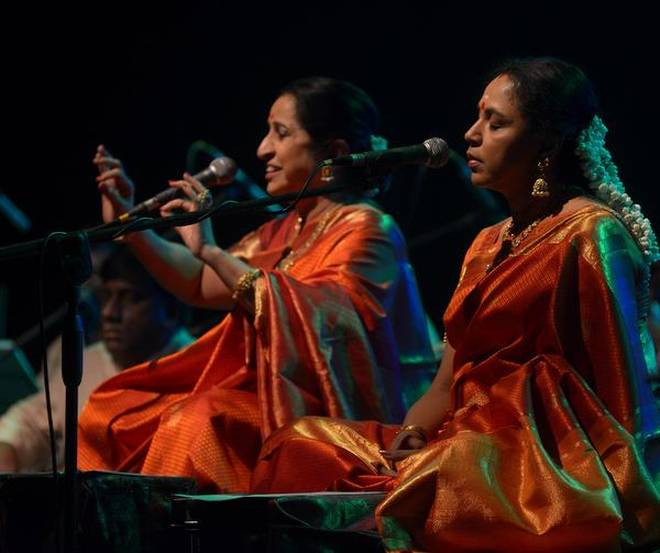
Chennai is now part of UNESCO’s ‘creative cities network’

Chennai’s contributin to music hailed.

The world body recognises the city’s rich musical tradition.

It’s a feature Chennai has always flaunted with pride. And now, it has got international recognition. The city has been included in the UNESCO Creative Cities Network for its rich musical tradition.

On Wednesday, Prime Minister Narendra Modi tweeted, congratulating the city: “Chennai’s contribution to our rich culture is precious. This is a proud moment for India.”

A total of 64 cities from 44 countries have joined the UNESCO Creative Cities Network, the organisation’s website said.

“They join a network at the frontline of UNESCO’s efforts to foster innovation and creativity as key drivers for a more sustainable and inclusive urban development,” it stated.

Gastronomy, music, crafts and folk art, media arts, design, film and literature are the seven fields of creativity highlighted by the network, which now has a total of 180 cities in 72 countries.

Jaipur and Varanasi are the other Indian cities that feature on the list.

Chief Minister thanks PM

Tamil Nadu Chief Minister Edappadi K. Palaniswami, in a statement, said “the people of Chennai love their music and it is a part of their culture and tradition”. He thanked Mr. Modi for “congratulating the people of Chennai for this unique distinction.”

Carnatic vocalist Bombay Jayashri said, “This truly is a moment to remember each and every artiste of the varied forms who have laid the bricks to build this musical empire. A haven for the classical music, popular music, music for dance and theatre and folk, we revel in the arts.”

Ghatam vidwan ‘Vikku’ Vinayakram said the city and its sabhas had played a very important role in bringing together Carnatic musicians from all over the country and abroad. “In the beginning, there were very few sabhas, but now, there are many. And even the very small ones help in propagating Carnatic music. The December music season is something very unique to this city and even for persons from other countries; it is a matter of pride to perform during it,” he said.

Tamil Development Minister Ma Foi K. Pandiarajan said, “Chennai, as a cultural capital of India, is built on its music and dance culture. We are delighted that UNESCO has recognised it.”

source: http://www.thehindu.com / The Hindu / Home> News> Cities> Chennai / by Special Correspondent / Chennai – November 09th, 2017

Export award for Coimbatore firm

Engineering Export Promotion Council has recognised Coimbatore-based KU Sodalamuthu and Co for the regional export award for 2015-16.

The company manufactures paper conversion machinery for production of paper cones, tubes, edge protectors and pulp moulded products.

It claims to be a market leader in India, apart from exporting to more than 60 countries, said its Managing Director K S Balamurugan.

source: http://www.thehindubusinessline.com / Business Line / Home> News / The Hindu Bureau / Coimbatore – November 06th, 2017

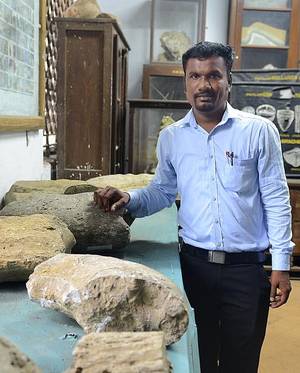
School of rock: in conversation with geologist C Singaraja

GeologistCF08nov2017

Award-winning geologist C Singaraja explains how what’s happening beneath our feet impacts our lives and health

It’s Shawshank Redemption in real life. Or, if you prefer, Erin Brockovich. In the first, a banker (Tim Robbins) charged with murder is sent to a high-security prison where he uses his fine knowledge of rocks to dig a tunnel and escape.

In the second, based on a true story, Erin Brockovich, a law-firm assistant (Julia Roberts) investigates a chemicals company that releases untreated hexavalent chromium thus contaminating groundwater and jeopardising the health of local residents.

Geologist Dr C Singaraja was recently conferred a Dr APJ Abdul Kalam prize for Young Scientist — 2017, by Marina Labs R&D, Chennai, a Medical Research Center and Biotechnology Company. The award was given in recognition of his study of groundwater. Rocks, water, contamination: how does he join the dots?

“I did my graduation and post graduation studies in Thoothukudi, and moved to Annamalai University for my M.Phil and doctorate work,” he says. “My paper for MPhil was on how tidal variation affects groundwater along the Cuddalore coast. My PhD thesis on the other hand was on the hydro-geo chemistry of groundwater in Thoothukudi district. This place has sea-water intrusion and heavy-metal pollution by industries. I checked the land for the presence of radon and fluoride and their effect on groundwater.”

He listed the findings. Groundwater is impacted by salt content in coastal regions. In inland areas the weathering of bed-rock leaches mica, fluorite and fluoro-apatite into groundwater. The report educates panchayats and builders about water quality, and the reasons why it gets contaminated.

Singaraja also worked as an assistant on a project that surveyed soil in Thoothukudi, Dindigul, Krishnagiri, Nagapattinam, Puducherry and Villuppuram. He prepared a groundwater quality index, and pointed to where people could find good aquifer zones.

The team tested and labelled water quality region-wise based on scientific parameters. “In Cuddalore district we showed how tidal waves and salt-pans impacted water salinity, and how this affected sea creatures. We devised a method to remove excess fluoride from water using natural materials,” he says

Since 2009 Singaraja has been part of several soil-testing projects and has written 40 papers on hydro-geology. “Rocks don’t change for millennia, but water content does, indicating what’s happening beneath our feet and how it impacts our lives and health.” He also studies what he calls medical geology. “It looks into the health effects of rocks,” he explains. For example, granite, a source rock, contains naturally-occurring uranium and radon, and exposure to weather makes uranium radio-active and radon into gas. These run into groundwater, making it unsafe.

Doing research on water quality in 100-plus villages was memorable. “Some villagers noticed the instrument we dipped in the water and accused us of poisoning their sources. Others knew what we were doing and asked us to check the water in wells in their homes. Still others requested us to bore wells for them. We helped farmers identify zones to dig for water.” That’s a lot of passion in someone who calls himself a reluctant geologist. “I wasn’t sure what I wanted to do after school. A cousin had studied Geology and was doing well with the Geological Survey of India. I joined VOC, Thoothukkudi, which has a well-known 85-year-old Geology Department. I soon warmed up to my subject.”

Talking about the water in Chennai, he says boiling drinking water will make it salt-free. “Store can water in porous mud pots, so the pH increases through air circulation. It’s good for health. Check common water for fluoride. Beyond 1.5 mg/litre it could cause yellowing teeth and problems with bones.”

He adds, “Never buy land or construct houses without first testing the soil for curability; and water for elements within permissible levels. Certain types of soil swell with water and shake the foundation. The effects of groundwater contamination show up slowly after regular intake. Rain-water harvesting purifies groundwater. So opt for preventive measures.”

He adds, “Geology is currently an important subject. Future wars will be fought over fresh water… Research on groundwater components can get you two Nobels — for Science and for Peace.”

source: http://www.thehindu.com / The Hindu / Home> Society / by Geeta Padmanabhan / November 06th, 2017

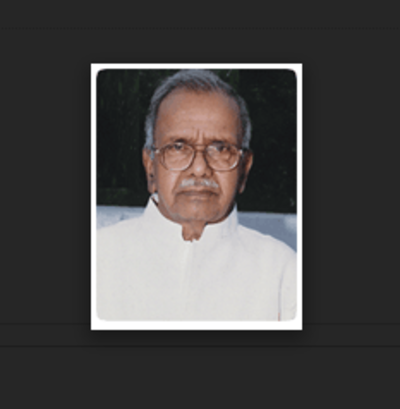
M Nannan, famous Tamil teacher, dies aged 94

M Nannan
M Nannan

Chennai :

M Nannan, who kindled an interest among people to learn Tamil through his famous ‘Tamil Karpom’ programme on Doordarshan in the 1980s and 1990s, died at his residence in Chennai on Tuesday due to aged-related illnesses. He was 94.

Nannan, who was a Tamil professor at Presidency College in Chennai, had written several Tamil textbooks. He was the recipient of Tamil Nadu government’s Periyar, Thiru Vika and Anna awards.

Born in 1924 in Cuddalore district, he started following Periyar and later joined the DMK. He participated in the anti-Hindi protests in 1965.

Political party leaders condoled the death of Nannan. “Nannan’s death is a great loss for the Dravidian movement. Apart from being a Tamil teacher, he was also involved in propagating Periyar’s teachings,” said DMK working president M K Stalin in a statement.

Stalin said DMK chief M Karunanidhi had entrusted him the responsibility of propagating the Tamil language and Periyar’s teachings in the party.

PMK chief S Ramadoss said, “Nannan was a famous Tamil professor and a good friend of mine. He started his career as a primary teacher and later he became the chief of Tamil department in college. He also created a separate type of teaching called Nannan Murai.”

AIADMK leader T T V Dhinakaran tweeted: “We have lost a Tamil expert in the death of Prof Nannan. His death cannot be replaced.”

source: http://www.timesofindia.indiatimes.com / The Times of India / Home> News> City News> Chennai News / by Abdullah Nurullah / TNN / November 07th, 2017

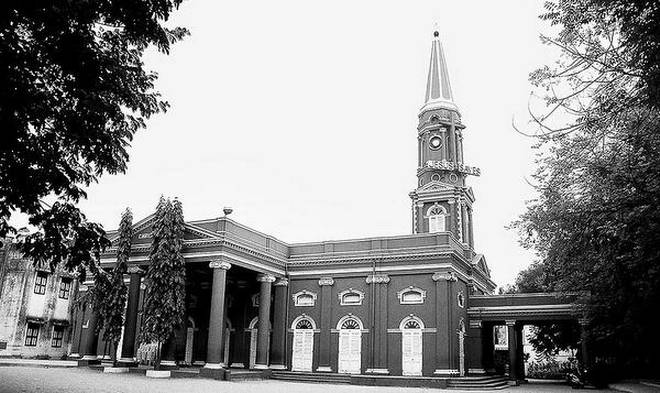
The Mount Road School in Chennai

MadrasSchoolCF07nov2017

The East Indians, as Anglo Indians were known till 1911, were well served by schools and churches in almost every locality where they were in numbers. In New Town and Vepery areas, near where they served in the General Hospital and Gun Factory, the German missionaries representing the Society for Promoting Christian Knowledge had done their bit. In Royapuram, the railway and harbour employees were well served by St Kevin’s and St Peter’s. And in Perambur, the railway hub, there was the Railways School and the Lourdes Shrine, all serving Protestants and Catholics. But where the poorest East Indians lived, in the Narasingapuram, Chintadripet, Pudupet and Royapettah areas there was nothing between St Mary’s in the Fort and St George’s Cathedral for those who worked in stables like Waller’s, coach-builders like Simpson’s, as printers in Addison’s, and sales-clerks in Spencer’s and Higginbotham’s. That was till the Rev Henry Taylor arrived in 1842 and was temporarily posted to sahibdom’s St George’s.

Struck by the poorer East Indians’ conditions in the Round Tana area, Taylor rented a room there in July 1842 and commenced worship and primary classes. That will on November 26, be celebrated as the 175th anniversary of Christ Church, Mount Road, and its school. Growth followed thanks to Thomas Parker Waller who owned a large stable and coach rental here. When a building and compound he offered the new institution was deemed too small, he negotiated exchange of a part of his estate for an adjacent property and gifted in perpetuity the latter, then worth ₹ 12,000, to the new church. Here, Taylor’s successor, Rev Robert Carver (Miscellany, February 6) established in 1843 two schools called the Mount Road Male and Female Schools, to be duly called the Christ Church School. Another building in this property was used for worship. Work on the church began in 1850 to John Law’s design and Christ Church, Mount Road, was consecrated in 1852. The Church, including furniture from Deschamps, then a leading furniture maker, cost ₹ 37,000.

Remembered in the Church with a memorial tablet and in the name of a primary school opened in 1986 is TP Waller. Another tablet, one in the porch, remembers his son, a veterinarian, who died in 1830. Connected or not, another Waller name figures in the School’s history; Bishop Edward Waller (1922-41) helped the school considerably with Diocesan funding.

Funds were till the 20th Century a constant problem for the School. Typically, an 1854 note showed expenses being ₹90 a month and school fees only about ₹30 from around 120 students! It was a poor school with poorer children. This lack of funds was to over the years affect the character of the school, which kept shuttling between being a middle school and a lower school.

The history of this period is too depressing, not to mention full of upheavals, to record. But what seemed like a closed chapter became a new chapter with Waller’s infusion of funds and support from St George’s Cathedral, St Mary’s in the Fort and St Matthias, Vepery.

This made possible a new block in 1928 at a cost of ₹40,000 and recognition as a High School in 1947. In 1949, when St George’s Cathedral School closed, Christ Church welcomed its students, as numbers meant viability. Today, with over 2,000 students it is a co-educational higher secondary school from 1905 with good results and many a university entrant, a far cry from 1930 when it reported “After years of barren results, it is refreshing to find one passing in the Middle School examination”! That was a School that changed from 1936 after the previous 25 years had recorded “hardly one per cent in passes”. Since then it has been recording 90-100 % passes and students joining India’s most prestigious services and institutions. Among them is Dr John Varghese, principal of St Stephen’s College, Delhi.

The mystery of the missing award

My mention on August 27th of the Jagirdar of Arni’s Gold Medal for Physics/ Chemistry not having been awarded for years, has brought intriguing information. In letters to the Arni family in 2005, Presidency College categorically stated their records showed no such awards. Yet, in 1992, plaques were seen in the College’s Central Hall listing Arni Award winners in Physics and Chemistry.

Still more intriguing is that the CVs of many leading Indian scientists mention them as having received the award. These include Dr CV Raman in 1905, Dr Govind Rao (‘Father of Chemical Engineering in India’) in 1921, and Dr S Chandrasekhar in 1930. Later winners found include in 1956 (Physics) Dr TR Viswanathan, a Director of Texas Instruments after stints at MIT, Carnegie Mellon, Stanford and Berkeley, in 1974 (Chemistry) Dr N Pattabhiraman, Professor of Oncology, Lombardi Cancer Centre, Washington DC, Dr N Gopalaswamy (1977, Physics) who was with NASA, and Dr S Moorthy Babu, Anna University.

With so many winners, listed as late as 1986 (Dr Babu), how could an award vanish into thin air? Be that as it may, would the College like to start all over again with the help of the Arni family?

The chronicler of Madras that is Chennai tells stories of people, places, and events from the years gone by, and sometimes from today

source: http://www.thehindu.com / The Hindu / Home> Society> History & Culture> Madras Miscellany / by S Muthiah / November 07th, 2017

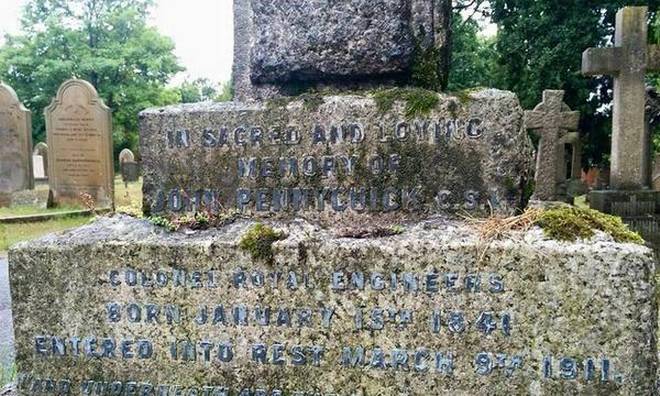
Pennycuick hardly known in England

John Pennycuick’s grave in England.

Film-maker traces British engineer’s roots in the country

The famed British civil engineer John Pennycuick, who built the Mullaperiyar dam, may be extremely popular in the southern districts of Tamil Nadu for building the dam and his life may have inspired actor Rajinikanth’s Lingaa, but he is reportedly practically unknown in England.

Having grown up listening to stories about John Pennycuick in Uthamapalayam in Theni district, Santhana Beeroli, a documentary filmmaker, wants to change it by making a film about the illustrious British engineer who constructed what is generally called an engineering marvel.

“In my home town, Pennycuick is a massive hero. Ever since I was a kid, I grew up listening to his story and was interested in knowing more about him. This is one of the reasons why I came to the U.K. to study. My wish is that Mullaiperiyar dam should become a famous tourist spot in his memory,” he says.

Despite John Pennycuick’s popularity in Tamil Nadu, finding Pennycuick’s family roots proved to be difficult, confesses Santhana Beeroli, who currently lives in Croydon, London.

After failing to find any leads, Mr. Beeroli says that he had to approach a professor at the History Department, University of Chester, where the film-maker was pursuing his Masters in Business Administration.

“I only knew that he died in Camberly, where he had his family home, which he reportedly sold to fund the dam. The professor recommended that I look for leads in the British Library in Euston. Luckily, I found valuable information about the Mullaiperiyar dam, the designs, financial aspects [balance sheets], his own appointment letter, which gave me an idea about the kind of engineering marvel that it is,” said Mr. Beeroli.

He adds, “Over nine years’ time, during which he built the dam, he didn’t take a single day’s leave so as to ensure that people who worked on the dam were not going off track. It was a complex engineering feat – to divert a westward flowing river towards the east to irrigate the plains. Apart from these information, I also documented the oral history about how the dam was built by speaking to people whose grandfathers and fathers worked to build the dam.”

While the library had documented important information, Mr. Beeroli says that it proved almost impossible to trace his family members. “The British lifestyle values privacy and since almost 100 years had passed, it was very difficult to find his family. But through a website that helps find family trees, I was able to gather that he had at least four daughters and a son. I was able to figure out that his great grandson was John Hope.”

Asked about how Pennycuick’s descendants reacted, Mr. Beeroli said that most of them were surprised and inspired by the story of their illustrious ancestor.

“The people in the church where he was laid to rest didn’t realise how important and revered Pennycuick is in Tamil Nadu. My wish is to take his family to the dam. The film is 70% complete already and soon will be ready,” he says.

source: http://www.thehindu.com / The Hindu / Home> News> States> Tamil Nadu / by Udhav Naig / Chennai – November 02nd, 2017

Chennai girl awes with her boxing skills

Chennai:

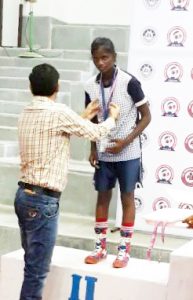
“I always get to hear this question: Why boxing? May be because, I am a girl. Well, this is the only venue, where I can beat somebody and not get into any trouble,’” grins A Pavithra, a resident of Aadhanoor, who is being trained at Railway Institute Tambaram Boxing Club, located at Railway Ground, East Tambaram.

PavithraCF04nov2017

A class 8 student of Adi Dravida Higher Secondary School, she is a national and State-level boxer and has won several medals.

“Mohammad Ali is my role model. There is a lot to learn from his tactics and follow it,’” said Pavithra, who is trained by coach P Saravanan.

In the recently held State-level championship for boxing in the under-15 category, she won a medal. She has also won several medals in 200 and 400 metres athletics.

“‘Pavithra is one of my most obedient students, who does not miss her practice like others of her age group do. And, above all, she often does it with a smile and willingness on her face. She’s an inspiration to some and a role model to many,”’ said coach Saravanan.

On how she took up boxing, her uncle S Balaji said, “‘It all started at the age of 9. She was strong enough to defend her family members and seeing it, I enrolled her to karate, which she discontinued due to lack of interest. Later, given a choice, she chose to learn boxing and also showed interest in athletics.”

An average student in academics, Pavithra finds it hard to juggle between her passion and studies. Also hailing from a middle class background, it becomes a challenge at times for her to pay for the expenses and get good accessories for the sport.

Fortunately, she has been recognised and is being supported by Tamil Amudhan, who is extending all help. Pavithra is taken care of by her uncle Balaji and he can be reached at 98845 43839.

source: http://www.newstodaynet.com / NewsToday / Home / by Konda Somna / Nov 04th, 2017

Neeru’s opens first family store in Chennai

Neeru’s, a leading ethnic wear retailer is opening its first family store at Anna Nagar. The store will be inaugurated by actress Shruthi Hassan along with Neeru’s family. Alongwith Chennai, Neeru’s has also expanded its footprint in Kochi and Kanpur.

Apart from opening in Chennai, Neeru’s has also made its mark in MG Road Kochi and Lucknow

The store features an inviting and inspiring design which exudes the sophistication of the brand.

The store showcases Neeru’s extensive range of clothing which redefines and modernizes Indian attire for women. Right from innovative silk lehengas to stylish Banarasi sarees, suits, mix-and-match, accessories and the signature Neeru Kumar collection. The store also houses Little Neeru’s which is dedicated to children up to 14 years of age. Ranging from everyday ethnic wear to festive wear, the brand caters to a spectrum of discerning audiences with varied tastes and style.

Neeru’s has an exclusive 1,000 handpicked silk saree collection and is all set to revolutionize silk with a bouquet of ensembles from silk collection from Kanjeevaram, Banarasi, Uppadas, Pochampally, Coimbatore, Gadwal, Rajkot Patola and Pure Zari.

Apart from opening in Chennai, Neeru’s has also made its mark in MG Road Kochi and Lucknow.

The store also caters to the young fashion trends with an array of ethnic attires for the little ones. The kid’s collection is on par to the men and women’s collection when it comes to designs and style.

Stating the USP of the brand – Selling the latest and the best of Indian ethnic wear at a reasonable price tag, Director, Neeru’s, Avnish Kumar said, “We are delighted to open our first family store in Chennai and will be expanding our presence with three more stores, taking the count to five stores. Our aim is to serve the clothing demands right from everyday to D-day of the mass, thus our collection rejoices the finest craftsmanship and grandeur of luxurious fabrics with just perfect blend of traditional Indian finery with contemporary styles.”

source: http://www.indiaretailing.com / IndiaRetailing.com / Home> Fashion / by India Retailing Bureau / October 30th, 2017

In a first in Tamil Nadu, Srirangam temple bags Unesco award

Trichy :

The Sri Ranganathaswamy temple at Srirangam has bagged an award of merit from Unesco for protecting and conserving cultural heritage, thus becoming the first temple from Tamil Nadu to grab the prestigious honour from the UN body. The traditional method of renovating temple premises as well as re-establishment of rainwater harvesting and the historic drainage system in preventing flooding are the two key parameters that earned the temple the award.

Launched in 2000, Unesco-Asia Pacific awards for cultural heritage conservation programme is aimed at acknowledging the efforts taken to restore and conserve historical structures without affecting their heritage value in the region comprising 48 countries. Unesco had invited applications earlier this year to submit conservation projects either taken up by individuals or in public-private partnership model in the last 10 years for the awards. Subsequently, the Hindu Religious and Charitable Endowment (HR&CE) department of Srirangam temple applied for the awards in May. As the results of the awards given under four categories were disclosed by Unesco Asia-Pacific on Wednesday, Srirangam temple was the only religious centre from south India to find a mention under ‘Award of Merit’ category.

HR&CE sources said that the temple had received the international recognition for the Rs 20 crore (from HR&CE and donors) renovation project taken up prior to a consecration ceremony in November 2015, especially without affecting its centuries’ old architectural design. “The communique received by us cited the traditional construction method involved in reworks and re-establishment of the historical sewage system as parameters for receiving the international award,” P Jayaraman, joint commissioner of the temple, told TOI. In 2015, restoration work was carried out in the entire temple complex by craftsmen who had in-depth knowledge in traditional architecture involving the usage of limestone and chemical-free construction practices.

Similarly, the flooding problem in the temple was overcome by re-establishing historical water harvesting and drainage system, and the waste water after re-treatment was used for watering the garden within the temple.

There were 43 applications from 10 countries for the 2017 Unesco Asia-Pacific Awards for Cultural Heritage Conservation. Mumbai’s Christ Church and Royal Bombay Opera House were the other monuments in India that received the Award of Merit this year.

The awards are classified under four categories — Award of Excellence, Awards of Distinction, Awards of Merit and Award for New Design in Heritage Context. They are being given to encourage the efforts of all stakeholders and the public in conserving and promoting monuments and religious institutes with rich heritage in the Asia-Pacific region. A jury comprising nine international heritage conservation experts reviewed the documentation of the conservation project taken up by Sri Ranganathaswamy Temple management.

In Video: In a first in Tamil Nadu, Srirangam temple bags Unesco award

source: http://www.timesofindia.indiatimes.com / The Times of India / News> City News> Tamil Nadu / TNN / November 02nd, 2017