Human rights activist Ossie Fernandes died at a hospital in Chennai on Tuesday after a brief illness. He was 58.
Fernandes was director of the Chennai-based Human Rights Advocacy and Research Foundation, an NGO working for child rights protection, custodial justice, women’s rights, rights of fishermen and decentralised governance.
According to his colleague Indra, Fernandes was admitted to Apollo Hospitals on Saturday after a boil on his leg got infected.
“The infection spread to other parts of his body. Doctors amputated his leg on Monday evening, but were unable to save him,” she said.
The funeral will be held on Wednesday.
Fernandes is survived by his wife, Halcyon, and son, Carl.
source: http://www.timesofindia.indiatimes.com / The Times of India / News Home> City> Chennai / by Meera Vankipuram, TNN / November 03rd, 2015
Lakshmi K raised her voice to be heard over the ruta-tut-tut of the weaving frame. For more than 400 years, Vadamanapakkam village -about 30km from Kancheepuram -has resounded with the rattle of these contraptions that spun out cotton saris closely resembling the more famous silks produced in the vicinity.
Lakshmi’s family and a handful of her neighbours are today the only ones who are working to keep an ancient form of weave alive.
“Every time we say we make Kancheepuram cotton saris, people look surprised as the district is known more for the silk variety ,” said Lakshmi, 55, a fourth generation weaver.
But this festive season her community saw a sudden spurt in demand after Tamil Nadu Handloom Weavers’ Co-operative Society Ltd (Co-optex) initiated a project in May to revive ancient sari varieties in the state.
“Pictures of some of our saris were put up on Facebook. We are now getting orders from as far as Mumbai and Delhi,” said Kannadasan, Lakshmi’s husband.
“We have to work overtime to meet the demand as most villagers have left this profession,” he said. It takes around three days to weave one sari. The designs are similar to Kancheepuram silk saris, with the pallu and zari being spun out of cotton yarn.
Along with Kanchi cotton, Co-optex has been in the process of reviving other varieties like Sungudi, Kodalikarupur, Kandangi, Sungudi, Chinnalampatti and Koorai Nadu saris that were popular decades ago. Since May , around 3,000 such saris have been sold so far through Co-optex. The saris have tags with the names of the weavers and how long they have been in the profession.
“The tags helped us boost sales of these saris in a big way . A lot of people are also buying them to help these weavers,” said Co-optex managing director T N Venkatesh. The state government is also providing several incentives to these weavers.
The Kandangi cotton variety from Chettinadu region, known for its dark colours and check patterns, sold the most under the project with around 1,000 orders being placed. The cost of the saris is based on the availability of weavers, the craftsmanship and the raw materials used. These saris are priced between Rs 600 to Rs 3,000.
Sungudi cotton saris, traditionally made in Madurai and known for their rich colours, design and craftsmanship sold the least under the state government’s project with only 75 being taken.
To cater to current tastes, officials are also intervening in design and colour to popularize these saris. “The core features like the weave and feel of the fabric are retained. We tweak the design and colour to suit the needs and appeal to the aesthetics of modern-day working women,” said the official.
Turn a tag attached to these saris sold through Co-optex and two words stare back at you: Thank You. “The note is for the customer for being part of the struggle to continue a lineage,” said Venkatesh.
source: http://www.timesofindia.indiatimes.com / The Times of India / News Home> City> Chennai / by Ekatha Ann John / November 03rd, 2015
The unknown intrigues her as she skims through texts of a bygone era.
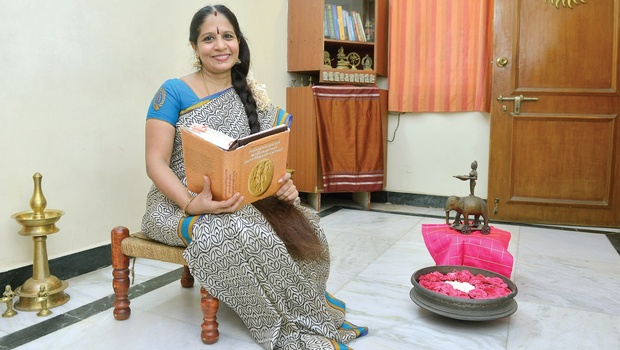
Dr Lakshmi Ramaswamy depicts these stories meticulously through theatre and dance, two art forms she has cherished since childhood. While performing, she effortlessly slips into the persona of a woman from the first century, expressing her feelings for her lover to a friend or that of a land-conquering warrior. Currently, the great Tamil epic—
Silappadikaram—is the subject of her imaginative scrutiny.
For the Chennai-based danseuse and researcher, ancient Tamil texts, especially those belonging to the Sangam Period, are enthralling beyond measure. “There is grace in its classicism and rhythm in its realism. Else, why then would it be called the Golden Age? They are vivid in human emotions and exceptionally particular about ethics. Everything is based on ethics, even raging a war had its own norms then,” she explains.
Way back in 1987 when Lakshmi, now a top-notch Doordarshan artiste, performed her first solo debut at a gathering of 7,000 people in Tirunelveli, Tamil Nadu, dance to her was only a glittery affair. For more than a decade, she remained only a performer, far from the vicinity of the academics of dance.
Lakshmi, who holds a master’s degree in commerce, shifted to Chennai after marriage and enrolled for a master’s degree in Bharatanatyam at the University of Madras. She took up the task of interpreting the Koothanool, a rare Tamil text in which she did her doctorate. “And this was the beginning,” says the first Fulbright Fellow in Bharatanatyam.
Full-length productions based on her research works began with Natrinai, a collection of 400 songs of aham poetry (that which deals with the relationship of a man and a woman) followed by Ainkurunuru, which is still untouched by any other dancer. The response to these performances was encouraging and helped Lakshmi carve an inimitable niche for herself.
Supported by her guide and professor, Dr S Raghuraman, Lakshmi made productions such as Tirumalai Aandaver Kuravanji based on Kuravanji Literature, Purananuru from Sangam Age poetries, and many more. Currently, Lakshmi has received a senior fellowship from the Ministry of Culture to work on the great Tamil epic,
Silappadikaram, authored by Ilango Adigal in the second century.
The story of Kannagi, Kovalan and Madhavi is known to most. But according to the scholar, “there is much more that needs to be fathomed”. She believes the text is an encyclopedia for historians, musicians and dancers. “The text’s myriad layers are challenging and contain jaw-dropping information on both grammar and performance that were in vogue then,” she says. Lakshmi says that though Ilango was a Buddhist, the writer was tolerant towards all religions. “Religion in those days meant each of the landscapes being connected to a presiding deity,” she explains. “For example, Lord Muruga was the deity of the Kurinji or the mountain regions. The text mentions a wide variety of dances, including those done by soldiers and ghosts.”
While Lakshmi is proud of literature of the past, she equally appreciates meaningful contemporary work. However, working on such productions brings with it multiple challenges.
“The phase of interpreting is time-consuming with limited resources; managing funds for sets, costumes and lights is a separate ball game; platforms to showcase such productions are quite few and they too have budget constrictions,” she says. But that does not stop the determined artiste, whose cascading long hair and warm smile only add to her charming personality.
“My mission is to ignite the minds of my students. That is my bhakti towards my work and not merely lighting lamps,” says the teacher whose institution Sri Mudhraalaya is now 21 years old. Besides dance, theatre, history, theory, lighting, stage presentation and choreography are taught at her school.
source: http://www.newindianexpress.com / The New Indian Express / Home> Magazine / by Jagyaseni Chatterjee / October 24th, 2015
Keeping its 300-year-old tradition, Kambalathar community continues to conduct its marriage ceremonies in the village square by trying to keep close to nature.
Jayabalan, 25, son of Bangarusamy and Lingammal of Ezhuvanampatti near Battalagundu in Dindigul district, tied the knot with Sivasakthi, daughter of Ponram of Koduvilarpatti in this traditional manner. As per the tradition, elders of the village went into the forest and brought branches of some perennial trees such as milk tree (brosimum galactodendron). Two huts were made using these branches – one for the groom and other for the bride.
Priest Mookiah performed the marriage ceremony while the bride and groom remained at the huts. The marriage ceremony is performed in front of mud pots containing millets, jaggery and betel leaves. “These were things that our ancestors consumed as food and was given to the bride for prosperity,” he said.
A horse was then brought to the venue and groom mounted it and galloped around the bride’s hut before tying the ‘mangalsutra’ around the neck. Other ceremonies and rituals followed. People gathered at the venue sang songs glorifying their community’s culture and heritage.
These people believe that the ‘thali’ or ‘mangalsutra’ should never be kept down once the goldsmith makes it. A woman from the groom’s family wears it, till the day of the wedding, when he takes it from her and ties it to the bride.
S Siva Murugesan, a siddha doctor from Dindigul, says that the Kambalathar community hail from Bellary in Karnataka which was earlier under Andhra Pradesh. They still speak Telugu. “They were traditionally shepherds who roamed the Himalayas. They were fearless warriors a reason why Vijayanagar empire appointed them as soldiers and made them lead them,” he said. They were tribes that roamed the hills, so they carry out rituals that pertain to nature only.
They crossed the Tungabatra river led by Vijayanagar dynasty’s Viswanadha Naicker and came to conquer Madurai, which was under the rule of the Muslims and succeeded in their quest. The used the tantric method in war and believe only in natural forces.
Veerapandia Kattabomman, the chieftain from Palayamkottai who fought against the British belonged to this community. They were also made zamindars by the rulers for their loyalty.
A closed community, they were known for suppressing their women. It is in the last three decades that these women have ventured out of their homes and gone to pursue their education, he said. One such except was the new bride Sivasakthi who had completed her post-graduation.
K Samikannu an elderly person from the community says it is a must for all members of the community to conduct the initial marriage ceremony in this traditional manner.
“It is something that has been followed for the past 300 years. But the reception and feast can be conducted in a hotel or marriage hall,” he said.
source: http://www.timesofindia.indiatimes.com / The Times of India / News Home> City> Madurai / by Padmini Sivarajah, TNN / October 30th, 2015
In 1989, the then principal of the Railway Protection Force (RPF) training centre in Tiruchirapalli was not too pleased to see a woman trainee among hundreds of men for the first time at the institute.
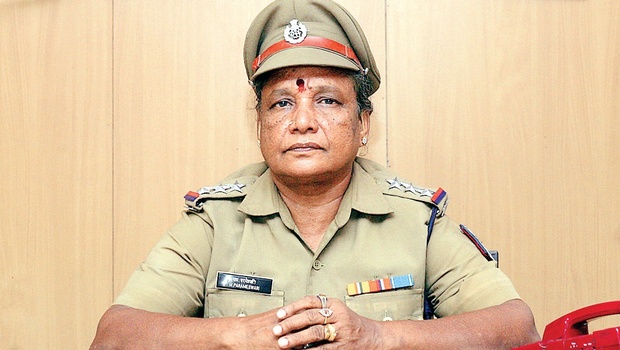
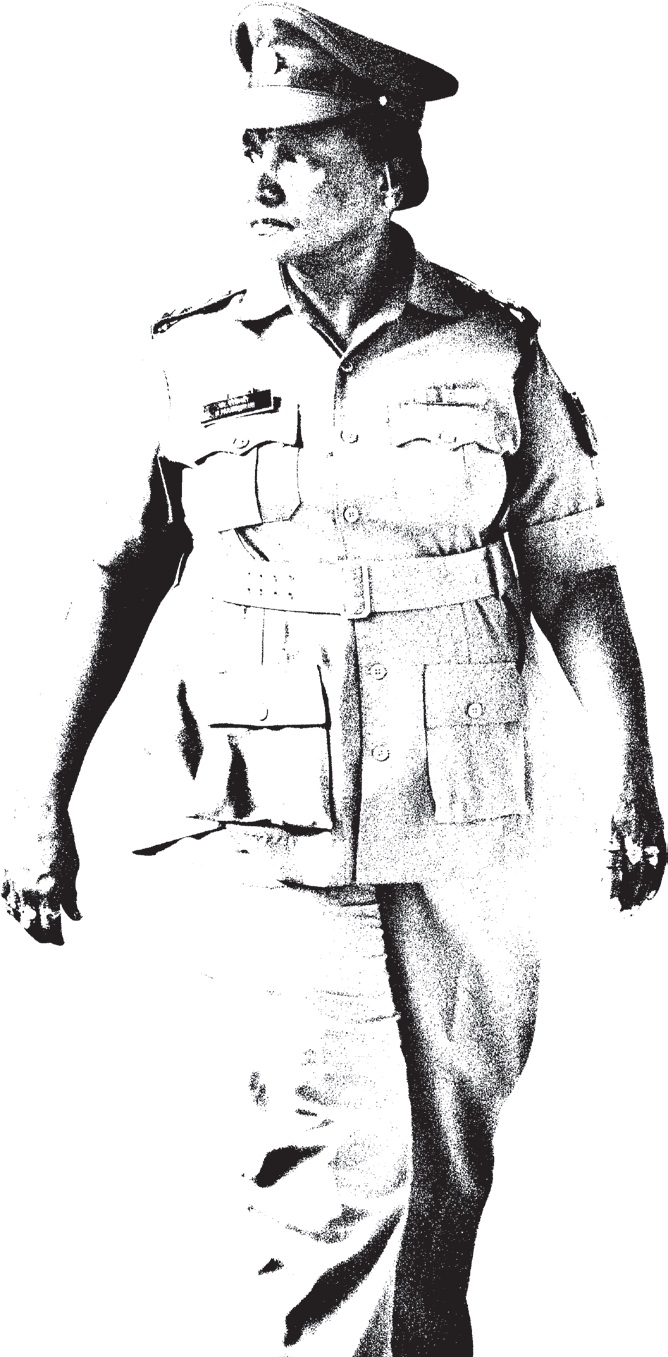
“It was very evident from his body language and his face. But when he saw me matching steps and firing the .303 rifle as proficiently as the men, the apprehension was gone. In fact, when I graduated, he personally came up and said that I had exceeded expectations,” says 60-year-old M Parameshwari, the lone woman RPF inspector in the Indian Railways, also in-charge at the Egmore Railway Station.
Parameshwari is all set to retire after a 38-year-long career with the Indian Railways — a service which she fondly says is her second husband. Looking back at her career and life, the mother of three tells City Express about her her father’s encouragement.
“He pushed me into sports right when I was a teenager. This made me physically and mentally tough. It worked in my favour when I joined the RPF in March 1977,” she explains, crediting the Indian Railways for helping her stand on her feet today.
Times were tough those days, she reminisces. “The then Prime Minister Indira Gandhi had just given a push to include women in security forces. But special facilities like a toilet or changing room were non-existent for men, much less women. I’ve seen the gradual changes over the years and today, we have a separate toilet and a relaxing room for RPF staff,” she says.
Being tough-as-nails in a male dominated work-force always has its pitfalls, rues Parameshwari. Refusing to elaborate, she indicates that there have been times when professionally jealous subordinates or colleagues would pass unnecessary comments based on her gender. “But since I was very straight-forward and demanding, they never dared to say it on my face,” she says.
Despite her diligence, Parameshwari says that she was given only office work for the first few years after she became Assistant Sub-Inspector after the training in Tiruchirapalli. In 1998, the then Chief Security Commissioners Ganesan and Damodaran, recognised her toughness and sent her to safeguard passengers, remove hawkers from the stations and apprehend criminals.
“After that, there was no looking back. I travelled to places like Himachal Pradesh, West Bengal and Delhi. Very few women get an opportunity to see the world and I consider myself lucky,” she says.
But being a woman in the security forces was a tough job, especially if one wished to have a satisfactory domestic life as well, Inspector Parameshwari says.
“I was not only a government servant, but also a servant in my home, a wife, a mother and a daughter-in-law. Unlike other 9 to 5 jobs, I have to attend the call of duty at any time of the day or night,” she says, adding that a woman must develop a sportive spirit to succeed in a demanding career like this.
Parameshwari is looking forward to spending her life’s savings on building a home for her children in Avadi. She plans to spend her post-retirement time with her two grandchildren. Duty, as she puts it, is a task that she is always ready for.
source: http://www.newindianexpress.com / The New Indian Express / Home> Cities> Chennai / by Siddharth Prabhakar / October 29th, 2015
Seven years ago, B K Amala was walking with her grandmother when she noticed a poster for taekwondo training. Sensing the eight-year-old’s desire to learn martial arts, the older woman took the initiative. Amala is now the national champion in Thai boxing (in her age category) after having mastered taekwondo and conventional boxing.
The 15-year-old, who has won state-level taekwondo and boxing championships as well, credits her grandmother for her success. “She is a great source of inspiration.”
Hailing from a lower middle class family – her father is a clerk at a private hospital – Amala says she couldn’t have made it but for the sacrifices made by her family. “My parents never complained and made sure I got the best possible training. My uncle accompanies me to all tournaments,” she says.
Managing the training expenses of both his children (Amala’s brother is following in her footsteps) is quite a struggle for their father B K Kannan. “We always wanted the best for our children. To pay for Amala’s coaching, we stopped going to movies and eating out. I borrowed money to make sure she got good training. We could not afford the healthy food that her coach advised but my daughter was satisfied with whatever we gave and worked hard,” he says.
The corporation school student has also excelled in academics. “She is hard working. Though she trains hard for boxing she never lets it impact on her academics. She always passed her exams with distinction,” says her headmistress, Selvakumari.
The corporation, realizing her potential, sponsored her participation in the national level championship. Amala now wants to represent her country in Olympics ands her coach Karan is sure she will make India proud one day. “She is a very disciplined and focused student.”
source: http://www.timesofindia.indiatimes.com / The Times of India / News Home> City> Chennai / TNN /October 30th, 2015
Chennai-based neuropsychiatrist Dr Ennapadam S Krishnamoorthy has been chosen as president-elect of the International Neuropsychiatry Association (INA).
The decision to make him president-elect was taken at the 10th INA Congress held in Jerusalem recently.
The INA is a global grouping of doctors and scientists with specific interest in disorders of the brain and mind.
Dr Krishnamoorthy has been unanimously elected to lead the INA as president-elect from 2015 to 2017 and as president from 2017 to 2018.
He is the founder of an integrative healthcare and rehabilitation chain in Chennai. He has authored two book and more than 70 scientific papers.
source: http://www.timesofindia.indiatimes.com / The Times of India / News Home> City> Chennai / Ekatha Ann John, TNN / October 25th, 2015
It looks like Coimbatore has been witnessing a surge in the number of home entrepreneurs. These trendy businesswomen do not need a fancy set up or a plush studio to run their business, but are more than happy to churn out their goodies from the premises of their houses. Lathadevi R Sivakumar, who conducts baking classes in the city, doesn’t have an upmarket baking studio, but has a separate portion carved out of her home for her workshops. “I wanted to encourage people to make simple homemade food and teach them the basics of cooking. When I started my work, there was a common entrance to the house and there was a steady influx of people to the home. This posed as a hindrance in managing the family and business. But now I use a separate room in my house outside the entrance and have set clear working hours as well. I also take appointments before I meet people. It’s a 400 sq ft room and it can easily hold up to 15 people for a hands-on-session and 30 people for demo. This helps me to manage the flow of work smoothly.”
Isha Arora, who makes cellphone covers, keychains, wallets right in her bedroom, says that she just spreads a newspaper around and begins to work on the merchandises. “I have been making these crafty items for the last two years and every bit of the work happens in my bedroom. If the orders are less, I have a small table around the corner where I sit and make them. If the order is big, I just sit on the ground, spread few newspapers around and begin my work. The work predominantly happens after I finish my day at college, “says Isha, who sells her products online or at expos. “Only if it’s a bulk order, people come home. I also conduct classes for those interested in crafts right in my room on the ground,” she adds.
According to Latha, the biggest advantage of the arrangement is that she can be a lot flexible. “Since both workplace and home are in the same area, I do not have to fret over getting to work or getting back home. I can work long hours and also take breaks in between.” For Shereen Nunez, who caters custards for colleges along with her husband Arthur Auto Nunez, it’s a huge advantage as she can concentrate on both her family and work at the same time. “I started with just five custards two years ago and today I serve up to 300 custard cups every day. I didn’t have to invest much as well in the beginning since I just had to function out of my kitchen. The custards are made in the morning and we purchase the material every evening. If we have to cater biriyani on prior order, we cook it in traditional way with dum in a small space outside our home.”
Nithya Doraisamy, who has been making crafty tags, says that though she would love to open a craft studio in future, she enjoys working out of home as well. “I used to make these gifts for friends and when I realized that Coimbatore has a good demand for crafty tags, I decided to make more of them. I work out of an extra room that we have at home where I also stock my paper and paints. Since I am only a beginner and haven’t ventured into the business full-fledged in a commercial manner, working from home suits me me. I can finish all the work on my own and manage my personal life as well.”
source: http://www.timesofindia.indiatimes.com / The Times of India / National> City> Coimbatore / by P. Sangeetha, TNN / October 18th, 2015