With petals of its white flowers spread out, this orchid presents a ghostly appearance. / Special Arrangement / The Hindu
Long, meandering, steep and punctuated with hair-pin bends, the highway connecting Mettupalayam and Kotagiri is a source of delight to tourists.
A fascinating variety of vegetation on either side and favourable weather enhance its beauty. Different wild flowers catch the eyes of the passersby. Among them are Lady’s slippers and even kurinji. However, the most striking are the orchids with the popular name, Spreading Flowered Habenaria (Habenaria rariflora).
Conservationist and nature photographer P.J. Vasanthan says the orchid is an endemic variety restricted to the Western Ghats. It belongs to a group popularly called ‘bog orchids.’ However, in contrast to the popular name of the group, this orchid is usually seen growing on damp and rocky terrain. With the petals of its white flowers spread out, it presents a ghostly appearance. The plant comes to notice only when it is in bloom, and the flowering season coincides with the monsoon.
Once found all over the moist parts of the outer slopes of the district, it is now restricted to a few areas owing to anthropogenic activities. It is quite common around Droog near Coonoor, considered a haven for ground orchids.
It is now seen along the roadside at Muloor near Kunjapanai on the Kotagiri-Mettupalayam Highway. Though unexpected, it indicates the health of the ecosystem as orchids are sensitive to changes in the environment.
The Nilgiris hills were once rich with orchids, with over a hundred varieties being listed in the district manual of 1880. Agriculture and plantation forestry have vastly reduced their numbers.
source: http://www.thehindu.com / The Hindu / Home> News> National> Tamil Nadu / by D. Radhakrishnan / Udhagamandalam – October 20th, 2014
Guru puja of Maruthu brothers went off peacefully with more than 100 people from various districts visited the memorial and paid homage to the statue at Teppakulam here on Monday.
People from Usilampatti, Karumathur, Virudhhunagar and Dindugal districts visited the memorial on guru puja day. As a mark of respect, they garlanded the statue of Maruthu brothers.
Similarly, the guru puja was celebrated at Kalayarkoil in Sivaganga district. People from Ramanathanpuram, Madurai, Virudhunagar and Sivagnaga districts, visited the memorial at Kalayarkoil.
As the event was marred by violence in 2012, the district administration had issued an order under section 144 of Cr Pc and imposed a ban on entry of private vehicles and higher vehicles to the memorial at Kalayarkoil.
Usilampatti MLA Kathiravan said, “The volunteers visited the memorial in their own vehicles to pay their homage to Maruthu brothers. More than 300 women from Madurai district belonging to Agamudaiyar community visited the memorial carrying milk pots and poured the milk on the statues of Marathu brothers at Teppakulam.”
The event passed off peacefully amidst the security provided by the police personnel in the city. Around 1,000 police personnel were deployed at various spots and sensitive areas to maintain law and order in the city.
Deputy commissioner of police (law and order) Samant Rohan Rajendra, said, “The law and order of the city was maintained by deploying around 1,000 police personnel at Teppakulam, Goripalayam and Scot Road in the city. Traffic was diverted at Kalayarkoil.”
source: http://www.timesofindia.indiatimes.com / The Times of India / Home> City> Madurai / TNN / October 28th, 2014
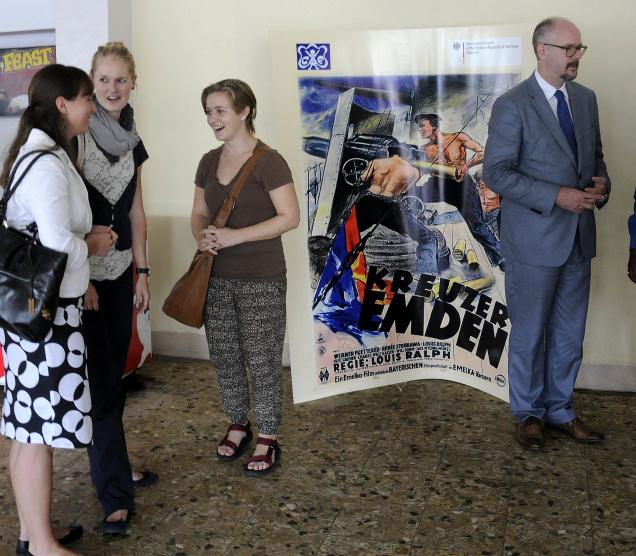
The screening of Kreuzer Emden was an opportunity for the audience to reflect on the shared artistic traditions of India and Germany — Photo: M. Srinath / The Hindu
Despite the rain and slushy roads, film and history buffs turned up in good numbers to watch the 1932 German war film, Kreuzer Emden, directed by Louis Ralph, at Woodlands theatre in Royapettah on Sunday morning.
The film is about the various missions of SMS Emden, a German warship, which bombed Madras on September 22, 1914, and its eventual destruction at the hands of an Australian warship, HMAS Sydney.
The screening, which was organised jointly by German Consulate General, Chennai and members of the Indo-Cine Appreciation Foundation, was preceded by a welcome address by Achin Fabig, consul general, and a short talk by Professor A.R. Venkatachalapathy from the Madras Institute of Development Studies, who provided the historical context.
“The screening of the film does not aim to further understand the role played by the Emden in World War I or to even glorify it. It takes a critical approach to the attack,” said Mr. Fabig.
Drawing attention to how the film’s cinematographer Josef Wirsching went on to work in several Hindi feature films in Bombay, he said that Indians and Germans also seem to have shared artistic traditions.
Professor Venkatachalapathy began his talk by bemoaning the fact that Indians care too little for history. “We understand war as something spectacular and tend to glorify it. India has been lucky not to have experienced destruction of such scale,” he said.
Speaking about the Emden, Professor Venkatachalapathy said that it symbolised the ascendancy of Germany on the seas, which had previously been dominated by England. “Within months of attacking Madras, it managed to pass into popular culture. It is today a part of local parlance,” he said.
source: http://www.thehindu.com / The Hindu / Home> News> Cities> Chennai / by Udhav Naig / Chennai – October 27th, 2014
Environment and nature enthusiasts in the city convened at the Gandhi Memorial Museum premises here on Saturday to initiate the ‘Madurai Nature Forum’, a collective of NGOs and individuals working for environmental causes in the city.
The forum plans to conduct an extensive study of the biodiversity in the district over the next six months and document the flora and fauna. The biodiversity study, which will have a special focus on birds and the disappearing water ecosystems in the district, will begin on October 26 with a study of the Samanatham tank and the migratory birds which flock to the spot during the monsoons.
Speaking at the launch of the forum, District Forest Officer Nihar Ranjan said that a forum and study like this would not only help people know about the unexplored biodiversity in the district, but would also motivate people to conserve their surroundings.
“As many of the forest areas in the district are unexplored, the forest department will cooperate and help organise treks for enthusiasts who wish to document the biodiversity there,” he said, at the event.
D. Raveendran of Iragugal Naturalists Association said that the study would seek to create awareness among many people who remain oblivious to their surroundings or the harm they might be causing to the environment. The members of the forum further made a mention of villages in the country which had celebrated a cracker-free Deepavali to protect birds in the area and urged the people to follow more such initiatives to conserve the biodiversity.
Badri Narayanan, an avid bird watcher, spoke about the variety of birds in the district with a powerpoint presentation showcasing the various species of birds he had photographed in the district.
source: http://www.thehindu.com / The Hindu / Home> National> TamilNadu / by Staff Reporter / Madurai – October 26th, 2014
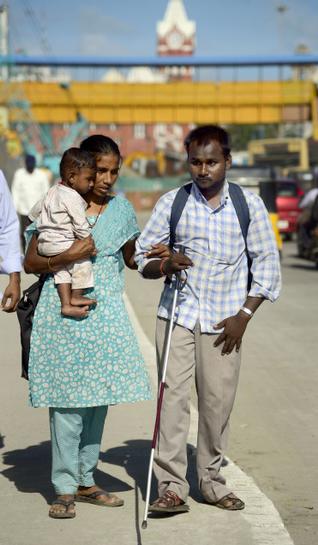
Babu Ezhil Gunalan and Karpavalli were able to move into a home a few months ago after a long spell as pavement dwellers. Photo: M. Vedhan / The Hindu
A blind couple on the darker side of the city and their fight against all odds
He hawks popcorn on suburban trains from 10 a.m. to 9 p.m. every day, to try and eke out between Rs. 200 to Rs. 300 to support his wife’s dream of becoming a teacher and also, towards caring for their one-year-old toddler.
Babu Ezhil Gunalan (30) is blind, also to the challenges that life throws at him. He hopes that soon, his wife B. Karpavalli (30), who is also blind and studies at Presidency College, will complete her graduation in English literature and pursue a B. Ed immediately so that she can become a teacher. A student of Tamil literature from Tiruchi’s National College, Gunalan says his B.A. degree has not helped him find a job. “That’s why I wanted her to pursue English literature,” he says. “That’s why this train life for me.”
The blind couple, who got here from their home town Tiruchi three years ago after their parents opposed their inter-caste love, have made Chennai their home against all the odds. The last couple of months have been relatively easier as they have rented out a home at Thiruninravur at a monthly rent of Rs. 2,500. Their newborn desperately needed shelter from rains. But life has not always been under a roof. They have spent a good deal of their life together in the city as pavement dwellers.
The couple, who met at the voluntary organisation Vizhi Ilanthore Mahalir Maruvaazhvu Maiyam (Home for rehabilitation of blind women) in Tiruchi, arrived in Chennai with just Rs. 3,000 in cash and a few friends to turn to.
City life, Gunalan says, is fraught with as many challenges as it provides hope. While Karpavalli pursues her study with the hope that she would one day be an English teacher at a school, Gunalan toils hard. He has turned to usurious money lenders (kandhu vadi) to make ends meet. He has borrowed Rs.10,000 and has to repay at an monthly interest of Rs. 10 per 100 every month. The sheer math of it makes the loan mind-boggling.
“But what option do I have,” he asks. “No bank would give me a loan as I don’t have a regular income to show or some property in my name. Loans at high rates of interest are bothering us. A friend, who is also blind, recently committed suicide because he was unable to repay debts.”
There are some spells during their stay when they find themselves at the mercy of friends or some sheer providence – at times considerate officials have allowed them to stay overnight at railway stations.
The big dream is to one day own a house. “I have to find a home of my own. Homelessness is quite painful,” he says.
source: http://www.thehindu.com / The Hindu / Home> News> Cities> Chennai> Society / by Aloysius Xavier Lopez / October 28th, 2014
The Singanallur Lake that was once a hub for various migratory birds and accommodated a boat house will be restored to its previous grandeur within 15 days. The lake was closed for public usage 5 years back and the boat house was also closed down. The Mayor, Commissioner, Deputy Commissioner, Executive Engineers and other higher officials at the corporation inspected the lake. Several labourers were employed to remove water hyacinth from the lake.
The engineers have also contracted a private company to renovate the boat house.
“I have instructed the officials to clean up the tank and renovate it within 15 days. We have also planned to have a cafeteria and a children’s play area in the boat house for recreational purpose,” said P Rajkumar, Mayor.
Once a popular attraction in the city, it was frequented by families and college students for boating and recreation. There have been several attempts in the past for cleaning the tank but hyacinth grew quickly even after cleaning it. Environmentalists said that even if the hyacinth is removed, the lake cannot be restored unless untreated sewage water is dumped into it. “The hyacinth has been growing there for years and due to its roots and seeds in the water, it will continue to grow. Hyacinth grows only in dirty water. So it is the hyacinth that cleans the sewage and drainage that is being dumped into the lake. If hyacinth is removed, the lake might start to stink. Only if they treat the water before directing it to the lakes, the problem can be solved,” said C Yogananthan, Environmentalist.
“We understand that sewage water is causing the growth of hyacinth and so I have strictly instructed the officials to stop sewage water entering into the lake. That will be the first step in restoring it,” said Rajkumar.
The engineers in charge for the restoration of the lake and renovation of the boat house said that the work will be completed as soon as possible. “After the renovation, we will go out to tender for the boats,” said T Gnanavel, South Zone Executive Engineer.
source: http://www.timesofindia.indiatimes.com / The Times of India / Home> City> Coimbatore / by Komal Gautham, TNN / October 17th, 2014
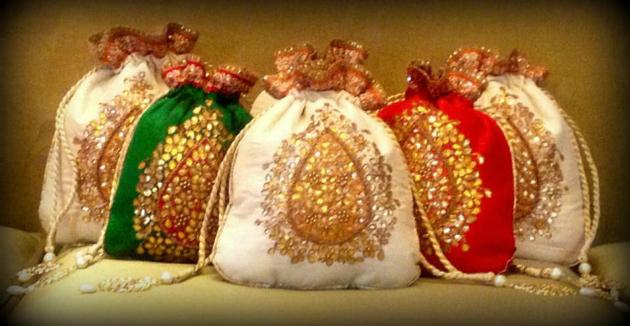
Utilitarian and graceful: The surukkupai has returned. Photo: special arrangement / The Hindu
Tucked into the waist for easy access, the surukkupai women carried all those years ago, has made a comeback as a fashion statement.
Surukkupai is a small bag usually made out of fabric with drawstrings. This could easily be one of the oldest accessories in the South of India. The surukkupai culture they say began in Madurai. Most of us will remember our grandmoms or their friends with a surukkupai tucked into their sari at their waists. I vividly remember some elderly ladies at a temple fiddling with their surukku pais. As an accessory, it had a lot of utilitarian value. As those were the good old days when cell phones didn’t exist and nobody carried makeup around, the surukkupai served to be an aesthetic and useful accessory to carry their vethalai paaku.
Chenthamarai, a tailor in Papanaickenpalayam, reminisces that he used to stitch surukkupais from leftover bits of cloth given to stitch blouses, at no extra charge. In more recent years, the paati’s surukku pai has transformed into a more contemporary fashion accessory. The surukku pai has given way to the chic potlis or the batuas of today. Younger women generally tend to pair them with a sari or a salwar kameez. The potlis come out in a rainbow of colours during the wedding season. Designers have also made the batua an accessory to own. My favourite designer duo of the batua are Chamee & Palak. More widely known for their lehengas, their batuas are unique and ornate too.
Actress Vidya Balan carrying a potli. File photo: PTI
A temple border Kancheepuram sari paired with a simple Mangalagiri cotton potli for a morning function is elegance personified. On the contrary, carry a hand embroidered batua made of Banaras silk fabric for a night out to feel luxurious and grand. The beauty of the modern surukkupai lies in the fact that you can use it to dress up or dress down as you deem fit for the occasion.
During traditional functions when return gifts have to be given, the potli is the perfect gift, especially when filled with bangles and sindoor.
It is indeed a lovely piece of handcrafted art that represents our culture and heritage and, therefore, the most appropriate gift to give your friends abroad. It shows them our diverse crafts and the variety of textiles our country has to offer. Be a fashionista and carry your surukkupai with pride!
Shrivyshnavi Annush is a software engineer who pursues her passion for fashion and design. She has launched a curated fashion accessories portal, www.pookaari.com.
The accessories portal
Shrivyshnavi Annush recently organised a sneak peek into a collection of accessories that she is going to feature in her brand new website www.pookaari.com.
“If we wanted access to some of the happening designers in the country, we had to visit their stores in big cities such as Delhi, Mumbai, Chennai or Bangalore. I always felt there was a dearth in fashion accessories and hence I decided to launch Pookaari,” says Shrivyshnavi.
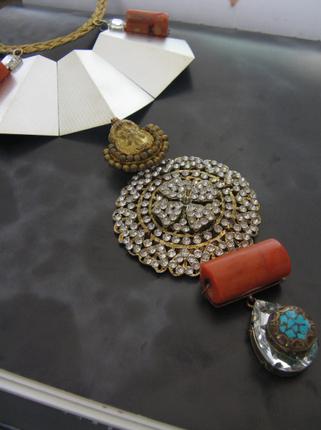
Jewellery designed by Suhani Pittie. Photo: special arrangement / The Hindu
Her carefully curated portal will feature designers from across the country and include brands such as Suhani Pittie, Raya, Mayaa Bazaar, MKBK (Madras Ka Bag Kompany), Deepa Sethi… Scarves, stoles, earrings, neckpieces, bags and clutches are some of the accessories that will be featured in the website. Pookaari will feature a minimum of two new collections every Thursday and the collection will remain online for two weeks.
Pookaari’s pick
Besides the stylish range there will also be Pookaari’s Pick that will have a line of scarves in natural textiles, iPad sleeves and so on. The price of the accessories range between Rs. 1,000 and Rs. 14,000.
source: http://www.thehindu.com / The Hindu / Home> Features> Metroplus> Fashion / by Shrivyshnavi Annush / October 20th, 2014
Irula tribals of Thanikandi hamlet abutting the Western Ghats near Narasipuram in Coimbatore district would soon be tilling large tracts of land for cultivation.
The residents of the village who earn paltry sums as daily wage labourers would now be roped into an agricultural federation under the World Bank funded Pudhu Vaazhvu Thittam through which they would take up cultivation. Coimbatore collector Archana Patnaik visited the hamlet on Tuesday and inspected the land identified for cultivation by the tribals.
“A stretch of 96 acres of forest settlement land has been identified for this purpose. The tribals have rights to enjoy the land but cannot sell it,” said Philips Ilayaraja, district project manager, Pudhu Vaazhvu. There are 64 Irula families in Thanikandi who will benefit from this scheme.
Philips said that some of the tribals in Thanikandi had tried their hand in agriculture two decades ago but dropped it due to various reasons. They started going out as daily wage labourers but the pay was very poor. The traditional means of livelihood, that of selling forest produce, also became difficult and unsustainable due to the increasing incidence of elephant movement in the locality.
“The tribals would commence cultivation once the shrubbery in the identified land is cleared,” Philips said.
This Pudhu Vaazhvu scheme has been extended to Thanikandi after its success when implemented on a pilot basis in Thondamuthur. The scheme was introduced in 13 hamlets comprising 850 families in the block a year ago at a cost of Rs55L. Cultivation has begun in 298 acres of forest land provided to them.
Archana Patnaik visited Saadivayal, one of the villages were tribals have started cultivation and inquired about the progress made regarding the project. The tribal women said they were cultivating brinjal, lady’s finger, onion, paddy and cotton. We are using organic manure only,” one of the women told the collector. The women said that they sell their produce at the Boluvampatti vegetable market.
Patnaik assured the tribals that all support from the government would be provided to them in this venture.
source: http://www.timesofindia.indiatimes.com / The Times of India / Home> City> Coimbatore / TNN / October 15th, 2014
Samyuktha with her collection of clothes at Alwarpet in Chennai. Photo: M.Srinath / The Hindu
House of Chase attempts to make lounge wear glamorous and fun
‘Flat lock,’ ‘lab dips,’ ‘pigment print’…everytime Samyuktha Venkatachalam uses technical words such as these, she stops for a second and looks amused. “I am just getting acquainted with these terms,” she smiles with a sense of achievement and just stops short of almost patting herself on the back. A student of graphic designing, she realised sitting in front of the computer was not her thing. A need for a creative outlet led her to start House of Chase, an online fashion label that has loungewear for women. “I never found enough loungewear here. Clothes that I bought abroad were long-lasting and had a snug feel and that’s what I was looking for. So I decided to start something of my own that addresses the needs of people like me,” she says. Hats are what she actually wanted to start working with. But since it was hard to get a hat manufacturer in India, the plan had to be shelved.
Hoodies, shorts, vests, tunics, tank tops, pyjamas, polo neck, round neck and printed T-shirts in hot pink, bright blue, virulent green and other bright-hues comprise the collection. Cotton, velvet, fleece, pique, poly viscose are the fabrics used. The tracks, hoodies and shorts have brushed fleece or velour lining for that cosy feeling. What princesses wear when they are chilling — that’s the concept House of Chase is based on. No wonder the logo has a shiny golden crown, along with a St. Bernard (her favourite pet).
Does the name mean anything? “Chase — I have been obsessed with that word since ninth grade. All my books had ‘chase’ scribbled on them. To me it means pursuit. When I was starting this business I knew I had to use that word in the label.” The clothes are deeply inspired by Juicy Couture. The California-based brand’s tracks and hoodies have been her favourite for long. Every time relatives travelled abroad they knew what they had to bring back for her. “They are very comfortable and the fabric is amazing. I wanted people who don’t have access to JC to get a feel of it through my clothes,” she says.
All the materials are manufactured and dyed in Tirupur. She has a small team comprising a graphic designer, two brand designers and a merchandiser. She comes up with a concept and together they work on it. “We vote to finalise and I also ask my friends for opinion. We are working off feedback for now,” she says. The second line of clothes is underway — summer dresses in varying silhouettes and lengths. How often does she plan to have a new collection? “As soon as we are ready with new clothes,” she laughs and adds, “The aim is to have a new line every three months.”
It took two years for House of Chase to take shape. Sleepless nights, anxiety, excitement and after analysing numerous fabrics the first collection was launched on September 20 this year. “Now when I see a garment from any other brand I can tell how much effort has gone or not gone into it,” says the 24-year-old.
Barely 19 days since its launch, House of Chase has managed to sell 200 pieces of garment so far. She pulls out a file and is all business-like as she checks her sales report to reconfirm the number and then laughs again. “I am just getting used to these things. There’s still scope for improvement in terms of finishing. We are far, far away from breaking even.” Her father, V.R. Venkatachalam, Chancellor of Sri Ramchandra Medical University made the initial investment. “At first I thought I would pay him back, but now, I don’t think so,” she laughs. Samyuktha aims to start a boutique by the end of this year. In addition, she wants to add more to her label. There are notebooks already. Coming soon are watches, bracelets and accessories, perfumes, hand sanitisers… So, the brand will basically comprise everything she likes? “Well, yes, you could say that,” and she breaks into a giggle again.
www.houseofchaseclothing.com
source: http://www.thehindu.com / The Hindu / Home> Features> Metroplus> Fashion / by Priyadarshini Paitandy / October 08th, 2014
A student of Class 12 of Crescent Castle Matric Higher Secondary School in Ooty bagged the first place in the state level elocution competition in English conducted by the forest department as part of their Wildlife Week Celebrations, held on Thursday in Chennai.
Having won the district level elocution competition held in Ooty earlier, Hanu Priya, a Badaga girl, was selected to represent the Nilgiris district in the state level competition held in Chennai.
“For the second time, Hanu Priya, has won the first prize in a state level competition. We are proud that she competed in the Wildlife week competition conducted by the forest department and won the elocution competition,” said Farouk Ummar, corespondent of the school.
Nurturing young minds to pay heed to the global issue of ‘deforestation’, Hanu Priya said, “The nature of man’s future depends on the future of our nature”. She said, only when the last tree has died, the last river has been poisoned and the last fish has been caught, will man realize that he cannot substitute money for sustenance. “The guidance I received from my English teacher, Rukhia, helped me deliver a winning performance at the state level for the second time”, she said.
Her prize-winning speech had some thought provoking moments with ” man did not inherit earth from his ancestors, he, in fact, borrowed it from his children” and “a greedy man grabs more than what nature offers him.” On Friday, Hanu Priya met Nilgiris collector P Sankar. As a token of his appreciation for her achievement, the collector presented her with a small memento.
source: http://www.timesofindia.indiatimes.com / The Times of India / Home> City> Coimbatore / TNN / October 11th, 2014