Glitter … Glamour and Rochelle …

RochelleRaoCF10sept2014

by S.N. Venkatnag Sobers

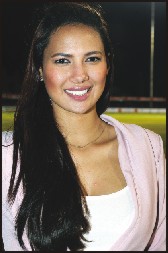
Having won a beauty pageant, any girl would want to get into movies and dominate the glamour world. In days when models want to get into movies, Rochelle Rao, who won the Miss India Inter-national 2012, has gained popularity as a presenter and anchor. She was seen as an anchor in season six of Indian Premier League (IPL) hosting Extraa Innings and postmatch analysis. Rochelle has also anchored various events and shows. She was in Mysore to anchor the first leg of Karbonn Smart Karnataka Premier League (KPL) – 2014. Star of Mysore caught up with Rochelle for a brief chat. Excerpts…

Star of Mysore (SOM): Normally, any girl having won Miss India International title would want to get into movies, especially Bollywood. But, you have chosen to be an anchor and a presenter. Why ?

Rochelle: It is that I don’t want to get into movies. But, I like being an anchor and a presenter, which I was involved even before winning the beauty pageant. My whole family loves talking and interacting a lot and moreover my sister Paloma Rao (well-known Video Jockey) has been my mentor and inspiration who helped me to learn about anchoring.

SOM: Do you plan to get into Bollywood in future ?

Rochelle: Yes for sure. But, I would like to launch myself with a Tamil movie, since I am very comfortable with the language with Chennai being my home town. In the meantime if I get an offer from Bollywood, I would definitely take it up. I also need to improve upon my Hindi before taking a project.

SOM: If you get a chance to act in a Tamil movie, whom would like to be your co-star ?

Rochelle: There are a lot of talented actors in the industry. But, among them Vikram has been my favourite actor. I would like to act alongside him.

SOM: Being an anchor for sports show, one needs to get to know with the latest updates and also know about the players. How do you update yourself with cricket ?

Rochelle: Cricket has been my favourite sport which I have been following since I was young. We do a lot of research before coming on air presenting a show. I keep updating myself about cricket happenings not just in India but across the world. Having knowledge about the sport always helps the anchor in presenting the show.

SOM: Who has been your favourite cricketer ?

Rochelle: Undoubtedly Yuvaraj Singh. I think he should have been given a chance to play in England to prepare himself for the World Cup 2015. He played a vital role for India to win the 2011 World Cup. I am sure that he would make a comeback into the team and win us another World Cup.

SOM: You have travelled across the country visiting various cricket grounds. What do you have to say about Gangotri Glades ?

Rochelle: Gangotri Glades is among the best cricket grounds that I have visited across the country. The view is wonderful and I am sure that Gangotri Glades will host IPL and International ODIs in future.

SOM: How has Mysore treated you ?

Rochelle: Mysore has been a wonderful place. My father is a photographer. We have visited Mysore together many times. Ranganathittu, has been one of my favourite places. This apart, I am familiar with the Chamundi Hill, Mysore Palace and Zoo.

source: http://www.starofmysore.com / Star of Mysore / Home> Feature Articles  / September 05th,  2014
Chennai doctor gets special training to help fight epidemics

Mohan Kumar. (Photo: DC)

Chennai:

While Chennai is keeping close watch on passengers arriving from  Ebola affected countries at the airport, the country could have additional expertise to rely on as the first batch of seven officers from across India who underwent two-year training in ‘Epidemic Intelligence Services’ (EIS) at the Centre for Disease Control and Prevention in the  USA will be returning next month.

The Union government had entered into an agreement with the USA in 2010  for a training programme to be conducted by its Centre for Disease Control and Prevention (CDC),  Department of Health and Human Services, in coordination with  National Centre for Disease Control (NCDC), Ministry of Health, India.

Dr R. Mohan Kumar from Chennai, who was the only candidate from southern states to undergo the programme, says it included training in preventing a disease outbreak, identifying it at inception and in ways and means of handling  an outbreak should it hit a region.

While the second batch of 15 candidates undergoing the course has no representative from Tamil Nadu,the third batch, which will begin training in October will  include Dr Sri Kalpana, medical officer at the Institute of Public Health in Poonamallee.

Meanwhile, director of public health Dr K Kulandaisamy says it is important for the country to adopt a system to monitor and prevent the outbreak and spread of epidemics as global travel exposes many people to a wide range of health conditions today.  “Most of the new diseases spread globally through passengers. And so it is important to identify those coming from or returning to   epidemic affected countries  and keep them under medical observation,” he stresses. //

source: http://www.deccanchronicle.com / Deccan Chronicle / Home> Nation> Current Affairs / DC / Aishwarya VP Vignesh / September 07th, 2014

MADRAS 375 – ‘Kappalottiya Tamilan’ sold rice in Madras for survival


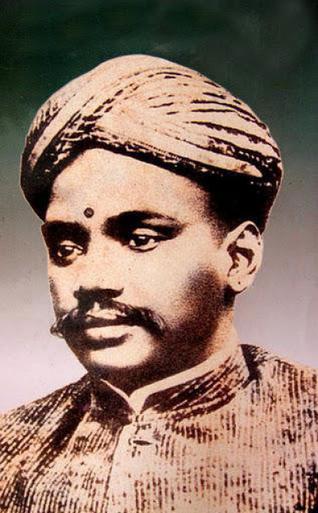
The life of 'Kappalottiya Tamilan', V.O. Chidambaram Pillai (VOC), took a drastic turn after his release from prison / by Special Arrangement / The Hindu
The life of ‘Kappalottiya Tamilan’, V.O. Chidambaram Pillai (VOC), took a drastic turn after his release from prison / by Special Arrangement / The Hindu

He was a famous lawyer, a noted Tamil scholar, and a redoubtable freedom fighter.

Cocking a snook at the mighty British Empire, he ran the Swadeshi Steam Navigation Company but eventually paid a heavy price for it.

Kappalottiya Tamilan, as V.O. Chidambaram Pillai (VOC) came to be known, was arrested and put in Coimbatore jail — where he had to pull the oil press — for his revolutionary activities.

Post prison, VOC’s life turned out to be more heart-rending. He had to eke out a living by running outlets that sold rice and ghee, in Mylapore, Chintadripet and Perambur.

“He wrote about his pathetic condition in a small poem,” said V. Arasu, editor of the collected works of VOC.

‘I used to rain rewards on Tamil scholars, but my condition is now so wretched that I have to literally beg for survival,’ VOC said in the poem.

After being imprisoned on charges of treason, VOC was released in 1912. He stayed in Coimbatore with C.K. Subramania Mudaliar, who published Periyapuranam.

He even worked as a clerk in a bank for a while, but eventually came to Chennai in 1916 and remained here until 1932. He returned to Thootukudi to spend his final years.

“It seemed everything had turned against him. He was a follower of Bal Gangadhar Tilak, but by the time he was released from jail, the Gandhians had the Congress firmly under their control. As the British government had cancelled his advocate’s licence, he could not practise law,” said Prof. Arasu.

At one point, he wrote to the founder of Dravidar Kazhagam, E.V. Ramasamy Periyar, who was a Congress leader before his transformation, requesting him to help his son find a police job so his family could be sure of at least two square meals a day.

“But poverty never killed VOC’s spirit. While in Chennai, he worked with Tamil scholar and trade unionist Thiru.Vi.Ka., and organised textile workers and postal department employees. He was the first person to organise a union for postal employees,” said Prof. Arasu.

He also joined hands with Prof. Vaiyapuri Pillai and published Tholkappiyam with the notes of Ilampooranar in 1922. He also wrote commentary for the Arathupal part of Thirukkural.

Once, he wrote an angry letter to Va.Ra., the great reformer and freedom fighter, wondering how he could afford to live in peace in Thirupazhanam, while the country was in bad shape. He persuaded him to take up the editorship of Colombo-based Veerakesari.

VOC spent his final days in his home town, Thoothukudi. The British government had, at last, allowed him to practise law.

He continued to write and publish Tamil literary works, besides giving lectures on Sivagnana Bodham, a treatise on Saiva Siddantha.

source: http://www.thehindu.com / The Hindu / Home> News> Cities> Chennai / by B. Kolappan / Chennai – August 18th, 2014

CHENNAI ON CANVAS – A studio with a view of the city

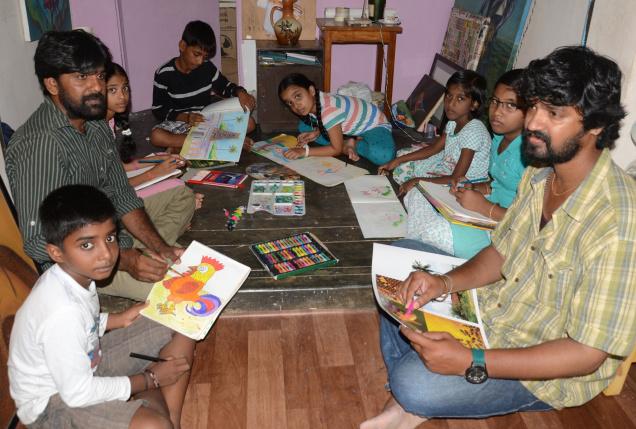
The small studio, which stands amongst a row of shops at Mootakaranchavadi, also serves as an art school in the evenings — Photo: M. Karunakaran / The Hindu

On busy OMR, artists K. Yuvaraj and N. Kirubakaran catch the attention of passers-by with their Old Madras series and portraits

Amidst the hustle and bustle of Rajiv Gandhi Salai or Old Mahabalipuram Road (OMR), this fine arts studio stands as an island of silence.

In the evenings, you can watch artists K. Yuvaraj and N. Kirubakaran, seated in front of their easels, work on an Old Madras series or portraits of people that many visitors seem to take a fancy to.

“People who are on their evening walk or shopping for their daily needs walk in and look at our work. They ask us if we can replicate famous paintings or can draw portraits to be presented as gifts for weddings and housewarming ceremonies. A pencil drawing portrait takes a day to complete,” says Yuvaraj, who has a Masters in Fine Arts. He and Kirubakaran share the space and work.

“Since Madras Day just passed, people have also taken a liking to old Madras paintings. We did some images typical of the city including those with temples, oxen-drawn carts, women in saris and houses with pyols. We are also planning a series on OMR itself,” says Kirubakaran.

The small studio, which stands amongst a row of shops at Mootakaranchavadi, also serves as an art school in the evenings. “People who walk in start asking questions about the paintings and want to know if they can draw and paint like us. Anyone with interest can learn. We get people from the IT field as students. Many of them are women who come in between 7 p.m. and 9 p.m. We also teach children during the weekends,” Yuvaraj adds.

source: http://www.thehindu.com / The Hindu / Home> News> Cities> Chennai / by Deepa H. Ramakrishnan / September 05th, 2014

German students get lessons in business skills, Indian cuisines

Coimbatore :

Seventeen students from various universities in Germany are in Coimbatore city to spend part of their summer at PSG Institute of Management, thanks to the Bavarian state government which facilitated the summer project.

The students are from different academic backgrounds, including, science, engineering and management.

They are on a 17-day tour to India and the schedule had been arranged by PSGIM and the Bavarian Government prior to the visit. Guest lectures on topics like textile engineering, entrepreneurship, cultural events, industrial visits, student interaction and sharing of tradition and culture were among the few events organized for the students.

The students arrived in India on August 31 and will also visit Kochi and Bangalore as part of their programme, spending a weekend in each city. Josef Bertler, a student of engineering science at University of Bayreuth said, “I wanted to come to India to learn entrepreneurial skills. The business tactics practiced in India, I am told, are futuristic and commendable.”

In most German Universities, students are required to undergo a summer programme between August and September.

While India is popular among students, other popular locations include China, USA, France and a few countries in South America.

The German visitors got hands-on training in cooking Indian dishes from students of catering and hotel management at the PSG College of Arts and Science.

“We learnt to make samosas, dosa and kolokottai,” said Daniela Islinger. “In return, we taught the PSG students a few German delicacies,” said Julian, who is an environmental engineering student at University of Applied Science Weihenstephan, Triesdorf.

It is not just entrepreneurial skills that attracted the German students. “India is skilled in technology too, especially when it comes to web design,” said Julian Vortendieck, a business administration student from Friedrich-Alexander University, Nuernburg.

“I find the websites of Indian organizations more user-friendly and attractive,” Julian said. He feels that the Germans are very conventional when it comes to designing their websites, while in India, innovation is integral to design.

source: http://www.timesofindia.indiatimes.com / The Times of India / Home> City> Coimbatore / by Adarsh Jain, TNN / September 08th, 2014

More students turn to entrepreneurship

Madurai :

Entrepreneurship is the buzz word in many engineering colleges in Madurai and a few colleges in the southern districts, thanks to the improving awareness among students and authorities. Other reasons are the incubation environment provided by non-profit organisations and angel investors’ network that are increasingly encouraging students to become entrepreneurs. Authorities of colleges say the decreasing number of companies and intake numbers in campus recruitment also encourage students to think about starting their own companies.

For instance, around 20% of the students in Pandian Saraswathi Yadav Engineering College are involved in developing their own ideas of a start-up. Over the last two years, a large number of students have taken to developing their own business ideas. They are inspired by their seniors who have already proved to be successful entrepreneurs. Many students get ready with their business ideas by the time they complete their course.

S P Varadarajan, managing director of the college said, “Engineering students from this region lack communication and soft skills which are needed to get selected in campus recruitment. But the students are sincere and hardworking. They are good at developing ideas. The on-campus recruitment in the last two years was also not encouraging. The support of agencies like Native Lead helps students take up entrepreneurship. In fact, 20% of our students want to start their own business.”

Similarly, many colleges help the students by setting up entrepreneurship development and incubation cells. Organisations like Indian Angel Network which provides financial support for sound business ideas and agencies have come as a boon for them.

N Suresh Kumar, principal, Velammal College of Engineering and Technology said, “Many of our students are into developing business ideas. Some of the ideas are in the final stages of starting up into a business. The students are willing to innovate and convert them into start ups. However, very few students receive support from their families. In our college, we have a centre for innovation and product development which helps the students.”

“There is a lot of sore scope in the southern districts. More colleges can come forward to encourage the students,” said R Sivarajah of Native Lead.

source: http://www.timesofindia.indiatimes.com / The Times of India / Home> City> Madurai / by Devanathan Veerappan, TNN / September 06th, 2014

Joshna, Dipika honoured

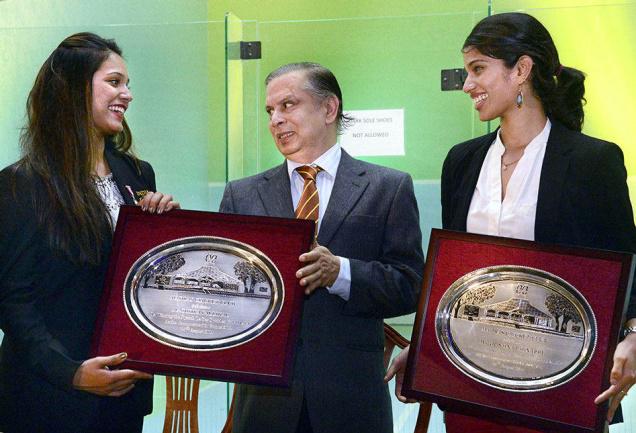
Dipika Pallikal and Joshna Chinappa being felicitated by MCC President Ajit Kumbhat. Photo : M.Vedhan

Madras Cricket Club (MCC) on Saturday honoured two of its “own children” — Joshna Chinappa and Dipika Pallikal — for having won the squash doubles gold at the Glasgow Commonwealth Games.

MCC president Ajit Kumbhat, hailed Joshna and Dipika as “role models for future generations.”

Tamil Nadu Squash Rackets Association founder member Dr. Ravi Santosham described the duo as “world champions”. Also, Joshna’s comeback from a grave knee surgery a few years ago was the stuff of legends, he said.

Former men’s National squash champion Ali Ispahani urged Joshna and Dipika “to stay out of the country for eight months (in a year)” if they wished to succeed. “If they stay out of India (and practice abroad) they can reach the top 5 (in the world),” he said. The day is not far off when the “girls from our club” will become world champions, he added.

The Hindu Sports Editor Nirmal Shekar said the growth of squash had a lot do with “N. Ramachandran (World Squash Federation president) and clubs like MCC.” He added: “they (Joshna & Dipika) will be right on top (in world rankings) in the next few years.”

Former World women’s champion Sarah Fitz-Gerald, now coach of Dipika, said both the players had “the ability to go higher.”

source: http://www.thehindu.com / The Hindu / Home> Sport> Other Sports / by Special Correspondent / Chennai – August 31st, 2014

Madras 375 – The man who chiselled the city’s skyline

RobertCF06sept2014

Robert Fellowes Chisholm’s spirit lives on in the iconic buildings he designed

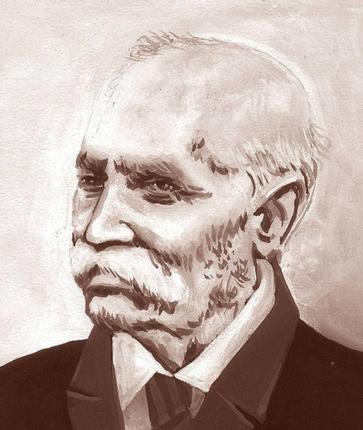
In the death centenary of architect Robert Fellowes Chisholm, it’s only fitting that we “remember the man who changed the skyline of Beach Road,” says writer and historian Sriram V. at his tribute talk on Chisholm, ‘The Indo-Saracenic Man’, as part of Madras Week celebrations. At a time when the predominant architecture was either Greek-inspired or in military-garrison method with minimal ornamentation, Chisholm is credited with blending indigenous building styles with classical British staples to popularise an architectural language that came to be called ‘Indo-Saracenic’. It defines colonial Madras to date.

Born to artist parents in 1840 in London, Chisholm came to India as a special engineer to the Government of Bengal in 1859, married the very next year and had six children in quick succession. In 1863, as part of the Puri division, Chisholm submitted drawings for an architectural competition the Government of Madras was conducting for its proposed university and senate house, which were to compete with the grandeur of Bombay’s Gothic architecture. Among 17 nationwide entries, Chisholm’s’ won. The new Governor of Madras, Lord Napier, got Chisholm immediately transferred as ‘consulting architect’ and the two became thick friends.

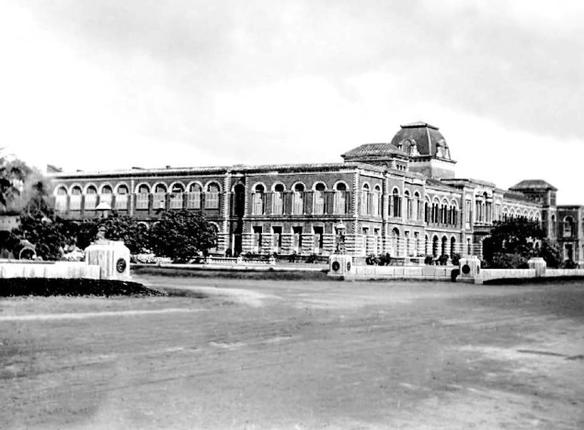
Presidency College Madras in the year 1890./  © Vintage Vignettes / The Hindu
Presidency College Madras in the year 1890./ © Vintage Vignettes / The Hindu

While the university (the present-day Presidency College) was completed by 1867, it was discovered years later that Chisholm had lifted this Italianate design from one reserved for a British hospital in Malta. “The arch of moulded bricks around the windows, an element Chisholm faithfully added to every building, marks the College as his,” says Sriram. Chisholm went on to build the Lawrence School, Lovedale, and the Nilgiris library, once again with similarly plagiarised designs, notes Sriram. Later, he built Madras’ PWD building, reminiscent of Scottish-baronial architecture, specially commissioned by Napier to hide the Chepauk Palace that Napier felt irritatingly reminded him of a time before British rule. A clue to Chisholm’s future direction in architecture though, lies in the tower he built to connect the Humayun and Khalsa Mahal wings of the Chepauk Palace. It seems inspired by the designs in Charminar, thus suggesting that Chisholm was finally acknowledging and adopting the beauty of native architecture.

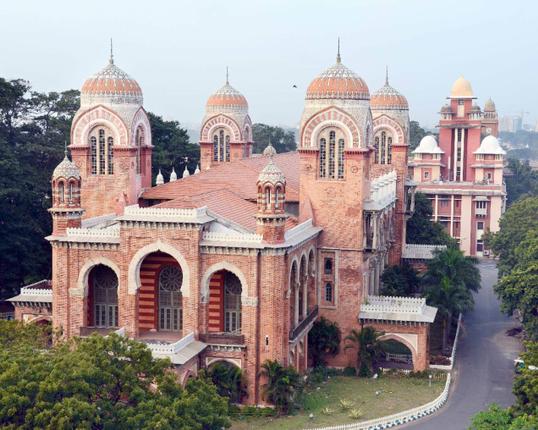
A view of Senate House in Chennai. Photo: K.V. Srinivasan / The Hindu

In 1872, Napier sent Chisholm to visit the Thirumalai Nayak Mahal, an event that changed his life. “It was love at first sight,” says Sriram. Chisholm wrote extensively of the Mahal’s ornamentation, went on to restore it, returned to Madras, and reworked his designs for the Senate with numerous ‘Hindoo’ elements, winged gods and angels, columns typical of the Mahal, and in nine years, completed the building considered his best ever work. Next, Chisholm visited the Maharaja of Kerala to design a museum there in honour of Napier and fell in love all over again with the Kerala architectural style, its sloping Travancore roofs and Mangalore tiles. Madras’ General Post Office, was to incorporate much from Kerala, in its three-storeyed building whose central hall was only one storey that stretched upward to the iconic sloping roof. “The restoration of the building sadly retains little of Chisholm,” notes Sriram.

Chisholm went on to hone his brand of the Indo-Saracenic with Madras’ Victoria Public Hall, P. Orr and Sons office, a tower of the Central Station and eventually grew “above himself,” especially in matters of accounts corruption. In 1886, he resigned, and was snapped up by the Maharaja of Baroda, where he completed work on the Lakshmi Vilas Palace, the Baroda Museum, the Makarpura Palace, law courts and a library. “All along, he was building confidence to build the Sayajirao University of Baroda, with its 74-feet diameter dome, which was the biggest free-standing dome built by the British.”

For this, he was honoured by the Royal Institute of British Architects, where he was a Fellow and lectured often. Once Chisholm returned to England in 1901, he designed the First Church of Christ, Scientist in 1907 in Sloane London, which is today a concert hall, but bears a tower distinctly similar to Chisholm’s towers at the Senate House and Chepauk, observes Sriram.

Chisholm died in London on May 28, 1915, but Chennai’s skyline still remembers him well.

source: http://www.thehindu.com / The Hindu  / Home> News> Cities> Chennai> Madras 375 / by Esther Elias / Chennai – August 20th, 2014

Jaw can be reconstructed with abdominal fat, says expert

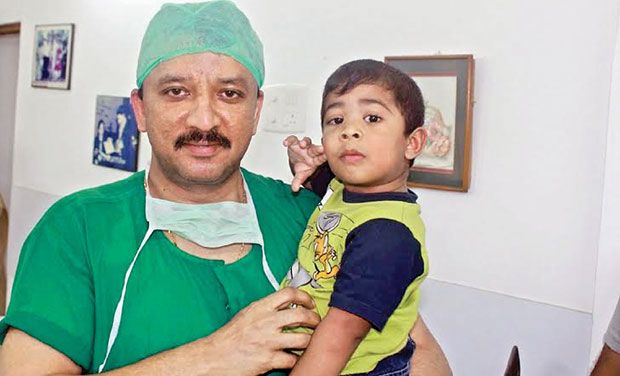
Dr. S.M. Balaji (Photo: DC)

Chennai:

Many of his surgeries are first-of-its kind and he is the doctor who introduced the latest technological advancements in reconstruction of facial defects to the city.

Director of Balaji Dental and Craniofacial Hospital at Teynampet and famous facio-maxillary surgeon Dr S.M. Balaji, says more specialists are needed in this particular field. Noted for making a great difference to the confidence and life of his patients, Dr Balaji is known for some of the most dynamic innovations in his field of specialty. In an interview to Deccan Chronicle, Dr Balaji explains how patients with jaw defects can expect to be completely normal people after surgery.

Excerpts from the interview:
Q) You are a pioneer in applying latest technology of tissue engineering. Can you explain the recent developments in the field?
A) Earlier, we used to remove the tumour of the jaw and take the bone from the hip or the leg and do a microvascular surgery for reconstruction of the jaw. It used to be a long procedure as it would go on for 10-12 hours. Also, anaesthesia is prolonged and the scar is so visible in the leg.
Now you can take the abdominal fat to reconstruct the jaw. Adipose stem cells present in the fat have inherent ability to grow into other tissues like bone, cartilage and tendons. People do liposuction and throw away the fat but it can be utilised. Since this technique is new, so far only three patients have undergone the reconstruction using abdominal fat.
Q) What kinds of defects are seen?
A) If somebody meets with an accident, a part of the bone, say, in the upper jaw, is lost and reconstruction is needed.
In case of oral cancer, after the cancer treatment, the person has to undergo reconstruction, otherwise there will be disfigurement. Given the incidence of oral cancer, more specialists are required in this field and the cost of reconstruction is affordable.
Reconstruction of facial defects has evolved over the recent years due to latest technological advancements. Craniofacial defects, be they congenital (by birth) or acquired (by accidents) or removal of tumour or cysts, they could be successfully rehabilitated.
Q) Recently, you rehabilitated a one-year-old Maldivian child with a rare type of facial bone disorder. Please explain.
A) He was born with a disorder in which the jaw bones are destroyed and gradually replaced by fibrous tissue which would cause difficulties in eating, speaking and disfigured appearance. His jaw tumour was entirely removed through the mouth without any scar in the facial region.
Using rhBMP-2 and titanium plate we reengineered the jaw bone and six months later, we could see a good amount of normal bone jaw formation and the boy was given fixed dental implants to replace his missing teeth. For the first time in the world, a rare type of jaw bone disorder was rehabilitated completely.
Q) What is rhBMP-2 and explain its benefits.
A) Recombinant human bone morphogenetic protein-2 is a biotechnologically engineered version of a protein that is otherwise normally found in the human bone.
Yes, this miracle protein stimulates the body’s own cells to convert into bone forming cells. Such cells lay down new bone at the site where the protein is placed.
By using this technology, the second additional surgery for grafting bone from the hip or rib to close the defect is entirely avoided. This technique is a boon in cases for closure of bone defects, such as alveolar cleft, a common birth defect (gap in the teeth-bearing region of the jaw).
Distraction osteogenesis is another revolutionary new technology that besides lengthening the bone, associated structures such as skin, soft tissues, nerves and blood vessels are also created.
In cases that require extensive removal of jaw bone in case of tumour or cysts, the residual jaw defect is reconstructed using plate-guided transport distraction osteogenesis that enables growth of new bone and soft tissues along the customised plate in accordance with each patient.
source: http://www.deccanchronicle.com / Deccan Chronicle / Home> Nation> Current Affairs / DC / Uma Kannan / August 31st, 2014

State Best Teacher Awards Given to 10

Vellore :

Ten teachers, including four from higher secondary schools and six from elementary schools received the State Best Teachers Award for this year.

They are: K Visalakshmi, head master of Government Girls Higher Secondary School, Poigai, P Karunanidhi, (PG teacher at SRK BHEL school at Ranipet, K Veermani of TVKV Aided High School at Vaniyambadi and G Tamilselvan of Governemnt Higher Secondary School at Vellakuttai, all from higher secondary school category.

In the elementary level, six teachers from the government middle schools received the award. They are: Jayaseelan, head master Panchayat Union Middle Schools at Thandalam, A P Janakiraman, head master, Panchayat Union Middle School at Mohamadhipettai, S Shanti, headmaster, Panchayat Union Middle School, Kalacheri, Bharathi Kandoji Rao, secondary grade teacher, Panchayat Middle School at Vandaranthangal, N Narumalar, headmaster, Panchayat Union Middle School, Anna Nagar, Natrampalli and C S Raja, Head master, Panchayat Union Middle School, Kavaraiyur.

source: http://www.newindianexpress.com / The New Indian Express / Home> States> Tamil Nadu / by Express News Service / September 06th, 2014