MADRAS 375 – Tales from leopard country

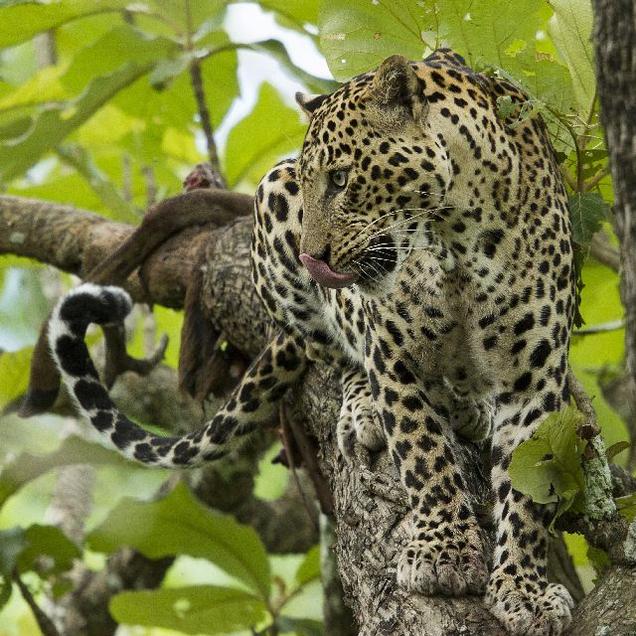
A leopard in Mudumalai, Tamil Nadu. / Photo: Jomish Mohan / The Hindu

“Those who have never seen a leopard under favourable conditions in his natural surroundings can have no conception of the grace of movement, and beauty of colouring, of this the most graceful and the most beautiful of all animals in our Indian jungles.”¯ Jim Corbett, Man-Eaters of Kumaon

Wildlife researchers say that in tiger-dominated forests, the leopards — smaller in build — keep a very low profile.

If we went by this theory, the leopards in the suburbs of Madras were lucky as there were never any tigers in this part of the State. Thus, the scrub jungles on the southern fringes of the city came to be known as leopard country. These majestic spotted animals still continue to come out of their habitat and encounter humans, who have encroached into what were once their lands. Given the fear the movement of a leopard causes among people, the outcome for the cats, more often than not, is rather unfortunate – they are trapped in cages and find themselves in a zoological park.

S. Subburayalu, former Principal Chief Conservator of Forests, who served in the city, says Vandalur and its surroundings always had leopards. In those days, they would come out whenever there was a disturbance in their natural habitat, or if there was water scarcity.

Recalling the incident of a leopard straying onto the airfield at the old airport in Meenambakkam in February 1983, Mr. Subburayalu says they received a complaint from the airport police and security personnel that a wild animal strayed into the north-western sector of the airfield. Following this, a team of forest officials combed the Cowl Bazaar and Manappakkam areas, but the animal could not be traced, he says.

Later the Forest officials did a reconnaissance using the aircraft of the Madras Flying Club. However, the animal could not be sighted. It was later identified as a black leopard, which the officials tried hard to, but failed to trap. Similarly, in 2002 a leopard from the wild strayed into the Vandalur zoo. Authorities had to keep the zoo closed for a month, he recalls. The movement of leopards continues in the urban areas near the city even today.

“In those days, human habitations were not located so close to the Reserved Forest boundaries. So there was not much of man-animal conflict. This is one of the reasons for increased human-animal conflicts today,” he adds.

source: http://www.thehindu.com / The Hindu / Home> News> Cities> Chennai / P. Oppili / Chennai, July 31st, 2014
Three-Day Expo Kicks off in Fort City

Vellore :

A three-day exposition on computers and consumer items ‘The Great Vellore Bazaar’, organised by the Vellore Association for Information Technology (VAIT) was inaugurated  by Collector R Nanthagopal here on Friday.

“This is the ninth edition of the exposition being organised this year to create awareness on the latest developments in the field of consumer electronics,” said C Arumugam, one of the organisers of the event attached to the VAIT. This time, entrepreneurs from other parts of the district had been invited to join the exhibition.

Sujith Kumar, zonal sales manager of an electronics goods-manufacturer  from Chennai, said, “Vellore is developing as an education hub, we are looking forward to explore new avenues to push our products here.”

The new 29-inch ultra-wide monitor launched recently attracted the attention of local businessmen. Youngsters were seen hovering around the low-cost all-In-One PC. A new range of smart power banks, solar chargers for mobile phones, laptops, bluetooth devices were on display. Some stalls were also selling low-cost software for billing and inventory management for business outlets.

Some stalls to promoted domestic solar power plants with latest technology, to reduce dependence on electricity. Latest range of water purifiers, domestic security systems and multi-brand computer consumables are also on display.

source: http://www.newindianexpress.com / The New Indian Express / Home> States> Tamil Nadu / by Express News Service / August 02nd, 2014

MADRAS 375 – Animal planet in Chennai

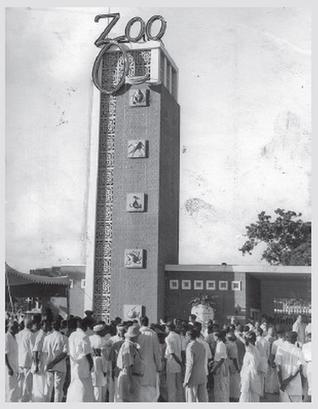
With Madras Corporation taking charge by 1866, the Madras Zoo as it was called, became the country’s first public zoo to be formed.

AnimalChennaiCF01aug2014

A century and 61 years ago, Edward Balfour, the director of the two-year-old Government Museum at Egmore was struggling to come up with ways to attract more visitors to its premises. It was then that he conceived the idea of showcasing a collection of living animals as an adjunct to the museum. The first few animals to be exhibited — a leopard, a tiger and an orangutan — proved to be a tremendous draw, leaving visitors fascinated. A couple of years later, with the generous donations of the Nawab of Carnatic, a menagerie was established in 1855. Six years later, the facility was compelled to relocate People’s Park (Georgetown) in August 1861. Edward Thurston, the then superintendant, is said to have been plagued by complaints from neighbours who were thoroughly mortified by the roars of the wild beasts housed in the Museum campus.

With Madras Corporation taking charge by 1866, the Madras Zoo as it was called, became the country’s first public zoo to be formed. Boasting of an exotic range of animals and birds, the zoo was considered to be in the league of the best including the London Zoo.

However, with the imminent threat of the Japanese bombing the city in the Second World War, the zoo faced a turbulent time. Apart from managing the exodus of panic-stricken people, authorities had to contend with the animals in the zoo, should the city be under siege.

Mayor V. Chakkarai Chetti and Commissioner C. Pulla Reddi ordered for arrangements to transport the wild animals to safer regions. The Railways were roped in to cart the animals in sealed cages on a priority basis. Mysore zoo and Erode were some of the few shelters which were willing to temporarily care for the animals. However, despite the best efforts of authorities, many dangerous species and poisonous reptiles had to be put down.

After the war, the zoo invested heavily in expansion and fresh improvements to overcome its losses. And it did.  By 1975, due to the lack of space and increasing pollution, the zoo moved outside the city limits and was named Arignar Anna Zoological Park, or Vandalur zoo as we now know it.

source: http://www.thehindu.com / The Hindu / Home> News> Chennai / Nitya Menon / Chennai – July 31st, 2014

Rs 100cr facility in Chennai for US-based firm

Chennai  :

HTC Global Solutions, a US-based IT and IT-enabled services provider, has set up a `100 crore delivery facility at Vandalur in the city. It is part of the company’s expansion drive to increase its global business in the next few years.

Company’s president and CEO Madhava Reddy told reporters here that the facility was capable of housing 4,500 employees and would support its ITO and BPO growth. “We have invested about `100 crore in this facility so far and are planning to recruit 10,000 more people globally in the next few years,” he said.

The IT giant is also considering acquiring new units.

HTC Global Services provides its clients services ranging from Mobility, ERP, Integration, Big Data Analytics, Infrastructure Services and so on. It currently has more than 6,500 employees in India operations.

source: http://www.newindianexpress.com / The New Indian Express / Home> States> Tamil Nadu / by Express News Service / July 30th, 2014

VIT Honour for Vellore’s ‘golden’ Boy

Vellore :

VIT University here has decided to honour Sathish Kumar, the Vellore youth who won a gold medal for India in the 77-kg class in weightlifting in the Commonwealth Games in Glasgow, Scotland, through a cash award. The university would felicitate him at a function to be held here after his return.

In a release VIT chancellor G Viswanathan said, the university would extend all support, including financial assistance, to Sathish Kumar, whose father N Sivalingam was also a national weightlifter and a security guard in the university.

Expressing happiness at Sathish’s achievements, Viswanathan, the founder president of the North Arcot Weightlifting Association for over 20 years said that he had done not only India and Tamil Nadu proud but also Vellore in a big way.

source: http://www.newindianexpress.com / The New Indian Express / Home> States> Tamil Nadu / by Express News Service / July 31st, 2014

MADRAS 375 – Tambaram: A suburb older than Madras itself

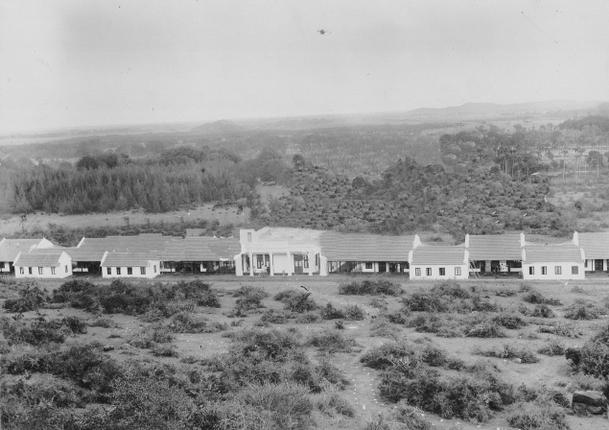
Tambaram Sanatorium hospital was opened in 1928. This photograph was taken in 1936. Photo: The Hindu Archives / The Hindu

It is a little-known fact that the southern suburb of Tambaram is older than Madras itself.

A few centuries before East India Company acquired a small patch of land, now known as Chennai, there were several pockets in its vicinity which flourished, Tambaram being among them.

Chennai’s expansion, fuelled by the establishment of premier institutions and the creation of a railway hub, has bolstered Tambaram’s status as an important nerve centre in the immediate vicinity of the city’s limits.

________________________________________________________

Dates in History
1931      first electrified metre gauge train service in the country ran in the country ran between Tambaram and Chennai beach
1937     Madras Christian College, in its 100th year, moved to East Tambaram from George Town
1954      Indian Air Force Station, a premier training institution, was set up
DID YOU KNOW!Tambaram finds mention as ‘Taamapuram’ in temple inscriptions, notably the one Dating back to the 13th century, on the walls around the sanctum sanctorum at Marundeeswarar temple in Tirukachur village near Chengalpattu

______________________________________________________

A number of pockets around Tambaram have managed to retain their old charm, with life moving at an idyllic pace in sheer contrast to the outside world.

Chennai’s expansion, fuelled by the establishment of premier institutions and the creation of a railway hub, has bolstered Tambaram’s status as an important nerve centre in the immediate vicinity of the city’s limits. Photo: The Hindu Archives

“There were only lush green fields all over Tambaram. Living close to the Indian Air Force station, we used to get unlimited pleasure at the sight of aircrafts taking off. We were even allowed to go close to the runway when we were children,” recalls K. Loganathan (55), whose family has lived in Selaiyur for three generations.

For A. Suresh, the best part of his childhood was spending time with friends in the massive vacant spaces of Railway Colony.

“Our generation was very fortunate to be able to get a close look at steam engines. The railway staff was friendly and showed us how the engine worked. We used to play hide and seek in the long rows of goods wagons in the yard,” he says.

Tambaram has had its share of scare factor too. “The area known as ‘maan thoppu’ (mango grove) was much feared, and all the children in its vicinity were told to be home before sunset,” says E. Chandrashekar, another resident.

“Tambaram has its own rightful place in history,” says Johnson Wesley, a teacher, who predicts the suburb will continue to play a pivotal role in the city’s future too.

source: http://www.thehindu.com / The Hindu / Home> News> Cities> Chennai / K. Manikandan  / Chennai – July 30th, 2014

CEG alumni take a walk down memory lane

Many forgotten memories were rekindled at College of Engineering, Guindy, on Saturday, when the class of 1985-89 got together to celebrate 25 years of passing out.

For Ravi Appan, who now works for Ericsson in the U.S., it was a chance to return to his alma mater and reconnect with the people from his past.

“The college was where I first met my wife, over 25 years ago. Although I had visited my college once, around 15 years ago, today was the first time I had the chance to really look at the campus,” he said.

The idea for the alumni meeting came up around six months ago, when P. Gopalakrishnan and R. Mahesh got together and decided the entire batch should meet. “Initially, we had just around 20 people signing up, and we almost dropped the plan. The impetus came when, around four weeks ago, close to 100 people agreed to come,” said Mr. Gopalakrishnan. “There is now a tentative plan to meet again in 2039, when we complete 50 years,” he said.

source: http://www.thehindu.com / The Hindu / Home> News> Cities> Chennai / Staff Reporter / Chennai – July 27th, 2014

Chennai based CVRDE to design futuristic tank

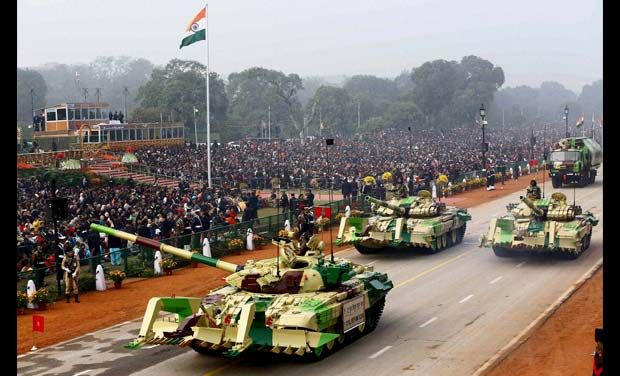
Picture for representational purpose (Photo: PTI/File)

Chennai:

The city based Combat Vehicles Research & Development Establishment (CVRDE) would soon come up with a futuristic battle tank that would trace an incoming missile from the enemy camp and retaliate with its own missile combining passive and active protection systems.

CVRDE director Dr P. Sivakumar on Monday said that their laboratory had embarked on a mission to develop a futuristic battle tank that would come with active protection system to safeguard the tank from Fin Stabilized Armour Piercing Discarding Sabot (FSAPDS) ammunition, the most lethal kinetic energy ammunition, capable of destroying all known tank armour. FSA PDS travels at a speed of over 1,700 metres per second and no country in the world has developed a technology to protect their tanks from such a lethal kinetic weapon.

“Countries like Israel, Russia, Germany and Sweden have technology for ammunition that travels at 1,000 metres per second and we are the first country to work in kinetic energy threats (missiles that travel at over 1,700 metres per second),” Dr Sivakumar said while speaking to DC on the sidelines of an international conference on energy materials at Sathyabama University.

Pointing out that CVR DE had incorporated softkill technology (passive protection technology) in main battle tank Arjun Mark 2, the eminent scientist said that if the enemy fires a missile using an infrared weapon, softkill passive technology in Arjun mark 2 would jam the infrared rays as it had only passive technology.

“Suppose the enemy fires a laser guided missile or a beam rider missile (BRM), etc, in such cases the futuristic battle tank will have laser sensors, which will identify whether it is fired from laser guided machine or BRM. The active protection system would launch grenades, which will generate smoke. By this process, we are going to hide our tank and the tank would also retaliate at the enemy by launching a missile. This way we are combining passive protection system and active protection system in a battle tank,” he said.

source: http://www.deccanchronicle.com / Deccan Chronicle / Home> Nation> Current Affairs / DC / N. Arun Kumar / July 29th, 2014

Tamil Nadu among top states with work-from-home ventures

Chennai  :

S Adimoolam, a small-time waste paper trader in Chennai, employs his own family members. Apart from cutting cost, Adimoolam saves by not spending on hiring or on rents as he operates from his own small shop.

Adimoolam is not alone. He is part of a large community which is spreading entrepreneurial movement in the state.

Consequently, Tamil Nadu has emerged top among states having more household-enterprises, says the latest Economic Census released by the National Statistical Association on Wednesday. The state has 48.36% of the establishments within households out of the total establishments in the state. The national average is 38.39%.

“There are many small establishments which work from home or as cottage industries in the state. The jobs for these establishments come from big industrial units which outsource part of their work,” business economist Raman Mahadevan told TOI. These establishments quote a lower price for the job they do and it is a win-win situation for the big industry as well as the household establishment, he said.

Adimoolam for example, mainly deals with waste paper and his wife and other relatives manage the photocopier machine and electronic typing unit. “I am not educated but with whatever I know I manage the waste paper business but my wife and others take care of the copier machines and also sell prepaid mobile cards. The shop is owned by my family and therefore we save on rent and labour by employing ourselves,” said Adimoolam.

In other areas of the state, household establishments take up jobs of making small components for industries.

“For a household establishment, there is no fixed cost in the form of provident fund and other expenditure incurred by companies for employing people on their rolls. Thus a job which normally used to be done in the company itself is being outsourced,” said Mahadevan. The example in rural areas of household establishments is the beedi rolling industry, he said.

Across the country, there are 58.47 million establishments, including those in households. Uttar Pradesh has 67 lakh establishments, followed by Maharashtra with 61.25 lakh and Tamil Nadu comes third with 50.52 lakh establishments. The overall growth rate in number of establishments during the intervening period of 2005 and 2013 is 41.73% and employment grew by 34% during that period.

In terms of employment, Maharasthra has 11.26% (1.43 crore) of the total employment in establishments excluding crops production, plantation, public administration, defence & compulsory social security services activities).

This is followed by UP with 10.77% (1.37 crore) and five states, Maharashtra, Uttar Pradesh, West Bengal, Tamil Nadu, and Gujarat have the combined share of about 46.63% of total employment in establishments at the country level.

There are about 21.93 lakh handicraft/handloom establishments, accounting 3.75% of the total number of establishments in the country.

source: http://www.timesofindia.indiatimes.com / The Times of India / Home> India / B. Sivakumar, TNN / July 31st, 2014


VIT Inks Pact with US Institute for Incubator Facility

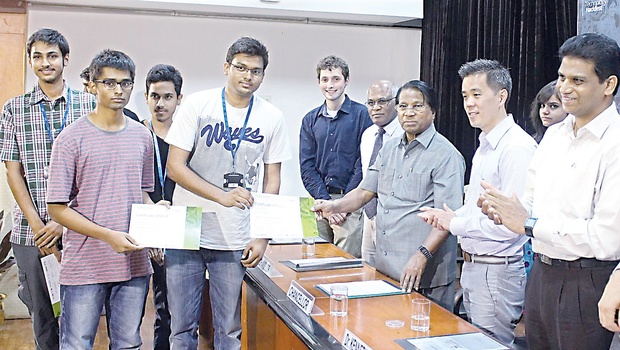
VIT Chancellor G Viswanthan handing over prizes to one of the winning teams, which participated in the ‘Makeathon 2014’ | EXPRESS

Vellore :

The US-based Massachusetts Institute of Technology (MIT) and VIT University here have joined hands to set up what they say is the first-of-its-kind incubator facility at VIT, to promote innovations by the student community.

This was disclosed by Dr Kenneth Eugine Paik, director of Sana, a volunteer organisation.

He was here to take part in the ‘Makeathon 2014’ organised jointly by the MIT and VIT on its campus since Saturday last.

Speaking to Express on Monday, Paik said, “This is first-its-kind facility that we would be setting up in India with an emphasis on capacity-building of the students to convert their ideas into business models and later patenting them also. This way we would be channelising the interest of students to the betterment of the community,” he further said. The MIT team would help as patrons and mentors for the students. An MoU would also be signed between the two universities in this regard, he added.

Paik and his colleagues from MIT and University of California have been camping at VIT, to judge the ‘Makeathon 2014’ in which around 450 students had participated.

VIT Vice-Chancellor Dr V Raju said that 34 judges and 47 mentors were involved in the selection of the best prototypes of products developed by the students in 36 hours of non-stop work. A total of 28 teams had worked on healthcare, 18 on automation, 21 on energy and 10 on media science-related products. According to him, the programme was the brainchild of the creation lab that has been set up at VIT to encourage students to find simple solutions to compelling problems affecting society. VIT vice-president Sekar Viswanathan, while handing over prizes to the winning teams at a function held on Monday, said, “We need to encourage students to think freely. The traditional education system did not do this. Universities must promote free thinking by the students and VIT had already taken a lead in this direction.”

VIT Chancellor G Viswanthan, while appreciating the students’ efforts, said VITA had been a trend setter and the Fully Flexible Credit System (FFCS) that was introduced by VIT four years ago was being introduced by IIT- Khargpur this year.

Jay Patravali, a third year student of VIT, who had received an award at the Makeathon for developing software to enable robots  communicate was upbeat with his idea. He said this software would have wide application in healthcare sector to help a surgeon to perform a surgery with the help of robots.

Sankalp and his team received an award for developing a low-cost Braille printer using any language.

Omkar and his team had developed a cranking portable mobilephone charger while Junwar and his team were awarded for developing an acupressure pad that could activate particular organs in the body.

The selected teams would also be participating in a ‘hackathon’ that is to be organised by Honeywell next month.

source: http://www.newindianexpress.com / The New Indian Express / Home> States> Tamil Nadu / by V NarayanaMurthi / July 30th, 2014