New broad gauge bay inaugurated at Golden Rock workshop

Trichy:

The newly-converted broad gauge (BG) bay for undertaking both light schedule and heavy schedule attention of EMD locomotives, was declared open by the Trichy divisional railway manager (DRM) Manjula Rangarajan at the Golden Rock Workshop on Wednesday. The bay has been constructed with elevated platforms with a pit facility for attending to the bogie. The Railway Board has sanctioned Rs 14 crore for augmenting the infrastructure at the 42-year-old diesel loco shed that has bagged the annual rolling shield for best maintained shed five times in the last nine years. Manjula Rangarajan also commissioned the newly-installed reverse osmosis (RO) type water purifying plant for the benefit of 750 employees of this shed. The 250 litre per hour capacity RO plant happened to be a new year’s gift to the employees, she said. The workforce at the shed maintain 147 diesel locomotives (71 ALCO type, 53 EMD type high horse power locomotives and 23 DEMU power cars).

Since July 2011, the diesel loco shed at Golden Rock became the first in the country to maintain EMD type locomotives with 4500 horse power that are used extensive in both freight service and in express train service. “In order to home these new breed of locomotives, the Railway Board had sanctioned Rs 14 crore for augmenting the infrastructure and for the procurement of various tools, machineries required for maintenance,” she explained.

The DRM further said that the new bay had been specially constructed with elevated platforms for working alongside the locomotives and with a pit facility for attending to the bogie and under gear items with much ease. These bays would provide additional space required for increased holding of these locomotives, she added.

Earlier, under the leadership of the DRM, all the officers and division and engineers of diesel shed and faculty of Diesel Traction and Training Centre (DTTC) carried out mass tree plantation at the training centre. Only treated effluent water discharged with the effluent treatment plant would be used for watering these trees, she said.

source: http://www.timesofindia.indiatimes.com / The Times of India / Home> City> Trichy /TNN / January 03rd, 2014
‘Oo-tea fest’ to be a major tourist draw


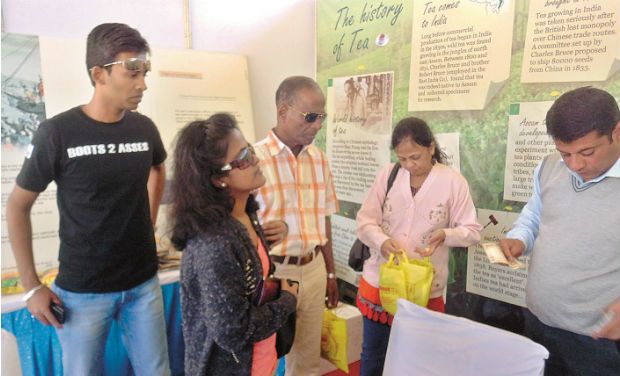
The crowded venue of the tea and tourism festival at the HADP open-air stadium in Ooty—DC
The crowded venue of the tea and tourism festival at the HADP open-air stadium in Ooty —DC

Ooty:

The aptly titled ‘Oo-tea Fest’, the tea and tourism festival organised by the Nilgiris district administration, Tourism Department and the Tea Board of India, got under way on Friday, with the HADP open air stadium, the festival venue, packed with exhibits by Self-Help Groups (SHGs), food courts, music and  cultural programmes.

The sheen is missing, however, as only five tea factories, including the two state-owned units, have come for the exhibition, bringing with them varieties of Nilgiri tea for visitors to appreciate and savour.

M. Budhic­handran, Ooty MLA  who inaugurated the show, explained the various welfare schemes being implemented by the state government for tea growers. R.Ambalav­anan, Exec­utive Director of the Tea Board of India, South Zone, in his address, touched upon the history of Nilgiris tea and trends in consumption in recent times, appealing to the small tea growers in Nilgiris, who form the bulk of the farming community in the hills, to focus on good quality to fetch a premium price for their produce in the market.

Dr P. Sankar, collector of Nilgiris, said that tea was a health drink with cardio-protective and other related medicinal traits.  He said that everyone should come forward to lend their support to the product to ensure that it took care of their health as well as that of the economy of tea growers.

N. Chandrasekar, Secr­etary of the Nilgiris Hotels’ and Restaurants’ Associ­ation, said that tea and tourism were the lifelines of the hill economy and  that the organisers should plan this festival well in advance to make both a grand attraction in the winter just as they did with the flower and fruit show in the Nilgiris.

source: http://www.deccanchronicle.com / Deccan Chronicle / Home> News> Current Affairs / DC / by B. Ramachandran / December 28th, 2013

Community groups and SHGs to maintain Tiruchi parks

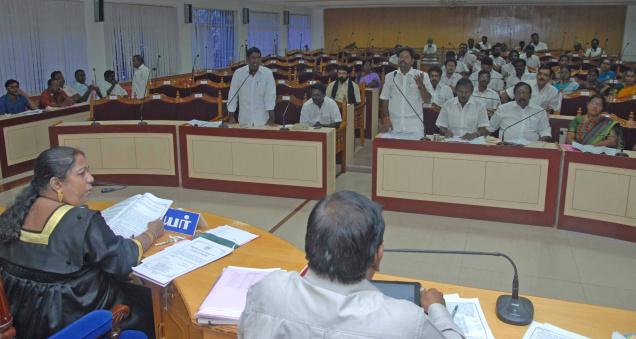
FACE TO FACE: An AIADMK councillor speaking at the Tiruchirapalli City Corporation Council meeting on Friday. / Photo: A.Muralitharan / The Hindu

They are allowed to collect user and entry fee; lights, gardens, amusement equipment, toilets lying in disuse

Tiruchirapalli City Corporation Council on Friday decided to hand over maintenance of public parks in the city to community groups and women self-help groups.

A decision to this effect was taken at an urgent meeting of the council with A. Jaya, Mayor, in the chair. Conceding the need to improve the upkeep of the public parks in the city, an official resolution that was approved by the council, said the infrastructure such as lights, gardens, amusement equipment, and toilets have been lying in disuse in many of the parks because of the absence of personnel to maintain them.

The corporation now plans to identify community (comprising residents of the respective areas) or self-help groups to maintain the parks. Initially, the parks would be handed over to the groups for maintenance for three years. The civic body would post watch and ward staff and groups would be vested with the task of maintaining the parks, including the gardens and other infrastructure. The corporation will not pay the groups any salary.

However, they may be gradually allowed to collect a user fee of Rs. 50 a month or Rs. 2 a person as entry fee to the parks. The groups will be allowed to put up milk kiosks through Aavin or other agencies.

The council approved a resolution to relocate all the 66 traders of the Vazhakkai Mandi functioning adjacent to Gandhi Market, to the Viragupettai Overhead Drinking Water Tank complex, where the necessary infrastructure will be developed.

Answering a query from M. Mohamed Mustafa of Marumalarchi Dravida Munnetra Kazhagam, Corporation Commissioner V.P. Thandapani said the OHT complex had adequate space to accommodate the traders.

The council gave its nod for constructing a new commercial complex by demolishing the diamond jubilee building, an old toilet complex, a two-wheeler parking lot, and a few shops in front of Gandhi Market as part of the civic body’s initiative to renovate and redevelop the market.

However, the move was strongly opposed by Syed Ibrahim (independent), who sought to know the fate of the 200-odd traders currently at the diamond jubilee building and wondered whether they would be allotted space at the new building or given alternative sites. Corporation officials contended that no trader had been allotted shops at the building and only platform shopkeepers were allowed to carry on their business there on a first-come-first-served basis every day.

Mr. Thandapani said measures were aimed at relieving the congestion around the market. However, alleging irregularities in the move, Mr. Ibrahim staged a walkout from the meeting.

source: http://www.thehindu.com / The Hindu / Home> News> Cities> Tiruchirapalli / December 28th, 2013

MARGAZHI MELODIES : Music and its lovers in north Chennai

North Chennai too, celebrates the season with gusto. Bharathanatyam exponent Padma Subrahmanyam speaking at the inauguration of the Margazhi Deiva Tamizh Isai Vizha at Sri Kothandaramar temple in Old Washermenpet / Photo: Special Arrangement / The Hindu

If south and central Chennai hog the kutcheries and the sabhas, north Chennai too has its own celebration of the Margazhi season, though in a much smaller way.

Every Margazhi, despite the cold mornings, a large audience gathers to listen to Tamizh Isai at the Sri Kothandaramar temple on Perambalu Street in Old Washermenpet. The Margazhi Deiva Tamizh Vizha is in its 26th year, and is being organised thanks to contributions from kind hearts that support music.

R. Mohan Kumar, a resident of Tiruvottiyur, who is at the temple every day at 5.30 a.m. to listen to discourses and the concert of the day, says it is nice to have concerts nearer home. “Earlier, I have attended a few free concerts in sabhas in Mylapore. But I am more comfortable here as I enjoy the music in the mornings and then go for work,” he said.

Margazhi Deiva Thamizh Vizha organisers, S. Mahalingam, Ma. Ki. Ramanan and S. Yugarajan said they were continuing the work of the Irai Pani Anbargal that had been conducting street bhajans for over 45 years now.

“Our aim is to encourage Tamil isai only. The musicians sing for free. We get at least 200 listeners every day,” said Mr. Ramanan. Mr. Yugarajan said that though north Madras was once home to Carnatic music, the area had lost its sheen over the years. However, organising Carnatic music festivals here had helped residents slowly learn to appreciate classical music, he said.

The Tamil Isai Sangam is a leader of sorts in propagating Pann isai (Tamil music) in the city. In its 71st year now, the Sangam was started by Sri Annamalai Chettiyar, R.K. Shanmugan Chettiyar, Kalki and Rajaji.

“Artistes are welcome only to sing Tamil songs. Even Carnatic vocalist K.J. Yesudas, who has been performing at our Sangam for 35 years now, sings only in Tamil,” said a representative of the Sangam. Yesudas will perform for the Sangam on December 28 at the Raja Annamalai Mandram in Esplanade.

Other organisations in north Chennai like the Perambur Sangeetha Sabha (PSS) in Perambur, Sri Sai Vivekananda in Kodungaiyur and Padma Sarangapani Cultural Academy (PSCA) in Villivakkam, support Carnatic music in their own way.

The PSCA had been organising music festivals for 10 years, but stopped after they found that rasikas preferred sabhas in south Chennai. PSCA secretary V. Jayakrishnan said they were unable to continue despite providing transport to the rasikas, as the response to their music festival was not good.

Kalyana Varadan of the PSS said the sabha was established in 1931 and has been organising music programmes every month, except during the kutchery season.

According to historian V. Sriram, the city’s first sabha, the Madras Jubilee Gayan Samaj, was begun in 1887 at Pachaiyappa’s Hall on NSC Bose Road. There were several other sabhas too, including the Muthialpet Sabha and the Thondai Mandalam Sabha, which was the first to ticket concerts in the late 1880s, and the Perambur Venkatesa Gunamritha Abhivarshini Sabha, which was the founder of the Madras Labour Union in 1918-19.

source: http://www.thehindu.com / The Hindu / Home> News> Cities> Chennai> Marghazi Melodies / by Deepa H Ramakrishnan & R. Srikanth / Chennai – December 25th, 2013

Tamil Nadu launches a slew of welfare projects

The CM also inaugurated projects aggregating 2,816 new apartments involving a cost of Rs 106.79-cr in other parts of the state.

JayalalithaCF05jan2014


Tamil Nadu  chief minister J Jayalalithaa has inaugurated a Rs 222.60-crore building project to be built by the Tamil Nadu Slum Clearance Board. The project comes up with 6,000 new apartments at Ezhil Nagar Okkiyam Thoraipakkam, Chennai.

The chief minister also inaugurated projects aggregating 2,816 new apartments involving a cost of Rs 106.79-crore in other parts of the state.

The Tamil Nadu Slum Clearance Board has been involved in several projects for the development and relocation of people living in slums across various cities in the state.

Besides a housing complex at Thoraipakkam, another 792 apartments at Ammankulam in Coimbatore, 207 apartments in Tirunelveli and 102 apartments in Pudukottai were inaugurated by the chief minister via a video conferencing from the secretariat.


Drinking water  projects
A host of drinking water supply projects totaling over Rs 30-crore were also commissioned by the chief minister.

These include a combined water supply project for the Melpuram union and an integrated water treatment plant in Kanyakumari district and the expansion of water supply project for the Villupuram municipality were significant, in terms of cost. The cost of the Melpuram union water supply project and the treatment plant involves Rs 16.7-crore and that of the Villupuram project at Rs 9.55-crore.

The Melpuram union project would cover 79 habitations, benefiting about 186,000 persons, ensuring 40 litres of water per capita per day (lpcd). The treatment plant was for the Kaliakkavilai, Kollangode and Melpuram combined water supply projects. The Villupuram municipality project is aimed at providing 90 lpcd and would benefit 95,439 persons.

According to a state government release, the expansion of water supply projects for Appakudal town panchayat in Erode district and Uppilyapuram town panchayat in Tiruchi would ensure 90 lpcd and 70 lpcd respectively, covering about 17,800 persons. Their total cost was Rs 94.9 lakh.

Guaranteeing the supply of 40 lpcd each, the other projects pertained to a Rs 1.85-crore combined water supply project for Chithamur and 27 habitations of Anakavur union in Tiruvananmalai district benefiting 13,756 persons; a Rs 97.5 lakh project for Melamayur and 12 habitations in Kattankalathur union of Kancheepuram district covering 7,357 persons; and a Rs 99.72 lakh project for Sumaithangi and 13 habitations of Walajah union of the Vellore district covering 11,231 persons, stated the release.

source: http://www.business-standard.com / Business Standard / Home> Economy & Policy> News / by BS Reporter / Chennai – December 24th, 2013

Amidst battle of ideas, cultures meet in Chennai

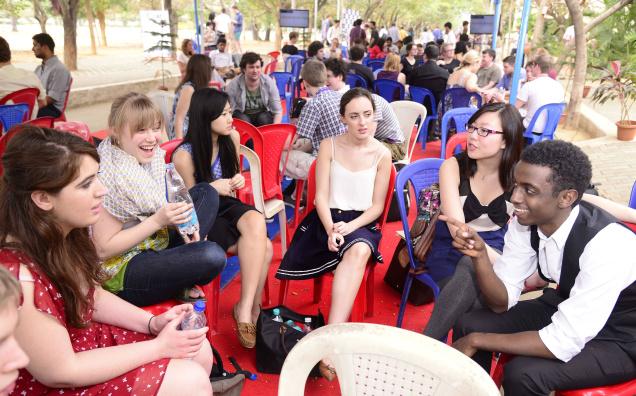
This is the first time the World Universities Debating Championship is being held in India. / Photo: R. Ravindran / The Hindu

1,200 students from 60 countries test each others’ skills in debating championship

“50 cents, now that we have adopted the US dollar,” said Austen Harrison, talking about the price of a newspaper in Zimbabwe. “Before that, don’t even ask. The currency’s value kept depreciating. It was utter chaos,” said the student of teacher education at Mutare Teachers’ College in the southern African country.

Austen welcomed the New Year in Chennai, hoping that things continue to be stable when he gets back. On Thursday and Friday though, his entire focus is on arguments and counter-arguments on a variety of issues. He is among the 1,200 participants from 60 countries who are in Chennai at the Rajalakshmi Engineering College for the World Universities Debating Championship (WUDC) 2014. This is the first time the debating championship is being held in India.

If debating is all about discussing different sides of an issue, the best argument is presented by the person who has thought of all possible angles. “One of the topics had to do with the abolition of gated communities. In Australia, inequality is much less than in developing countries. Many participants could not relate to the topic, but as I grew up in Thailand, I was able to present a cogent argument,” said James Gray, an economics student from Australia.

The topics of discussions ranged from NATO and media issues to global security threats. “Participants from English-speaking countries always seem to be at an advantage. As Asians, it is sometimes difficult to contextualise your examples. The same issues mean very different things to people from different countries,” noted Ritvik Chauhan, from the IIT- Bombay team, the only one from India among the 48 teams that qualified for the next round. His teammate Souradip pointed out that in debating, one was often forced to argue against one’s own views.

“We were supposed to talk about ‘the hook-up culture’. Though we have no problems with it, we had to argue that sometimes, such relationships rob you of the ability to emotionally connect with people,” he said.

It was not all serious debating. Joshua Baxter from New Zealand, a student of law at the University of Auckland, was fascinated with autorickshaws. “For a moment, I thought it was dangerous but I held on. I still cannot understand why drivers here honk so much.”

Lodged at a five-star hotel many of these candidates welcomed the New Year dancing to Indian music. Rosie Unwin, an adjudicator from London, said she was touched to see people on the streets on New Year’s eve, wanting to shake hands with everyone.

Some of them have made friends here too.  Liam Brown from Melbourne, Australia said he managed to have a long conversation with the security guards at the college. “They heard Australia and screamed Ricky Ponting. We then analysed how the Indians thrashed us the last time.”

source: http://www.thehindu.com / The Hindu / Home> News> Cities> Chennai / by Vasudha Venugopal / Chennai – January 03rd, 2013

MARGAZHI MELODIES : Not just artistes: Chennai Corporation School students too, serenade

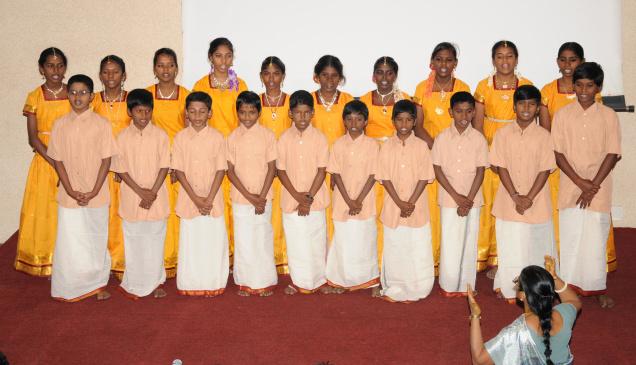
The students were trained as part of a Music Literacy Project and performed at the TAG Centre on Sunday. / by Special Arrangement / The Hindu

This Margazhi festival, it is not only accomplished artistes but also children from less privileged backgrounds who are taking to the stage.

Dressed in crisp pavadais and veshtis, 20 students from a Chennai Corporation school in Mylapore sang songs by V.V. Sadagopan and Bharathiyar among others at the TAG Centre on Sunday.

They were among the children who were trained as part of the Music Literacy Project at 16 Chennai Corporation schools.

Anil Srinivasan, founder of Rhapsody – music through education, a music initiative that runs the Music Literacy Project along with NGO NalandaWay Foundation said that TAG Centre extended an invitation to the students to perform.

Nalina Kumari, headmistress, Chennai High School, VP Koil Street, Mylapore, said the students were extremely excited. “It was a very good platform for them, and music helps greatly in a child’s development,” she said.

R.T. Chari, managing director, TAG Group of Companies, said he had heard the students earlier this year, and decided to invite them to perform in December as part of the South India Heritage Lecture programme.

“We are planning to give a chance to students from one Chennai Corporation school every year to perform during the music season,” he said.

“The mission is to take music to everybody and also indirectly build a rasika base,” said Sudha Raja, principal faculty, Rhapsody

Mr. Srinivasan said that around 100 students from both top schools and poor socio-economic backgrounds will be performing on December 28 at Bharatiya Vidya Bhavan in Mylapore.

source: http://www.thehindu.com / The Hindu / Home> News> Cities> Chennai> Margazhi Melodies / by Staff Reporter / Chennai – December 25th, 2013

Made in Madurai enthralls the city

Madurai :

It will be quite surprising to know that the China Nuclear Corporation is procuring valves from a Madurai-based company and the conveyor belts used in mines across the country are manufactured here. There were many such revelations at ‘Made in Madurai’, the three-day exhibition organised by Madurai District Tiny & Small Scale Industries Association (MADITSSIA) that began on Friday. It is generally assumed that high-end manufacturing in Madurai is negligible and the city’s economy is just about religious tourism. The exhibition is an emphatic announcement that manufacturing is thriving in Madurai and many products manufactured in the city have takers around the globe.

Aruna Alloy Steels Pvt Ltd at the outskirts of the city not only supplies valves made of carbon steel to nuclear plants in China but also supplies stainless steel valves for marine application to European countries including Norway, Germany, the UK. With consistent quality, the international orders were scaling up and the firm is expanding, the company sources said.

Madurai’s journey in manufacturing started in 1889, when Harvey Mills now known as Madura Coats, was set up. In the next few years, 27 more spinning mills came up turning the city into textile hub. Over the years, other industries also came up in the city. Renowned brands like TVS Sri Chakra, Fenner India, Hi-Tech Arai, Thiagaraja Mills, and many brands in food industry like Perry’s biscuits, Sastha oil, Anjali oil, health concerns like AVN Arokya established in Madurai by 1909 and Saibol, the ointment that cures many skin diseases established in 1937, came up. Some of these have carved out a unique name for themselves. For instance, eucalyptus tree in the region is called RS Pathy tree, after the company that started manufacturing medicine from the tree oil in Madurai since 1909.

The 125 stalls in the exhibition is representative of the sectors including engineering & fabrication, press metal components, chemical and allied products, agro products, electrical & electronics, printing & packaging, motor & pumps, paper & paper allied products, auto parts & components, pharmaceuticals, food processing, siddha medicines, granite, textiles & readymade garments, rubber and allied products. “Though many of the trade and industrial ventures were unique to the city in those days, we grew over the period adapting to changing times and technology to spread across the country. Many are not aware that Madurai supplies lot many products nationwide,” V Vinoth of Janatha Syrup company, a leading sarasaparilla (nannari) syrup manufacturer in the city.

source: http://www.articles.timesofindia.indiatimes.com / The Times of India / Home> City> Madurai / by J. Arockiaraj, TNN / December 21st, 2013

IFGTB’s afforestation initiatives in mine spoils lauded

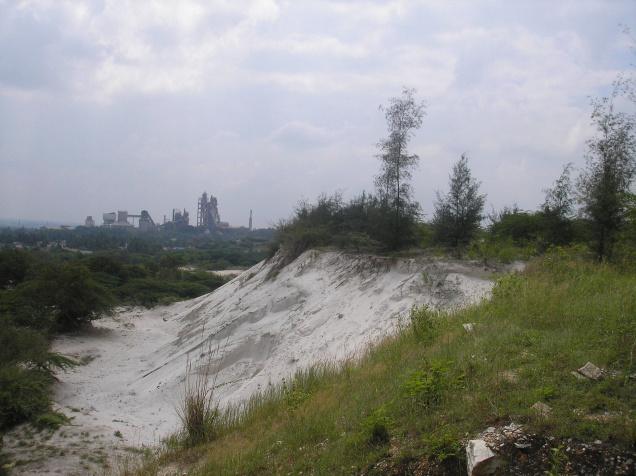
Dumping of mine spoils has always been a problem for health and environment. / Photo: Special Arrangement / The Hindu

The drive was carried out near mines in Yercaud, Salem and Coimbatore

Afforestation initiatives in mine spoils in Salem and Coimbatore districts carried out by the Institute of Forest Genetics and Tree Breeding (IFGTB) during the period 2002-06 has been lauded by the National Afforestation and Eco-Development Board under the Union Ministry of Environment and Forests in a documentary film.

The Director of IFGTB, N. Krishna Kumar, said that reclamation of mine spoil land, rehabilitation and restoration of de-graded areas has come in for appreciation. IFGTB carried out the drive in one hectare in areas closer to bauxite mine near Yercaud, in two hectares near magnesite mine in Salem and another two hectares near the lime stone mine in Coimbatore.

Mine spoils is a mixture of minerals, metals, rock fragments, and sub-soils that result from surface mining operations. Dumping of mine spoils had always been a problem for health and environment. To ameliorate the mine spoils, top spoil is spread over it before planting saplings, because top soil has good structure, water holding capacity and beneficial microbes which are very essential for plant growth.

Suitable tree species such as Acacia Auriculformis, Casuarina equisetfolie and Gmelina were inoculated with culture beneficial microbes such as Arbuscular mycorrhizal fungi, Rhizobium Phospobacterium and Azospirillum and then grown in collected mine spoils as potting media.

Seedlings grown in mine spoils with these bio-fertilisers have been improved in terms of growth and biomass. Thus, quality improved seedlings with bio-fertilisers were directly transplanted at the sites.

After this, growth and survival rate are monitored on an annual basis. Seedlings inoculated with beneficial microbes had higher growth and survival rate.

Method of using beneficial microbes for afforestation in mine spoils is cost effective and environment friendly. The reclaimed and rehabilitated sites are fast restoring, increasing the bio-diversity by attracting host of insects, butterflies and birds.

Ecological engineering using soil microbes is a sure way to restore the degraded areas in which public participation is essential, Mr.Krishna Kumar added. Now, IFGTB has specialised teams in the area of mine spoil restoration.

source: http://www.thehindu.com / The Hindu / Home> News> Cities> Coimbatore / by V. S.  Palaniappan / Coimbatore – December 21st, 2013

Meet Reviews Mahamaham Preparations

Mahamaham, the festival celebrated once in 12 years at the temple town of Kumbakonam has been scheduled to be celebrated in the month of February 2016.

Dr N Subbaiyan, Collector, Thanjavur, said that the Chief Minister had during the recent Collectors’ conference in Chennai, instructed to conduct the festival in a befitting manner.Based on this, a review meeting was conducted on Friday.

source: http://www.newindianexpress.com / The New Indian Express / Home> States> Tamil Nadu / by Express News Service – Kumbakonam / December 21st, 2013