Timeless Tanjore

PASSIONATE V.Nagarajan / Photo:S.James / The Hindu

 V. Nagarajan upholds the tradition of Tanjore paintings with a creative zeal

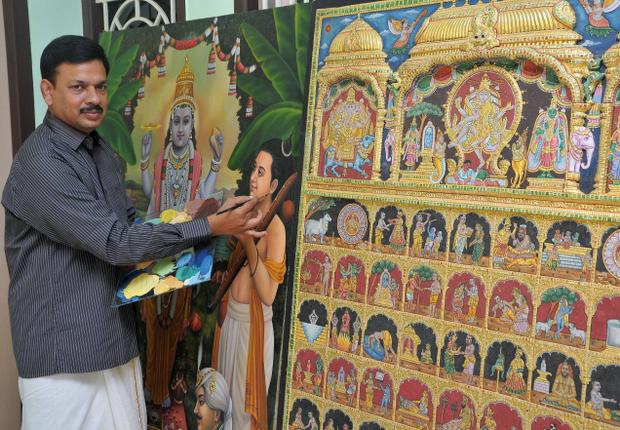
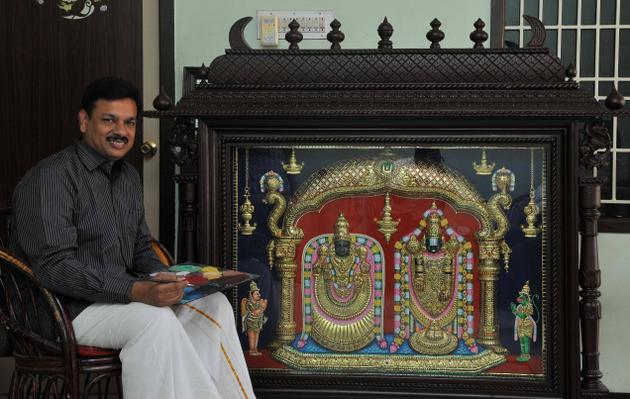
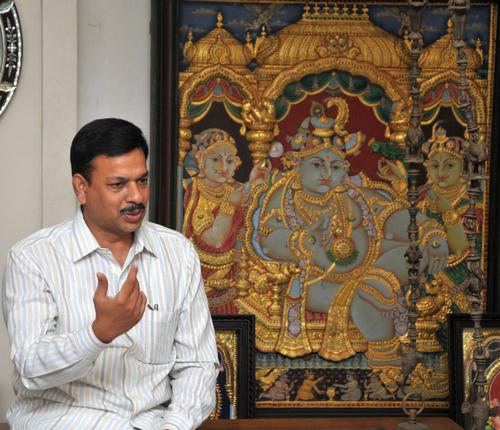
Inside V.Nagarajan’s house, you feel gods and goddesses have descended in glittering gold attire. The hall is cramped with a variety of 3D and 2D Tanjore paintings of Buddha, Balaji, sequence of paramapadam, Ramar pattabhisekams, 63-Nayanmars, Tirupati Brahmotsavam and many more. But the one which instantly grabs the eyeball is Lord Krishna, who overshadows the rest.
PASSIONATE V.Nagarajan ./ Photo:S.James / The Hindu

A glance at the work and you know why the artist has been handpicked by the Handicrafts Marketing and Service Extension Centre and Export Promotion Council of India as the craft ambassador of Indian tradition of South India that also made him travel to the United Kingdom last autumn.
PASSIONATE V.Nagarajan /  / Photo:S.James / The Hindu
PASSIONATE V.Nagarajan / / Photo:S.James / The Hindu

A resident of Karaikudi, the small town fuels his passion. He takes the cue for intricate designs, motifs and hues from the artistically designed bungalows here.

“World’s first language is art,” says Nagarajan, “Man scribbled and exchanged his ideas and thoughts.”

Nagarajan cannot be dismissed off as a Tanjore painting artist. His works are underlined with unconventional visuals but rooted to culture and tradition in theme and context. He breathes paints. He lives with every painting he writes. “Painting is in my blood,” he says, “from my great grand father’s generation.”

His great grandparents were palace painters at the Palace of Vijayanagara Empire. When the empire collapsed, the community of painters migrated down South identifying themselves as Rajus.

Nagarajan, one of the descendants of Rajus, is widely acclaimed as Tanjore painting artist of the last two decades. Though he learnt the art from his father and guru Venkatachalam Raju at the age of 13, Nagarajan went to complete a diploma course in Mechanical engineering. It was later that he decided to follow his heart and family tradition of writing and selling of Tanjore paintings.

“I am the fourth generation member writing Tanjore paintings and earning a living out of it,” he says.

Delving into the past, he says, “When the migrants came down, a few settled at Mysore and developed the Mysore School of Art. Those who settled in the Thanjavur belt during Maharaja Serfoji’s period, evolved the Tanjore paintings.”

In his opinion, Tanjore painting is unique in various aspects. “It has both art and material values. We use pure gold foil and semi-precious stones that embellishes the product.”

Nagarajan’s grey cells are at constant war to breed new ideas and innovations in the age-old art. Though Hindu images dominate the Tanjore paintings, Nagarajan tried his hand at painting Buddha in Tanjore style modelling on a Buddha statue found in Thailand.

“My aim,” he says, “is not to create a painting as a mere decorative wall hanging, it is a piece of art. “The Buddha statue is an exclusive work of art as it comes with an intricately carved and colourfully decorated door that gives us an impression of entering into a temple.

Nagarajan is credited with the design sequence of paramapadam, Ramar Pattabhisekam in 3D format aligning to the tradition of Tanjore painting. With the inclusion of more creative concepts, they have become paintings of high quality. “The market is flooded with Tanjore paintings. I need to stand out,” he asserts.

Winner of the State and the national merit certificate, Nagarajan says that he is not ready to deviate from the tradition of Tanjore paintings. But, he regularly introduces new subjects. He has made Lord Buddha, Jesus Christ and Thirukostiyur temple settings. He is also recording Ramayana concepts, temple structures and Chettinad culture in Tanjore paintings.

Though people have started using golden paper for paintings, Nagarajan continues to use only pure gold foils and semi precious stones for his paintings.

Real 22 carat gold foil is used which remains intact for years and gives a glowing appearance in the dark, he informs. Traditionally, diamonds and rubies were used. They are now replaced with semi-precious stones or glass stones. Similarly, vegetable dyes have been replaced by chemical paints but Nagarajan adheres to the old and original method.

Though art is a form that thrives on human imagination and creativity, Nagarajan closely studies archaeology and history to learn about a particular age and tradition. “This helps me to understand the colour concept of that age. I use the colours accordingly to create an art that is true to the facts and traditions of that period.”

He explains how in Tanjore paintings, the main subject gains prominence. For instance, the sitting Krishna is unassumingly big than the other standing figures. Similarly, size of the baby Krishna is bigger than that of his mother. In Ramar Pattabhishekam, Hanuman and cavalry appear tiny.

Nagarajan mostly sells his paintings to hospitals, jewellery shops, individuals and commercial establishments. His paintings serve a twin purpose. They make good decoration articles and are also a good alternative to idols of worship that warrant high maintenance. He also accepts orders for custom-made paintings.

“Though affordability factor of such paintings rides high, but we should not lose the tradition either,” he says.

“The purpose of art, culture and tradition is to delight people. Anything made with hand is important, beautiful and costly,” he says. According to him, people go for Tanjore paintings despite the cost because after a period of time these add the antique value to them.”

In response to reader’s queries, Dr Nagarajan can be contacted

@ 9443338138

or 36-A, Kothar Street, Kottaiyur, Karaikudi — 630106

source: http://www.thehindu.com / The Hindu / Home> Features> Friday Review> Art / by  S. S. Kavitha / Madurai – August 08th, 2013
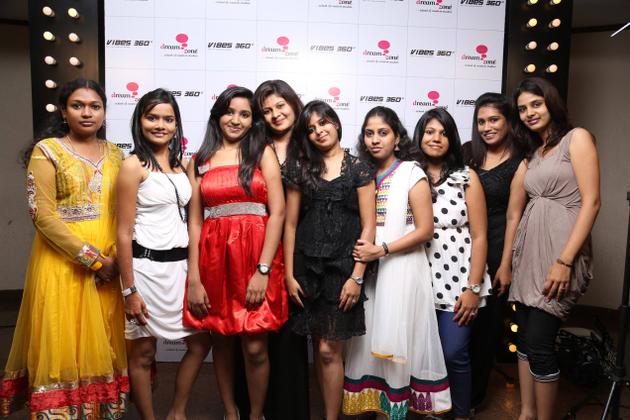
Madurai girls take to THE RAMP

Fashion collection by Madurai students

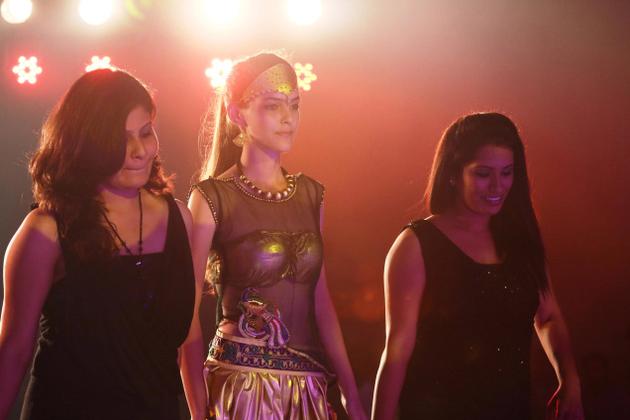
A group of seven fashion designing students from Madurai have made the city proud by showcaseding their women’s wear collection at Vibes 360 Degrees , a fashion show that happened in Chennai last week.

Last Saturday seven girls from Madurai made a mark with their prêt line at a national level fashion show held in Chennai. The eighth edition of Vibes 360 Degrees showcased over 500 ensembles designed by 100 fashion students from all over the country. Among them were 36 designer dresses from Madurai that stormed the ramp.

Fashion collection by Madurai students

Every set of garments was theme-based and the girls also created the ramp-music and mood-story.

“It was heartening to see students from smaller towns taking part in the event. The collection from Madurai was received with much applause,” beams Thangarajeshwari, Head of Madurai Centre, Dream Zone School of Creative Studies. The girls completed their Master Diploma course in fashion designing here and were part of the annual design contest of Dream Zone (CADD Centre).

Fashion collection by Madurai students

Flower-power

Theme: Dominance

Inspiration: The shapes and colours of flowers

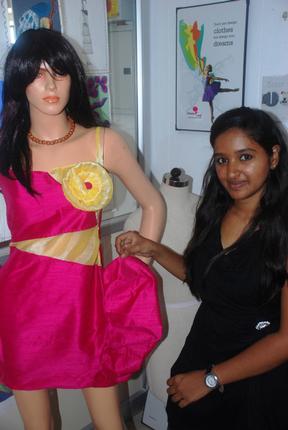
Collection: With frills, tucks, pleats and emphasis work, the six party gowns under ‘Dominance’ are simple bold and beautiful. A riot of floral motifs, circular ruffles and shapes inspired from the petals and sepals of flowers is noticeable in every ensemble and it’s that typical girly short gown that a woman would prefer for parties.

Colour palette: Bright shades of blue, orange, red and pink with a minimal tinge of black

Fabrics: All the six garments have bits of lycra with velvet for that glossy touch and a major portion of chiffon and tissue to complement compliment the party appearance.

Designer’s take: “I am a party lover basically and that’s where my idea came from. I have kept the length of all the dresses short so that they can be worn in place of hot pants and are perfect for party dancing,” says Reena. “It took me two months to complete the entire collection. Fabrics were sourced from Chennai and Bangalore.” “I want to open a boutique and launch a label,” she adds.

Ethnic chic

Theme: Contrast

Inspiration: The sepia-toned rural landscape and colourful people of Rajasthan

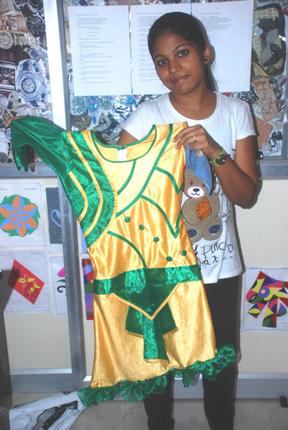
Collection: How about a Cocktail dress with Rajasthani kamarbandh and tukdi work? That’s what the line is about – contemporary and yet traditional – toeing the theme ‘Contrast’. Every garment under the collection has some Rajasthani touch. Belts resembling Kamarbandhs and waist coats designed like cholis make the entire set quirky.

Colour palette: Sky-tones, hues of nature and earth-tones – blue, green, ochre and red

Fabrics: Nets, crochet, lycra, velvet and everything flashy and shiny form the body of all the dresses while hints of cotton patch work and silver piping give the Rajasthani feel.

Designer’s take: Deshna and Gitanjali say they share a common sensibility and taste and they want to launch a label in Madurai. “I believe in innovation,” says Deshna, showing a short skirt made of handmade paper and a crochet waistcoat. “Fashion doesn’t just mean expensive clothes. I want to make fashion that’s affordable.” Gitanjali says, “We both think a bit ‘Hatke’ and we have tried to incorporate some funky element in all our garments.

Shade-play

Theme: Colour gradation

Inspiration: The shades of sky and the hues of rainbow

Collection: Here’s an exclusive set of garments meant for just shopping! Pockets, pouches and buttons and zips would help you keep cash, cards, that lip-gloss, and eye-liner and everything that you may need while shopping. Every garment is a one-piece monochrome with movement designs done in light and dark shades of the same colour.

Colour palette: Baby pink, sky blue, pista green and rainbow colours

Fabrics: Every ensemble is made of Satin, sateen, rexin and velvet. The aim is to add sheen to your shopping. Bows, buttons and Velcro is also used in many places.

Designer’s take: “I have added a utility value to all my garments apart from the aesthetics and look aspect of it. Women’s dresses hardly have pockets and pouches and this was purely an experiment,” says Priyanka Hiran. “Shopping need not be always done with a bag. Small and impulsive shopping is what my dresses are meant for.” She adds, “I aim to become an ace women’s wear designer someday.”

Fashion collection by Madurai students

Zig-zag zing

Theme: Asymmetry

Inspiration: Geometrical polygons and innovative shapes

Collection: Layers, tucks, darts and frills are the highlights of ‘Asymmetry’. It’s a peppy set of clothes with one-shoulder, zig-zag patterns and an unbalanced usage of colour. Some are printed, dotted and striped while others are plain with patchwork, stone work and other surface embellishments.

Colour palette: Peach, green, blue, yellow, red and white

Fabrics: Layers of crush, frills of net, straps of velvet and glazed synthetic cotton blend are used

Designer’s take: “I care about innovation than practicality. My collection is only meant for ramp shows. They cannot be worn everyday or even for occasions, though trendsetters can do so,” asserts Pooja. “I want to become a celebrity stylist so that I can design garment for Bollywood stars. And that’s why all my clothes are funky and high-funda.”

Glassy-glossy

Theme: Transparent

Inspiration: The delicate shapes and feel of wine glasses

Collection: Simple, elegant and transparent is the mantra of this women’s party wear collection. From bustline to waistline, every garment has a see through material so that you can flaunt off your assets! Balloon skirts, puffed sleeves and skin-hugging tops make the clothes standout. Solid plain blocks of colours with no prints and patterns complimented with a little skin-show add that dramatic effect!

Colour palette: Red, black, white, gold, pink and yellow

Fabrics: Gauze, net and rustle tissue form the see-through parts while shimmering raw silk, crush chiffon and crepe dominate the body of all dresses.

Designer’s take: “Transparent portions in a dress give visual relief to the eye. Moreover, it’s a subtle way of adding glamour,” says Payal. “I have designed the clothes keeping in mind a high profile party-going fun-loving girl. My future plan is to open a designer store in big cities.”

Fashion collection by Madurai students

Texture-mixture

Theme: Crush

Inspiration: Textures of nature – parched earth, leaf veins, water ripples and tree barks

Collection: One unique aspect of the ‘Crush’ collection is the usage of fabric textures. Earthy colours and free-flowing silhouettes make the ensembles long, layered and elaborate, but they are all wrap-around types that can be effortlessly fastened with a lace, belt or buckle. The longish gowns are versatile and can be worn for office and parties!

Colour palette: Brown, turquoise, golden yellow, green and blue

Fabrics: Ribbons, bows, tassels and frills are seen in crepe and crushed organza while the base is made of cotton, muslin and raw silk.

Designer’s take: “I have worked on the easy-to-wear (wrap) concept. My collection can be draped and gives a desi Indian feel when worn,” says Neha Jain. “I have also used Indian elements like the glass bangles and thread-ball-pompoms. In times when people are crazy about western outfits, I thought this would be a head-turner.”

source: http://www.thehindu.com / The Hindu / Home> Features> MetroPlus> Fashion / by A. Shrikumar / Madurai – July 18th, 2013

Multi-talented Manivannan passes away

ManivannanCF27aug2013

Chennai:

Noted Tamil filmmaker, writer and actor  R. Manivannan died at his Ramavaram residence in Chennai on Saturday following a massive heart attack.  He was 59. Having played character roles in more than 400  Tamil, Telugu and Hindi films, he made  his directorial debut with Gopurangal Saivadhillai.  His  last and 50th directorial venture was  Nagaraja Cholan MA MLA , a sequel to his 1994 blockbuster  Amaidhipadai.

It all began for him when as a student in  Sulur, Coimbatore district, he sent a 100-page fan mail to director Bharathyraja. And soon he found himself working as an assistant with him. Bharathyraja later introduced him as an actor in his film Kodi Parakkudhu and his popularity grew in both  comic and negative roles.

Some of his best films as an actor include Mudhalvan, Sangamam and Ullathai Allitha, Amaidhipadai, and Avvai Shanmugi. He also  turned  writer with films like Tick Tick Tick, Agaya Gangai and Kadhal Ovium. And teaming up with his best friend Sathyaraj, he directed him in 25 films.

The combo worked wonders at the box office. His protégés include Vikraman, R. K. Selvamani, Sunder C, Seemaan, K. Selvabh­arathi, Radhabharathi and E.Ramadas who have  now made a mark as independent directors in Tamil cinema themselves.

Always keen on making a film on the problems  of Sri Lankan Tamils, he was a member of the “Naam Tamizhar” (We Tamils) group and in fact he supported the Sri Lankan Tamil cause so much that he said recently, “When I die, I want my body to be handed over to (Tamil director) Seeman and my funeral must take place under his guidance.”

Manivannan is survived by wife Sengamalam, son Raghuvannan and daughter Jothi.

source: http://www.deccanchronicle.com / Deccan Chronicle / Home> News> Current Affairs / DC / by Anupama Subramanian / June 16th, 2013

The untold story of a freedom fighter


I. Mayandi Bharathi. / Photo: Soma Basu / The Hindu

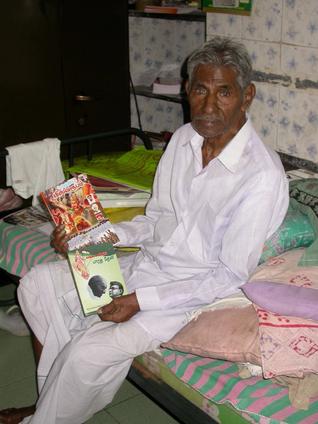
On this Independence Day, meet Madurai’s oldest living freedom fighter, I. Mayandi Bharathi, whose spirit remains intact at 97 

On August 9 every year, the Gandhi Museum in Madurai holds a function to mark the anniversary of Quit India Movement. In the last five decades, guests and invitees to the function changed. Not I.Mayandi Bharathi.

This year his attendance was doubtful as he was admitted to the hospital for treatment of dysentery. But the 97-year-old was restless and got himself discharged in time for the function.

You cannot miss the fire in his eyes as he presses the flashback button. Listening to him is like going back to the black’n’white era and reliving the historic moments that our generation has only read about in books or seen in films.

Mayandi Bharathi is Madurai’s oldest living freedom fighter who unfailingly attends the City administration’s Independence-Day function every year. There are 150-odd freedom fighters in Madurai district who are seated in a special enclosure and Bharathi’s chair is never vacant.

Though it’s been 66 years, the voice of young revolutionaries, he says, still reverberate in his ears, “Down with British Imperialism…Long Live Revolution…Inquilab Zindabad.” He was part of many such rallies and protests and was jailed over a dozen times. His life changed when he was 14. His classroom window allowed him a peep into the street opposite to where Government Rajaji Hospital stands today. “There were no buildings then, only forests. Hidden inside the shrubs was a toddy shop run by the British,” he recalls.

As part of the Congress-led picketing of shops selling foreign cloth and liquor, the Seval Dal workers were lathi charged during a protest in 1932. Watching the action from his seat, Bharathi grew restless. He excused himself from the class, rid his school bag of the books and notebooks and filled it up with stones and pebbles instead. “I ran to the spot and supplied stones to the unarmed protestors to help them to hit back. I too got beaten up by the police,” he can’t hide his smile.

When he reached home late that evening, he was admonished by his worried parents and asked to keep off such desh-bhakti activities. As he ate that night’s meal with 23 other family members (he was the 11th child for his parents, his mother bore 13 children and his father’s second wife had another five), Bharathi knew that his parents had already lost him to the patriotic fervour.

After that Bharathi became a regular at every rally that popularised swadeshi goods and khadi and boycotted collection of war funds. He went to prison numerous times between 1940 and 1946 and met several leaders of freedom movement including Pasumpon Muthuramalinga Thevar, K.P.Janaki Ammal, N.M.R.Subburaman, Sasivarna Thevar, Sitaramaiah, M.R.Venkatraman and A.Vaidyanatha Iyer who further inspired him.

Though he abided by Gandhian philosophy and principles, he was much in awe of Netaji Subhash Chandra Bose and was in the welcome committee when Netaji Bose visited Madurai in 1939. The mere recollection of the moment lit up his face. “I shook hands with him and remember he had a big hand. He told us the World War II had given us a golden opportunity to intensify the freedom struggle and win.”

An audacious freedom fighter characterised by altruistic values, Bharathi lives alone in a small cramped room on Kakathoppe Street in the heart of Madurai. At one end of the rectangular room is the kitchen and the other end has an old television perched on a small steel almirah. A charpoy in the centre seats him with support of pillows. His feet are swollen and he finds it difficult to walk without support. Every inch of space in the room, cot and the lone table is filled with papers, newspapers, booklets and books. He lives off the freedom fighters pension given by the Centre and is obviously too proud to admit that he has and continues to live in penury. He jokingly recalls how once his veshti was stolen by another patriot and he was left with only one for several months. “I never regretted the way I chose to live my life. I have no demands,” he says.

Bharathi has authored a dozen books – the first in 1939 and the latest this January – all on various aspects of the freedom struggle. He wrote for and edited the CPI journal Janashakti (1944-63) and the CPI-M’s Tamil daily Theekathir (1964-91). He laments though India attained “swaraj but sukhraj still eludes the people”. The lack of jobs and education, food and shelter, increasing crime and disrespect for women, the deepening caste-based and rich-poor divide – all dishearten him.

Remembered for giving fiery speeches, Bharathi wonders whether the billion-plus countrymen will ever be united to make India a super power and take on the challenges of modern society disabled by corruption and discrimination. Earlier, a leader’s call was enough to rouse the sentiments of the people and fight the British. But today, the so-called leaders ignore the welfare of the people, he rues.

Bharathi loves to narrate stories and meticulously maintains scrap books with photographs of leaders of the freedom movement along side notes scribbled by him. The day I called on him, he was working on his next book on the lives of different leaders. He saves his pension money to publish his books and distributes them among students, friends and laymen.

Driven by the dream of freedom, independence is Bharathi’s way of life.

(Making a difference is a fortnightly column about ordinary people and events that leave an extraordinary impact on us. E-mail soma.basu@thehindu.co.in to tell her about someone you know who is making a difference)

source: http://www.thehindu.com / The Hindu / Home> Features> Friday Review> History & Culture / by Soma Basu / Madurai – August 14th, 2013

Epiphany technical fest held

The Department of Nuclear Science and Engineering, SRM University, Kattankulathur launched its first Technical Fest ‘Epiphany’ on Tuesday. The event drew in over 2,000 students from various colleges and schools in Chennai.

The fest was inaugurated by T J Kotteeswaran, director, Madras Atomic Power Station, Kalapakkam and M Sai Baba, associate director, Resource Management Group, Indira Gandhi Center of Atomic Research, Kalpakkam, in the presence of C Muthamizhchelvam, director, Engineering and Technology, SRM University.

TJ Kotteeswaran said that Kalpakkam will soon emerge as a front runner in nuclear programs in India.

The highlights of the fest was youth nuclear summit and an exhibition by Indira Gandhi Center of Atomic Research (IGCAR).

source: http://www.newindianexpress.com / The New Indian Express / Home> Cities> Chennai /by Express News Service – Chennai / August 15th, 2013

Tamil Nadu Veterinary and Animal Sciences University releases vaccine for swine fever

Chennai :

The Tamil Nadu Veterinary and Animal Sciences University (TANUVAS) on Wednesday released a vaccine for classical swine fever, a contagious viral disease affecting pigs.

The vaccine was released by university officials at an international conference on the ‘Emerging and Transboundary Diseases of Global Importance.’ Dr V Purushothaman, director, Centre for Animal Health Studies at TANUVAS, said classical swine fever should not be confused with swine flu that affected humans.

The classical swine fever is prevalent in Tamil Nadu and northeast parts of the country. It causes death of pigs. “The spread of this disease results in a loss of Rs 10 crore annually in the country,” Dr Purushothaman said.

Veterinarians in India had been administering the crystal violet vaccine to curb the disease in pigs earlier. But the vaccine was discontinued a few years ago because of some side effects. “The new vaccine has been proved safe and potent without side effects,” Dr Purushothaman said.

source: http://www.articles.timesofindia.indiatimes.com / The Times of India / Home> City> Chennai> Side Effects / by M Ramya / July 17th, 2013

Ugam Solutions signs MoU with PSG

PSG Polytechnic College, and PSG College of Technology, Coimbatore, signs MoU with Ugam Solutions to create a Retail and Analytics Elective. 

HandshakeCF25aug2013

Ugam Solutions has signed a memorandum of understanding (MoU) with PSG Polytechnic College and PSG College of Technology, Coimbatore, to expand their student training opportunities by creating a new industry elective for retail and analytics. The college will work closely with Ugam Solutions to develop a business-based elective that will prepare students for specific and highly marketable skills within the retail and analytics fields.

The MoU was signed by Dr. R. Rudhramoorthy, Principal of PSG College of Technology and Polytechnic College, and Mr. Sunil Mirani, CEO Ugam Solutions, at the college on Monday 12th August 2013. Dr. R. Rudhramoorthy presided over the signing ceremony. Other dignitaries attending included Ms. S. Sharmila, Head of Department Information Technology, and Mr. Dharmesh Mistry, Chief Talent Officer, Ugam Solutions.

Commenting on this new academic offering, Mr. Sunil Mirani said, “While students today come well equipped with the technical skills, the application of the same in the business context is missing. With this new elective, Ugam will impart the practical understanding of the application of analytics and technology in the world of retail, thereby making students more employable”, Dr. R. Rudhramoorthy added, “Bridging the gap between academics and industry is one of the major trends of PSG polytechnic college. This MoU targets the final year students to fulfill the expectations of the industry and make them industry ready.”

About Ugam Solutions

Ugam Solutions is a research and analytics firm providing cutting edge solutions to global retailers, brands and insights-based consultancies that improves their business performance. Ugam’s analytics solutions for pricing, assortment, and content decisions help retailers and brands grow and retain their customers. Nine of the largest 25 on the Top 500 internet retailer companies are benefitting from these solutions that combine the best of domain consulting, analytics expertise and a proprietary big data technology platform. Learn more at www.UgamSolutions.com

About PSG Polytechnic College

PSG Polytechnic College, established in the year 1939, a pioneer institute in the field of Technical Education and Research is a Government aided, ISO 9001 certified institution with Autonomous status from 1976. This aids it to have a flexible curriculum and updated syllabi. The Polytechnic College has the best laboratories with free access to the students and prepares them with the latest method of learning industrial practices. The industry attachment Programme, compulsory for all courses provides the students an exposure for current industrial practices. The college is located in the same campus as the PSG Industrial Institute.

source: http://www.moneycontrol.com / MoneyControl / Home> News> Business / by Business Wire India / August 14th, 2013

When the anklets jingled

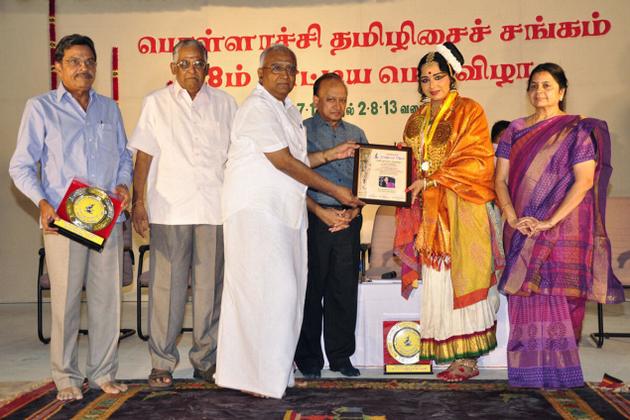
Gopika Varma receiving the title 'Nattiya Kalai Sudar' / by Special Arrangement / The Hindu
Gopika Varma receiving the title ‘Nattiya Kalai Sudar’ / by Special Arrangement / The Hindu

The 28 dance festival organised by Pollachi Tamizh Isai Sangam brought together myriad dance forms on one stage.

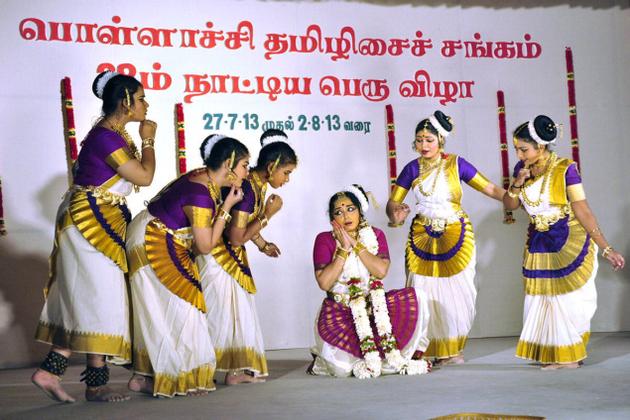
The new auditorium at N.G.M. College, Pollachi, reverberated with the delightful sounds of music and anklets for seven days as Pollachi Tamizhisai Sangam brought together various styles of Indian classical dance for its 28th dance festival. Gopika Varma, renowned Mohiniyattom dancer and director of ‘Dasyam’ dance school, Chennai, was honoured with the title ‘Nattiya Kalai Sudar’ on the inaugural day. This was followed by her dance presentation along with her disciples.

Gopika Varma with her disciples / by Special Arrangement / The Hindu

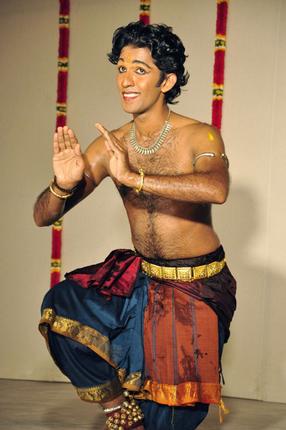
On one of the days, K.M. Jayakrishnan (sponsored by the Tamil Nadu Iyal, Isai and Nadaga Mandram), put up a sprightly performance. His abhinaya and footwork reflected his training at Kalakshetra. Depth of knowledge and mastery of technique were evident in the choreography. The meaning of the phrase ‘Shivena Saha Modhate’ (from Siva Panchaksharam) came alive beautifully as he depicted the kundalini’s rising and reaching the ‘sahasraara chakra’, resulting in complete bliss.

K.M.Jayakrishnan / by Special Arrangement / The Hindu

Jayakrishnan had not included extensive sancharis for his varnam ‘Chalemela Jesevayya’ in Nattakurinji. But, the sanchari for ‘Enna Punniyam Seidheno’ by Oothukkadu Venkatakavi, describing Ekalavya’s gurubhakti made up for that. The way Ekalavya shaped his guru’s image from clay, his utter faith in his guru, his joy when he saw him in person and the promptness with which he cut off his right thumb and placed it at Drona’s feet as gurudakshina carried the spectators to another era. The orchestra was satisfactory. The introduction was neither adequate nor impressive.

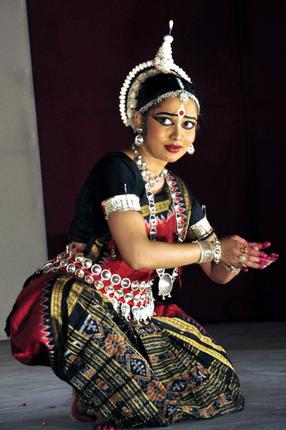
Shatabdi Mallik / by Special Arrangement / The Hindu

Shatabdi Mallik and her disciples exhibited grace and speed during their Odishi performance. Dressed in traditional Odishi headgear and silver jewellery, Shatabdi nimbly flitted across the stage, using her body as a willing medium for expressing her art. Her face seemed to pour out emotions effortlessly and her piece on ‘Navarasa,’ choreographed by Guru Deb Prasad Das, was a visual treat. She brought ‘hasya’ along with ‘veer’ rasa while depicting the lifting of Siva’s bow during Sita’s swayamvaram. Her masterpiece was the depiction of karuna rasa. The suffering of the wounded bird and the protagonist’s sympathy for the bird were portrayed vividly. After the Ashtapadi, ‘Lalitha Lavanga,’ Shatabdi and her disciples concluded with ‘Moksha,’ a dance item that prays for peace and welfare to all.

Yazhini / by Special Arrangement / The Hindu

Stupendous task

‘Inidhe, Tamizh Inidhe’ a Bharatanatyam performance comprising Tamil songs with excerpts from the Thevaram, Silappathikaram, Bharatiar’s songs and Arunagirinathar’s Tiruppugazh was presented byYazhini, disciple of Himaja Ramsharan, Chennai. Her varnam ‘Mangaiyar Potrum Maathavappudhalvi,’ composed by Sikkil B. Balasubramanian narrated the story of Kovalan and Kannagi. Himaja’s brief but comprehensive introduction lent strength to Yazhini’s performance. It is a stupendous task to narrate the whole story of Silappathikaram in a varnam, but the composer had succeeded in doing it and Himaja had strengthened it with her choreography.

Yazhini’s dance showed she had learnt well, but she has to internalise the craft and present it in her style. The padam ‘Chinnanjiru Kiliye’ could have been livelier. Himaja’s nattuvangam was majestic and the orchestra comprising Latha Ramchand (vocal), Mayuram J. Shankar (mridangam), Sikkil B. Balasubramanian (violin) and P.V. Ramana (flute) was impressive.

S.M. Sowjanya and R.K. Krithi (Guru- Jayanthi Ramachandra), Dr. P. Ramadevi and disciples,Rajashri Gopinath (Guru- Lalitha Ganapathy), Sinni Joshi, (Guru- Padmini Ramachandran),Ramya Venkataraman (Guru-Dr. Padma Subrahmanyam) and Aniruddha Knight were the other artists who performed on the first four days.

B. Ramadevi

source: http://www.thehindu.com / The Hindu / Home> Features> Friday Review> Dance / by B Ramadevi / Chennai – August 15th, 2013

AIF to launch tuition centre today

It is to improve the performance of Coimbatore Corporation school students

The American India Foundation (AIF) is going to launch a ‘DE Tuition Centre’ here on Wednesday to improve the academic performance of Coimbatore Corporation school students of Classes VI to IX.

The centre is coming up under the Digital Equaliser (DE) initiative of the civic body under which information technology and activity-based approach are adopted to make the curriculum easier for children to comprehend.

V. Alexander, Regional Coordinator (DE) – Tamil Nadu of the AIF, which has a tie-up with the Coimbatore Corporation, told The Hindu here on Tuesday that the tuition centre was aimed at achieving a 20 per cent increase in marks in the examinations.

Initially, 20 students in Classes VI to VIII would be given training in one subject a day, after which the project would be scaled up.

An audio–visual classroom would be utilised to develop subject knowledge during the tuition classes, which would also feature group discussions to improve collaborative learning. The sessions would focus on developing concentration, self confidence and increase the Intelligence Quotient level of the students.

He said that the classes were structured to enable the students to have a better conceptual understanding. The classes were open for students of all the Corporation schools. The student’s assessment will be made though tests held on weekly, monthly and term basis.

Mr. Alexander said that the tuition centre was coming up at the DE office in Corporation Elementary School at New Siddhapudur.

The classes would be held daily from 4.30 p.m. to 6 p.m. except on holidays. The DE coordinator would conduct the classes. This project was part of ‘Digital Equaliser’ Programme – for which the civic body had inked a three-year Memorandum of Understanding (2012-15) with the AIF under which subject content was provided in Tamil language through technology. It covered all the 10 high schools, 16 higher secondary schools, and one special school of the Coimbatore Corporation, which had provided 464 computers for the project.

source: http://www.thehindu.com / The Hindu / Home> News> Cities> Coimbatore / by R. Sairam / Coimbatore – August 14th, 2013

Soon, a memorial for Kongu chief who built grand canal

Coimbatore :

Seven hundred and thirty years after he built the 56.5 mile long Kalingarayancanal to connect River Bhavani with River Noyyal, hoping to enhance irrigation facilities in the Erode region, a fitting memorial for the Kongu chieftain Kalingarayan inKalingarayanpalayam, where the irrigation canal originated, is in the pipeline. PWD Minister K V Ramalingam has confirmed that the memorial would come up inside a children’s park where there will be a special column and statue of Kalingarayan.

A memorial for the chieftain has been a long pending demand from the Kongu Vellalar community. Long forgotten by authorities, there is no memorial of Kalingarayan anywhere in Western Tamil Nadu. When the minister visited Kalingarayanpalayam recently, to release water through the canal, the locals urged him to initiate the long pending project.

The canal supports one of the largest ayacuts in the state. It irrigates vast stretches of turmeric, sugarcane and paddy fields. So, its creator must get a fitting tribute,” said Ramalingam. The canal had deteriorated in recent years and a massive renovation is in progress. Efforts to ensure smooth flow of water till the tail end of the canal and prevent the flow of sewage and industrial waste into it are going on. The canal is the worst affected waterway in the district due to indiscriminate dumping of untreated effluents by the textile processing and tannery industries.

Kalingarayan has contributed significantly to the region’s development. Born Lingaya Gounder around 1240, he rose to become Veera Pandian’s (1265-1280) chieftain,” says Periyaswami Prahladan, a farmer on its banks. The PWD is planning to build the memorial at an estimated cost of Rs1crore. In the beginning, the canal irrigated only about 3,500 acres, as historian and traveller Francis Buchanan noted in his diary, later published as ‘A Journey From Madras Through the Countries of Mysore, Canara, and Malabar”.

Buchanan visited the entire region as per the orders of then British Governor General Marquis Wellesley to check the state of agriculture from April 23, 1800 to January 15, 1801. In his book he writes that Kalingarayan’s family never seemed to have received any reward in the form of land on account of the grand canal that he built.

source: http://www.articles.timesofindia.indiatimes.com / The Times of India / Home> City> Coimbatore> Industrial Waste / by K A Shaji, TNN / August 14th, 2013