It’s time for balle balle!

At Tadka Talk / Photos: R. Shivaji Rao / The Hindu

THE RELUCTANT GOURMET.

We board the train at Chintadripet. Desolate and dimly lit, the station looks like the perfect setting for a fight scene. Trains always make me think of ‘Bread-Omelette’. However, the only thing we find on the local trains are phone numbers, scrawled across the walls in thick red and black marker. After staring at the ‘call me’ messages fixedly, my colleague snaps open her chic Miu-Miu handbag and starts writing them down. I look at her with horror. “This has to be the worst way to find a boyfriend — ever,” I snap. She punches my arm angrily. “Of course I’m not going to date them,” she shudders. “But we should call all the numbers anyway. Think of what a great story it will make.” Ah. Investigative research. I finally agree to help. A crowd collects to watch. Ah Velachery. Always an adventure!

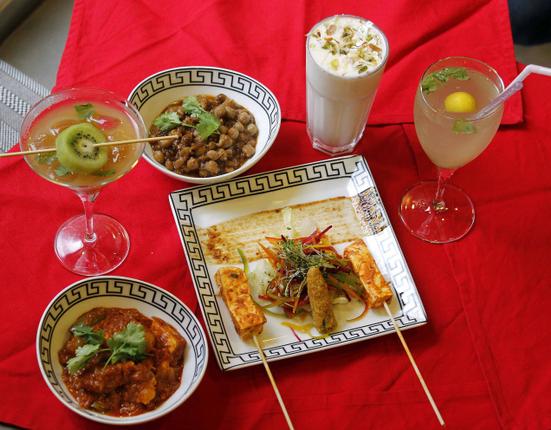
We’re headed to Chef Jugesh Arora’s new Tadka Talk. Racing out of the station, we take an auto and plunge into Velachery’s open drains, pungent cows and boisterous traffic. Then we stop on a quiet side street and walk into a restful space, flooded with natural light and the scent of fresh herbs. The interiors are quiet and calming, with clean lines and a restrained use of colour. But what cheers us up the most are the martini glasses filled with chilled ‘Ambi kiwi panna,’ a refreshing mix of raw mango, kiwi and cumin.
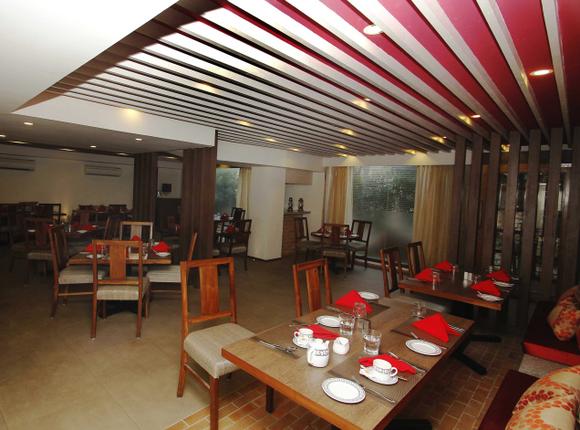
At Tadka Talk / Photos: R. Shivaji Rao / The Hindu

Tadka Talk offers vegetarian and vegan Punjabi food in a new avatar. Punjabi food, of course, has always been popular, with its cream-laden curries, ghee-drenched naans and meaty kebabs. However, the style of cooking that exploded in India is designed to appeal to mass market. It borrowed items from North West Frontier cuisine, lifted recipes from the roadside dhabas and sneaked in more spice, all to exaggerate flavours, colour and taste.

While this was a great way to introduce these flavours to the mass market, it also means that by now the heavy ‘Punjabi’ food we eat at most popular restaurants is very different from the food Punjabis eat at home. Chef Arora’s mission is to get back to his roots, rediscover the cuisine, and then reinterpret it for a contemporary audience looking for food that is light, healthy and stylish.

As we eat delicately grilled bhutte kebabs, where the natural sweetness of the corn is tempered by the fierce heat of green chillies, Chef Arora explains why he’s so determined to promote home-style cooking. “Punjabi food is never heavy,” he says, “We don’t use cream in our daily food. Most of our cooking is done in mustard oil. Everyone uses dal makhni as an example of heavy Punjabi food, because it’s full of white butter. But it’s actually from Afghanistan!” He adds that his wife, Deepa, has worked with him on the recipes. “It’s all typical home food, which we have made even lighter. Instead of frying, we use the tandoor and grill… We also use lot of fresh nutritious ingredients…” He holds up a tray of fragrant mustard. “It’s grown right here in the restaurant, takes about six days to sprout and we use it in our cooking. “

Our pillowy rectangles of paneer tikka are accompanied by a tangle of yellow, orange and red peppers scattered with sprigs of delicious fresh mustard. It’s followed by a flat spiced mushroom cappuccino, thin and afloat with cinnamon. Fortunately the meal bounces back with our main course. A steaming emerald-green Amritsari version of sarson da saag, blending mustard leaves with radish, spinach and dill leaves. It’s served with the traditional makki ki roti, a bowl of grated jaggery and home churned butter: dangerously delicious. “We might need to come to Velachery more often,” I whisper to my colleague.

Then the parathas arrive. Flaky and flecked with methi. We eat them with pindi channa, spiked with dried pomegranate. “Hmmm. Maybe we should come this side more often,” says the colleague, spooning up cool creamy raita flavoured with roasted cumin.

I know what the real lure is. She’s spotted dessert. Velvety phirni freckled with nuts. Blistering gulab jamus. And spongy rasmalai in saffron soaked milk.

And now if you’ll excuse me, I have some phone calls to make.

Tadka Talk is at Velacity by Purpletree, 6&7 Ramagiri Extension, Opposite TCS, Taramani Velachery Link Road. A meal for two is roughly Rs 500. Call 4321 3838 / 4321 3939.

source:  http://www.thehindu.com / The Hindu / Home> News> Cities> Columns> The Reluctunt Gourmet / by Shonali Muthalaly / April 04th, 2013

New Year almanacs


Panchangam
Panchangam

The advent of Tamil New Year Vijaya is round the corner and almanacs are ready to hit the stands. Sri Desika Darsana Diary and Guide contains matters of astronomy, important dates and do’s and don’ts. It has slokas and valuable information for Vaishnavites. Released on the occasion of the 90 jayanti of Sri Seva Swami, the diary is priced at Rs. 60. Contact 044-26180481.

The Brahmin Welfare Association, Triplicane, also gives vital information for followers of Sanatana Dharma, especially Vaishnavite,in a simple style. The positions of the planets in the new year have also been given. Contact 28441503, mobile 9840227436.

source: http://www.thehindu.com / The Hindu / Home> Arts / April 04th, 2013

Bryant Park gears up for flower show

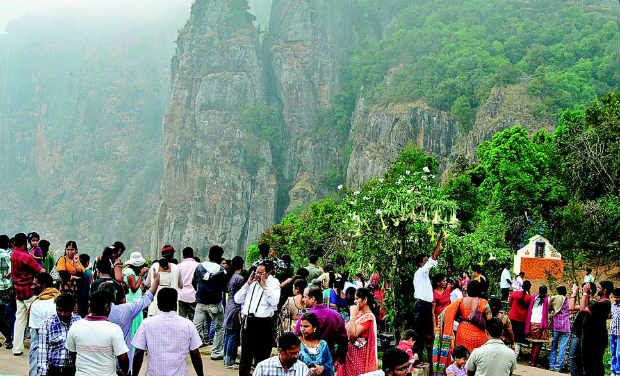
A view of pillar rock in Kodaikanal. —DC

Madurai:

Kodaikanal, the princess of hill resorts, is bursting at the seams  despite a dry spell.

With the sun showing no mercy on the residents in the plains, tourist influx to the popular hill station in the south Tamil Nadu is soaring.

“The average arrival of tourists during weekdays is 3,000 and during weekends is 5,000 now. If the colleges are closed for vacation, there will be a steep rise in the number of tourists visiting Kodaikanal. We expect a considerable increase in the influx this summer,” says an official in the tourist department.

Exhibiting flamboyance with 75 percent of 3.5 lakh plants planted for the ensuing flower show blooming in splendor, the Bryant Park spread on 20.5 acres has attracted 21,000 visitors since the beginning of April.

Horticulture deputy director S.Raja Mohamed says, “Put together, the revenue collected through sale of tickets to visitors to Bryant and Chettiar parks is Rs 6.2 lakh in the last 12 days.” Even as  Bryant Park has been readied for the flower show, he says, fancy varieties like California Poppy, popularly called Singamuga poo (lion-faced flower) in local lingo, and andraeanum, a frog-shaped flower, are in full bloom.

Anticipating traffic congestion and problem in parking tourist vehicles as encountered in the last few years, the municipality in coordination with highways and forest departments is making arrangements to level the government lands along the approach roads to sight-seeing places.

“Usually, the stretch of tourist spots from Green Valley View, Pillar Rock, Guna Caves, Moyer Point to pine forests is choked with vehicular traffic during peak season. So steps have been taken to level the forest and revenue lands on the roadsides in these sites to facilitate parking of vehicles,” an officer in the municipality said.

“The pleasant climate is drawing crowds from the plains to the hills. Hence, we are also chalking out plans to mitigate water shortage,” he added. Kodaikanal recorded a minimum temperature of 17 degree Celsius and maximum of 24 degree Celsius on Friday.

source: http://www.deccanchronicle.com / Deccan Chronicle / Home> News> Current Affairs / DC / by AR. Meyyammai / Saturday, April 13th, 2013

Assamese cultural fest on April 14

The Assam Association, Chennai, has organised an annual spring festival ‘Rongali Bihu’ on April 14 at CLRI playgrounds, Adyar.

The festival will bring people Assamese community in the city together to celebrate the Assamese New year.

Many Assamese folk cultural performances including Husori and Jeng Bihu, and Assamese local food-making competition are all part of the festival

For more details,  call 9444391730 and 9840588738.

source: http://www.newindianexpress.com / The New Indian Express / Home> Cities> Chennai / by Express News Service – Chennai / April 04th, 2013

‘Tamil Nadu, Rajasthan have good auto industry potential’

Kolkata :

Tamil Nadu and Rajasthan have the highest growth potential for the automobile industry for adding new and first time customers, an Assocham study said Wednesday.

According to the study, titled “Automobile Industry in India: Saturated and Potential States”, both Tamil Nadu and Rajasthan have registered a high growth in employment generation, per capita income and monthly per capita consumption expenditure share in durable goods and are ahead of the national growth in the three key indicators.

“Tamil Nadu’s gross domestic product (GDP) and motor vehicles registration growth are also more than the national level growth,” said D.S. Rawat, national secretary general of industry panel Assocham (Associated Chambers of Commerce and Industry of India) while releasing the findings of the study.

Andhra Pradesh, West Bengal and Gujarat have been identified as possible opportunity states as they have performed better than national average and also have a high share of untapped growth, according to a release here.

Lack of infrastructure, geographical challenges and population density were certain constraints faced by automotive companies to expand their presence in rural markets, the study said.

source: http://www.twocircles.net / Two Circles / Home> India News / April 03rd, 2013

First flight departs from Chennai’s new airport terminal

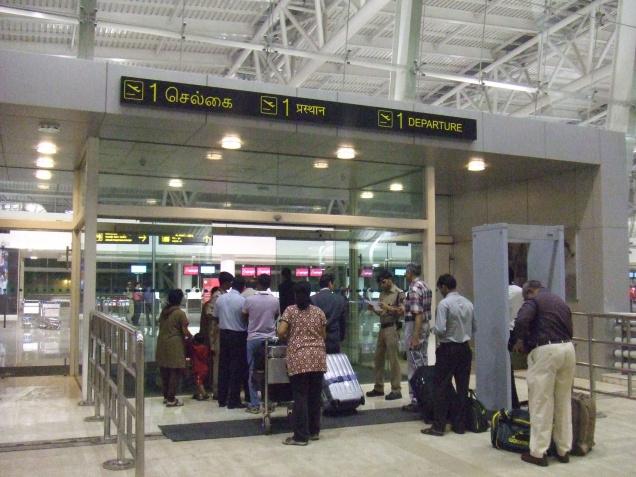
Passengers waiting to enter the Chennai airport for departure. (Photo: T.E. Raja Simhan) / Business Line

Chennai :

At 4.15 am, the departure area at the new airport terminal was buzzing with activity. Passengers came flocking to board the SpiceJet flights to Pune and Kolkata just past 5 am.

The take-off of two SpiceJet aircrafts marked the start of regular departure of domestic flights from the new Chennai airport terminal.

It was a ‘flawless’ take-off, said an airport official.

On the auspicious day of Amavatsya on Wednesday, the first flight (a SpiceJet) took-off from the new terminal.

A team of uniformed officials from the Airports Authority of India were all over the terminal guiding passengers to ensure the smooth departure.

source: http://www.thehindubusinessline.com / The Hindu Business Line / Home> Industry> Logistics / by T.E. Raja Simha   raja.simhan@thehindu.co.in / Chennai, April 11th, 2013

Trisha launches Magnum ice cream in Chennai

Southern diva Trisha launched Magnum ice cream in Chennai recently. Unilever rolls out its premium Magnum ice cream bars in the country this month to cash in on the growing aspirations of India’s increasingly affluent consumers this summer. The Anglo-Dutch multinational’s Indian unit, Hindustan Unilever, will launch Magnum bars ” premium vanilla ice cream on a stick wrapped in thick Belgian chocolate shell ” in Chennai.

Trisha who is the brand ambassador for Magnum ice cream recently tweeted before the launch “Happy 2 announce Ill b d brand ambassador fr my most fav ice cream brand.Soon 2 b launched in India..Will kip u posted.til ten Ssshhhhhhh.”

Magnum ice cream bars, tweaked to appeal Indian consumers’ taste buds, will be shipped from Unilever’s Thailand factory and will be sold through supermarkets, select general trade and its own ice-cream parlours and trikes (tricycles). The largest ice cream brand in Europe, Magnum debuted in the US in 2011 and recorded sales of $100 million in its first year. It is now sold in more than 50 countries and even in emerging markets such as Indonesia it is one of the best-selling ice creams despite its premium positioning.

source: http://www.articles.timesofindia.indiatimes.com / Times of India / Home> Entertainment> Regional / TNN / April 02nd, 2013

Agriculture beckons Madurai’s entrepreneurs

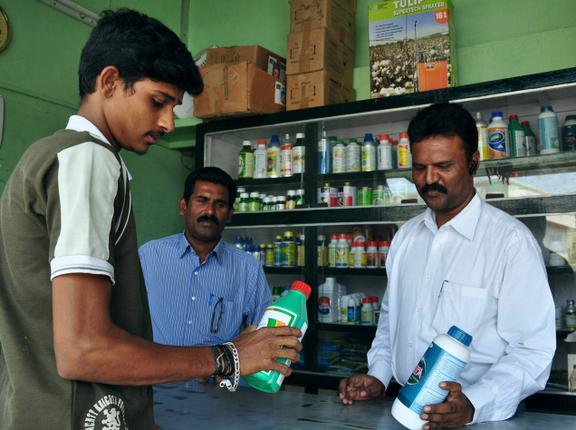
An agri-business centre in Madurai. /  Photo: R. Ashok / The Hindu
An agri-business centre in Madurai. / Photo: R. Ashok / The Hindu

 Graduates moving away from secure government jobs

V. Rajesh Kannan, now 39, was at a crossroads when he completed his bachelor’s degree in agriculture in 1994. Today, he is a successful agripreneur and a net-worth individual with a growing business.

His is among the success stories of agriculture graduates who break out of the pattern of looking for the security of a government job and, instead, dare to venture into agribusiness that includes sale of seeds, pesticides, fertilizers, cattle feed, bio and organic inputs, among other things.

“Success did not come overnight. I first worked as an executive in a private company for 10 years, rose to the level of manager, learnt the nuances of agribusiness and then started my own venture. There is a lot of scope in this field but not many dare to enter it,” he says.

Mr. Kannan was part of the second batch of trainees who underwent a two-month training programme in 2004 on ‘Establishment of Agri-Clinics and Agri-Business Centres’ (ACABC) conducted by Voluntary Association for People Service (VAPS) here, a training institute approved by the Union Ministry of Agriculture.

AgriTwoCF10apr2013

The programme is being implemented jointly by the National Institute of Agricultural Extension Management, Hyderabad and National Bank for Agriculture and Rural Development (NABARD). VAPS, one of the 55 training institutes across the country, has trained over 1,600 students since 2002.

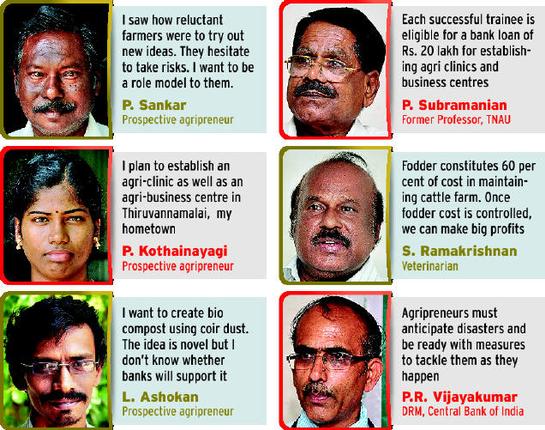
P. Subramanian, a former professor at Tamil Nadu Agricultural University and now a technical consultant for VAPS training centre, points out that the Centre had revised the ACABC scheme in 2010. As per the revised scheme, each successful trainee is eligible for a bank loan of Rs. 20 lakh for establishing agri clinics and business centres.“If five of them join together for a group project, they can get Rs.1 crore. The Centre provides a subsidy of 44 per cent of the project cost to women and those belonging to Scheduled Castes and Scheduled Tribes and 36 per cent for others. Banks do not charge interest for the subsidy portion,” he adds.

There is no age bar for enrolling in the training programme. Utilising the opportunity, P. Sankar, a 59-year-old retired staff of Agricultural College and Research Institute here, joined the training programme recently. “I decided to undergo the training because during my career span I saw how reluctant farmers were to try out new ideas. They hesitate to take risks. I want to be a role model to them. I am going to venture into agribusiness by utilising the eight acres I own near T. Kallupatti,” he says with confidence.

Cattle farm

S. Ramakrishnan, a veterinarian who retired from government service, is among those who want to take to farming as a profession post-retirement. He proposes to set up a cattle farm at Palamedu along with an agri-farm, adjacent to it, to raise fodder. “Fodder constitutes 60 per cent of cost in maintaining a cattle farm. Once we learn to control the cost of fodder, we can make big profits in this field. Being a veterinarian is an advantage for me. Others must maintain a liaison with a local veterinarian,” he suggests.

Not only the seniors, but also youngsters like 22-year-old P. Kothainayagi of Thiruvannamalai are showing interest in becoming agripreneurs. She travelled to Madurai and signed up for the training. “I completed my bachelor’s degree in horticulture in 2011. Ever since, I have been helping my father, an agriculturist, and also other farmers in my village by providing tips on increasing their produce. Now, I plan to establish an agri-clinic as well as an agri-business centre in my hometown,” she says.

L. Ashokan (38) who completed his bachelor’s degree in rural development science and then a master’s degree in social work from Loyola College, Chennai, has an innovative idea. He wants to create bio compost using coir dust. “The idea is novel but I don’t know whether banks would support it,” he doubts.

P.R. Vijayakumar, Deputy Regional Manager, Central Bank of India, says that banks are ready to extend loans for raising crops, irrigation, animal husbandry, harvesting, agricultural processing, storage of agri-produce, buying farm implements and tractors and even for purchasing shares of sugar mills. “There is no limit for the loan amount. Everything depends on the project cost and the security would be the project itself but for certain instances when collateral would be required. Young agricultural graduates and even those who are in the profession must utilise the opportunity,” he urges.

Stressing the importance of repaying bank loans promptly, he adds that an agripreneur cannot fail to make profits if he or she gave importance to involvement, innovation, planning, and disaster management. “Agripreneurs must anticipate disasters and be ready with measures to tackle them as they happen,” he advises.

source: http://www.thehindu.com / The Hindu / Home> News> Cities> Madurai / by Mohamed Imranullah   S. / Madurai, April 02nd, 2013

Coimbatore to host commodity seminar

Mumbai : 

A stakeholder awareness and education seminar to discuss agribusiness and commodity market price risk management will be held at 4.30 pm on Wednesday at University Auditorium (Convocation Hall), Tamil Nadu Agricultural University (TNAU), Coimbatore.

The seminar is part of an ongoing series of events organised by The Hindu Business Line jointly with Forward Markets Commission (FMC), the commodity futures market regulator under the Union Ministry of Consumer Affairs; and National Commodity and Derivatives Exchange (NCDEX), the country’s largest agri-futures market exchange.

Ganga Murthy, Principal Advisor to the Government of India, Ministry of Consumer Affairs, will be the chief guest. K. Ramasamy, Vice-Chancellor, TNAU, will be guest-of-honour along with M. Mathisekaran, Member-FMC, and Lakshmi Narayanan, Director, T. Stanes & Co. Ltd. Arun Anant, CEO, Kasturi & Sons Ltd, will deliver the welcome address.

Presentations include ‘Commodities as critical driver of India’s economic growth” by G. Chandrashekhar, The Hindu Business Line and “Benefits of commodity futures trading and price risk management” by V.V. Ganesan, NCDEX. Mathisekaran will bring the regulator’s perspective. Representative of T. Stanes & Co will speak on role of inputs in agriculture.

Commodity producers, processors, importers, exporters, local traders and related others who have exposure to the physical market and face the risk of price volatility will benefit by participating in the seminar.

A question and answer session will follow the presentations. To register, please contact: S. Prabhakar on 9894288511.

source: http://www.thehindubusinesline.com / The Hindu Business Line / The Hindu Bureau /  Mumbai,  April 02nd, 2013

Deccan Pumps primes ‘EKKI’ range for urban, agri markets

Coimbatore : 

As the Indian pump industry pins its hopes on a revival of industrial demand and the onset of the South-West monsoon in June to perk up demand from the farm sector, Coimbatore-based Deccan Pumps is preparing to launch a new brand of pumps ‘EKKI’ (which in Tamil means ‘to ascend’) that targets both the agricultural and urban markets.

The company, among the top pump manufacturers in Coimbatore city that accounts for a near 40 per cent market share of the organised pump market in the country, is also looking at opportunities to partner with European pump manufacturers to serve markets in India and abroad.

In an interaction with Business Line, P. Arumugam, Chairman, DPPL, and Kanishka Arumugam, Product Manager, EKKI, a new division of DPPL, said the development of the borehole submersible ‘EKKI+’ was driven by the demand for energy efficient pumps with lower lifecycle costs.

The new borehole range comes in varying diameters ranging from 4 inches to 8 inches and are up to 10 per cent more efficient than the earlier generation of boreholes, making them ‘the best in class’ from 0.5 HP up to 90HP. They expect the ‘EKKI+’ borehole submersibles to contribute to about half the sales of the EKKI brand. The existing ‘Deccan’ brand open-well submersibles, mini submersibles, jet pumps and centrifugal monoblocs would also be sold under the ‘EKKI’ brand name.

The EKKI range of products would be produced at a greenfield facility set up with a capacity to manufacture 6,000-7,000 units a month. While the first phase of the plant was ready, the second phase would be completed in two months.

Kanishka Arumugam said while MNC pump manufacturers dominated the industrial segment, the Coimbatore pump industry has carved a niche in the agriculture, residential and commercial segments. But the industrial segment was alluring because of the scope for value addition.

Deccan was focused on the farm segment at present, though the industrial segment was also on its radar. He felt there were still some pockets in the country where the company’s products had not reached and he would like to tap these markets even while trying to ramp up capacity.

He said some of the leading European pump makers wanted Deccan to supply products under their brand names. For instance, while buying submersible motor parts from India and China, they would produce their own pumps at their own facilities, making Deccan an OEM supplier to them, under their brand name. As the company does not have sufficient capacity to meet domestic demand, it has not embraced the opportunity. But once capacity addition was in place, Deccan was open to the idea of looking at such opportunities in countries where its own brand did not have a market.

He said a few other foreign companies that wanted to enter the Indian market have evinced an interest to forge joint ventures with Deccan. The advantage was that these companies had niche technologies whereas Deccan has manufacturing strengths. He said EKKI would consider ‘growth through joint synergies’ with some of the European family-owned groups. This would also catapult the company from ‘being follower to leader’ by leveraging its R&D and design capabilities.

Arumugam said besides Coimbatore, Ahmedabad was also a major production hub for the pump industry, though Rajkot also had many players. The Central and State Governments have been lending a supporting role, particularly in the manufacture of energy-efficient pumps. But the sluggish business environment has impacted the supply chain and captive foundries have also been slow in meeting their supply commitments.

Asked about the impact of the ongoing drought in many markets, including Tamil Nadu and Maharashtra, he said generally drought drives up the demand for borehole pumps from the farm sector. In Tamil Nadu the ‘sales are actually OK due to drought’ as farmers dig new wells in search of water. But the drought in Maharashtra, an important market for the Deccan brand, has affected sales. But he expected the demand to pick up once the monsoon sets in and distributors there have already begun stocking, expecting a demand revival. He said compared to last year, the overall demand was high for Deccan as farmers have plumped for ‘high performance energy-efficient branded pumps’.

On future growth plans, Arumugam said DPPL completed the spin-off from Deccan Industries on March 31, 2013. This would enable DPPL to focus on becoming the largest producer of vertical open-well submersibles and mini submersibles. He planned to set up a group logistics centre and an additional greenfield facility in the city in the coming fiscal, apart from the three plants it has now.

source: http://www.TheHinduBusinessLine.com / Home / by  R. Yegya Narayanan / April 01st, 2013