Karur Vysya in rejig mode

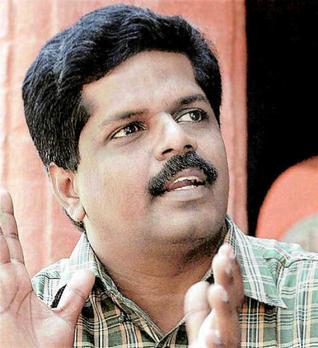
Karur Vysya Bank (KVB) has started implementing the recommendations of management consultancy Boston Consulting Group (BCG), including organisational restructuring and business re-engineering, in a bid to meet the private sector lender’s Rs 1.25 lakh crore business target by 2016. “Even amid the slowdown in economic growth and increasing competition in the market, the bank has managed to focus on execution of its strategic agenda and delivered results which would ensure that the bank is on the right track to achieve its centenary year (2016) goals,” said K Venkataraman, managing director and chief executive officer.

“We have started implementing the recommendations of BCG under Golden Vision Initiatives and are periodically reviewing the progress of the project implementation,” he said in a communication to the shareholders. The bank appointed BCG in 2009 to prepare its long-term business plans. In all major business parameters, KVB’s growth in 2011-12 was higher than its compound annual growth rate for the past five years.

During the year, the lender implemented the BCG recommendations like organisational restructuring at the central office and at divisional offices, ramping up key business development and support initiatives across the banking network and targeting the crucial areas for transmission.

The organisational structure has undergone major changes with verticalisation of business strategy group, operations group, risk, inspection and audit and human resources departments.

The business strategy group is further organised into business segments such as personal banking, commercial banking, corporate and institutional banking, international banking and treasury and funds management.

“While we are generally optimistic of the economy picking up momentum and growing in the future, we have formulated our near-term strategies based on the prevailing economic scenario,” said Venkataraman.

For 2012-13, the bank has set a gross business target of Rs 72,000 crore. The bank has crossed its projected level of Rs 55,000 crore in 2011-12 and reached the business level of Rs 56,317 crore, after the initiatives being undertaken.

Total deposits increased to Rs 32,112 crore from 24,722 crore, an increase of 29.89 per cent. Current account, savings account (CASA) deposits accounted for 19.16 per cent in aggregate deposits. The average deposits stood at Rs 27,156 crore in 2011-12, compared with Rs 20,973 crore in 2010-11, an increase of 29.48 per cent.

KVB will give a major thrust to improve the CASA ratio, recovery of non-performing assets (NPAs), improving fee-based income by effectively focussing on parabanking, leveraging technology and offering new innovative products to target young and tech savvy clientele, he said.

CASA deposits of the bank were at Rs 6,152 crore as on March 31, 2012 against Rs 5,755 crore as on March 31, 2011. The gross NPA of the bank as on March 31 was at Rs 321 crore (1.33 per cent) against Rs 228 crore (1.45 per cent) a year ago.

This is mainly on account of large amounts of slippages to NPAs despite the best efforts. The net NPAs of the the bank stood at Rs 79 crore (0.33 per cent) at the end of the 2011-12, up by 0.26 per cent over the year-ago figure of 0.07 per cent.

source: http://www.business-standard.com / Home> Banking & Finance / by T. E. Narasimhan / Chennai, July 20th, 2012
TN Govt to set up fisheries technology institute

Chennai:

An institute of fisheries technology that would offer diploma courses in various disciplines connected with fishing will be set up by the Tamil Nadu Government in neighbouring Tiruvallur district.

Chief Minister J Jayalalithaa had sanctioned administrative approval for the Rs 34.08 crore project at Ponneri.

The institute would offer diploma courses in various disciplines such as prawn-rearing, fish-breeding and equipment management among others, an official release here said, adding 20.78 acres of land had been earmarked for it.

Jayalalithaa, who had last year announced setting up a Fisheries University in Nagapattinam, has allocated an initial sum of Rs seven crore towards the latest initiative taken as part of her government’s efforts for the betterment of the fishing community.  / PTI

source: http://www.zeenewsindia.com / Home> News> Tamilnadu / Friday, July 20th, 2012

A President who set precedents

Anecdotal recollections of those who worked alongside R. Venkataraman in public life and government

R. Venkataraman, the nation’s eighth president (1987-1992), loved to present himself a “copybook president.” But, he faced such situations that none of his predecessors did. During the second half of his presidency, the country underwent a phase of political instability and RV, as he was popularly known, had to swear in three Prime Ministers in barely 18 months.

After Chandra Shekher quit as Prime Minister in March 1991 a few days after his Finance Minister Yashwant Sinha had presented the interim budget, RV, as president, took the initiative of having budgetary and financial provisions passed by Parliament, avoiding an unpleasant situation of having to promulgate an ordinance to cover expenditure. Unusually, the President wrote to Lok Sabha Speaker Rabi Ray and the Prime Minister, advising them how this could be done. That was not the only occasion that he departed from the conventional approach that Presidents would have adopted under similar circumstances. His gesture of getting down the dais to give away the Dadasaheb Phalke award to the ailing Raj Kapoor at the 35th National Film Festival in May 1988 was another unconventional act. His assumption of office as President was only the culmination of his long innings in public life, spanning over 45 years. RV, who was a senior Minister in the Kamaraj Cabinet during 1950s and 1960s, is still the best-remembered Industries Minister of Tamil Nadu.

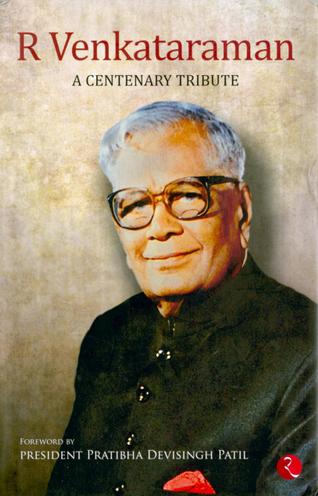
This book R. Venkataraman: A Centenary Tribute is essentially a compilation of anecdotal recollections of a host of persons including those who worked alongside him in public life and government. It carries 38 essays of those who have recalled his services to the nation in one field or the other. Besides, messages from 10 others explain the greatness of RV. His contributions — as Industries Minister who played a vital role in the industrialisation of Tamil Nadu; as Union Finance Minister who helped avert an economic crisis in the early 1980s by tackling deftly the problem of deteriorating balance of payments; as Defence Minister in 1982-1984 who guided the programme of producing modern indigenous fighter aircraft and as President who had created the right precedents in times of political instability — have all been vividly captured.

There are other aspects — “lighter” — of the personality of RV which have been brought out well in this publication. Geoffrey Howe, the longest serving Minister in Margaret Thatcher’s Cabinet (1979-1990) and who was Chancellor of the Exchequer (1979-1983), has described RV’s mastery of English as one special feature of Venkataraman’s performance in meetings of committees of the International Monetary Fund and Commonwealth. According to Lord Howe, RV’s mastery of the language enabled him time and again to formulate “the only possible form of words which could deliver an agreeable conclusion.”

What is more lively is an account of Kapila Vatsyayan, veteran art historian, of the gracious and spontaneous acceptance by RV of her, what she called, “absolutely crazy idea” of utilising an air force plane for transporting precious bronze statues from Tamil Nadu for an exhibition during the Non-Aligned Movement Summit in New Delhi in March 1983. Two other articles — one by K.V. Ramanathan and another by T.S. Sankaran — stand out. The authors, both former civil servants, have not discussed much about their association with RV but about the subjects, which were dear to the former President. Ramanathan has passionately written about S. Satyamurti, who was Kamaraj’s political mentor, and Sankaran on the relevance of the trade union movement.

Dates and events

Notwithstanding several impressive features, the book suffers from factual inaccuracies. In an otherwise scholarly piece, Fali S. Nariman, distinguished jurist, writing about the sensational Presidential election in 1969, has stated that V.V. Giri got elected after the split in the Congress party. In fact, it was the other way round. At the time of the election, there was only one Congress. To refer to the Congress (I) in the context of the 1969 election was not appropriate. The Congress (I) was born nine years later — January 1978 — and Indira Gandhi was its chief. That was why the prefix — I.

P. Murari, another former civil servant and who was Secretary to the President during 1989-1992, has recounted his suggestion to RV on the dissolution of Tamil Nadu Assembly in January 1991 and written that in the context of the Supreme Court judgment in the Bommai case, it might be imprudent to accept the Union Cabinet’s decision to dissolve the Assembly. But, the Supreme Court delivered its judgment only in March 1994, three years after the dissolution of the Tamil Nadu Assembly.

Writing about the outcome of the Assembly elections to Maharashtra in 1978, Inder Malhotra, seasoned journalist, has commented that the Congress (I) and the Congress (O) were intensely hostile to each other. By 1978, the Congress (O) was no longer in existence. It along with parties including Bharatiya Lok Dal and Jan Sangh formed the Janata Party in 1977. The other faction comprised senior Congress leaders including K. Brahmananda Reddy, Swaran Singh and Y. B. Chavan. In all likelihood, Malhotra had this faction in mind. In her message, Shiela Dikshit, who has been Delhi Chief Minister since 1998, mentions that “Probably, he [RV] was the only politician from the southern state of Madras/Tamil Nadu who never lost any election.” This is off the mark as RV lost [by a margin of about 22,600 votes to a Dravida Munnetra Kazhagam candidate] in the 1967 elections in Thanjavur parliamentary constituency, a fact recorded by another contributor, Gopalkrishna Gandhi.

What one can make out from these instances of factual inaccuracies is that the contributors, in general, have made their recollections, mostly out of their memory. The editorial team of the book must have ensured that in a publication marking the centenary of one of the celebrated Presidents of India, all the important details are carried right. After all, RV was known for meticulousness when it came to recollection of history.

source: http://www.TheHindu.com / Home> Arts> Books / by T. RamaKrishnan / July 16th, 2012

Viswanathan Anand offers help for Kerala chess school

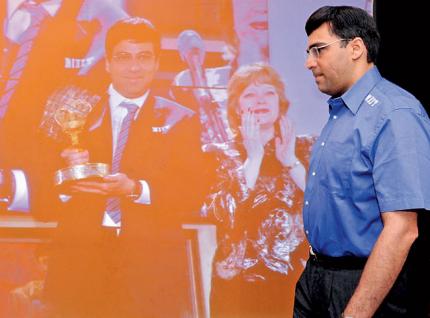
Viswananthan Anand on Monday expressed his willingness to assist the Kerala government with its plans to open a chess academy along the lines of the one being opened by the West Bengal government.

“Yes, I’ll be open to working with the state government of Kerala if they approach me with such a plan. I’ll try to make myself available to the maximum extent possible, though time is a constraint due to the busy schedule ahead,” the five-time World chess champion explained at a private event here.

Anand said the main focus should be on generating interest towards the game among the youth. “Chess can be mentally healthy for students as it can sharpen their brains and improve their concentration levels. Several states like Gujarat and Tamil Nadu have included the game in the school curriculum,” he pointed out.

Earlier the Bengal government had approached Anand seeking his involvement with the chess academy it is setting up to popularize the game in the state.

Earlier, interacting with the students, Anand asked them to grab opportunities in life and fully utilize them. “Hard work and dedication is simply not sufficient for success. Just like my 8th game (at the World Championship match) against Gelfand.”

He described Kerala as his ‘favourite leisure spot’, saying it was very relaxing to come to the state. “I visited Kovalam earlier this year.”

Aim for global board: Anand

He finds the current lot of young Indian chess players “exciting”, but five-time world chess champion Viswananthan Anand, says they are yet to “translate” their early success to making a mark at the international level.

“Players like Grand-master (Krishnan) Sasikiran, (Surya Sekhar) Ganguly and (Pentala) Harikrishna, are in fact very close (to being at the top). I know they are working very hard but they should try to translate early success to leave a mark in the international scenario. Only then can I visualise India emerging as a major chess power,” said Anand, who became the only non-Soviet to successfully retain a World Cham-pionship title three times when he recently won agai-nst Israeli Boris Gelfand.

Indians are quite successful till they are 20 years of age or so, but thereafter they don’t concentrate enough on the game to move on to the next level. “However, India as a chess power is inevitable and eventually that’ll happen,” Anand said. His advice was to go for the right tournaments and be consistent.

Vishy also batted for India hosting a World Championship match at least once. “It would put immense pressure on me. Last time Chennai came close to bidding for the tournament. Players, though, would prefer neutral venues; Gelfand, for example, was not keen to come to India.”

The only person in chess history to have won a World Championship title in all formats — match, knock and tournament — Anand says his top priority is to defend the title and play for as long as he can.

“I’ll be defending the title next year and will play as long as possible. Sure, Kasparov’s record (six titles) is important for me, but the priority is to defend the title. At the end of the day, winning matches gives you more satisfaction,” he said.

source: http://www.asianage.com / Home> Sports> Chess / DC, Kochi    / July 17th, 2012

Malaysia gov’t allocates money for Tamil schools football tournament

Tamil school kids in Malaysia get funding for “Road to England” football tournament.

Kuala Lumpur:

Tamil schools in Malaysia received a boost on Friday after Prime Minister Najib Razak announced the approval of RM530,000 for a football tournament between the schools aimed at boosting integration and cultural projects for the minority group in the country.

Minister in the Prime Minister’s office G. Palanivel said that the goal of the “Road to England” tournament was to promote cultural exchange and give Tamil speakers in Malaysia the opportunities other Malaysian students had.

The football tournament will include 523 Tamil schools in the country and will see the use of some 10 venues across Malaysia, he said.

He said that 11 players from the tournament would be sent to “train and play at the Manchester United (MU) football club in England later this year.

“The objective of the project is to produce Malaysian Indian boys who can have football as a career with their standards on par with the English players on a long term.

“They can also contribute towards the standard of football locally when they return and represent the country in international tournaments,” he told a a press conference after handing over an allocation worth RM330,000 to 23 Indian non-governmental organizations (NGOs) in Selangor at a temple near Bestari Jaya.

The final training and selection of the 11 players will be done by former England International footballer Peter Barnes.

The “Road to England” tournament initiative is a collaborative effort between Peter Barnes Football Academy and the Malaysian Tamil schools headmasters council.

BM

source: http://www.medianet2.com / by admin / July 16th, 2012

Tamil computing wizard dead

     Anto Peter

Anto Peter, one of the strong proponents of Tamil computing and technical writer who created many Tamil fonts, died here on Thursday. He was 45 and is survived by his wife and two children.

A native of Arumuganeri in Tuticorin district, Anto Peter was the first to launch an exclusive website, tamilcinema.com, for Tamil cinema.

His company, Softview, was the first institution in Tamil Nadu to introduce graphics and animation Courses.

Tamil literary works such as Tirukkural and Aathichoodi entered the Internet portals with graphics and proper pronunciation thanks to the efforts of Anto Peter.

He was closely associated with many Tamil groups in the country and abroad and participated in international Tamil computing conferences. He also wrote the books ‘Graphics and Animation’ and ‘Multimedia Basics’ in Tamil and created awareness of Tamil computing among the masses.

source: http://www.TheHindu.com / Home> Newsz. States> TamilNadu / by Special Correspondent / Chennai, July 13th, 2012

TESO conference on August 12

DMK chief M. Karunanidhi

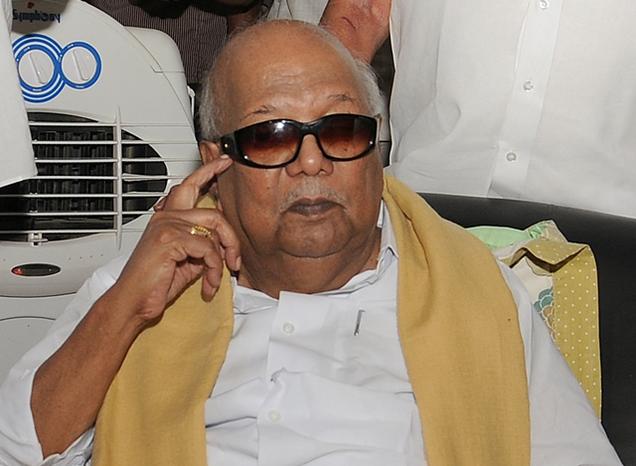
The conference of the Tamil Eelam Supporters Organisation (TESO) will be held at the Young Men’s Christian Association (YMCA) grounds here on August 12, the Dravida Munnetra Kazhagam president M. Karunanidhi, who recently revived the organisation, said on Saturday.

Answering reporters’ queries on Chief Minister Jayalalithaa criticising him on the issue of training imparted to Sri Lankan Air Force personnel, Mr. Karunanidhi said: “It does not seem to be a Chief Minister’s statement. It is in bad taste. The statement contains attacks that are worse than those of a layman.”

It was made without exercising restraint on the limit to which those in the Opposition could be criticised, Mr. Karunanidhi added.

source: http://www.TheHindu.com / Home> News> States> TamilNadu / by Special Correspondent / Chennai, July 14th, 2012

New engineering syllabus for colleges under Anna university

Chennai:

The 500 self-financing colleges affiliated to Anna University are set to start the academic year with a new syllabus. A team of 240 faculty members of Anna University, Chennai, including 10-12 members from each department, coordinated by the academic courses director, is working to roll out the syllabus.

For the affiliated colleges, this is the second time the syllabus has changed in two years. The first time was in 2011, when the directorate of technical education asked colleges affiliated to each of the five Anna Universities of Technology to follow R-2008 instead of the one prescribed by the respective AUT.

“It is four years since R-2008 was drawn up. At Anna University it is customary to revise the syllabus every four years. This helps us to adapt to industry needs and keep up with technology developments,” said a senior faculty member of Anna University, Chennai. The constituent colleges of Anna University, Chennai — Guindy College of Engineering, Madras Institute of Technology and Alagappa College of Technology — follow a different curriculum and syllabus called R-2009. “This syllabus is tougher than that prescribed for the affiliated colleges. Work on upgrading it will begin next year,” said another faculty member.

With just a few weeks to go for the new academic year to start, academicians believe the change will not be too drastic. “It is likely that there is only a 10% change in the syllabus. A couple of electives are likely to be added based on industry inputs,” said an academic. For instance, the Data Structures course could be changed to Date Structures with Programming in C, C++.

The move has evoked mixed reactions. Anna University faculty are pleased. “When the AUTs were formed they started their own curriculum and syllabus based on their whims and fancies. At least now the colleges will conform to the academic standard set by the university.”

Others said institutions should be allowed to work out the curriculum according to the region concerned. A faculty member in Chennai may not be aware of or bother too much about the need for solutions to a regional problem. In Tuticorin, for instance, the need may be for technology that helps workers separate salt from impurities in the salt pans there. A professor in Chennai is unlikely to know about such demands. “It’s not so much about knowledge, as knowledge delivery that we have to worry about. The curriculum may have changed, but how many teachers will be able to adapt to it? Our teacher are not prepared for the new syllabus,” said educational consultant P Moorthy Selvakumaran.

For the second year, the 500-odd technical institutions will follow a common academic calendar too. All AUTs and Anna University, Chennai, will have the same semester opening and closing dates, examinations and practicals.

source: http://www.timesofindia.indiatimes.com / Home> News> Education / TNN / July 11th, 2012

Tribute to ‘Bhishma Pitamaha of business journalism’

A DAY TO REMEMBER N. Ram, former editor-in-chief of The Hindu, presents a memento to P.A. Seshan, retired financial editor, at a function organised on his 99th birthday on Saturday. Also present on the occasion were (seated from left to right) Suresh Krishna, chairman and managing director, Sundram Fasteners Ltd., P.S. Ananthanarayanan, son of Mr. Seshan, and N. Mahalingam, chairman of Sakthi Group of Companies / Photo: V. Ganesan / The Hindu

It was an eggless cake. Of course, it was meant for a birthday event. The person who was at the centre of the event — Palamadai Ananthanarayana Seshan — may not have cut a cake in the past to mark his birthday.

But Saturday was special, as he stepped into his 100th year, and made an exception.

In the presence of industrialists Suresh Krishna and Pollachi N. Mahalingam, 15 of his family members, including the youngest member and his great-granddaughter Sanjana and many of his colleagues at The Hindu, the former Commercial and Financial Editor of The Hindu, Mr. Seshan, popularly known as ‘Leo’ to his readers and PAS to his colleagues, celebrated his 99th birthday at a simple and elegant function.

True to Tamil culture, Mr. Mahalingam, chairman, Sakthi Group of Companies, and Mr. Suresh Krishna, Chairman and Managing Director, Sundram Fasteners, presented Mr. Seshan with shawls at the function organised by Kasturi & Sons Limited. The birthday hero received a couple of rare gifts from his organisation — laminated versions of the newspaper dated July 7, 1913 (the day on which he was born) and April 30, 1957 (the day on which the earliest available edition of his famous column ‘Leo’s News & Notes’ was carried).

N. Ram, former Editor-in-Chief of The Hindu, whom the newspaper’s Senior Associate Editor V. Jayanth described as the architect of the event, mentioned there was a suggestion to wait for a year to celebrate PAS’ birth centenary but the organisation decided it was best to kick off the celebration now.

Recalling Mr. Seshan’s long association with the newspaper that began in 1952, Mr. Ram referred to his contributions through his column, ‘Leo’s News & Notes,’ and his anchoring the annual Survey of Indian Industry, a publication brought out by The Hindu. He commended Mr. Seshan for his ability to work exceptionally long hours, word length and deadline discipline and “above all, prodigious memory.”

Mr. Seshan was not known to be a wordsmith but he was “reliable, factual, accurate, precise, unrelentingly so, day after day,” Mr. Ram pointed out, adding how the veteran journalist overcame his visual handicap.

Mr. Mahalingam, who is in his 90th year, recalled how Mr. Seshan, despite his handicap, visited his sugar factories to have first-hand knowledge of the working of the plants. The journalist had helped him in drafting the text of the annual speeches of the company’s chairman.

The industrialist had a word of advice to the newspaper — make a comparative study of the living conditions of farmers between the past and the present.

Mr. Suresh Krishna was as usual brief and to the point. He recounted how he benefitted by wise counsel provided by Mr. Seshan in 1983 when his organisation was planning to carry out expansion and become a public limited company.

The industrialist, who said he felt young in the presence of Mr. Seshan even though he himself was 75-plus, hailed the seasoned journalist as a “karma yogi” as one who found God in his work.

S. Viswanathan, Editor of Industrial Economist, hailed Mr. Seshan as the “Bhishma Pitamaha of business journalism.”

Mr. Seshan expressed his gratitude to K. Srinivasan and G. Kasturi, former editors of the paper, for their guidance and encouragement. His son P.S. Ananthanarayanan thanked the management of Kasturi & Sons Limited on behalf of his family for organising the event.

After his retirement from service in the 1990s, Mr. Seshan was associated with a host of organisations, including those in culture and education. He was founder-president of the Mahakavi Sri Neelakanta Deekshithar Foundation, the Palamadai and Sri Kasi Viswanathan Mangaleswari Baktha Jana Sabha and the Palamadai Welfare Account.

source: http://www.TheHindu.com / Home> News> Cities> Chennai / by Special Correspondent / Chennai, July 07th, 2012

Safety device jams driver’s mobile phone

Researchers at the Anna University of Technology in Chennai, India have prototyped another system to prevent drivers from using their mobile phones when driving.

According to articles about the research at Smithsonian and Phys.Org, the system detects when a car is in motion and then uses a “jammer” to block the driver’s cell phone signal but not the passenger. It’s not entirely clear to me how that’s possible (unless the phone is tethered to the device), and unfortunately the full research paper is only for paid subscribers of the International Journal of Enterprise Network Management

. Not only does their system limit use, it reportedly also employs RFID to “transmit the vehicle number plate information stored in RFID tag to RFID reader buffer, when driver use of cell phone was detected. Data collected from the reader will be transmitted from car and displayed at traffic signal post containing LCD so that police can take legislative action against the driver.” Of course, if the jammer actually works, that entire part of the system would be unnecessary.

Yeah, so… I’m a bit unclear on the details of this. But the tl;dr is, don’t be distracted by your mobile phone when you’re driving. “Technology to prevent mobile phone accidents”

source: http://www.boingboing.net / by David Pescovitz / Monday, July 09th, 2012