Category Archives: Arts, Culture & Entertainment

A tale in Tamil

Growing up amidst a pile of comics books and drawing inspiration from his  father Soundrapandian’s efforts,
S. Vijayan, the editor of Lion Muthu Comics set foot into the comics world in 1984.
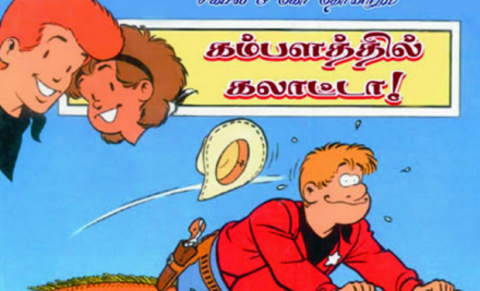
Bringing in a full length Tamil version of popular British comics, the company came into existence with a super hero who had a steel claw and powers of invisibility and till date Irumbukkai Mayaavi is a name that invokes wonderful memories amongst comics lovers.
Vijayan took up the initiative to translate foreign language comics to Tamil, thanks to his father. “My dad had largely stuck to British and American comics strips like Phantom; Mandrake. I tried my luck with Franco Belgian comics; Italian creations; some Dutch and Yugoslav features and they have been well-received,” he says.
Gearing up for the Chennai Book Fair which commences on January 11, he says, “Chennai ranks amongst the top spots when it comes to adoring quality comics. Enthusiasm cuts across age barriers and there are many comic lovers and collectors who are incredibly passionate. This is the 40th year of Muthu Comics and we are bringing out a 456 page anniversary titled the Never Before Special. ”
Quiz him on exposing the local audience to international comics through translations, and he says, “The Tamil comic lover has a very distinctive appetite for quality artwork; a credible story line and good crisp translations. Even if one aspect falls a bit short that series will not click. Western cowboy tales; detective stories; adventure series and cartoons that aren’t too juvenile are popular.
Mostly, I just rely on my gut feeling when it comes to selecting a new series and I have not been let down too often.” Vijayan says that comics to the uninitiated means a crude page or two that is for kids to read. “The day that people realise there is so much to cherish and treasure in the world of comics, we would probably progress to match our fellow comics lovers across the globe. Passion for
Tamil comics isn’t by any means restricted just to Chennai; we have people living in the States; Sri Lanka, France, UK and Singapore buying our books! This, despite the fact that they can savour the original versions in English or French and in much better quality too ! But for them the experience of reading in their mother tongue is the best and they are amongst our very focussed readers!”
source: http://www.DeccanChronicle.com / Home> LifeStyle> Books/Art / DC by Nidhi R Daiya / January 09th, 2013

‘Socialist realism is still relevant’

S. DORAIRAJ
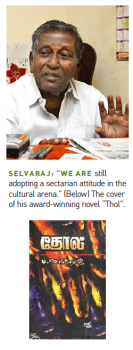
Interview with D. Selvaraj,  winner of the Sahitya Akademi Award.
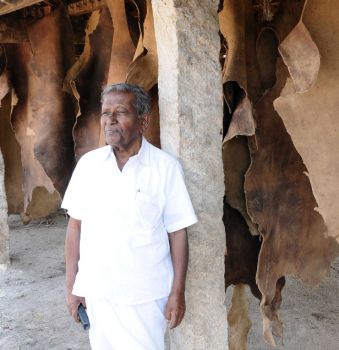
D. Selvaraj in a tannery in Dindigul. “When class struggle sharpens, automatically, caste struggle will merge with it.” 
Photograph by S. James
“[A]mong the younger leftist writers, D. Selvaraj is sometimes quite successful in depicting the life of the proletariat, especially of the Pallar agricultural labourers.”

—Kamil Veith Zvelebil

Almost four decades have rolled by since the world-renowned Czech Tamil scholar Zvelebil made his assessment of writer Daniel Selvaraj’s contribution to modern Tamil literature in his famous work A History of Indian Literature published in 1973. Selvaraj’s novel, Thol (Hide), which speaks about the travails and struggles of the Dalit tannery workers of Dindigul in the composite Madurai district from 1930 to 1958, has been chosen for the Sahitya Akademi Award for 2011. The novel has already won the Tamil Nadu government’s award for 2010.

The relevance of the novel can be gauged from the fact that primitive methods of processing hide is witnessed even today at some tanneries in Dindigul and in several other factories workers face occupational risks.

Ever since he entered the world of literature, Selvaraj has been unswervingly moving along the path of Marxism and socialist realism, steering clear of attempts to classify his works as Dalit literature. Almost all his creations highlight the plight of the workers and the toiling masses and their consistent struggle for changing the social order.

The 74-year-old writer’s first novel, Malarum Sarugum (Flower and dead leaf) revolves around the peasants’ struggle against landlords who deceived tenants by using unauthorised measures. The novel was published in 1967. His second novel Theneer (Tea) came out in 1973. It deals with the appalling living and working conditions of the tea estate workers. Mooladhanam (Capital) and Agnikuntam (Fire pit) were published in 1977 and 1980 respectively. Of these, Mooladhanam highlights issues such as collapse of the joint family system and authoritarianism while Agnikuntam is about problems in the judiciary.

Much before writing novels, he started writing short stories. Many of his 200-odd short stories have appeared in reputed literary and political journals, including Santhi, Saraswathi, Thamarai, Semmalar, Sigaram, Janasakthi and the Sri Lankan Tamil weekly, Desabimani.

He has authored the biographies of Communist leader P. Jeevanandam and Tamil scholar Sami Chidambaranar. He has also penned two stage plays, Paattumudiyum Munne and Yuga Sangamam, and more than 30 one-act plays. His novels are part of curriculum in some universities and also taken for research projects.

Born into a family of tea estate workers and Kanganis (labour contractors), Selvaraj studied law. The practising lawyer says that his profession also contributes to his writing as he has to meet clients with different problems. His in-laws were freedom fighters. His wife Bharataputri was born in jail. Even while balancing between his profession and writing, the novelist loves spending time with his grandchildren at his Dindigul residence.

In this interview to Frontline, Selvaraj discusses issues, including the path which led him to the world of literature, his unshakable faith in socialist realism, the need to synchronise class struggle and caste struggle and the need to conduct field work before writing novels. Excerpts:

The Sahitya Akademi award has come to you nearly five decades after you embarked on your literary journey. Do you think this is a belated recognition?

Even when I was a student of the M.D.T. Hindu College in Tamil Nadu’s Tirunelveli town in the late 1950s, I was guided into the world of progressive literature by three acclaimed literary persons: T.M.C. Ragunathan, the great Tamil poet-cum-novelist; N. Vanamamalai, outstanding Tamil scholar who enabled researchers to adopt the Marxist approach to literary analysis; and T.K. Sivasankaran, well-known critic.

There was a time when Sahitya Akademi was dominated by persons who believed in the theory: art for art’s sake. As a writer who always holds the view that art is for social purpose, I did not expect the academy to have any proper appreciation of progressive writing in the then prevailing scenario.

However, the situation underwent a gradual change, thanks to the role played by progressive cultural organisations such as the Tamil Nadu Kalai Ilakkiya Perumanram (Tamil Nadu Federation of Art and Literature) and the Tamil Nadu Murpokku Ezhuthalarkal and Kalaignarkal Sangam (Tamil Nadu Progressive Writers and Artists Association).

This is evident from the fact that Sahitya Akademi awards have been conferred on progressive Tamil writers in the recent period. Though as a writer, Akademi’s award has come to me belatedly, in the case of Thol it is not late, as the novel was published only a couple of years ago.

Thol” revolves around the life and struggle of the tannery workers, who by and large are Dalits. Can you recall the circumstances under which you ventured into the work?

It all started in the early 1960s when I was studying law in Chennai. I was closely associated withJanasakthi, the official organ of the Tamil Nadu unit of the undivided Communist Party of India. I also developed contacts with leaders of the trade union movement. During that time, veteran trade unionist and former Mayor of then Madras Corporation S. Krishnamurty helped me to familiarise myself with the problems of the tannery workers who were living under the most appalling conditions in Chromepet on the outskirts of Chennai. He also briefed me on the outrageous working atmosphere in the tanneries of Dindigul, which was part of the composite Madurai district then.
As a concomitant development, S.A. Thangaraj, one of the founder-members of the tannery workers’ union, asked me to come to Dindigul to help the union as a lawyer in its struggle for enhanced wages and better working conditions. Accepting his invitation, I came to Dindigul in 1975.

Even while handling several cases pertaining to the problems of the tannery and municipal workers, as a writer I wanted to portray the oppressions faced by them socially, economically and politically. This is how I ventured into writing the story of the tannery workers of Dindigul and their heroic struggles.

You must have done a lot of field study before writing Thol?

The first thing I did after coming to Dindigul was to undertake visits to the hamlets and colonies of the tannery workers and municipal employees with a view to studying their life and family background. They had rallied under very strong unions. Frequent interactions with the workers, more particularly the veterans who had actually participated in the struggles, enabled me to get a useful feedback on their conviction and loyalty to the union in the face of police repression.

Further to understanding the life of their leaders, I went through the life history of a number of communist stalwarts, including P. Ramamurthy, A.S.K. Iyengar, M.R. Venkatraman, A. Balasubramaniam, V. Madanagopal and K.P. Janaki. Though I had Balasubramaniam in mind when I created the leading character of the novel, Sankaran, he was the combination of the unique qualities of all these leaders. It took around 20 years for me to complete Thol.

Did you adopt the same strategy for other novels also?

I did not resort to much field work for Malarum Sarugum, which was based on the historic Muthirai Marakkal struggle of the small peasants and their life, as the story was set in my native village Thenkalam in Tirunelveli district. I was a college student then. During the vacation, I used to interact with the farmers in my village and elicited details on the struggle.

As far as Theneer is concerned, it runs in my blood. I was born into a family of Kanganis who brought labourers from Tamil Nadu to work in the tea estates in Kerala. More than 300 workers were in their gang. A percentage of the wage earned by the worker would go to the Kangani as commission. The system was in vogue in the colonial era.

It may sound odd but nevertheless it is true that tea estates in the entire Devikulam area in the princely state of Travancore, presently in Idukki district, were under the control of the British planters. It was like an impenetrable island without any means of communication and people in the estate did not even know the advent of freedom to India.

I studied in the Munnar High School, which was exclusively run for the children of the Kanganis and staff members of the estate. The medium of instruction was English. Mostly those who finished the school final examinations were absorbed as staff by the company. I was one of the few boys who were able to move out the district and got a degree in Tamil Nadu.

My association with the estate workers right from my school days enabled me to gain first-hand knowledge about their problems.

It has been my firm opinion that conducting field study is very important for a serious writer. By doing so he is able to see the life of the people for whom he writes, besides understanding their inner feelings and gauging the overall situation through lively interactions with them. Almost all the characters in my novels including the ones in Thol are based on real people and they are not purely imaginary.

What kind of satisfaction do you draw from “Thol”?

In fact, I did not make any attempt to get the novel published, as the manuscript ran to more than 2000 pages. But when the New Century Book House came forward to publish it, I rewrote the entire novel.

I can say with confidence that at least for the next 10 years no other writer would write such a novel, which chronicles the struggles waged by the workers and peasants in the State from 1930-1958.

Though the CPI was outlawed during that period and its leaders went underground, they were able to effectively organise the working class and peasantry especially tannery, textile, handloom and municipal workers and peasants. They had also successfully synchronised the struggle against caste oppression with class struggle. Even today, this remarkable feature is worthy of emulation after subjecting it to a thorough analysis.

I treat the Sahitya Akademi Award for my novel not as a personal achievement but as a recognition to these historic struggles launched by the communist and trade union movements during that period.

It is said that many of the 117 characters in the 700-page novel are real-life heroes. How do you evaluate the role of the leaders who worked for the cause of the toiling people then?

In those days, the tannery workers and municipal workers were treated as outcasts and they were not allowed to enter Dindigul town. Their colonies were segregated in such a way that the wind blowing across these habitations would not touch the town. But the communist leaders reached out to them, lived with them and organised them.

The greatness of the leaders like A. Balasubramaniam, who was born into an orthodox Brahmin family, lies in identifying themselves as declassed and adopting the food habits of the tannery workers to help them develop class consciousness and take a plunge not only in the struggle for better wages but also in the freedom movement. V. Madanagopal was an equally important leader who worked among the tannery workers and faced brutal police repression. I have recorded the sacrifice of such leaders in my novel.

Literary works centring round the life and struggles of the toiling people and their leaders are dubbed propaganda literature. Would you like to comment?

Frankly speaking, all my works can be classified as propaganda literature. But when the writer resorts to faithful description of life, his works will not appear to be propaganda. It has also been said that the characters in Tolstoy’s monumental work War and Peace are the combination of historical figures of the Napoleon era and the imaginary characters of the ancient Greek poet Homer. I have adopted this technique in my novels.

Who is your role model?

It is true that the early inspiration came from the works of Guy de Maupassant and Charles Dickens. In my earlier days of writing, I took Pudumaipithan and Ragunathan as my role models. Then assimilating the styles of Maxim Gorky, Krishan Chander and Thakazhi Sivasankaran Pillai, I evolved my own style of writing.

Can you recall your association with stalwarts of the progressive writers’ movement in Tamil Nadu?

My association with Ragunathan, Vanamamalai and Sivasankaran is unforgettable. They revaluated the ancient Tamil literature in a scientific and Marxist way. They started the Tirunelveli Progressive Writers’ Association. With utmost devotion they trained me and my contemporary Sundara Ramaswamy. We embarked on our literary journey by contributing to Santhi, a literary journal edited by Ragunathan. Among my contemporaries are Jayakanthan and Krishnan Nambi.

When I joined the Madras Law College, I had close association with P. Jeevanandam, the great orator and communist leader. A special quality of these literary giants was that they were not only unassuming but also treated their comrades as equals. Another leader who had amazingly deep knowledge of English literature was A.S.K. Iyengar, doyen of the trade union movement in Chennai. Tamil Oli, a poet par excellence, pioneered portrayal of the pathetic life of the oppressed sections.

There is a view that the progressive cultural movement in the country has lost its sheen. Can it still galvanise democratic-minded writers and artists?

Though communists and pro-communists took the lead in organising the All India Progressive Writers’ Association in 1936, it was able to galvanise democratic-minded writers and thinkers including Pandit Jawaharlal Nehru, Abdul Kalam Azad and Sarojini Naidu. But this had not happened in Tamil Nadu, though an attempt was made in the State with Janasakthi offering space for non-communist writers and thinkers. The progressive writers’ movement ought to have brought into its fold humanists and realists.

Unfortunately, we are still adopting a sectarian attitude in the cultural arena. This approach continues even after the formation of the Tamil Nadu KalaiIlakkiya Perumanram, Makkal Ezhuthalar Sangam and the Tamil Nadu Progressive Writers and Artists’ Association.

In my opinion, still there is scope for the progressive writers’ movement to re-induct democratic-minded thinkers and writers. As a cultural vacuum is rapidly developing in the State, the Left and progressive thinkers and writers have the great task of tackling this lurking danger.

Is it true that socialist realism has become obsolete after the collapse of the Soviet Union and the socialist camp?

I don’t think that socialist realism has become obsolete. Thol is living proof of the relevance of socialist realism, which cannot be replaced by any other ‘ism’. Magical realism may be relevant to Latin America, which was under the oppression of the United States.

Post-modernism is only a perverted understanding of life. But socialist realism is dialectical, which sees the transformation in individuals, society and nature. It is a scientific approach.

Certain Dalit thinkers treat ideology as a fetter, which comes in the way of writers wielding their pen against caste oppression. Do you agree with this point of view?

Such anarchic views arise because most of the Dalit writers are middle-class intellectuals. Through their writings, they highlight issues such as social oppression, sufferings and insults heaped on Dalits. They never try to move beyond that purposely. They refuse to depict the struggles of Dalit people to liberate themselves and organise themselves into a trade union movement. In fact, such caste associations help the hostile forces to effortlessly create a deep schism among the working class and the peasantry. Scheduled Castes and Scheduled Tribes form one-third of the Indian population. Indian community cannot move forward or will it be able to change the social order if these oppressed people were prevented from taking part in common struggles for transformation.

So, unity between Dalits and non-Dalits is essential to ensure the liberation of the oppressed people, ending the prevailing social order. Such a synchronisation of class and caste was successfully achieved by the communist and trade union movements before 1958 in Tamil Nadu. That has to be studied in detail for future action.

Don’t forget that caste itself is the creation of class. When class struggle sharpens, automatically, caste struggle will merge with it. But even after attaining socialism, the remnants of the old order may continue for some time before getting abolished completely. That is the dialectical and historical process which we can’t predict today.

In this connection, I would like to say that we cannot equate Dalitism with postmodernism. I am optimistic that in the course of time, Dalitism will accept socialist realism and become part of it.

Some people even argue that Dalit writers alone can understand the intricacies of Dalits’ problems…

This is absurd. Any writer, who observes changes obtaining in a society, can write about the travails undergone by any person. If you extend the same logic, a Dalit writer should not portray the problems of women or children.

If you go further, it may even be argued that nobody other than a child can write about the problems of the children.

source: http://www.frontline.in / Home> Literature / Volume No. 30, Issue 01, Jan 12-25, 2013 / by S. Dorairaj /
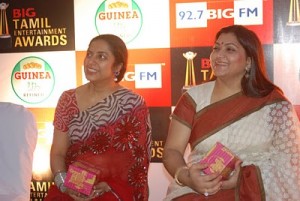
Big FM announces Big Tamil Entertainment Awards 2013

Chennai:

92.7 BIG FM’s biggest attraction in the south is back again this year with The BIG Tamil Entertainment Awards.

The annual entertainment awards show catering to various fields such as Tamil Cinema, Music, Dance, Theatre, Television and Sports was conducted in 2011 and 2012 and was a phenomenal success, witnessing an array of celebrities across multiple fields of entertainment. This people’s award has in the past received an overwhelming response and is driven through on air and on-ground activations by the radio network. Taking the initiative a notch higher, this year, the Awards’ have south superstar Dhanush as its face!

Keeping in mind the technical aspects of entertainment and all the work that takes place behind the scenes, the awards property has crafted a holistic approach to itself, not only recognizing the stars but also honouring the people who help promote entertainment. With an aim to promote technology and innovation, the property for the very first time has also included categories such as Best Promoted Movie, Best Entertaining YouTube Video (Regional) and the Best Entertaining Movie Trailer among other categories.

Commenting on the occasion Ashwin Padmanabhan, Business Head, North and South, 92.7 BIG FM said “The talent prevalent in the Southern Entertainment Industry is enormous. We wanted to seize this opportunity to establish a platform for talent across various fields to be promoted and honoured. The Southern entertainment industry has grown into a global phenomenon and we want to promote and leverage its power through the BIG TAMIL Entertainment Awards.

The show will be promoted through an integrated and high-decibel marketing plan ranging from on-ground, television, and radio, digital enabling marketers to increase and maximize their brand visibility and target wider audiences for their products providing a long term presence in the market.

source: http://www.medianewsline.com / Home> Media Buzz and Happennings / January 07th, 2013

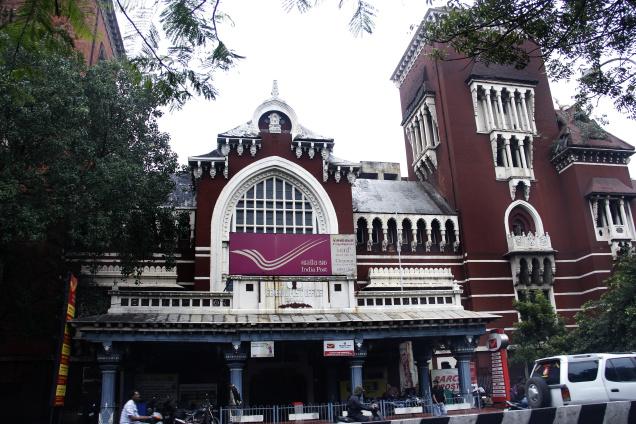
Abandoned section of GPO to see light of day?

 The historic post office on Rajaji Salai has seen its fair share of mishaps. In 2011, a portion of the roof collapsed during the monsoon. / Photo: S. Netheshkumar / The Hindu

Portion of the late 19 century building was declared unfit for use; officials now consider restoration

The historic General Post Office on Rajaji Salai may well be termed a phoenix of a heritage building, for the number of times it has recouped after mishaps.

The civil wing of the postal department is now assessing the feasibility of implementing the recommendations of an INTACH report to restore a sizeable portion of the late 19 century building. The section currently lies unoccupied for fear of latent dangers.

According to sources in the department, the report which was commissioned by the former post master general, covers the ground, first and second floor of the eastern corner of the building used by the postal department. Of this, the ground floor is currently being used, they said. The other half of the bifurcated building is being used by the telecom department, according to them.

According to an official, the portions of ‘right-side’ of the building’ had been declared unfit for use, and the departments functioning in those portions had been relocated to other parts of the building in 2007. K. Kalpana, conservation architect, who worked on the report, says that she had suggested that the work be carried out in three phases, as close to 20,000 square feet of the heritage building was not in use when she was working on the report earlier this year.

“Collectively, it is a three-year project and I had suggested that work on the roofing be done in the first phase since it is the most crucial,” she said.

However, officials in the civil department note that restoration on such a massive scale is replete with challenges, including red-tape. “Studying the feasibility is only the first stage. If satisfactory, it has to be approved by the administrative wing of the department and the Heritage Conservation Committee, following which funding needs to be looked into. And, since it requires heavy funding, it may not be allocated at one go,” the official said, adding that he could not put a date to when the study would be completed.

Sourcing expertise and material, also would be a challenge, the official noted. “When we were restoring the elevation of a heritage postal building in Bangalore, we could not declare the work complete for a long time because the original material was not available, and had to wait for it.” However, the official, also said that since it was an important structure, they would accord it priority.

According to M.M. Inamdar’s ‘Madras GPO- Earlier Postal History of Madras Presidency’, the idea of establishing a GPO in the premises of Fort St. George was first mooted in 1785 and shortly thereafter A.M. Campbel was first appointed to the office of post master general.

On how it came to function in its current premises, he wrote that the GPO was first located in a building on the beach in Fort. St. George Square. In 1837, it was removed to a building in Fort commonly called the old bank. In 1856, it was shifted to Pophams Broadway from where it moved to its present building in 1884, he writes. In 2000, the GPO was witness to a fire that destroyed the main counter, sorting halls, computers and stores, and the speed post and foreign mail sections. More recently in 2011, a portion of the roof collapsed during the monsoons.

An employee who fondly recalls how a portion of the building designed by architect R.F. Chisholm was a vantage point to see the harbour and enjoy the see breeze, said that she hopes that the building would be restored to its original glory.

“Today, anyone can erect swanky buildings, but how many would get an opportunity to work in such an old and unique building,” she said

source: http://www.TheHindu.com / Home> Cities> Chennai / by Asha Sridhar / Chennai, January 03rd, 2013

Thousands throng Velankanni

Thousands of devotees from various parts of the country thronged the world famous Christian pilgrim centre Velankanni in Nagapattinam district for the New Year Celebrations. Special mass commenced by 11:15 pm on the New Year eve to thank the almighty for all the good things happened during 2012. On the New Year’s day, prayers and special aradhana were performed all day long for peace and prosperity in 2013.

Bishop of Thanjavur Devdoss Ambrose presided over the prayers in the presence of Velankanni parish priest Michael Adigalar. The huge pandal put up on 60,000 square feet area in the premises of Shrine Basillica was teeming with pilgrims. All the lodges in Velankanni and nearby areas were full. Throughout the day, special prayers were held in many Indian languages including Tamil, Malayalam, Kannada, Urdu, Hindi, Konkani, Bengali and other languages.

source: http://www.newindianexpress.com / Home> States> Tamil Nadu / by Express News Service – Nagapattinam / January 02nd, 2013

Art for survival

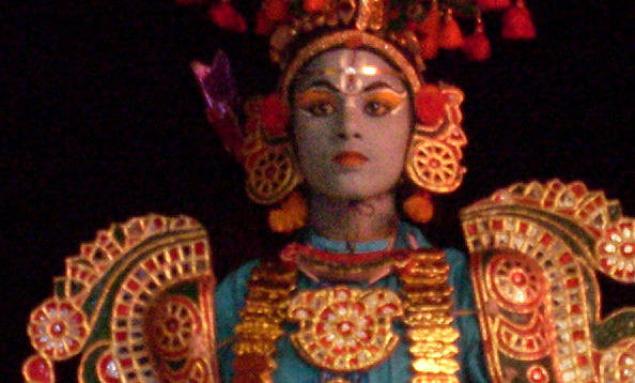
A band of poverty-stricken villagers from Kanchipuram district in Tamil Nadu have found life-support through the Gurukulam Kattaikkuttu Sangam which has been training them in performing folk arts apart from providing basic education to their children.

Kattaikkuttu is a rural theatre form of Tamil Nadu and Therukoothu a form of street play with music and dance. Though their profession is not be lucrative, the villagers of Punjarasantanaal have devoted themselves to reviving these art forms.

Recently, the National School of Drama (NSD), New Delhi, organised a chain of shows in Chennai. The performers are mostly students of 10th and 12th class along with some ex-students of the institution. However, many students have had to leave education to go back to agriculture which is their hereditary occupation. Traditional Koothu families don’t encourage their wards due to the hardships involved in being a professional theatre performer.

“We don’t have a fixed salary. At times, we get around Rs 10,000 for one performance and maybe Rs 2,000 for the next two. But I never took any other job. I want to keep this art form alive in me,” said Radhakrishnan, one of the performers.

Dr Hanne M. De Bruin, the facilitator of the Sangam and wife of P. Rajagopalan, the moving force behind the Gurukulam, says that a lot more has to be done. “If we could win the hearts of the city people, I’m sure they’ll travel to the rural areas to see Koothu theatre,” she added. This will be helpful for the performers as they spend many hours travelling. They will have time for agricultural activities. The Koothu performers ended their city tour last month with the play ‘Raam Ravana’.

(Wriddhaayan studies at the Asian College of Journalism, Chennai.)

source: http://www.TheHinduBusinessLine.com / Home> On Campus/ by Wriddhaayan Bhattacharya /

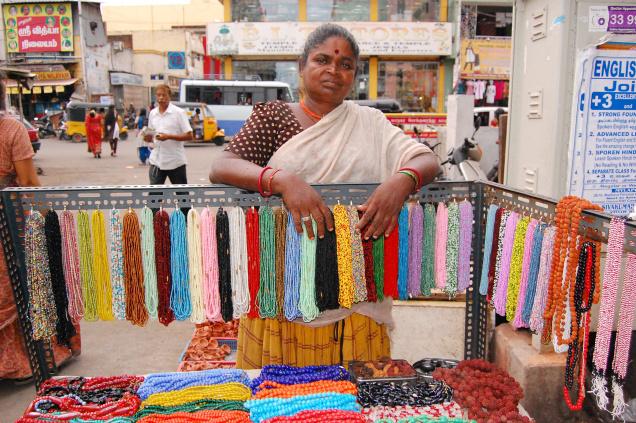
I am…Kanniamma, Gypsy bead seller

Kanniamma with her beads.

One overcast evening, in a corner of North Mada Street, Mylapore, I meet Kanniamma who tells me she has just returned from Delhi. “I buy all the materials for these necklaces from the North,” she says, pointing to colourful strings of beads hanging from the steel-frame of her pavement-shop.

“People told me that stones and beads are very good there; so for the past 10-15 years, I have packed food, take a train and travelled there to bring back plenty of beads.”

Beads costs Rs. 500 per kg wholesale, and Kanniamma can make about a dozen necklaces from it. “But there’s no big profit in this; I sell the necklaces for Rs. 50 or Rs. 60,” she says, adding that her son and daughter are also in the same trade. “But they also collect paper and plastic, to earn a little extra.” .

Born into a family of bead-sellers, Kanniamma learnt a good many bead patterns from her parents when she was a little girl. “You need exceptionally good eyesight to string the tiny beads. You also need to keep changing the designs and beads, otherwise you can hardly make any money.”

Adjusting her dress — Kanniamma’s usual attire is a handmade long-skirt and blouse, with a dhavani — she attends to a customer who is looking for navaratna malais. When the customer leaves, a disappointed Kanniamma wonders aloud if hers is only a sightseeing shop. “Business is bad today,” she says, because although several people, on the way to the Kapaleeswarar temple, stop by to look at her wares, no sale is made. “I haven’t even earned even Rs.100; on days like this, there’s no money to eat.”

Sitting down next to her husband — with whom she converses in their language (“It has no script; it’s only a spoken tongue”) — Kanniamma tells me that their lives revolve round their shop. “We are from Tiruvanmiyur; but for the past 15 years, I have been selling beads near the temple. We sleep here, use the public conveniences, and buy food and eat.” The festival season is a little kinder to Kanniamma. “Everybody here knows me; during Navarathri, I even get orders for necklaces. But I’m careful never to undersell my stuff. This is very demanding work; my neck hurts, as I constantly bend over to string the tiny beads,” she says, pointing out to some new designs, made with tiny blue-green beads, and a transparent glass necklace, tasselled with orange.

As we speak, the wind tugs at the bead necklaces and the evening sky darkens; slokams can be heard from the Kapaleeswarar temple, while Kanniamma’s radio plays old MGR songs. “I like MGR and Chiranjeevi songs; I can understand Telugu too,” she tells me with a smile. When Kanniamma travels to source beads, her grand daughter — among the few in the family who is educated — helps out with the shop. “But she dropped out in the 7th Std when her friends stopped going to school.” And then Kanniamma attends to a small girl looking for pink beads.

(A weekly column on men and women who make Chennai what it is)

source: http://www.TheHindu.com / Home> Arts>  Crafts / by Aparna Karthikeyan / December 30th, 2012

Tamil musicians recognised at Sangeet Natak Akademi Awards

It was recently announced that thirty six artistes from across India, in the fields of Music, Dance, Theatre and Puppetry have been selected for an Indian National Award – The Sangeet Natak Akademi Awards for the year 2012.

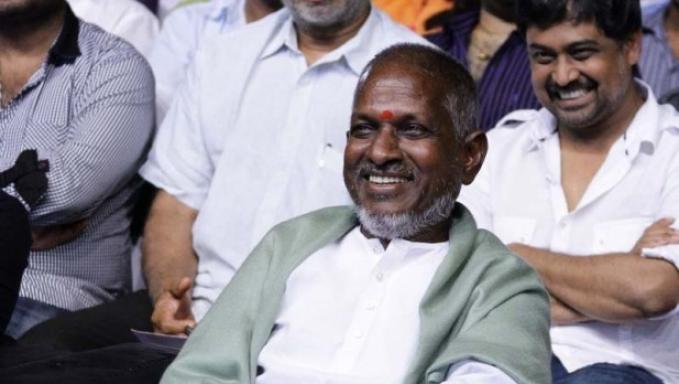
The legendary South Indian music composer Ilayaraja will receive an award under the section of Creative & Experimental Music. The 79 year old maestro has composed over 4500 songs in various Indian languages including Tamil, Telugu, Malayalam, Kannada, Hindi and Marathi.

The General Council of Sangeet Natak Akademi, the National Academy of Music, Dance and Drama, New Delhi held its meeting held on 21 December 2012 where it elected three eminent personalities in the field of performing arts for the prestigious Sangeet Natak Akademi fellowship.

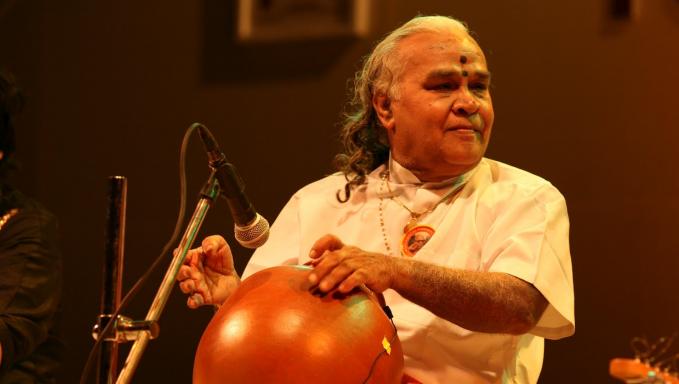
Grammy Award-winning percussionist T. H. Vinayakram from Tamil Nadu is one of the three personalities. He is the first South Indian musician to be awarded the Grammy for Best World Music Album for his participation in Mickey Hart’s Planet Drum, in which he played ghatam and morsing.

The honour of Akademi Fellow has been conferred since 1954 and Akademi Award since 1952. They not only symbolize the highest standard of excellence and achievements on a national basis, but also recognize sustained individual work and contribution to the practice and appreciation of the arts through performance, teaching and scholarship.

The full list of Akademi Fellows and Akademi Awardees for the year 2012 are listed below.

Akademi Fellow (Ratna)

Smt N. Rajam

Shri T. H. Vinayakram

Shri Ratan Thiyam

Akademi Awards (Puraskar) for the Year 2012


Field of Activity – Music

Shri Rajashekhar Mansur (Hindustani Vocal)

Shri Ajay Pohankar (Hindustani Vocal)

Shri Sabir Khan (Hindustani Instrumental – Tabla)

Shri Bahauddin Dagar (Hindustani Instrumental – Rudra Veena)

Shri O. S. Thyagarajan (Carnatic Vocal)

Shri Mysore M. Nagaraja (Carnatic Instrumental – Violin)

Shri K. V. Prasad (Carnatic Instrumental – Mridangam)

Shri Illayaraja (Creative & Experimental Music)

Shri Bhai Balbir Singh Ragi (Other Major Traditions of Music – Gurbani)


Field of Activity – Dance

Smt Priyadarsini Govind (Bharatanatyam)

Shri Vijay Shankar (Kathak)

Shri Vazhengada Vijayan (Kathakali)

Shri Vedantam Ramalinga Sastry (Kuchipudi)

Smt Sharmila Biswas (Odissi)

Shri Jai Narayan Samal (Chhau)

Shri Painkulam Damodara Chakyar (Kutiyattam)

Shri Jwala Prasad (Music for Dance)

Smt Aditi Mangaldas (Creative & Experimental Dance)


Field of Activity – Theatre

Shri Arjun Deo Charan (Playwriting)

Smt Tripurari Sharma (Direction)

Shri Waman Kendre (Direction)

Shri Parvesh Sethi (Acting)

Smt Nirmal Rishi (Acting)

Shri Purisai Kannappa Sambandan (Acting)

Shri Murari Roychoudhury (Music for Theatre)

Shri Ghulam Rasool Bhagat (Major Traditions of Theatre – Bhand Pather)


Traditional/Folk/Tribal/Dance/Music/Theatre and Puppetry

Shri Goru Channabasappa, Folk Music, Karnataka

Shri Kinaram Nath Oja, Suknani Ojapali, Assam

Shri Prem Singh Dehati, Folk Theatre, Haryana

Smt Sulochana Chavan Lavani, Maharashtra

Shri Mattannur Sankaran Kutty Marar Thayambaka, Kerala

Shri Govind Ram Nirmalkar Nacha, Chhattisgarh

Shri Heera Das Negi Mask Making, Himachal Pradesh

Shri Prafulla Karmakar Traditional Puppetry, West Bengal


Overall Contribution / Scholarship in Performing Arts

Smt Nandini Ramani

Shri Arun Kakade

source: http://www.Thamarai.com / Home> News /

Munroe’s India connections

KONGU NAATTIL THOMAS MUNROE

Idaippadi Amudhan

Anuradha Pathippagam, 9 Jalakantapuram Road, Idappadi — 637 101 Price: Rs.145

India during the British Raj brought some colourful personalities into limelight; Thomas Munroe is undoubtedly one of them.

Amudhan has done meticulous research on the role played by Munroe in the Kongu region. The writer has relied on historical records from the district manuals and gazetteers of Salem and Coimbatore, besides the biographies by G.R. Gleig, Alexander Arbuthnot, John Broadshah, P.R. Krishnaswamy, M. Arokiasamy and K.K. Pillai, as well as, three editorials of The Hindu from 1878 to 1978. What makes this book absorbing is the way he has strung the incidents together.

Munroe’s love for India, and particularly Dharmapuri in Salem district, comes out loud and clear. He considered seven years of his work in the area as a golden period.

For being posted in Dharmapuri, Munroe showed his gratitude to George Kippen in Fort St. George. Later as Governor, he helped I.M. Heath to establish Salem as the source for iron ore exports. He did not spare officials, whether British or Indian, who had indulged in corruption.

While Munroe introduced the ‘ryotwari’ system for direct payment of taxes by farmers, he fought with his own masters to reduce taxes on weavers. As Deputy Collector, Salem, Munroe had insisted that the Collectors are fluent in local language of the people. Later, he also distinguished himself in the British Army, during wars in the region.

Enriched with letters to his parents, siblings and friends, the book reveals the character of the protagonist. In his letter to his brother James living in Krishnagiri, Munroe wrote: “Do exercises daily in the morning. Be nice to your colleagues in the Army. Along with Maj. Cuppage and Capt. Irton and others, go round the place; it is helpful for body and mind. You would come to know more about the people. Please ensure your expenses are manageable within your salary, but don’t be a miser.”

Munroe faced challenges from his own men in the latter part of his life. However, William Thackeray and Charles Carpenter were closer to him. Novelist Thackeray’s fictional character ‘Colonel Newcome’ is none other than Munroe, quotes Amudhan. Carpenter’s sister was married to novelist Walter Scott. Carpenter died in Salem and his cemetery is found near Salem Collectorate.

Munroe married when he was 53 to a girl who was 30 years younger. In his letter dated September 15, 1795, Munroe replied to his sister who had found a girl for him, thus: “Even if we marry, I cannot assure her that our married life would be pleasant. While my wife would love to play the melody of flute into my ears, she would show her wrath on servants instead, whenever she is angry with me.”

The final chapter when Munroe contracts cholera and succumbs to it in Gooty, is moving. The book presents an intimate picture of Munroe with authenticity.

Charukesi

source: http://www.TheHindu.com / Home> Arts> Books / by Charukesi / December 27th, 2012

Attire of pearls

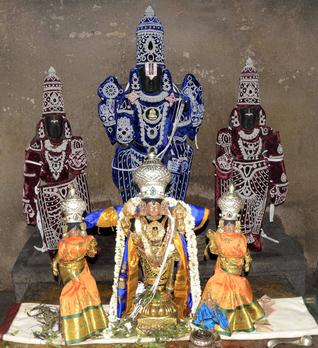
Sri Abeeshta Varada Perumal adorned with Muthangi.  / Photo: B. Velankanni Raj / The Hindu

Karappankadu near Madukkur in Pattukottai taluk, Thanjavur district, has a famous Vaishnavite temple called Abeeshta Varada Perumal temple or Devaperumal temple. Karappankadu is one among the Panchagramams in Thanjavur district. Other places are Nammankurichi, Puliyankudi, Serankulam and Peravurani.

How the temple came into existence at Karappankadu is an interesting story. Legend has it that a group of Vaishnavite scholars, that travelled from Kanchipuram to Thirupullani, in Ramanathapuram district, had to stay in a forest near Pattukottai for a night. The chieftain of the area, Karuppan Devan, was attracted by the devotion of the scholars towards the Lord of Kanchi – Varadaraja Perumal – and asked them to stay in that place itself.

The scholars stayed in the place and named it after the chieftain i.e., Karuppankadu which later became Karappankadu. The scholars, however, longed to see Varadaraja Perumal of Kanchipuram. It is said that Perumal appeared in their dream and asked them to take His idol, which was lying buried at Moorthiyambalpuram near Vaduvur, and that the place can be identified with the Garuda flying over the sky. After having found the idols of the Lord and His consorts, the scholars built a temple and installed the idols. As the Lord fulfilled the wishes of the scholars, He is called ‘Abeeshta Varadan’ (one who fulfils the wishes of His devotees).

Karappankadu is also the birth place of Vaishnavite saints such as Singaperumal Swamy, Desika Varadachar Swamy, who later became Sri Rangam Jeer and Venkatachar Swamy.

On December 22, this year, a devotee of the temple, V. Thiruvenkatasamy, son of Varadachariyar, has offered Muthangi to moolavar Deva Perumal, Pakkathu Nachiyars and moolavar Perundevi. He also offered stone-studded crowns to Moolavar Abeeshta Varadan and His consorts. Hundreds of people witnessed the event and worshipped the Lord and Goddess.

source: http://www.TheHindul.com / Home> Arts> History & Culture> by G. Srinivasan / December 27th, 2012