Category Archives: Leaders

A President who set precedents

Anecdotal recollections of those who worked alongside R. Venkataraman in public life and government

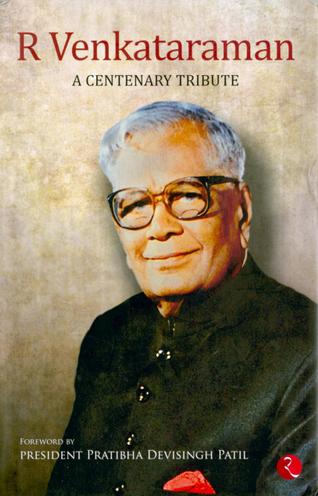
R. Venkataraman, the nation’s eighth president (1987-1992), loved to present himself a “copybook president.” But, he faced such situations that none of his predecessors did. During the second half of his presidency, the country underwent a phase of political instability and RV, as he was popularly known, had to swear in three Prime Ministers in barely 18 months.

After Chandra Shekher quit as Prime Minister in March 1991 a few days after his Finance Minister Yashwant Sinha had presented the interim budget, RV, as president, took the initiative of having budgetary and financial provisions passed by Parliament, avoiding an unpleasant situation of having to promulgate an ordinance to cover expenditure. Unusually, the President wrote to Lok Sabha Speaker Rabi Ray and the Prime Minister, advising them how this could be done. That was not the only occasion that he departed from the conventional approach that Presidents would have adopted under similar circumstances. His gesture of getting down the dais to give away the Dadasaheb Phalke award to the ailing Raj Kapoor at the 35th National Film Festival in May 1988 was another unconventional act. His assumption of office as President was only the culmination of his long innings in public life, spanning over 45 years. RV, who was a senior Minister in the Kamaraj Cabinet during 1950s and 1960s, is still the best-remembered Industries Minister of Tamil Nadu.

This book R. Venkataraman: A Centenary Tribute is essentially a compilation of anecdotal recollections of a host of persons including those who worked alongside him in public life and government. It carries 38 essays of those who have recalled his services to the nation in one field or the other. Besides, messages from 10 others explain the greatness of RV. His contributions — as Industries Minister who played a vital role in the industrialisation of Tamil Nadu; as Union Finance Minister who helped avert an economic crisis in the early 1980s by tackling deftly the problem of deteriorating balance of payments; as Defence Minister in 1982-1984 who guided the programme of producing modern indigenous fighter aircraft and as President who had created the right precedents in times of political instability — have all been vividly captured.

There are other aspects — “lighter” — of the personality of RV which have been brought out well in this publication. Geoffrey Howe, the longest serving Minister in Margaret Thatcher’s Cabinet (1979-1990) and who was Chancellor of the Exchequer (1979-1983), has described RV’s mastery of English as one special feature of Venkataraman’s performance in meetings of committees of the International Monetary Fund and Commonwealth. According to Lord Howe, RV’s mastery of the language enabled him time and again to formulate “the only possible form of words which could deliver an agreeable conclusion.”

What is more lively is an account of Kapila Vatsyayan, veteran art historian, of the gracious and spontaneous acceptance by RV of her, what she called, “absolutely crazy idea” of utilising an air force plane for transporting precious bronze statues from Tamil Nadu for an exhibition during the Non-Aligned Movement Summit in New Delhi in March 1983. Two other articles — one by K.V. Ramanathan and another by T.S. Sankaran — stand out. The authors, both former civil servants, have not discussed much about their association with RV but about the subjects, which were dear to the former President. Ramanathan has passionately written about S. Satyamurti, who was Kamaraj’s political mentor, and Sankaran on the relevance of the trade union movement.

Dates and events

Notwithstanding several impressive features, the book suffers from factual inaccuracies. In an otherwise scholarly piece, Fali S. Nariman, distinguished jurist, writing about the sensational Presidential election in 1969, has stated that V.V. Giri got elected after the split in the Congress party. In fact, it was the other way round. At the time of the election, there was only one Congress. To refer to the Congress (I) in the context of the 1969 election was not appropriate. The Congress (I) was born nine years later — January 1978 — and Indira Gandhi was its chief. That was why the prefix — I.

P. Murari, another former civil servant and who was Secretary to the President during 1989-1992, has recounted his suggestion to RV on the dissolution of Tamil Nadu Assembly in January 1991 and written that in the context of the Supreme Court judgment in the Bommai case, it might be imprudent to accept the Union Cabinet’s decision to dissolve the Assembly. But, the Supreme Court delivered its judgment only in March 1994, three years after the dissolution of the Tamil Nadu Assembly.

Writing about the outcome of the Assembly elections to Maharashtra in 1978, Inder Malhotra, seasoned journalist, has commented that the Congress (I) and the Congress (O) were intensely hostile to each other. By 1978, the Congress (O) was no longer in existence. It along with parties including Bharatiya Lok Dal and Jan Sangh formed the Janata Party in 1977. The other faction comprised senior Congress leaders including K. Brahmananda Reddy, Swaran Singh and Y. B. Chavan. In all likelihood, Malhotra had this faction in mind. In her message, Shiela Dikshit, who has been Delhi Chief Minister since 1998, mentions that “Probably, he [RV] was the only politician from the southern state of Madras/Tamil Nadu who never lost any election.” This is off the mark as RV lost [by a margin of about 22,600 votes to a Dravida Munnetra Kazhagam candidate] in the 1967 elections in Thanjavur parliamentary constituency, a fact recorded by another contributor, Gopalkrishna Gandhi.

What one can make out from these instances of factual inaccuracies is that the contributors, in general, have made their recollections, mostly out of their memory. The editorial team of the book must have ensured that in a publication marking the centenary of one of the celebrated Presidents of India, all the important details are carried right. After all, RV was known for meticulousness when it came to recollection of history.

source: http://www.TheHindu.com / Home> Arts> Books / by T. RamaKrishnan / July 16th, 2012
Viswanathan Anand offers help for Kerala chess school

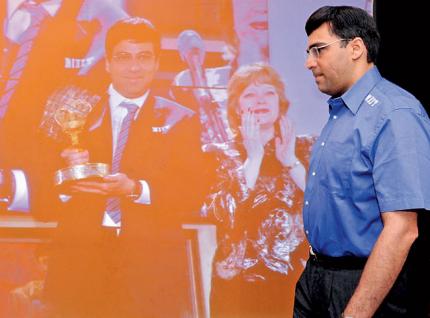
Viswananthan Anand on Monday expressed his willingness to assist the Kerala government with its plans to open a chess academy along the lines of the one being opened by the West Bengal government.

“Yes, I’ll be open to working with the state government of Kerala if they approach me with such a plan. I’ll try to make myself available to the maximum extent possible, though time is a constraint due to the busy schedule ahead,” the five-time World chess champion explained at a private event here.

Anand said the main focus should be on generating interest towards the game among the youth. “Chess can be mentally healthy for students as it can sharpen their brains and improve their concentration levels. Several states like Gujarat and Tamil Nadu have included the game in the school curriculum,” he pointed out.

Earlier the Bengal government had approached Anand seeking his involvement with the chess academy it is setting up to popularize the game in the state.

Earlier, interacting with the students, Anand asked them to grab opportunities in life and fully utilize them. “Hard work and dedication is simply not sufficient for success. Just like my 8th game (at the World Championship match) against Gelfand.”

He described Kerala as his ‘favourite leisure spot’, saying it was very relaxing to come to the state. “I visited Kovalam earlier this year.”

Aim for global board: Anand

He finds the current lot of young Indian chess players “exciting”, but five-time world chess champion Viswananthan Anand, says they are yet to “translate” their early success to making a mark at the international level.

“Players like Grand-master (Krishnan) Sasikiran, (Surya Sekhar) Ganguly and (Pentala) Harikrishna, are in fact very close (to being at the top). I know they are working very hard but they should try to translate early success to leave a mark in the international scenario. Only then can I visualise India emerging as a major chess power,” said Anand, who became the only non-Soviet to successfully retain a World Cham-pionship title three times when he recently won agai-nst Israeli Boris Gelfand.

Indians are quite successful till they are 20 years of age or so, but thereafter they don’t concentrate enough on the game to move on to the next level. “However, India as a chess power is inevitable and eventually that’ll happen,” Anand said. His advice was to go for the right tournaments and be consistent.

Vishy also batted for India hosting a World Championship match at least once. “It would put immense pressure on me. Last time Chennai came close to bidding for the tournament. Players, though, would prefer neutral venues; Gelfand, for example, was not keen to come to India.”

The only person in chess history to have won a World Championship title in all formats — match, knock and tournament — Anand says his top priority is to defend the title and play for as long as he can.

“I’ll be defending the title next year and will play as long as possible. Sure, Kasparov’s record (six titles) is important for me, but the priority is to defend the title. At the end of the day, winning matches gives you more satisfaction,” he said.

source: http://www.asianage.com / Home> Sports> Chess / DC, Kochi    / July 17th, 2012

Tamil computing wizard dead

     Anto Peter

Anto Peter, one of the strong proponents of Tamil computing and technical writer who created many Tamil fonts, died here on Thursday. He was 45 and is survived by his wife and two children.

A native of Arumuganeri in Tuticorin district, Anto Peter was the first to launch an exclusive website, tamilcinema.com, for Tamil cinema.

His company, Softview, was the first institution in Tamil Nadu to introduce graphics and animation Courses.

Tamil literary works such as Tirukkural and Aathichoodi entered the Internet portals with graphics and proper pronunciation thanks to the efforts of Anto Peter.

He was closely associated with many Tamil groups in the country and abroad and participated in international Tamil computing conferences. He also wrote the books ‘Graphics and Animation’ and ‘Multimedia Basics’ in Tamil and created awareness of Tamil computing among the masses.

source: http://www.TheHindu.com / Home> Newsz. States> TamilNadu / by Special Correspondent / Chennai, July 13th, 2012

Tribute to ‘Bhishma Pitamaha of business journalism’

A DAY TO REMEMBER N. Ram, former editor-in-chief of The Hindu, presents a memento to P.A. Seshan, retired financial editor, at a function organised on his 99th birthday on Saturday. Also present on the occasion were (seated from left to right) Suresh Krishna, chairman and managing director, Sundram Fasteners Ltd., P.S. Ananthanarayanan, son of Mr. Seshan, and N. Mahalingam, chairman of Sakthi Group of Companies / Photo: V. Ganesan / The Hindu

It was an eggless cake. Of course, it was meant for a birthday event. The person who was at the centre of the event — Palamadai Ananthanarayana Seshan — may not have cut a cake in the past to mark his birthday.

But Saturday was special, as he stepped into his 100th year, and made an exception.

In the presence of industrialists Suresh Krishna and Pollachi N. Mahalingam, 15 of his family members, including the youngest member and his great-granddaughter Sanjana and many of his colleagues at The Hindu, the former Commercial and Financial Editor of The Hindu, Mr. Seshan, popularly known as ‘Leo’ to his readers and PAS to his colleagues, celebrated his 99th birthday at a simple and elegant function.

True to Tamil culture, Mr. Mahalingam, chairman, Sakthi Group of Companies, and Mr. Suresh Krishna, Chairman and Managing Director, Sundram Fasteners, presented Mr. Seshan with shawls at the function organised by Kasturi & Sons Limited. The birthday hero received a couple of rare gifts from his organisation — laminated versions of the newspaper dated July 7, 1913 (the day on which he was born) and April 30, 1957 (the day on which the earliest available edition of his famous column ‘Leo’s News & Notes’ was carried).

N. Ram, former Editor-in-Chief of The Hindu, whom the newspaper’s Senior Associate Editor V. Jayanth described as the architect of the event, mentioned there was a suggestion to wait for a year to celebrate PAS’ birth centenary but the organisation decided it was best to kick off the celebration now.

Recalling Mr. Seshan’s long association with the newspaper that began in 1952, Mr. Ram referred to his contributions through his column, ‘Leo’s News & Notes,’ and his anchoring the annual Survey of Indian Industry, a publication brought out by The Hindu. He commended Mr. Seshan for his ability to work exceptionally long hours, word length and deadline discipline and “above all, prodigious memory.”

Mr. Seshan was not known to be a wordsmith but he was “reliable, factual, accurate, precise, unrelentingly so, day after day,” Mr. Ram pointed out, adding how the veteran journalist overcame his visual handicap.

Mr. Mahalingam, who is in his 90th year, recalled how Mr. Seshan, despite his handicap, visited his sugar factories to have first-hand knowledge of the working of the plants. The journalist had helped him in drafting the text of the annual speeches of the company’s chairman.

The industrialist had a word of advice to the newspaper — make a comparative study of the living conditions of farmers between the past and the present.

Mr. Suresh Krishna was as usual brief and to the point. He recounted how he benefitted by wise counsel provided by Mr. Seshan in 1983 when his organisation was planning to carry out expansion and become a public limited company.

The industrialist, who said he felt young in the presence of Mr. Seshan even though he himself was 75-plus, hailed the seasoned journalist as a “karma yogi” as one who found God in his work.

S. Viswanathan, Editor of Industrial Economist, hailed Mr. Seshan as the “Bhishma Pitamaha of business journalism.”

Mr. Seshan expressed his gratitude to K. Srinivasan and G. Kasturi, former editors of the paper, for their guidance and encouragement. His son P.S. Ananthanarayanan thanked the management of Kasturi & Sons Limited on behalf of his family for organising the event.

After his retirement from service in the 1990s, Mr. Seshan was associated with a host of organisations, including those in culture and education. He was founder-president of the Mahakavi Sri Neelakanta Deekshithar Foundation, the Palamadai and Sri Kasi Viswanathan Mangaleswari Baktha Jana Sabha and the Palamadai Welfare Account.

source: http://www.TheHindu.com / Home> News> Cities> Chennai / by Special Correspondent / Chennai, July 07th, 2012

A R Rahman to introduce Punjabi beats for Olympics

Mumbai, Jun 30 (PTI)

 Oscar-winning composer A R Rahman, who is reuniting with Danny Boyle for London Olympics, will celebrate Indian influence in UK by incluing Punjabi track in the opening ceremony.

The 46-year-old has teamed up with Boyle, the artistic director of the games, for the gala ceremony.

“Clarifying the report on the Olympics track I am composing… It’s a track in Punjabi celebrating the Indian influence in the UK.

source: http://www.ptinews.com / PTI / by Staff Writer / July 01st, 2012

Gov. Perry Appoints Kannappan to Key Texas Board

        Sam Kannappan

AUSTIN, Texas, United States

Governor Rick Perry recently appointed Sockalingam “Sam” Kannappan of Houston to the  Texas Board of Professional Engineers Texas Board of Processional Engineers  for a term to expire Sept. 26, 2017.

The board licenses qualified engineers, enforces the Texas Engineering Practice Act and regulates the practice of professional engineering in Texas.

Kannappan is a professional engineer and senior design engineer for SNC-Lavalin Hydrocarbons and Chemicals. He is a member of the American Society of Mechanical Engineers, the Gas Pipeline Safety Research Committee, a board member of the Society of Piping Engineers and Designers, and an advisory board member of the Asia Society of Texas.

Born in Nattarasankottai in the Sivaganga district of Tamil Nadu, Kannappan is a past member of the Texas On-Site Wastewater Treatment Research Council. He received his bachelor’s degree from Annamalai University in India and a master’s degree in mechanical engineering from the University of Texas.

Kannappan is a prominent local Indian American community leader and one of the co-founders of the Sri Meenakshi Temple in Houston.

source: http://www.indiawest.com / Home> News> US Indian / by Staff  Reporter / June 15th, 2012

Ex-Army doctor, going strong at 95

Chennai:

A board outside an apartment building in Adyar announces free counselling for cancer patients. Inside the comfortably furnished room, Brigadier Dr C R Suryanarayan sits, ready to receive anyone who might need help.

Dr Suryanarayan was one of the pioneers of radiation treatment in India, having started the first Radiation Medicine Centre in the Military Hospital at Delhi in 1957, as Chief Medical Officer. For his contribution to the field of chemotherapy in cancer treatment, he was recently given a lifetime achievement award by the Tamil Nadu Dr MGR Medical University. He has spent the last few years travelling around the world, delivering lectures on a wide range of topics. Closer home, he provides free counselling for those suffering from cancer. His interest in the field of cancer treatment probably stems from the fact that he is the nephew of Muthulakshmi Reddy, founder of the Cancer institute.

At 95 the doctor is a sprightly person who keeps up to date with the latest technology. Turning on his laptop, he says, “When I started out, we had no conveniences like computers. Everything was handwritten and recorded meticulously.” He now has scanned copies of his correspondence with stalwarts in many fields including Annie Besant, Otto Werberger and Sir Bernard Russell, all of which he holds close to his heart. “I was a junior researcher, but they still found time and were kind enough to read my work and write to me,” he says with a smile.

An alumnus of Presidency College (1935-1937) and Madras Medical College (1937-1942), he did his postgraduate training in radiation medicine, nuclear medicine and cancer chemotherapy in the United Kingdom. He was honorary consultant in nuclear medicine, cancer chemotherapy at the Southern Railway Hospital in Perambur, Chennai. Dr Suryanarayan talks about his experience in the wars he served in – World War II, Middle East, Indo-Pak, Indo-China and Bangladesh wars. “In 1943, at short notice I was asked to report to Colaba at Mumbai. We boarded the Ascanis, which was sailing to an undisclosed location. It turned out to be Basra. On the way we were chased by German submarines but managed to make it,” he says.

Recounting his experience of treating people for viral ulcers and conducting de-lousing camps for immigrants, the doctor says, “We went to Cancun, Mosul, Syria, Jordan, Tel-Aviv and Tehran; each place had its own charm and beauty in spite of the war. The oases waters were too precious to dirty so we used to wash our faces with beer.”

In 1946 he was back to India, and posted at Ayodhya to deal with a cholera epidemic. Alone and in charge of treating hundreds of people of different faiths, the doctor says the first thing he wanted there was harmony. “I set up pictures of all the gods in a small hall where the sick were gathered and I asked them to pray. That was the day I found that such unity could exist between people of varied beliefs,” he says.

Dr Suryanarayan has also undergone paratrooper training. “I did not like it very much,” he confides, adding that he never did jump out of a plane after his training was over. He still leads an active life and says, “Even now I am ready to speak to any group of students. They need to be well informed about the world.”

source: http://www.ibnlive.in.com /  Home> South> Southern News> Chennai / by Susanna Myrtle Lazarus / The New Indian Express / May 29th, 2012

The ice cream man

 BUILDING DREAMS: R.G. Chandramogan. Photo: R. Ragu

From push carts to parlours, R.G. Chandramogan has built his ice cream empire bar by bar. Priyadarshini Paitandy meets the man behind Arun and Ibaco

Juggling an ice cream in one hand and a notebook and pen in another isn’t the easiest thing to do, especially when you have to take down notes between mouthfuls of waffle cone. This is what I do when I meet R.G. Chandramogan at his office and start a conversation over an Arun ice cream as he traces the journey and growth of his company Hatsun Agro Products.

When Chandramogan was a school boy he would unfailingly put aside money for ice cream. Thirty-seven paise would be saved for an ice lolly and even though flavours weren’t many except vanilla, pineapple and strawberry, that was enough to bring a blissful smile to his lips.

Little did he know then that two decades down the line he would have an ice cream empire of his own. Surely, this is how Charlie must have felt when he inherited the chocolate factory. But in Chandramogan’s case he built it right from scratch, brick by brick or rather bar by bar.

“With a limited capital of Rs.13,000 I had to start something. So I started Arun ice cream in 1970. I was 21 then,” says Chandramogan. The factory was just an unassuming little place in Tondiarpet where three or four people worked and manually produced about 20 litres of ice cream per day. Ten paise candy was their first variety of ice cream and it was sold through push carts. Today of course it’s a different story. The automatic equipment produces 50,000 litres to 75,000 litres of ice cream per day.

Like most success stories that are laced with phases of initial struggle, his story too saw him plough through early hardships in the business. “We struggled a lot in the first 10 years. The top three players then were Dasaprakash, Joy and Kwality. They were financially ahead and had a bigger market. I lacked knowledge about marketing. I am not a graduate. So while I was struggling I did a course in marketing management, export management and personal management from Sabari College. In the first year our turnover was Rs.1,15,000. From 1981 we started growing and in 1991 Arun recorded a turnover of Rs. 3 crore,” he says.

Chandramogan began catering to ships, messes, colleges. Slowly he branched out to Pondicherry, Madurai, Sivakasi and Kumbakonam where his ice creams were a novelty and the other brands hadn’t yet tapped these markets.

While frozen dessert lovers were lapping up whatever came from the stables of Arun, Chandramogan busied himself with another venture — the dairy business. In 1995 he started Arokya milk. “We were procuring milk for our ice creams and so this idea came about. Today Arokya sees an annual turnover of Rs. 1,300 crores. We also manufacture butter, milk powder, ghee and curd. We are associated with 3,50,000 farmers and buy milk from 8,000 villages. We operate from nine different factories and our people travel 4,20,000 km to collect and distribute milk,” he adds. Hatsun dairy products are available across the country.

Hatsun has its dairy plants in Kanchipuram, Palacode, Salem, Madurai, Belgaum, Honnali. As for its ice cream, apart from Tamil Nadu they also have a plant in Seychelles. How does Arun sell in Seychelles, a market for other popular international ice cream brands? “We have a 70 per cent share of ice cream market in Seychelles. In Brunei we have a distributor who buys and sells our ice creams and there we are among the top four brands,” says the seasoned entrepreneur.

In 2012, Hatsun started yet another ice cream brand, Ibaco. This is the posh cousin of Arun ice cream and is based on the ice cream-by-scoop model. “Arun is a factory finished product and comes in cones, cups and sticks. As for Ibaco, it’s the scoop variety. You walk into an Ibaco parlour, choose the flavour and get it dressed with toppings. As of now Ibaco is available in Chennai, Bengaluru and Delhi. By next year I’ll be taking it to Mumbai, Pune, Hyderabad and Kolkata,” says Chandramogan.

But the launch of a new brand in no way means that Arun has been ignored. This season Arun’s got quite a few new flavours to pep up its range. There’s Berry Storm, Vanilla with Chocolate Fudge, Lemon Bar, Cream and Cookies among others. With myriad options available his favourite still remains the classic Arun chocolate cone. “Earlier I used to eat an ice cream every day. Now I try out ice creams when I travel to get a taste of competing brands,” he smiles.

After a day of cream, dairy and deals, how does he unwind? “I go to the gym, read books. Earlier I used to play badminton. I was a fan of the game and would go to watch Prakash Padukone play at tournaments. I even like watching tennis especially when Roger Federer plays. I am going to London to watch him play in November.” Who knows maybe the Swiss player could be roped in as the brand ambassador for Hatsun? Now that’s a thought!

***

Hatsun produces 18 lakh to 20 lakh litres of milk per day. Twelve lakh litres are used up for milk and milk products. Sixty thousand litres are used for ice cream. The remaining is used for ghee and skimmed milk.

source: http://www.thehindu.com / Life & Style> MetroPlus / by PriyaDarshini Paitandy / Chennai, May 17th, 2012

‘The more you kick me…’

Ignoring threats and entrenched interests, the admired and controversial T N Seshan helped clean up India’s elections. T E Narasimhan meets the changemaker in retirement

It is with some trepidation that I walk into T N Seshan’s house on St Mary’s Road in Chennai. It is called Narayaneeyam, which is the title of a medieval text composed by Melpathur Narayana Bhattathiri, a Sanskrit poet of Kerala. Seshan is the no-nonsense former cabinet secretary and chief election commissioner; he also won the Ramon Magsaysay Award for Government Service in 1996. He is credited with having helped clean up Indian elections — and is, perhaps not surprisingly, known to have a short fuse.

Seshan’s office wanted the list of questions ahead of our meeting, and informed me that he would not answer questions on national politics, nor discuss any issue outside the original list of questions.

So I reach his house 15 minutes early. Unlike the other residences in this upmarket neighbourhood, Narayaneeyam, where Seshan lives with his wife Jaya, is built in the Kerala style. A sparkling-clean car stands in the driveway. There is a small garden and a verandah. A Ganesha idol rests on the floor, and a picture of Ganesha above the main door. A CCTV camera keeps an eye on visitors.

From the foyer a staircase leads up to the living room and library. At the stroke of 3 pm, I am let into the visitor’s room on the ground floor. Seshan, who will turn 80 next week, is dressed in a half-sleeve brown shirt and veshti, the kind of dhotiworn by Brahmins. He has put on weight since he was last in the news.

The room is serene; the only noise is the rumble of an old air-conditioner. Where he sits, within arm’s reach are two remote controls and a cordless phone. On display behind him, and also around the television set placed in front of him, are the various accolades and souvenirs he has received. In one corner is an idol of Ganesha; in another, an automatic foot massager. To one side is a shelf with audiocassettes and a cassette player. He offers a drink of buttermilk.

In spite of the repressive “advisory” of his office, Seshan speaks freely. He has aged since his government days, but still speaks with his famous conviction. Not once does his memory falter.

Tinnellai Narayana Iyer Seshan is best remembered as the man who cleaned up Indian elections. To the public he was a hero. And he revelled in that status. A Delhi journalist who watched Seshan conduct a “town hall” meeting in those days remembers that he handled the audience with great skill. Dressed in a loose kurta and pyjama, he was direct and crisp, and impatient with long-winded questions. His punch line for the evening was: “Tu cheez badi hai bhrasht bhrasht” (“You are very corrupt-corrupt,” a take on a then-popular film song).

Another journalist remembers Seshan’s informal monthly get-togethers when he was the cabinet secretary (the country’s top bureaucrat). He once asked a secretary to furnish some information to journalists the very next day, although it was a Sunday. He relented only when the secretary remonstrated. His detractors called him authoritarian, egotistic, eccentric and publicity-hungry.

Sixteen years after he left the Election Commission in 1996, Seshan lives a quiet life. He devotes most of his time to the Internet, and to his library of over 1,000 books. The library upstairs, which he invites me to see, contains an eclectic mix of books on philosophy, politics, history, economics and Shakespeare.

He says he is currently reading the Vivekachudamani, a long Sanskrit poem composed by Adi Shankar, founder of the Kanchi Mutt. The poem is in the form of dialogue between a master and his disciple, where the master explains nature and the atman (the self, in Hindu philosophy). It should be noted that Seshan was attached with the Mutt when it was run by Jagadguru Chandrasekharendra Saraswati Swamigal (1894-1994). He also follows Sri Sri Ravi Shankar, Sai Baba and Amritanandamayi Devi, though he says he is not “over-attached”.

Seshan is on the faculty of the Great Lakes Institute of Management in Chennai, where he teaches leadership. He had been asked to lecture bureaucrats-in-the-making at the Lal Bahadur Shastri Academy in Mussoorie, but his frankness ensured the stint was short. “When I took the first batch, my first remark for the students was, ‘A paanwala will earn more than what you earn.’ I was being both brutal and fair.” Seshan had, in the past, set up the Deshbhakt (Patriot) Trust with like-minded people for social reforms. Now, however, he “only spends time at the Great Lakes Institute and at home”.

On the hard disk of his computer rests Seshan’s autobiography. “I have written my autobiography and it is ready. But I am not planning to publish it since it will hurt many people. I wrote it just for my satisfaction,” he says.

* * *

Seshan was the youngest of six siblings in a middle-class family. His father was a lawyer in the district court. “My father came up the hard way,” he says. “During our childhood, we were not denied our needs, but we didn’t live in luxury.” His mother once beat him for spending 4 annas (25 paise) on food in a restaurant without permission. “There are certain lessons you learn from your childhood. It is not that we shouldn’t spend money, but that we shouldn’t spend blindly. This incident helped me to be a clean-handed person in my career. You will not find even one single wrong rupee in my account. Money was not wrongly spent, be it public or personal. I lived with the principle of integrity, absolutely fearless.”

Seshan went to school in Kerala, then studied science at Madras Christian College in Chennai, where he says he won a gold medal for outstanding performance — but at the cost of his social life. He was a bookworm, in the college “hostel morning, evening and night”.

With few job opportunities in the early 1950s for young scientists, Seshan became a lecturer in the same college at 19. He left in 1953 because the monthly salary was a paltry Rs 180. He decided to make a career in the civil services, and topped the police examination in 1953. “I did not take up police service,” he says, “because I would have had to deal with criminals all the time and eventually would have become hard-hearted.” In 1955, he topped the IAS entrance exam and began his long journey as a bureaucrat.

Seshan started in Tamil Nadu and then moved round the country before arriving in Delhi. Despite the prominence of his later positions, he counts his time as director of transport for Madras as one of his most memorable assignments. There he managed 3,000 buses and 40,000 staff. One of the bus drivers once asked Seshan how he would grasp drivers’ problems when he did not understood bus engines or know how to drive a bus. Seshan took this as a challenge and not only learnt to drive but also spent long hours at the workshop. “I could dismantle engines and put them back and drive the bus also,” he says. Once he stopped a driver in the middle of the road, took the wheel and drove the bus, full of passengers, for 80 km!

* * *

But the assignment most Indians will remember Seshan for is chief election commissioner. He was chosen by the then prime minister, Chandra Shekhar. According to Seshan, the then law minister, Janata Party leader Subramanian Swamy, played a vital role in the appointment, for which Seshan says he is still grateful. His association with Swamy goes back to Harvard University, where the government had sent Seshan to do a course in public administration, and Swamy was then teaching.

“I assumed the office when I didn’t know the rules and how the Election Commission operates,” says Seshan. “I had never conducted an election. I went with two principles: zero delay and zero deficiency.” During his early days on the job, Seshan identified over 100 common electoral malpractices, including the preparation of inaccurate election rolls, mistakes in setting up polling stations, coercive electioneering, spending more than the legal limit, using goons to snatch polling booths and general abuse of authority. The challenges were enormous, but Seshan says they didn’t intimidate him. “I am like a ball. The more you kick me, the more I will bounce back.” The cleanup began with his own office. Long lunch breaks were banned, and tennis and library during office hours was brought to an end.

It was Seshan who began issuing identity cards to voters. “We [the Election Commission] wanted to issue photo identification cards to all legal voters,” he says. “The politicians bitterly protested this move, claiming that it was unnecessary and expensive.” After waiting nearly 18 months for the government to act, Seshan announced that if voter identity cards were not issued, no elections would be held after January 1, 1995. A number of elections were, in fact, postponed for this reason. The Supreme Court eventually interceded and ruled that since voting was an inherent right of citizens, it could not be postponed indefinitely because voters lacked identity cards. Even so, Seshan’s insistence led the government to start issuing identity cards. By 1996, Seshan’s last year on the job, 2 million voters had ID cards.

The other reform related to election expenses, ostentatious campaign displays and residency requirements. Seshan instituted the practice of using election observers, who were senior officers of the National Tax Bureau. He also implemented Section 77 of the Representation of the People Act of 1951, which made it obligatory for candidates to keep an accurate account of their expenditure and set a ceiling on the amount they could spend on their campaign.

During the 1993 Lok Sabha elections, Seshan monitored electoral expenses round the clock from a control room at the Election Commission headquarters. One of his officers was assigned to each state. Altogether, according to reports, 1,488 candidates for Lok Sabha were disqualified for three years because they failed to submit an account of their expenses. It was reported that Seshan reviewed more than 40,000 alleged cases of false election returns and disqualified 14,000 potential candidates from public office. He was impervious to the demands of politicians; so much so that in 1992, when the Commission under him cancelled elections in Bihar and Punjab, some politicians tried to have him impeached.

“It was not that I introduced a new reform in the system,” says Seshan. “In fact, I didn’t even add one comma, semicolon or a full stop to the Act. Whatever was said in the Act, I implemented.”

Notwithstanding my original trepidation, and despite his fearsome reputation, Seshan is not curt, arrogant or bitter.

source: http://www.Business-Standard.com / Home> Life & Leisure / by T E Narashimhan / May 12th, 2012

Narain Karthikeyan may become the brand ambassador of Incredible India

New Delhi:

As India tries to increase its share in the world tourism market, the tourism ministry is looking for a brand ambassador for its flagship logo Incredible India. The ministry is in talks with India’s first Formula One driver Narain Karthikeyan for the job.

Though Bollywood actor Aamir Khan has been the face of Incredible India spreading the social message of cleanliness and Atithi Devo Bhava in India, the ministry needs a global brand ambassador.

After seriously considering Bollywood actors, the ministry has zeroed in on sportspersons to do the job. Speaking to ET, tourism minister Subodh Kant Sahai said: “India needs a brand ambassador to promote Incredible India in the overseas market. A world-renowned sportsperson would be the ideal choice for this.”

According to highly-placed sources, Karthikeyan met Sahai earlier this week and gave a presentation on how he could promote Brand India globally. This includes plans of sporting Incredible India logo with visuals of  Taj Mahal on his racing car and making appearances at India roadshows abroad.

The ministry is showing keen interest as Formula One racing has the second-largest viewership after FIFA World Cup. The ministry had also considered cricketers like MS Dhoni but realised that cricket is not followed in Europe and United States and it could mean leaving out big international tourist markets.

source: http://www.economictimes.indiatimes.com / News> News by Industry> Services / by Nidhi Sharma, ET Bureau / April 21st, 2012