Category Archives: Uncategorized

Making a difference: Saving craft with craft

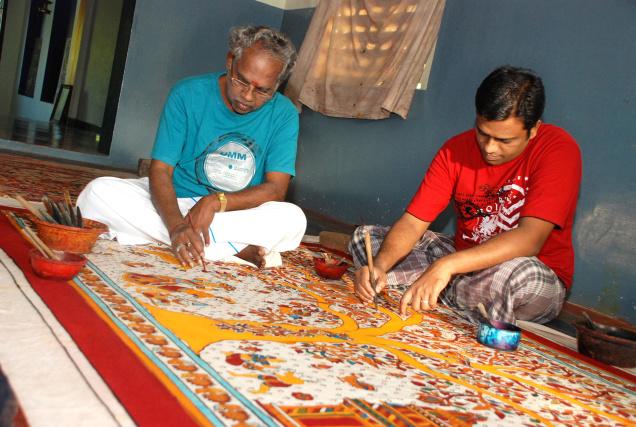
KALAMKARI CRAFTSPERSONS: E. Rhajhmohan and his father R. Emberumal. Photo: Special Arrangement

Like Shilpguru R. Emberumal and his son, E. Rhajhmohan, paint stories on fabrics with a purpose. They want to save kalamkari from dying

Kalamkari artist E. Rjajhmohan was a trifle upset the day I met him. He had missed the chance to showcase his exquisite products at the Madurai Vizha organized by the CII’s local chapter last month.

He said, “The sales are not so good these days. I am trying to customize my products and was hoping to create awareness in Madurai market.”

As the son of traditional master craftsman Dr. R. Emberumal, he was struck by the beauty of kalamkari from childhood but was not so keen to join the same profession. Theirs had come to be the only family left in Sickkalnayakenpet in Thanjavur district struggling to live off this art. Younger family members were lured by more lucrative jobs. The buyers, too, were dwindling. “That was a decade ago when I started working with my father and other craftsmen,” he says.

Karupur Kalamkari

Kalamkari, the art of hand-painting and printing on fabric, is native to Andhra Pradesh as temple art, and there are two main centres for it today — Machilipatnam and Srikalahasti. But there is a third style, called the Karupur Kalamkari, which originated in Thanjavur during the Maratha rule. Essentially using vegetable dyes and depicting scenes from Hindu mythology on cotton, this kalamkari was further embellished with gold brocade work in hand-woven fabric mostly worn as saris and dhotis by the royal family during the period of Raja Serfoji and later Raja Shivaji.

In Sickkalnayakenpet, there were 300 families involved in these complex but exquisite creations. Now only Emberumal is left with his 38-year-old son, a late entrant with a natural flair for the art and full of innovative ideas. Father and son have now hired and trained half-a-dozen individuals to carry on the art.

Craft and commerce

Emberumal, the National Award winner for Karupur Kalamkari, retains his passion for traditional panels bursting with mythological figures, and the typical “tree of life” depicting peace, prosperity and vibrancy, but he is not always able to sell his works. They cost anywhere from Rs.1,000 to Rs.100,000 depending on the size. Rhajhmohan has gone commercial.

“We have to survive,” he says, “practically selling our products door to door and occasionally getting noticed at some exhibitions.” He has now ventured into customized clothing like saris, stoles, salwar-kurtas, shirts, and home décor items like tablecloths and mats, bed spreads, cushion and pillow covers, curtains and wall hangings.

“I also need to ensure that my artisans have a roof to live under.”

Kalamkari is an elaborate process and each item takes days to finish. The artists prepare the ink from fermented rusted iron, jaggery and fruit powder, then treat the fabric in varying temperatures of water before and after filling in the colours with vegetable dyes. The work needs ample time and concentration. “Our work is rich and pucca and no buyer will ever complain,” he says, displaying one of his paintings.

Painting outside the box

Considering the time and effort that goes into making a large wall panel, says Rhajhmohan, it has to be priced accordingly. “But ordinary people find our items costly and we lose out to the modern-day processes of block-printing, machine-printing and even digital printing.”

KALAMKARI CRAFTSPERSON: E.Rhajhmohan. Photo: S. James

“However,” he is quick to add, “the charm of our hand-painted craft appeals to connoisseurs of art. The love, hard work and passion we put into it shows in the fabric and that is what makes it attractive. We may be selling less today but our work is worth the cost, labour and appreciation.”

Emberumal’s work is displayed in museums and art galleries throughout the world and his work is not entirely constrained to the classical motifs. His reproduction of the 1988 Seoul Olympic Games mascot is displayed at the Olympic Memorabilia Museum in Seoul and he has created the emblem for a couple of American universities. He also experiments freely with tantric and geometrical designs.

At 71, Emberumal continues to celebrate tradition. He has not abandoned hope for his art. “The canvas of our lives may be tattered, but we believe our skills hold the promise of a better tomorrow.”

(Making a difference is a fortnightly column about ordinary people and events that leave an extraordinary impact on us. Email to somabasu@thehindu.co.in to tell about someone you know who is making a difference)

source: http://www.TheHindu.com / Arts> Crafts / by Soma Basu / March 28th, 2012
Documentary for awareness on biogas

Chennai:

In a bid to generate awareness about biogas in rural areas, a documentary film, ‘Energy Independence’ was released here on Wednesday.

The initiative, undertaken by department of nongovernmental organisation (NGO) management, Madras School of Social Work (MSSW) and NSS Empanelled Training Institute, was to promote awareness on sustainable energy in rural areas.

The 18-minute documentary, which was screened after an inaugural ceremony by Dr S Krishnaswamy, founder and managing director of Krishnaswamy Associates, was aimed at promoting biogas in villages, said D K Harish, a student of MSSW who directed the documentary.

The film was shot at Alathur village in Tiruvanmiyur and Marakanam village.

He said biogas in the villages had created energy independence.

“Earlier, the villages used steel-based system to generate gas, which was a costlier experience. Now, with emerging technology, they are using a fibre reinforced plant, which doesn’t require maintenance, said director of corporate social responsibility of Orchid Chemicals, C Mani.

Mani added that biogas was not successful previously because the government’s focus was on liquefied petroleum gas, which was not sustainable in the long run. He said demand for biogas is increasing now as it is cheaper. “Even many buildings in Chennai are opting for biogas in their complexes,” he said.

Fatima Vasanth, principal and secretary of Madras School of Social Work, said that biogas is an alternative energy and students in collaboration with NSS will spread awareness in villages by holding special camps.

source: http://www.ibnlive.in.com / South> Chennai / The New Indian Express, Express News Service / March 22nd, 2012

50 years later, students meet Professor

Chennai:

Not everyone gets an opportunity to meet his or her teacher 50 years after graduating. Surely something like that would be a special moment. On Thursday, as part of the golden jubilee celebrations of the School of Architecture and Planning Alumni Association (SAPAA) of the Anna University, students of the first batch (1957-62) met and honoured their teacher of 50 years ago, Professor Kasturi.

‘Students’ who participated included TV Prabhakaran, Anwar Sherif, Prof B Bhaskar Rao, Haji Mohammed Mustafa and A Krishnaswamy.

President of SAPAA, TV Prabhakaran introduced students of his batch (then department of architecture under the Madras University) and their teacher. Travelling down memory lane, he recalled how Professor Kasturi demystified the theory of structure and structural design for the students.

He narrated the memorable learning experience during the days of Prof V S Jayaraman and Prof Desai.

Prabhakaran noted with satisfaction that the first batch students were successful in their respective ventures, be it teaching, the profession of architecture or trade ventures. “When we met the students of the fiftieth batch last month, it was very special,” he noted. Later, Professor Kasturi was honoured with a memento and a shawl.

Suresh Kuppuswamy, Dean, School of Architecture and Planning (SAP), Anna University traced the history of the institution. Set up in 1957 as a department of the University of Madras, it was initially located in the Alagappa college of technology premises offering five year degree in architecture.

Eminent architect C N Raghavendran was the chief guest and P Mannar Jawahar, vice chancellor of Anna University presided.

source: http://www.ibnlive.in.com/ South> TamilNadu> Chennai / The New Indian Express / Express News Service / March 09th, 2012

Lawyers advocate ‘Green Bench of India’

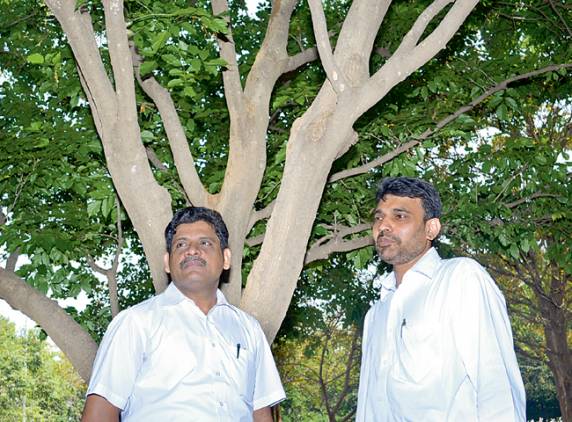
Lawyer-friends T. Lajapathi Roy and G. Prabhu. — DC

Trees are poems that earth writes upon the sky,” writes Lebanese-American poet Khalil Gibran.

With this precious quote from the author of The Prophet on stately trees inscribed on the invite, two leading lawyers of the Madurai bench of Madras high court help open the eyes of their colleagues, litigants and general public to the greenery of the court.

Their love for the court where they argue for justice turning green, the lawyer-friends T.Lajapathi Roy and G.Prabhu Rajadurai take the reader on a breathtaking journey into the woods of the bench campus in their bilingual book ‘Green Bench of India’.

It presents the rich biodiversity on the premises through captivating pictorial representations. Almost all species of trees – evergreen, flowering, landscaping, nut and forest trees and orchards, flowers, birds and insects thriving on the sprawling 107-acre campus are graphically captured.

Yet, they gripe. “We would have left out some 15 species of birds in the campus. Had we used high-end cameras, then we would have featured them too,” says Roy while co-author Rajadurai chips in, “We chanced upon snakes when we were on the job but could not click them. Hence, we have presented the picture of its slough we spotted in the orchard.”

The campus is infested with snakes, says Rajadurai as Roy adds it is balanced with a good number of peacocks too.

More a catalogue of nature’s charms, it has taken eight-long months for the duo to bring out the glossy book encapsulating the pictures of species of trees, both native and non-native (74), local migratory birds (28) and insects (14), and their individual characteristics.

“There must be at least a hundred varieties of butterflies. So, we have now recommended to the court administration to allot two to three acres exclusively for wild growth for the tiny winged creatures to feed on,” Roy says.

Most high court campuses in the country, the authors say, are only concrete jungles mainly due to lack of space. Fortunately, the expanse of the Madurai bench has worked to nature’s and nature lovers’ advantage. Says Roy, “There were only three species before the bench came into existence. The rest were raised only after it was established in 2004.”

Now, the Madurai Bench High Court Advocates’ Association has planned to utilise the services of Lady Doak College, whose students planted 300 trees in the site on an occasion, for a biodiversity project to make it greener.

As the flora and fauna in the court sanctuary is set to grow, the book, the authors hope, will also see its updated edition on the eve of the 10th anniversary of the Madurai bench.

source: http://www.DeccanChronicle.com / Home> Channels> Cities> Regions> Madurai / by AR Meyyammai/ DC / Madurai, March 07th, 2012

SHOWBIZ: The best of Asean

A festival that celebrates the diversity of Southeast Asian music illuminated Istana Budaya for two days, writes Dennis Chua

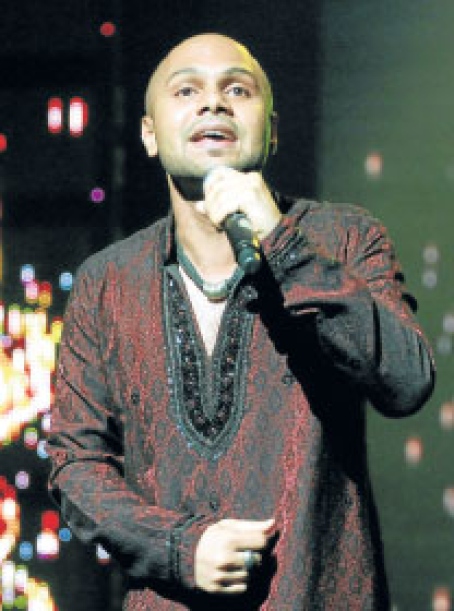
 MK delivering a powerful Tamil number

The  last day of February 2012 will go down in Southeast Asian history as one where the region got together for reportedly its biggest celebration of music in Kuala Lumpur’s splendid Palace Of Culture, Istana Budaya.

Musicians from the Association Of Southeast Asian Nations (Asean) member countries — Brunei, Cambodia, Indonesia, Laos, Myanmar, the Philippines, Singapore, Thailand, Vietnam and this country — brought joy to and garnered applause from the national theatre’s 1,000-odd audience at the Asean Musical Extravaganza 2012 on Feb 29 and March 1.

The extravaganza, organised by the Information, Communication and Culture Ministry, was attended by Prime Minister Datuk Seri Najib Razak and Information, Communication and Culture Minister Datuk Seri Dr Rais Yatim.

It was organised in conjunction with the 11th annual Asean Ministers Responsible For Information (AMRI) Conference 2012 in KL.

The member countries introduced their performers in alphabetical order, beginning with Brunei and ending with Vietnam.

As host, Malaysia showcased three popular singers representing the country’s three major communities.

They were One In A Million 1 champion Suki Low, popular Tamil singer MK and the country’s pop king Jamal Abdillah.

Dressed in elegant purple, Suki delivered an outstanding rendition of  the Chinese song Beauty Within.

Sporting a new, short hairdo reminiscent of Jaclyn Victor, the singer from Seremban showed fans across the region that she was “growing with her music”.

Not only did she shine in her Chinese number, Suki also delivered a perfect rendition of Joget 1Malaysia, a remake of the 1960s hit Joget Malaysia made popular by Tan Sri P. Ramlee and his wife Puan Sri Saloma.

And she had the perfect singing partner in Jamal, who with MK nicely complemented Suki as the male voices of the patriotic joget.

Jamal received a standing ovation for his spiritual song, Samrah Mentari, dressed in a golden baju Melayu and sporting a moustache.

His deep, caressing voice was as good as ever, and the 26 backup dancers from the theatre’s troupe were stunning in their whirly footwork and stylish in their green, gold and red Egyptian-style dresses.

MK did not disappoint either. He delivered a powerful Tamil number, Ravanah Veera, which was an ode to heroism and the victory of good over evil.

Brunei’s 11-man traditional music group Senandung Darussalam, with six kompang players, a guitarist and four dancers, performed some spiritual Hadrah songs. Their performance was a combination of modern popular music and traditional religious hymns.

The group was formed in 1985, a year after Brunei’s independence.

Cambodia’s King Music Band, with two vocalists, two guitarists, two xylophonists, a keyboardist and a drummer, delivered two melodious songs that are hugely popular back home.

They were Dancing At Angkor, which celebrated the country’s most iconic temple Angkor Wat, and Phnom Penh, an ode to the Cambodian capital city composed by the country’s former monarch King Norodom Sihanouk.

Indonesia thought out of the box by introducing a Minangkabau dance titled Sabalah. Performed by seven female dancers of 30-year-old cultural troupe Krida Budaya, it told the story of black mushrooms and their growing process in the tropical rainforest.

The ladies were elegant in green and gold blouses, colours that reflected the rainforest and sun. And they also wore large black skirts that reflected the mushrooms’ umbrella-like formations.

Laos chose a straightforward performance with the KL-12 Lao Pop Stars, a special musical project for the festival that combined the talents of the country’s best musicians and vocalists.

KL-12 had a sweet-sounding vocal quartet, backed by a guitarist and drummer with gusto. The group performed two Laotian songs about human values, Ban Mea Hao and Ban Kird Hao.

Myanmar proved the most entertaining guest that evening by presenting the traditional Myanmar opera U Shwe Yoe And Daw Moe.

Bearing an uncanny resemblance to our own dondang sayang, makyong and Chinese opera, this performance focused on a middle-aged man and his no-holds-barred wife.

The dancers’ acrobatic yet graceful movements delighted the audiences, as did the four musicians who complemented them with three traditional drums and a traditional flute.

Myanmar also presented the Kayin Doan Dance, a traditional dance by the country’s Kayin community from the east.

The Philippines gave audiences a performance out of the ordinary by the Diwa De Leon group, Hegalong Project.

De Leon, a gifted and popular folk musician, is the country’s master of the hegalong, a home-grown lute.

His group comprising percussionists Frances Escape and J P Hernandez and vocalists Abe Dalena and Zob Reyes delivered two haunting songs, Moon Rise and the instrumental Stormy Night.

Fans loved the Hegalong Project, for it showed a whole new side of Philippine popular music, one that was rooted in the hills, mountains, countryside and tradition.

Singapore’s instrumental quintet Five Elements was a show-stealer too. Comprising conductor-cum-flutist Ghanavenothan Retnam, accordion player Ismahairie, pipa player Chin Yen Chien, erhu player Shunta Goh and percussionist Sai Akhilshwar, it performed the souful songs Ode To Joy, Fast Forward and Shanti, and the upbeat Joget.

Thailand paid homage to its King with the Royal Dance Troupe. Its nine members performed a traditional dance drama Lakhon and a traditional mask play Khon.

The troupe also performed the song  Falling Rain, a composition by King Bhumibol Adulyadej.

Vietnam’s National Academy, with 10 musicians on the traditional Trung, flute, zither and monochord, belted out traditional tunes that reflected the country’s beautiful landscapes.

The group’s vocalist also sang a moving Ode To The Missing Loves, which is a United Nations Educational, Scientific And Cultural Organisation (Unesco) heritage of the country.

Throughout the two-hour showcase which began at 8.30pm, the Malaysian Traditional Orchestra’s 86 members did a splendid job backing up every performance. Likewise the Istana Budaya dancers who opened the showcase with a traditional joget.

Last but not least, every performer got together at the grand finale to sing the Asean anthem Under The Asean Sky to roaring applause from the VIPs and fellow guests.

Showcase of diversity

THE Asean Musical Extravaganza 2012 is the first celebration of music from all 10 member countries of the Association Of Southeast Asian Nations (Asean) in Malaysia.

It is the brainchild of Information, Communication and Culture Minister Datuk Seri Dr Rais Yatim and organised by the Ministry of Information, Communication and Culture in Istana Budaya, Jalan Tun Razak, Kuala Lumpur.

Held in conjunction with the annual Asean Ministers Responsible For Information (AMRI) Conference 2012, it is aimed at showcasing the diversity of musical traditions from Asean member countries Brunei, Cambodia, Indonesia, Laos, Malaysia, Myanmar, the Philippines, Singapore, Thailand and Vietnam.

And for host country Malaysia, it introduces music lovers to the budding musical and dance talents from fellow Asean countrie

source: http://www.nst.com.my / New Straits Times / Sunday Life & Time / by Dennis Chua,   dchua@nst.com.my / March 04th, 2012

Madurai Meena’ to showcase city to the world

Dressed in a colourful ‘pattu pavadai’ (silk skirt), jasmine flowers on her hair, bangles and earrings, ‘Madurai Meena’ is all set to be the temple city’s brand ambassador for culture and heritage throughout the globe and will start her journey on February 27.

Gaurie Gupta, in charge of the programme, which is a part of ‘Madurai Vizha’ hosted by the Confederation of Indian Industry (CII) says that they plan to reach out to the world with the doll. Twenty replicas have been made of this hand-painted, two feet tall wooden doll and will be sent to people of different countries with some information on Madurai. Organisers hope that people who receive the package will not merely retain her as a souvenir but send her on a chain of journeys, taking the message of Madurai and its culture.

The three-day second edition of ‘Madurai Vizha’, which was inaugurated on Friday, is being hosted by the CII. It is an initiative of the tourism wing of CII to showcase the rich culture and heritage of Madurai to the outside world.

At the venue, visitors could witness sculptors making stone sculptures and garland makers stringing the famous ‘Madurai jasmine’. There were cultural programmes showcasing the various art forms such as ‘poikal kudirai’ and ‘karakattam’, local cuisine to suit the taste buds and even the ‘ilavattakal, the round stone that young men had to carry over their shoulder and prove their might to win the hand of the girl of his choice.

The receivers of Madurai Meena have just one duty to perform, that is, to take a photograph of themselves with the doll in front of a famous landmark in his or her city or town and upload it on the special webpage, which is linked to the website | Madurai Tourism.

CII hopes that Meena would be photographed in front of the Buckingham palace, Statue of Liberty, Sydney Opera House, Vatican and even the Alps and Amazon. The objective is to create a chain of the doll across various countries, without age barriers, who will become aware of Madurai’s ancient history, culture and heritage while keeping track of the doll on her webpage. When a person uploads a photograph of himself with Meena on her webpage he or she will promptly receive a postcard from the organisers.

The doll will begin its journey on February 27 and people can start tracking her journey from the second week of March 2012. It is hoped that this doll will form a social network of people, interested in the culture and heritage of Madurai and visit this ancient city.

source: http://www.penmai.com / February 27th, 2012

Ooty Fountain gets facelift for summer

Ooty:

Adam’s Fountain at Charring Cross, a landmark in the Queen of Hills, has been spruced up before summer and its attendant tourist season hits Ooty.

The Ooty municipality has handed over the maintenance of Adam’s Fountain to a Coimbatore-based private advertising company and work has been completed. The new look of the fountain under floodlights in the night is sure to be a tourist attraction. Built in 1886 as a memorial to Governor Adam of Madras Presidency, it remains a public display fountain. The Governor died in Ooty in 1881. The fountain was established at a cost of `13,000 then, from public subscriptions. Since maintaining the fountain is expensive, the municipal administration has invited private participation for several years now, rejecting councillors’ demands not to hand maintenance over to private companies.

sources: http://www.ExpressBuzz.com / Home> States> TamilNadu / Express News Service / February 27th, 2012

Kovai Gets First Woman Dy Mayor

Coimbatore:

Coimbatore got its first woman Deputy Mayor, S Leelavathi Unni, in a ‘hurry’ on Monday thanks to a classic case of slip between the cup and lip for the AIADMK’s originally intended nominee K B Balraj. The post of Deputy Mayor had fallen vacant following the resignation N Chinnadurai on December 30 last year.

Just hours before the Coimbatore Corporation Council was to meet to elect the new Deputy Mayor on Monday, it became apparent that Balraj would be the ruling party nominee for the post. Immediately, senior AIADMK functionary M Manimaran sought to preempt Balraj. He pointed out that since the latter had got a contract to operate a Corporation abattoir in Uppilipalayam, electing him would lead to conflict on interest in civic administration.

Balraj had recently written to the Corporation seeking to annul his contract with an eye on bagging the post. His request to surrender his contract was on the agendas for Monday’s council meeting.

With Manimaran and a few other councillors objecting to Balraj’s candidature confusion prevailed

Amid the drama, Corporation Commissioner consulted Mayor S M Velusamy and adjourned the council meeting by an hour. Subsequently, after backroom confabulations with Chennai, first time councillor Leelavathi Unni was asked to file her nominations.

A brief while later the Commissioner declared that she was unanimously elected Deputy Mayor.

source: http://www/ibnlive.in.com /  Express News Service / Tamilnadu / February 28th,2012

Sinclairs Hotels reopens Sinclairs Retreat Ooty

Kolkata:

Sinclairs Hotels Limited on Tuesday announced the grand reopening of Sinclairs Retreat Ooty – the 72-room 7-suite hill resort located 2240m above sea level in the panoramic Nilgiri Hills.

The resort, close to the Coimbatore airport, has been extensively refur-bished and has opened in time to leverage the peak summer season which typically sees a spike in tourist arrivals in the region.

Apart from Ooty, Sinclairs’ properties in Siliguri, Darjeeling, Dooars and Port Blair recorded strong year-on-year performance with a 10% increase in topline and 5% increase in profit from the previous year.

Sinclairs’ portfolio will stand enhanced to around 600 keys across 9 desti-nations following completion of three new projects including a luxury hill resort in Kalimpong, a tourist resort with a hotel, club and banquet com-plex in Burdwan, near Kolkata and a 106 room premier business hotel in Kolkata.

It may be mentioned the group recently acquired majority ownership of Savannah Sarovar Premiere – a 104 room upscale operational hotel in Whitefield, the IT hub of Bengaluru. With this acquisition, Sinclairs is firmly positioned to cultivate the traditionally strong business and leisure segments in Bengaluru and its adjoining metropolitan region.

source: http://www.economictimes.indiatimes.com / Home> News> News by Industry> Services / by Anuradha Himatsingka, ET Bureau / February 28th,2012

48.2-ft dosa for Guinness record

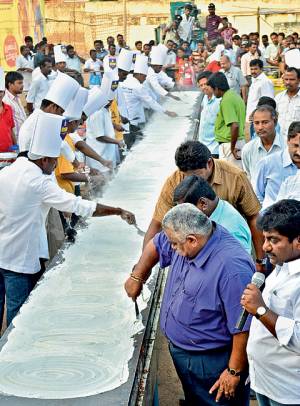
Madurai hoteliers on Sunday dished out a 48.2-feet-long dosa in a bid to enter the Guinness Book of World Records.

“We have outdone the previous record for the longest dosa, which was 38.2-feet-long, made by Vijayawada Hotel Owners’ Association,” said a confident chef K. Damodaran under whose supervision the dosa was made.

The Temple City Group of Hotels had sponsored the event as part of Suvai Durbar, a three-day food festival organised by Madurai Round Table 14 to raise funds to improve infrastructure facilities in government schools. The food festival culminated with the sizzling dosa-making feat.

“We wanted to roll out a dosa measuring 64 feet in view of chief minister Jayalalithaa’s 64 birthday but we ended up at 48.2 feet as the dosa pan did not get the required heat from the 38 burners that were on. Yet, we have beaten the previous record,” said K.L. Kumar, proprietor of the Temple City Hotels.

While 24 kg of batter and 3 litres of oil were used, 18 masters were roped in to make the lengthy crispy brown dosa that was rolled carefully without damaging it or spoiling the colour. Later, it was sliced and served free to the crowd of visitors that flocked the festival venue.

“On the first day, we came out with 45 feet dosa and increased this to 48 feet on Saturday. On Sunday, we added an additional 0.2 feet. In all, we have used 200 kg of batter,” Kumar said.

Chef K. Damodaran and his team attempt to set a record by making a 48.2-feet long dosa at Suvai Durbar, a food festival held at Tamukkam grounds in Madurai on Sunday — DC

The event was videographed and the CDs would be sent to the adjudicators of Guinness and Limca books of records, Kumar said.Two giant monitors were placed to enable the visitors to watch the event that started at 5 pm and ended at 8 pm.

A sizeable number of foreigners were seen enjoying the south Indian delicacy along with the locals post the event.

source: http://www.DeccanChronicle.com / Home> Channels> Cities> Region> Madurai / February 20th, 2012