Category Archives: Uncategorized

Trichy tailors against distribution of school uniform orders

Trichy:

Women belonging to the Cauvery Women Tailors’ Cooperative Association, Trichy on Monday submitted a petition to district collector Jayashree Muralidharan seeking her intervention to not divert orders for stitching school uniforms to unregistered tailors citing time constraints.

In their petition, the women coming under categories like below poverty line, widows, destitutes and differently-abled persons were given orders from the district social welfare office to stitch school uniforms for government and aided schools in Trichy district. The association has been in existence for the past 29 years and was providing employment to the poor women to run their families.

Earlier, the officials gave enough time for delivering the stitched uniforms. However, last year after the then state government’s decision to provide two sets of school uniforms to the students, the special officer Veeramani sought the tailors to finish the task within a day, failing which he diverted the orders to unregistered tailors in Sivaganga district. Due to this, the tailors had faced a loss of income last year. Unfortunately, the uniforms could not be used as they were declared unfit. This year, the state government has ordered to provide four sets of uniforms to the students. The tailors claimed that the special officer is again trying to give the orders to outsiders.

According to official sources, as many as 1.50 lakh students in the district benefited every year. In the wake of the government order, the number of school uniform sets would go up this year. So, the officials shared the orders to tailors in Sivaganga district to complete it on time. Previously, the tailors were given five months time to complete the orders. But this year, the time is very limited. So this year also, the government gave very limited time to complete the order before June 10.

When contacted K Yasodhai, district social welfare officer, Trichy said that since the petition was submitted to the district collector, she cannot comment on the issue.

source: http://www.articles.timesofindia.indiatimes.com / Home> City> Madurai> Collections / TNN / May 29th, 2012

IICPT urges industry to look at high pressure processing for food safety

Indian Institute of Crop Processing Technology (IICPT), Thanjavur, is now calling for the need to look at high pressure processing for food safety.

Food safety is the responsibility of the growers, manufacturers and processors and food handlers. The supply to consumers is in different forms such as fresh, preserved and processed products of plant, animal and marine origin.

During the past two decades, numerous researches on food preservation using emerging technologies have been developed. Since these processing techniques have little or no new thermal effects on food, they are commonly referred to as non-thermal preservation technologies. Among these emerging technologies, the most promising ones for food application are high-pressure processing and use of pulsed electric fields. Although the fact that high pressure kills microorganisms and preserved food in the early 19th century, its commercial benefit became available to the food processing industry in a decade ago, stated officials at IICPT.

The concept of high pressure treatment of foods involves subjecting food materials to pressures as high as 9,000 times the atmospheric pressure. It is uniformly applied throughout a food material independent of its mass and time, they added.

Typically, the pressurisation time for foods is independent of the quality of food placed in the pressure vessel, The presence of air in the food increases the pressurisation time, since air is more compressible than water.

According to IICPT, in contrast to the thermal treatment, high pressure processing does not break the ‘covalent bonds’ in food, and thus helps to preserve the flavour. The effect of high pressure on enzymes is largely due to the nature of the proteins.

In fact, the first commercial production of high pressure processed jam was carried out in Japan in 1992, which was well received by consumers. Since then a diverse range of foods, including fruit juices, vegetables, milk, yoghurt, cheese, fish, pork, beef, ice cream, Japanese unrefined rice wine and rice cakes containing herbs are processed using this technology, stated IICPT.

The non-availability of suitable equipment burdened early application of high pressure. There has also been considerable progress made in equipment design which has ensured global recognition of the potential for such technology in food processing. Moreover, high pressure technology can supplement conventional thermal processing for reducing microbial load or substitute the use of chemical preservatives. The advantage of high pressure technology includes that it enables, food processing at ambient temperature or even lower temperature. Causes of microbial death leads to improvements in overall quality of foods and it can be used to create ingredients with novel functional properties.

The food technologists globally recommend high pressure processing to prevent hazardous micro-organisms like E Coli, Salmonella and Vibrio. Presently the food industry is interested in eliminating the harmful organisms.

IICT officials’ said that High pressure processing was not likely to replace traditional methods. However, they observed that high capital expenditure could limit the application initially but this could be offset by lowering the cost expenses of lower operating costs if efficient energy systems were used.

source: http://www.fnbnews.com / Home> Top News / by Nandita Vijay, Bengaluru / Saturday, May 19th, 2012

The ice cream man

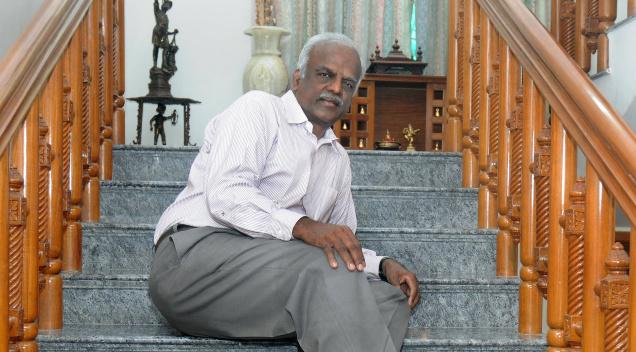
 BUILDING DREAMS: R.G. Chandramogan. Photo: R. Ragu

From push carts to parlours, R.G. Chandramogan has built his ice cream empire bar by bar. Priyadarshini Paitandy meets the man behind Arun and Ibaco

Juggling an ice cream in one hand and a notebook and pen in another isn’t the easiest thing to do, especially when you have to take down notes between mouthfuls of waffle cone. This is what I do when I meet R.G. Chandramogan at his office and start a conversation over an Arun ice cream as he traces the journey and growth of his company Hatsun Agro Products.

When Chandramogan was a school boy he would unfailingly put aside money for ice cream. Thirty-seven paise would be saved for an ice lolly and even though flavours weren’t many except vanilla, pineapple and strawberry, that was enough to bring a blissful smile to his lips.

Little did he know then that two decades down the line he would have an ice cream empire of his own. Surely, this is how Charlie must have felt when he inherited the chocolate factory. But in Chandramogan’s case he built it right from scratch, brick by brick or rather bar by bar.

“With a limited capital of Rs.13,000 I had to start something. So I started Arun ice cream in 1970. I was 21 then,” says Chandramogan. The factory was just an unassuming little place in Tondiarpet where three or four people worked and manually produced about 20 litres of ice cream per day. Ten paise candy was their first variety of ice cream and it was sold through push carts. Today of course it’s a different story. The automatic equipment produces 50,000 litres to 75,000 litres of ice cream per day.

Like most success stories that are laced with phases of initial struggle, his story too saw him plough through early hardships in the business. “We struggled a lot in the first 10 years. The top three players then were Dasaprakash, Joy and Kwality. They were financially ahead and had a bigger market. I lacked knowledge about marketing. I am not a graduate. So while I was struggling I did a course in marketing management, export management and personal management from Sabari College. In the first year our turnover was Rs.1,15,000. From 1981 we started growing and in 1991 Arun recorded a turnover of Rs. 3 crore,” he says.

Chandramogan began catering to ships, messes, colleges. Slowly he branched out to Pondicherry, Madurai, Sivakasi and Kumbakonam where his ice creams were a novelty and the other brands hadn’t yet tapped these markets.

While frozen dessert lovers were lapping up whatever came from the stables of Arun, Chandramogan busied himself with another venture — the dairy business. In 1995 he started Arokya milk. “We were procuring milk for our ice creams and so this idea came about. Today Arokya sees an annual turnover of Rs. 1,300 crores. We also manufacture butter, milk powder, ghee and curd. We are associated with 3,50,000 farmers and buy milk from 8,000 villages. We operate from nine different factories and our people travel 4,20,000 km to collect and distribute milk,” he adds. Hatsun dairy products are available across the country.

Hatsun has its dairy plants in Kanchipuram, Palacode, Salem, Madurai, Belgaum, Honnali. As for its ice cream, apart from Tamil Nadu they also have a plant in Seychelles. How does Arun sell in Seychelles, a market for other popular international ice cream brands? “We have a 70 per cent share of ice cream market in Seychelles. In Brunei we have a distributor who buys and sells our ice creams and there we are among the top four brands,” says the seasoned entrepreneur.

In 2012, Hatsun started yet another ice cream brand, Ibaco. This is the posh cousin of Arun ice cream and is based on the ice cream-by-scoop model. “Arun is a factory finished product and comes in cones, cups and sticks. As for Ibaco, it’s the scoop variety. You walk into an Ibaco parlour, choose the flavour and get it dressed with toppings. As of now Ibaco is available in Chennai, Bengaluru and Delhi. By next year I’ll be taking it to Mumbai, Pune, Hyderabad and Kolkata,” says Chandramogan.

But the launch of a new brand in no way means that Arun has been ignored. This season Arun’s got quite a few new flavours to pep up its range. There’s Berry Storm, Vanilla with Chocolate Fudge, Lemon Bar, Cream and Cookies among others. With myriad options available his favourite still remains the classic Arun chocolate cone. “Earlier I used to eat an ice cream every day. Now I try out ice creams when I travel to get a taste of competing brands,” he smiles.

After a day of cream, dairy and deals, how does he unwind? “I go to the gym, read books. Earlier I used to play badminton. I was a fan of the game and would go to watch Prakash Padukone play at tournaments. I even like watching tennis especially when Roger Federer plays. I am going to London to watch him play in November.” Who knows maybe the Swiss player could be roped in as the brand ambassador for Hatsun? Now that’s a thought!

***

Hatsun produces 18 lakh to 20 lakh litres of milk per day. Twelve lakh litres are used up for milk and milk products. Sixty thousand litres are used for ice cream. The remaining is used for ghee and skimmed milk.

source: http://www.thehindu.com / Life & Style> MetroPlus / by PriyaDarshini Paitandy / Chennai, May 17th, 2012

With upgrades, India to reopen 3 vaccine plants

HLL, a company that made its name in condom manufacturing, has contract for work

An Indian company known for making condoms has completed upgrades on a vaccine plant there and is nearing completion on two others.

It has only recently been disclosed that HLL Lifecare, formerly Hindustan Latex, has been overseeing the work, reports rediff business, a disclosure it says has been a surprise to some. HLL still makes condoms but also operates hospital chains, diagnostic clinics and MRI centers in India.

The plants all had their licenses pulled in 2008 because of quality problems, leading to a shortage of some vaccines at the time, according to in-PharmaTechnologist.

The government is investing about $37 million in the project. That is about half the cost of the upgrades at the Central Research Institute in Kasauli, the Bacillus Calmette-Guerin Vaccine Laboratory in Guindy, and the Pasteur Institute of India, in Coonoor, rediff reports. Additional funds will come from institutional investors. And while government-owned facilities usually stick to common vaccines like DPT, the plan is for the reopened plants to manufacture a variety of vaccines, including those for hepatitis B, influenza. and rabies.

While strides have been made in recent years in the development and manufacturing of vaccines, the world continues to have huge unmet needs in many areas.

– read the rediff business story
– get the in-PharmaTechnologist story

source: http://www.fiercepharmamanufacturing.com / Home> Topics: Emerging Markests , Facilities / by Eric Palmer / May o3rd, 2012

Narain Karthikeyan may become the brand ambassador of Incredible India

New Delhi:

As India tries to increase its share in the world tourism market, the tourism ministry is looking for a brand ambassador for its flagship logo Incredible India. The ministry is in talks with India’s first Formula One driver Narain Karthikeyan for the job.

Though Bollywood actor Aamir Khan has been the face of Incredible India spreading the social message of cleanliness and Atithi Devo Bhava in India, the ministry needs a global brand ambassador.

After seriously considering Bollywood actors, the ministry has zeroed in on sportspersons to do the job. Speaking to ET, tourism minister Subodh Kant Sahai said: “India needs a brand ambassador to promote Incredible India in the overseas market. A world-renowned sportsperson would be the ideal choice for this.”

According to highly-placed sources, Karthikeyan met Sahai earlier this week and gave a presentation on how he could promote Brand India globally. This includes plans of sporting Incredible India logo with visuals of  Taj Mahal on his racing car and making appearances at India roadshows abroad.

The ministry is showing keen interest as Formula One racing has the second-largest viewership after FIFA World Cup. The ministry had also considered cricketers like MS Dhoni but realised that cricket is not followed in Europe and United States and it could mean leaving out big international tourist markets.

source: http://www.economictimes.indiatimes.com / News> News by Industry> Services / by Nidhi Sharma, ET Bureau / April 21st, 2012

DISH Launches Four South Indian Channels from SUN TV Network

Englewood, Colorado: 

DISH Network L.L.C. (NASDAQ: DISH), the nation’s third largest pay-TV provider announced the launch of four more South Indian channels from SUN TV Network. Adithya TV, Gemini Comedy, Kiran TV and SUN Music bolster DISH’s rank as the leader in international programming with more than 240 ethnic channels in 29 languages.

“We are a leader in delivering TV channels from across India to those in the U.S. seeking news, music and entertainment from their home country,” said Chris Kuelling, vice president of International Programming at DISH. “DISH currently offers 92 South Indian channels, and the launch of additional SUN TV Network programming shows our continued commitment to serve the South Indian community.”

With presence in more than 27 countries, SUN TV Network’s CEO K. Vijay Kumar said this partnership will allow the company to further expand its reach in the international market.

“Millions of people around the world watch SUN TV Network channels,” said Kumar. “DISH dominates the South Indian market in the U.S., and we are thrilled to have the opportunity to bring our content to an even wider audience.”

Channel descriptions and DISH programming package availability are listed below.

Adithya TV: A Tamil channel with a lineup of rib-tickling comedy and call-in music request shows. Popular programs include “Anandam Anandame,” “Konjam Kapi Niraya Comedy,” “Kalakkal Comedy,” “Sarigama Padhani,” “Vaanga Sirikkalam,” “Jokaddi,” “Comedy Galata,” “Adra Sakka,” “Vaivittu Siringa,” “Sirikka Sirikka Sirippu,” “Jillinu Oru kadi” and “Idhu Thanda Sirippu.” Adithya TV is available on channel 693 in DISH’s Tamil Mosaic Pack and SUN Pack.

Gemini Comedy: A Telugu channel tailored to tickle the funny bone, Gemini Comedy broadcasts a variety of Telugu movies and comedy series including “Comedy Talkies,” “Kita Kitalu,” “Smile Raja Smile (with Rani’s),” “Kevvu Comedy,” “Navvandehe,” “Havva Ente Navva,” “Fun Bomb” and “Appam Bappam.” Gemini Comedy is available on channel 591 in DISH’s Telugu Pack at no additional cost.

Kiran TV: A Malayalam music channel that features a variety of song sequences and films, such as “Kiran Morning,” “Kiran Wishes,” “Darling Darling,” “Ningalakku Areyamo” and “Kiran Classics.” Kiran TV is available on channel 593 in DISH’s Malayalam Mega Pack at no additional cost.

SUN Music: A dedicated Tamil music channel, SUN Music captures the essence of song-based sequences from a vast library of Tamil movies and features a variety of popular programming like “Hi Kutties,” “Anbe Anbe,” “Vaazhthalam Vaanga,” “Star Times,” “Ladies Choice” and “Yendrum Iniavai.” SUN Music is available on channel 692 in DISH’s Tamil Mosaic Pack and SUN Pack.

source: http://www.IndoAmerican-News.com / Entertainment / April 12th, 2012

Short URL: http://www.indoamerican-news.com/?p=6368

Memories of Coimbatore: Women in action

Shashi Ghulati on the Coimbatore of the 60s, and the slew of welfare activities she and other ladies undertook in the city

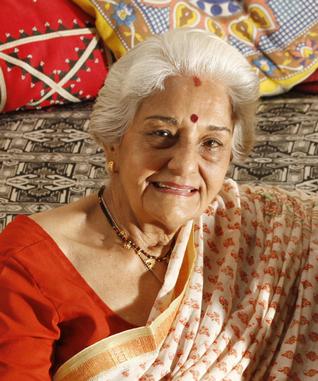
                         Shashi Ghulati during a photoshoot Photo: K. Ananthan 

I migrated from Calcutta to Coimbatore in 1964 after my husband Sagar decided to quit Hooghly Pilot Service to start his own business. Since I grew up in Madras in the 40s and 50s, moving to Coimbatore was a sort of homecoming for me. The city was an overgrown village back then. The hills in the periphery of the city gave one a feeling of being in a hill station. And yes, the salubrious climate! It was one of the major reasons why we chose to settle down in Coimbatore even after experiencing the exciting lifestyle of Calcutta.

I distinctly remember the level crossings on Avanashi Road and Cross Cut Road. The flyovers did not exist then. These crossings tested our patience especially when we had to get our kids to school on time!

When we moved to our first home at Siddhanaidu Layout, I would drive past the Kamarajapuram sweeper colony. The area housed municipal workers and cobblers. The roads were lined with numerous huts and they were very badly maintained. I wanted to do something about it. I became a member of YWCA and proposed an idea of starting a community centre at Kamarajapuram. The then President of YWCA, Dr. Rangala and Secretary Hepzibah were receptive to it.

Literacy drive

With the municipality’s support, we restored a dilapidated reading room in the locality and started a crèche, nursery and a tailoring unit. Adult literacy classes were started for women in Kamarajapuram and they are functioning even today.

The very first Ladies Circle in India was founded in Coimbatore in 1968. The wives of members of Round Table No. 9 in the city formed it. I was the Founder President. The Ladies Circle helped organise recreational activities for children in Kamarajapuram, set up kitchen gardens and volleyball training sessions.

I remember the time I visited Stanes School to enrol my son there. The school had an expanse of open land. There were not many trees. Strong gusts of wind raised waves of dust in the school. Reverend H.O. Fowler of Stanes was a very genial man. His wife, Alda Fowler and V. Amritham didn’t let me miss Calcutta at all.

In 1966, the members of the Society for the Aid of Handicapped Children started the Coimbatore Orthopaedic and Rehabilitation Centre at Krishnasamy Mudaliar Road. Alda, Amritham, Dotty Boppayya and I were the first office bearers of this centre, which is now ‘Amrit Centre for Special Needs’ on Mettupalayam Road.

In January 1984, the Indian National Trust for Art and Cultural Heritage (INTACH) was founded in New Delhi. In November 1985, Dr. Deborah Thiagarajan, then State Convenor of INTACH, Tamil Nadu, invited me to found a chapter at Coimbatore. In August 1986, this chapter was formed. Till 1995, our initiatives included documenting and listing several public structures in the city. We fought for the restoration of the Victoria Town Hall, which was being used as a godown.

Awareness campaigns

In 1987, 88, 90 and 92, National Environment Awareness Campaigns were held for a period of four months each. These addressed issues involving pollution of rivers Bhavani and Cauvery, the Noyyal tank, and the ground waters of Tirupur due to industrial and sewage effluents.

INTACH Coimbatore pioneered legal action to save the Bhavani River with a PIL in the Supreme Court.

In the early 70s, Coimbatore had the privilege of playing host to Mother Teresa twice. During her first visit, I had the opportunity to meet her. She expressed her desire to do something for the homeless in the city. She wasn’t ready for any sort of civic reception then.

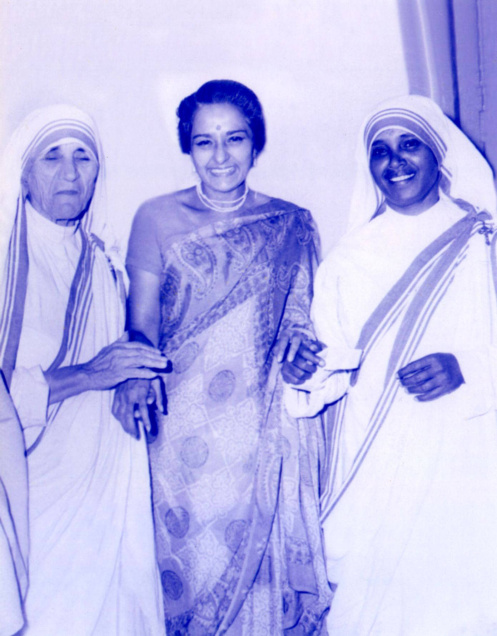
In Divine Company Shashi Ghulati (centre) with Mother Teresa Photo: Special Arrangement

Nuns from the Missionaries of Charities came down to Coimbatore to set up Nirmal Hriday and Sishu Bhavan near Carmel Garden School. As members of Ladies Circle No. 1, we invited the nuns to volunteer at a home for juvenile delinquents near Lakshmi Mills.

During Mother’s second visit, a huge gathering was organised for her at the grounds in Carmel Garden. But the most exciting thing for me was that I got to be her chauffeur!

(As told to NITHYA SIVASHANKAR)


BIO

SHASHI GHULATI Born in 1934 in Chennai, she made Coimbatore her home in 1964. She was the first President of the Ladies Circle India. As part of her work with Women’s Voluntary Services in Calcutta, she worked with refugees from East Bengal. Her interests include music, writing, reading and drama. Shashi is the secretary of the Coimbatore Book Club Theatre Group and she regularly directs plays in the city.

I REMEMBER

Sessions with a group of us sitting down and reading out of favourite books and plays. We would have these meetings at home. These sowed the seeds of the Coimbatore Book Club.

source: http://www.TheHindu.com / Life & Style> MetroPlus / by Nithya SivaShankar / Coimbatore, April 03rd, 2012

Buy sugarcane in powder form, enjoy juice at leisure

Coimbatore:

There’s good news for those who crave for sugarcane juice, but don’t want to have it from roadside shacks with suspect hygiene standards. Coimbatore-based Sugarcane Breeding Institute has developed a technology to make sugarcane powder. Mix the powder with cold water, you have sugarcane juice.

“Sugarcane powder would look like milk powder and it can be used to quench thirst,” says K Sivaraman, a principal scientist at the Institute. “The powder can be produced by a slight modification in the machines used to make milk powder. It can be mixed with water, the same way milk powder is mixed with water. Sugarcane juice is ‘spray dried’ to make sugarcane powder,” he said.

Spray drying is a complex process used to turn liquid food particles into solid form. Milk powder is made using this process. Sugarcane juice though popular has a short shelf-life. Due to the high content of sugar, the juice gets spoilt in six hours. K Hari, the principal investigator on the project, said the sugarcane powder would solve this problem. “It would solve the problem of storage of sugarcane juice. And, the juice could be available in various flavours like lemon, ginger etc,” said Hari.

The powder could also be used as a substitute for sugar. “Use of white sugar is not a healthy option. But the powder extracted from sugarcane retains the mineral content in almost the same way as it is present in sugarcane juice. This can be even used as a substitute to sugar in food or even in ayurvedic medicines. The flavour will be different, but is a healthy option,” Hari added.

Sivaraman said the powder would be introduced in the market soon. “A Gujarat entrepreneur has bought the technology. They are contemplating about various products and flavours, which could be developed from this. However, others interested in the product could approach the institute as we do not sell the rights exclusively for any single party,” he said.

Coimbatore-based Sugarcane Breeding Institute has developed a technology to make sugarcane powder. Mix the powder with cold water, you have sugarcane juice.

source: http://www.articles.timesofindia.indiatimes.com / Home> City> Coimbatore / by Arun P Mathew / TNN / April 03rd, 2012

Pollachi sends summer coolers

For 48-year-old Mahendran, March to May is a busy season as the demand for tender coconuts peaks with rising mercury levels. Mahendran has been selling them for nearly three decades in Egmore and now owns two shops and seven push carts. “I buy around 4,000 coconuts every three days,” he says.

As the mercury rises in Chennai , people turn to tender coconuts to beat the heat. The town that supplies Chennai with its daily dose of coconuts is Pollachi, about 40km south of Coimbatore.

According to Hemachandra, deputy director of the Coconut Development Board, Chennai gets around 30 truckloads of coconuts from Pollachi and 15 from Puducherry and Cuddalore between March and May. Each truck has 4,500 coconuts.

The Tender Coconut Producer Association, which consists of Pollachi-based farmers, meets every week to decide the price of coconuts. An SMS is sent to the members and representatives of nearly 200 villages and traders, informing them about the price. Traders then bargain based on the quality of the coconuts.

A E Srinivasan, a farmer and secretary of the association, says Pollachi coconuts are the best as they have more butter. “Earlier, we were not aware of the price in other cities and used to sell coconuts for as low as Rs 4. Now, we sell the hybrid quality for Rs 12 to Rs 14, dwarf variety for around Rs 15 and tall quality for up to Rs 9. The prices will go up in May,” says Srinivasan, who has coconut plantations. Traders come to his farm once a month to take the harvest.

Kamaraj (41), who has been selling coconuts for past 15 years in Egmore, says he buys about 500 coconuts depending on the sales. “I pay Rs 20 for a piece. I sell around 60-70 coconuts daily and the price varies from Rs 25 to Rs 30,” he says.

Till last year, Puducherry, Cuddalore and other coastal districts supplied coconuts. However, Cyclone Thane destroyed most of the plantations, thereby increasing the prices. “I used to buy coconuts for Rs 12, but now I have to pay Rs 20,” says Mahendran.

Despite getting a better price for their produce, things are not all bright for the Pollachi farmers. “There is labour shortage as younger generation doesn’t want to take up this job and only a trained person can climb the tree,” says Srinivasan.

T A Krishnaswamy Gounder, president of United Coconut Growers Association of South India, says youngsters prefer to work under the Mahatma Gandhi National Rural Employment Guarantee Act schemes than climb coconut trees for a living.

source: http://www.articles.timesofindia.indiatimes.com / Home> City> Chennai / by Nanya Srivastava / TNN / March 31st, 2012

Get ready for the Exotic Car Show

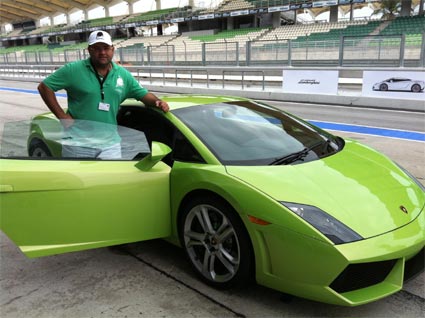
A exotic car show to coincide with the first program of the newly formed Madras Exotic Car Club(MECC) will be held on 1st April 2012. 30 Exotic Cars like  Ferraris’,Lamborghinis, Rolls Royces, Bentleys, Porches, BMWs, Audis and the likes will be making a statement, with the owners seen racing  on the Irrungatukotai race track  from 11 am to 1 pm. The show, sponsored by Golden Homes, is open to public to enjoy and experience the thrill of all the exotic  cars present in one place. The entry is free.

Talking to the media about the show and the club Mr. Manoj Lulla, Chairman, says,” The number of Exotic  cars is increasing in the South, so there is a need to form a club, where owners can come and share their experiences, problems faced and take help form the club authorities.  Madras Exotic Car Club will reach out to all those owners who are passionate about their expensive  cars. The club will organise events on the track, get drivers from Europe to train the drivers on optimal use of sports /super cars and also give advice on which car to buy next while providing technical expertise on performance upgrades. The club will also facilitate visits to important factories and  tie up with other clubs.”

He further added that plans are afoot to tie up with leading automotive brands to offer special experiences and prices to this elite club, which will be free to members initially.”We plan to do three of four events in this year and then increase as we see better participation “.

Mr. Bal Singh George, MD, Golden Homes, an avid car enthusiast himself, said, “There are hundreds of super car clubs in Europe and other cities spread across the world. Surprisingly, even though South is supposed to be conservative, there has been a silent craze for super cars especially in the 3 C’s – Chennai, Coimbatore and Cochin”.

When asked about what is the standard definition of a super car, Mr. Bal Singh  George  said that it varies from country to country and for me a super or exotic  car is one which is capable of touching 300 kms an hour with at least 8 cylinders and a minimum of 4000 cc engine. Recent advances have made powerful luxury cars perform better but focus is still on comfort, luxury and exclusivity.

source: http://www.chennaionline.com / Friday, March 27th, 2012