‘Weapons are meant to protect country’

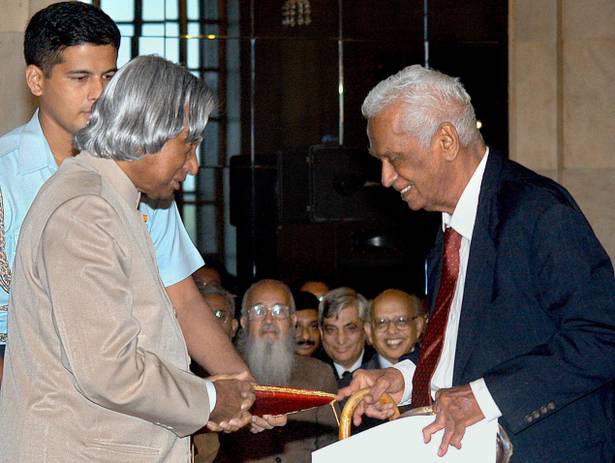
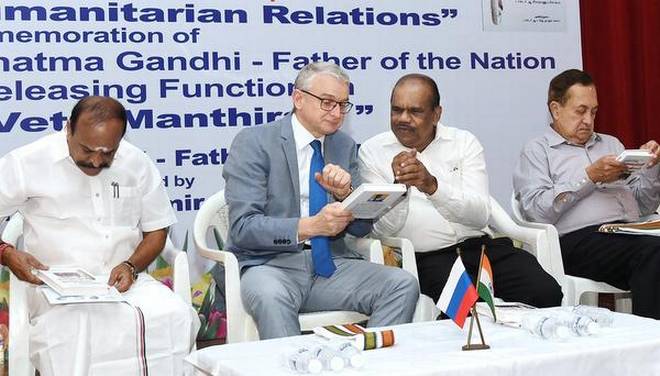
H.E Oleg N. Avdeev (Consul General of Russia) having a word with A.Sivathanu Pillai, Father of Brahmos, Vice President Indi Russian Chamber of Commerce and Industries, along with N. Ram, chairman, The Hindu Publishing group (right) and Kadambur Raju, Minister for Information and Publicity Tamil Nadu (left) ''BrahMosin Vetri Manthiram'' book release function during the Mahatma Gandhi 150th year birth day celebration held at Russian Cultural Centre, Alwarpet in Chennai on Tuesday. | Photo Credit: B_JOTHI RAMALINGAM
H.E Oleg N. Avdeev (Consul General of Russia) having a word with A.Sivathanu Pillai, Father of Brahmos, Vice President Indi Russian Chamber of Commerce and Industries, along with N. Ram, chairman, The Hindu Publishing group (right) and Kadambur Raju, Minister for Information and Publicity Tamil Nadu (left) ”BrahMosin Vetri Manthiram” book release function during the Mahatma Gandhi 150th year birth day celebration held at Russian Cultural Centre, Alwarpet in Chennai on Tuesday. | Photo Credit: B_JOTHI RAMALINGAM

Sivathanu Pillai, creator of the BrahMos missile, credits Dr. Kalam for achievements

The Russian Centre for Science and Culture, along with the Indo-Russian Chamber of Commerce and Industries, commemorated Gandhi Jayanthi by releasing a book by renowned defence technologist A. Sivathanu Pillai, BrahMos in Vetri Manthiram, on Tuesday.

A discussion on Indo-Russian humanitarian relations was held on the occasion.

Contribution lauded

Minister for Information and Publicity Kadambur Raju, who presided over the event, lauded the contribution of Mr. Pillai in creating the supersonic cruise missile, BrahMos, and promised to take his book to schools across the State so that students could get a glimpse of missile technology.

“The friendship between India and Russia has always been strong and will continue to remain so,” he added. N. Ram, Chairman, THG Publishing Private Limited, said, “Despite Western attempts to cause prejudice against Russia, the people of India have not been misled, especially in Tamil Nadu. I don’t see their propaganda have any serious influence. India remains immune.” Commending Mr. Pillai, he said, “Nobody, including the USA, has been able to reproduce anything like BrahMos. It is not meant to be used against anyone but to defend India’s national security.

“The people of Tamil Nadu represented by our Minister here are grateful to Russia for remaining steadfast strategic partners and co-operators.” Thanking the gathering for honouring his work and his book, Mr. Pillai recalled the days when he would study Tomahawk and other missiles to create something better in India. “It was Dr. Abdul Kalam’s dream to put our country on the top in technological advancements. “With the help of Russia and our leaders we were able to reach there by creating BrahMos,” he said.

“And like Mr. Ram said, weapons are not meant to fight but to protect. People will respect us only if we are able to defend ourselves,” he said.

source: http://www.thehindu.com / The Hindu / Home> News> Cities> Chennai / by Staff Reporter / Chennai – October 03rd, 2018

Chennai-based companies attract huge investments

InvestmentChartCF02oct2018

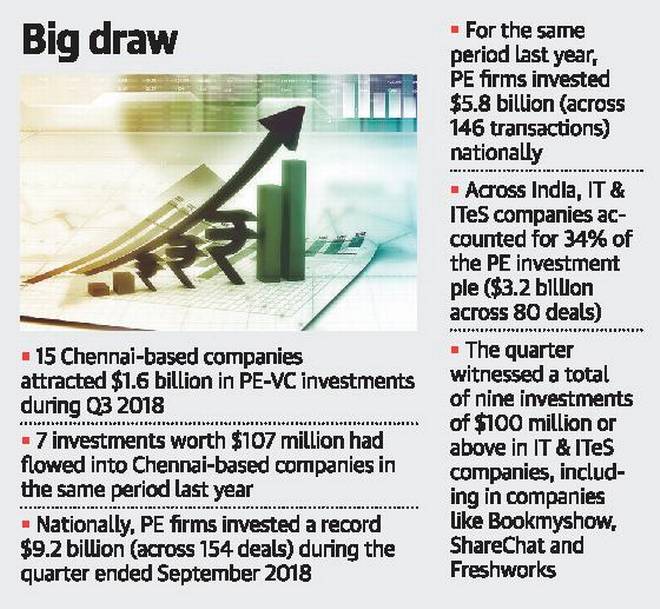
Fifteen firms received $1.6 billion in funding during the third quarter of 2018

Led by the large ticket investment in Star Health Insurance and CAMS, fifteen Chennai-based companies attracted $1.6 billion in Private Equity and Venture Capital (PE-VC) investments during the third quarter of 2018. During the same period last year, seven investments worth $107 million flowed into city based firms.

Companies that raised significant capital during the latest quarter include Sanmar Chemicals ($150 million more from existing investor Fairfax Group); NBFC Five Star Business Credits ($100 million) and SaaS software maker Freshworks ($100 million).

At the national level, Private Equity (PE) investments in the first nine months of 2018 touched $23.7 billion (across 525 deals), up 29% (across 527 deals) when compared to the same period in 2017. Calendar 2017 was the biggest ever year for PE investments in India, recording $23.7 Billion across 704 deals. According to data released by Venture Intelligence, a research service focused on private company financials, transactions and their valuations, PE firms invested a record $9.2 billion (across 154 deals) during the quarter ended September 2018 – up 60% compared to the $5.8 billion (across 146 transactions) in the same period last year.

The investment amount in Q3’18 was 11% higher than the immediate previous quarter (which had recorded the previous highest quarterly investments at $8.3 Billion across 191 transactions). Note: These figures include Venture Capital investments, but exclude PE investments in Real Estate.

The latest quarter witnessed 22 PE investments worth $100 million or more (accounting for 79% of the total investment value during the period) compared to 13 such transactions in Q3’17. Of these, 12 were larger than $200 million each (by themselves accounting for 65% of the total value) – compared to just four such investments in the year ago period, the Venture Intelligence data shows.

International Investors

“International investor interest in Indian Internet and Mobile companies has shot up dramatically post the Walmart-Flipkart deal,” said Arun Natarajan, Founder of Venture Intelligence. “Investments in other industries – including in manufacturing, energy and engineering companies – is also quite strong. This lends confidence that 2018 will set a significantly new high for PE investments in the country, even if the nervousness in the public markets and global events begin to affect private markets in Q4,” he added.

source: http://www.thehindu.com / The Hindu / Home> News> Cities> Chennai / by Sangeetha Kandavel / Chennai – October 02nd, 2018

Google doodle honours Aravind Eye Hospitals founder Dr. Venkataswamy

DrAravind01CF01oct2018

Google on Monday honoured eminent ophthalmologist and founder of Aravind Eye Hospitals Govindappa Venkataswamy with a doodle in his birth centenary year.

The doodle, visible in India, Australia, and New Zealand, features a mirrored landscape blurred on one side and clear on the other with a caricature of Dr. Venkataswamy in the middle. Dr. Venkataswamy or Dr. V is known for introducing low-cost cataract surgery and the eminent ‘Aravind Model’ of free cataract treatment to the poor.

According to a World Health Organisation report released in 2012, cataract continues to be the main cause of blindness in the world (51%). According to a paper published by Indian Journal of Opthalmology, 8.25 million people could lose eyesight in India in 2020 due to cataract.

Dr. Venkataswamy started Aravind Eye Care in a rented house with 11 beds in Madurai in 1976 with an aim to eradicate what he called needless blindness. Today, Aravind has over 57 centres comprising five tertiary care centres, five secondary care centres, six outpatient centres and 41 vision centres across India.

DrAravind02CF01oct2018

Born on October 1, 1918, in Vadamalapuram village in what is today Virudunagar district of Tamil Nadu, Dr. Venkataswamy decided to study obstetrics reportedly after seeing three of his cousins die due to pregnancy-related complications. He graduated from Stanley Medical College in Chennai and joined the Indian Army as a physician in 1945. But Dr. Venkataswamy had to retire in the early thirties after he was diagnosed with rheumatoid arthritis that permanently twisted his fingers out of shape. This also meant he could not continue as an obstetrician.

Dr. Venkataswamy studied Ophthalmology and subsequently became the head of the Ophthalmology department at the Government Madurai Medical College. For the next two decades, Dr. Venkataswamy led Tamil Nadu government’s initiative of mobile eye camps in rural areas. At one stage, Dr. Venkataswamy would perform 100 surgeries in a day. “His team of paramedicals do most of the prep work required for each surgery, freeing doctors to do what they do best,” said Google’s blog post on Monday’s doodle.

Dr. Venkataswamy designed the way to address the problem of blindness in a holistic way. “He set up eye camps in rural communities, a rehab center for blind people, a training programme for ophthalmic assistants, and personally performing over 100,000 successful eye surgeries,” said Google’s blog post.

After retiring in 1976, Dr. Venkataswamy founded Aravind Eye Care with 11 beds. The vision was to devote six beds to those patients who could not pay anything and to cover those costs with the other five beds, serving patients paying only as much as they could afford. This model is a case study for numerous medical institutions and governments across the globe and has featured in classed of Harvard Business School. Today, Aravind has nearly 4,000 beds and 70% of patients receive free or subsidised treatment. To put this in perspective, every year Aravind performs 60% as many eye surgeries as the National Health Service in the United Kingdom, doing so at one-thousandth of the cost.

Dr. Venkataswamy was accorded the Padma Shri in 1973 and BC Roy Award in 2001 for his low-cost lenses that costs as little as $2 and is being exported to over 120 countries.

Dr. Venkataswamy passed away on July 7, 2006, and his family continues to run Aravind with the same vision of the patriarch.

source: http://www.thehindu.com / The Hindu / Home> Sci-Tech> Internet / by K. DeepaLakshmi / October 01st, 2018

Meet the man operating the only oil press in a village near Coimbatore

A village near Coimbatore was once an edible oil heartland, with every household owning an oil press. Today, only one man continues to operate it

Decades before edible oil became a mass-produced consumer product packaged in plastic bags, an entire village in Tamil Nadu depended on oil presses for a living. Some 30 years ago, almost every household at Kadampadi near Coimbatore had an oil press. There was a Government-run society in the village that supplied families with sacks of groundnuts and sesame seeds to be pressed every week. Bullocks going in circles around the press, drawing a wooden shaft attached to it, the action grinding the nuts to a paste, was a common sight. Today, there’s only one man in the village operating an oil press.

RamasamyCF30sept2018

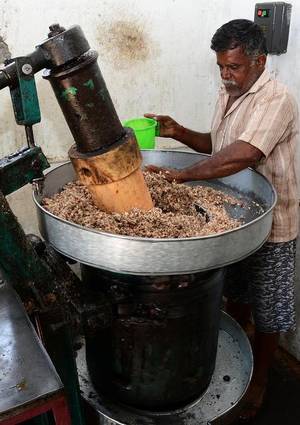
A small board announces the sale of cold-pressed oil at the entrance of C Ramasamy’s house. Bordering a cornfield, it holds the last of the oil presses of Kadampadi. It is made of wood, but runs on electricity, unlike his father’s that was bullock-driven. “A bullock-operated chekku (press) needed two people to operate it — one had to control the bulls and the other had to keep scooping the groundnuts into the press,” recalls the 57-year-old. “I assisted my father as a little boy. I was usually positioned at the chekku while he controlled the bulls,” he says.

In the 1980s, there were 60 oil presses in the village. “We ground sesame seeds, groundnuts, neem seeds, coconut, and amanakku (for castor oil),” he remembers.

Seated on a string-cot, a wall separating us from the press that stands in a lime-washed room, we can smell the thick, nutty aroma. The floors are sticky and the walls by the press wear tell-tale oil splashes.

Ramasamy tumbles a tin of groundnuts into it and switches on the power. The press grunts to life — the gigantic wooden pestle crushes the nuts to a chocolate-coloured paste, tempting us to scoop some up to try. Ramasamy sprinkles water into it occasionally — “Otherwise, it will become powdery”. Within 20 minutes, clear oil collects by the pestle. We contain our excitement and ask with a straight tone — “That’s all it took to produce oil?”

Ramasamy smiles. “Yes. Groundnut oil tastes like ghee when sprinkled on dosai,” he offers. A kilogram of groundnuts will fetch 400 millilitres of oil. “For coconut, the same amount will provide 600 ml and sesame, 400 ml,” he explains. Ramasamy hasn’t finished school, but has studied the nuts and the oil they produce so well that he can tell by looking at the soil the quality of the crop it can grow. “I don’t buy nuts from places beyond Pollachi. Soil there is semi-white, and is not fertile for the crop I require. I stick to areas north of Kinathukadavu.”

Coimbatore , the land of textile mills, was their chief consumer. “We supplied oil to the canteens of the mills in the region,” remembers Ramasamy. His father delivered them in tins on a bullock cart. A cart could carry 30 tins, each with a capacity of 16 litres. “In the 70s, 60 families registered with the Khadi Board-run Society and took turns to go to Tiruvannamalai to source the nuts,” he explains. “We travelled every week to buy on auction, and once back home, we divided them. Each family got seven sacks a week.”

Business thrived and people were happy. But as the big crude oil players entered the fray, they lost out. “Our customers switched to packaged oil and our presses shut down, one by one,” Ramasamy shakes his head. “Villagers turned drivers and mill workers.” In fact, Ramasamy himself called it quits and did odd-jobs to no success, and finally revived the craft he learned from his forefathers. “These days, people have renewed interest in chekku oil. A lot of youngsters stop by to buy my oil. Demand has gone up; this is a good sign.”

Ramasamy is suddenly overcome by emotion as he recalls his past. He gets teary-eyed and we gently remind him of our presence, asking for his cooperation for a photoshoot. Would he like to change into a dhoti? “No, this is what I wear to work,” he tells us, standing up in his oil-kissed shirt and shorts.

For details, write to krgoilmill@gmail.com, or call 8760927281.

source: http://www.thehindu.com / The Hindu / Home> Life & Style> Food / by Akila Kannadasan / September 27th, 2018

The difficult garment

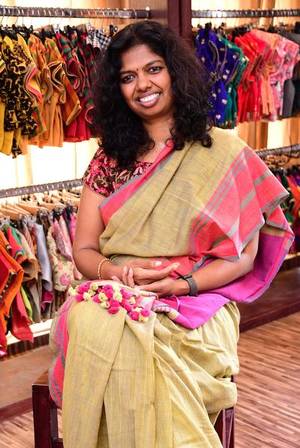
For the right fit Swaroopa Muthusivan of Tamarai Design Studio

For all those tormented by ill-fitting blouses, Ravikkai offers hope

Swaroopa Muthusivan calls her line of blouses ‘Ravikkai’. And one has heard rave reviews from friends about the comfortable blouses she designs for them. A sari wearer knows how tiresome an ill-fitting blouse can be. One hitches, pulls down, tugs up and finally in despair draws the pallu right around to hide the offending garment. Just when I toy about ditching blouses in favour of tee shirts, I hear of Swaroopa.

I WhatsApp her an image of a simple, elegant and, importantly, not one of those skin-tight affairs. “Want one exactly like this one,” I text. “I get what you are looking for. It looks very comfortable and I can make a similar one for you,” she promises.

A blur of blouses at Tamarai Design Studio

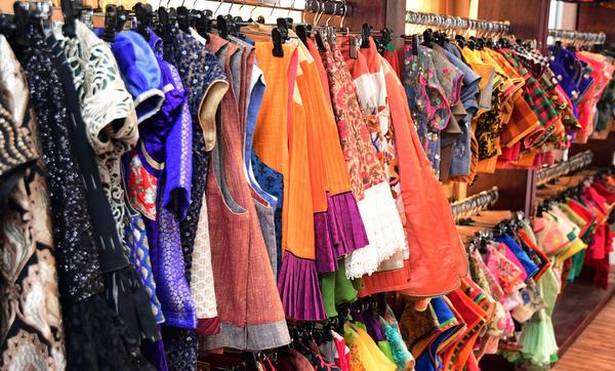
I show up at Tamarai, Swaroopa’s boutique in Coimbatore to be greeted by a blur of blouses! They hang in orderly rows, lie in piles on the counter top and on the floor where her team is putting finishing touches to them. “We are sorting them out for the exhibition in Bengaluru and Coimbatore,” she explains.

Her love for fabrics and tailoring goes back to when she was Std III. “During vacations, my mother took me along when she went to learn tailoring. As her teacher gave detailed instructions about how to fold the fabric, cut the neck, the armhole, etc. I hung on to every word.” Swaroopa loved these outings. She collected the scraps of material lying about, took them home and made clothes for her dolls following the teacher’s directions. When she was a little older and her mother brought a Singer sewing machine home, one of the first things she did was to de-construct a blouse. “I took it apart and then sewed it on together again,” she laughs.

The Ravikkai line hopes to end the less-than-perfect blouse problem once and for all. And to give old saris a new lease of life. “Just changing the blouse lends the sari a new look. So bring out all those wedding, valagappu and old Deepavali saris that are buried in the back of the cupboard and give them a makeover,” she says.

For the exhibition, Swaroopa has designed ready-made blouses to fit sizes 30 to 38 ranging from no-nonsense everyday wear to whimsical. “I have combined textures and embellishments. Each of my blouses is one of a kind. I do not mass produce.”

The blouses are embroidered (both hand and machine done), have frills and furbelows, decorative buttons, painted motifs and appliqué work. Chungdi, Ajrakh, Kalamkari… there are blouses in cotton, silk, in velvet and jute. Every kind of Indian fabric is experimented with and the results are dramatic.

Swaroopa also has semi-stitched blouses that need but a few minutes to become ready-to-wear.

The Ravikkai exhibition

What: The blouses are priced between ₹1, 200 and ₹10, 000. Gift vouchers are also available

When: October 2 to 9; from 11.00 am to 7.00 pm

Where: Tamarai Design Studio, 17, Sivaram Nagar, Sungam By pass

Contact: For more details, +91-9655793268; email tamarai.designstudio@gmail.com or visit www.facebook.com/TamaraiDesignStudio/

source: http://www.thehindu.com / The Hindu / Home> Life & Style> Fashion / by Pankaja Srinivasan / September 29th, 2018

‘Our duty to preserve culture for the next generation’

KalyanramanCF27sept2018

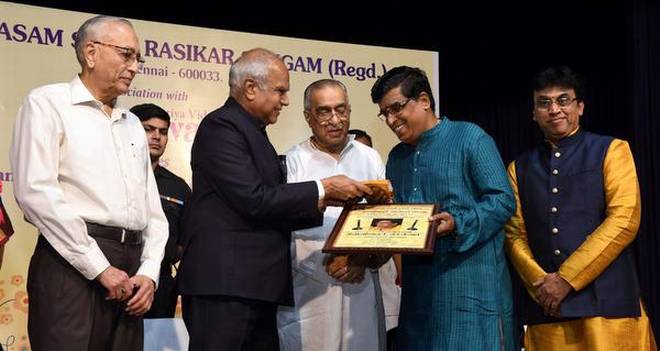
Namasankeerthanam exponent Udayalur Kalyanaraman honoured

Composer Papanasam Sivan was responsible for a transformational change in the field of Carnatic music, Governor Banwarilal Purohit said.

In an event organised by Papanasam Sivan Rasikar Sangam and Bharatiya Vidya Bhavan to celebrate the 128th birth anniversary of Papanasam Sivan, he said, “Just as Italian was considered the most suitable language for Western classical and operatic music, Telugu and Sanskrit compositions dominated the Carnatic concert platforms of South India for nearly two centuries.”

“With the arrival of Sivan’s compositions, musicians could not resist singing his simple yet very elegantly structured Tamil compositions with rich emotive content, as they ensured an instant connect with the many Carnatic rasikas who only knew Tamil,” he said.

Namasankeerthanam exponent Udayalur Kalyanaraman was honoured with the title ‘Sivanisai Selvar’ in the event.

N. Murali, president of the Music Academy, said, Mr. Kalyanaraman truly deserved this title as he had taken this art everywhere. “What he has done to Namasankeerthanam is monumental,” he added. On accepting the honour, Mr. Kalyanaraman said, he was delighted to be given this title. “It is our duty to preserve our culture for the next generation,” he added.

Director of Bharatiya Vidya Bhavan K.N. Ramaswamy and president of Papanasam Sivan Rasikar Sangam Rukmini Ramani were among those who spoke at the event.

source: http://www.thehindu.com / The Hindu / Home> News> Cities> Chennai / by Staff Reporter / Chennai – September 27th, 2018