Indian artist steals the show in Korea

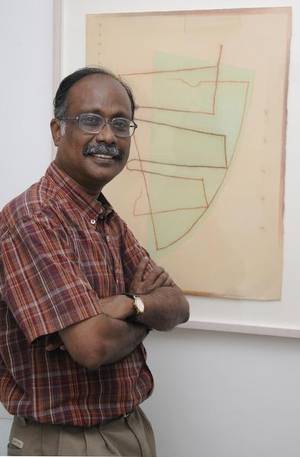
Artist Rm. Palaniappan | Photo Credit: V_GANESAN

Eminent artist Rm. Palaniappan has a lot to share about his Busan residency

“Palaniappan, you have become more popular here in Korea within a few years than many of us, who have been working for decades.” — This statement is perhaps proof of the Korean artists’ appreciation and respect for senior artist Rm. Palaniappan’s creativity. Palaniappan is an acclaimed artist internationally for his expertise in graphics, drawing, painting and photography.

He was recently in Busan, Korea as an Artist in Residency at the invitation of K-Art International Exchange Association, one of the largest exhibitors of contemporary and traditional art in Busan.
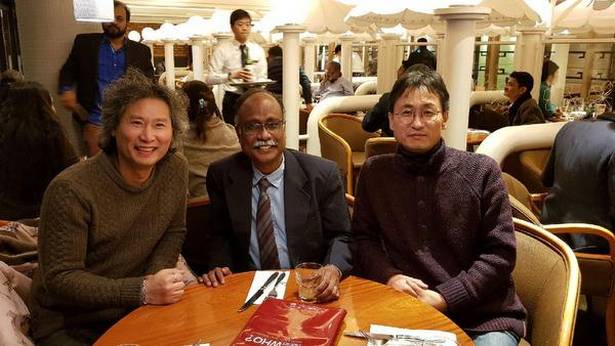
Artist Rm. Palaniappan at Busan

The K-Art International Exchange Association takes up several international activities in India, Japan, and Vietnam, China among the earlier destinations. They already held 10 exhibitions in Chennai, including three Biennales in collaboration with Lalit Kala Akademi and Inko Centre, Chennai.

Now they are planning to have a major collaborative exhibition with Mumbai artists in October. Inko Centre, Chennai, has been organising several cultural activities between India and Korea for the past 11 years , which made it possible for visual artists and performing artistes as also writers of both countries to collaborate .
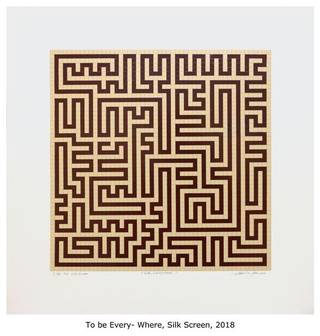
Artist Rm. Palaniappan’s work

This is Palaniappan’s third visit to Busan and the first residency, though he has been to several art institutions on invitation and also was an ‘Artist at Residency’ in different countries, including the U.S. and the U.K. His stay in Busan gave him an opportunity to be present in person at the 16th International Busan Art Fair, in which besides his paintings, works by C. Douglas and Alphonso Doss from Chennai and a few other artists found a place.

“In this Art fair, several galleries from Mumbai also took part and displayed over a hundred works by Indian artists,” says Palaniappan. Many Indian artists visit Korea to exhibit their work as also for workshops, etc. in painting as well as ceramics. He has been exhibiting regularly in Korea for the past few years and is quite well known in the art circle. His interview was broadcast over radio and articles were published in newspapers.

During the 35 years of his service at the Lalit Kala Akademi, from where he retired last year as the regional secretary, he has had the opportunity to meet and interact with many established national and international artists as well as young and upcoming artists. This experience earned him the invitation as curator/commissioner of international and national exhibitions, such as the Bharat Bhavan (Bhopal) International Print Biennale (1995) and “The Major Trends in Indian Art” Lalit Kala Akademi, New Delhi (1997).

“I had a warm reception there during my residency; I visited museums and galleries to see both traditional and contemporary art and watch artists at work,” says Palaniappan, who initially stayed with a doctor, an art collector, in his medical resort. He took him to many interesting places.

“Korea has a strong tradition in arts. The landscape with its mountains, waterfalls, lakes, etc., has always inspired artists as can be seen from their watercolour wash drawings,” observes Palaniappan. Some artists have developed a penchant for the abstract while some have evolved a contemporary style out of the landscapes, using different mediums and techniques. A lot of artists also work with new media and installations and the results are quite contemporary. I can name a few artists, who paint — Young–sung Kim for realistic work, Bong cheon Kim for digital manipulation, Prof. Hodeuk Kim, Yong-woon kim, Hee-Don Lee and Hyun-Cheol Hong for abstraction and Sung Won Choi, Ji-Yeon Song for a unique landscape approach,” he says.

Since 1982, when he started using the line as a main element in his work for expressing his presence in the creation, Palaniappan’s main concern was expression of movements in the context of physical and psychological perceptions of ‘time-space-environment.’ “In my work, light in the space was outside as a background for the line and movement; but recently I brought light into the line within the confined space, that is, the movement of line itself as light,” he explains.

Known as a master of graphic arts for trying novel and innovative ideas, Palaniappan has been spending his time mostly drawing and painting. “Whatever I am attempting at, I want to be honest to my work,” he says. “I may be using various mediums, including photography, but you will see a continuity — like in music,” he adds. In fact his works are linked — from his earlier etchings, lithographs, etc., to his conte drawings and the recent works. Take for instance, his recent creation, ‘Maze.’ “ there are no blockades anywhere; when one goes through the maze, one can pass through the entire area of the confined space as if walking through one’s life,” he points out.

During his stay in Busan Palaniappan was provided with a studio apartment and a local person to help him with the language and chores. He was painting for long hours — he made ten in all. “Even when my assistant suggested we go out, I refused. When not working, I did some sightseeing and went to a few islands; it is said that there are nearly 2,000 islands around Busan. The landscape is absolutely fascinating. Only a few islands are connected by road; for others one has to go by boat or flight. I visited a few Buddhist temples as also heritage villages. Quite a few artists speak English; the organisers had provided an interpreter for me.”

What about food, Palaniappan being a vegetarian? “Eating out was ruled out. Since I can cook it was fine. I had taken some instant stuff. Besides, vegetables and fruits were available aplenty. So I managed quite well,” he says.

After a second Korean Residency later this year, which would be partly sponsored by Inko Centre, Palaniappan’s works will be exhibited at Busan and Seoul. Also, he will be delivering lectures on Indian art at some universities and art institutions in Seoul and Busan. Painting, of course, is on the cards.

source: http://www.thehindu.com / The Hindu / Home> Entertainment> Art / by Lakshmi Venkataraman / May 17th, 2018
AIR Chennai’s 80-year journey

AIRChennai01May222018

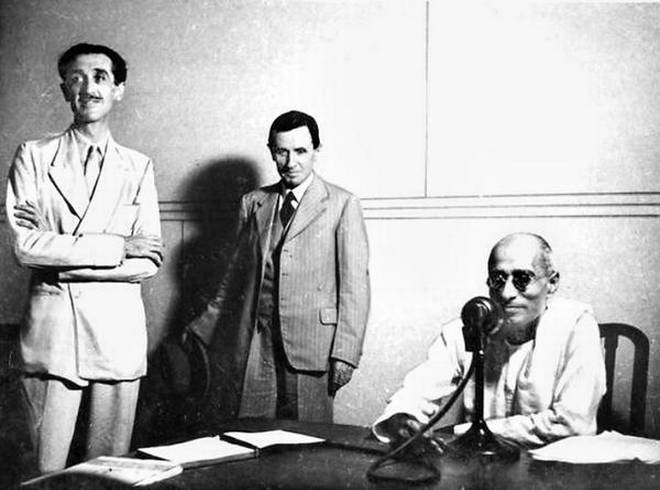
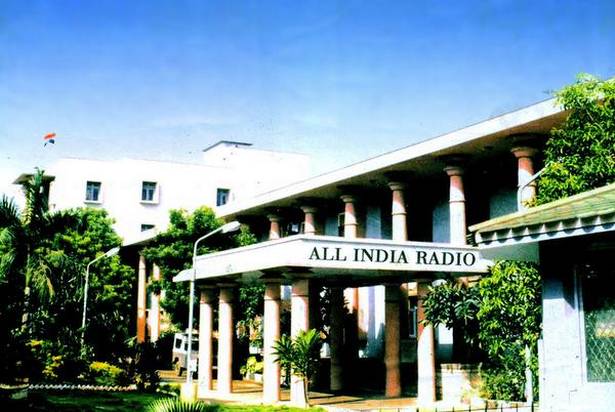
June next year will see All India Radio (AIR) Madras/Chennai celebrate its 80th birthday. The station had evolved from the first broadcasting service in India, V Krishnaswamy Chetty’s Madras Presidency Radio Club established in 1924. It made its first broadcast from Holloway’s Garden in Egmore on July 31. The Club was rescued from financial difficulties in 1927 by the Madras Municipal Corporation which ran it till AIR put down roots in Madras.

AIR itself celebrated the 80th birthday of its naming last year. Lionel Fielden, an Oxonian from the BBC, arrived in India in 1935 to head what had been set up in 1930 as the Indian State Broadcasting Service (ISBS). He thought the name not catchy enough. But to change a Viceroy-approved name was not the done thing. He relates how he got it done:

“I cornered Lord Linlithgow after a Viceregal banquet and said plaintively that I was in great difficulty. … I said I was sure he agreed with me that ISBS was a clumsy title. … But I could not, I said, think of another title; could you help me? … It should be something general. He rose beautifully to the bait. ‘All India?’ I expressed my astonishment … [It was] the very thing. But surely not ‘Broadcasting?’ After some thought he suggested ‘Radio’. Splendid, I said, and what beautiful initials.” (Fielden in The Broadcasting in India, Awasthy G. C., 1965).

AIRChennai02May222018

Much of that may have been related tongue-in-cheek, but he was more serious — and possibly prophetic — when, as Controller of Broadcasting, he wrote an article for The Hindu’s supplement to mark the inauguration of AIR (Madras). In the article on the future of Carnatic music, written as a letter to the Station Director, Madras, in 2,500 AD, he said:

“I fear that in your day (2,500 A.D.) Indian music as we know it will be forgotten. I can only say we are doing our best to save it. The impact of the West in our time is strong enough to make it clear that the younger generation is drifting into an easy acceptance of Western harmonies and moving away from the static and intricate melodies — often too prolonged — of their own tradition. It seems that if Indian music is not to be drowned by the clangours of jazz, the addition of harmony — or at any rate some growth and progress in that direction — is essential. I do not mean by this that there is any failure to recognise the inherent beauty and individualism of Indian Classical music and the inestimable value of its freedom in improvisation. The trouble is that the Sangit Vidwans refuse to accept the necessity for any measure of adaptation and persist in their contention that Indian music has already reached perfection. Acrobatic feats of the larynx, no matter what quality of voice, are accepted as sufficient indications of a perfected art. In these days of mechanical reproduction and rapid communication, the musical language of four continents cannot but exert pressure on the fifth and while Indian classicists still insist on long performances — stretching to even three hours for a single musician — and ignore the necessity of proper voice production, the youth of India is in danger of forgetting its own musical language altogether.”

A sahib from on high speaking down to the natives, or prophetic? I’m no music fan, so I don’t know. Perhaps Sriram V would like to respond.

_______________________________

The uncivil civil servant

My reference to Sir Chettur Sankaran Nair (Miscellany, April 30) had MN Nair wondering whether I had heard of Sir Sankaran Nair’s distant cousin, SK Chettur, ICS, who on one occasion had been not only uncivil but vindictive. I had indeed heard the story, but it is worth repeating.

In January 1939, when Chettur was a Sub-Collector, he and his wife and a friend went to an event in Palghat being held as part of the Sri Thyagaraja Festival. When an usher noticed Chettur and his friend smoking, he namaskaramed to them and politely requested them to stop smoking as it was not appropriate to do so on what was a semi-religious occasion. The friend put out his cigarette, but Chettur continued smoking. When several in the audience started shouting at him to stop smoking, the Chetturs and their friend walked out. Outside the temporary pandal, Chettur shouted for the usher and asked him to apologise. In his stead, the organisers apologised, but Chettur walked away in a huff followed by his wife and friend.

The next day, January 11, The Hindu reported, “Sensation prevails in Palghat following the demolition of the entertainment pandal put up at the Ram Dhyan Matom in Kalapathy Agraharam on the order of the Sub-Divisional Magistrate of Palghat (Chettur). The pandal had been put up in connection with the Sri Thyagaraja festival which commenced yesterday.” The report followed the Police informing the organisers that, despite having Municipal permission for it, they had to dismantle it by 4 pm. The organisers rushed to Chettur and apologised all over again. All he would say was that his order stood. And the organisers carried them out in front of a large posse of policemen who were there to keep protesters out.

A few days later, “A memorial on behalf of the citizens of Palghat” was submitted to the Prime Minister (as Chief Ministers were then titled) stating the facts. What Prime Minister Rajagoplachari had to reply is not known, but the next we hear is of a two-column long letter in The Hindu from nine citizens of Palghat reiterating the facts.

Then came the sting in the tail. The Police registered a case against the organisers for “Putting up a pandal in the public street and obstructing traffic.” I am sure the Sub-Divisional Magistrate would have found in favour of the Police.

The chronicler of Madras that is Chennai tells stories of people, places, and events from the years gone by, and sometimes, from today.

source: http://www.thehindu.com / The Hindu / Home> Society> Madras Miscellany – History & Culture / by S. Muthiah / May 21st, 2018

‘Work to start soon on museum at Keezhadi’

KeezhadiMuseumCF20may2018IRs 1 cr. allotted for the purpose: Minister

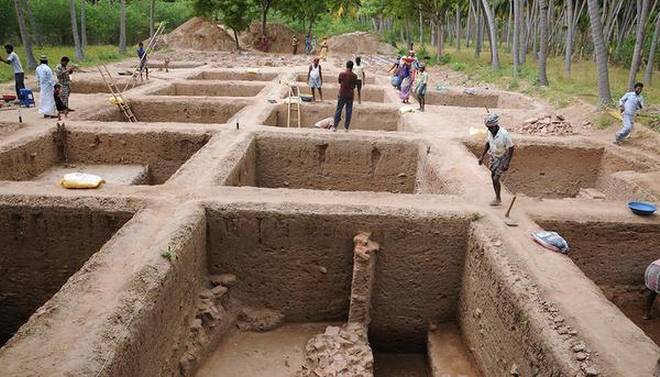
Work to establish a museum at Keezhadi, near Madurai, will start soon, Minister for Tamil Official Language and Tamil Culture K. Pandiarajan has said.

Addressing reporters at the Coimbatore airport on Friday, he added the government had allotted ₹1 crore for the purpose. The museum will house the 2,200-odd artefacts that the recent excavations had helped unearth over 109 acres, and more that could be discovered in the next six months. The 2,200-odd artefacts were unearthed over an 18-day period.

The fourth round of excavations were going on, and thus far, 7,700 artefacts had been unearthed, the Minister said and added that of those, a good number was in Mysuru and the rest was with the State government.

The Minister also said that the government would also establish museums to house artefacts in Arachalur, Erode, Korkai and Thoothukudi.

source: http://www.thehindu.com / The Hindu / Home> News> Cities> Coimbatore / by Staff Reporter / Coimbatore – May 19th, 2018

12,000 artefacts from Azhagankulam to be sent for carbon dating

The State Archaeology Department is in the process of classifying more than 12,000 artefacts found at Azhangakulam in Ramanathapuram district and will send them for carbon dating, an official of the department said.

The department has been undertaking excavations at Azhagankulam and the artefacts found at the site include ivory objects, copper coins, quartz, crystals, iron smelters, furnace, potsherds and terracotta plates, among others.

“These artefacts are now being classified, and will be documented, catalogued, photographed and videographed,” the official said.

“Following this, they will be sent for carbon dating,” the official added.

Last year, the department began its eighth season of excavations.

The Tamil Nadu government had sanctioned ₹55 lakh for the purpose.

source: http://www.thehindu.com / The Hindu / Home> News> States> Tamil Nadu / by T.K. Rohit / Chennai – May 14th, 2018

Lester and Ceylon’s films

LesterCF15may2018

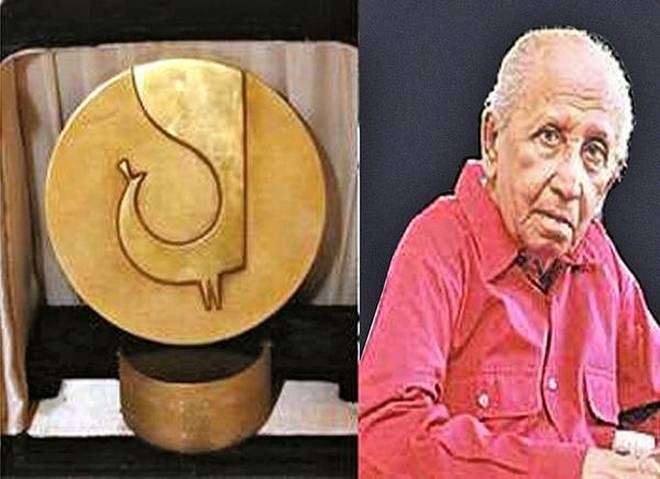
The death of Lester James Peiris, the father of the ‘New Sinhala Cinema’, brings back to mind his winning in 1965, with his Gamperaliya (The changing village; 1963), the first Golden Peacock awarded and for taking Sinhala film-making not only out of Madras State studios but away from the clichétic Tamil film formula.

Lester was the London Correspondent of The Times of Ceylon when I was its Foreign News Editor in the 1950s. We were in regular touch during that period, when he was experimenting with film-making. When he returned to Ceylon he opted out of journalism and focused on cinema — first with government documentaries and then the making of a new kind of Sinhala film, one drawing inspiration from the realism of Italian and French films. We kept in touch, however, because Iranganie Serasinghe and Sita Jayawardana were two of his leading supporting actresses, both girls who worked with me in features and who were forever asking for time off for ‘shooting’ or who kept dozing after ‘night shoots’. But when I moved to Madras I lost touch with Lester whom many consider one of the greatest South Asian film-makers.

Lester02CF15may2018

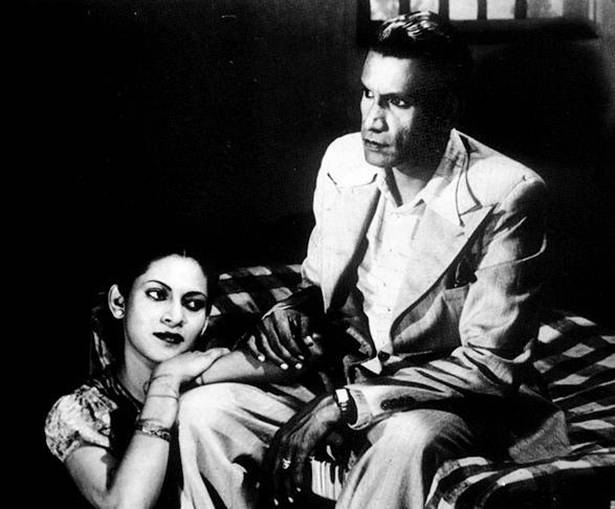
Lester made 20 full-length feature films and about a dozen documentaries and short films. He started with a winner, Rekawa (Line of Destiny, 1956), which focused on village life. It was the first Sinhala film to be shot entirely in the country and the first to be shot mainly outdoors. It was nominated for the Palme d’Or at the 1957 Cannes Film Festival. Gamperaliya, for its part, was shot entirely outside the studio. Besides the Golden Peacock, it also won Mexico’s top international film festival award.

The first Sinhala film to be made, Kadavanu Porundhuva (Broken Promise), was shot entirely in Madras and released in Colombo on January 21, 1947. It was produced by S M Nayagam, who was what they called in Ceylon an Indian Tamil (being from the Tamil districts of Madras Presidency) and who not only pioneered the making of Sinhala films but also the starting of local industries. The film was directed by a Bengali, Joti Sinha. This was followed by 42 other Sinhala films being made in Madras, Coimbatore and Salem. It was only in the 1950s that Sinhala films began to be made in Colombo, where Nayagam had established the first studio. But even then, till legislation in the late 1950s, technicians from Madras continued to work in Ceylon — and the generation of Sinhala technicians who followed them benefited considerably from their mentoring.

One of the earliest from Madras to direct Sinhala films was Anthony Bhaskar Raj. Lenin Moraes was another director from Madras where he had learnt cinematography and make-up. J A Vincent was Art Director for over 100 Sinhala films after starting out with Asokamala being made in Central Studios, Coimbatore. Another connected with Asokamala was experienced cameraman Mohamed Masthan who also shot Sujatha in Salem. When he moved to Ceylon, he was guru to a generation of Ceylonese cameraman. He later went into direction. Other directors from Madras to work in Ceylon included A S A Samy, P Neelakantan, L S Ramachandran who pioneered Sinhala films on village life, and A S Nagarajan. After having been a scriptwriter in Madras, Nagarajan moved to Ceylon and into direction. Among his films was Mathalan, based on the Tamil hit Mangamma Sabatham.

Starting from where the Madras technicians left off, Lester James Peiris gave a completely new face to the Sinhala film industry. R.I.P., Lester.

________________________________

They mined for diamonds too

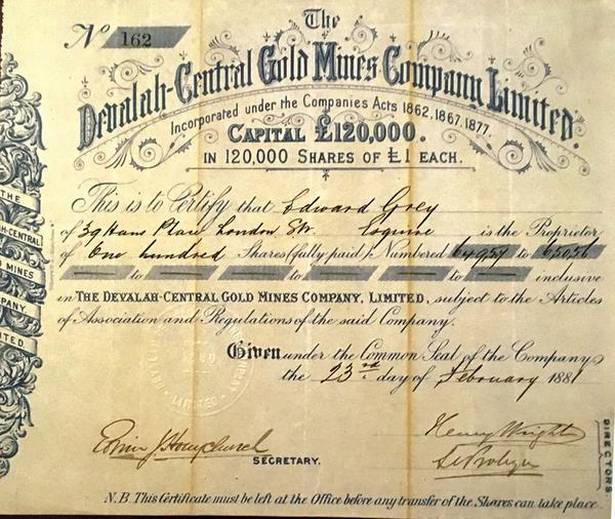
My scrip-collecting correspondent, Sayeed Cassim, has sent me some fascinating material, responding to my gold rush story (Miscellany, April 23). The best of it is a share certificate issued by the Devalah (Devala) Central Gold Mines Company Limited in 1881. This was one of the first companies to be established— even before the gold rush began — and, as I had recorded, it was promoted by Parry & Co, though the certificate (my enlarged picture today) gives no indication of that.

Golden01CF15may2018

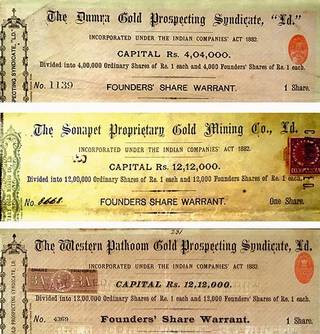
Accompanying it are the headings of three other certificates, those issued by the Western Pathoom Gold Prospecting Company Limited, the Sonepat Proprietary Gold Mining Company Limited, and the Dumra Gold Prospecting Syndicate Limited. Having made a study of these three certificates, Sayeed Cassim feels that “these were companies set up only to rake in the money and hoodwink the public.” He bases his presumption on the fact that there are several identical features in these certificates which “make their intentions suspicious”. He lists the following:

Similar authorised capital of each of these companies:

Date of all issues very close together in 1890

Printer the same: Calcutta Catholic Orphan Press;

Per value of each share only one rupee (to induce greater subscription?), and

Certificates of Western Pathoom and Dumra signed by the same person.

But that is not all. Apparently there were optimists who thought that there were diamonds in the hills too and companies were formed to prospect for them. He names The Madras Diamond Mining Company Limited and The Madras Presidency Diamond Fields Limited. Were they genuine speculators or in it for the quick buck?

Golden02CF15may2018

If you want to take a better look at these certificates, Sayeed Cassim suggests you have a look at the website of David Barry of London (www.indianscripophily.com), who has “the largest and finest collection of Indian share certificate in the world.”

The chronicler of Madras that is Chennai tells stories of people, places, and events from the years gone by, and sometimes from today.

source: http://www.thehindu.com / The Hindu / Home> Society> History & Culture> Madras Miscellany / by S. Muthiah / May 14th, 2018