‘Standing on top of Mt Everest was my life’s best moment’

MtEverestCF19aug2016

K Sivakumar, havildhar attached to the Madras Regimental Centre in Wellington, is the first person in Tamil Nadu to have climbed the Mount Everest as part of an army mountaineering expedition this May. He is presently posted at II Madras in Sikkim. On his first visit, after the expedition, to his home town Lovedale near Ooty, K Sivakumar talks to TOI’s Shantha Thiagaragan on his inspiration and challenges faced in climbing Mount Everest.

What gave you the inspiration to climb Mount Everest?
I joined the army in 2001. In 2004, I was sent to Mountaineering Training School in Gulmarg, Kashmir, for six months training. I passed out with 80 per cent score in the training. Initially, I drew inspiration from other army personnel in the training. But my motivation was heightened when I got posted at the same training school as my instructor for four years. During those years, I got the chance to climb six peaks in Ladak, Utharanjal and Himalaya while training army students.

Have you attempted to climb the Everest before?
Yes. In November 2014, a team of army personnel had planned to scale Mount Everest to celebrate fifty years of climbing the mountain by the army. But unfortunately, the expedition was cancelled midway due to an earth quake on April 25, 2015. The Nepal government had also cancelled permission to access the Everest. During that time 18 people died and around 60 were injured.

How do you handle the disappointment?
The experience only gave me more courage and hope. In November 2015, a team of 30 members were sent for training in army camps in New Delhi for two months. Out of the 30 people, two seven-member teams were selected to climb Mount Everest. I was fortunate to have been chosen. We reached Kathmandu on March 30 and on April 5 we started our Everest expedition.

How did you manage the low oxygen level and rations on your expedition?
As the oxygen level is very low after 7000 meters, we could not eat but we needed energy. Part of our ration included energy bars and drinks which helped us get through the expedition. The oxygen was part of our mountaineering costume. It took us 25 days to reach Mount Everest and return to Kathmandu.

How did you feel when you reached the highest peak?
On May 19, after crossing several army base camps, we reached the very top of the mountain. Words cannot express how I felt when I reached the peak. I just could not believe I had actually climbed the Everest. It took several days for the achievement to sink in. Standing there at the top was the best moment of my life. We stayed there for 20 minutes to take pictures and videos as evidences.

Did you ever think that one day you would climb Mount Everest?

I was an athlete when I was in school. However, mountaineering never crossed my mind. Only after joining the army, I developed a passion for mountaineering. If not for the army and support from my family, I could not have achieved this goal.

How does it feel to return home after scaling the highest mountain?

It is very refreshing to return home and spend time with family.

source: http://www.timesofindia.indiatimes.com / The Times of India / News Home> City> Coimbatore/ by Shantha Thiagarajan / TNN / August 19th, 2016
Award-winning Tamil Nadu forensic officer narrates how he helped solve a hit-and-run case

PariCF17aug2016

Vellore :

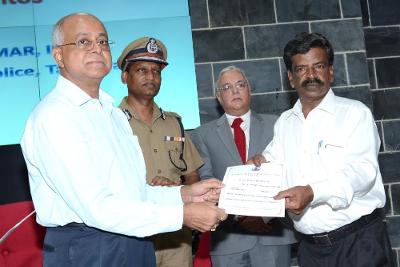
Assistant director of Mobile Forensic Science Laboratory, Vellore, K Pari has helped investigating officers solve a recent hit- and-run case with the help of a portion of tyre mark, a few pieces of broken metals and paint flakes of an unidentified vehicle that was involved in the accident.

Pari’s efforts and expertise won him the award for applying scientific methods in a real life-time situation.

Director general of police Asok Kumar presented him the award during the state police duty meet in Chennai on August 13.

Natrampalli inspector Muralidharan, who investigated the hit-and-run case , got the award for best investigation.

Pari said the accident took place at Athurkuppam on the Chennai-Bengaluru National Highway around 3.30am on April 22.

The victims were travelling on a bullock cart from their native village Elaraipatti to Natrampalli for a temple festival.

When the bullock cart was passing through Athurkuppam, it was hit by an unidentified vehicle. Three women died and seven people sustained injuries.

“It was a rear end collision. Except the tyre mark, flakes of paint and broken materials, there was nothing in the accident spot,” said Pari.

“Going by the tyre mark, we come to a conclusion that it was a heavy vehicle that hit the bullock cart. The rear right side of the bullock cart was hit by the vehicle. We concluded that the left front side of the heavy vehicle had hit the bullock cart. Since the paint flakes were brown in colour, we focused on brown colour heavy vehicles. We checked CCTV footages at the toll plaza in Vaniyambadi and Krishnagiri,” he said.

However, no such vehicle had passed the toll plazas for the next couple of hours after the accident. “None of the heavy vehicles passed the toll plazas matched our suspect list. We continued checking the footages,” he said.

The investigation team zeroed in on one vehicle as it took over 20 hours to cross Krishnagiri toll plaza form Vaniyambadi.

“Normally, it will take 90 minutes between Krishnagiri and Vaniyambadi toll plazas. Though the video footages showed that the vehicle was intact (no damage was seen), we grew suspicious as the vehicle took over 22 hours to cross the Krishnagiri toll plaza,” he said.

Investigations helped police nab the man behind the wheels of the vehicle that claimed the three lives.

The team found that stark difference between the right and left front portion of the vehicle. “While the left side was painted and gives a glassy look, the right side was pale brown. So, it strengthened our doubts. Further investigation revealed that the driver had halted en route to Krishnagiri to repair the damaged portion,” he further said.

The sample of paint collected from the right side of the vehicle and paint flakes found on the accident spot also matched. The analysis of the samples at the Forensic Lab in Chennai also confirmed it, said Pari, who had been honoured by the police department four times earlier for helping solve cases.

source: http://www.timesofindia.indiatimes.com / The Times of India / News Home> City> Chennai / by Shanmugasundaram J / TNN / August 11th, 2016

The mouthpiece as mirror of the soul

MurasoliCF16aug2016

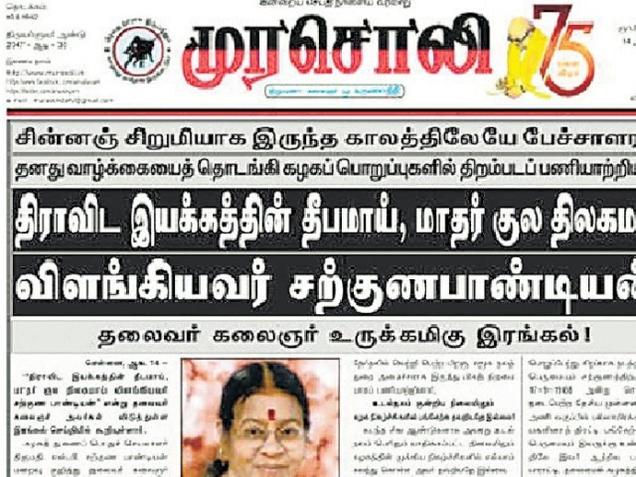
Murasoli is an integral part of the Dravidian movement and its history precedes that of the DMK

When DMK president M. Karunanidhi launched Murasoli, a handwritten manuscript mouthpiece of the then fledgling Dravidian movement on August 10, 1942, World War-II was still on. The DMK itself was not launched then. Murasoli — which has since graduated, first from a hand-written magazine to a weekly and then to a daily — is now into its platinum jubilee year.

Recording the landmark moment, Mr. Karunanidhi. writing in the party organ recently, describedMurasoli as his “first child” and said he cherishes its founding day more than his own birthday.

The veteran politician had for long used the mouthpiece as a medium to communicate with his party cadre. In fact, during the Emergency when media was subjected to stringent censorship, he subtly conveyed to the cadre about the list of leaders who had been jailed under the draconian Maintenance of Internal Securities Act (MISA). Knowing well that the Press Information Bureau would not allow these leaders to be named, he, instead, published the list of leaders who would not be able to pay respects to party founder C.N. Annadurai on the latter’s death anniversary.

“The DMK and the Murasoli are inseparable and the contribution of the paper to the growth of the party is immeasurable,” said former Minister Duraimurugan, who has been reading the paper since 1962. Few leaders had the passion of Mr. Karunanidhi when it came to running a party organ, he said.

“Our leader has the capacity to write what will please all sections of the society. He will proof-read what he had written even at midnight and always ensure that he read the paper in the morning before others read it,” said Mr. Duraimurugan.

Former School Education Minister Thangam Thennarasu, a second-generation leader, said, Murasolihas adapted itself to technology and it is now available online to reach a wider audience.

“The first issue of Murasoli had four pages and Kalaignar wrote the contents under his pen name ‘Cheran’,” said Dravidian Movement’s historian K. Thirunavukkarasu. “It became a weekly in 1948 and Kalaignar suspended its publication after joining Modern Theaters. He resumed its publication in 1954 and Murasoli became a daily on September 17, 1960,” he added.

Murasoli has since become the only newspaper of the Dravidian movement to have weathered many a political storm and Mr. Karunanidhi had ensured its existence by forming a trust to run the paper. “He was a hands-on editor and never hesitated to spend his money to run the paper. Murasoli is a guide to the party leaders as well as the cadres,” said Mr. Thirunavukkarasu.

But the admirers of the Dravidian movement, who pointed out its role in demolishing feudalism and upper caste domination in the society, are sceptical about the role of the Murasoli. “While the Dravidian movement ensured that democracy percolated and reached sections of society that were hitherto impossible to reach, Murasoli has become a weapon in the hands of neo capitalists, particularly the family of the DMK leader,” felt V. Arasu, former head of Tamil department at the University of Madras.

source: http://www.thehindu.com / The Hindu / Home> National> Tamil Nadu / B. Kolappan / Chennai – August 15th, 2016

A funeral manager who laid orthodoxy to rest

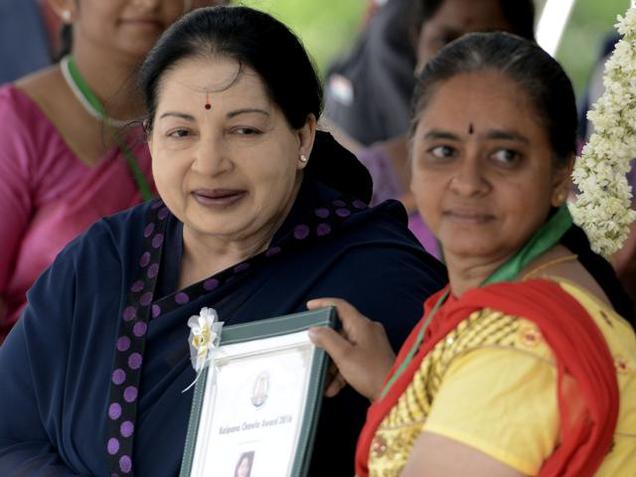
Chief Minister Jayalalithaa presents the Kalpana Chawla Award to Jayanthi during Independence Day celebrations in Chennai.

40-year-old Jayanthi took the job of burning bodies at Namakkal electric crematorium

Her workplace is one that women do not normally even visit: a crematorium.

But Jayanthi, of Senthamangalam in Namakkal district, is comfortable managing the town’s crematorium, ignoring invisible barriers of orthodoxy.

The 40-year old has been working as an operator in the electric crematorium since 2013, burning corpses in the face of resistance from some sections.

On Monday, Ms. Jayanthi received the Kalpana Chawla Award for Courage and Daring Enterprise from Chief Minister Jayalalithaa, at the Independence Day celebrations. It was a particularly poignant moment because her mother, who was overjoyed to hear about the award to be conferred on her, died last week. Her father’s death in 2003 brought the first realisation that she had to depend on others for rituals.

Only for men

“We were all sisters, and we had to plead with our male cousins to help us observe certain rituals after my father’s death. I then realised the need to be independent,” she says.

She was working in an orphanage when she found an opening in the crematorium in Namakkal to maintain the campus.

“I thought, why shouldn’t I take that up? It’s the work that matters. I didn’t mind people talking behind my back. I’m happy people now look up to me as an inspiration.”

The mother of twin daughters is happy that her husband is with her on the decision.

“I’m a Brahmin and married a Gounder. Our wedding faced so much criticism. But my father supported me. Initially, my husband didn’t like the idea, but he too came around,” she says.

“I’m happy that my mother was able to hear the good news about this award before she left us,” she says emotionally.

The award includes a cash prize of Rs. 5 lakh, a gold medal and a certificate. Asked about her role model, she says it is Chief Minister Jayalalithaa. “I have seen how much she has achieved in politics despite adversity,” she says.

source: http://www.thehindu.com / The Hindu / Home> National> Tamil Nadu / by Dennis S. Jesudasan / Chennai – August 16th, 2016

Chennai-Howrah Mail chugs on, 116 years after hitting the tracks this day

ChennaiHowrahCF15aug2016

Chennai :

As the country celebrates 70 years of Independence on Monday, the day marks another glorious chapter in the history of the Indian Railways. One of its legendary trains, the Chennai-Howrah Mail, completes, on this day, 116 years of ceaseless operations.
Introduced in 1900 between Madras (Chennai) and Calcutta (then the national capital), it continues to serve as a crucial link for millions of travellers. It has, in fact, become a brand with rail enthusiasts recalling the interesting stories woven round it from its glorious days. Through rain and shine, it has transported in its weather-beaten coaches literally everyone -from casual travellers, holidayers and migrant workers.

Through its more than a century run, the train has a number of firsts, according to members of IRFCA, a forum for railfans.

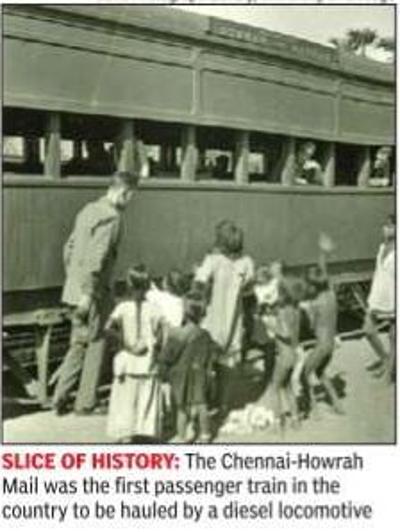
After being hauled by steam engines for decades, it became in the 1960s the first passenger train to be hauled by a diesel locomotive. “Initially , it was on diesel traction between Howrah and Bhadrak [in Odisha]. Soon after, the entire run was on diesel traction; that cut more than four hours from the journey time,” says Kamal, an IRFCA member recalling his experiences.It also had the maximum stoppages en route, ensuring that people in the smallest of places had a rail link.

When the Telugu film industry thrived in Madras, multitudes of its members, especially those hailing from coastal Andhra relied on it. Senior railfan Vijayaraghavan recalls seeing in the 1950s film stars Akkineni Nageswara Rao and Anjali Devi hurrying into the first coach. Over the years, many trains on the Chennai-Howrah route have been withdrawn, but the Mail continues.

A senior railfan and IRFCA member Vijayaraghavan recalls seeing in the 1950s famous film stars Akkineni Nageswara Rao and Anjali Devi hurrying into the first coach.

The Mail was also popular among people in northeastern Andhra Pradesh.”It was very convenient because of the timing. It would start from Chennai late at night, and travel throughout Andhra Pradesh for most parts of the day ,” recalls a resident of Lakkam Diddi, a tiny village in Srikakulam district.There are several stories about locals pulling the chain as the train neared their villages and getting off there. “The checks were not stringent then,” he adds.

This ties in with S Venkatraman’s recounting of how it took a long time to reach its destination. The 93year-old former railway employee and railfan who has written books on the history of trains in the country remembers it as being the only train from Chennai to Howrah for more than 30 years. “It had eight wooden coaches in the olden days.Travelling used to be tough.There were bed bugs… There was no catering, no food at the wayside stations.It took more than 36 hours to reach the destination,” says Venkatraman, speaking of the numerous journeys he made in it.

In the late 1970s, the railways introduced Coromandel Express on the same route with limited stops to cut down on travelling time between the two cities, forc ing the Mail to play second fiddle. But, the old warhorse has shrugged aside the challenge of its brash, young competitor and soldiers on. It remains THE train on the route for the countless who have travelled by it. Its various features, particularly the evergreen mail van (railway mail service), continuing to embellish their memories.

source: http://www.timesofindia.indiatimes.com / The Times of India / News Home> City> Chennai / by T Francis Sundar Singh / TNN / August 15th, 2016

Lyricist Na Muthukumar passes away

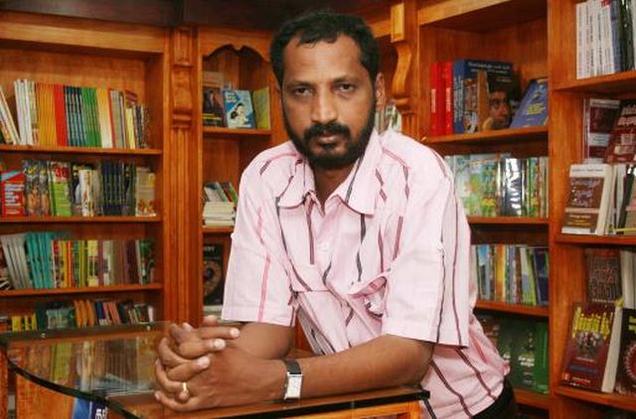
Na. Muthukumar. / File photo: S. Siva Saravanan

He won two national awards for the songs “Ananda Yazhai Meetukiral” in “Thanga Meengal” and “Azhage Azhagu” in “Saivam”.

Two-time national award-winning lyricist Na. Muthukumar succumbed to jaundice in Chennai on Sunday. He was 41 and is survived by his wife, a son and a daughter.

He first won the award for the song Aananda Yazhai Meetukiral in the filmThangameenkal and the second award was for the song Azhage Azhagu inSaivam.

“In my opinion he had the calibre to achieve great heights in Tamil literature. But film industry reduced the space for his creativity,” said director N. Alagamperumal. Na. Muthukumar wrote most of the songs for his film Dum Dum Dum and all of them were hits.

“He is a friend and we would have a chat over phone once a week. I love his lines Un Perai Sonnale Ul Naaku Thithikkume, Nee Yenkey Nee Yenkey and Desingu Raja Desingu Raja,” said Mr. Alagamperumal.

Later, he wrote for films of Selvaragahavan and the song Niniathu Ninaithu Parthen in 7G Rainbow Colony became one of the evergreen film songs. His Anil Aadum Mundril, a poetic narration published in Tamil weekly Ananda Vikatan, proved his grip with the language and close observation of Tamil life.

“It was writer Sujatha who first introduced his poem Thoor in a meeting organised by Kanaiazhi magazine. He introduced images of modern poetry in films songs, which is achieved by very few writers. He excelled both as a lyricist and a poet and he achieved great heights in a short span of life in a highly competitive world,” said poet Manushyaputhiran.

He further explained that at a time when music directors dominated the film world, Muthukumar secured a space for poetry and meaningful lines and also an identify for himself.

Muthukumar entered the film world with a dream of becoming a director and worked as an associate for Balumahendra. “But his knowledge in Tamil language and literature led him to the area of song-writing and he first wrote for director Seeman’s film Veeranadai,” said writer Suka, who also worked with Balumahendra.

A native of Kancheepuram, Muthukumar is also a distant relative of DMK founder C.N. Annadurai, “He studied in Pachaiappa’s college and was shaped by his father Nagarajan who was a voracious reader and had a great collection of books,” said lyricist Palaini Bharathi.

DMK leader M. Karunanidhi condoled his death, saying he was shocked by the sudden demise of the lyricist.

source: http://www.thehindu.com / The Hindu / Home> Entertainment / by Special Correspondent / Chennai – August 14th, 2016

Former DMK minister S.P. Sarguna Pandian passes away

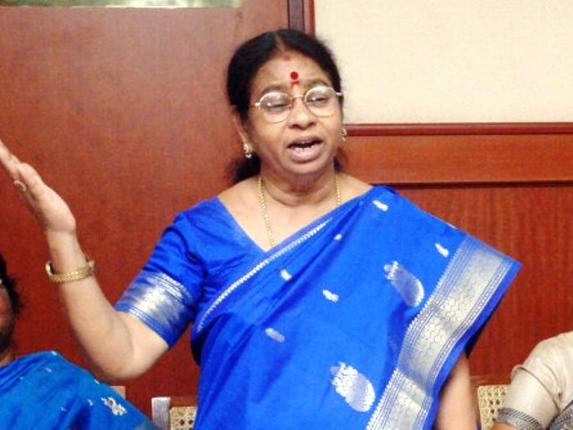
Former DMK Minister S.P. Sarguna Pandian.

She was elected to the Tamil Nadu Assembly from the R.K. Nagar constituency in 1989 and again in 1996

Former DMK minister S.P Sarguna Pandian, passed away in Chennai on Saturday. She began her political career as a platform speakerwhen she was a school student, She was 76 and is survived by her two sons and daughter-in-law, Shimla Muthuchozhan. Ms. Muthuchozhan had unsuccessfully contested against Chief Minister Jayalalithaa in Dr Radhakrishnan Nagar constituency in Chennai.

“She was not well for quite some time, especially after she underwent a bypass surgery,” said Ms. Muthuchozhan.

“DMK founder Anna would call her ‘Sollin Selvi’. She was in the forefront in all the struggles organised by the party and was nominated to the Chennai Corporation in 1971,” said DMK leader M. Karunanidhi in his condolence message.

Born in a family of followers of Dravidar Kazhagam and its founder Periyar in Thalavaipuram in Thoothukudi district, she was encouraged by her father Ponnusamy and cousin Dravidamani to address public meetings. She had a meteoric rise in the party organisation and held the post of deputy general secretary in the last ten years.

She was elected to the Tamil Nadu Assembly from the R.K. Nagar constituency in 1989 and again in 1996. As a minister she held the portfolio of Social Welfare between 1996 and 2001. In the 2006 Assembly elections she had contested unsuccessfully from the Royapuram constituency.

“She played a crucial role in organising the party’s women’s wing conferences in Chennai, Tiruchi and Madurai and was conferred Kalaignar award in 1990 for her contribution to party work,” said Mr. Karunanidhi.

source: http://www.thehindu.com / The Hindu / Home> National> Tamil Nadu / by Special Correspondent  / Chennai – August 13th, 2016

4 Ooty students qualify for TN shooting contest

Udhagamandalam  :

Four students from The Good Shepherd International School in Ooty won one gold and three bronze medals in Tamil Nadu State Rifle Shooting Championship for the year 2016.
Over 500 contestants from various parts of the state participated in the competition that was held for five days from August 3 to 7, 2016 at the Coimbatore Rifle Club.

About 11 students, including four girls from the Good Shepherd International School took part in the rifle shooting championship, while four secured medals.

Aditya Bhavesh Vaghasia won the gold medal with 358 points in youth men with 10M air pistol category, while Anushka Agrawal, Alice Deswal and Danielle Luzanne D’souza won bronze medals under youth women category in the 10M air rifle team event scoring a total of 1032 points together.tnn

source:  http://www.timesofindia.indiatimes.com / The Times of India / News Home> City> Coimbatore / TNN / August 09th, 2016

A prescriprion for entrepreneurial success

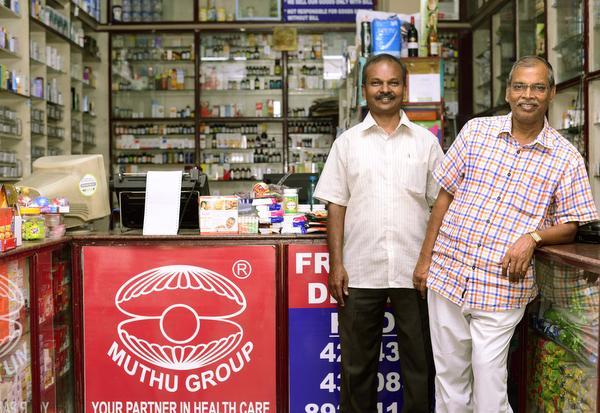
E. Gnanam, chairman, Muthu Group and S. Srinivasan, managing director of the company. Photo: R. Ravindran

From a modest 300 sq.ft. shop set up 45 years ago, Muthu Pharmacy has grown into 51-outlet enterprise. Its founder E. GNANAM talks to LIFFY THOMAS about the spectacular journey

A 1970-model blue Vespa kept in a glass enclosure greets me as I set foot in the corporate office of Muthu Group in Egmore.

On the wall, right above the classic scooter, there is a note.

“We don’t sell banned drugs here,” it says.

The scooter and the note serve two different purposes.

“While the former reminds me of my beginnings, the latter apprises visitors of the value on which the company is built,” explains E. Gnanam.

He set up his first pharmacy 45 years ago in a 300 sq.ft. space in Perambur.

“This is the first vehicle I bought from my earnings; it costed me Rs. 3,000 then,” says Gnanam.

It was with this vehicle that he would go on his business rounds.

From that humble beginning, his enterprise Muthu Group has grown into a Rs. 300 crore business, consisting of five companies — Muthu Pharmacy Pvt. Ltd., Muthu Pharma Pvt. Ltd., Pearl Medicals, Shell Pharmaceutics Pvt. Ltd. and Rao and Co. Pharma Pvt. Ltd.

Gnanam, who is Chairman of Muthu Group, says he has built the brand over the years based on ethics, trust and hard work.

“We stick to the brand prescribed by the doctor, and don’t suggest any other. We don’t sell expired goods,” says 65-year-old Gnanam.

Starting from scratch

So, how did his journey begin?

When he was 16, Gnanam left his village in Tanjore and came to Madras, where he worked at his uncle’s pharmacy shop.

“My work involved sweeping the shop and cleaning the shelves where medicines were kept. My first salary was Rs. 60, a major portion of which would go towards buying food,” says Gnanam who simultaneously did a diploma in pharmacy at the Kilpauk Medical College.

No, this is not what you are thinking: there is no rags-to-riches story here.

Gnanam did not have to put himself through such deprivations, but chose to. His family has always been financially sound and he subjected himself to menial work at a pharmacy because he wanted to learn the ropes of the profession.

By 1970, Gnanam knew what is took to run a pharmacy and set up his own enterprise. His first shop was called Sangam Pharmacy, which he opened borrowing Rs. 60,000 from his mother. It was located near Lourdes Mada Church in Perambur.

For the next two-and-a-half years, Gnanam would be the only employee at the shop.

“I was making sales worth Rs. 250 per day. When it reached Rs. 700 a day I hired an assistant,” he says.

Since then, the business has been steadily growing.

From 1974, Gnanam opened one outlet every two years, giving a fancy name to each of them.

“In 1978, I decided to stick to one name and re-branded all the outlets as Muthu Pharmacy,” he says.

In 1982, he forayed into the wholesale pharmacy business.

“It took me 14 years to find my feet in the business,” he says.

As the brand started expanding, Gnanam was faced with other challenges. Not knowing English was a stumbling block for Gnanam who would later go on to become the general secretary of Tamil Nadu Chemists and Druggists Association and joint secretary of All India Chemists and Druggists Association.

“I picked the nuances of English at work, especially from many of my Anglo Indian customers. It did not matter that my grammar was wrong,” says Gnanam, who spoke to me in halting English.

On the subject of competition, Gnanam says it has not affected the brand in any way. “We never give any discounts, which are a lie,” he says. “Also, name the medicine, and we’ll have it.” From 1990, Muthu Pharmacy started looking beyond expansion, and began to offer value-added services. It introduced door-to-door delivery of medicines.

It added a doctor’s chamber to its pharmacy. Currently, 10 shops in the city have a room where customers get to consult a doctor and get the medicine from the same roof.

Muthu Group now has over 500 employees. While his daughter takes care of the HR and finance aspects of the business, his cousin takes care of the retail units.

It currently has 51 pharmacy stores and 19 wholesale outlets. They deliver to 3,500 chemists in and around the city in a day. The company plans to stop expanding its stores when it reaches 100 outlets.

“We have around 46,000 formulations in our retail outlets,” says S. Srinivasan, managing director and relative of Gnanam, who has been helping him run the business since 1981.

Reaching out

In the initial years, the pharmacy built its brand conducting blood donations camps.

“Our campaigns were a huge hit. The blood we collected from donors was given only to government hospitals,” says Gnanam.

Through Muthu Pharmacy Charitable Trust, the company has been funding the education of underprivileged children. It has also instituted an achievers award. The Muthu Hospital at Pulianthope is also reaching out to many people.

(A column about entities that started in a small way in a neighbourhood and grew bigger)

source: http://www.thehindu.com / The Hindu / Home> Features> Downtown / by Prince Frederick / Chennai – August 06th, 2016

‘Panchu’ Arunachalam, who scripted Annakilli, dead

K N 'Panchu' Arunachalam
K N ‘Panchu’ Arunachalam

Chennai :

It was a black day for Tamil cinema. The death of K N ‘Panchu’ Arunachalam on Tuesday of cardiac arrest has robbed the industry of one its most celebrated scriptwriters, producers and filmmakers. He was 76.

He wrote down almost 1,000 songs that his famous uncle, the inimitable Kannadasan created, before making a mark.

Known as the man who introduced Illayaraja in ‘Annakilli,’ Arunachalam was a voracious reader who thought differently and came up with scripts that were big commercial hits in 70s and 80s.

While director S P Muthuraman, a distant relative, said his unit grew on a pillar like ‘Panchu’, Rajinikanth and Kamal Hassan became commercially successful through his movies. Tamil cinema, dominated till the late 1970s by Sivaji and MGR flicks, changed after his entry. Folk music and village themes became the rage. In ‘Bhuvana Oru Kelvi Kuri’, he practically reinvented Rajinikanth, known until then for negative roles.

It was his scripts that made ‘Bhuvana Oru Kelvikuri,’ ‘Mullum Malarum’, ‘Aarilirunthu Arubathu Varai’, ‘Engeyo Ketta Kural’, ‘Sri Raghavendra’ and others blockbusters. Kamal Haasan, till then considered an A-centre star, in 1982 became popular in B and C centres with Arunchalam-scripted ‘Sakalakala Vallavan,’ the first Tamil film to do a business of Rs 1 crore.

Director Bharathiraja said: “Today, Illayaraja, Gangai Amaran and I are having three square meals only because of Panchu. He was not just a good script-writer, but an amazing personality as well. A good human being, he could be approached for anything at anytime. In fact, for close to 40 movies, I used to run my screenplays through him.”

“He belonged to the golden era of the industry. He studied cinema, breathed cinema. The best gift he got in life is his peaceful death, and friends and well-wishers like us. Respecting artistes was his forte, he took suggestions from one and all… added the director.
Film critic Vamanan said Kamal Hassan and Rajinikanth were lucky to have subjects scripted by him. “Take ‘Kalyanaraman’ or ‘Netrikan.’ Such roles could be pulled off with ease only because of his screen-play and scripts.”

source: http://www.timesofindia.indiatimes.com / The Times of India / News Home> City> Chennai / TNN / August 10th, 2016