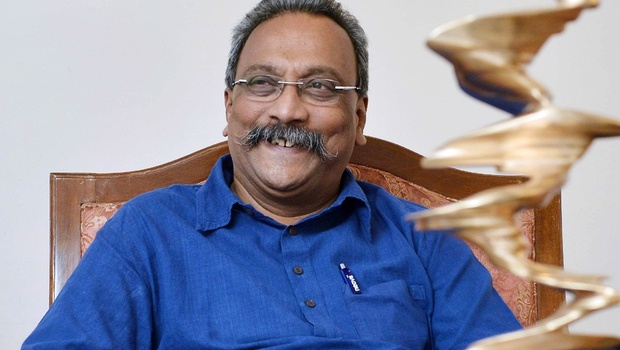
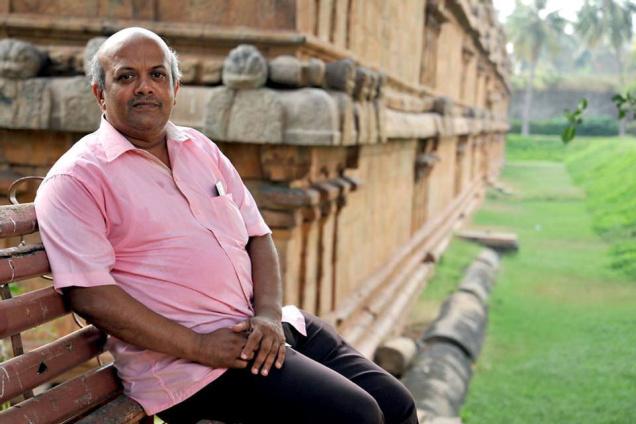
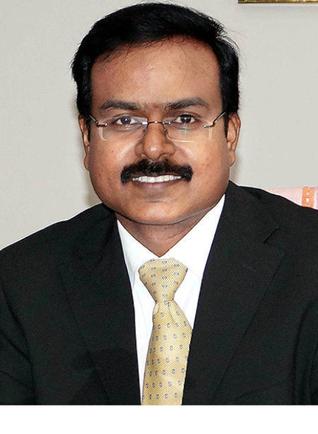
Henri Tipagne, the recepient of the eighth Human Rights award from Amnesty International | P JAWAHAR
Chennai :
Human rights activist Henri Tiphagne has become the first Indian to receive the human rights award from the Amnesty International. Tiphagne, known more as the founder of People’s Watch, says his activism began when in his youth he was stopped from doing flood relief work, because the villagers did not know if he was from a ‘pure’ caste or not.
Q: What does this award mean to you?
A: I think this award is not for me as an individual, but for all those who do good work and go unrecognised. This award highlights the shrinking civil society space globally.
Q: With more than 30 years of active participation in human rights cases, what was the first case that drove you to this phase?
A: It started in 1977, when human rights was not known in the country. We would call it a fight for social justice. In the same year, in November at Vedasandur, a panchayat in Dindigul, a group of volunteers including me went for doing flood relief work as the Alagapuri dam in Vedasandur had broken. But when we started work, we were prevented by the so-called ‘upper caste’ of the village from cleaning a particular well. They said it in good interest. We were supposed to clean only pure well, considering us to be pure people. Only then, I understood the concept of impure well and pure well. They did not know our caste. So they did not allow us to go to the impure well. But we refused to do it, and I think it is that refusal that turned a life of refusal for me and taught me many things.
Q: You are an advocate as well. What made you take up law?
A: To support the poor, you also have to be competent in terms of being a lawyer. That is what forced me to take up law in 1980. But we could not study law in the college, as it taught us how to prepare ourselves for breaking law. So my study of law was study of street law in the streets of Madurai intervening in the lives of several people.
Q: Do you think independent institutions in India can work or survive?
A: Of course, we have the best example of the Election Commission. Though it has drawbacks it still controls the entire nation during elections. They conduct peaceful elections and all States follow their instructions. The reason is most of the people in it are vigilant. We have gone one step ahead. The commission does not only conduct election but also conducts campaign to attain 100 per cent Voting. So if independent institutions work better and are vigilant, that could make a difference.
Q: Things that need to be implemented for betterment of the country.
A: We have to ensure that human rights education is taught in schools so that it functions as an antidote to challenge inequality in this country. Protection should be given to defenders. All persons defending the good are attacked and they should be protected. Institutions should be focused and should be made to work.
source: http://www.newindianexpress.com / The New Indian Express / Home> Cities> Chennai / by Jayanthi Pawar / May 05th, 2016
After practising medicine for seven years in India, London returned neuropsychiatrist Dr E S Krishnamoorthy understood that while Indians had total trust in modern medicine their heart was often in traditional systems. If an ayurvedic medicine would work or if a series of yoga sessions seemed to help, they would rather go for that. Like most allopaths, Dr Krishnamoorthy , was initially dismissive but soon realised that he should investigate the science behind “alternative medicine.”
After some years of diligent research and efforts, he launched a small clinic called Trimed, as a pilot, near his house in Sri Nagar Colony in 2009. With seed money from family and friends, Trimed sought to weave allopathy with ayurveda, yoga, naturopathy and pilates.
The first task for the integrated medical therapy centre was drawing up treatment protocols that integrate diverse genre whose practitioners have typically worked in silos – with each being mostly dismissive of the other. “In most such integrated centres, we realised that treatment was mostly left to patients’ choice. Many times patients aren’t guided through choices. Ours was a clinic and we decided that treatment protocols will be decided by the doctor,” said Dr Krishnamoorthy , one of the founders of Trimed. For nearly 40 conditions including pain, disability and mental health issues the team has standardised treatment practices.
Patients coming to Trimed meet an allopathic practitioner first, but they are also evaluated by at least four other specialists including a physiotherapist, naturopath, ayurveda practitioner and a psychologist. The specialists then discuss the treatment plan for each case sheet.”Sometimes treatment plans take more than two hours to formulate,” said Dr Rema Ragu, an epidemiologist, who is one of the core members.The aim is to bridge the limitations of allopathy with the wisdom in traditional medicine. “We made a conscious choice that all medicines prescribed will be only allopathic. Massages and therapy from other traditional streams are integrated with modern medicine. But with every case it is important to offer holistic care,” she adds.
The cloud-based electronic medical records of each patient stored at the hospital showed substantial progress in most patients. For instance, a 92-year-old a wheelchairbound patient walked out of the hospital after 15 days of intensive therapy and young IT professional was taken off the bench and put on projects after he was able to control mood disorders. Soon, Trimed, with its mobile therapy unit -an ambulance converted to therapy centre -extended services to homecare. “When people come to us they realise that almost everyone in the family needs holistic medical management,” said Gayathri Krishnamoorthy, a core administrator at Trimed. The centre, which was exclusively for medical management, is now expanding to offer rejuvenation therapy .
The company received funding of $300,000 from an Indian businessman living abroad. It is planning to start another centre in Coimbatore. “When I first heard about it I was impressed about the holistic approach concept. In fact some members in my family tried and benefited from it. I don’t think such centres should mushroom all over, but I certainly believe they have a place,” said A Vellayan, executive chairman, Murugappa Group, who has invested in his individual capacity.
source: http://www.timesofindia.indiatimes.com / The Times of India / News Home> City> Chennai / Pushpa Narayan / TNN / May 02nd, 2016
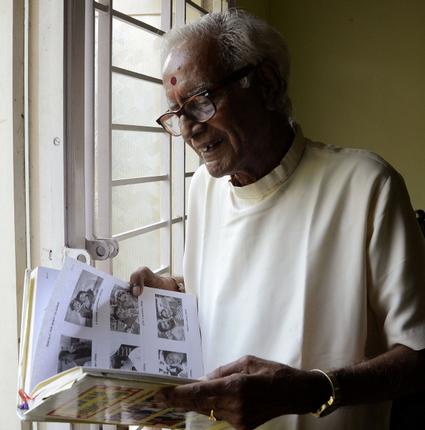
Film News Anandan. File photo by K.V. Srinivasan / The Hindu
It could well be curtains for flawless archiving of South Indian cinema
In the past two decades my interactions with this unique personality were many. Every time I needed pictures for a story on cinema, all I had to do was call up ‘Film News’ Anandan. He would attend the call himself. “Sir, I need a few pictures. Can I come over this evening?” “Sure, just give me the details and they will be ready,” he would say. And I would find them in a cover, neatly labelled with the essential information. His only request was that I return them after use.
Every time I visited Anandan I was awestruck by his simplicity and self-effacing nature. In fact, he would even sound slightly diffident. Like the time when he hesitantly walked up to Sivaji Ganesan, who was sitting under a tree at the shooting spot of ‘Raja Rani,’ and requested him to pose for him. Anandan’s career in cinema began with that click! “Great man, he immediately obliged,” he would recall often. His passion for photography and love for his prized possession, a rolleiflex camera, may not be known to all.
Also few may be aware of his knowledge of Carnatic music. We were walking out after the press show of ‘Subramaniapuram,’ when he told me, “I enjoyed that song in Reetigowla. The new composer, James Vasanthan, has done a good job.” Even later, during our conversations Anandan would dwell on the music of films of Tyagaraja Bhagavathar and the kritis of Saint Tyagaraja, used in cinema.
Anandan never forgot kind gestures. M.G. Ramachandran, who enabled him to become the first PRO in cinema, was often in his thoughts. So was Jayalalithaa. She was instrumental in the State Government buying over Anandan’s archival collection. She had planned to make it into a permanent exhibition. “I can’t thank her enough,” he said. Yet I sensed both agony and ecstasy, when he told me in a choked voice that parting with his ‘treasure’ wasn’t easy. It was just a week after he had handed over his collection.
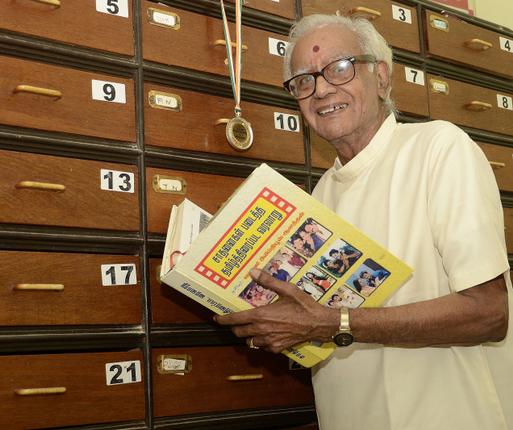
Film News Anandan File Photo by K.V. Srinivasan / The Hindu
Newspapers, cuttings from them, notepads and dairies of details on cinema were seen everywhere in his room always. “These are my years of hard work. This is not junk, this is my life. Nothing would upset me more than sitting in a neat room without these possessions around me,” he would smile with pride as he cleared some of the papers on the sofa for me to sit down.
The last time I met him was more than a year ago. He mentioned that the State Government had honoured him enough. So it was the Centre’s turn? He simply smiled. His meticulous chronicling will be an objet de vertu for generations of students of cinema. The diligence ought to be recognised, at least now.
When I entered Anandan’s home to pay my last respects, his daughter was standing beside her father’s body. Tears welled up in her eyes. “Just before he died, he mentioned three letters. We couldn’t understand them. He then asked, ‘Did all the films scheduled for Friday get released?’ ‘Yes, appa, they have all come out,’ I said. Next he uttered the word, ‘Sivaji’ and passed away.”
Ironically, the man’s first step into cinema began with clicking Sivaji Ganesan, and his last breath was with the name of the thespian on his lips!
source: http://www.thehindu.com / The Hindu / Home> Features> Friday Review> History & Culture / by Malathi Rangarajan / March 24th, 2016
Madras Musings, a journal that focusses on heritage, nostalgia and on asking for a better Madras, has just completed 25 years.
Madras Musings, that tabloid-sized fortnightly that cares for the city, a journal that focusses on heritage, nostalgia and on asking for a better Madras, has just completed 25 years. That it has done so has been entirely due to a unique arrangement N. Sankar of the Sanmar Group made when it seemed as though, like many another small journal, it was doomed to failure after struggling along for five years when it had been mothered by what was then Lokavani-Hallmark Printers. The Sankar plan involved getting a dozen corporates who cared for the city to support the journal with an equal donation every year. That dozen has grown to nearly two dozen now — and no one asks for anything in return, not even reports about their activities; all they want is a place for their logos as acknowledgement.
I know of no other journal that has been kept going in this fashion. But that Madras Musings has been is because the donors felt strongly that the people of a city should know about the past and present of the place and be able to discuss its future. In the early years of the journal, this seemed to attract an elderly audience; this was reading material for old people, the young seemed to say. But to judge by the greetings Madras Musings recently received, the bulk came from such young persons’ media as Facebook, blogs and Twitter (if I’ve got the jargon right). And there appear to be more and more young people getting interested in heritage as well as wanting to do something for the city.
We are now hearing about young leaders of heritage walks, camera trails, sketching outings; we are hearing about the young getting down to beach cleaning, road sprucing, and working at reviving heritage. Just the other day, a couple of post-graduate doctors from Madras Medical College came to meet me to say they were working on a history of the college, that they were trying to give new life to old buildings like the famed Anatomy Block, and that they were trying to create a college museum.
Madras Musings, which has been associated with Madras Day, Madras Week, Madras Month has been noting how every year the participation of the young in heritage events has been increasing. You find them organising events, you find them on walks, you find them at lectures, you find them exhibiting and quizzing — and all in growing numbers every year.
It certainly triggered something, did Madras Musings, and now it watches the slow but steady growth of interest in heritage and in the city and looks forward to this burgeoning. But talk to those connected with the journal, and they’ll tell you a much wider audience needs to be reached. That there must be a reach to the grassroots. Anyone willing to support a Madras Musings-in-Tamil start-up?
Memories of times past
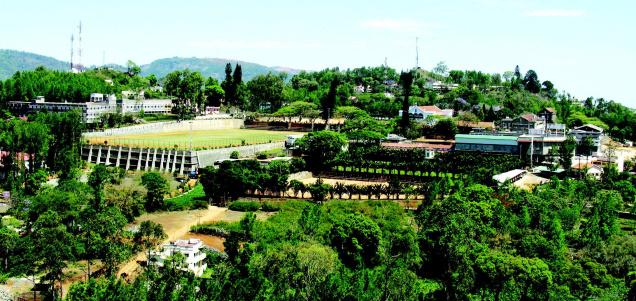
The picture of Yercaud and the Shevaroys last week brought back memories of my year at Montfort where I had come to do my Senior Cambridge. Together with Sacred Heart Convent (SHY), the two schools were the pride of Yercaud. It was only in much more recent times that I foundreason to believe that Yercaud, the first of the South’s hill stations, had much more to be proud of. M.D. Cockburn, the introducer of coffee, Robert Bruce Foote, the Rev. P. Percival, Dr. John Shortt, Nat Terry the boxer, and film mogul T.R. Sundaram all had their homes there. They’ve all figured in this column in the past for their significant contributions to the Presidency. But as schoolboys none of these names had meant anything to us, except possibly Terry and Sundaram of Modern Theatres. Our world tended to be centred on Montfort and on the SHY girls during the once-a-week film show in our hall into which they walked in two by two carefully watched over by Mother Bernard.
Montfort at the time was headed by Bro. Eleazar, Titch to all, but anything but small as a presence! It was only recently that I discovered that this Brother of the Order of St. Gabriel had come out to Montfort as a teenager, with his more earthly education incomplete. He arrived speaking only French, but went on to do his Senior Cambridge from Montfort in a couple of years and then Bachelor’s and Master’s degrees from Loyola, topping every class. What a fine teacher he proved and what a first class educational institution he made of Montfort during his tenure as Principal. That would rate him an out-of-the-ordinary Old Boy and another whom Yercaud should be proud of.
Sundaram’s was a rather different world from Titch’s. He had a gleaming white house, well raised off the road, which we used to stare at every time we went to Montfort and back. It had a magnificent garden well worth staring at if, at that age, we appreciated floral beauty, but the staring was more a sign of awe over an invisible presence, a man who made films by the score as well as money in numbers we couldn’t quite imagine. Of him, Randor Guy has said, “He was perhaps the only person in cinema history to own a studio and produce a hundred films, most of which he directed himself.” In that studio, over a period of 40 years, he produced films in all the South Indian languages besides movies in Hindi, Sinhalese and English. It was in Modern Theatres’ studio in Salem, just where the Ghat road to Yercaud begins, a studio with all film-making facilities under one roof and run like a smoothly functioning manufacturing unit, that Sundaram made the first Malayalam film, Balan, the first Malayalam colour film, Kandam Becha Kottu, and the first Tamil film in colour, Ali Babavum Narpathu Thirudargalum. As boys, particularly as boys in an Anglo-Indian school, we knew little of all this. But a movie-maker — and a person who was supposed to be the richest person in the district — was someone to be in awe of at that age, whoever you were.
So Sundaram’s house always had our attention as we marched to the Big Lake and back.
When the postman knocked…
* Mohandas has a query and I wonder whether anyone can help. Quoting this column and books I’ve written, he says the first car to be registered in Madras was Sir Francis Spring’s and it bore the number MC-1. The next car I have mentioned, he says, is Namberumal Chetty’s MC-3. But what was MC-2, he asks. It has been recorded that even before Spring’s car came out in 1901, A.J. Yorke, a director of Parry & Co, had brought out a car from England and that it attracted much attention on the roads of Madras. I wonder whether this was MC-2. Or is there another answer?
* Mail seeking help from readers of this column arrived the other day from David R. Armitage, Chair, Department of History, Harvard University. He and Jennifer Pitts of the University of Chicago are editing the essays of Prof. Charles H. Alexandrowicz for publication by Oxford University and they seek “any reminiscences of his time in Madras or any letter or any other writings of his that anyone may possess. Responses to armitage@fas.harvard.edu”. Prof. Alexandrowicz arrived in Madras in 1950 and the next year he started what was is now known as the Department of Legal Studies in the University of Madras. He started the first M.L. degree course in India in International & Constitutional Law. He headed the Department until 1961 when he left Madras after a decade in the city. He also was the first Chairman of the Alliance Française in Madras when it transformed itself in 1954 from the Groupe Française that had been founded in 1948.
* Commenting on Albion Banerjee’s religious leanings and his studying Tamil (Miscellany, April 4), M.S. Sethuraman writes, and I quote him: “Excommunication for travel abroad was followed in all parts of India. Mahatma Gandhi was ostracised and so also Dr. Swaminadhan. None of the Palghat Iyers offered for his marriage, resulting in his visit to his village and sought the daughter of Ammu’s mother.
“Sir Albion Banerjee ICS opted for Madras cadre, perhaps due to resistance from Bengal families. W.E. Banerjee, early Congress President, converted to Christianity when expelled from his caste due to his crossing the seas. Sir Albion should have studied Tamil after his Madras appointment (SM’s note: No). ICS officers were asked to learn a local language on appointment and cash awards are also awarded. A.S.P. Ayyar ICS, in addition to his Malayalam, learnt Tamil, Telugu, Kannada, but the then British Government limited the cash award to one language.”
source: http://www.thehindu.com / The Hindu / Home> Features> MetroPlus> Society / by S. Muthiah / April 30th, 2016
TRAILING THE TURTLES: Historian Orissa Balu. Photo: Special Arrangement
Historian Sivagnanam Balasubramani, popularly known as Orissa Balu, deciphers the sea trade routes used by ancient Tamil sailors through his research on sea turtles
‘Thirai kadal odiyum thiraviam thedu’ (Seek your fortune even by venturing overseas) — Tamil poet Avvaiyar.
The Sangam literature is a rich repository of information on the ancient Tamil way of living. Amidst its chapters that vividly describe the beauty of nature, lifestyle and social structure of the old Tamil country, the Purananuru elicits the flourishing sea trade of those times. From ships, sea routes, daring maritime voyages to the merchandise that were traded and the expertise of the Tamil seafarers, it talks in detail of the mighty ocean and the strong bond the people shared with it.
For the past two decades, historian Orissa Balu, has been collecting real-life evidences and remnants from across the coast of Tamil Nadu and elsewhere in the world, correlating them with the references in Sangam literature. “The land expanse mentioned in the literary works is a much larger area than the present day Tamil Nadu state. Our ancestors had maintained trade links from Europe in the west to the Far East,” says Balu. “Excavations at Adichanalur have yielded skeletons of people belonging to five different races. It’s an indication that we have been a centre of international trade, paving way for exchange of culture and language.”
According the Balu, the root of the word ‘Tamilar’ comes from ‘Dramilar’, which in turn is a derivative of ‘Thirai Meelar’ – an expression to denote sea farers. “It was considered a science to be able to return from the sea. The Tamil seafarers had an advanced idea of direction, geography and weather. They were able to come back to their home turf after sea voyages spanning months and years covering millions of nautical miles. The word ‘Thirai Meelar’ is mentioned repeatedly in works like Manimekalai andSilapathikaram.”
Sea faring was such a thriving industry that the Tamil society is said to have had over 20 different communities working for sea trade. Literature talks about the Vathiriyars (people who weaved the sail), Odavis (men who built ships), Kuliyalis (Surfers) and Mugavaiyars (divers who fished pearl from the deep sea bed).
Balu who has done an extensive study on the ‘Paimara Kappal’ (sail boat), the indigenous vessel of ancient Tamils, says, “The sail cloth used in the Sangam age was 20 metres in width, 10 metres in height and could withstand a wind velocity of 250km/hr. It’s notable that even the women were experts in sailing and pearl fishing. Even today, we can find women diving into the sea in search of pearls along the coast of Tuticorin.”
He adds, “The mechanism of building the boat was unique as they used nearly 42 kinds of wood including the Karunkali wood for the central pole that withstood lightning. Today, the coastal Muslim community practices the age-old boat building technique. There are hardly 25 sail boats and five families of boat builders left in Kayalpatnam and Keezhakarai.”
The Sangam literature also documents the presence of over 20,000 islands in the Indo-Pacific Ocean, says Balu. ‘Muziris Papyrus is a document on the evolved sea trade of Tamils. It shows how advanced and strategically planned were the supply chain network and management policies of Tamil traders.” Balu postulates that ancient Tamil seafarers followed sea turtles and thus chalked maritime trade routes. For over 21 years, he has been doing research on sea turtles, mapping their migration routes.
“The turtle has the ability of returning to its home turf even after migrating thousands of miles in the sea. They float along sea currents and don’t swim in the ocean. The technique used by Tamil sailors must have been inspired from this,” he says. “There’s a proper documentation of the life cycle of sea turtles in Sangam literature.”
Balu is researching on the migration routes of Olive Ridleys, Green Turtles and Leatherbacks which visit the Tamil Nadu coast.
“My idea is to use historical facts for sustainable living in the present times,” says Balu, who runs the Integrated Ocean Culture Research Foundation, based in Chennai. “We have people from over 72 sea-related fields researching on various subjects. We have created a link between the stakeholders of the sea, from marine engineers and ship builders to fishermen.” Orissa Balu delivered a lecture at a programme organised by INATCH Madurai Chapter.
source: http://www.thehindu.com / The Hindu / Home> Features> MetroPlus> Society / A. Shrikumar / Madurai – April 29th, 2016
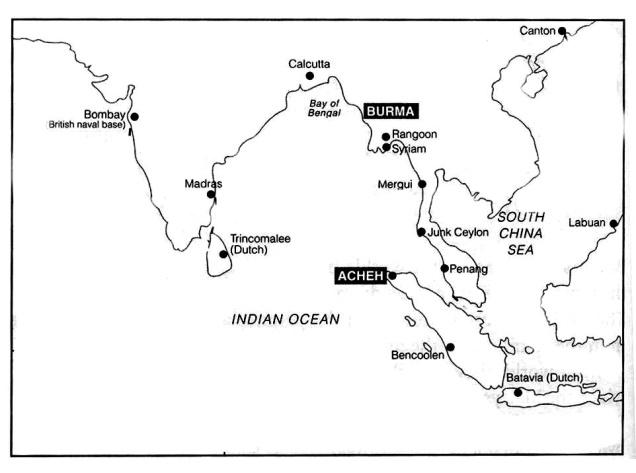
The forgotten ruins in this small village remind us of the power that a tiny, faraway country wielded on our coast for over 200 years.
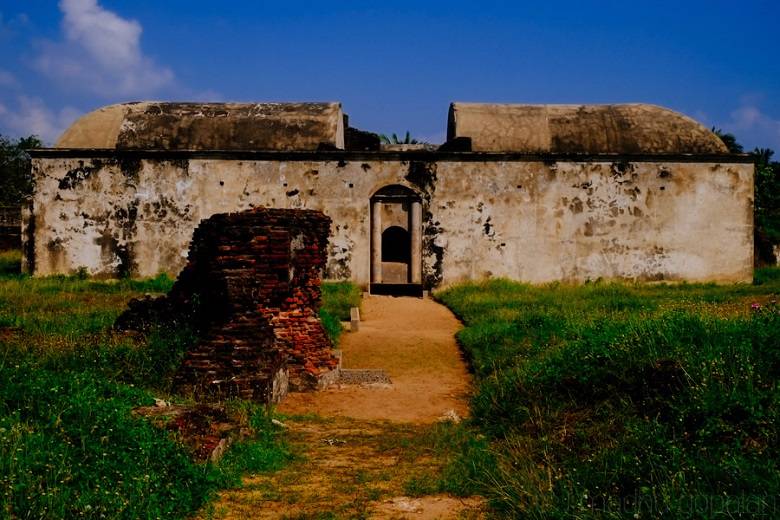
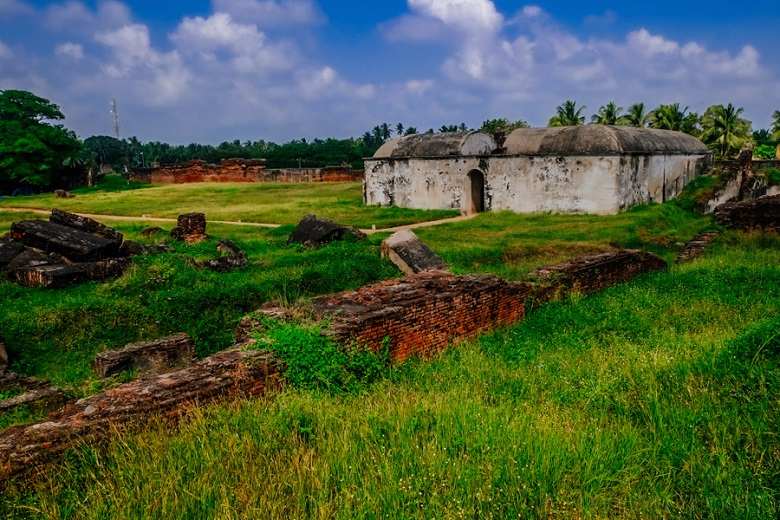
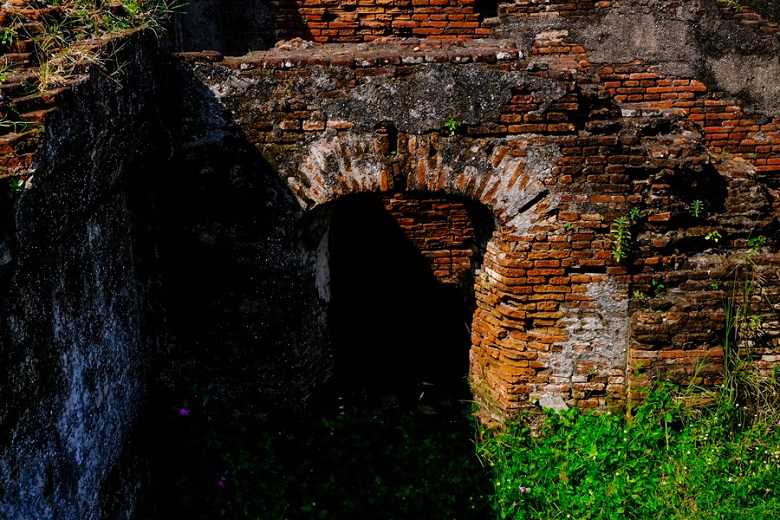
As one drives down the East Coast Road from Chennai, about half an hour past the World Heritage Site of Mahabalipuram, is a village called Sadurangapattinam, anglicized to Sadras. An important Dutch settlement between the 17th and 19th centuries, this nondescript village is home to the ruins of a picturesque seaside brick fortress.
Back in the 16th century, before the Dutch arrived on Indian shores, the Portuguese had pretty much monopolized maritime routes between Asia and Europe. This wasn’t a problem as long as the Dutch could use Portuguese seaports to conduct their trade. However, this became unviable in the late 16th century, as Portugal was taken over by the king of Spain, with whom the Dutch were at war.
Since the Dutch now had to find another way, merchants in the tiny country started setting up companies to send fleets of ships to South East Asia.
In the year 1602, a national resolution merged all of these players into one Dutch East India Company. The company was empowered to do business, build ports, factories and fortresses, negotiate deals, and even wage wars if required.
Over the next two centuries, the Dutch East India Company established settlements in different ports on the Coromandel coast of southern India.
The first foothold that they gained was in Machilipatnam in present day Andhra Pradesh, where they built their first factory. Over the following decades, they set up shop in various coastal towns, including three important centres in Tamil Nadu – Pulicat, straddling the state’s border with Andhra Pradesh, which served as their capital for a long time, Nagapattinam their later capital, and Sadras, about 80km south of Chennai.
Sadras lies adjacent to the Kalpakkam township. Dating back to the mid 17th century, the fortress is built on a rectangular plan, and is entered through a gateway on the west, with a watchtower above it. A canon stands on each side of the entrance. The eastern wall overlooks the sea, and has a bastion on top, to protect the fort against attacks from the sea. Most of the fortress is gone, leaving a few structures like a granary, stables and a Dutch cemetery.
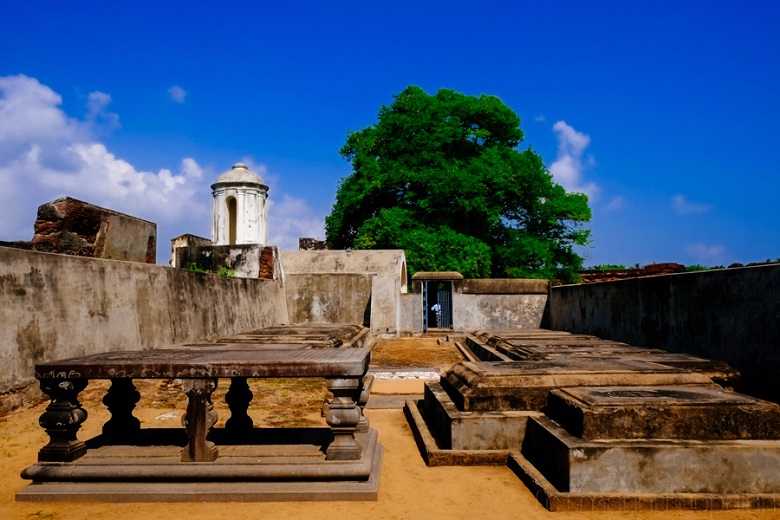
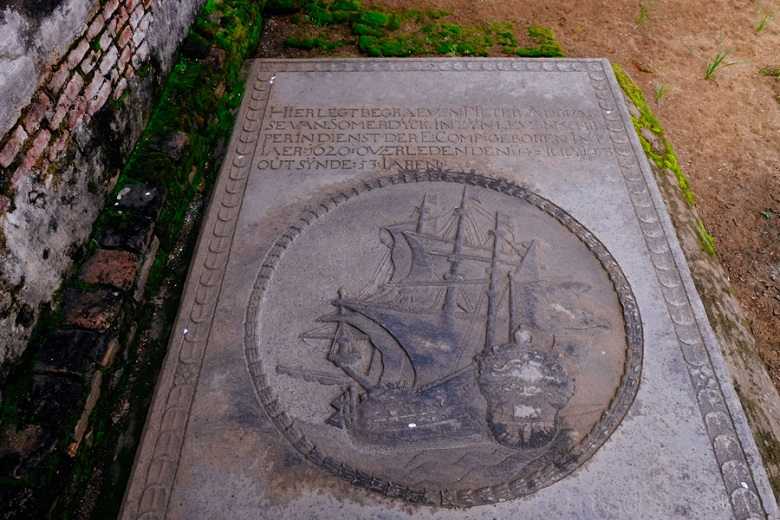
The cemetery contains beautiful tombs with ornate inscriptions dating back to the 17th century.
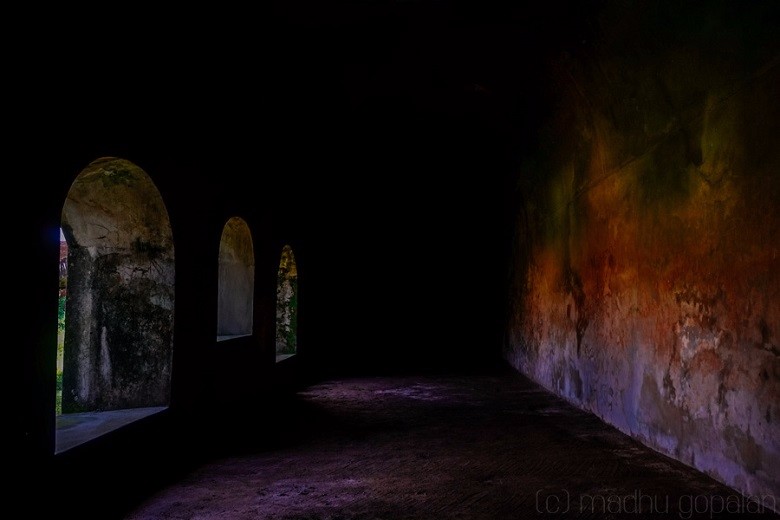
It is usually kept under lock and key, but visitors can request the caretaker to open it for them. An antechamber stands behind the graves, with sunlight streaming in through a caved-in roof.
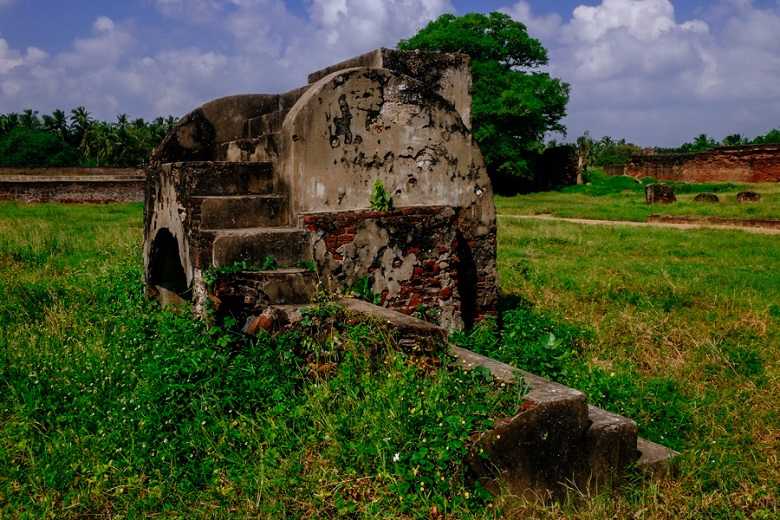
A structure that was used to mount elephants
Back in the day, the Sadras fort was referred to as Fort Orange, because orange is the colour of Dutch royalty. The settlement was famous for the extremely fine muslin that was spun in its looms. Other items traded from the port included pearls, spices, rice, bricks and beautiful printed textiles called chintz.
The control that the Dutch East India Company had over the Coromandel Coast, gave them monopoly over trade routes to the East Indies, essentially the Malay Archipelago in Southeast Asia.
However, their supremacy didn’t last very long.
As the British rapidly grew stronger and the Dutch company began to decline due to various reasons like wars, competition, bad financial policies, increasing costs, decreasing demands, etc, it became unaffordable for them to hold on to their settlements in India. The British attacked and captured the Sadras fortress in the late 18th century, destroying it in the process.
In a few decades it went back into the hands of the Dutch, but in the 19th century, they signed a treaty with the British and ceded all of their Indian settlements to them.
The double decker tomb in front is said to belong to two brothers.
The details on a tomb
Today, not much remains of Sadurangapattinam’s Dutch legacy, but the forgotten ruins in this small village remind us of the power that a tiny, faraway country wielded on our coast for over 200 years.
All photographs by Madhumita Gopalan
(Madhumita Gopalan is a photographer, blogger and history enthusiast who loves photo-documenting travel, culture and architecture. She blogs at www.madhugopalan.com.)
source: http://www.thenewsminute.com / The News Minute / Home / by Madhumita Gopalan / Saturday – April 30th, 2016
Our city has only three seasons — hot, hotter and hell. Given this, would people believe me if I said that the temperature once dipped below freezing in our city, and that too, in the sweltering month of April? It would probably be dismissed as an April Fool’s Joke. And yet it happened exactly 200 years ago, in the last week of April 1815. The morning temperature was 11 degrees Celsius on Monday, April 24, and by Friday, April 28, it had dipped to minus 3 degrees Celsius. There are unverified reports of snow falling too but that may be an exaggeration.
The cause of this freak phenomenon was the volcanic eruption of Mount Tambora in distant Indonesia. At that time, this was the tallest peak in the archipelago which formed that country, rising to a height of 4,300 m.
Lava burst forth from it on April 10 and 11, 1815, with such ferocity that the explosion killed around 12,000 people and was heard 2,000 km away. It holds the record for being the largest volcanic activity ever in world history till date.
What followed next is best described in Tambora: The Eruption That Changed The World, by Gillen D’Arcy Wood — “Tambora’s dust veil, serene and massive above the clouds, began its westward drift aloft the winds of the upper atmosphere. Its airy passage to India outran the thousands of waterborne vessels below bent upon an identical course, breasting the trade winds from the resource-rich East Indies to the commercial ports of the Indian Ocean. The vanguard of Tambora’s stratospheric plume arrived over the Bay of Bengal within days”.
Madras was perhaps the first to feel it two weeks later, with the temperature dipping to freezing point, thanks to the aerosols in the volcanic cloud absorbing heat from the sun and the earth. Given that our public dons monkey caps and earmuffs in December each year, what was the fashion statement in freezing April 1815? There is, however, not one East India Company record that notes the reactions of the colonial masters or the people to this freak occurrence. There is also no mention of a tsunami. Pumice stone, however, washed up on the coast for a long while.
What followed thereafter was not as pleasant as the cold weather. The ash cloud spread globally, making 1816 the ‘year without summer’. In Madras, and the rest of India, it also meant a year without monsoon. Crops failed, as they did internationally. Famine in India was followed by cholera, which is now directly attributed by scholars to the volcano. Over 70,000 people perished globally, due to Tambora.
In August 1815, the brig Catherina — the first vessel from Java after the eruption — arrived in Madras.The Madras Courier interviewed the craft’s master for an eyewitness description of what happened. He also brought with him a bag of volcanic ash, which was forwarded to Calcutta for further analysis. But nobody linked the big freeze in Madras to the volcano!
source: http://www.thehindu.com / The Hindu / Home> Features> MetroPlus> Hidden Histories / by Sriram V / April 17th, 2016
C. Anandharamakrishnan, a renowned scientist in the field of food engineering, has assumed office as the Director of the Indian Institute of Crop Processing Technology (IICPT) here.
Dr. Anandharamakrishnan has over two decades of experience in R&D and administration at the CSIR — Central Food Technological Research Institute, Mysuru, a prestigious food research institution in the country. He was Principal Scientist and Coordinator for the Academy of Scientific and Innovative Research (AcSIR) there.
Dr. Anandharamakrishnan completed his Doctoral degree in Chemical Engineering from Loughborough University, United Kingdom, under the Commonwealth Scholarship programme. Prior to that he had pursued his B.Tech (Chemical Engineering) and M.Tech from A.C. College of Technology, Anna University, Chennai.
His areas of research include design of engineered nano and micron scale delivery systems for the controlled and targeted release of food bioactive compounds, spray drying, and spray-freeze-drying of food products.
source: http://www.thehindu.com / The Hindu / Home> National> Tamil Nadu / by Special Correspondent / Thanjavur – April 30th, 2016
When J F Bailey, a constable in British Malaya, landed on the shores of Madras in the late 1890s, he had just a trunk of clothes and a few coins to start life afresh. Why he chose to move to the city remains a mystery, but his reason for setting up base in Perambur – after buying a thatched house from a milk vendor -was obvious: the railway workshops.
A century later, Bailey’s granddaughter Barbara Pavey and her son Robert are on a quest to find out why he chose the spanner over the baton and his life in the Straits Settlements – British colonies comprising parts of the southern and western Malay peninsula and adjacent islands, including Singapore.Their discoveries, they believe will unveil not just their personal roots but the story of Perambur, one of the earliest British settlements in Madras.
“My grandfather rarely talked about his days in the Straits. But his eyes would light up when he spoke about his life in Perambur and the road that led him to the love of his life – my grandmother,” says 70-year-old Barbara Pavey, blowing the dust off a broken wall on Ballard Street to reveal a named etched below: J F Bailey. A narrow path leads to the Baileys’ house, one of the few buildings on the street that have survived the thrust to modernity, but barely. While the columns, reflecting the Indo-Saracenic style (popular during thattime), stand tall, the walls are being crushed by the roots of a banyan tree.
“The building was called `the terrace house’ as it was the first in the neighbourhood with a terrace. Even the mayor’s and police commissioner’s houses on the street didn’t have one,” says Barbara, precariously climbing a flight of stairs that a broken balustrade lined.
Barbara, who moved into the Bailey house with her parents and seven siblings in 1958, reminisced of Christmas ball and parties at the Railway Institute; of men in bowler hats and suits cycling to work, and of people drinking wine and singing rhymes. But the locality was more than that. Noted for its railway establishments since the 1850s, the Anglo-Indian community in the neighbourhood, with their grit, dominated the Railways until well into the 1960s.
“We always made time for music too.Every evening, after my father got back from work at Central railway station, he would pick up his banjo, while my mother would play the piano. Their music could be heard right down the street,” recalls Barbara. The piano now lies in a locked room in the Baileys’ house, which has remained unoccupied since 2007, after Barbara moved to an apartment close to the locality following her mother’s death. With many members of her family and community leaving the country from the ’80s, many stories like Barbara’s have died along with the bungalows that once lined the narrow Ballard street.
There were around 6,000 AngloIndian families from in Perambur earlier; there are fewer than 1,300 now.
source: http://www.timesofindia.indiatimes.com / The Times of India / News Home> City> Chennai / Ekatha Ann John / April 29th, 2016
The eighth Human Rights Award of Amnesty International was presented to Henri Tiphagne, Executive Director, Madurai-based People’s Watch, at a function organised in Berlin on Monday.
“Henri Tiphagne’s passionate advocacy in the fight against torture and discrimination in India is exemplary and serves as an inspiration for activists all over the world who are campaigning for human rights,” said Selmin Calıskan, Director of Amnesty International Germany.
In his address, Mr. Henri said, “We would like to thank Amnesty International for this award, which reminds us that we are not alone in our fight for human rights. India has a vibrant civil society; I am humbled to accept this prize on behalf of all the brave women and men who tirelessly campaign for human rights in India.
However, the space for civil society activists is shrinking constantly.”
source: http://www.thehindu.com / The Hindu / Home> News> Cities> Madurai / by Special Correspondent / Madurai – April 27th, 2016