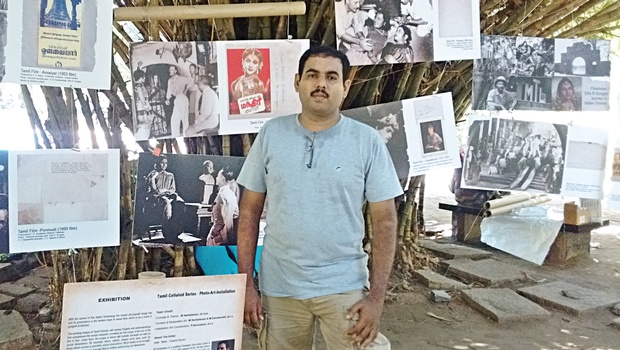
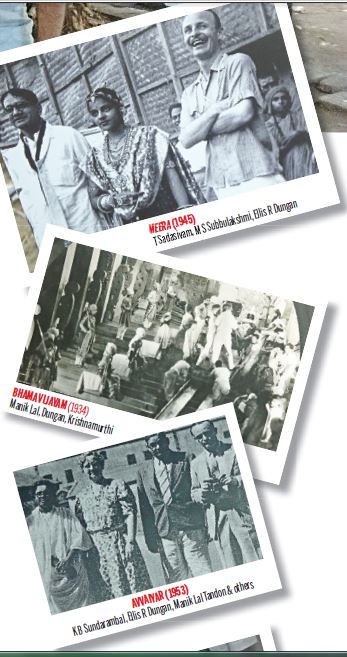
Classic and vintage movies have always been cherished for their grandeur and story line. In a recently conducted public art festival, M Venkatesan, a filmmaker displayed a photo-art-installation of vintage classics including movies like Meera (1945), Ambikapathy (1937), Manthiri Kumari (1950) and Ponmudi (1950). But, do these movies ring a bell? Classic movie buffs can spot the one common feature in a jiffy. Yes, Ellis R Dungan!
This American film director is renowned for his work in Indian films, predominantly south Indian films. Themed around Dungan’s journey in Indian cinema, Venkatesan said, “All these pictures have been meticulously sourced and restored for the present and future generation to witness the golden era of films.”
Venkatesan has been interested in film restoration and image preservation film archiving for over a decade now. “My interest in films goes back to when my grandparents idolised MGR and Sivaji on screen. It was always about getting a haircut like Rajinikanth or being an ardent lover like Gemini Ganesan,” he quipped about his venture into the industry.
Inspired by the works of Dungan, Venkatesh wanted to restore lost images and visuals of his works. “I have been researching, sourcing, preserving and restoring these images for almost eight years. The man introduced actors like MGR in Sathi Leelavathi and T S Balaiya. Should I say more?” smiles the filmmaker who runs a production house, Sai Media.
With most of the images from vintage movies lost in time, he explained, “Unlike foreign classic movies, most of our old movies are lost in time and there aren’t many who come forward to restore it. Why? Because we give more importance to foreign movies!” he avers.
Pointing to the installation of a still from the movie Avvaiyar (1953) starring the legendry K B Sundarambal, he claimed, “This might be the first still photo of an actress outside the sets. In those days, taking stills of actors beyond the film set wasn’t common unlike now and having a still of it is worth a million dollars.”
Having done a digital version of these images, Venkatesan elucidated, “This is my first attempt in having a hard copy of the installation. I earlier did a digital presentation. But, I feel doing it this way will have a better impact,” he said. “I have spoken to over 42 people in a single day. This shows that everyone is interested in classic cinema and they know it. They just need a medium where they can learn more about it,” stated Venkatesan who considers legendary Indian archivist P K Nair and American director Martin Scorsese as role models in Film Culture & Preservation.
While most of us think that roping in technicians from abroad and having larger-than-life sets have been a fad only for the last decade, the installations prove us wrong. “If you look closely at the photo of Bhama Vijayam (1934), you’ll be able to spot foreigners who are also a part of the movie,” he explains, “Period movies were taken on a grand scale and the sets are just mind-blowing. All this was always a part of the Indian cinema, it’s only now that people are hyped about how we have an international connection in a movie.”
Working towards his goal of taking classic cinema to everyone, he said, “My team has been supportive and I want this to be preserved for our future generation to know how rich our techniques were.”
Notable Projects
Kadhal Mannan: The King of Romance: The Biography of Late Gemini Ganesan
Kshama: Written & Directed By Venkatesan M (Special Honorary Screening: Chennai International Film Festival & Other international Festivals)
Madurai Jallikathu: Written & Directed By Venkatesan M (New York Times Media & Other Channels)
canada connect
Participated as the only South Indian Filmmaker/ Producer in the Indo-Canadian Co-Production Delegation 2015 and was part of the team which initiated and signed the Treaty with Canada Government.
source: http://www.newindianexpress.com / The New Indian Express / Home> Cities> Chennai / by Roshne B / April 27th, 2016
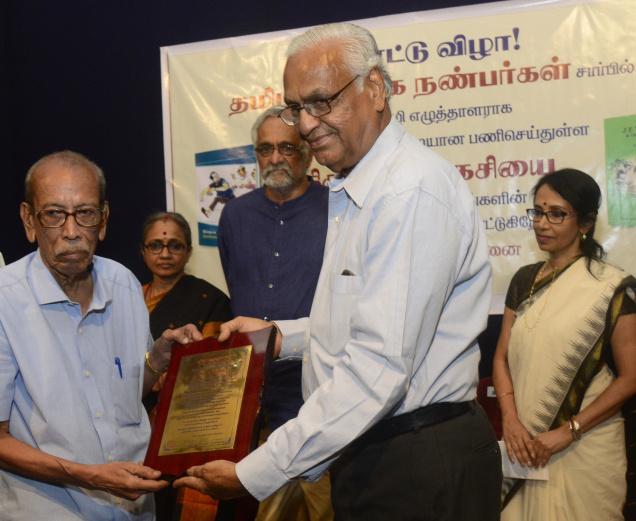
‘TAG’ R.T. Chari hands over the citation to Charukesi (left). With them are Seetha Ravi, V. Ramnarayan and Alarmelvalli. Photo: M. Vedhan.
Review, story, essay, translation… versatility has been Charukesi’s forte.
For Viswanathan Subramaniam, a man fascinated by the voices of Peri Como, Jim Reeves, Nat King Cole that he avidly followed on Radio Ceylon, with no interest whatsoever in Carnatic music, being given a pen name Charukesi, based on a raga was probably a forerunner of the direction his life was to take. From writing short stories and features to reviewing Carnatic music concerts, this energetic 78-year young man has just crossed a milestone, completing 60 years of his writing career.
A deep quest to spread his wings and explore and experience the world beyond the small town of Salem where he grew up, young Viswanathan moved to Madras. A job with Faizer & Co after a few small jobs initially, gave him financial security, allowing him to pursue his other passion, which was writing. Armed with the pen name given by his friend Vagoolan, Charukesi began his writing stint with an article for a children’s fortnightly Kannan published by the Kalaimagal group followed by another forKalkandu magazine. He soon became a regular contributor of short stories and humorous articles to almost all major tamil magazines such as Ananda Vikatan, Kalki, Kumudam, and Dinamani Kadir.
A turning point came when he met the editor of Kalki, Ki.Rajendran, after winning a prize for a humorous short story, ‘Ulaga Maamiyargale Onru Serungal.’ The encouragement that he got from Rajendran to write features and interviews led to his transition from the world of fiction to the arena of hardcore reality. Interviewing people ranging from politicians to film stars, artists to aam admi, beaurocrats to businessman gave him deep insight into understanding human nature. He fondly recalls some special interviews with people such as R.K. Lakshman, Dr. Manmohan Singh and Maharajapuram Santhanam.
All this was not an easy task. It entailed extensive homework and Charukesi happily burnt midnight oil. He was meticulous in getting his information and facts right, transferring his thoughts into words, and maintain the various deadlines of the publications. A noteworthy quality in him is the ability to learn new things, be it attaining proficiency in English or learning the nuances of Carnatic music. It is this enthusiasm that led to his being roped in as an executive committee member of Natyarangam, dance wing of Narada Gana Sabha.
Charukesi has travelled widely across all districts of Tamil Nadu for the ‘Madham oru mavattam’ series for Kalki, visited Singapore, Malaysia and other countries. He has interviewed Prime Ministers ,Chief Ministers, writers, celluloid personalities, musicians and dancers in his long tenure. He has translated many books from English and other languages to Tamil and vice versa and has won prizes for his stories, reviews and translations .
How would Charukesi sum up his career? A simple man of few words, he has only this to say: “Writing got me a lot of friends and I have not lost a single one of them all these years.’
source: http://www.thehindu.com / The Hindu / Home> Features> Friday Review / Anjana Rajan / April 28th, 2016
Come summer, parents wonder how to keep children occupied. The studious types keep themselves engaged with computers, painting or music classes. Naughty ones prefer to play outdoors.
The boys keep themselves occupied by enrolling in numerous cricket academies, and many also join swimming clubs. Girls generally take up table tennis or chess and stay away from the heat.
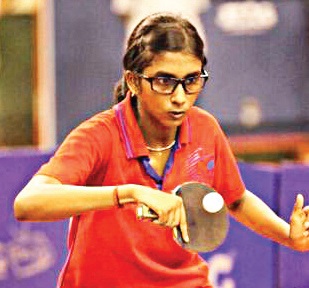
This is how CR Harshavardhini was initiated into table tennis at the tender age of seven. She has grown since, and is currently No 1 in the junior category in India. The 17-year old’s self-belief, dedication and hard work have helped her evolve as a table tennis player of repute. Moreover, her decision to train under one coach and one academy has paid rich dividends.
“At a time when players were shifting from one academy to another once in 2-3 years, I entrusted Harshavardhini to noted coach Ravi Venkatesh. Ravi took personal interest in her game, and has groomed her into a champion,” recalls CK Ravichandran, Harshavardhini’s father.
Harsha has forged a reputation as a ‘giant killer’ thanks to her attacking play. “She has developed into an attacking player, who is swift on her feet too. She is dedicated and sincere. Her self-belief is a big plus,” says coach Ravi, based at MVM Academy at Maharishi Vidya Mandir School, Chetpet. “Since the academy is in her school, it’s easy to train in the morning and evening. The school management too has been supportive by granting her leave to take part in tournaments,” adds Ravi.
Harsha says passion for the game is her driving force. “Love for the game has enabled me to climb up the ladder. My solid preparations at the academy have helped beat higher ranked players like Manika Batra, who is ranked No 1 in youth and women.”
The Class 12 student, who wants to do commerce, has represented India in the cadet category and won gold in the team event at the South Asian Games. Harsha has also won gold for India at Open events in Elsavder and Gautemala.
source: http://www.newindianexpress.com / The New Indian Express / Home> Cities> Chennai / by Ashok Venugopal / April 27th, 2016
Old-timers remember Chennai as Madras, a city of horse-drawn carriages, lonely streets and men in suits. A TOI series brings recollections from a mix of neighbourhoods
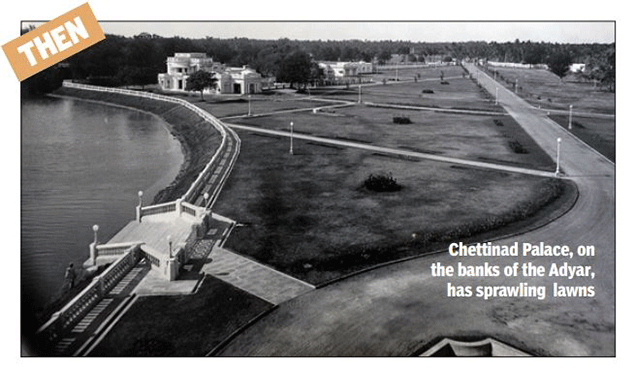
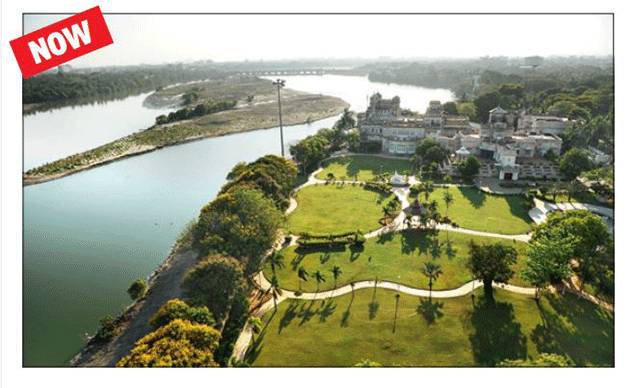
Tall white pillars, long ornate windows and spacious porticos – the exquisite Chettinad Palace which stands along the Adyar estuary with its sprawling lawns and vast terraces was amongst the earliest structures that adorned Raja Annamalaipuram (RA Puram) more than 70 years ago. The magnificent mansion stood solitary, overlooking the Adyar river, as its ivory coloured walls made from Italian marble and limestone bespoke the royalty it housed. Built by wealthy businessman Raja Sir Annamalai Chettiar from Chettinad, the historic marvel is now part of an industrial and educational neighbourhood that buzzes with activity. “The palace was originally to be built opposite the Taj Connemara hotel on Binny road. But Lord Willingdon, the then governor of Madras requested my grandfather to give the land for constructing a club for women as there weren’t any then,” says MeenaMuthiah, Kumara Rani of Chettinad, and granddaughter of Raja Sir Annamalai Chettiar.
This led to the purchase of the expansive 104-acre estate in RA Puram where the palatial structure (the main house) and the smaller quarters, a few yards from the big one, were built.
“Our childhood memories revolve around The Theosophical Society, Kalakshetra campus, Rosary Matric school (then St Thomas Convent), where I studied and, of course, the Adyar river,” says Meena aunty, as she is fondly called.
The locality had only a handful of buildings, including Andhra Mahila Sabha, earlier the residence of capitalist Rangachari. “Previously, this neighbourhood was called Adyar. Only in recent times, they renamed it after my grandfather,” says the 81-year-old educationist. Many eminent people have frequented the aristocratic home for high teas and dinners on the lawn.
“Politicians such as Kamaraj and VR Nedunchezhiyan came here often. Thatha used to call the governors by name,” says Muthiah. “But since we were not allowed into these gatherings, we used to peek through the railing on the balcony and see them.”
The scenic landscape and lavish interiors served as an ideal backdrop for many movies including M S Subbulakshmi’s Meera. “The stretch where the Image Auditorium stands was a dairy farm then. We used to do kalamkari printing in a small unit, near the farm,” says Muthiah, reminiscing how well-known social reformer Kamaladevi Chattopadhyay bought material from the unit to take to Bengal. The day-long holiday from the convent typically began with a visit to the library in The Theosophical Society and ended with a game of pandi. “We would often stopover at Rukmani Devi’s house too. And it was athai who encouraged me to start a school inspired by Kalakshetra’s cultural values and the discipline of the convent I went to,” says Muthiah, who founded Chettinad Vidyashram in 1986, on 7 acres of the property.
source: http://www.timesofindia.indiatimes.com / The Times of India / News Home> City> Chennai / Aditi Maithreya / TNN / April 22nd, 2016
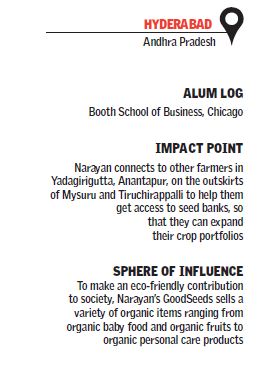
When Narayan Murthy came to India from the United States, he didn’t know that he would end up retracing his roots, in a journey that would last forever.
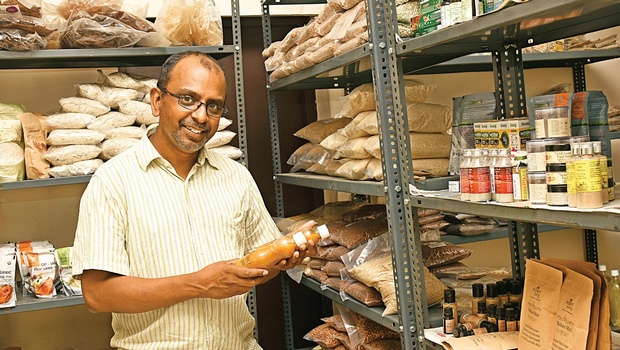
A management consultant by profession, he is the founder of GoodSeeds, an organisation that sells organic food and home products. And it doesn’t end there.
Narayan works closely with farmers across the region to help them find a platform where they can find buyers and connect with other farmers for better reach and productivity.
Says Narayan, “I left India in 1992 and went to the US for higher studies and a job. I completed an MBA from Booth School of Business, Chicago, after which I started working as a management consultant. I was earning quite a decent package and monetarily I was very sound. But there was a voice in my head which kept on telling me that this is not what I wanted to do. But I didn’t know what it was that I was looking for.” That’s when he decided to come back to India and spend a few years here, “I came back and after a year or so, I realised that it was my roots that I had been missing.”
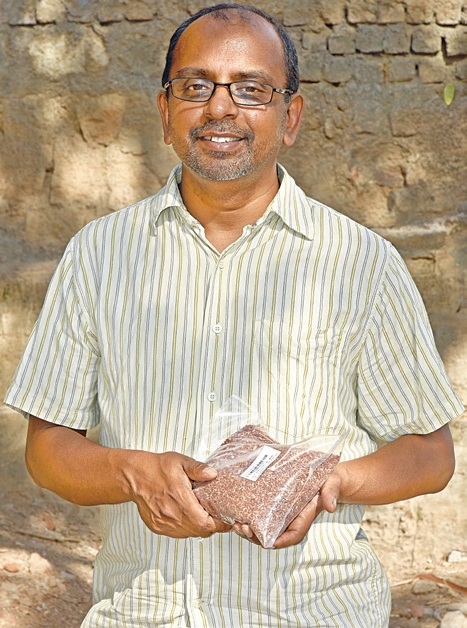
Narayan Murthy, founder of GoodSeeds, which sells organic food and home products
Originally from Chennai, Hyderabad is now his home. But how did he land up here? He answers with a chuckle, “I got a job here in Microsoft as a strategic planner in 2008. Now this city is my home.”
It so happened that one day his friend complained about how good organic food is not available in Hyderabad. Since Narayan was already wondering what to do with himself, the idea appealed to him. Thus was born GoodSeeds in the year 2012. “The name came about because it was about sowing good ideas about what we eat, drink, who we live with and where we live,” adds Narayan. Sort of an eco-friendly contribution to society.
While the company sells a variety of organic items ranging from organic baby food and organic fruits to organic personal care products, farmers often come to them to gain market connections, “Many farmers get in touch with me. I connect them to the market and customers who choose to buy organic products. This way they are able to connect to other farmers as well. We also help them get access to seed banks, so that they can expand their crop portfolios,” informs Narayan.
He goes with farmers to different areas like Yadagirigutta, Anantapur, outskirts of Mysuru and Tiruchirappalli (Tamil Nadu) for advise and to network. As a result of his efforts, farmers are coming closer and becoming part of co-operatives. Narayan adds further, “It’s beneficial that small farmers become part of small co-operatives. For example at Timbaktu, Anantapur there’s a small co-operative of 40 farmers. A farmer can’t do everything alone. If he tries everything and it goes wrong then unfortunately it will be him who will starve. These days people give their lands to farmers on lease to grow crops. In return, the farmers are paid on a monthly basis. So, even if there’s a drought, farmers will get their money and manage to keep their respect intact, as well.”
They also encourage things like the Sunday organic bazaar held at Saptaparni, Lamakaan, Our Sacred Space and Goethe Zentrum, where farmers sell everything from organic fruit to staples like rice. It’s probably not as fancy as the farmers’ markets in the US, but hey, with people like him around — it may become a reality sooner than you think!
source: http://www.newindianexpress.com / The New Indian Express / Home> Education> Edex / by Saima Afreen / April 25th, 2016
It was one of the happiest mornings I’ve spent in a long time when I recently went to the Madras Literary Society which was holding a minuscule exhibition to celebrate World Heritage Day. Two things made the morning special. First to see a group of YOUNG persons, led by Rajith Nair, a heritage walks leader, and two architects just getting into their stride, Tirupurasundari and Sivagami, not only enthusiastic about heritage but also wanting to breathe new life into what still feels like a mausoleum, the MLS. The second thing was finding that the MLS still has a few treasures by way of old books, even though more than half its collection had vanished at the time I had first visited it in the early 1970s.
The exhibition, tiny as it was, had me pausing at exhibits longer than at most other exhibitions. There was a frieze of old advertisements that had me stopping because they looked so familiar and out of my youth. W.M.A Wahid, one of them, was where I had bought all my school textbooks and notebooks. And then Sivagami produced their source — and that again took me back to beginnings. This was The Times of Ceylon One Rupee Diary that her grandfather had used when he was in Colombo in the 1950s. Then there was Tirpurasundari showing me an old inkwell-stand-cum-pen-holder-tray. “It had belonged to my grandfather’s grandfather,” she said. And much of the other exhibits the two young architects had put together had rather similar histories.
The two architects, virtually self-taught on paper conservation, are also leading a ‘Restore a Book’ project, whereby old books are being restored in scientific fashion with support for each such book coming from a donor. Both donors and volunteers are needed — and I couldn’t help wondering why, with Women’s Christian College next door, a team of dedicated volunteers couldn’t be found there. If we get enough volunteers, we’ll be able to save all the valuable old books in the library in a year, working every Saturday, says an enthusiastic Tirupurasundari.
One of the 14 old books saved till now is a 1798 edition of Captain James Cook’s Voyage in the Pacific Ocean. But interesting me even more was a tabloid-size book of Tripe’s photographs of Madurai that was awaiting restoration.
I was positively over the moon when I was told there were 11 more such volumes, of Trichy, Thanjavur etc. Tripe had been commissioned by the Government of Madras to record all the historic structures in these areas and he did so in 1854-1860. And then just as I was leaving I spotted Forest Conservator Ganesan poring over a book that kept me for another hour at the MLS.
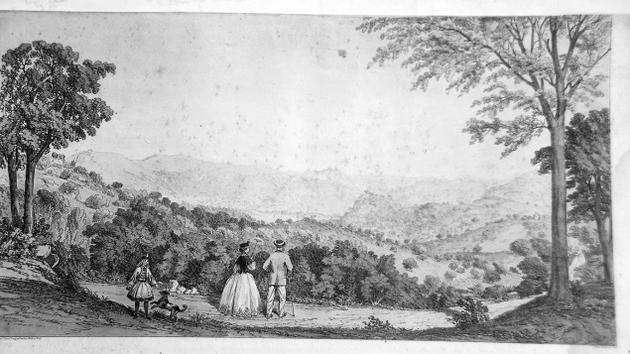
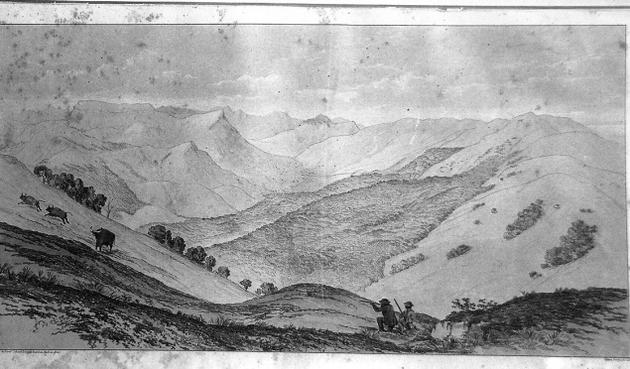
The book, again the size of the Tripe volumes, was of Capt Douglas Hamilton’s sketches of Yercaud and the ‘Pulni’ Hills.
Panoramic view of Shevaroy Hills from the garden of Dr. Marrett’s House at Yercaud
He too had been commissioned by the Government to record the hill stations of what is today Tamil Nadu and what he did was some wonderful pen and ink sketches — eight of them of Yercaud, which revived memories of the year I spent in school there. Tripe’s pictures, Hamilton’s sketches and perhaps any other such pictorial material deserve an exhibition of their own — if only there was a sponsor.
Boundary ridge dividing the Pulnis from Travancore. (Note the gaur on the left, that are being targeted)
Meanwhile, Tirupurasundari and Sivagami and their small team are looking for volunteers for their restoration project as well as to help with a second project: the reorganisation and classification of the entire collection. Contact them at tsarchi2007@gmail.com or rajith.bala@gmail.com
For the record, the Madras Literary Society is the oldest surviving library in India, its beginnings dating to 1812.
***
A Seven Pagodas’ neighbour
When my Australian correspondent Dr A. Raman finishes with papers he has used for research for the numerous articles he writes for a variety of publications every year, he sends them to me to forward to the Roja Muthiah Research Library. And usually amongst them are a couple of papers that grab my interest. Last week’s consignment had one paper that fascinated me: Descriptive and Historical Papers Relating to The Seven Pagodas of the Coromandel Coast. Edited by Capt. M W Carr and published in 1869, it included eight articles by British scholars who had explored and researched Mahabalipuram. Their findings were fascinating to say the least.
The Editor’s note began with these words: “The papers contained in this volume… have been reprinted in a collected form, under the order of the Government of Madras, with a view to promote the intelligent study and examination of these interesting relics of a bygone age.” I wonder which Government in India today, State or Central, will think in such terms.
Be that as it may, Carr writes, summarising the papers, “The origin of the European Appellation cannot be satisfactorily traced… (but) as stated by Dr Graul’s guide it may refer to the five Rathas, the Ganesa temple and the Shiva temple. The story of magnificent pagodas swallowed up by the sea is apocryphal…” Carr goes on, “A matter of greater importance, the age of the Sculptures and Inscriptions… has not …been definitely ascertained.”
Carr points out that Fergusson had thought the rathas had been carved in 1300 CE and were an architectural transition from Buddhist to Hindu styles. Walter Elliot dates the Tamil inscriptions to the latter part of the 11th Century and the Sanskrit ones “not later than the 6th Century”.
No doubt there are a heap of latter day views, but it does seem that the sculptures and inscriptions do not have definitive dates. Shouldn’t we be searching for them?
While this is an old debate, new to me was mention of a place called Saluvan Kuppam, about two and a half miles north of Mahabalipuram. Here there are several rocks that have been sculpted, there is amandapam/temple with a lingam, and several inscriptions. A frieze above the temple entrance bears in Old Tamil the word ‘Atiranachandapallava.’ Do these remains still exist or has the sand swallowed them? If they do, shouldn’t there be some focus on them for any visitor to Mahabalipuram, no matter how insignificant they seem. Like Tiger’s Cave, they would certainly indicate extent of settlement.
Elliot, examining the inscriptions in and around Saluvan Kuppam, goes into a long discussion about them that is beyond me. But I note two points that he makes at the end of it all:
1. “In a copy of a grant at Pithapur, in my possession, Vijayaditya, the founder of the Chalukhya dynasty of Kalinga, about the middle of the 6th Century, is described as destroying the southern King Trilochana Pallava… (who) it may be inferred… was of the same race and probably the same family as… Atiranachanda Pallava.”
2. “From these facts it may be inferred that the rulers of Mamallapura were in a state of independence in the 6th and beginning of the 7th Centuries. We know from other sources that the Chola kings reduced Tondamandalam about the 7th Century.”
None of this makes the history and implication of the inscriptions in and around Mamallapuram indisputable. But what I want to emphasise is that much study was going on in the 19th Century to understand and unearth the secrets of Mahabalipuram. Is the same effort going on today?
***
Malabars and Malabar
R Seshadri, quoting Wikipedia, tells me that “Malabars is an appellation originating from the colonial era that was used by Westerners to refer to all the people of South India (Tamils, Telugus, Malayalees and Kannadigas included)” and not confined to Tamils (Miscellany, April 11). I’m afraid I don’t quite agree with him. Wikipedia, I have found, is not always the last word on a subject.
In this case, Malabar was first used by the Portuguese to refer to the people of what is now Kerala and Tamil Nadu from the time they landed in Calicut in what was Malabar.
The first type for printing in an Indian language was cut in Tamil script and the language of their publications in the 16th Century using this type, the first was in 1578, was called Malabar. Kannada and Telugu came nowhere in the picture at the time.
As far as I know, Old Kannada script (10th-18th Century CE) derived from Kadamba Script (5th-10th Century CE) which in turn derives from Brahmi script. Telugu script deried from Old Kannada script, the separation beginning in the 13th Century and finalising in the 18th Century.
I’m no expert on the subject, but perhaps someone would like to add to this and point to any links the two languages have with Tamil (Malabar).
The Telugus, mainly on the east coast of India, were referred to by the early European settlers as Gentoos. It was well into the 18th Century before the Europeans moved into what is now Karnataka and caught up with the Kannadigas. The only Karnataka contact they had before that was along the Konkan Coast and the Portuguese recognised them as Konkanis.
source: http://www.thehindu.com / The Hindu / Home> Features> MetroPlus / by S. Muthaiah / Chennai – April 23rd, 2016
Overall products including garments made in India have got huge potential in the global market, according to a senior functionary from USA-based Sourcing at Magic.
“Many are inclined to source their requirements from India, keeping in mind all advantageous factors like political relationship, cultural relationship, quality manufacturing, communication angle and above all dependability and responsibility,” Bob Berg, Director (international Business), Sourcing at Magic from USA has said.
Bob was recently in Tirupur to interact with knitwear garment exporters on ‘how to do business with USA’ and avenues to develop contact with buyers and brands in the world market through the fair, Sourcing at Magic, scheduled at Las Vegas from August 14 to 17, Tirupur Exporters Association (TEA) president A Shaktivel said in a statement today.
While discussing the share of US apparel imports from India, Bob said that India contributed four per cent of US imports, with a growth of eight per cent, whereas China registered only two per cent growth Year on Year.
The given import scenario in US apparently revealed that there was good potential available to increase imports from India, thereby giving more avenues for Indian knitwear and apparels to US markets, he said.
Stating that SOURCING at MAGIC is North America’s largest, most comprehensive sourcing event, reflecting the fashion supply chain at its most complete, Bob said it offered unmatched access to over 35 countries representing the world’s most important markets.
The fair was also a convenient space for retail buyers, global importers, licensees and brands to meet and conduct business with offshore manufacturers like India and contract suppliers from the international manufacturing countries.
Sakthivel said he had urged Bob to focus specifically on sourcing from India by highlighting the virtual facts to all leading buyers and brands during their visit to the particular fair. NVM APR ABK
source: http://www.timesofindia.indiatimes.com / The Times of India / News Home / PTI / April 18th, 2016
Science, in Deepana Gandhi’s rural Ooty school, may have whetted her appetite for the great unknown, but it gave her no inkling of where it would lead her.
The 26-year-old, is today a member of Team Indus, the only team from India to have been shortlisted among 16 global teams for the $30 million Google Lunar XPrize competition, the race to land a privately-financed robotic craft on the Moon by December 2017.
Gandhi also happens to be the centerpiece of a documentary series that traces the competing teams’ backstories.
Titled Moon Shot, the series is produced by JJ Abrams, the co-creator of the TV series Lost and director of last year’s Star Wars: The Force Awakens.
“India’s changing. What I have been through is proof of it,” says Gandhi in the documentary, “Now there are women who are doing well in science and space studies. Soon, there will be an equal number of men and women (in these fields).”
Gandhi is part of the flight dynamics group at the Bengaluru-based Team Indus, responsible for controlling the spacecraft from the point it gets separated from the launch vehicle, till the touchdown on the moon.
Abrams’ documentary, directed by Oscar-nominated Orlando von Einsiedel, traces Gandhi’s story from her school days in Ooty to her present-day moon mission. She was fascinated with maths from a young age. “Maths mixed with science is beautiful,” she says, as the film shows her teaching children in a small-town school about space.
Gandhi was among those from Team Indus who travelled to the US to be part of the launch of the documentary series. “She’s incredible. When an American journalist asked her a technical question, she said, “Give me a whiteboard, I’ll explain it to you’,” says Sheelika Ravishankar, who leads Team Indus’ outreach and people programmes.
Gandhi’s inspiration was Kalpana Chawla, the Indo-American astronaut who became the first woman of Indian origin in space.
She went on to do her MTech at PSG College of Technology, Coimbatore, following it with an internship at ISRO. “People used to say you are a girl, you can sit at home and relax,” she says. But her family, her father in particular, supported her. “My dad always said a girl can do what a boy can. That kept me tryingAt last, I got the opportunity to prove myself,” she says about her stint with Team Indus.
Founded by IIT Delhi alumnus Rahul Narayan, Team Indus started out as the inexperienced and under-resourced underdog in the competition, but is now a frontrunner.
source: http://www.timesofindia.indiatimes.com / The Times of India / News Home> City> Bangalore / TNN / April 24th, 2016
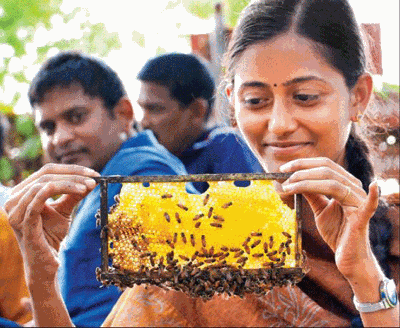
Coimbatore residents have been putting their backyards to good use … and no, we are not talking about just kitchen gardens. The braver of the lot are rearing honey bees in their gardens not only as a hobby but also as means to supplement their income.
M R Srinivasan, of the entomology department of the Tamil Nadu Agricultural University (TNAU), said while many farmers attended the training programme conducted by them every month on beekeeping, the number of home makers and students taking part was, interestingly, on the rise. “This can be done anywhere as it does not require much investment or time. One needs some practice and should learn the basic nuances. We get entries from people from all walks of life,” he said.
While some women got interested in beekeeping out of curiosity, some wanted to produce honey in their homes. N Krishnaveni, a software engineer, said she found a beehive in her garden and became curious. “I wanted to learn the art of beekeeping. I was told that bees are best at cross pollination so I thought this would help increase the yield in the mango farm maintained by my family,” she said.
Like Krishnaveni, Saranya, an MBA student, wanted to get involved in beekeeping to increase the yield in her farm. But some women said they were aware of the benefits of pure honey and wanted to extract it on their own. “My husband is in the honey business and has a company in Bengaluru. But I want to rear them at home to extract honey for household purposes. I have already started learning the techniques,” said F Shabeena, a homemaker from Ukkadam.
Many women who already have terrace gardens and kitchen gardens are also rearing bees. K Jayanthi, 26, says she comes from an agricultural background and has always loved rearing bees. “I take part in various training camps conducted by TNAU and government to learn the techniques,” she said.
The women said they were not scared of the bees. “Unless we disturb the bees, they do not we disturb the bees, they do not attack. If right techniques are used, there is no danger at all,” said Krishnaveni.
An apiary expert, R Philip Sridhar said beekeeping was be coming popular as one just needs to give some time. “There are no maintenance costs involved. We need to check the chambers once a week at least to ensure the bee count is appropriate. One needs to check for the presence of eggs, honey and pollen storage. Moth attacks need to be prevented. Other techniques if learned, can not only make beekeeping fun but also yield commercial benefits to beekeepers,” said Sridhar.
source: http://www.timesofindia.indiatimes.com / The Times of India / News Home> City> Coimbatore / Komal Gautham / TNN / April 22nd, 2016
A view of the Thana Road, Arasappa Mudali Street junction. It is one of the places that is the parties’ favourite venues for organising rallies.— PHOTO: THE HINDU ARCHIVES
Places like Thana Street and Robinson Park bear witness to momentous occasions that shaped the State’s history.
K. Umapathy was 27 when heard the former West Bengal Chief Minister, Jyoti Basu, address a rally at Mangollai in the city’s Mylapore area in May 1991.
A resident of Mylapore’s Warren Road, he used to attend every public meeting at Mangollai. “I cannot forget that meeting. Even as the meeting was on, it was wound up abruptly. Only later did we hear about the news of assassination of former Prime Minister Rajiv Gandhi,” recalls Mr. Umapathy, now a resident of Mudichur on the city’s outskirts.
Similarly, V. Rama Rao remembers how he used to listen to politicians at Thana Street in Purasawalkam. For R. Ramesh, the arrest of some leaders under provisions of the Maintenance of Internal Security Act after their speech at Bharathi Thidal in West Tambaram remains a vivid memory.
These places, despite having transformed over the decades, remain political parties’ preferred venues for organising election meetings.
“Every political party used to organise public meetings on Thana Street. I used to have meals for just 50 paisa at Eswari Mess and then listen to speakers talk from the stage near Saraswathi Theatre. This was in the 1960’s and both the theatre and the mess have gone,” Mr. Rama Rao recalls.
Mr. Ramesh, a restaurant owner, says Bharathi Thidal was created by members of Communist Party of India. “Former Chief Ministers M.G. Ramachandran and Kamarajar have spoken here.”
Says historian V. Sriram: “The meeting in Robinson Park in 1948 was a turning point in the history of Tamil Nadu. C.N.Annadurai spoke from here to launch Dravida Munnetra Kazhagam after breaking away from Dravida Kazhagam.”
It is now known as Arignar Anna Poonga.
All trade union meetings in the city used to be held at Mayday Park, originally called Napier Park, in Chintadripet and leaders who spoke there went to become top political leaders too, Mr. Sriram adds.
A news report in The Hindu in March 1957 said that a meeting was organised by the Congress at Bandi Venkatesan Street in Triplicane (near CSI Kellet School) in support of Union Finance Minister and Lok Sabha candidate T.T. Krishnamachari.
Things have not changed at all as meetings continue to be held there.
source: http://www.thehindu.com / The Hindu / Home> News> Cities> Chennai / by K. Manikandan / Chennai – April 22nd, 2016