The Department of Posts will celebrate Gandhi Jayanthi by organising a philatelic exhibition at Gandhi Museum in Hasthampatti Post Office in the city from October 2 – 15.
A sales counter will be opened at the exhibition to facilitate the public to collect latest stamps, to place ‘My Stamp’ order and to open philatelic deposit accounts, B. Arumugam, Senior Superintendent of Post Officer, Salem East Postal Division, told presspersons here on Monday.
Post Shoppe
The Postal Department has also proposed to launch ‘Post Shoppe’, a new channel for business development activity, at Salem Head Post Office on October 3.
The general public can purchase stationery items and books from ‘Post Shoppe’. Manju P. Pillai, Postmaster General, Western Region, Coimbatore, will inaugurate the philatelic exhibition on October 2.
source: http://www.thehindu.com / The Hindu / Home> National> TamilNadu / by Special Correspondent / Salem – September 30th, 2015
A three-day event, Inter Command Sport Climbing Championship, concluded at Thangaraj Stadium in the Madras Regimental Centre (MRC) in Wellington near Coonoor, on Sunday. The event, in which six teams from various commands of the Indian Army participated, was held under the aegis of Army Adventure Wing, Delhi.
It began on September 25, with six climbers participating in speed climbing, lead climbing and bouldering events respectively, at the Army Adventure Nodal Centre in Wellington, demonstrating exceptional spirit of sportsmanship and courage.
Southern Command bagged the trophy with 90 points. NK Jaskaran Singh of Southern Command clocked the best timing in speed climbing while LNK Palanisamy of Southern Command topped lead climbing and HAV Somnath Sindhe of Southern Command was the winner in the bouldering event.
Colonel SS Sahi, Director, Army Adventure Wing, Delhi, inaugurated the event. On Sunday, Brigadier SK Sangwan, VSM, Commandant, MRC gave away the championship trophy and prizes to the winners and runners up.
source: http://www.timesofindia.indiatimes.com / The Times of India / News Home> City> Coimbatore / TNN / September 28th, 2015
The National Hub for Healthcare Instrumentation Development (NHHID) funded by the Department of Science and Technology (DST) has developed a portable ‘antibiogram’ device that will help doctors determine whether a specific antibiotic will be suitable for a patient at a nominal cost of Rs 20-30. DST had allocated Rs 70 lakh in the past three years for this project and once commercialised, the manufacturing cost of one device will be around Rs 10,000.
Since doctors in India have used the same group of antibiotics for years, disease-causing agents have developed resistance to antibiotics, turning the treatment ineffective. A study was conducted by NHHID in 400 government and private hospitals across the state to study antibiotic resistance patterns. The study suggests that penicillin-related antibiotics generally have very little effect on bacteria causing urinary tract infections.
Researchers from NHHID Centre in Anna University say this device will enable doctors view lab results on their mobile phones, tablets or laptops to chart out an effective antibiotic treatment for a patient.
According to S Muttan, the head of Electronics and Communication department at Anna University who is involved with the NHHID project, all that the doctor needs to do is to place samples of biological fluid (blood, urine, saliva, eye and ear discharge), and the antibiotics mixed with biochemicals in the vial trays. Around 8 to 10 samples of antibiotics can be tested simultaneously. The antiobiogram kit will determine whether an antibiotic will help the patient fight the bacteria or not within four to seven hours.
Researchers from NHHID say that the resulting images are processed and sent to the doctor’s mobile, tab or system connected to the viewfinder of the device. This will be of great help to rural healthcare professionals as it is portable and battery-charged, K Sankaran, Coordinator of NHHID, told Express.
Sankaran said that doctors in Tamil Nadu, particularly in rural areas, are concerned about what antibiotics can be prescribed for effective treatment. Based on an idea proposed by NHHID for an antibiogram, the Indian Institute of Science, Bengaluru, came up with a prototype which was later developed into a portable gadget by the NHHID, he added.
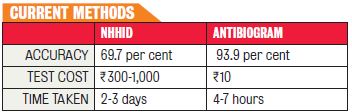
Unlike current methods which consumes two to three days to produce a 70 perc ent accurate result, this antibiogram produced 93.9 per cent accurate results in less than four-seven hours. It costs around Rs 10 to perform a test in NHHID laboratory setup, where as the same test using conventional methods would cost around Rs 300-Rs 1000 in private labs.
Chennai-based Trivion Healthcare is looking to sign a MoU with NHHID to get the rights and market it. GSK Velu, founder of the company said that it need not only be used for urinary tract infections, but also for several other diseases including dengue, malaria, tuberculosis, common fever.
source: http://www.newindianexpress.com / The New Indian Express / Home> Cities> Chennai / by Ram M Sundaram / ENS / September 28th, 2015
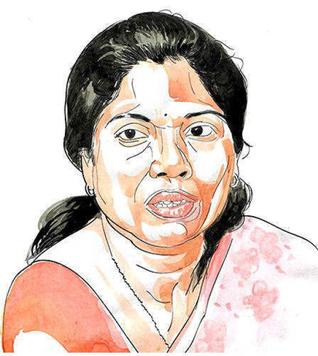
Sivakami, a writer, took VRS from civil service to join politics.
P. Sivakami’s novel has incidents that a Dalit officer may face in her career
The story of Neela, a fictional IAS officer, may find resonance among civil servants, especially Dalits, who feel they are under undue pressure.
At a time when the State is concerned about the plight of officers such as DSP Vishupriya, whose recent suicide is suspected to be under pressure from various quarters , Unmaikku Munnum Pinnum , a work of fiction, seeks to unmask the attitude of the administration towards Dalit officers.
However, Neela, the protagonist in former IAS officer P. Sivakami’s novel, shows steely determination in the face of humiliation, discrimination and agonising moments.
Ms. Sivakami, who took voluntary retirement some years ago to take the plunge into politics, seems to contend that such problems are faced more by Dalits, as other employees are protected by their caste status.
The novel also gives insights into the functioning of civil servants and how IAS and IPS officers tend to identify themselves with one party or other to reap personal benefits.
Pressure from politicians
“More often than not, officials succumb to pressure from politicians; and caste affinity seems to decide their conduct while in service. They are ready to do anything to please their political masters,” says Ms. Sivakami.
In the case of Vishnupriya, she says, her superiors chose to view her investigation into a murder case from a caste angle only because she was a Dalit, even though she commanded credibility as an officer.
“Would it have happened to an officer from another caste,” asks Ms. Sivakami, whose heroine Neela is slapped with memo after memo in the novel, and is put on compulsory wait for helping the oppressed section of society.
The novel was serialised in Tamil magazine ‘Pudhiya Kodangi’ when Ms Sivakami was in service.
It has many incidents that seem close to real life events that a Dalit officer may face in her career. For instance, Neela is punished for overzealousness in her duties as secretary of the Adi Dravidar Welfare Department.
She is pressurised by the administration to apologise for her activities, and even a senior Dalit officer on extension is roped in to persuade her to “abide by the rules.” But, she refuses to give it in writing regretting her social activities.
Neela is portrayed as a sportsperson, well-read and with an independent mind. Her aim to become a public servant is driven by the desire to serve her people and not by the privileges that civil service offers.
This probably is the first novel on the functioning of bureaucracy in the State
source: http://www.thehindu.com / The Hindu / Home> News> Cities> Chennai / by B. Kolappan / Chennai – September 28th, 2015
City boy bags a $1000 grant from a US based NGO, Pollination Project, after public voting chose his project – Nofoodwaste – as the best initiative among many others nominated from across the world. Padmanaban Gopalan and his two friends, Sudhakar and Dinesh have been actively working for over a year since October, 2014 to collect excess food at weddings and hotels that could be packed and given to the hungry in Coimbatore.
His competitors included Mark Devries from New York whose project was Citizen Drone Project in which he uses drones to gather information about factory farming methods, Maria Maneos from Eagleville, Pennysylvania, for project Prison Arts programme and Samantha N Ngcolomba from Johannesburg, South Africa for the project Lady Liberty in which attorneys were given a platform to help abused women.
“Out of 150 applications, we selected four outstanding finalists working on human rights, social justice, animal advocacy, environment, arts activism, and women’s rights,” wrote Ari Nessel, founder and director of Pollination Project. The voting closed on July 17 and he won by a margin of over 4000 votes. The grant was received recently. Padmanaban who won only based on the public voting said he was delighted by the news. “I got to know about this funding through a friend and applied for it. Generally, there is no voting system. They scrutinize the project and grant it. But since this was their 1000th grant, they launched the public voting system,” he said. He has now launched a Zero Hunger Hour campaign that would be marked on October 16 on World Food Day between 12:30pm to 1:30pm when they would feed several hungry people. “We will use this grant to mobilize people into the campaign. We have already written to various international NGOs to make it a global phenomenon and have received positive responses,” he said.
Ask him how this grant has changed his life and he says people who hardly noticed him have also begun offering help. “Earlier, when we were scouting for sponsors, nobody took us seriously. We used our own funds and packaged and transported the food,” he said. But after the award, the Rotary Club of Coimbatore gifted them a that has made their task simpler. The team plans to expand it to Tirupur, Erode, Salem, Krishnagiri and Dharmapuri.
He will soon launch a mobile application that would help people look for locations close by where extra food could be donated. They would be guided with a map and GPS system that would show 100 spots where excess food could be delivered. “On October 2, we will launch the application and the Zero Food Hour campaign,” he said. “The idea is to promote this concept of not wasting food by feeding the poor,” said Padmanaban. Meanwhile, the team is in talks with the city corporation to extend it to all the wards and zones. “If the civic body provides us with land, where food could be collected and saved in cold storage, transporting food could be easier. Moreover, people would know where to give excess food and this would help create more awareness,” he said.
source: http://www.timesofindia.indiatimes.com / The Times of India / News Home> City> Coimbatore / by Komal Gautham / Septemeber 26th, 2015
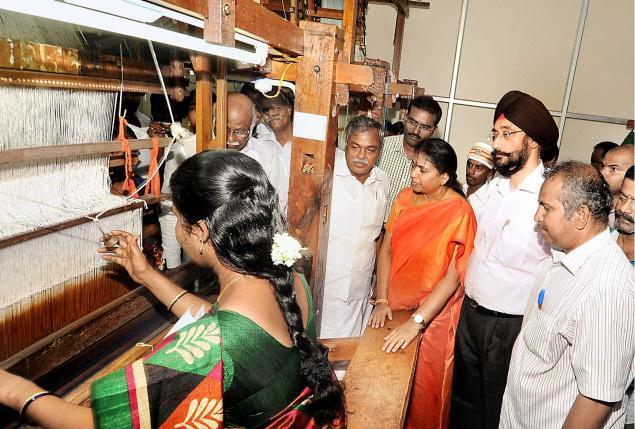
Minister for Handlooms and Textiles S. Gokula Indira inaugurating a weavers’ training centre at Paramakudi on Thursdy. Minister for Sports and Youth Welfare S. Sundararaj and Principal Secretary, Handlooms and Textiles, Harmander Singh are seen.
Move to help them meet changing market needs
The Ministry of Handlooms and Textiles has offered to train 100 weavers under the Integrated Skill Development Scheme (ISDS) and help them come out with diversified products with new designs and improved quality to meet changing market needs.
Inaugurating the training centre at Emaneswaram near here on Thursday, Tamil Nadu Minister for Handlooms and Textiles S. Gokula Indira said that 100 handloom weavers in Paramakudi, Virudhunagar, Nagercoil and Tirunelveli circles would be trained for 50 days and they would be given a daily stipend of Rs. 150 each.
The training imparted to the weavers in the centre would help them develop new designs, add value to their products and enhance their earnings, she said.
In the first batch, 20 weavers, including eight women, from Paramakudi circle would be trained and all the 100 weavers would be covered in the next 10 months, she said.
The Minister said that 89 weavers’ cooperative societies were functioning in Ramanathapuram (86) and Sivanganga (three) circles with more than 12,000 weavers attached to them. They produced about Rs. 36 crore-worth products, mainly cotton saris, per year, and Co-optex procured 40 per cent of themshe added.
The training centre was equipped with all necessary infrastructure facilities, including looms, motorised jacquard boxes, computerised design machine, computerised card punching machine, and motorised pirn winding machine to help the weavers upgrade their skills and familiarise with emerging technologies, R.P. Gowthaman, Assistant Director of Handlooms and Textiles, Parakamudi circle, said.
He said that 30 weavers each from Paramakudi and Virudhunagar circles and 20 each from Nagercoil and Tirunelveli circles would be trained in the centre.
Besides, the Tamil Nadu Cooperative Union was also imparting 15-day training to weavers in technology upgradation on a regular basis. Twenty weavers were trained every month with a daily stipend of Rs. 150 each, he added.
Minister for Sports and Youth Welfare S. Sundararaj, Principal Secretary of Handlooms and Textiles Harmander Singh, Collector K. Nanthakumar and local MP A. Anwar Raza were among the others present at the function.
source: http://www.thehindu.com / The Hindu / Home> National> Tamil Nadu / by Special Correspondent / Paramakudi – September 26th, 2015
Daisy D’Costa, 84, is arguably the first woman in India to undergo a coronary artery bypass surgery
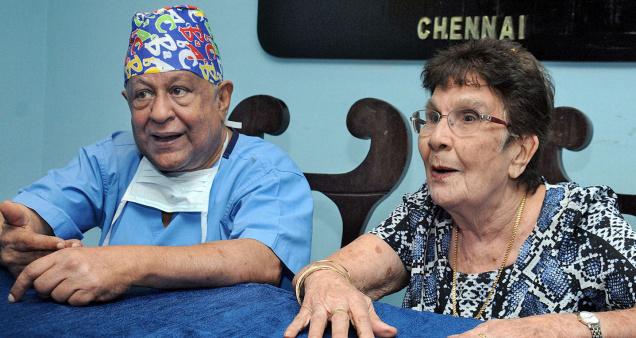
Daisy D’Costa, one of the first women to undergo a coronary artery bypass surgery in India, with K.M. Cherian, chairman, Frontier Lifeline Hospital in Chennai on Wednesday. —Photo : K. Pichumani
It was a few days after Easter, on a hot April morning in 1976, that Daisy D’Costa became, arguably, the first woman in India to undergo a coronary artery bypass surgery.
Then 44, the resident of Perambur had returned from delivering a parcel at the Railway Hospital a few hours earlier, when she felt a pain in her chest – she had had a heart attack. “I was tearing off my clothes, it was that bad,” she says. Her husband was at the cinema, but her son rushed her to the hospital, where, she heard the doctors say, “she has to be opened up.”
Cardiac surgery was in its infancy in the country then and there was no experience with coronary artery bypass surgeries, says K.M. Cherian, chairman, Frontier Lifeline Hospital, who was then with the Railway Hospital. He led the team which performed the surgery on Ms. D’Costa. “We did not have a cath lab for the angiogram or a trained cardiologist to perform it. We did not have a perfusionist to operate the heart-lung machine. A signals and telecommunications engineer from Southern Railway handled it. We used silk as the suture material – nowadays, its prolene. We had no magnification or headlights that are routine today. We used a disc oxygenator, which is now a museum relic. It was a very primitive set up. But this did not stop us,” he says.
There were no stents back then and no keyhole procedures – the surgery was open heart and a vein from Ms. D’Costa’s leg was used to patch up her heart, says Dr. Cherian.
Friends and relatives of Ms. D’Costa had urged her to go abroad for the procedure. But she was adamant about staying in India. “I was comfortable here and Dr. Cherian gave me confidence. I was not scared at all,” she says. Seven months after she was first diagnosed with coronary artery disease, Ms. D’Costa underwent the surgery. Her husband, who worked for the World Health Organisation in Europe then, flew down. “Dr. Cherian told my husband – ‘I will give you back your wife and then you can fly out. And he did,” Ms. D’Costa says.
After a four-hour surgery and 11 days in hospital, Ms. D’Costa was back home. There was a little pain in chest and thigh and some breathlessness but things soon retuned to normal — she was back to travelling the world over with her husband and raising her five children. Almost 40 years later, at 84, Ms. D’Costa, who is 10 years older than her surgeon, is still sprightly and smiling. She lives in Perambur, but spends part of the year in Australia, where three of her five children, some of her eight grandchildren, and four of her great-grandchildren live.
K.M. Cherain, heart surgeon, says it was a primitive set up and a Railway signals engineer handled the heart-lung machine during the surgery.
source: http://www.thehindu.com / The Hindu / Home> News> Cities> Chennai / by Zubeda Hamid / Chennai – July 09th, 2015