The rise and rise of Sundar Pichai

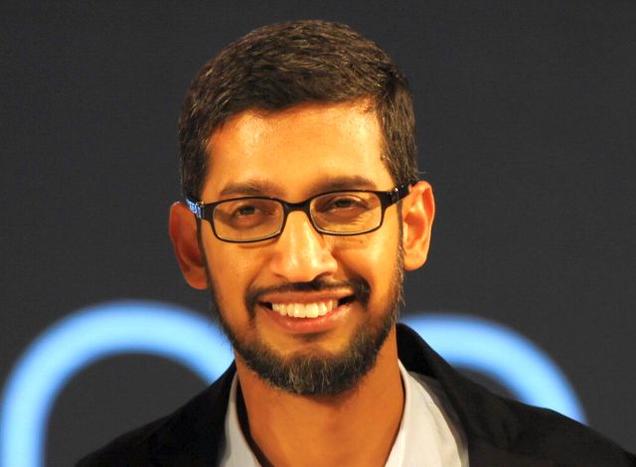
Pichai Sundararajan aka Sundar Pichai. / Photo: Kamal Narang / The Hindu

“Super excited about his progress and dedication to the company,” says Google co-founder Larry Page.

Google’s announcement on Monday that it would be subsumed within a new parent company called Alphabet had a bonus for people of Indian-origin world over: the company’s head of Products and Engineering, Chennai-born Pichai Sundararajan, was anointed the CEO of the new, “slimmed down” Google.

Underscoring his confidence in the man known as Sundar Pichai (43), Google boss Larry Page said of the restructuring in the company he co-founded with Sergey Brin, “A key part of this is Sundar Pichai.”

Mr. Pichai, who is a graduate of IIT Kharagpur and Stanford University, had “really stepped up since October of last year, when he took on product and engineering responsibility for our Internet businesses,” Mr. Page said in a blog post, adding that he and Mr. Brin were “super excited about his progress and dedication to the company.”

They may well have reason to feel fortunate that Mr. Pichai is the man to head their $66-billion revenue, $16-billion profit, company– by most accounts he combines a deep passion for engineering excellence with a rare managerial quality of attracting the best talent into the teams he works with.

Mr. Pichai started at Google in 2004, where he was known as a “low-key manager” who worked on the Google toolbar and then led the launch of the market-beating Chrome browser in 2008.

Following this his rise through the ranks of Google took on an increasingly meteoric tenor, and soon he became Vice President, then Senior Vice President, and ultimately was charged with supervising all Google apps including Gmail and Google Drive and finally given control of Android itself.

His promotion to Product Chief in October 2014 literally made him Mr. Page’s second-in-command with oversight of day-to-day operations for all of Google’s major products including maps, search, and advertising.

Some of Mr. Pichai’s colleagues describe him in the media as a skilled diplomat, including Caesar Sengupta, a Google Vice President who has worked with Mr. Pichai for eight years, and said to Bloomberg News, “I would challenge you to find anyone at Google who doesn’t like Sundar or who thinks Sundar is a jerk.”

Nowhere was Mr. Pichai’s easy blending of techno-diplomatic competence evident than in early 2014, when the fracas between Samsung and Google was reaching fever pitch, at the time over Samsung’s Magazine UX interface for its tablets, which Google felt may have been deliberately underselling Google services such as its Play apps store.

According to reports “Defusing the situation fell to Sundar Pichai, the tactful, tactical new chief of Google’s Android division. Pichai set up a series of meetings with J.K. Shin, CEO of Samsung Mobile Communications, [where] they held ‘frank conversations’ about the companies’ intertwined fates [and a] fragile peace was forged.”

Since then, Samsung has apparently agreed to scale back Magazine UX, and the two corporations have announced a broad patent cross-licensing arrangement to implement which they “now work together more closely on user experience than we ever have before,” according to Mr. Pichai.

Another apparent talent of Google’s new CEO – his thinking seems to be ahead of the curve. Although Mr. Pichai trained in metallurgy and materials science at IIT Kharagpur, and Stanford and did an MBA at Wharton, he was already deeply immersed in the world of electronics.

According to one of his college professors Mr. Pichai “was doing work in the field of electronics at a time when no separate course on electronics existed in our curriculum.”

The Google founders no doubt recognised that Mr. Pichai was a man on an evangelical-type mission for pushing the boundaries of technology.

Mr. Pichai most eloquently outlined this mission when he said, “For me, it matters that we drive technology as an equalising force, as an enabler for everyone around the world. Which is why I do want Google to see, push, and invest more in making sure computing is more accessible, connectivity is more accessible.”

source: http://www.thehindu.com / The Hindu / Home> Sci-Tech> Technology / by Narayan Lakshman / Washington – August 11th, 2015

Documentary gives insight on blind chess players of India

Chennai :

Sixty-four squares. That’s all it takes to create a level playing field between the blind and the sighted, said Charudatta Jadhav, founder of the All India Chess Federation for the Blind (AICFB), on Saturday, at the premiere of the film, Algorithm, at PVR Skywalk in Chennai.

The film, directed by Ian Mcdonald, is a 100-minute black and white documentary that follows the lives of three young chess players between 2009 and 2011.

The film attempts to show that for the game of chess, you don’t need sight, just foresight; you don’t need eyes as long as you have vision. This was also underlined through a blind blitz game between five-time world champion and grandmaster Vishwanathan Anand and Jadhav. Anand and Jadhav tussled in a 10-minute game (of course Anand won), with the world champ facing away from the board and visualizing his moves. “For a moment there, I thought I had forgotten one of my moves, but luckily I hadn’t,” said Anand.

Krishna, who is featured in the film, took to chess at age nine because he wanted to play a game he could excel at. “I couldn’t and didn’t want to play outside with my friends because I couldn’t see the balls or bats they played with properly,” said Krishna, now a student at Loyola College. “Then my mother taught me to play chess and when I realized I could compete with people who could see, I decided to work hard to excel at it,” said Krishna, who has beaten many sighted champs over the years.

“Chess is about calculating and predicting moves,” said Jadhav, ” it is immaterial if you can see.” Unlike Krishna, who has been visually impaired since birth, Jadhav, now 47, went blind at 13. “It happened in a matter of days. I was a topper, sitting in school one day, when I began to see grey dots everywhere. My vision got fuzzy, and before I knew it I had lost my eyesight because of a retinal detachment,” he said.

“It was a depressing five years between 1980 and 1985, but chess changed my life… chess showed me that even the blind can be as independent as the sighted,” said Jadhav, who pursued software engineering because vision did not really matter in that field. Jadhav, now, head, innovation strategy, at TCS in Mumbai, decided to start the AICFB in 1998. “The blind do not want sympathy or pity. We want to be treated as equals,” said Jadhav,.

And that’s what McDonald has done in the way he portrays the champs – cheeky Darpan Inani from Baroda, the highest ranked totally blind player in India; gentle and eccentric Anant Kumar Nayak from Bhubaneswar; and the determined Krishna, who is fighting to conquer championships as well as his impairment. The documentary, though made in 2012, will release in theatres on August 21.

source: http://www.timesofindia.indiatimes.com / The Times of India / Home> City> Chennai / by Kamini Mathai, TNN / August 10th, 2015

‘Underutilised plant species are a hidden treasure trove’

Madurai  :

Out of at least 1 lakh plant species that humans can consume as food, hardly 30 are used as food and just three- wheat, rice and maize- predominantly get cultivated as food grains. In the unexplored plant species lies India’s wealth, said vice-chancellor of University of Agricultural Sciences, Dharwad, Dr D P Biradar here.

Biradar on Wednesday inaugurated the third ‘International Symposium on Underutilised Plant Species – Exploration and Conservation for Future Generation’ at the Agricultural College and Research Institute (AC & RI) under the Tamil Nadu Agricultural University (TNAU). The first two symposiums were held in Arusha, Tanzania (2008) and Kuala Lumpur, Malaysia (2011). As part of the golden jubilee celebrations of AC & RI, Madurai, the third international symposium is being held by Krishi Vigyan Kendra of the institute in collaboration with the International Society for Horticultural Sciences (ISHS), Belgium.

During the four-day event, researchers will explore the potential of underutilised plants as there is increasing endorsement at national and international levels on the important role that can be played by less-used crops and species in sustainable farming systems and human well-being.

Addressing the audience, Biradar said that according to the West, Indians are not aware of the immense value of these plant species found in their backyard. Plant species found in biodiversity-rich Western Ghats are worth a million dollars, he commented. In addition to being ignorant about their worth, Indians also tend to study these plants in isolation.

For example, a common weed like ‘coat button’ or ‘tridax daisy’ (tridax procumbens) can cure wounds. In the same way, wild vegetables that are yet to be domesticated have a lot of potential, like the wild bitter gourd which is getting more prominence in the food industry.

“There is a need for a multidisciplinary research approach on these underutilised plant species, which is going to be a boon to the Indian economy,” Biradar said.

Tamil Nadu Agricultural University VC Dr K Ramasamy said underutilised plants should be explored in a sustainable manner. He pointed out that though the Western Ghats were safeguarded, the Eastern Ghats from Kanyakumari to Kolkata was getting lost and its impact on environment was becoming visible in the present days.

Dr Bhimu Patil, director, vegetable & fruit improvement centre, A & M University, Texas, Dr Sandhya Gupta, vice chair, commission on plant genetic resources, ISHS, also spoke at the inaugural event.

Speaking on the sidelines of the event, TNAU VC said they have identified 156 plant species in the state, of which 56 were medical plants.

source: http://www.timesofindia.indiatimes.com / The Times of India / News Home> City> Madurai / TNN / August 06th, 2015

Sasi Perumal Laid to Rest; Kin Vow to Continue Mission

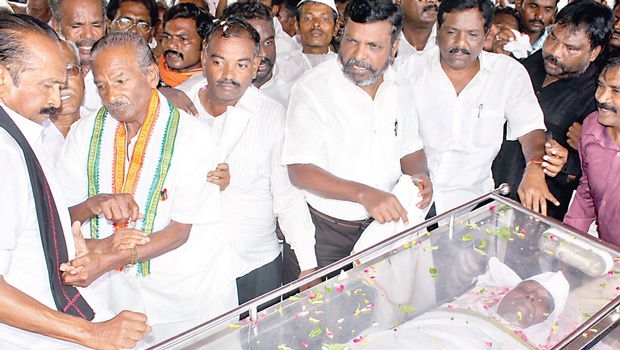
MDMK leader Vaiko, senior Congress leader Kumari Anandan and VCK’s Thol Thirumavalavan and others paying homage to Sasi Perumal in E Metukkadu on Thursday | EXPRESS

Salem :

Eight days after his death, anti-liquor activist Sasi Perumal’s body was laid to rest in his native village, E.Metukkadu, here on Friday. Hundreds of political functionaries, civil society activists and general public paid their last respects before the body was buried in front of his house.

Sasi Perumal’s eldest son Vivek, relatives and social activists who were on a hunger strike ever since his death demanding an announcement from the State government on implementing prohibition, ended their fast after the last rites. As per discussions the six party front Makkal Nalanukaana Kootu Iyakam had with the family members, a memorial will be built for the Gandhian activist. Vaiko, who leads the front, handed over `5 lakh collected from the constituent parties to the family but since they refused, donated it for towards building the memorial.

The cremation was virtually hijacked by star leaders Vaiko, VCK chief Thol Thirumavalavan, CPM’s G.Ramakrishnan and Thamimun Ansari of Manithaneya Makkal Katchi who relegated members of Sasi Perumal’s Desiya Makkal Kootamaippu to the background and organised the final rites, right from crowd management to moderating condolence speeches.

Earlier, around 10.30 am, Sasi Perumal’s body was brought from Asaripallam in Kanyakumari by his younger brother and son Navaneethan, accompanied by Vaiko. Once the hearse van entered the city limits, police objected to the body being taken around in a procession saying it was school time. Vaiko assured police officials that they would ensure discipline and cautioned that preventing them would trigger unrest. Following this, police relented and allowed the body to be taken in a procession. Thirumavalavan, Ansari, leaders of IUML, CPI and CPM took part.

Sasi Perumal’s supporters and his son Vivek have announced that they would continue his struggle till the government makes an announcement on prohibition.

Meanwhile, Opposition leaders gave an unanimous call for total and immediate prohibition as against the gradual prohibition stand taken by some parties and anti-liquor campaigners.

Delivering condolence speech during the last rites of Sasi Perumal on Friday, MDMK general secretary Vaiko said, “Partial prohibition will only promote black market.”

Calling for a sustained struggle against liquor, Vaiko said the proposed memorial to be built for Sasi Perumal will only be built after ensuring total prohibition in the state.

Viduthalai Chiruthaigal Katchi (VCK) founder  Thol Thirumavalavan said that Sasi Perumal’s  struggle will be continued with vigour and concern.

He clarified to Sasi Perumal’s supporters and activists not to feel that the opposition parties have sabotaged their indefinite fast.

source: http://www.newindianexpress.com / The New Indian Express / Home> States>Tamil Nadu / by Express News Service / August 08th, 2015

Chennai doctors use new technique to implant dentures in teenager

 Doctors at Rajan Dental Institute performed a new technique where they grafted bones from the patient's cheekbone.
Doctors at Rajan Dental Institute performed a new technique where they grafted bones from the patient’s cheekbone.

Chennai  :

More than the difficulty she faced while eating and speaking, it was the curious stares of people that upset 17-year-old Manju (name changed). The teenager, who was suffering from a genetic disorder, lost all her teeth by the age of 14, and found it difficult to step into college this year with dentures.

Conventionally doctors would graft the hip bone and give permanent implants in a procedure that spans over a year. But doctors at Rajan Dental Institute here performed a new technique where they grafted bones from her cheekbone and gave her implants – all within a week.

At the age of four, the patient was diagnosed with Papillon Lefevre Syndrome, a rare, genetic autosomal disorder that affects 1 in a million people. “It leads to progressive bone loss around teeth, and subsequent teeth loss. It is often treated by the usage of removable dentures from a very young age,” said Oral and Maxillo Facial surgeon Dr R Gunaseelan.

Two months ago, the doctor and his team performed a procedure called Zygoma Implant technique, in which the cheekbone’s support is used to implant.

“On the fourth day after Zygoma Implant surgery, Manju was given permanent artificial teeth that closely resemble her natural teeth. She is now able to talk without the fear of her dentures falling off and is more confident as an individual,” said the doctor.

source: http://www.timesofindia.indiatimes.com / The Times of India / News Home> City> Chennai / by Janani Sampath, TNN / August 07th, 2015

Kodaikanal Won’t: Rapper goes viral with toxic waste gibes at Unilever

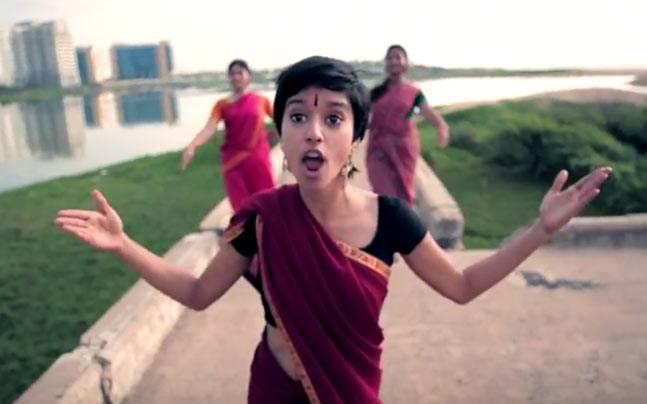
Sofia Ashraf’s video has had more than a million views on YouTube, drawing attention to accusations against a thermometer factory in the town of Kodaikanal that closed down 14 years ago.

Sofia Ashraf.
Sofia Ashraf.

An Indian rapper has gone viral with a music video calling on consumer products giant Unilever to clean up alleged toxic waste from a forested southern hill station. Sofia Ashraf’s video, posted online by a nongovernmental organization called Jhatkaa, or “shock” in Hindi, has had more than a million views on YouTube, drawing attention to accusations against a thermometer factory in the town of Kodaikanal that closed down 14 years ago.

Hindustan Unilever, the Indian subsidiary of the consumer goods company, has denied wrongdoing. It disputes claims of former workers who say their health has been damaged by exposure to mercury. The company said it shut down the factory in 2001 when environmental activists including Greenpeace “brought to Hindustan Unilever’s attention the fact that glass scrap containing mercury” had been sold to a scrap dealer about three kilometres from the factory.

“We have been rigorous in establishing the facts and several independent expert studies have concluded that there were no adverse impacts on the health of our people at Kodaikanal. We have also taken action to ensure the clean-up of soil within the factory premises,” a Hindustan Unilever spokesperson said in an email.

“There is still work to do here – which we are committed to fulfilling – as soon as we have received final consent from the Tamil Nadu Pollution Control Board to start the soil remediation.” Set to the beat of Nicki Minaj’s “Anaconda”, and retweeted by Minaj herself, Ashraf also asks Unilever to compensate workers.

“Kodaikanal won’t step down, until you make amends now,” she raps.

source : YouTube

source: http://www.indiatoday.intoday.in / IndiaToday.in / Home> News> India / Reuters Mumbai / August 04th, 2015

First mother’s milk bank opened

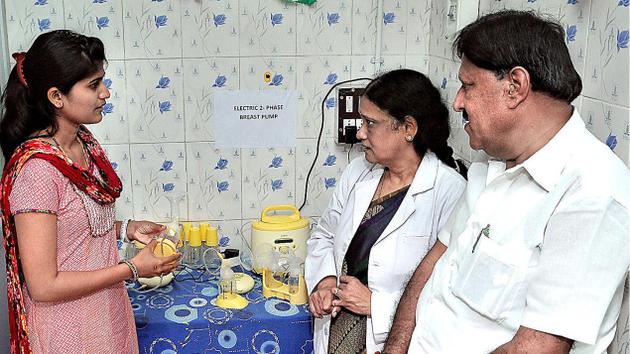
right move:Rohini Ramdas, Project Officer, DRDA (left), at the breast milk bank in Government Rajaji Hospital in Madurai on Monday.— Photo: S. James

All OP wards in GRH to have dedicated rooms for mothers

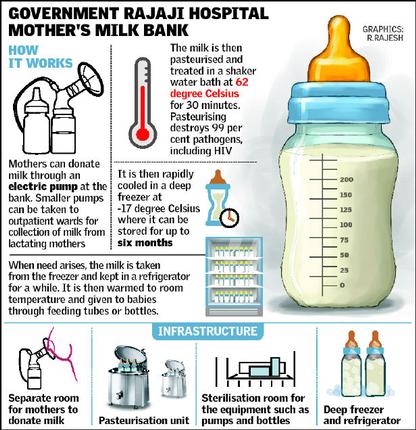
The first mother’s milk bank in the district, an initiative of the State government, was inaugurated at Government Rajaji Hospital here on Monday as a part of the Breastfeeding Week celebrations.

“Pre-term babies, babies whose mothers are under medical care and cannot breast feed as well as orphaned babies will greatly benefit from this bank. Since there are many mothers from across Madurai district and the surrounding areas, who come here for their delivery and maternal health care, we will counsel them about donating milk and encourage them to visit the facility in the hospital,” said S. Balasankar, Professor of Paediatrics.

He further said that for newborn babies brought to the GRH from nearby districts soon after birth for health reasons and separated from their mothers, the milk available in the bank would be helpful in building up their immune system.

The breast milk after being collected and put in a deep freezer can be used for over six months.

Dean of Madurai Medical College Rewvathy Kailairajan said that breast milk went a long way in helping build the immune system of babies. “From today, all outpatient wards at the Government Rajaji Hospital will have dedicated rooms for mothers to breastfeed their babies,” she stated.

RajajiMothersMilkCF04aug2015

Ms. Rohini Ramdas, who was present at the inauguration, said that with the opening of separate rooms at bus shelters and dedicated rooms in the outpatients ward of the GRH, more workplaces and public places should step up and have assigned rooms to enable mothers breastfeed their babies.

Awareness needed

“Studies indicate that six per cent of the newborns in the State do not get mother’s milk. With the opening of this bank, I hope that more babies get access to mother’s milk. There needs to be more awareness about the availability of such facilities among people so that the babies can be given adequate care,” she also said.

source: http://www.thehindu.com / The Hindu / Home> News> Cities> Madurai / by Staff Reporter / Madurai – August 04th, 2015

Joshna Chinappa Wins Melbourne Meet for 10th Professional Squash Title

Joshna-Chinappa | File/EPS

Melbourne :

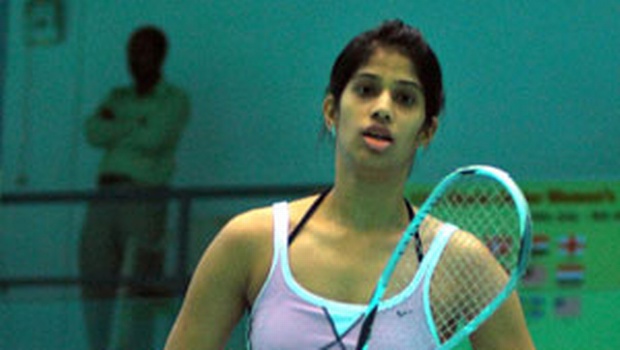
Joshna Chinappa today upstaged second seed Line Hansen in straight games to win the USD 15,000 Victorian Open squash competition for her 10th WSA title.

Third seed Joshna beat the Dane 11-5, 11-4, 11-9 in the final of the WSA event. It was only last week that Joshanalost to Line in Kooyong.

The Indian’s last triumph had come in the Richmond Open in April last year.

Known for mixing strokes and accuracy in the placements, the Joshna held the upper-hand right through, though she admitted, it was a “hard game” particularly after Line fought and brought the score to nine-all in the third game.

Coming as it did soon after her recent success in the National Championship, she was happy  with her current form.

With the Australian Open to start in a few days and the venue being the same, the Joshna is looking forward to more success.

“I am so happy it will be at the same centre,” she said.

The title in the men’s section went to Australian Ryan Cuskelly who beat Greg Lobban of Scotland 12-10, 13-11, 11-9.

Meanwhile, India went down 0-2 to top ranked and title-favourite Egypt in the quarterfinals of the girls’ event of the WSF-world junior squash championship in Eindhoven.

Debutant Nikita Joshi, who played first, tried her best but Salma Hany Ibrahim was far superior. The Egyptian won 11-5 11-6 11-2 to give Egypt the lead.

Adya Advani was pitted against the top player Habiba Mohamed and it proved a tough task for the Indian. Habiba won easily 11-3 11-5 11-3 to give Egypt the win and a place in the semi-final.

India now will play for the 5th to 8th place matches

source: http://www.newindianexpress.com / The New Indian Express / Home> Sport / by PTI / August 02nd, 2015

TNAU scientist discovers genetic key to ‘domestication’ of barley

Coimbatore :

A scientist at Tamil Nadu Agricultural University (TNAU) along with a Japanese professor has identified the genes responsible for barley’s ‘domestication’ that transformed this once-wild food grain into an item of mass consumption. Today, barley is the fourth most important crop in the world – both in the size of cultivation and grain production, and its high production is due to its domestication that happened 10,000 years ago.

Their two-decade-long research work was published by the journal ‘Cell’ on July 30.

“About 10,000 years ago, people identified barley as a food grain. And, then farmers started cultivating barley,” said Senthil Natesan, professor and head of biotechnology department, Agricultural College and Research Institute, Madurai.

There was a problem with the wild variety. The spikes that contain the grain were brittle in the wild variety. “This brittle nature breaks the spike, and the grain falls on the ground. While this is essential for the proliferation of the crop, this made harvesting difficult,” said Takao Komatsuda, senior researcher in the National Institute of Agro-biological Sciences (NIAS), Tsukuba, Japan. Komatsuda is the principle researcher in this project.

The wild variety underwent domestication, which helped farmers in cultivating barley. “Barley domestication occurred twice. The first was a natural mutation in one gene (Btr1), while an independent mutation in the other gene (Btr2),” said Senthil. This domestication resulted in the cell wall thickening, that induced flexibility in the spikes. “And, the spikes developed a non-brittle nature, and this prevented the grains from dispersing on the ground,a major relief for farmers,” said Senthil.

Takao Komatsuda, during his initial years at NIAS, thought that mapping of brittleness in barley would resolve the key phenomenon behind the barley domestication. “In Okayama University, 60 years ago, two of the genes (Btr1 and Btr2) essential for grain fall in wild barley were discovered. Many scientists working on wheat and barley research were interested in the subject, but it was hard to initiate the project to identify these complex traits responsible for barely domestication,” said Komatsuda.

The research work began in late 1990s and was completed a few months ago, said Komatsuda. Senthil started his career as assistant professor at TNAU in 1995 after competing his PhD. “I wanted to pursue my postdoctoral research, and came across the NIAS. I applied for the fellowship, and was fortunate to have been selected for the Japanese government-sponsored research programme,” he said. I visited Japan in 2002 for six months and in 2006 for one year to participate in this research work.Komatsuda and Senthil, along with the fellow researchers, mapped the genes responsible and identified the genes that were responsible for the domestication of the crop. “We also studied the cell wall morphology under scanning electron microscope and transmission electron microscope,” said Senthil. The major part of the research work was carried out at NIAS. And, the Japan Science and Technology Corporation (CREST), Japanese Society for Promotion of Science (JSPS), the German Science Foundation Priority Programme SPP1530 and the Australian Research Council along with NIAS have funded the project.

Komatsuda, who has pursued extensive research on barley, plans to take this research forward. “Identifying new traits such as disease resistance, quality in the production of beer depending on breeding lineages will be the areas of future research. Also, the origin of cultivated wheat will be studied using the similar genes isolated in this study,” he said.

source: http://www.timesofindia.indiatimes.com / The Times of India / Home> City> Coimbatore / by Adarsh Jain, TNN / August 03rd, 2015

Adding on to a unique repository

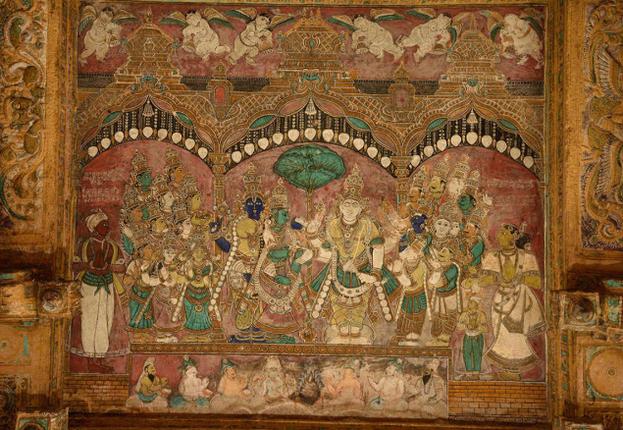
IFP has now provided a fresh lease of life to these murals and paintings that had been created using herbal colours and natural pigments.N. MurugesanResearcher IFP

IFP completes first phase of documentation of temple art, murals in Tamil Nadu

The French Institute of Pondicherry (IFP) has completed the first phase of documentation of endangered temple art, murals and paintings in Tamil Nadu in an effort to bring them back to life and preserve them for posterity.

A team of researchers from IFP documented the murals in Madurai Meenakshi Amman temple; Kallalagar temple i.e Alagarkovil; Chenraya Perumal temple in Adiyamankottai; Chithiraichavadi near Narasingapatti and Jain caves of Tirumalai in the first phase in collaboration with the British Library. The IFP has already completed a major portion of digitisation of its photo archives which contain over 1,60,000 photographs of temples in South India and are an unique repository of information on temple art and iconography in South India.

The documentation of temple art is aimed at enriching the collection enabling historians and researchers to carry out their work. Dr. N. Murugesan, researcher IFP told  The Hindu  that “Documentation of temple art and murals in these five vulnerable sites in Tamil Nadu should have been done at least 50 years back. Many of the sites had lost their glory and historical importance. IFP has now provided a fresh lease of life to these murals and paintings that had been created using herbal colours and natural pigments.” There are more than a hundred inscriptions found on the walls, gopuras and corridors of the Kallalagar temple in Alagarkovil dating back from 11th to 18th centuries. The paintings are of high quality and depict episodes from the Ramayana.

MuralsCF02aug2015

The murals found in the world famous Meenakshi Amman Temple in Madurai depict Meenakshi Thirukalyanam, the celestial wedding ceremony of Goddess Meenakshi with Lord Sundareshwarar. The murals are more than 600 years old.

At the Chenraya Perumal Temple in Adhiyamankottai there are five galleries that lead to the sanctum sanctorum depicting the scenes of Mahabharata, Viswarupa Darshan of Lord Krishna, scenes from the Ramayana including the life of Lord Rama and various episodes from Mahabharata and Vedas.

Mr. Murugesan said that the murals in Chithiraichavadi near Narasingapatti are estimated to belong to 17{+t}{+h}-18{+t}{+h}century and have similarities with Nayak era murals. IFP is planning to take up documentation of 10 more sites in Tamil Nadu in the second phase.

IFP has now provided a fresh lease of life to these murals and paintings that had been created using herbal colours and natural pigments.

N. MurugesanResearcher IFP

source: http://www.thehindu.com / The Hindu / Home> National> Tamil Nadu / by S. Prasad / August 02nd, 2015