Chennai lab develops diabetic footwear

Chennai :

More than 50% of lower leg amputations are estimated to be linked to diabetes. A therapeutic open footwear developed by scientists at Central Leather Research Institute now promises to reduce foot complications in diabetic patients by reducing abnormal distribution of foot pressure.

The footwear, which scientists say is a vast improvement on the existing MCR and MCP footwear prescribed for diabetics, is made after estimating the risk category of a patient through a specially designed computer software. CLRI developed the footwear in collaboration with MV Hospital for Diabetes and Diabetes Research Centre and Novo Nordisk Education Foundation.

The footwear, which scientists say is a vast improvement on the existing MCR and MCP footwear prescribed for diabetics, is made after estimating the risk category of a patient through a specially designed computer software. (Representative Image)

MV Hospital for Diabetes head Dr Vijay Viswanathan said the footwear is for diabetics with either mild or moderate neuropathy, a dysfunction in peripheral nerves that can cause numbness or weakness. The CLRI labs have worked on features like rigid counter stiffener that can support the back of the feet and limit joint mobility and prevent shear stresses as well as fasteners that can be adjustable according to the foot volume. Such comfort factor was not there in the MCR and MCP footwear that have been available in the market for many years.

“MCR and MCP footwear were not designed the perfect way,” said Dr Viswanathan. “They are more like rubber chappals with a toe grip. A person with neuropathy will not have any sensation or muscle power to hold to that grip. So, when more pressure is applied, the toes may bend,” he explained.

The sole is made of polyurethane, with extra depth to provide a larger area for more effective pressure distribution, an outsole with special tread for better grip and traction, and an insole bed with layers of foam to provide added comfort and shock absorption for the wearer.

Scientists at the shoe design and development centre (SDDC) in CLRI said in addition they have provided a specially derived angle of slant in the sole to give the ‘rocker’ effect which is essential to offload pressure from the sole of the feet. Based on clinical examination and replies to a questionnaire, the software computes the ‘diabetic risk threshold score’ which would indicate to the diabetologist the exact risk category to which the patient belonged. “There are 10 clinical parameters including sensitivity, vibration threshold and sugar levels that measure the diabetes risk threshold score,” the scientist said.

CLRI director SR Wate said that anyone with foot problems could use the footwear. Head of business process division at CLRI K Srinivasan said that the research institute is now looking for more manufacturers to take up license and develop the footwear.

source: http://www.timesofindia.indiatimes.com / The Times of India / Home> Science / by U. Tejonmayam, TNN / June 28th, 2015
An app that takes Bharatanatyam to all

Chennai :

As dusk falls on Saturday, the tinkling of anklets will fill the air at the Kapaleeswarar temple as well-known danseuse Dr Ranjani Ganesan Ramesh performs along with her disciples. And the performance is all the more special as it also marks the worldwide launch of an app that will help eager students across the world learn Bharatanatyam.

‘Learning Bharatanatyam from Dr Ranjani Ganesan Ramesh’ is the brainchild of software professional Srinivasa Gopal. “I felt that an increasing number of people were learning things online and with the help of apps, whether it is maths, science or music. And I felt that even Bharatanatyam could be learnt with the help of an app,” says Gopal, who then contacted his friend Ranjani, who lives in Mumbai.

For the Bharatanatyam and Kuchipudi exponent, it was an idea that immediately appealed. “Since 2008-09, I had been teaching dance to students all over the world through Skype and online classes,” says Ranjani, who currently lives in Mumbai.

Her mother, dancer Savithri Ganesan, had established the Ponnambalam Golden Temple of Fine Arts in Bengaluru in the late 1980s. Ranjani began teaching as her assistant and by the early 1990s, the academy grew, with centres in Mumbai and even Arizona in the US.

“Though I began using Skype to teach them, it had its own problems – connectivity was an issue and we also had to juggle time zones,” she says. “So I was also looking for something which would help make it easier.”

Ranjani and Gopal began working on the app in June 2014. The free app, which can be downloaded only onto Android smartphones, provides various levels of tutorials — the beginner level, where Ranjani discusses theory and some hand gestures and head movements; intermediate level, and advanced level. “It is similar to what a student will experience in a classroom,” says Ranjani.

According to Gopal, it will help eager students who may not be able to go to a dance class. “It saves the trouble of commuting and is also very user friendly,” he says. “We have also put up 25 videos that you can download.”

You can search for the app in the Google playstore apps section with the search terms ‘Indian Classical Dance’; ‘Learn Bharathanatyam’. The app, which has been online for the last 50 days, has had more than 1,000 downloads. “It will be formally launched worldwide on Saturday but we are encouraged by the response we have got so far,” says Ranjani. “Even people who have learnt dance find it interesting and want to learn further items through it.”

source: http://www.timesofindia.indiatimes.com / The Times of India / Home> City> Chennai / by Priya Menon, TNN / June 27th, 2015

Fort City to Host Specialised Siddha Medicine Conference

Vellore : 
A two-day conference titled ‘Higher Level of Siddha Medicines’ is being organised in Vellore on July 11 and 12 by the Tamil Nadu Parambarya Siddha Vaidya Maha Sangam for the benefit of traditional healers and siddha practitioners.

Vaidyar K P Arjunan, president of the Sangam and a member of the National Institute of Siddha, speaking to Express, said this was the first time an effort was being made in the country to impart siddha-medicine knowledge and practical experience at the higher level, to young siddha-vaidyars.

Out of 4,448 diseases classified and documented in the siddha literature, the world has witnessed only around 2,601 so far, said Arjunan. “This is where the use of higher level medicines come in,” he said.

The meet will have around 30 experts and senior siddha-vaidyars from various parts of the country to talk and demonstrate the preparation of higher-level medicines, the purpose of which is to ensure that vaidyars can preserve them for posterity, Arjunan said.

The technique of preparing higher-level medicines has never been discussed in public and “we want to dedicate this treasure of knowledge and the ancient wisdom for the betterment of the community,” Arjunan further said.

Arjunan explained that young siddha-vaidyars dispense lower level of medicines on a routine basis with each containing up to 20 herbs in the form of ‘kashayam’ (shelf life-24 hours), ‘chornam’(shelf life-three months) and ‘lehyam’(shelf life-six months).

While most siddha-vaidyars in the country dispense lower level siddha-medicines, they are not exposed to higher-level medicines, which are prepared and preserved in the form of ‘kattu’, ‘kalangal’, ‘muppu’ and ‘guru’.

Each of these categories  comprise over 2,000 herbs in various forms.

While ‘kattu’ is a collection of herbs in solid form, ‘kalangu’ is in liquid form (like wax), ‘muppu’ and ‘guru’ are in powdered form.

Around 500 practitioners from the southern States of Tamil Nadu, Andhra Pradesh, Kerala, Karnataka and Puducherry are expected to take part in the meet.

Traditional vaidyars belonging to adivasi communities from the hill-regions of Tamil Nadu and Andhra Pradesh have also been invited to share their experiences in the meet.

The proceedings will be video documented and handed over to the Ministry of Ayush, Government of India for their records and for further promotional activities, Arjunan said.

Dr R S Ramaswamy, director of Central Council for Research in Siddha, under the Department of Ayush in Chennai and his colleague Dr R Kumaravel, president of Scientific Advisory Board will chair the sessions.

source: http://www.newindianexpress.com / The New Indian Express / Home> States> Tamil Nadu / by V. NarayanaMurthi / June 26th, 2015

BVB director gets award

BVBawardCF28jun2015

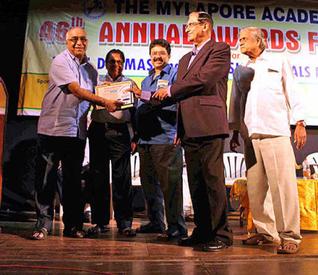
K.N. Ramaswamy, director, Bharatiya Vidya Bhavan, Chennai Kendra, was awarded the ‘Honour for Veteran Secretary Office Bearer of City Sabha’ by The Mylapore Academy at its 46th Annual Award function held recently. R.K. Raghavan, former director, CBI, presented the award.

source: http://www.thehindu.com / The Hindu / Home> Features> DownTown / June 28th, 2015

Exclusive reading space for women

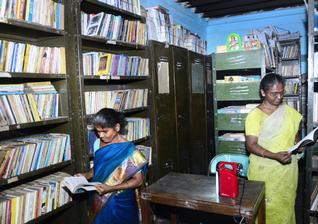
This library is located in the midst of auto spares shops, but that does not deter women from flocking to it. D. MADHAVAN reports

Around 15 people can be accommodated at the two-room facility.Photo: M. Vedhan

At this branch library for women, eight women seem to be supernaturally focussed as they study for their competitive examinations. They ignore the sounds that pierce the air. This library, tucked inside the auto spare parts market at Adithanar Salai in Pudupet, draws many women from the neighbourhood, for the exclusive space its offers than for its collection of books.

The library, Pengal Noolagam, is one of the two state-run libraries that is operated exclusively for women readers at “rent-free” premises. The other library for women is located on Bells Road in Chepauk.

The library has readers from various localities, including Egmore, Vepery, Pudupet, Chetpet, Zambazzar, Royapettah and Nungambakkam every day between 10 a.m. and 5 p.m. “Every year, we add 1,000 books to the collection in the library. At present, we have 40,428 books, mostly Tamil, with around 400 members,” said Elango Chandra Kumar, Chennai District Library Officer, in-charge of 158 government libraries.

Opened in December 1962, the library has a diverse collection of books including fiction, non-fiction, poetry, academic, magazines and newspapers. Around 15 people can be accommodated at the two-room facility.

“After school hours, we come to the library as a group and spend at least an hour browsing novels, books on Tamil literature and newspapers,” said V. Kavitha, a class XII student from Egmore.            According to officials of the Directorate of Public Libraries, government libraries were started after Independence to encourage women to step out of their houses for education including higher studies. Opening of such exclusive public libraries for women was one of the steps taken by the state government to give more space for women.

Of 158 public libraries in the city, 92 libraries have own buildings and 54 libraries including women libraries at Pudupet and Chepauk are accommodated in rent-free buildings.

“Every year, we add 1,000 books to the library. At present, we have 40,428 books.”

source: http://www.thehindu.com / The Hindu /Home> Features> Down Town / June 28th, 2015

Brothers Emerge Winners

Akash and Harish Balaji

Chennai :

Siblings Akash Balaji and Harish Balaji of Sindhi Model Matriculation Higher Secondary School, Chetpet, recently won the first place in water polo and 100-metre breast stroke respectively at the State-level Aquatic Competition held in Chennai.

Both winners will take part in the national-level competition in mid July.

source: http://www.newindianexpress.com / The New Indian Express / Home> Cities> Chennai / by Express News Service / June 27th, 2015

Surgery done on man with 100% blockage of blood vessel in Chennai

Chennai :

A chronic diabetic, smoker and an alcoholic, 47-year-old Gowthi was recently admitted to Stanley Hospital with difficulty in moving his limbs.

“For the past three months, his movement was slow and his speech was slurred. We assumed it was a stroke but a quick scan revealed that the blood vessels to his head and neck had a 100% blockage,” said Dr N Sridharan, head of vascular surgery.

The patient was referred to the department as doctors suspected that the blood supply to his brain was low.

Dr Sridharan explained that Gowthi had managed with supply from vessels responsible for blood flow to upper limbs.

Doctors had to perform an open surgery to re-vascularise vessels that supplied blood to head and neck.

“We wanted to ensure that we did not upset the blood flow to the brain. Further, we also placed a graft to ensure smooth blood flow to the head and neck,” said the surgeon. He added that the patient recovered well without any episode of cerebral stroke.

source: http://www.timesofindia.indiatimes.com / The Times of India / Home> City> Chennai / TNN / June 23rd, 2015

Jebakumar is CFA Player-of-the-year

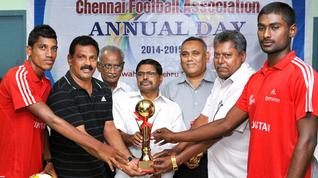
Chief guest Justice D. Hariparanthaman (centre) of Madras High Court hands over the senior division trophy to Hindustan Eagles.— PHOTO: M. MOORTHY

The annual day of the Chennai Football Association (CFA) was held here on Saturday. The winners and runners-up of various competitions conducted by the CFA were felicitated with cash awards and trophies.

The chief guest Justice D. Hariparanthaman of Madras High Court gave away the prizes. In the 2014-15 season, 96 clubs participated in the various divisions of the CFA league, with more than 450 matches being held during this period at three venues. Hindustan Eagles won the senior division title and netted a prize money of Rs. two lakh, while runner-up Chennai FC was awarded Rs. one lakh.

In the first division, Chennai City FC clinched the title winning all its 11 matches and securing promotion to the senior division along with runner-up Madras Sporting Union.

D. Jebakumar of Chennai Customs was awarded the R. Muthuraman Rolling Trophy for ‘player of the year’. Eagles’ N.D. Opara received the T. Nagar FC rolling trophy for finishing as the top-scorer with 12 goals. He was also feted with the Tanveer Memorial top scorer award along with a cash prize of Rs. 5000. S.E. Bharanidharan was adjudged ‘referee of the year’.

CFA also conducted inter-school and inter-college tournaments with Don Bosco, HSS Perambur winning the CFA-E. Vadivel Memorial inter-school tournament and Madras Christian College the CFA-Chennai City FC inter-college tournament.

The chief guest also formally launched the website of the CFA www.cfa.net.in.

Winners: Senior division: Hindustan Eagles; I division: Chennai City FC; II division: Chennai United FC; III division: Pachaiyappas SC; IV division: Sangeetha FC.

Runner-up: Senior division: Chennai FC; I division: Madras Sporting Union; II division:Madona Matrix; III division: V.M. Football Club; IV division: Chennai Postal Audit

source: http://www.thehindu.com / The Hindu / Home> Sport / by Sports Reporter / Chennai – June 28th, 2015

Three Dalit students from ‘Super 30’ bag medical seats

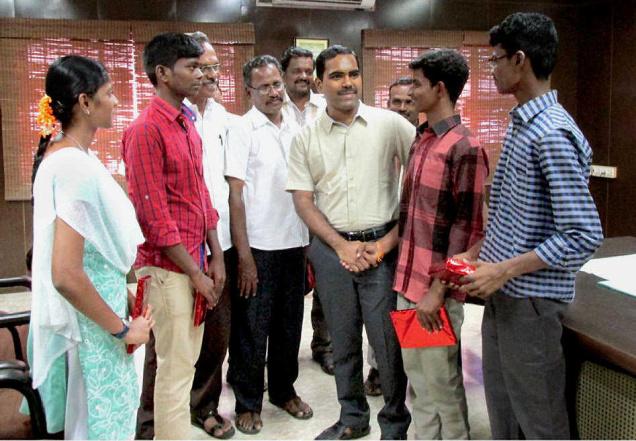
Collector (in-charge) Madhusoodhan Reddy congratulating the ‘Super 30’ group students who have been allotted seats in medical colleges, in Perambalur on Saturday.

Standing on the threshold of realising his childhood dream of becoming a doctor, B.Prasanth, an Arunthathiyar student from a poor family of agricultural labourers from Irur in Perambalur district, is not sure whether his mother would be able to raise the fee for the course.

He is one of the three Dalit students who have secured MBBS admission from a group of 57 students who were handpicked from government schools of the district for special coaching in Plus-Two under the ‘Super 30’ initiative of the district administration. A Dalit girl has bagged a BDS seat, bringing acclaim to the district and the special initiative.

With a Plus-Two score of 1,108 marks and a cut-off of 193.25, Prasanth has been allotted a seat in the Chenglepet Government Medical College. Prasanth is supported by his mother, a farm hand. His father, also a farm worker, spends most of his earnings on liquor.

“I have to pay a fee of Rs.11,000 now. My mother is trying to raise the money and officials have promised to arrange for a loan. But I am not sure whether these will materialise. I am looking for sponsors,” he said speaking to The Hindu over phone.

P.Prakash of Ladapuram, with 1,140 marks in Plus-Two, and T.Aravindaraj of Kolathur, with a score of 1,119, have been allotted seats in the Stanley Government Medical College and Tuticorin Medical College, respectively. M.Manjula of Nattarmangalam, with a cut-off of 191.75, has been allotted a BDS seat in the Chennai Government Dental College and stands a chance of getting a MBBS seat as she is on the wait list. Inspired by District Collector Darez Ahamed, Prakash wants to enter the Civil Services after MBBS.

All the four students belong to poor families of agricultural labourers, says N.Jayaraman, district coordinator, ‘Super 30’. There are about 15-20 other students from the group with good engineering cut-off marks and are hopeful of getting BE seats, he said. A brainchild of Mr.Darez Ahamed, the ‘Super 30’ idea is being implemented over the past couple of years in the district.

All are from poor agricultural families and need assistance to pursue studies

source: http://www.thehindu.com / The Hindu / Home> News> National> Tamil Nadu / by S. Ganesan / Perambalur – June 28th, 2015

HIDDEN HISTORIES – The Madras media man

During the Emergency, Express Estates, that's now a mall, was a refuge for opposition leaders / The Hindu
During the Emergency, Express Estates, that’s now a mall, was a refuge for opposition leaders / The Hindu

June 25 was the 40th anniversary of the infamous Emergency — the then Indira Gandhi Government’s audacious attempt to stifle democracy. Very few from the South opposed it, and yet, much of the momentum for the resistance came from a feisty press baron of Madras — Ramnath Goenka, the owner of the Indian Express Group of newspapers.

Having come to Madras in the 1920s, with reportedly nothing more than “a lota and a nine-cubit dhoti,” to quote his biographer BG Verghese, Goenka was an all-India figure by the 1940s. Though his papers would later be published from many cities, Madras was always his headquarters, his residence being Hicks Bungalow on Patullos Road. His businesses operated from neighbouring Express Estates, a 23-acre property that he bought from the Madras Club for Rs. 14.85 lakhs in 1946. The quiet thoroughfare connecting the property to Mount Road is still Club House Road.

It is said that when Emergency was declared, Goenka was in the ICU of a Calcutta hospital, recovering from a heart attack. Raring to get into the thick of battle, he disconnected the tubes and “stole out to board a taxi but was detected in time and brought back”. The Indian Express came out on June 25, 1975, with a blank first editorial while the Financial Express published Tagore’s poem, Where the Mind is Without Fear.

A man who loved the good fight, Goenka challenged the Emergency in many ways. He helped in publishing Prajaniti, and its English counterpart, Everyman, vehicles that propagated the thoughts of Jayaprakash Narayan, the doughty opponent to Mrs Gandhi’s regime. The vast Express Estates was also where several leaders of the Opposition, most of them on the run from the police, could find safe haven. One among these was the firebrand George Fernandes. He had come first to the Spur Tank Road residence of tuberculosis specialist and Swatantra Party leader Dr Mathuram Santosham. On coming to know that the police were closing in, he was transferred to Express Estates.

The powers-that-be did their best to stifle Goenka and his publications. There were moves to acquire the business by media houses in sympathy with the ruling party, and when this was resisted, there were, to quote BG Verghese, “raids, court cases, a long series of pre-censorship orders, stoppages of bank advances and advertisements”— in short, all the standard operating procedures of a draconian Government. Goenka, however, stood his ground, despite being in poor health throughout. The stress that he and his family withstood then later resulted in the early demise of his son Bhagwan Das.

The battle against the Emergency gained ground and culminated in the General Elections in March 1977. That saw the landslide victory of the Janata Party and the first national debacle for the Congress. Goenka went on to fight other battles. The Express Estates is now a mall. But we do need a marker to commemorate the Marwari Media Man from Madras who fought the Emergency from there.

source: http://www.thehindu.com / The Hindu / Home> Features> MetroPlus / by Sriram V. / June 26th, 2015