Stampex coin exhibition begins in Coimbatore

Coimbatore :

All roads led to the Stampex coin exhibition in Kamalam Duraisamy Hall at Ramnagar here on Friday morning.

Coin collectors, auctioneers, sellers and members of the public thronged the hall to get a glimpse and bargain for coins as old as 800 years and a few rare stamps too.

Coin collectors came from many districts and cities like Kochi, Salem, Ooty, Madurai, Bangalore and even Vijayawada to see if they can strike a good bargain.

Vineeth K, from Salem, who has been collecting coins since 2009, prefers picking expensive coins from exhibitions at Kolkata and Delhi but came to just look for “good grade coins.”

“These are coins which have not been in circulation and so their metal and engraving is still in good shape,” he said as he was looking closely at Re 1 coins from the pre-Independence era.

Another medical student, Ashwin Ramkumar from Kozhikode, who has been collecting coins since he was aged three, came to look for coins and stamps based on medical themes.

“I wanted to create a portion of my collection on medical themed coins and I found them in the custody of a seller from Kottayam,” he said with a satisfied smile.

Though the focus of the exhibition was coins and old currencies, what drew the visitors’ attention were a couple of old postcards and new stamps which told a story of their own.

One of them was a postcard sent by Tin Can Mail to Tonga from Australia. “Tonga is an island on the Pacific Ocean. So people who wrote to friends and relatives in Tonga had to put their letters into tins with names, which would in turn be put into a barrel. The barrel would be dropped into the ocean by the postal ships. The Tonga residents used to collect by going into the sea in a canoe,” says Balu Vasudev, a Malayalee filmmaker and avid coin collector.

“The zeppelin mail postcards are one that used to be sent through zeppelin flights and they were stopped after 1931,” says Vasudev. The two popular stamps were part of a limited edition released by the Republic of Niger in 2011 to celebrate bilateral relations with India. It had Indian gods and goddesses—Ganesha and Saraswati– with parts made of real gold and Swarovski stones.

The exhibition also saw parents bringing their children to the exhibition hoping they will take to coin collecting in the future.

“I think it can teach them a lot of history, geography, biology and politics in a more interesting manner,” said Aravindhan K, who had brought his 14-year-old son and 16-year-old daughter to the exhibition.

The exhibition which will go on till Saturday evening.

source: http://www.timesofindia.indiatimes.com / The Times of India / Home> City> Coimbatore / by Pratiksha Ramkumar, TNN / November 28th, 2014
When Chennai’s own freedom fighter stood by Netaji

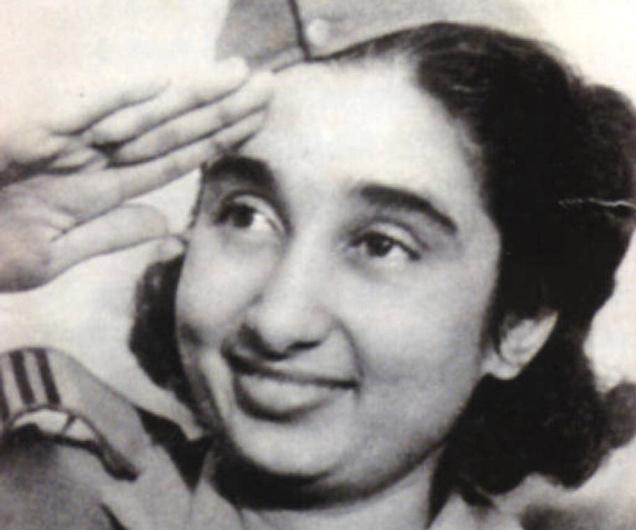
Despite being captured by the British, Captain Lakshmi’s support and reflections on Bose’s dubious death reveals fascinating insights — Photo: The Hindu Archives / The Hindu

The controversy of making public Netaji Subhas Chandra Bose’s classified files has yet again spawned speculation surrounding the freedom fighter’s last days.

This is not surprising considering the leader’s radical politics always invited polarised public opinion.

The city’s tryst with the Indian National Army’s (INA) fight for independence was best embodied by ‘Captain Laxmi’ or Dr. Laxmi Swaminathan, who hailed from then Madras. Having earned an MBBS and made Singapore her home, Dr. Swaminathan led the INA’s women-only ‘Rani of Jhansi’ regiment in 1942, under Bose’s command.

Despite being captured by the British in Burma soon after, Captain Lakshmi’s unwavering support and reflections on Bose’s dubious death, as recorded in The Hindu’s archives, reveals fascinating insights.

A rare interview given in the Burmese capital on November 15, 1945, to Douglas Lackerseen of Associated Press, unveils an intimate portrait of the trailblazer.

Dressed in a plain white sari with a green border, as Lackerseen described the 31-year-old national, she came across as being formidable, on the defensive, and often fronting an impervious silence to questions. When she was asked about her loyalties, given that she was offering medical aide to wounded civilians on the behest of the British military, she said, “Never – I shall never be pro-British. I still think of myself as a member of the INA. ”

Despite facing a precarious future with INA undergoing a trial in New Delhi for its ‘terrorist’ acts, Captain Laxmi held a dogged defence. She said, “I do not regard them (members of the INA) as war criminals. How can I? In that case even I am a criminal.”

Reiterating the dominant suspicions over Mr. Bose’s death, the leader confessed to believing there was a possibility of him being alive. “I sincerely hope he lives. Subhas Chandra Bose was never a traitor to India. What he did, he did for India,” she said.

The admiration was mutual.  The Hindu quotes Mr. S. A. Aiyer, a minister in Bose’s Azad Hind government, in a tribute offered to the leader in Madras on January 1, 1946: “Bose had a special relationship with Captain Lakshmi and wanted to appoint her as a minister in the provisional government.  I remember him once saying, ‘She is a wonderful child, God bless her’.”

With front men of INA refusing to accept their leader’s death even then, it is not surprising that decades after, the conspiracy theories continue to thrive.

source: http://www.thehindu.com / The Hindu / Home> News> Cities> Chennai / by Nitya Menon / Chennai – December 02nd, 2014

Doctors at Chennai hospital introduce new technique to treat carpal tunnel syndrome

Chennai  :

Doctors from the department of plastic surgery at Apollo Speciality Hospital have introduced a new endoscopic technique of carpal tunnel release for treating carpal tunnel syndrome.

This is an improvisation of the existing option of open surgery, performed under local anaesthesia, which results in a 5-6cm longitudinal scar running across the wrist on to the palmar skin (patterns that appear on the palms).

The new endoscopic technique by Dr G B Rajan ensures reduced scarring and hospital stay. The patient can return to work in eight days or even less.

Carpal tunnel syndrome is a medical condition wherein people suffer from numbness, pain and discomfort on the hand accompanied by tingling, burning, numbness, weakness of hand grip or simply pain.

The symptoms are usually felt over the thumb, index and middle finger, though the pain may extend up to the shoulders.

One in every five people suffering from such symptoms can be expected to have CTS following a thorough clinical examination, imaging and electrophysiologic (nerve conduction) studies. If untreated, it may result in permanent nerve damage causing constant numbness, wasting of the muscles of the hand involved in thumb movements.

“This condition may affect both hands, though symptoms may predominate on one side. The symptoms are intermittent in early stages, usually occurring at night times. This could be due to the flexed position of the wrist joint during sleep. However, the numbness can be intense enough to wake one from sleep,” said Dr Rajan.

Non-surgical treatment includes the use of night splints, steroid injection, oral anti-inflammatory and analgesic drugs. However, for acute cases, surgery is the only option.

“In this new procedure, with the aid of an optically linked video monitor, without cutting open the entire palmar skin, the surgeon precisely cuts the transverse carpal ligament from underneath, using a retractable blade within the smart release device. Once done, the blade retracts and the endoscopic instrument is withdrawn,” said the doctor.

Usually, the procedure itself doesn’t last more than half an hour, though mild sedation of the patient does help in making it quicker.

The less than 1cm skin incision is closed with absorbable sutures.

“The resultant cosmetically acceptable scar is small and concealed within the wrist skin crease,” said Dr Rajan.

source: http://www.timesofindia.indiatimes.com / The Times of India / Home> City> Chennai / by Janani Sampath / December 05th, 2014

‘Sthala Vriksham’ to be preserved through cloning

The Hindu Religious and Charitable Endowments (HR&CE) Department has asked the executive officers of temples and departmental inspectors to adopt cloning to preserve Sthala Vriksham or tree unique to each temple.

Describing every Sthala Vriksham as a unique germplasm, a recent communication of the department urges the officials to take the help of experts from the Agriculture Department or the Tamil Nadu Agricultural University (TNAU) for the task.

Among the prominent examples of Sthala Vriksham are the Kadamba at the Meenkashi Sundareswarar Temple in Madurai; the Vanni at the Magudeshwara Temple at Kodumudi and the mango tree at the Ekambershwara Temple at Kancheepuram, the last two being 3,000-3,500 years old.

The communication, issued by Additional Chief Secretary R. Kannan to HR&CE Commissioner P. Dhanapal, also asks the executive officers to ensure that enough clones are kept in carefully quarantined, separate places in nandavanam or flower garden. Even in private temples, the HR&CE inspectors should take steps to preserve Sthala Vriksham. The operation should be certified by an international body for its quality.

A notice board, giving the Tamil, English, Sanskrit and botanical names of each species with details of the legend, should be put up prominently. It should also give the details of the cloning operation, such as the method used and the persons involved, the letter says, citing the case studies of cloning carried out in the past 10 years, including those of the Vanni of Kodumudi and the mango tree of Kancheepuram.

source: http://www.thehindu.com / The Hindu / Home> News> National> Tamil Nadu / by T Ramakrishnan / Chennai – December 03rd, 2014

Tourist spots in district cry for attention

Coimbatore :

While the state government frequently announces plans to promote tourism in lesser known places, it has done very little to develop Valparai and Pollachi, years after recognizing them as potential tourist spots in Coimbatore district.

The government had announced its plans to develop Valparai as a tourist hub way back in 2007 while Pollachi was declared as a lesser known tourist spot in 2011. The idea was to attract tourists from popular places like Ooty so that the ecological balance of the hill stations is maintained. The government came up with various subsidies and grants for entrepreneurs to develop the infrastructure in this region but the tourist and resort owners say, the plans remain only on paper.

K Krishnaraj, a resort owner in Pollachi, had approached the government for the said grants in 2011 but was told that the funds had been diverted for other projects. He had no choice but to apply for a commercial loan.

The government has done very little to develop basic infrastructure, say resort owners. “In 2011, Kandasamy Park area was renovated at a cost of Rs 50 lakh but is closed for the past five months,” said T Sethupathi, managing director, Coco Lagoon. Without government contribution, private owners have tried to make the best use of existing infrastructure, to promote the place, he added.

In Valparai, the situation is worse. “Even after seven years, not a single park has been constructed by the tourism department. There are no parking facilities. It is not lack of funds, but rather negligence on the part of the government to promote these locations,” said M J P Shaju, secretary of Valparai Merchant Association.

“All their grants and loans are reserved for star hotels but we don’t have that kind of space. When we applied for a grant, we were told we were not eligible,” said Pradeep Kumar, treasurer, Valaparai Cottage Owners’ Association. The taluk does not even have an information centre. “As most of the land belongs to the forest or the municipality, no developmental work is allowed,” said another private home stay owner.

Many home stays had applied for a license from the tourism department but even that has been denied to them. Out of the 250 home stays only 15 have the necessary licenses, said M J P Shaju. One home stay, Yatri Nivas, that was constructed by the department several years ago has not yet been opened to the public.

Tourism department officials said they have visited the tourist spots to inspect the basic infrastructure and facilities. “We are trying to promote tourism in every way we can. There may have been some technical issues behind refusal of funds to some applicants,” said a state tourism officer. The Yatri nivas in Valparai will be inaugurated very soon, he said citing land acquisition for the delay in getting it ready.

source: http://www.timesofindia.indiatimes.com / The Times of India / Home> City> Coimbatore / by Komal Gautham, TNN / December 03rd, 2014

Doctors put chip in brain to make deaf children hear

Chennai :

Parents of two-year-old Guhan and five-year-old Beninal had only one dream – to hear them talk in their lifetime. The children, hailing from two poor families, were born deaf, and hence couldn’t speak too. While Guhan’s father was a farmer in Thanjavur district, Beninal’s was a house painter in Aranthangi in Pudukottai. Both, struggling to make ends meet, couldn’t afford the huge treatment costs.

The state government’s health insurance scheme came to their rescue. A team of city doctors performed complex surgeries, which involved implanting the hearing device , on the children, who are now on the path to recovery. The surgeries that cost 18.25 lakh for each child were performed free of cost, making these the most expensive surgeries the government has ever paid for.

Guhan and Beninal were both deaf since birth. While 99% of children with deafness can be treated with a cochlear implant, these two fell in the 1% bracket as they were born without a cochlea. “So we had to perform a surgery and implant the hearing device directly in the brain, which makes this procedure complex ,” said Dr Mohan Kameshwaran of Madras ENT Research Foundation, who performed the surgery.

Explaining the procedure, Dr M C Vasudevan, a neurosurgeon from Voluntary Health Services, said, “It involves opening the skull and planting the chip in the brainstem. It is a critical procedure as the brainstem has the nerves responsible for all the vital activities of the body.” The chip bypasses the absent cochlea and directly stimulates the hearing nerves that are present in the brain. Once the wound heals, an external device is fitted three months after the surgery. The children would also be made to undergo rehabilitation to gain speech, the doctor said.

The procedure which took more than five hours was performed jointly by ENT and neurosurgery teams. “TN has the highest deafness rate with 6 in 1,000 children born with hearing loss. The main reason for this is consanguineous marriage.” said Dr Kameshwaran.

source: http://www.timesofindia.indiatimes.com / The Times of India / Home> City> Chennai / TNN / December 03rd, 2014

After 15 Miscarriages, 40-year-old Neyveli Woman Gets Bundle of Joy

S Abhirami along with her newborn baby girl | express

Chennai :

After suffering 15 prior miscarriages, a 40-year-old mother delivered a healthy female baby at a private hospital in the city recently.

S Abhirami (40) and G Sridhar (44), hailing from Neyveli, were married in 1995. Abhirami became pregnant that very year. However, a miscarriage occurred when she met with an accident. The couple did not realize, at the time, that the accident was not the cause of the miscarriage but what doctors would call “cervical incompetence.”

During the years 1996, 1997 and 99 Abhirami conceived, with all pregnancies miscarrying.  Abhirami approached a private hospital in Cuddalore to help her deliver a healthy baby.  The Cuddalore doctors put a surgical suture at the mouth of the uterus in an attempt to avoid a miscarriage and make the uterus capable of holding the baby. Several attempts to deliver of a healthy child with the surgical suture failed and the mother lost four more foetuses to miscarriage.

“Then she approached a private hospital in Coimbatore, who followed the same procedure for four more pregnancies unsuccessfully. Without losing hope and with determination, Abhirami approached the Aakash Fertility centre for help in 2011.”

After a few more miscarriages while being treated by the Aakash Fertility clinic (now adding up to 15) Dr K S Jeyarani, director of Aakash Fertility Centre, said on Saturday, “16th time I did not want to make any mistakes and we wanted to save the baby of the mother. After much diagnostic assessment, I sutured just above the mouth of the uterus using laparoscopy procedures, during the pre-conception period. After Abhirami conceived on February 2014, she was kept under observation, delivering a healthy, girl child, by caesarean section, weighing 2.5 kg, on November 27. It all happened because of the sheer determination and the confidence of Abhirami.”

Abhirami, visibly elated with her baby in her arms said that she did not want to use the services of a surrogate mother or even adopt a baby as she had no problem conceiving naturally. “All my babies, I conceived naturally, and again I was worried about the words of the society. People talk about a woman negatively and do not treat them nicely, if a woman cannot deliver of a baby. I had to face all these throughout my ordeal of delivering a term baby. I took up the challenge and succeeded in it,” added the mother.

source: http://www.newindianexpress.com / The New Indian Express / Home> Cities> Chennai / by Express News Service / November 30th, 2014

A Trip down history lane for school students

Coimbatore :

R Rajeshwari, a Class 9 student from Selvapuram had never been on any trip, not even to VOC Park in the city. But all that changed on Wednesday, when she was taken to six places of historical importance in the city.

She was not alone. Sixty other children from various schools run by the city corporation also went on the trip. But what made the trip more memorable was the fact that Archana Patnaik, district collector, A K Vishwananath, commissioner of city police and K Vijayakarthikeyan, corporation commissioner accompanied them on the bus.

“We are not taken on trips like other private schools. I was surprised that Coimbatore had so many heritage buildings,” said Pandi Selvi, a Class 9 student. The trip was organised as part of the Coimbatore Day celebrations by the city corporation.

Students visited the Athar Jama Masjid that was built in 1904, Durglal Pickles which is an 80 year old shop, the clock tower built in 1928 on the big bazaar street, the residence of Rao bahadur and A T Venkataswamy Mudaliar which is now the Tamil Nadu Merchantile Bank on Big Bazaar Street, Delite Theatre on Variety Hall road and Coimbatore cloth merchants association training school on Raja street.

The bureaucrats seemed to have as much fun as the children as they interacted with them, cracked jokes and got to know more about the city. Many were surprised to know that south India’s first movie theatre was the variety hall theatre in the city. “It is now called the Delite theatre,” said C R Elangovan, city based historian and a writer, who was their tour guide.

For Madhan of Class 11, it was an experience of his life time, travelling with the top officials of the city and learning about its heritage and culture. “These officials are my inspiration. I have got their autographs and will definitely frame them,” said Madhan.

A photo exhibition aimed at recalling the city’s vivid 200 year history was also inaugurated at the corporation office. Industrialists, members of non-governmental organisations, government officials and the children visited the exhibition. The exhibition showcased pictures of Swamikannu Vincent who brought electricity to the city. He also built the Delite theatre.

Pictures of Rao Bahadur ATT Mudaliar, member of the first family of Coimbatore and municipaality chairman, M G Arogayaswamy Pillai, Coimbatore chairman from 1830 till 1891 and Moses Gnanabaranam Pillai, who built the first eye hospital in the city, were also displayed at the exhibition.

source: http://www.timesofindia.indiatimes.com / The Times of India / Home> City> Coimbatore /  TNN / November 27th, 2014

An author, yet again, at the age of 91

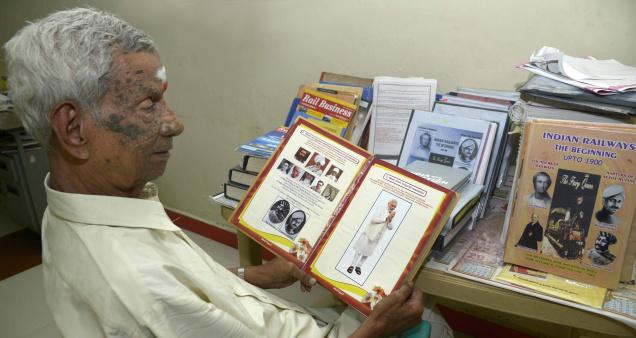
S. Venkatraman travelled across the country over the past two years to collect material and photographs for his book — Photo: V. Ganesan  / The Hindu
S. Venkatraman travelled across the country over the past two years to collect material and photographs for his book — Photo: V. Ganesan
/ The Hindu

After his first train ride in the 1920s, Venkatraman went on to work with the Railways and has now authored his second book on the Indian rail network

In the late 1920s, five-year-old S. Venkatraman boarded a train for the first time from Madras to Vijayawada, along with his father. He was smitten.

In 1942, he joined the Railways. As a culmination of his love for trains, 91-year-old Venkatraman travelled across the country and has come out with a book on the Indian Railways.

Indian Railways – The Beginning up to 1900 is a reminder of the glorious past of the world’s largest rail network.

The book comprises 534 pages and 600 pictures, including some rare ones in black-and-white.

But launching the book was not an easy task for this retired railway employee.

Over the past two years, he has travelled to Assam, West Bengal, Odisha, Bihar and Uttar Pradesh to collect details and take pictures of railways stations and trains.

“I also went to Bombay from where the first train chugged out. I travelled on nearly 350 trains and spent many lakhs compiling the book,” he says.

Mr. Venkatraman joined the Railways as a materials manager (stores) in Hubli and retired in 1982.

“I began writing the book more than three decades after retiring. My wife Lalitha, who was a lecturer of political science at Banaras Hindu University, was my inspiration. She passed away four years ago,” he says.

His first book Indian Railways at a Glance was a success. “The British had a separate coach for women, refreshment bars in stations and compartments with seating capacity of 200, way back in the 1880s. There were no toilets in trains then,” says Mr. Venkatraman, who feels that privatisation is the only way ahead for the Railways.

He says he is bringing out books on Railways out of sheer interest and not for profit. “My book should be a wake-up call to the railway administration that is now facing infrastructural deficiencies,” says Mr. Venkatraman, a member of the Indian Railway Fan Club.

He feels his efforts will be rewarded when more youngsters, especially in the Railways, learn about the heritage of our trains.

source: http://www.thehindu.com / The Hindu / Home> News> Cities> Chennai / by Vivek Narayanan / November 28th, 2014

Plans afoot to regain Vaigai’s historical value

Madurai :

City mayor V V Rajan Chellappa on Wednesday undertook an inspection of the Vaigai river where cleaning operation is being carried. Meanwhile, the Vaigai River Restoration Pageant has planned to recover the grand waterway by restoring its historic value.

The mayor has ordered cleaning operations of the Vaigai river after appointing 200 corporation workers. An initiative was also being taken to plant trees along the Vaigai to add beauty to its existence.

Chellappa said, “We have also planned for an eviction drive to remove all the encroachments along the Vaigai river and expand the roads along it to make it useful for commuters.”

Moreover, the Vaigai River Restoration Pageant in collaboration with Dhan Foundation, an NGO plans to recover the grand waterway by introducing various ideas like social credit to the public and assuring to keep the river clean.

The social credits shall help the public redeem them in the form of health insurance and enrolling themselves for English speaking classes. A Gurunathan, chief executive officer of Dhan Vayalagam (tank) Foundation said, “We are trying to restore the forgotten history of Vaigai river by introducing mythological aspects like that of Lord Shiva so that the people residing in Madurai understand the significance of the river.”

The project is more about making the people understand the importance of river for the farmers and potters. In its bid to sensitise the issue, the project also plans for a walk through the Vaigai river starting from Fathima College to Albert Victor Bridge.

Ahead of Chithirai festival, Dhan Foundation in collaboration with Earths Celebration, an US-based NGO has also planned for a series of 20 to 25 artisans who will be placed along the Vaigai river wearing kavadi dresses and people wearing paper masks showcasing the cultural aspects of the city. The preparations for the restoration pageant will start in the month of December ahead of Chithirai festival.

source: http://www.timesofindia.indiatimes.com / The Times of India / Home> City> Madurai / TNN / November 27th, 2014