I Don’t Write for Awards, but Vilakku nomination Inspiration to Carry on: Konangi

Konangi
Konangi

Kovilpatti :

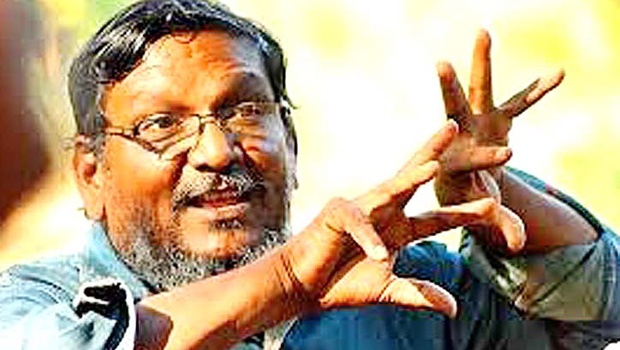
Kovilpatti – based Tamil storyteller and novelist Konangi was recently nominated for the Vilakku Award, instituted by Vilakku Society, a cultural organization formed by a section of the Tamil Diaspora in the US. Reacting to the announcement, the author said, although he does not write for awards, such awards are a source of inspiration.

“It brings to mind a vilakku in my house, which I call Calcutta vilakku,” he says. “The lamp was gifted to my grandfather Baskaradoss by a Calcutta-based artist and was passed down to me. I keep it as the highest award. Now, this Vilakku (award) will also be one such source of inspiration.”

Born into a family of literary and theatre artists, he is one of the grandsons of legendary artist-poet and freedom fighter, Mathurakavi Baskaradoss. While his elder brother, S Tamilselvan, is also a known short-story writer, his younger brother S Murugaboopathy is a well-known theatre artist. His father MS Shanmugam, a retired land surveyor, was also a writer.

Konangi, whose original name is Ilangovan, studied up to PUC and has a diploma in cooperative society management. He got a job in the clerical cadre in a cooperate society at Kovilpatti and he says even from land records he looked for stories to tell.

Narrating one such story, he says, “There was a village called Seelankulam, which, according to land records, was located in the middle of Mel-Eeral and Keel-Eeral, Valapatti, Thambaloorani and T Shanmugapuram near Ettayapuram. The area had huge heaps of sand and housed only electrical transformers, telephone lines, and dogs.”

“It was said, during colonial times, the people of Seelankulam protested against the Ettaiyapuram Zamindar as they were affected by severe drought and were unable to pay tax. When the Zamindar’s officials came to collect the tax, they tied him to a tree. The angry Zamindar sent his army, which surrounded the village and destroyed it. Since then the village has been deserted.” He said he had collected several stories of the village from various sources and began writing a novel but was unable to complete it.

Konangi’s first short-story, Veechu, appeared in Thamarai magazine in 1980, and he has six collections, three novellas and three major novels. While many of his earlier stories like Kollanin Arupenmakkal and Mathimarkal Kathai were written in the subaltern perspective, the recent ones like Uppukathiyil Uraiyum Siruthai, Natchathiram Uthirntha Manthirachimizh to the novels such as Pazhi, Pithira and the most recent Tha, were written in the style of magical realism. When asked why the shift in style,

Konangi said, “Earlier stories were about the untold sufferings of people who lost their life due to suppression. But all stories cannot be written in the same style.”

“For example, when I roamed around the streets Hampi in Karnataka, I visualized the remnants of Vijayanagar period. When I began writing, they refused to appear in the linear style and demanded a kind of sculpting. So I invented a new styles depending on the nature of tales, he said.

On how he gave life to his stories, he says, “While my characters are highly instinctive, my stories take birth from the sub-conscious mind and often oscillate into the world of unconscious.”

source: http://www.newindianexpress.com / The New Indian Express / Home> States> Tamil Nadu / by S. Karmegam / October 06th, 2014
Kudankulam farmer sows groundnut developed by BARC

Tirunelveli :

A farmer at Kudankulam in Tiruneveli district, where two nuclear reactors are situated, seems to be impressed by Bhabha Atomic Research Centre’s contribution to agriculture. The farmer, T Selvaraj, on Thursday began to sow the TG37A type groundnut developed by Bhabha Atomic Research Centre (BARC).

In June last, BARC invited a couple of progressive farmers, including Selvaraj, to the Palayamkottai prison where the inmates had sown the TG37A groundnut. The prison inmates sowed the groundnut in March and reaped the harvest in June.

Impressed by the successful cultivation at the prison, Selvaraj approached the BARC scientists. He was given 180kg of groundnuts to cultivate.

Selvaraj said he was planning to cultivate it in a one-hectare field. The sowing will continue for three days.

“I am convinced that this will give me good yields,” he said.

source: http://www.timesofindia.indiatimes.com / The Times of India / Home> City> Madurai / by J. Arokiaraj, TNN / October 09th, 2014

CM announces cash awards for Asiad medallists from TN

Chief Minister O. Panneerselvam has congratulated the 11 sportspersons from the State who won at the Asian Games, Incheon, South Korea. He also announced cash incentives for them.

Gold medallists Kush Kumar, Harinder Pal Singh and Saurav Ghoshal (squash), and Sreejesh Parattu Ravindran (hockey) will get Rs. 50 lakh each.

Silver medallists Aparajitha Balamurukan, Anaka Alankamony, Joshna Chinappa and Dipika Pallika (squash) will get Rs. 30 lakh each.

Bronze medallists Varsha Gautham and Aishwarya Nedunchezhiyan (sailing), and Rajiv Arokia (400 m race) will be given Rs. 20 lakh each.

source: http://www.thehindu.com / The Hindu / Home> News> Cities> Chennai / by Special Correspondent / Chennai – October 10th, 2014

Building libraries, rack by rack, book by book

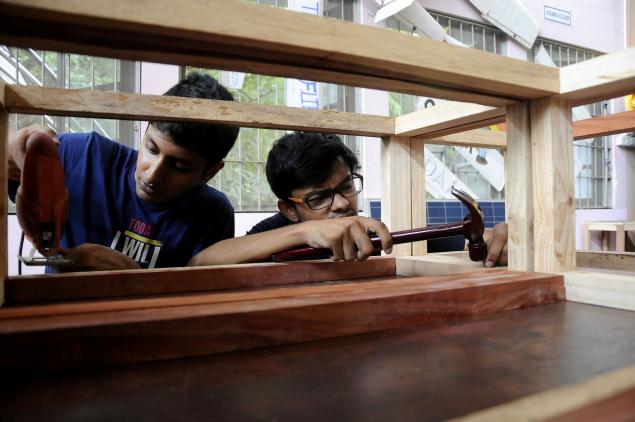
The student volunteers are also building their own bookshelves — Photo: M. Srinath / The Hindu

If you have books that your children have outgrown or don’t need anymore and are wondering what to do with them, the students of IIT-Madras have a solution — donate them to the needy.

The Pledge a Book Project, which started a couple of months ago, is building libraries for the underprivileged.

The students have tied up with different NGOs to help them set up bookshelves and libraries. Their first library was established through Avanti Fellows, an NGO that trains students for IIT-JEE. Around 100 JEE-related books were donated to the organisation and the students also supplied bookshelves. The team is collecting books from anyone who is willing to donate.

“Most people have some books that they do not use anymore. Whether they are IIT-JEE reference books or novels, there are people who need them,” Shubham Jain, a student volunteer said.

Once they collect the books, they sort them and then determine where to set up libraries based on the category. To save costs, the students are also building their own bookshelves at the Center for Innovation workshop.

“Many of the children’s reference books will go to the IDF’s Bal Gurukuls. We are also willing to tie up with any NGO that requires books for adults or children,” Romil Shah, another volunteer said.

Pledge A Book was initially started as part of IIT-Madras’ technical festival Shaastra 2015, but now, the project’s volunteers are planning to take it further.

“In the days to come, we also plan to start a programme that promotes reading among communities. In the future, we hope to establish libraries in different neighbourhoods. We are also looking for corporate support,” he said.

The Pledge a Book project is also supported by UNESCO. For further details contact shubham@shaastra.org.

source: http://www.thehindu.com / The Hindu / Home> News> Cities> Chennai / by Kavita Kishore / Chennai – October 09th, 2014

DISAPPEARING TRADES – The sheen’s gone out of eeya paathram business

Very few people prefer to use tin-coated vessels in the age of non-stick and stainless steel — Photo: K.V. Srinivasan / The Hindu

Tin and tin-coated vessels, once seen in every household, are increasingly a thing of the past

‘Velli eeya paathram’… does that ring a bell?

The vessel that is ubiquitous with lip-smacking rasam is called eeya paathiram — eeyam meaning lead — but is actually made of vellieeyam, or tin.

Until a few decades ago, vessels made of this material could be found in every household. But now, stainless steel and non-stick have come to stay and the eeya paathram is rarely seen even as that unique rasam slowly recedes into memory.

“Tin melts at 250 degrees Celsius and can be placed on the gas stove only if there is water or rasaminside. Earlier, people would use charcoal-fired stoves that gave out less heat, and so, they could use tin vessels,” says R. Venkatakrishnan of A. Srinivasa Aiyengar & Son, Kumbakonam Vessel shop, opposite the Sri Parthasarathy Swamy Temple in Triplicane.

The shop has been in existence since the 1920s and was started by Mr. Venkatakrishnan’s great-grandfather. It stocks eeya paathrams weighing between 300 grams and one kg. “When the shop was founded, it primarily sold eeya paathrams which were used by people from all walks of life,” he said. “Today, a few customers who still use eeya paathrams, including families living abroad, continue to come to us. We make special, stainless steel vessels with lead lining and flat bottoms that can be used on induction and coil stoves,” he said. To make a tin vessel, a sheet of tin is taken and, using a mallet, slowly beaten into the required shape.

Two doors away sits M. Sampath, who has been working at M. Mani and Sons for 47 years now. The store is known for coating copper and brass vessels with tin and is called an eeyam poosara pattarai.

“As far as I know, apart from establishments in Kumbakonam, the Aiyengar store and ours are the only two places where the eeya paathram is sold and eeyam poosu is done,” said A.R. Muthu, who runs the store.

“The metal costs Rs. 2,500 per kg. Only the highest quality metal from Malaysia is used. We usenavacharam and tin and coat vessels. Some people prefer this as the coating is cheaper. But, our customers are dwindling by the day,” he says.

Apart from making rasam, people also store rice overnight in these tin vessels as the food does not get spoilt fast. Curds don’t turn sour very easily in such vessels.

source: http://www.thehindu.com / The Hindu / Home> News> Cities> Chennai / by Deepa H . Ramakrishnan / October 08th, 2014

NGO spreads awareness on maintenance of rock sculptures

Madurai :

Green Walk, an NGO recently conducted a nature walk aimed at creating awareness about ancient rock sculptures in the district by holding a ‘rock fest’ at the foothills of Samanar hills in Keelakuyilkudi.

According to Muthukrishnan, the organiser, people in Madurai are not aware about the existence of rock sculptures in 40 locations, for which lots need to be done.

“Today, people consider the historic caves and rock sculptures as places to enjoy their drinks and litter the vicinity. We need to first educate the people and enlighten them with importance of Tamil scripts inscribed by our forefathers. Importance of such rock sculptures must be spread as people view these great rocks as mere slabs of granite worth only for paving pavements and floors,” he said.

Till 13 years ago, people carried out quarrying work at Samanar hills which has sculptures of Thirthankaras and Mahavira. “Such rock sculptures hold water beneath them and quarry work disturbs the ecosystem and thereby people need to know the importance of the inscription of Samanar hills,” said Muthukrishnan.

Theodore Baskaran, an environmental thinker said, “Samanar hills has a rare ‘Vattezhuthu’ inscription which dates back to the third century BC. People need to understand its importance and not neglect this historical place in Madurai.”

According to the archaeological expert S Santhalingam, after the advent of Saivism in Madurai the Jains sought refuge in Samanar hills, where they created sculptures of Thirthankaras and Mahavira, for worship.

Diana Jayanth, a professor of Aachi International School in Usilampatti said, “About 50 students from schools in and around Madurai participated in the heritage walk. Parents are playing a vital role in sending their children to such walks since it is important for the students to know the various historic places and its significance.” She has penned a poem on these important ancient structures through which students can be updated and hopes it will work towards the protection of these ancient sculptures which are invaluable.

source: http://www.timesofindia.indiatimes.com / The Times of India / Home> City> Madurai / TNN / October 07th, 2014

Model UN Helps Kids With Int’l Affairs

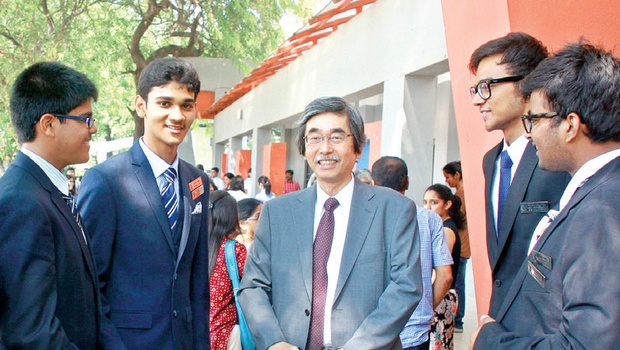
Students suited up for their roles as model delegates with Masanori Nakano, Consul General of Japan | MARTIN LOUIS

Chennai :

Over 500 students from 27 schools in Chennai turned into delegates representing the members at United Nations, during a model UN organised by Sishya School in Adyar on Monday.

Dressed in their formal best, comparing notes and doling out figures on carbon footprint of the country, the students got ready to get involved in heated discussions on topics of international interest, and tried to emulate the proceedings at United Nations at SISHMUN 2014.

The two-day programme for students to be abreast with awareness on international issues of importance would involve moderated and unmoderated discussions among those representing the nations. The student delegates split into various committees such as the International Court of Justice and Security Council put forth related issues from their country’s perspective, a consensus would be arrived at and a resolution passed. The secretary general of SISHMUN, Vivek Jajoo added that emergency situations would be declared and the delegates from each council would deliberate and arrive at a solution.

The inauguration was presided over by Masanori Nakano, Consul General of Japan and P V S Giridhar, a senior advocate who addressed the student delegates. Masanori informed them about the discussions in the UN General assembly and urged the students to deliberate on international issues, especially those in Iraq and Syria. Giridhar, on the other hand, spoke about the need for disarmament. He also welcomed the initiative of conducting a model UN in schools. “When children leave school and get exposed to the real world, they need to be informed on what’s happening. This goes a long way to help them,” he said.

Student delegates are benefitted as well, feels Malavika Nambiar who has been participating for four years. “This not only keeps us informed of international affairs but lets us think from their perspective,” she concluded.

source: http://www.newindianexpress.com / The New Indian Express / Home> Cities> Chennai / by Express News Service  / October 07th, 2014

Erode witnesses first organ harvesting

Erode :

In a first of its kind operation in Erode, a group of doctors harvested vital organs from a victim who was confirmed brain dead on Saturday. According to Kovai Medical Centre and Hospital (KMCH) in Erode, the victim was admitted to the hospital on September 30.

The 57-year-old man hailed from Rajapalayam in Virudhunagar district. He worked as chief electrician in Tamil Nadu Cements Corporation Limited in Alangudi, Tiruvarur district. “He was about to retire in a few months and was transferred to the marketing department. As part of his work, he came to Pallipalayam in Namakkal district on September 30,” said P Manoj, kin of the deceased. Talking to TOI, he said the victim met with an accident the same day in Pallipalayam. “An unknown vehicle knocked him down and he sustained grave head injuries,” he added.

Passersby rushed him to a private hospital in Erode for treatment. Doctors admitted him to the Intensive Care Unit (ICU) and the next day his relatives arrived at the hospital. “Doctors said his condition was critical and soon he slipped into coma from which he never recovered and was soon declared medically dead,” said Janaki, wife of the deceased.

The private hospital, in which the victim was admitted, did not have licence to harvest organs. So they shifted the patient to KMCH on Friday. “We have thoroughly examined his body and brain conditions. According to government rules, we should confirm twice before harvesting organs from a victim’s body. So we have conducted checkups twice, one on Friday night around 10.30 pm and another one on Saturday early morning around 4. 30am,” said a spokesperson from KMCH, on condition of anonymity. “We spoke to the family members about the importance of organ donation and they immediately agreed,” he said.

A team of 10 doctors led by senior general physician Dr N V Mohan, carried out the organs harvesting operation. The team started the operation around 10 am and completed around 3 pm. “We have harvested a pair of eyes, a pair of kidneys and liver from the victim’s body. We could not use his heart due to his age,” the spokesperson said and added that all the vital organs were sent to Coimbatore and Erode based hospitals immediately.

The body was later sent to Erode government hospital for postmortem and then handed over to the relatives.

source: http://www.timesofindia.indiatimes.com / The Times of India / Home> City> Coimbatore / TNN / October 05th, 2014

When the south got a taste of her music

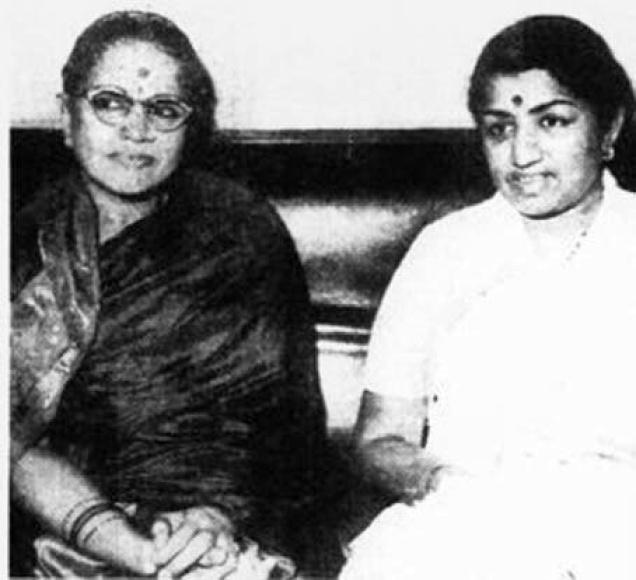
Though it took Lata a little over two decades to make a comeback in the Tamil film industry, she always maintained a connection with the south, and is a self-confessed fan of M.S. Subbulakshmi — Photo: The Hindu Archives

Few remember that Lata Mangeshkar’s debut in Tamil was as early as in 1956

Last week, veteran playback singer Lata Mangeshkar celebrated her 85 birthday, and accolades poured in from everywhere.

Lata was all of 13 when she took to professional singing and it was not long before she took the Bombay film industry by storm. So much so that, according to a report in The Hindu dated August 11, 1951, it was nothing but ‘Mangesh Music’ that ruled — “on screen, on the radio, and in street corners by enthusiastic urchins”.

Though most Illayaraja fans will credit the ‘Maestro’ for bringing the magical voice to Tamil films in the 1980s, few will remember that Lata’s debut in Tamil was as early as in 1956. With the film Vana Ratham, ardent fans in this part of the country got an opportunity to listen to the legend croon a couple of songs in their native tongue. This was, in many ways, her Tamil debut.

The film, a dubbed version of the Hindi original Udan Khatola starring Dilip Kumar, Nimmi, Suryakumari, and Agha, was directed by S.U. Sunny and produced by Naushad Ali, who was also the music composer.

The film itself was remembered for its visual flamboyance and touching music. While in Hindi it was Shakeel Badayuni who penned the lyrics, in Tamil, Kambadasan, adept at writing for dubbed movies, was roped in to do the same. Set to the same tunes, songs such as En ullam vittu odaathe, Enthan Kannalan, and Ennai Kande Selvai that were sung by Lata for the actress Nimmi became huge hits.

More than the film itself, it was its music that got noticed.

Despite making a promising start in the Tamil film industry, it took the singer a little over two decades to make a comeback.

It was between 1987 and 1988 that she finally returned with two back to back renditions —Aaraaro Aaraaro and Valai Osai, both set to Ilayaraja’s tunes — in the films Anand and Sathya, respectively.

Lata was not unaware of the popular music being produced in this part of the country.

In an interview with reporter ‘Partha’ of The Hindu in 1951, she said she was a big fan of K.B Sundarambal and never missed any of M.S. Subbulakshmi’s concerts in Bombay. If she had any regrets, she said, it was her lack of training in Carnatic music. “I really want to learn it, but hardly find the time.”

source: http://www.thehindu.com / The Hindu / Home> News> Cities> Chennai / Nitya Menon / Chennai – October 05th, 2014

Buy Online, Get Delivered by Post

Chennai :

Even as the Internet era has upset the fortunes of India Post, the postal department in the Tamil Nadu circle is trying to merge emerging technology with its ubiquitous presence in the nooks and corners of India to make inroads in e-commerce as well as financial segments.

The department, which is in the red now, is vying to establish a major presence in the e-commerce segment, Chief Postmaster General of Tamil Nadu circle T Murthy told Express. “We already have a tie-up with Amazon and an online supermarket in Chennai and are currently negotiating for a tie-up with Flipkart,” Murthy said.

“Currently we deliver around 50,000 parcels from the supermarket chain alone and 5,000 from Amazon,” said Murthy.

He says India Post’s plans to have a tie-up with Flipkart have reached an advanced stage. “We have heard reports that they are opening godowns here in Chennai,” he said.

Through the tie-up with e-commerce firms, their products will be delivered to every corner of the State as the department has a vast network that no one in India has, he said.

India has close to 10 million online shoppers and the numbers are growing at an estimated 8-10 per cent annually.

Electronics and apparel are the biggest categories in terms of sales.

The postal department is also planning to have Internet connectivity in all its post offices located across Tamil Nadu. “This is likely by the end of the financial year,” said Murthy.

He says currently the Tamil Nadu circle is facing a loss of 30 per cent as its market has been eaten away due to the Internet revolution.

The postal department is planning to capitalise on its vast infrastructure by investing Rs 5,000 crore in core banking services and other financial services, he said.

source: http://www.newindianexpress.com / The New Indian Express / Home> Cities> Chennai / by C. ShivaKumar / October 04th, 2014