The junior stars who did Coimbatore proud in the Tamil Nadu State junior inter-district volleyball championship at Tirunelveli recently.
The junior spikers from this part of the region put up a splendid show in the Tamil Nadu State inter-district junior volleyball championship at Tirunelveli.
The junior spikers from this part of the region put up a splendid show in the Tamil Nadu State inter-district junior volleyball championship at Tirunelveli.
The boys staved off a stiff challenge to oust a fighting Tiruchi for the title. Coach Murali was obviously pleased with the show. “It was not one or two individuals who did the job for us. It was a total team effort. There were quite a few teams which boasted of players with great height (195 cm) advantage but still our boys were able to cut them down to size, mainly due to some fine understanding.”
The girls did an equally good job but faltered in the final hurdle against Chennai. “We failed to get the blocks right. Frankly speaking, we did not have a block specialist. And, that did the damage. Also, two of our star players (Sandhya and Nandhini Priyanka) failed to get going. We rolled the bench as well but it was not our day. But, I am still pleased with the show,” said Kalpana, the team’s coach.
The Coimbatore District Volleyball Association and its office-bearers felicitated the players.
source: http://www.thehindu.com / The Hindu / Home> News> Cities> Coimbatore / by Special Correspondent / Coimbatore – September 26th, 2014
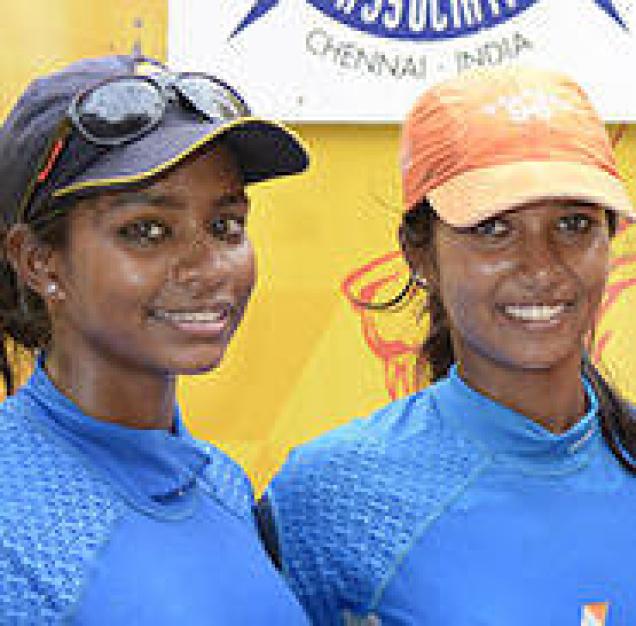
Chennai girls Varsha Gautam, 16, and Aishwarya Nedunchezhiyan, 18, made history on Tuesday by becoming the first Indian women to win a sailing medal at the Asian Games.
They took the bronze in 29er women’s two-person dinghy event at Incheon. Aishwarya is a student of MOP Vaishnav College. Varsha has completed the 10 standard.
source: http://www.thehindu.com / The Hindu / Home> Sport> Other Sports / Special Correspondent / Chennai – October 01st, 2014
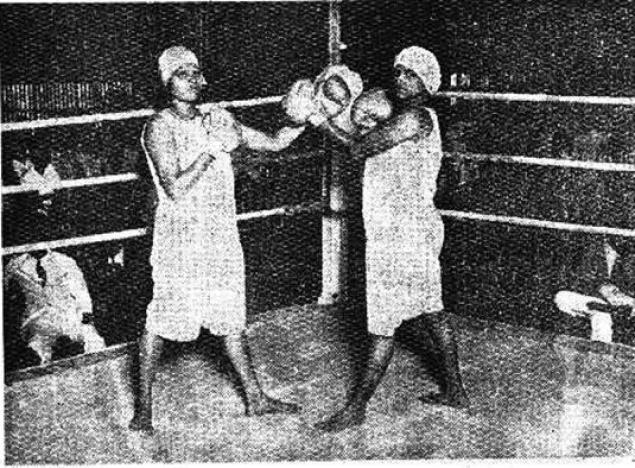
The match between Sita Bai of Tanjore and Kamala Bai of Malabar saw enthusiastic crowds but also led to controversy./ The Hindu Archives
The 1st all-woman boxing bout lasted only 3 rounds but ignited a fiery debate
Sunday was a fine day for Indian women’s boxing at the 17th Asian Games in Incheon. Olympic bronze-medallist M. C. Mary Kom, L. Sarita Devi and Pooja Rani entered the semi-finals, assuring medals for the nation. However, it was right here, in Madras city, that the first punches in women’s boxing in the country were thrown.
It was Saturday, the 15th of March, 1931, when two Indian women stepped into the ring for a bout of professional boxing at the famous White City Carnival held in the city. Looking fierce in knee-length shorts, sleeveless jerseys and gloved fists, the women appeared every bit combat-ready. Kamala Bai of Malabar and Sita Bai of Tanjore were trained boxers, touted to be in good form. Singapore’s English daily The Straits Times reported that this was arguably a first for India.
Visibly excited, The Hindu published an article five days prior to the event urging its readers to brace themselves to witness for the first time two ‘Indian ladies’ meeting in the boxing arena — until now the most exclusive preserve of men.
Large crowds, including a number of Europeans, assembled to watch history in the making. While the first two rounds saw the boxers on the defensive, the third round saw them packing a punch, exchanging double jabs, hard rights, hooks, and uppercuts. Disappointingly, by round three, the session drew to a close with referee V.E.J Brackstone of Messrs. Parry and Company declaring it a draw.
Despite their underwhelming performance, both Kamala Bai and Sita Bai stayed in the news — even making international headlines for days to come.
‘Shocked and pained’
The fact that two Hindu women dared to ‘invade’ the boxing ring also left many Indian men and women ‘shocked and pained’. Florida’s The Evening Independent published a report on March 16, 1931 titled ‘Women Boxers arouse India’. The story stated that ‘feminine India was up in arms’ with the female boxers facing ‘social ostracism and disgrace,’ having engaged in a boxing match in Madras.
For a country that had for centuries relegated their women to rigid domesticity, ‘ladies boxing’ became particularly hard to digest.
Mahatma Gandhi for instance found this to be especially problematic. He was quoted in Pennsylvania’sReading Eagle as saying women boxing was ‘degrading, disreputable and totally unbecoming of the finer instincts of Indian womanhood.’
Today, as the country celebrates the laurels of our women boxers, it seems only appropriate to pause and acknowledge the spirit of Kamala Bai and Sita Bai. For if not for them, we as a nation may have not dared to imagine the likes Mary Kom, L Sarita Devi and Pooja Rani fighting the good fight.
source: http://www.thehindu.com / The Hindu / Home> News> Cities> Chennai / by Nitya Menon / Chennai – September 30th, 2014
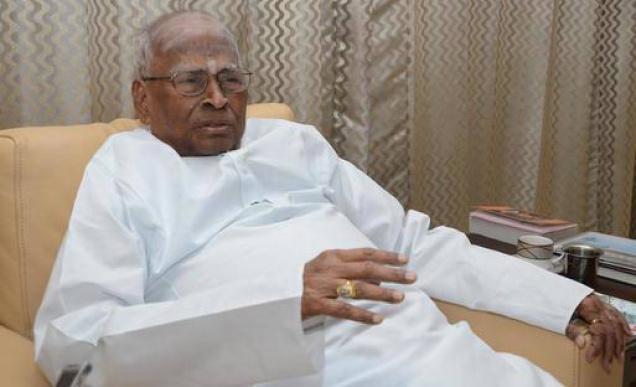
N. Mahalingam, Chairman, Sakthi Group of Companies. File photo: S. Siva Saravanan / The Hindu
A staunch Gandhian, educationist and philanthropist, 91-year-old Mahalingam’s end came on the Gandhi Jayanthi Day.
Noted industrialist and three-time MLA, ‘Pollachi’ N Mahalingam died here on Thursday following cardiac arrest suffered at a function.
A staunch Gandhian, educationist and philanthropist, 91-year-old Mahalingam’s end came on the Gandhi Jayanthi Day.
Chairman of the over Rs 5,000-crore Sakthi Group of Companies and Anamallais Bus Transport Ltd (ABT Services), he was participating in a lecture when he suddenly collapsed. He was rushed to a private hospital but declared brought dead, family sources said.
He is survived by wife, three sons —— M Manickam, M Balasubramaniam and M Srinivasan —— and a daughter.
He had published Mahatma Gandhi’s works in Tamil in 20 volumes.
Born on March 21, 1923 in Pollachi in Coimbatore district in an agricultural family, Mahalingam was an alumnus of Loyola College in Chennai. He also secured a Diploma from the College of Engineering, Anna University, and was also awarded Honorary Doctorate by Bharathiar University, Coimbatore.
A recipient of several awards including the ‘Padma Bhushan’ in 2007, he was elected to the state assembly from Pollachi constituency in 1952, 1957 and 1962 polls on Congress ticket.
He had played a key role in development projects, including the Parambikulam-Aliyar water project.
Mahalingam was also actively involved in spiritual life.
He was a recipient of Indira Gandhi National Integration Award and had been a member of the State Planning Commission for two terms.
MDMK Chief Vaiko condoled the death of Mahalingam saying it was a huge loss to Tamil language and for Tamil Nadu.
source: http://www.thehindu.com / The Hindu / Home> Business / PTI / Chennai – October 02nd, 2014
Dr Ramamoorthy Ramesh likely to win the Nobel Prize for Physics this year
Chennai:
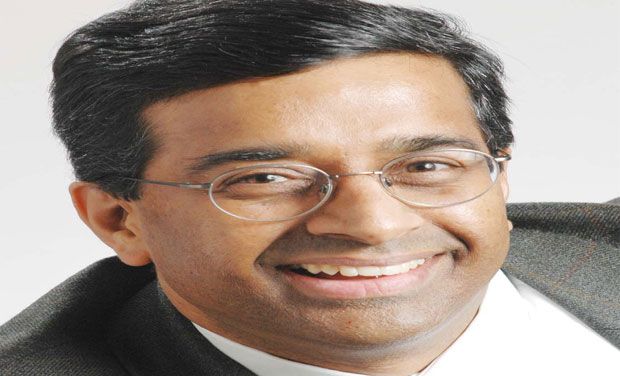
Chennai-born Dr Ramamoorthy Ramesh, a professor at the University of California, Berkeley, USA, is in the list 27 recently issued by Thomson Reuters as potential scientists likely to win the Nobel Prize for Physics this year. The award will be announced on October 7.
Dr Ramesh is an alumnus of Indian Institute of Science, Bangalore, and had gone to Berkeley in 1987 for Ph.D at the University of California. He joined the university faculty in 2004 in the materials science and engineering and physics departments. His work mostly focused on complex oxides.
In the Reuters list of Nobel probables, Dr Ramesh’s name figures with those of James Scott of the University of Cambridge and Yoshinori Tokura of University of Tokyo for their work in ferroelectric memory devices and multiferroic materials. Thomson Reuters has so far predicted correctly 35 Nobel winners.
source: http://www.deccanchronicle.com / Deccan Chronicle / Home> Nation> Current Affairs / DC Correspondent / October 02nd, 2014
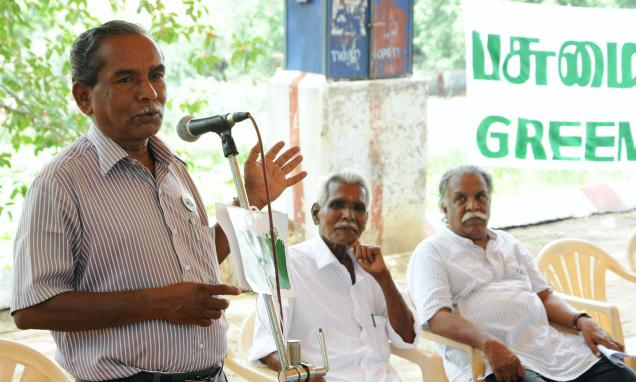
C. Santhalingam, retired archaelogist, speaking at the ” Rock Festival” organised by Green Walk at Samanar hillock near Keelakuyilkudi in Madurai on Sunday.Photo: R. Ashok
Nearly 500 nature lovers and history enthusiasts converged at Samanar hillock on the way to Keelakuyilkudi on Sunday despite the rain for ‘Rock Fest,’ organised by the Green Walk team to mark their 40th exercise.
Retired archaeologist C. Santhalingam explained the historical significance of Jain remnants at Chettipudavu. He said it was important to spread the historical and traditional accounts of Madurai to every person. “It will not be possible to excavate places within the city to trace remnants of forts and other prominent sites. Therefore, we should conserve the sites around the city,” he said.
According to him, places such as Kazhugu Malai, an 8th century hillock, and Meenakshi Sundareswarar Temple that eulogise the history of the ancient city, should be protected.
Writer N. Murugesa Pandian said it was necessary to protect Tamil traditions, culture and language. “Such gatherings and explorations are important to study the richness of our past,” he said.
Environmental thinker Theodore Baskaran explained how Jain inscriptions had engravings on the lives of the common men. “Until World War II, a lot of interest was shown in studying inscriptions that contained details of former kings in order to trace history. When people wanted to know about the common man, Jain inscriptions and ‘Nadukal’ were studied,” he said.
Mr. Baskaran said such gatherings gave people an insight into happenings in the outside world. “These activities create sensitivity in people, particularly among students,” he added.
A. Muthukrishnan, founder of Madurai Green, noted that people in villages showed more concern in protecting natural resources and historical sites.
Geologist Christopher Jeyakaran released ‘History of Madura-Voyage into Jaina Antiquity,” an English translation of a book titled ‘Madura Varalaaru.’
The third edition of ‘Madura Varalaaru’ was also released. Various activities were organised for children.
source: http://www.thehindu.com / The Hindu / Home> News> Cities> Madurai / by Staff Reporter / Madurai – September 29th, 2014
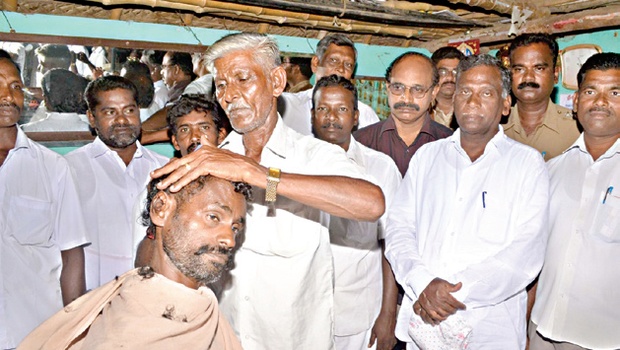
A barber giving a Dalit man a haircut, at Veerasingampettai village in Thanjavur district on Wednesday | express
Thanjavur :
Dalits of Veerasingampettai village in the district on Wednesday got their first haircut in three years at the local salon. The service had been denied to them due to the diktat of some dominant caste members of the village.
G Thangappan, a Dalit farm worker got his haircut in the presence of leaders of the Tamil Nadu Untouchability Eradication Front, S Vigneswaran, revenue inspector of Kandiyur, and Anandathandavam, inspector of police.
“For the last three years, I used to get my haircut at Kandiyur, about 2 km from here,” said Thangappan.
U Punniyamurthy, a Dalit and local unit secretary of CPM, said, “Till three years ago, Dalits used to be serviced by two salons in the village. However, when a PMK man got elected as village leader of the dominant community, Dalits were denied service at the salons.”
The two salons located on the land of a Mariamman temple at Veerasingampettai, used to service not only Dalits of the village but also those from the neighbouring hamlets of Thiruvedikudi, Thiruchchotruthurai and Kalyanapuram. However, for the last three years the Dalits from these villages were also denied service.
A Muthamizhselvan of Thiruvedikudi said two months ago a Dalit youth from Thiruchchotruthurai was roughed up by members of the dominant caste for questioning the denial of service at the salons.
Offering of service to Dalits at the salons in Veerasingampettai was the result of a campaign undertaken by the Tamil Nadu Untouchability Eradication front (TNUEF), which had announced action on the issue on September 30. However, a peace meeting was conducted by Tiruvaiyaru Tahsildar on September 29 and it was agreed by all parties present that the services would be offered at the salons from Wednesday. However, TNUEF members became agitated when one of the two salons, owned by a person called Gunasekaran, remained closed.
TNUEF members and Dalits pointed out that the shop, which used to open around 7 am, remained closed till 10.30 am. “Only after the intervention of revenue officials and some members of the dominant caste, the salon was opened,” said Sathish, a Dalit youth. He also pointed out that Sureshkumar, son of Dhanapal, who used to offer hairdressing services at one of the salons, was conspicuous by his absence at the meeting.
Chinnai Pandiyan, district secretary of TNUEF, told
Express that such untouchability prevailed in Varahoor village in Tiruvaiyaru union also. He said in Varahoor, the Dalits were also denied laundry services.
G Neelamegam, district secretary of CPM, V Jeevakumar, C Packirisamy, district secretariat members of CPM, and Sami Natarajan, farmers wing district secretary, were present in Veerasingampettai when the Dalits were offered hairdressing service in the salon.
source: http://www.newindianexpress.com / The New Indian Express / Home> States> Tamil Nadu / by N Ramesh / October 02nd, 2014
It is not easy for a cricketer from a district like Madurai to make it to the national side but M Venkataramana belongs to a rare breed. He played for the country, albeit for a short while, within nine years of taking to the game at 14.
“I used to play for my school but had no club … it was one of those days when I went to watch a league match with friends. Before the start of the match, Jolly Rovers (Madurai) skipper, late Soundararajan, asked me to get ready for the game as his main spinner did not turn up. That’s how it began …,” says Venkat, as he is fondly called.His father, who played for his employers Rallis India but couldn’t make it to the state or national team, was a big influence in his life. After making it to the first division league in Madurai, Venkat was spotted by former Indian skipper Kris Srikkanth, who advised him to relocate to Chennai.”… I came to Chennai in 1991 and started playing for YMS. After two seasons Chika asked me to join Alwarpet CC,” says the man who played one Test and one ODI. Venkat, who earlier failed to make it to U-14 & U-16 levels, directly got selected for Tamil Nadu U-19 team and impressed with some brilliant performances.
“… after I got selected for U-19 state team, things started falling in place quickly and I made it to the state Ranji side within three years. I was a regular in the state side and my performance (794 & 1-106) in the 1987-88 Ranji Trophy final against Railways caught everybody’s attention. It was a very proud moment for me,” adds Venkat, who played 75 First Class and 30 List `A’ matches.
The lankly offie, who got into the ODI side against New Zealand in 1988 and made his Test debut against West Indies the next year, feels lack of guidance was one of the reasons why he could not play for India for a long time.
“I was not in a position to hire a personal coach and received no help from others when I was going through bad patches. When we went to New Zealand my bowling was not up to the mark despite having a very good domestic season. I could not find my rhythm and there was no one who could help me get back my tempo …,” says Venkat.
From 2007 to 2012, Venkat coached the Singapore cricket team and returned to Chennai after BCCI appointed him coach of the Zonal Academy in Chennai.
(A weekly column on famous sport spersons whose first playing field was Chennai and its neighbourhood)
source: http://www.timesofindia.indiatimes.com / The Times of India / Home> City> Chennai / by Krishna Kanta Chakraborty, TNN / September 27th, 2014
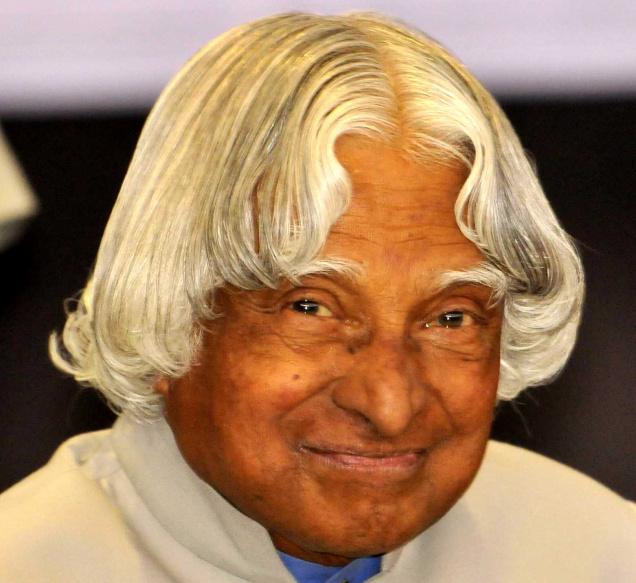
Former President Abdul Kalam says that true nation building is not made by political rhetoric alone but should be backed “by the power of sacrifice, toil and virtue”. File photo: K. Ramesh Babu / The Hindu
For former President A.P.J. Abdul Kalam, becoming a fighter pilot was a “dearest dream” but he failed to realise it by a whisker as he bagged the ninth position when only eight slots were available in the IAF.
In his new book “My Journey: Transforming Dreams into Actions”, published by Rupa, Mr. Kalam, who specialised in aeronautical engineering from Madras Institute of Technology, says he was desperate to pursue a career in flying.
“Over the years I had nurtured the hope to be able to fly to handle a machine as it rose higher and higher in the stratosphere was my dearest dream,” he writes.
Out of the two interview calls Mr. Kalam got, one was from the Indian Air Force in Dehradun and the other from the Directorate of Technical Development and Production (DTDP) at the Ministry of Defence in Delhi.
While the interview at DTDP was “easy” he recounted that for the Air Force Selection Board, he realised that along with qualifications and engineering knowledge, they were also looking for a certain kind of “smartness” in the candidate.
Mr. Kalam bagged the ninth position out of 25 candidates and was not recruited as only eight slots were available.
“I had failed to realise my dream of becoming an air force pilot,” he writes.
He says he “walked around for a while till I reached the edge of a cliff” before deciding to go to Rishikesh and “seek a new way forward.”
“It is only when we are faced with failure do we realise that these resources were always there within us. We only need to find them and move on with our lives,” says Mr. Kalam who went on to put his “heart and soul” at his job as the senior scientific assistant at DTDP.
The book is filled with stories of “innumerable challenges and learning” in his years as the scientific adviser when India conducted its second nuclear test, his retirement and dedication to teaching thereafter and his years as President.
Mr. Kalam has compiled life’s learnings, anecdotes and profiles of key moments and people who inspired him profoundly in the book, which will hits the stands on August 20.
He recounts “staring into the pit of despair” when he failed to make it as an IAF pilot and how he pulled himself up and rose to become the man who headed India’s missile programme and occupy highest office in the country.
While the 82-year-old, popularly known as the Missile Man for his contribution to the development of ballistic missile technology, had in 1999 brought out his autobiography “Wings of Fire” and followed it with “Turning Points”, a journey through challenges” in 2012 that details his political career and challenges, the latest book talks about the people who left a deep impression on him as he was growing up.
In the 147-page book, Mr. Kalam writes about his experience of watching his father build a boat, his early working life as a newspaper boy at the age of eight and even his first-hand experience of the way in their religious elders settled a religious matter in his school.
In a chapter “A brush with fire”, Mr. Kalam recounts the 1999 January 11 incident involving two aircraft which took off from Bangalore towards the Arakkonam-Chennai coastline and crashed, killing 8 men on board.
While Mr. Kalam immediately flew to Bangalore from Delhi and met the bereaved families, he says the grief of the devastated parents and the wailing of the infants remained with him even after years of the incident even after he moved from his office at South Block to Rashtrapati Bhavan.
The former President says that true nation building is not made by political rhetoric alone but should be backed “by the power of sacrifice, toil and virtue”.
“When grand plans for scientific and defence technologies are made, do the people in power think about the sacrifices the people in the laboratories and fields have to make?” he writes.
The book also contains a chapter detailing Mr. Kalam’s favourite books “which have always been close companions” who “were like friends” guiding him through life. Lilian Eishler Watson’s “Light from Many Lamps,” the “Thirukural”, Nobel Laureate Alex Carrel’s “Man the Unknown” have been listed.
Poetry says Mr. Kalam has been “one of his first loves” and poems by T.S. Elliot, Lewis Carroll and William Butler Yeats has “played out in my over and over again”.
In conclusion, Mr. Kalam writes his life can be summed up as “Love poured to the child… struggle… more struggle… bitter tears… then sweet tears… and finally a life as beautiful and fulfilling as seeing the birth of the full moon.
“I hope these stories will help all my readers understand their dreams and compel them to work on these dreams that keep them awake,” he writes.
source: http://www.thehindu.com / The Hindu / Home> Books> Authors / PTI / New Delhi – August 18th, 2013
The news that the Schmidt Memorial on Elliot’s Beach was being restored and the area around it landscaped is welcome indeed. But while this memorial has kept alive for several decades memories of the courage of a young Danish mercantile executive (Miscellany, September 23, 2013), there have been at least two other persons with Danish connections in the city’s past who deserve commemoration for significant contributions they made to Madras — and even to India.
John Goldingham was of Danish descent but was more British than Dane. He was the first official head of the oldest modern observatory in the country and of the oldest modern technical school in Asia, both surviving to this day. But better remembered is what was considered his patron Lord Edward Clive’s folly — or entertainment space. Built by Goldingham to host the Governor’s Council, thisAssembly Hall became better known as Banqueting Hall (and should I say ‘Ballroom’?) but today languishes as Rajaji Hall. Making me wonder how this splendid building can be revived and given new life.
Goldingham’s contributions may be remembered by a few, but very, very few outside the scientific community are likely to remember a German who made Denmark his home and later contributed significantly to India. Dr. Johann Gerhard König was a Danish-trained physician who served the Madras Government in the late 18th Century but became better known as ‘The Father of Indian Botany’, with scientific botany in India emerging through his efforts.
Born in what is now Latvia, König moved to Denmark in 1748 to study and became a private pupil of Linnaeus at Uppsala University from 1757. He lived and worked in Denmark till he came out to Tranquebar in 1768 to serve the Danish Halle Mission as its medical officer. Simultaneously, he worked with the Nawab of Arcot as his Naturalist and travelled throughout his domain (virtually what became the Madras Presidency) and Ceylon. In 1778, he was appointed the East India Company’s first Natural Historian /Naturalist/ Botanist and served in that capacity till his death near Vizagapatam in 1785. Amongst those who benefitted from his training them as naturalists were the Rev. Christoph John and Rev. Johann Rottler in Tranquebar and William Roxburgh in Madras. It was Roxburgh who treated him during his last days in what is now Andhra Pradesh when dysentery was felling him. J. König, a name to reckon with in Indian botanical terminology, was responsible for South India being the earliest centre for botanical and zoological research in the country.
Until König came along, plants found in India by the ‘greens’ were sent to Europe to be classified and described by scientists like Linnaeus and others. König introduced the Linnaean rules in India and was soon followed by others. Many of these students of Indian vegetation in the Peninsula and Ceylon, like James Anderson, Francis Hamilton-Buchanan, Roxburgh, Rottler, and John and a few others formed a society to promote botanical studies, exchanged specimens and information on new species collected, and, acting in concert as a society, named them. But as they became more confident of their botanical knowledge, some of them began naming their finds themselves without consultation. All this information was sent by them to European botanists who published the information under the names sent to them or under names they had changed the originals to. Later authors of botanical information, like Edward Balfour and Robert Wight, tended to use the names in general use at the time, but also offered the synonyms that had been earlier used. One of the names listed is Murraya Königii, a species of curry leaves.
Footnote: Searching for material for this column constantly throws up new leads to follow. And while writing today’s piece I came across the name of Dr. Francis Appavoo. Here was an Indian who, as early as the 1860s, was in charge of the Conservator of Forests’ office in Madras. I wonder if anyone can tell me more about him.
*****
A commitment to restoration
I had met Father Vijay Kiran many years ago in the Archbishopric’s archives and had been very pleased to meet someone who was more than an administrator, who was, in fact, a person who valued the riches he was in charge of. When I heard he had been transferred, I was rather dismayed because it would have been difficult to find someone who would have appreciated as much as him the history of the archdiocese. I was therefore delighted when I met him the other day to find that his interest in the past had led him to becoming a committed conservationist, now calling on his fellow Roman Catholic clergymen to maintain, and restore where necessary, their churches.
When I met Fr. Kiran a couple of weeks ago, it was at a viva for his second doctorate. His thesis this time was Conservation of Church Architecture (Buildings) and Their Artifacts in Tamil Nadu, and it was an excellent presentation that he made of it, ending with an appeal to parish priests to ensure regular maintenance of their churches and restoration of them if they were heritage buildings. Towards this end, he urged the support of the archdioceses.
After the presentation, I was rather surprised when an elderly, rather well-spoken man, who I got the impression was a retired priest, wondered whether it was really necessary to restore old churches when it was so much less expensive to build new ones to suit the congregations of today. He had me wondering whether, with his obviously cultured background, he really appreciated the cinematic elements that have been creeping into representations in many churches, whether all new churches had to sport St. Peter’s domes, and whether, if heritage was not particularly important, the leaders of faiths for hundreds of years should be forsaken for new messiahs.
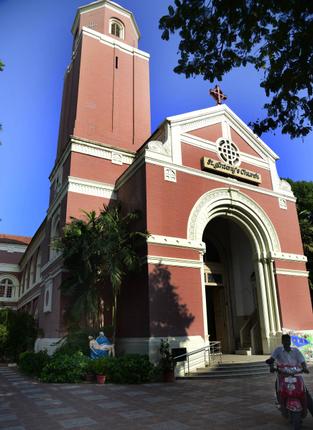
St. Anthony’s Church, Pudupet. Photo: M.Vedhan / The Hindu
Be that as it may, what was particularly pleasing was to hear that Fr. Kiran had during his three-year parish priesthood at St. Anthony’s, Pudupet, collected over Rs. 25 lakh to restore that 80-plus-year-old church using the best possible conservation practices that he had read about and heard of from a few conservationists. With this knowledge he had supervised the entire work — and now it only needed regular maintenance to retain its attention-drawing appearance.
There is a tradition that the French Capuchins had ministered to the needs of the rather impoverished Roman Catholics of Pudupet before it became the parish of Pudupet in 1873, a part of the then Archdiocese of Mylapore. Fr. Y. Arulappa was appointed parish priest in 1909 and was to hold the post for the next 20 years. It was during his tenure that the Church of St. Anthony of Padua, the church restored by Fr. Kiran, was built, being consecrated in September 1927. Starting a collection drive in October 1920, Fr. Arulappa had funds enough by the end of the year to have the confidence to invite a papal dignitary to lay the foundation in January 1921. But collecting the funds to finish the work was a slow process.
Priests who succeeded Fr. Arulappa embellished the church over the years that followed — a pale wooden altar was replaced by a gleaming ebony one, the interior was painted and improved with paintings, and other elements of beauty were added. All those and the building itself have now been restored — an example for the nearly 1,200 Catholic churches in Tamil Nadu, about 375 of which date to before 1947 and considered by Fr. Kiran, who visited and listed all of them for his thesis, as heritage churches. He hopes his lead will be followed in other States and by other denominations. For me, it was great to find a fellow-enthusiast for heritage.
******
When the postman knocked…
* Does John Pereira’s Garden still exist and, if so, where, wonders reader Raymond Pereira. I don’t know whether my correspondent is a descendant of John Pereira, but I can only disappoint him. To the best of my knowledge, the garden, once a small coconut thope at the southwest extremity of Peddanaickenpet, in the vicinity of where the General Hospital was developed, no longer exists, being completely built over. It belonged originally to Joao Pereira de Faria (John Pereira), a prosperous merchant of Negapatam (Nagapattinam), who fled the Dutch occupation and re-settled in Madras in 1660 with a house in White Town (Fort St. George). The Fort had 118 houses within it at the time, 79 of them belonging to Portuguese merchants and employees of the East India Company. Pereira’s daughter Escolastica married Cosmo Lourenco Madera (or Madeiros) who built the Descanco Church on St. Mary’s Road, Mylapore. Their son, the merchant-seafarer Luis Madera, was the owner of the garden house that his widow Antonia Madeiros sold to Governor Saunders and which became the nucleus ofGovernment House, so rudely pulled down not so long ago to build a new legislature that has now been transformed into a hospital.
* My reference the other day to the statue of Rev. G.U. Pope on the Marina (Miscellany, September 8), had K.V. Iyer asking me whether I knew that Pope owed his Tamil scholarship to Ramanuja Kavirayar. Not only did I not know that, but I must confess that I had not heard of Pope’s guru. I did, however, go a-digging and found that this Ramanathapuram-born scholar was in his thirties when he come to Madras in 1820 and began bringing out in print for the first time the Tamil classics with commentaries. But simultaneously he began gaining a reputation as an outstanding teacher of Tamil. Among his pupils were Pope (who acknowledged him as “my first teacher of Tamil”), the Rev. Myron Winslow, the Rev. W.H. Drew and the Rev. C.T. Rhenius. He helped Winslow with his English-Tamil dictionary and Drew with his translation of the Thirukkural into English. The other two missionaries also owed much to his advice for the literary works they produced. But from all accounts, despite his contribution to Tamil literature, Ramanuja Kavirayar was best known as an outstanding scholar and teacher.
source: http://www.thehindu.com / The Hindu / Home> Features> MetroPlus / by S. Muthiah / September 28th, 2014