Families in the saddle to bond over horses

Like the racecourse to which it is affiliated, Madras Riding School is a trendsetter. The first riding school in the city, it was established in 1951 to teach civilians the finer points of horse-riding. Lessons were initially held at Raj Bhavan, where Jawaharlal Nehru inaugurated the school in 1959. However, the horses themselves were stabled at 100 Feet Rd in Velachery on grounds leased to Madras Race Club.

“There were fewer students back then and most belonged to the upper echelons of society,” says N V Ravi, president of Madras Riding School. The school counts industrialists and cricket administrators M A Chidambaram and A C Muthaiah and barrister Govind Swaminathan among its former students.

Six decades later, the school’s stables have double the number of horses at 30 and three times as many students – around 80. The school has also moved location, to Velachery High Road where the erstwhile Apprentice Jockey Training School stood.

“It was where people who wanted to pursue professional horse-racing were trained,” Ravi says. The jockeys may have long left the grounds, but the racehorses remain. Several of the thoroughbreds at the school were once habitues of the race track.

Today, the school’s students – from age three to 70 – may have no intention to gallop 100kmph, but they do train for subtler equestrian sports like show jumping and dressage. In fact, a couple of Madras Riding School’s students like Namrata Kishore, 17, and Sai Arun, 21, have won the Junior National Equestrian Championship in jumping, and a new crop of riders like Kayva Gopal, 13, and Avadaath Kiran, 9, have been high scorers at the newly introduced Indian Dressage League.

Chief instructor and manager at the school Anita Ojha says six decades ago people signed up because they had nothing but recreational riding in mind. Now, even though they first sign up for recreational riding, they are soon drawn into competitive riding, primarily because of the progressive format adopted by the school where students are gradually initiated into all aspects of equestrian sport and encouraged to test their ability against other accomplished riders in the school.

She adds that the proliferation of local and national championships and the growing competitiveness of this generation have also changed the nature of the game. “What’s more,” says Ojha, “whole families are now coming to class, to bond over horses, which is wonderful to see.”

source: http://www.timesofindia.indiatimes.com / The Times of India / Home> City> Chennai / by Joenna Rebello Fernandes, TNN / June 20th, 2014
Lone Chennai boy secures place on MBBS top 10 list

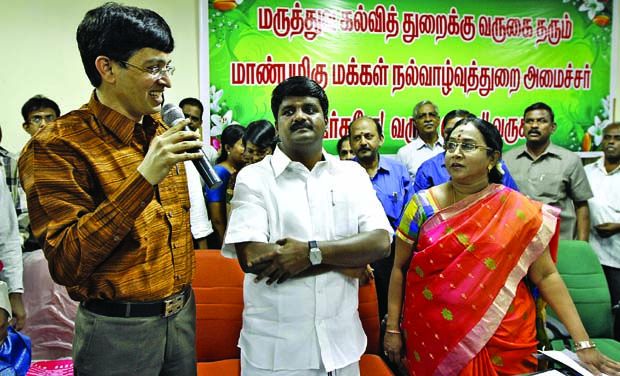
Health minister Dr C. Vijayabhaskar (centre), along with health secretary Dr J. Radhakrishnan and director of medical education Dr S. Geethalakshmi, release the MBBS toppers’ list on Saturday (Photo:DC)

Chennai:

K. Sundar Natesh of D.A.V. School, Gopalapuram, secured the first rank among the top 10 MBBS aspirants, according to a list released by health minister Dr C. Vijayabhaskar on Saturday. Like last year, only one MBBS aspirant from the city could make it to the top 10. Schools in Namakkal secured six ranks out of the top 10.

“I’ve been dreaming of joining MMC for many years, and hopefully, that dream will come true on June 18 when I will be given admission,” said Natesh. Till Class 10, S. Abhishek, the second rank holder in the MBBS rank list, studied in a Chennai school, but shifted to Sri Vidya Mandir in Krishnagiri as his father hoped he would secure good marks in that school. “My cousin studied in the school and scored well. I too worked hard for two years and now I’m happy that I could join the prestigious MMC and go to college from my home in Chennai,” said Abhishek.

Selection Committee secretary Dr. R.G. Sukumar said that no one had applied under the freedom fighters category. There were 28 from the ex-servicemen’s cagtegory and 79 from the physically challenged.

Speaking about the number of seats available in 19 government medical colleges, officials at the Directorate of Medical Education said that 2,172 seats would be filled under the state quota in 19 government medical colleges and 993 in self-financing colleges.

“The first phase of counselling will be held till June 22 and seats for MBBS in government, self-financing and BDS in government colleges will be filled in. The second phase of counselling will start in the second week of July.

MBBS/BDS admission will be closed by September 30 as per the Supreme Court order. “The academic year will start from September 1,” said Dr. Sukumar. For details, candidates can log on to www.tnhealth.org, www.tn.gov.in.

source: http://www.deccanchronicle.com / Deccan Chronicle / Home> Nation> Current Affairs / DC Correspondent / June 15th, 2014

Dubai woos Tiruchi fabrication units

Dawood Khan Jawahar Ahamed, right, senior engineer (contracts), DEWA, making a presentation in Tiruchi on Tuesday on business opportunities for SMEs in Dubai. / Photo: A. Muralithara / The Hindu

DEWA to facilitate SMEs to register themselves as vendors in Dubai

With fabrication units of Tiruchi beginning to explore business opportunities in Dubai, the State-run Dubai Electricity and Water Authority (DEWA) has come forward to facilitate the small and medium enterprises to register themselves as vendors in Dubai and also provide match-making services for the SMEs.

Representatives of DEWA, who visited the city for an interaction with BHELSIA members in November last year, are here again to take forward the discussions. A delegation of BHEL Small Industries Association (BHELSIA) had also visited Dubai recently to explore opportunities .

Both the organisations are of the view that fabrication units could tap direct and indirect business opportunities in Dubai. Briefing reporters here on the discussions, Dawood Khan Jawahar Ahamed, senior engineer (contracts), DEWA, said fabrication units of Tiruchi could supply equipment for power generation, power and water transmission, renewable energy, oil and gas, desalination plants, and a host of other fields.

His organisation would support the fabrication units in not only registering themselves as vendors online but also provide match-making services to help them become sub-contractors for DEWA’s main vendors.

Dubai was now going in for a 2 x 600 MW clean coal technology power plant and 1 x 100 MW solar power plants. The country will also ramp up its power generation capacity ahead of Expo 2020. “We are looking at suppliers in Tiruchi for its cost competitiveness and quality in fabrication,” he said.

VendortrichyCF19jun2014

“Our vendor registration process is very simple and can be done online from here. We do not have a system of approved vendors and anybody with expertise to supply quality material can register themselves.

Unique codes will be assigned within two days and evaluation will be purely on merit,” Mr.Ahamed said. Mr.Ahamed said that DEWA would help BHELSIA in exploring opportunities in countries other than Dubai in West Asia and elsewhere. “We are here for a long-term association,” he affirmed.

M.Srinivasan, president, BHELSIA, said after long years of being dependent on the public sector major BHEL, fabrication units in Tiruchi are now ready to explore opportunities abroad. “We have built the capacity and expertise. We have learnt from our visit to Dubai that we can do business from here. Given our cheap and qualified labour, we can still be competitive by exporting,” he said.

source: http://www.thehindu.com / The Hindu / Home> News> Cities> Tiruchirapalli / by Special Correspondent / Tiruchi – June 11th, 2014

Martial art from Tamil Nadu thrives abroad, neglected in state

Coimbatore :

Khainul Bin Abdullah, a Class 8 student at Melaka in Malaysia, has been learning martial art forms that originated in Tamil Nadu, for the last three years including ‘suvadu’ and ‘mallu sandai’.

He began learning this after seeing his elder brother learn them. Now he has become an expert in these forms and attends competitions in many parts of the world. Abdulllah was one of the participants at the Asian level Adithada Competition held at the Rathinam Group of Institutions at Eachanari near Coimbatore on Saturday and Sunday.

“Several people from across the world are coming to learn ‘adithada’, which includes many of our traditional forms like ‘suvadu’, ‘verum kai por’, ‘mallu sandai’ and various other traditional martial arts,” said Kalari P Selvaraj, general secretary of World Adithada Federation. These forms are collectively called ‘Adithada’. They were practised by Tamil expatriates and have gained a huge following abroad.

A few years ago they formed World Adithada Federation to popularise the forms. “We are hopeful that one day this art will be recognised by the Olympic Games committee as some Chinese and Japanese martial arts are,” said Selvaraj. However, they are yet to receive recognition from the Indian government.

Adithada was recognised by the Malaysian government as a sports event two years ago. Now there are around 1,000 people learning this.

“Many schools have included this as one of their extra-curricular activities,” said R Damodharan, a trainer from Malaysia. Excelling in the sport will help students going for higher education, he said.

Apart from Malaysia, participants have also come from Singapore and Bangladesh to take part in the event. Neethan Islamudheen, a martial arts trainer in Dhaka, said that there was a growing interest in the form in his country. He began to learn ‘adithada’ after a few trainers from the federation held a seminar in Dhaka a year ago.

“Many of those who are learning other martial arts are showing interest in it. This is because we find it has more traditional movements,” he said.

The organisers say they have to popularise the sport in various countries and get recognition in at least 90 countries to get entry in Olympics.

source: http://www.timesofindia.indiatimes.com / The Times of India / Home>City> Coimbatore / TNN / June 09th, 2014

Tourism is the future, Valparai reads the tea leaves

Coimbatore :

Valparai has been in festive mood since the Kodai Vizha opened in the tea town on May 30. Though meant to showcase the town as a tourist destination, the local population dominated the crowd that had gathered at the government high school. A host of events mirroring the summer fest in Ooty including dog show, flower show, gymnastics performances, music and magic kept the crowd entertained.

By Saturday noon the place was swarming with people as tea estates in the region and the district administration had declared a holiday. “There is not much opportunity for the estate employees to go out of Valparai and such events are the only mode of entertainment for them and their family,” said an official involved in organizing the event.

A tent was raised on the school’s playground and classrooms were converted into stalls with exhibits displayed by various departments of the state government. “The traffic exhibit has a mini theatre that screens short films on road safety with clips taken from CCTVs installed at the traffic signals. It is good way of helping youngsters understand traffic regulations,” said Sreenivasan M, 36, a tourist from Madurai, who was rushing to the playground to catch a glimpse of the gymnastic show.

The forest department showcased the wildlife of Anamalai Tiger Reserve and had put up charts about snakes in the Western Ghats. Stalls from the horticulture department, TANTEA (Tamil Nadu Tea Plantation Corporation Limited) and the health department were more about showcasing their activities.

Of course, food was available in plenty. From savouries to biriyani, everything was available at the more than 10 food stalls at the venue. “I earn nearly Rs500 on a normal day. But, yesterday (Friday) I earned 60% more than the regular,” said Chandrashekar B, a savoury lentils vendor.

The crowd-puller this year was the paragliding event. “We have got permission only for two days and the kind of enthusiasm among the tourists, especially small children, is amazing. I feel bad when I say no to a kid who weighs less than 40kg,” said Babu, a glider from Coimbatore, who was in-charge of the adventure sport. “We had planned for zorbing ball, parasailing and paragliding. But, we did not get permission from the forest department. Paragliding was organized after the district administration took responsibility for security,” said Babu.

source: http://www.timesofindia.indiatimes.com / The Times of India / Home> City> Coimbatore / by Adarsh Jain, TNN / June 01st, 2014

I didn’t realize it was a big achievement

His modest workshop in the sleepy locality of KNG Pudur in Coimbatore stocks a few machines that spit out the revolutionary low-cost sanitary napkins. Menstrual man Arunachalam Muruganantham, perched on his chair, goes on with his business even as he sorts out his visa applications to the different countries he has been invited to deliver keynote seminars. “All these visits are by invitation only. I had never stepped out of the city before. Today, I rub shoulders with biggies across the world,” says Muruganantham, son of a poor handloom weaver.

A Muruganantham
A Muruganantham

The social entrepreneur has found a place in the list of 100 Most Influential People in the World by an international magazine, that too with the likes of Narendra Modi, Arvind Kejriwal and Arundhati Roy. “When I got the news, I didn’t realize it was a big achievement. It was my wife, who told me that it was a feat I should be proud of.”

The tryst with the production of low-cost sanitary napkin producing machines began when Muruganantham saw his wife using a rag cloth during those days of the month. “I wouldn’t even clean my scooter with that. That’s when it struck me that most of the women, especially in the rural areas are not aware of sanitary napkins and those who did, couldn’t afford it. I studied women across the country and I was shocked to find out that only 5 per cent of them (excluding the metros) were aware of sanitary napkins. Women in rural households used saw dust, dry leaves and ashes on those days. When I showed these slides abroad, the audience was stunned. I started working on the machines with utmost care. No one volunteered to be my subject and when I tested these pads on myself, I was called a pervert. It was journey where I had to battle many ordeals.”

Muruganantham’s hard work bore fruits when his work was approved by IIT Madras in 2009. “It was a strange ambiance there. Everyone out there was conversing in English and I didn’t understand a word of what they were saying. I thought I would never fit into the corporate set up. But when my design was finally approved, I was glad that I was not well- educated as I didn’t have learn about ‘unnecessary’ things. I then supplied the machine to women self help groups, who now not only make a living out of it, but also take care of their ‘monthly’ issues,” says Muruganantham, who strongly believe in the cause of women empowerment. “We keep discussing nuclear power and other issues but we should spare a thought to the basic needs of our women. Now that I am on a mission to spread awareness about menstrual hygiene and help women, I would be glad even if I am able to raise the awareness level to 10 per cent.”

He also emphasizes that entrepreneurship is the need of the hour. “Every year, in our country, we churn out more job seekers rather than job creators. We have to look at new business models, identify a problem and work on a solution for the same. Today, the machines I have created have provided employment to many women in the rural areas across the country. Why can’t youngsters follow suit?”

As the conversation veers to his future plans, Muruganantham says, “I am now working on a model of suspended agriculture that is growing plants without water and sand,” he says as shows us a plant hanging from the ceiling of his factory. “This is to help the landless farmers,” he says with a grin.

source: http://www.timesofindia.indiatimes.com / The Times of India / Home> City> Coimbatore / by P. Sangeetha, TNN / june 07th, 2014

History woven into this silk lane

Madurai :

The lane called Pathuthoon Sandhu could be easily missed by a first-time visitor to the city as several textile shops dominate it. This protected archaeological site near the historical vilakkuthoon (lamppost) in Madurai was part of the erstwhile Nayak Mahal. It was at Rangavilasam where Thirumalai Nayak’s brother Muthiyalu Nayak stayed. The 10 pillars (Pathuthoon) were part of the palace.

The pillars are 12 meters high and have a diameter of 1.2 m. They were constructed with ring-shape stones placed one above another. The magnificent pillars inside Nayak Mahal are also of the same pattern, but they are plastered, archaeological sources said.

According to historians, Rangavilasam was dismantled when the capital of Madurai Nayaks was shifted to Trichy after Thirumalai Nayak’s rule in 1665. It was Thirumalai Nayak who turned Madurai as the capital of Nayak kingdom, but his predecessors and successors preferred Trichy instead. When they moved the capital again, they moved the materials from the dismantled portion of palace – Rangavilasam -to the new capital, said R Venkataraman, a city-based historian.

British rulers, who captured power in Madurai after the Nayaks, preserved the 10 pillars as they were quite amused by its architecture. “British rulers were curious to learn the architectural methods of the natives and they protected the pillars,” he said, while adding that “silk weavers living near the palace occupied the area after Rangavilasa was dismantled. Pathuthoon Sandhu was a typical silk weavers’ lane.”

There is a reason why the lane is so narrow, Venkataraman said. “After the Gupta dynasty, silk became the attire of royal families for it symbolized peace and prosperity. Silk weavers – predominantly Sourashtrians – were patronized by several dynasties across the country. Chola, Pandya, Nayak and Vijayanagara rulers patronized them in the south,” he said.

“Silk weavers lived near palaces and silk processing and weaving were conducted discreetly. The streets were meant only for use by the weavers. The narrow lanes were used to dry silk threads. Anyone sneaking into the streets was questioned by guards deployed at military outposts near the lane,” Venkataraman explained.

Several textile shops fringe the lane now. “There are not many houses when compared to about 30 years ago. The lane has been turned into a commercial hub for textiles in the last three decades,” said Balakrishnan, a textile merchant.

source: http://www.timesofindia.indiatimes.com / The Times of India / Home> City> Madurai / by J. Arockiaraj, TNN / June 09th, 2014

Obama names IIT aluminus to Science Foundation board

Barack-ObamaCF19jun2014

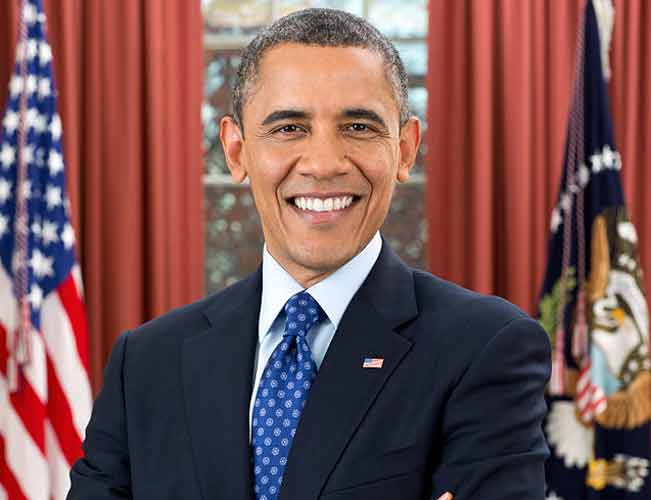
US President Barack Obama plans to appoint a Madras University graduate and alumnus of the Indian Institute of Technology as a member of the National Science Board of National Science Foundation.

The proposed appointment of Dr Sethuraman Panchanathan, Senior Vice President of the Office of Knowledge Enterprise Development at Arizona State University (ASU), was announced by the White House Friday with 15 other key administration posts

“Our nation will be greatly served by the talent and expertise these individuals bring to their new roles. I am grateful they have agreed to serve in this Administration, and I look forward to working with them in the months and years ahead,” Obama said.

At over thirty, the Obama administration has more Indian-Americans working at high places than in any other previous administration.

Panchanathan, who has held his current position at ASU since 2011, previously worked as a Data Communication Engineer for International Software India Limited in Chennai, India in 1986.

He received a BSc from the University of Madras, a BE from the Indian Institute of Science, an MTech from the Indian Institute of Technology, and a PhD from the University of Ottawa, Canada.

Panchanathan has held a number of positions at Arizona State University since 1998.

He has been a foundation chair professor in Computing and Informatics since 2009 and a founding Director of the Centre for Cognitive Ubiquitous Computing since 2001.

Panchanathan founded the ASU School of Computing and Informatics in 2006 and the Department of Biomedical Informatics in 2005.

Prior to working for ASU, Panchanathan served at the University of Ottawa as a founding Director of the Visual Computing and Communications Laboratory from 1990 to 1997.

He worked as Associate Professor in the Department of Electrical and Computer Engineering from 1994 to 1997, and Assistant Professor from 1989 to 1994.

Image courtesy: Wikipedia

source: http://www.prepsure.com /  PrepSure / Home> News / IANS / June 16th, 2014

From singer to radio jockey

Singer Anuradha Sriram

Anuradha Sriram will host a radio show on the Mozart of Madras

Singer Anuradha Sriram has taken on a new role – she’ll be hosting a radio show titled Rahman Ungaludan. As the name suggests, it will talk about everything about the Mozart of Madras – tales and trivia about the man of few words.

For the singer, who perhaps kick-started the idea of reality music shows in television when she hosted shows way back in 1996, it is a challenge and something to cherish at the same time. “Radio is a different ballgame but the fact that I’ll be speaking about a person who has been a mentor to me makes it exciting,” she says. Anuradha first sang for Rahman for Mani Ratnam’s Bombay; it was not a full-fledged song but a few notes that she hummed. “He told me then that my voice was divine,” she says, “With Rahman, there’s always space to improvise and experiment. He lets you be who you are. Perhaps that’s why the output is always good – from then to now.”

It will be a learning experience for her, she hopes. “As a singer and a person interested in music, it’s fascinating to see how great minds work. I hope to track Rahman’s journey in music…and learn from it.”

‘Anbendra Mazhaiyile’, one of her songs for Rahman, remains fresh in the memory of the classically-inclined. “He wanted me to sing that particular song because he felt I evoked divinity in listeners,” recalls the singer, who later also branched into singing fast-paced kuthu songs like ‘Malai Malai’ (Chocolate) and ‘O Podu’ (Gemini).

Few people know that ARR has a sense of humour too – the singer recalls how he used to call her ‘Gnanapazham’. “He was very interested in classical music and used to discuss ragas extensively. I will talk about those sessions in the show and try to provide a perspective of the composer that only a few people know,” says Anuradha, who also ventured into music composing when she, along with husband Sriram Parasuram, worked on Five Star.

Starting tonight, Rahman Ungaludan will play every Monday to Friday at 9 p.m. on 92.7 BIG FM

source: http://www.thehindu.com / The Hindu / Home> Features> MetroPlus / by Srinivasa Ramanujam / Chennai – June 15th, 2014

Call to preserve first water project as heritage property

Madurai :

Established in 1892 by the British, Arapalayam Water Works is the first modern drinking water scheme in Madurai. An initiative of J A Jones, a British engineer, the project enabled the British to provide drinking water to Madurai city.

However, the scheme was abandoned after 1980 due to contamination of the riverbed and decaying of the stone structure which hosted the water works after city corporation dismantled its roof for renovation. Almost after a year, renovation was not carried out and the otherwise heritage structure is at peril. Residents and conservationists advocate that the structure and place surrounding it – being used as two-wheeler stand at present – can be converted into a beautiful park and heritage centre.

After capturing power in Madurai, the British constituted the city as a municipality in 1866 . To provide clean drinking water, Arapalayam Water Works was developed by the municipal administration by constructing a check dam and sand aquifer wells were sunk. The British were able to pump 30 lakh litres per hour through this system and were able to provide drinking water to the entire city. They also took care in protecting the check dam and aquifers by deploying a mounted horse battalion. According to a book titled ‘Neerinri – the water resources of Madurai’, the project, which had a long run was abandoned in 1980.

R Shivakumar, author of Neerinri, stresses that the structure should be protected considering its heritage value. “It could be turned into a park and the building could be used to host an event exhibiting photos and models of drinking water schemes of Madurai,” he said.

R Jothiram, 60, a resident of Arapalayam, recalled that a park existed some decades ago. “Some 40 years ago there was a park surrounding the water works. The Vaigai river itself was in good condition. The corporation and PWD failed to prevent contamination of the river and subsequently abandoned the project,” he rued. “There is no proper park for Arapalayam and Ponnagaram regions and converting this land at Arapalayam as park will be ideal. Besides hundreds of passengers utilizing nearby Arapalayam bus stand can cool their heels in this park,” said A Ramesh, a resident of Ponnagaram.

source: http://www.timesofindia.indiatimes.com / The Times of India / Home> City> Madurai / by J. Arockiaraj, TNN / June 11th, 2014