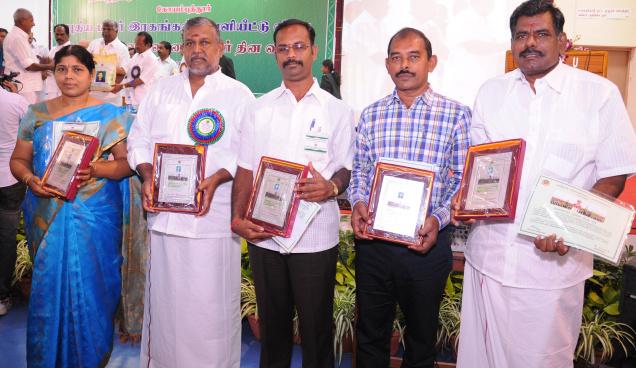
The certificates for the six-month course on NGO management, on Friday, was distributed to 16 people, including 12 women at the Holy Cross College in Trichy, one of the oldest colleges for women in South India.
Receiving the certificate from Sr Stella, president of Assisi Aid Projects India, in the presence of Holy Cross principal Dr (Sr) Jeusin Francis, Jaya Mani, a 50-year-old widow said she used to wonder whether she would ever have a chance to even enter the Holy Cross premises, let alone getting enrolled for a programme, whenever she passed through the college at Teppakulam. “Then I continued to dream of getting my two daughters enrolled in the college, but in vain,” said Jaya Mani. “Now, I cannot even dream of getting my two grandchildren enrolled in the college, because they are males,” she quipped.
But Jaya Mani was all the more happy as she was getting a certificate with the Holy Cross College emblem at its very premises. But it was all thanks to the efforts of Antony Stephen, a faculty member of the department of social, who with the support from Sr Jeusin Francis, got the 60 hours three-credit course approved by the HCC board of studies. Three subjects were taught: Introduction to NGO management, project planning management, and project cycle management (PCM).
In the past, National Bank for Agriculture and Rural Development ( NABARD) used to train the workers of the NGO for duration of five days, when as a visiting resource person Stephen found out that the workers lacked the knowledge for auditing procedures, its legal requirements and liaising with funding agencies. Thus, the unique course was born. The minimum requirement was eight years of schooling, and age was no bar.
For the first time, two batches of 16 people were awarded certificates. One of them a 62-year-old man, K Chandrasekhar, was previously a bonded laborer, and now runs a NGO called DEW (Development Education for Workers). Stephen said the new certificate course would become a permanent feature of the autonomous college.
source: http://www.articles.timesofindia.indiatimes.com / The Times of India / Home> City> Trichy> South India / TNN / January 11th, 2014
The Tamil Nadu Agricultural University (TNAU) has released a new rice variety, which has recorded a highest yield of 11,567 kg per hectare.
Rice TPS 5, released at a function today, observed as Farmers Day, has a normal yield of 6,301 kg per hectare, 13 per cent increase over the parent seed ASD 16, with 118 days duration.
This can be adopted throughout Tamil Nadu barring Ramanathapuram and Sivaganga Districts, a TNAU release said.
The highest yield of 11,567 kg was achieved at Mohanoor in Namakkal district.
TNAU also released Blackgram MDU 1, which has a yield of 1,679 kg/ hectare. The newly released variety of fodder sorghum Co31 has a yield of 227 tonnes per year.
The newly released Butter Pear Ooty seed has a yield of 97.13 kg per tree a year, meant for Nilgiris district and Kodaikanal.
source: http://www.thehindubusinessline.com / Business Line / Home / by PTI / Coimbatore – January 11th, 2014
When I revise my book on the Anglo-Indians, one of the many achievers I will have to add to my already long list will be Dr. John Shortt of the Madras Medical Services in the 19th Century. He could well have been one of the Madras Medical School’s first students when it was founded in 1835 with ten East Indians, as Anglo-Indians were then known, to be trained as apothecaries and 11 Indians to be trained as dressers, both, however, being additionally trained in diagnostic and aftercare skills. Among the four-member staff to train them, headed by Surgeon Mortimer, was Apothecary D’Beaux, an East Indian, and P. Muthuswami Mudaliar, but where they were trained I have not been able to trace. It was possibly this team that trained John Shortt.
To cut a long story to Shortt, he joined the East India Company’s services as an Assistant Apothecary. He must have been something exceptional even then, for he was selected to go to Edinburgh to study further. There he got an MD degree before returning to India to join the Madras Medical Services in 1854. In the Service, he served with the rank Surgeon-Major. When he retired 25 years later, he was serving in the rank of Colonel and, more importantly, as the Deputy Surgeon-General of the Madras Presidency, quite an achievement in those days for an East Indian.
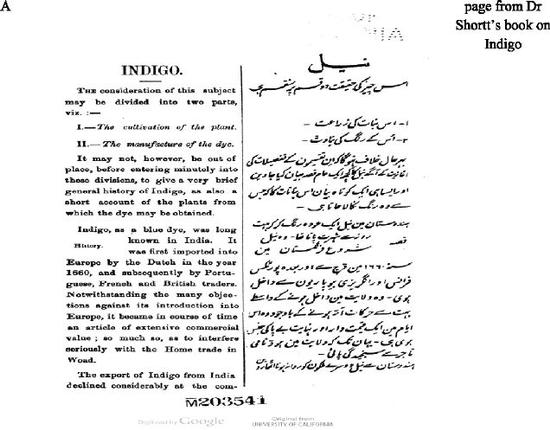
Like many Government officials in those days, Shortt too spent much time on a variety of interests which got them wider recognition. His interests were botany, biology and anthropology. His published works included a paper on the Indigo plant in 1860, an anthropological study of the Todas, and a paper on the coffee plant. His paper on Indigo, written when he was Zillah (District) Surgeon, Chingleput, was published by ‘Pharoah and Co’. It was a publication noteworthy for its two-column page format featuring the English text in the left column and the “Hindustani translation” in Urdu script on the right. Shortt also practised as a veterinary surgeon after his retirement in Yercaud till his death. Out of his experiences of those years came a book titled A Manual Of Indian Cattle And Sheep: Their Breeds, Management And Diseases published by Higginbotham’s.
A page from Dr. Shortt’s book on Indigo / The Hindu
His work in biology was responsible for Shortt being invited to be a Fellow of the Linnean Society, London. He was later to propose Dr. Senjee Pulney Andy (Miscellany, August 26, 2013) for a Fellowship of the Society. Both of them independently wrote articles on the branching palms in South India that were published in 1869 in two different journals of the Linnean Society. Both also wrote on the Palmyrah and other flora in the journals of the Madras Agri-Horticultural Society. Shortt, who in the early 1870s, was listed as the Superintendent-General of Vaccination, was probably Pulney Andy’s boss, the latter serving as the Superintendent of Vaccination, Malabar, at the time. Shortt was also during this period the Secretary of the Obstetrical Society of Madras. He passed away in Yercaud on April 24, 1889. I wonder whether a reader in Yercaud can come up with a picture of Shortt’s tombstone and a note on his practice there.
******
The Turings of Madras
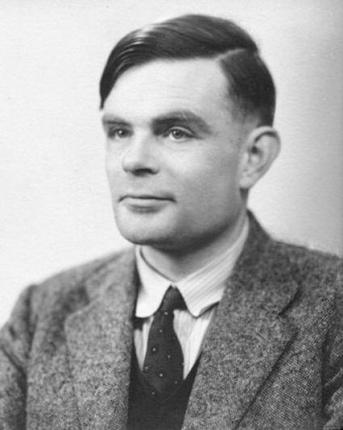
Alan Turing / The Hindu
It was Vishwas Ghaskadbi who set me on this trail by sending me an extraordinary story of coincidence related by Anvar Alikhan shortly after the story appeared of the famed World War II code breaker, Alan Mathison Turing, also known as the ‘Father of the Computer’, being pardoned posthumously by Queen Elizabeth II 60 years after he had been convicted for homosexuality. Shortly after the conviction, Turing had committed suicide.
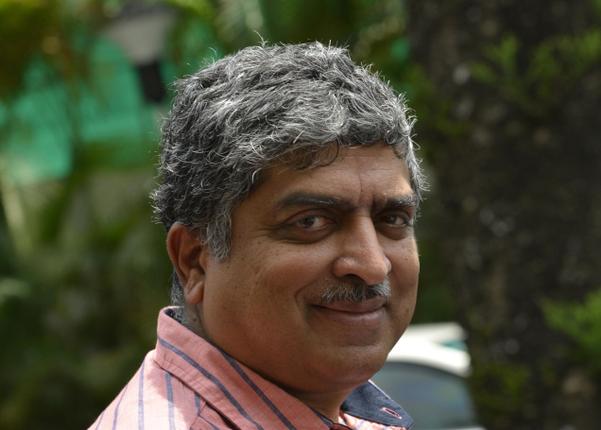
Alikhan, doing a bit of research on Turing, discovered that Turing had connections with Madras on both sides of his family. The trail led to a house in Coonoor to which had retired E.W. Stoney, a railwayman, who was the father of Ethel Sara Stoney, the mother of Alan Turing. Then came the amazing coincidence — The Gables, which still survives in Coonoor, was bought by Nandan Nilekani, one of India’s leading authorities on the IT industry. He had no idea that his holiday home had a Turing connection — till Alikhan showed him indisputable evidence dating to 1916 that E.W. Stoney had indeed been the owner of The Gables.
Nandan Nilekani / The Hindu
The statement by Alikhan that Turing had connections with Madras on both sides of the family got me searching for the trail of the Turings of Madras. The Turing story in Madras begins in 1729 with Robert Turing, the fourth son of Sir John Turing, the 3rd Baronet, being appointed Surgeon’s mate in Fort St. David, on the recommendation of Dr. John Turing (a kinsman?), who was the Surgeon of the East Indiaman Greenwich which called at Madras that year. By 1741, Dr. Robert Turing was Surgeon at Vizagapatam and then served in Madras from 1753 to 1762 as a Presidency Surgeon. He lived in a house near Harris Bridge, which is near the Casino Theatre.
Dr. Robert Turing helped Robert Clive to recover from a prolonged illness in 1752 and had him fit to sail for England early in 1753. He was also a persistent advocate for a much larger hospital in the Fort. He wanted space for 250 men, an area to treat 200-300 seamen when the Fleet was in the Roads, and an operating theatre. It was from Sir John Turing’s brother Walter’s line that Alan Turing descended; his father was Julius Mathison Turing, an ICS officer who served in Bihar and the Ganjam District of Madras Presidency.
Whether they were connected with Robert Turing or not, there were in Madras in the second half of the 18th Century John and William Turing, both in the Madras Civil Service, and James and Robert Turing in the Madras Army. John Turing Senior was Sheriff in 1767 (an office William Turing who entered the Civil Service in 1769 was to hold in 1778) and Mayor in 1776. He lived in a garden house in Vepery. Another John Turing, Junior, arrived in 1795 and died in Vizagapatam in 1808. Significantly, that great chronicler of Madras History, H.D. Love, writes c.1912 that “the name of Turing is still represented in the Indian Civil Service in the Southern Presidency.”
source: http://www.thehindu.com / The Hindu / Home> Features> MetroPlus> Madras Miscellany / by S. Muthiah / Chennai – January 12th, 2014
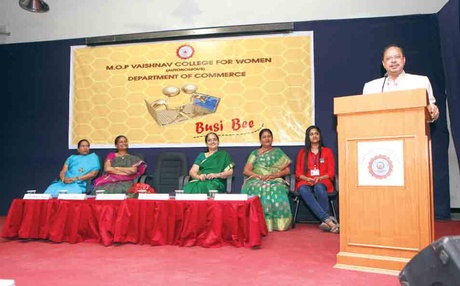
‘Busi Bee 2014’, a two-day intramural fest conducted by the Department of Commerce of MOP Vaishnav College for Women, was inaugurated by Pradipta K Mohapatra, governing council member of the Chennai Business School, here on Thursday.
The eminent economist addressed the students on investing in the stock market. With engaging anecdotes, he interacted with the students and said that people who understand market sentiments will become good investors. He encouraged the students to be updated on the current trends of the stock market saying, “Knowledge on finance backed by good commerce would highly increase the net worth of an investment banker.” He emphasised on the need for counter intuity of logic as this would help the investor gain more money by investing less.
As soon as Mohapatra learnt that the use of mobile phones by students is banned in the college he quipped, “One of the largest sources of knowledge in the world lies at our finger tips but the reason it is not permitted is the suspicion it creates.” He drew parallels with the reception of the calculator during the 70s, much to the delight of the students. Mohapatra also commended the principal for the exceptional standard of the students.
The event will feature competitions focused on management principles with a touch of creativity to make them interesting for the students.
source: http://www.newindianexpress.com / The New Indian Express / Home> Cities> Chennai / by Express News Service – Chennai / January 11th, 2014
All arrangements are in place at the Sri Parthasarathi Perumal temple, one of the important Vaishnavite Divyadesams in the Northern part of Tamil Nadu, to celebrate the Annual Vaikunta Ekadasi festival on January 11.
As part of the Vaikunta Ekadasi festival, Pakalpathu Utsavam began on January 1 and was held till January 10. After the Paramapathavasal Darshan on January 11, Rappathu Utsavam will begin on the same day.
The significance of this ancient temple is that here Lord Krishna is seen giving darshan to devotees as Parthasarathi (charioteer of Parthan or Arjuna with a moustache). During the Pakalpathu Utsavam, traditionally, from the sixth day till Vaikunta Ekadasi, Sri Parthasarathi Perumal will be giving darshan to his devotees without the moustache.
Arrangements have been made to bring the temple complex under police cover ahead of Vaikunta Ekadasi day. Besides, four surveillance towers have been set up to monitor the movements of anti-social elements, if any. Closed Circuit TVs have also been set up inside the temple.
The `300 ticket for early morning darshan starting from 2 am on January 11 can be bought from the temple from 2 pm on January 9. MRTS will operate special trains and MTC will operate special buses to Triplicane to help the devotees.
Since thousands of devotees from various parts of the city are expected to visit the temple on January 11, The Chennai Corporation has made special arrangements for ensuring basic amenities for the devotees. The Paramapatha Vasal Darshan will be relayed through megascreens placed on the Eastern and Western sides of the temple.
From January 12 to 19 Paramapathavasal Sevai will be performed at 6 pm and the same will take place at 9 am on January 20.
source: http://www.newindianexpress.com / The New Indian Express / Home> Cities> Chennai / by Express News Service – Chennai / January 11th, 2014
Progressive practices:Velanmai Chemmal awardees with their certificates and mementos, at the State-level Farmers’ Day at Tamil Nadu Agricultural University in Coimbatore recently. / by Special Arrangement / The Hindu
As it does every year, this time too the Tamil Nadu Agricultural University gave away awards to five select farmers from different parts of the State in recognition of their innovation and progressive methods followed in agriculture.
Instituted by the university, the Velanmai Chemmal Awards are sponsored by C.R.I. Pumps.
This year’s achievers included G. Mayilsamy from Sulur Kaliapuram, Coimbatore, for his contribution to seed and bio-fertilizer production by adopting new technologies, and also for making many other farmers follow them to turn them into progressive farmers.
G. Karikalan from Keelapatti, Karur district, for adoption of latest technologies in ensuring sustainable agriculture received an award too. He has also established a co-operative production company, which is operating successfully.
T. Rajkumar from Devankudi, Tiruvarur district, was recognised for his contribution to sustainable agriculture and service to farming community. He is involved in extensive use of mechanisation, from sowing to harvest of rice. He has also associated himself and other farmers with animal husbandry, to generate additional income.
A.P. Karuppiah, a banana farmer from Sinnamanur, Theni district, received award for his contribution and service to farming community. He has been instrumental in motivating farmers to form associations and take up processing technologies in making banana products
R. Suganthi from Neyveli in Cuddalore district, was recognised for her contribution to rural women’s development and service to farming community. She has been associated with making and marketing processed food products. She is also involved in spreading the food processing technologies of the university among women Self Help Groups.
According to Vice-Chancellor K. Ramasamy, the selection procedure is very stringent. “Applications for the award are distributed by the Krishi Vigyan Kendras (KVKs). The KVKs shortlist and submit a list of five names. These names are assessed by a five-member committee based on 10 criteria. The criterion is not only to do with their achievements, but also how much they can disseminate the knowledge that made them achieve great heights,” he said.
The final five were selected from the shortlisted 12. The winners of the award will visit all the colleges and campuses of the university to share their experiences with students.
source: http://www.thehindu.com / The Hindu / Home> News> Cities> Coimbatore / by Staff Reporter / Coimbatore – January 19th, 2014
Government job comes 22 years after he registered with employment exchange
Twenty-two years after he registered with the employment exchange in Tamil Nadu, L.Rajagopal’s dream came true: he landed a government job, six years before he is scheduled to retire.
He was given his appointment order for the post of assistant engineer in the Chennai Corporation about 10 days ago. On the first day of the training session for newly recruited assistant engineers at Ripon Buildings on Monday, Mr.Rajagopal along with other engineers half his age, declared his determination to contribute to welfare measures and civic improvement during his tenure.
After two frustrating attempts in his pursuit of his personal ‘Holy Grail’ – a government job – Mr. Rajagopal heaved a huge sigh of relief on the the first day of the training session.
He is the oldest among the 81 assistant engineers selected by the Corporation recently. The youngest engineer is 21 years.
The decision to opt for “private practice” after graduating from Tirunelveli Government Engineering College in the 1980s cost him a secure future, he rues. “I registered late with the employment office, in 1992. I was a (private) licensed surveyor in Srivilliputtur. As competition increased, I was unable to sustain the initial drive. By the time I understood the importance of a secure government job, it was too late,” says Mr.Rajagopal whose eldest daughter is all set to join college next year.
“In 2007, I appeared for a test, and on clearing it, I joined the TWAD Board, but thought the position offered at the TNPCB was better, so I moved. Unfortunately, that batch could not continue in service because of a court case. I was again left without a government job,” he says.
“Now, this new job seems challenging. I will certainly strive to bring about a change in civic conditions of my ward by giving additional focus on maintaining records,” promises Mr.Rajagopal.
“The coming six years will provide me a wonderful opportunity to explore the meaning of public service in life.”
source: http://www.thehindu.com / The Hindu / Home> News> National> Tamil Nadu / by Aloysius Xavier Lopez / Chennai – January 21st, 2014
Rapunzel may have used her locks to allow her lover to visit her, but Chennai’s long-haired girls are using their locks to give hope to children with cancer.
The Rotaract Club of Women’s Christian College (WCC) has adopted an initiative where girls can contribute their hair to make wigs for poor cancer patients. The hair would have to be a minimum of 10 inches long. The students plan to get the wigs made and donate them to the Adyar Cancer Institute.
The girls, who plan to receive hair donations from the public, too, got the idea from Locks of Love, an American organisation that organises a similar donation. “We were looking to take up an initiative that will reach people directly,” said club president Rennee Saradha, a final year student who plans to tonsure for the cause. A group of students visited Adyar Cancer Institute to find out if wigs were required. “We need at least 100 wigs a month,” said Dr V Surendran, psycho oncologist at the institute.
Cancer patients lose hair during chemotherapy. While the hair does grow back once they are cured, patients, especially children and girls tend to feel embarrassed during the treatment. “Hair loss affects their body image,” said Dr Surendran. “So they become even more depressed during the treatment.”
Wigs in the country are expensive and are not easily available. A 10-inch wig costs between 4,500 and 6,000. “Many patients who come to our institute are poor, and they opt for free or subsidised treatment. They cannot afford a wig,” said Dr Surendran.
The initiative will be inaugurated on February 4 with the WCC students being the first to donate hair. “We aim to contribute at least 200 wigs from hair collected from the campus,” says Saradha who plans to contribute her 14 inch-long hair.
The girls have tied up with Green Trends Salon which will visit the campus everyday through February and cut and save the hair of donors. “We have started training our stylists to cut eight-inch locks from customers, but ensure their hair style and looks are not altered drastically,” said S Deepak Praveen, senior marketing manager of the salon.
What the girls need now are more volunteers to donate hair and sponsorship for the cost of making the wigs. “It is a labour intensive small-scale industry. They are charging us 3,500 to make a wig,” says Saradha. “Every rupee counts for the cancer-affected children.”
The Rotaract Club of Women’s Christian College (WCC) has started an initiative where girls can contribute their hair to make wigs for poor cancer patients. Rennee Saradha (left) and Ramya Ramachandran will be among the first to donate their hair.
source: http://www.articles.timesofindia.indiatimes.com / The Times of India / Home> City> Chennai / by Pratiksha Ramkumar, TNN / January 12th, 2014
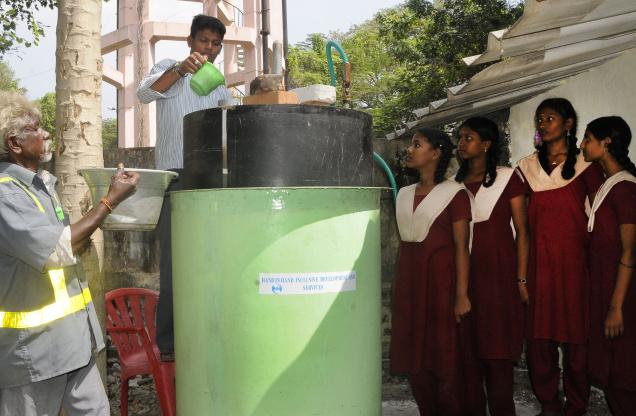
The plant is yet to reach its full capacity. However, the gas generated now is enough to boil eggs, served to the students of Cantonment High School along with lunch./ Photo: G. Krishnaswamy / The Hindu
Once the plant reaches full capacity, there will be enough gas to run the stove for 150 minutes, nonstop, every day
Food waste generated from restaurants has helped to light the stove at the noon-meal kitchen of a government school in St. Thomas Mount.
More than 150 children have lunch at the school every day.
Clean energy
A biogas plant was set up at Cantonment High School in St. Thomas Mount last week. Through the simple process of fermentation of degradable waste, the plant produces methane gas from food waste.
Through a pipeline, the gas reaches a conventional stove in the noon-meal kitchen of the school.
The plant is yet to reach its full capacity as trials are still on. However, the gas generated now is enough to boil eggs that are served to the students along with the lunch. Once the plant reaches full capacity, there will be enough gas to run the stove for 150 minutes, nonstop, every day.
Plant costs Rs. 25,000
The plant was inaugurated by S. Prabhakaran, chief executive officer of St. Thomas Mount-cum-Pallavaram Cantonment Board, in the presence of Army officers and elected representatives.
Hand-in-Hand, an NGO associated with the Board’s solid waste management project from 2009, has installed the plant, which costs Rs. 25,000. “This is a very small plant but can be scaled up in the future. It has resulted in significant savings in LPG usage,” said Mr. Prabhakaran.
Peter Durairaj, health superintendent, said the plant had now been filled with about one kilogram of food waste sourced from restaurants every day. The food waste is mashed before being poured into the plant.
The resultant sludge from the plant — high-quality manure — can be used in gardening.
source: http://www.thehindu.com / The Hindu / Home> News> Cities> Chennai / by K.Manikandan / Chennai – January 12th, 2014
Banana farmers in Theni district have produced a record 120 tonnes of bananas per hectare breaking national record, claimed a horticulture department official.
Several farms in Kamayakoundanpatti in Theni district yielded 120 tonnes of banana per hectare, said S Murugan, deputy director of horticulture department at Theni. However, the department couldn’t document the feat on time for a mention in record books. The harvest should have been calculated by the horticulture and statistics departments, he said.
Theni production is a record by all means as Maharashtra with its alternating cold and hot climates could not have exceeded 75 tonnes per hectare, Murugan said.
The official cited the case of one farmer Gurunathan and his son Loganathan who took up banana cultivation using tissue culture saplings. They relied on drip irrigation and reaped over 120 tonnes per hectare. “These farmers also provided nutrients and fertilizers in measured amounts,” Murugan revealed, adding Gurunathan has completed about 70% of the harvest. “The yield may go up to 150 tonnes per hectare at the end,” he said.
Theni district, which has a conducive climate for banana cultivation, has 8,000 hectares under the crop. A green banana variety known as Grand Naine is cultivated by many farmers here. About 90 tonnes is the average production at many farms.
It is Maharashtra that holds the record for the highest production per hectare of 68 tonnes. The horticulture department is planning to organise a competition for the banana farmers after January, he added.
source: http://www.articles.timesofindia.indiatimes.com / The Times of India / Home> City> Madurai> Tonnes / by Padmini Sivarajah, TNN / January 05th, 2014