Researchers detail new data in Proteobacteria. According to news reporting from Tamil Nadu, India, by NewsRx journalists, research stated, “Nanosized materials have been an important subject in basic and applied sciences. A novel, low-cost, green and reproducible bacteria, Aeromonas hydrophila mediated biosynthesis of titanium dioxide nanoparticles (TiO2 NPs) was reported.”
The news correspondents obtained a quote from the research from C. Abdul Hakeem College, “The resulting nanoparticles were characterized by FTIR, XRD, AFM and FESEM with EDX. FTIR showed characteristic bands (1643 and 3430 cm(-1)) finds the role of carboxyl group OH stretching amine NH stretch in the formation of TiO2 NPs. The XRD spectrum confirmed that the synthesized TiO2 NPs were in the form of nanocrystals, as evidenced by the peaks at 2? values of 27.47°, 31.77°, 36.11°, 41.25°, 54.39°, 56.64° and 69.54° were identified as 110, 100, 101, 111, 211, 220 and 301 reflections, respectively. The crystallite sizes were calculated using Scherrer’s formula applied to the major intense peaks and found to be the size of 40.50 nm. The morphological characterization was analyzed by FESEM and the analysis showed the NPs smooth shaped, spherical and uneven. GC-MS analysis showed the main compounds found in A. hydrophila were uric acid (2.95%), glycyl-L-glutamic acid (6.90%), glycyl-L-proline (74.41%) and L-Leucyl-D-leucine (15.74%). The potential glycyl-L-proline could have played an important role as a capping agent. A possible mechanism for the biosynthesis of TiO2 NPs has been proposed.”
According to the news reporters, the research concluded: “The antibacterial activity of the synthesized TiO2 NPs was assessed by well diffusion method toward A. hydrophila, Escherichia coli, Pseudomonas aeruginosa,Staphylococcus aureus, Streptococcus pyogenes and Enterococcus faecalis and showed effective inhibitory activity against S. aureus (33 mm) and S. pyogenes (31 mm).”
For more information on this research see: Biological approach to synthesize TiO2 nanoparticles using Aeromonas hydrophila and its antibacterial activity. Spectrochimica Acta Part A, Molecular and Biomolecular Spectroscopy, 2013;107():82-9 (see also Proteobacteria ).
Our news journalists report that additional information may be obtained by contacting C. Jayaseelan, Unit of Nano technology and Bioactive Natural Products, Post Graduate and Research Dept. of Zoology, C Abdul Hakeem College, Melvisharam, Vellore 632 509, Tamil Nadu, India. Additional authors for this research include A.A. Rahuman, S.M. Roopan, A.V. Kirthi, J. Venkatesan, S.K. Kim, M. Iyappan and C. Siva.
Keywords for this news article include: Asia, India, Tamil Nadu, Nanoparticle, Aeromonadaceae, Nanotechnology, Proteobacteria, Aeromonas hydrophila, Emerging Technologies, Gram Negative Bacteria.
source: http://www.hispanicbusiness.com / Hispanic Business.com / Home> News> News Column / October 29th, 201 3 /by a News Reporter – Staff New Editor at Life Sciences Weekly
Mazharul Uloom College in Ambur is hosting a two-day book fair on its campus beginning October 24.
According to the Principal Dr Adil Ahmed, the fair is being organised under the aegis of the departments of English and Tamil.
Abdul Razak, professor of Tamil from the New College in Chennai, and noted lyricist Yugabharathi would be the chief guest during the inauguration of the fair.
Poet Yazhan Adi, writer Azhigiya Periyavan and industrialist Sivakumar would be the chief guests during the valediction of the book fair.
A book titled Thaayumanavan written by the head of the English department A S Mohamed Rafi will be released at the fair, the principal said.
source: http://www.newindianexpress.com / The New Indian Express / Home> Education> Student / by Express News Service – Vellore / October 24th, 2013
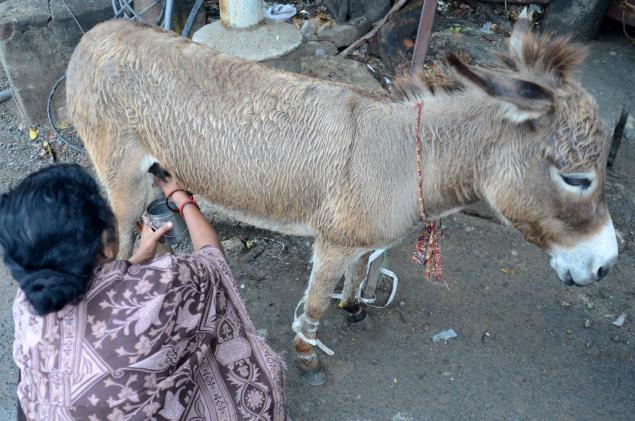
The sale of donkey’s milk is now limited to a few pockets in the city such as Perambur, Royapuram and Mylapore. But the milk is expensive and a few millilitres cost Rs. 200 to Rs. 400. / Photo: B. Jothi Ramalingam / The Hindu
Many continue to believe that donkey’s milk boosts immunity in newborns; doctors disagree
Vijaya, a resident of Perambur, recently gave her five-day-old great grandson donkey’s milk believing it would clear his throat and cure his cold. She said this was an accepted practice with her family.
Like Vijaya and her family, many others in the city hold on to this age-old “belief” that donkey’s milk boosts immunity and gives clarity of voice to newborns. Doctors decry this practice.
K. Githa, former professor of neonatology of Madras Medical College, said donkey’s milk had no proven benefits. Many other doctors agree with her. They have come across newborns with complaints of infections due to poor handling of the donkey’s milk administered to them.
“Some say donkey’s milk is equivalent to mother’s milk but unhygienic handling could lead to infections. I have heard of babies getting aspirated when the milk is forcibly fed by elders,” V. Kalaivani, superintendent of Government Raja Sir Ramaswamy Mudaliar (RSRM) Lying-in Hospital, said.
“Mothers should feed colostrum (first milk) to their babies. The constituents of donkey’s milk, such as proteins and sugar levels, vary. There are chances of the newborns developing infections. We advise them not to give donkey’s milk, sugar water and honey,” Dr. Githa said.
The infections could manifest as diarrhoea leading to dehydration especially if the baby was not exclusively breastfed, said T. Srikala Prasad, senior assistant professor of Government Kasturba Gandhi Hospital for Women and Children.
The sale of donkey’s milk is now limited to a few pockets in the city such as Perambur, Royapuram and Mylapore. But the milk is expensive and a few millilitres cost Rs. 200 to Rs. 400.
The family of Duraikannu, who works at the Chennai Corporation’s dhobi ghat on Veeraperumal Koil Street in Mylapore, sells donkey’s milk regularly.
“My uncle’s son owns a donkey and we sell milk in the morning. A “paladai” (a small feeding device) of milk costs Rs. 350 to Rs. 400. On certain days, we get five customers and there are lean days when we get just two,” he said. He cautioned that some unscrupulous sellers mixed donkey’s milk with cow’s milk.
Porkodi of Washermenpet regularly sells donkey’s milk near RSRM Lying-in Hospital in Royapuram in the early hours of the day. “I milk the animal in front of the buyers. Sometimes, there are 10 customers, mainly from the nearby maternity hospital,” she said. She claimed the milk was good for children suffering from fits and cold.
A resident of Mylapore said two families owning donkeys regularly sold the milk on P.S. Sivasamy Salai, Mylapore, but stopped recently. “Several persons used to come for the milk. Some sellers purchase milk from Perambur and sell it here. Nobody knows if it is donkey’s milk,” he said.
source: http://www.thehindu.com / The Hindu / Home> News> Citites> Chennai / by Serena Jospehine. M / Chennai – October 24th, 2013
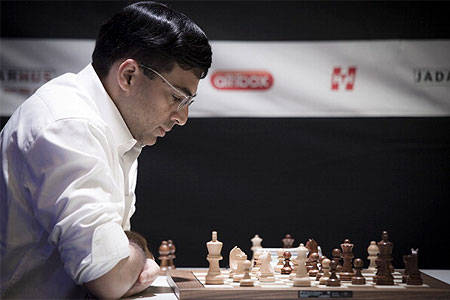
The next few weeks are testing times for chess wizard Viswanathan Anand. For, he is busy getting himself ready – both mentally and physically – for his World Championship match against World No. 1 Magnus Carlsen next month in Chennai.
In between all the hype around the match, Vishy, as he is called, made it a point to spend time with his family for Navaratri, a festival he loves. He gets talking to us on his upcoming match, inspirations and more.
(Viswanathan Anand is busy…)
How are you preparing yourself for the big clash against Carlsen?
It’s been months of preparation – both in terms of chess, and physical work. Now, it’s the last mile. So, I’m just taking it easy and getting ready for the match.
You were in Chennai recently for Golu celebrations. How did you spend your time?
I enjoyed seeing Akhil (son) in his Indian attire at the golus. Navarathri is a beautiful time to be in Chennai. The daily visits, guests, healthy sundals and music… it’s all so beautiful. Importantly, Navaratri is a family effort – arranging the dolls and planning the scenic backdrops that go into it. This year has been hectic due to visits to other golus, but it was mainly about Akhil.
You must miss Aruna and Akhil a lot when you’re away touring. How does Akhil react when you talk to him over the phone and when you’re back home, how do you bond with him?
We like playing together; there are lots pillow fights at home! He has this book – Happy Hippo Angry Duck – that we love reading together. The trick is to pretend that we are reading it for the first time every time. His favourite pastime now is counting; so, we count anything these days. And, of course, there’s Tom and Jerry; while he cheers for Jerry, I support Tom. I love it when he wakes me up in the morning with my brush and says, “Brush teeth.”
In your career, how have you handled pressure, during and before a match? What are some things you do to ensure that it doesn’t get to you?
It’s very difficult to keep a checklist because always, the one thing you don’t want to think about will pop right into the head. I try to keep a cool face and for the rest, just rely on my game.
How friendly are you with Carlsen?
We are cordial with each other.
In a previous interview, you mentioned that you rarely get time to watch movies, and that you last watched Rajinikanth’s Sivaji…
Well, I watched Kahaani and liked it a lot. I hope to watch The Lunchbox soon. But I have been watching classic Rajini films like Billa, etc…
Finally, would you consider this as the most important match of your career, and why?
Each match I play is the most important one yet.
source: http://www.articles.timesofindia.indiatimes.com / The Times of India / Home> Sports> More Sports / by Srinivasa Ramanujam , TNN / October 19th, 2013
The IIFA Awards are a wonderful opportunity to celebrate Bollywood , including the actors and actresses who have seemingly attained a ‘god-like’ status among millions of fans. Some of the most popular actresses are: The peerless Aishwarya Rai , the much-decorated Sonakshi Sinha and rising star Sonam Kapoor. It might also be a good time, however, to celebrate a couple of other Indian women who are arguably doing even more for the greater good of the society.
Born in Chennai, Tamil Nadu in 1955, Indra Krishnamurthy Nooyi is today the CEO of PepsiCo, and was rated by Fortune Magazine, each year between 2006 and 2010, as the most powerful business woman in the World. Serving as Pepsi’s CFO since 2001, Nooyi has garnered extensive accolades for her part in Pepsi’s dramatic rise in revenue and profit during the same period. She has been praised for her dynamic leadership, decisiveness and ability to rally her organization to a cause.
That a little girl born and raised in Chennai has grown up to become the most powerful business woman in the world is a stirring testament to the power of her dreams, the foundation provided by her family, and the nation that shaped her. I like the story of Indra Nooyi, for it is a reminder – powerful, tangible and inspiring – of the enduring promise of the daughters of India.
Just as little girls in India today may be inspired to play tennis because of Sania Mirza, or to become an astronaut because of Kalpana Chawla, they may also dream of reaching the top of the business world, because of Indra Nooyi.
Growing up in Chennai, Nooyi developed in an environment that would lay the groundwork for her future success, though she probably busted through a few more glass ceilings than anyone thought she would. A Hindu, she attended a Catholic school. She played cricket, and even started her own rock band in high school. She was allowed to express herself, with numerous interests outside the classroom.
The story of Indra Nooyi seems all the more poignant to me after reading recent articles detailing with the growing number of female fetuses being aborted in India. Easy access to ultrasound has become a tool for evil, and combined with the pressure to have a son, has resulted in a form of “gendercide”. The long term consequences to the country could be dire, as such a dramatic shortage of girls will inevitably lead to increasing social problems among a restless young male population. The tragedy is not that most little girls in India may not reach the same heights as Indra Nooyi, but rather, that so many will never even have the chance, their lives cruelly snuffed out simply because of their gender.
The need for collective honesty and effort when it comes to women’s issues is one reason why I support an initiative that might be distasteful to many traditional Indians.
Recently, a young Delhi based woman named Umang Sabarwal launched on Facebook a plan for ‘SlutWalk New Delhi’. The idea originated in my home city, Toronto. A local police officer said that women should avoid dressing like ‘sluts’ to prevent being raped, and in so doing paid homage to the great lie – perverse, self serving and chauvinistic – that how a woman dresses somehow excuses verbal and physical sexual harassment. The successful ‘SlutWalk’ in Toronto ended up spawning similar events in a number of other North American cities.
Sabarwal, 19, says she is concerned about women’s safety in her home city, and about the shameless ‘eve teasing’ carried out with seeming impunity by men in public. Predictably, much of the feedback directed at Sabarwal and her initiative has been decidedly negative. But Sabarwal says she will press ahead. ‘SlutWalk New Delhi’ is scheduled for some time near the end of July. The great problems of a society – and all societies have them – are not solved, or lessened, or made less bearable, by a quiet resignation, or by the pretense that they don’t exist. Societies and countries become better, more just and more fulfilled when the problems are first acknowledged, and then tackled with diligence and forethought. Umang Sabarwal understands this, and has demonstrated a courage that belies her years.
To reach the pinnacle of the business world. To insist on the right to walk the streets of Delhi dressed as one desires, without enduring verbal or physical harassment. Indra Nooyi and Umang Sabarwal, despite their significant differences, are both contributing to a brighter future for India’s daughters. Both, through example and action, are championing the complete emancipation of Indian women.
Check out ‘SlutWalk New Delhi’ on Facebook, and offer your support. And the next time you have a glass of wine with friends or family, raise a toast to these remarkable Indian women, whose extraordinary examples make their country proud, and indeed, make our world a better place.
source: http://www.articles.timesofindia.indiatimes.com / The Times of India / Home> Contributors> Indra Nooyi / by Jair Irwin / June 28th, 2013
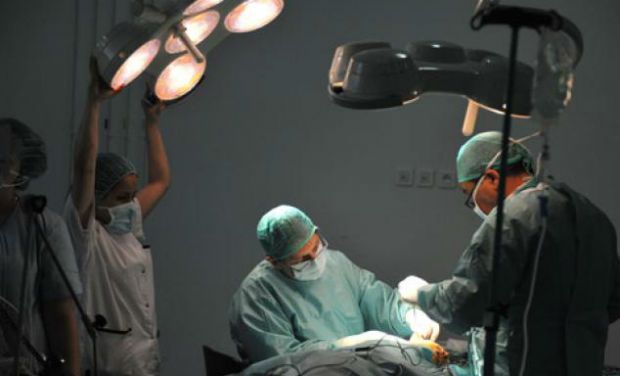
For Ambur General Hospital, this was the first time in 50 years that an orthopaedic surgery was performed on its premises on Wednesday. The hospital was earlier referring its orthopaedic surgery cases to the government hospital nearby as it had no anaesthetist.
A surgeon and anaesthetist were appointed last month. Wednesday’s surgery involved inserting a plate on the wrist of a coolie, Sridhar, who had injured himself while rising from the ground.
“This gives us the confidence to do more orthopaedic surgeries as we have plenty of resources available at the hospital,” said Dr Noor Syed, Chief Medical Officer.
The absence of an anaesthetist until now had kept the hospital’s infrastructure unused though the authorities had been attending on cases, such as hernia. With the appointment of Dr Suresh, an MBBS, D.Ortho, and Bharath, the anesthetist, the doctors were keen to perform the operation on Sridhar which proved to be successful.
Dr Syed is next keen that a gynaecologist be appointed at the hospital which would help women living in the neighbouring areas. The hospital does have a maternity ward that is being looked after by experienced doctors and nurses. However, critical cases are referred to the Thirupathur General Hospital or Vellore General Hospital.
source: http://www.deccanchronicle.com / Deccan Chronicle / Home> News> Current Affairs / DC / by N. Thyagarajan / June 21st, 2013
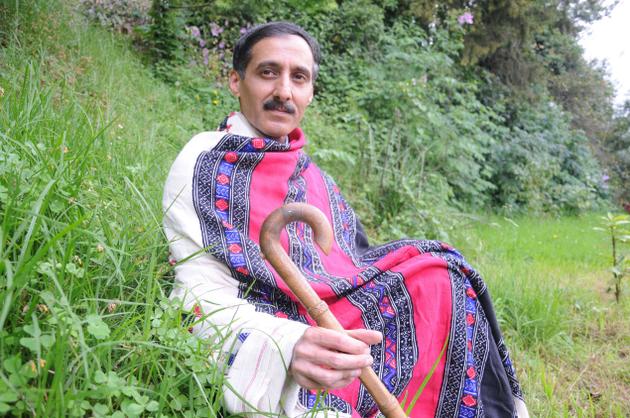
Ooty-based dentist, 49-year-old Tarun Chhabra, is an expert on Toda culture and is possibly one of the few outsiders who can speak their language fluently / Photo: M. Sathyamoorthy / The Hindu
The year was 1990. A youth in his mid-20s was browsing through books at the Defence Services Staff College library in Wellington, when he chanced upon WHR Rivers’ The Todas. As the son of an Army officer who served in the Nilgiris for long and as a student of The Lawrence School, Lovedale, he was familiar with name Todas, but knew nothing more. The pictures and text in the book fascinated him. It spoke about the Toda rites of passage, their rituals and way of life. He got it reissued repeatedly till he was satisfied he had read it thoroughly.
Today, Ooty-based dentist, 49-year-old Tarun Chhabra, is an expert on Toda culture and is possibly one of the few outsiders who can speak their language fluently.
The transformation took time. Tarun read up some more and introduced himself to the Todas. To learn their language, he wrote down words in a notebook and memorised them. Many months later, his vocabulary stood at a mere 50 words. Then, he threw his notebook away. He learnt to speak. “There was a time when I spoke a language that was 95 per cent Tamil and five per cent Toda. Now, it’s nearly 100 per cent Toda,” he smiles.
Tarun says his life has been enriched by the Todas. “Their culture and traditions are unique, and I feel privileged to have experienced them first-hand,” he says.
THE WORLD HEREAFTER
One of the Todas’ main beliefs relates to the afterlife. When a clan member dies, a buffalo is sacrificed. It is believed the animal will accompany the soul to the after world, passing though 15 landmarks. “Once, Kwattawdr Kuttan, a clan leader, took me to Upper Bhavani to show me the landmarks. They actually existed. That brought alive the belief for me. It was an honour, considering he had not even taken his son to the place,” says Tarun. Incidentally, buffalo sacrifice is on the wane these days, with many settling for a symbolic sacrifice.
Tarun has also joined in the community task of thatching the revered conical temple. He accompanied the tribesmen to the western slopes of the Nilgiri rainforest to collect rattan cane for the job.
Today, the Toda way of life is at a crossroads with just about 1,400 traditional tribespeople left. The Toda Nalavaaazhvu Sangam, set up by Tarun in 1992, primarily works to preserve their culture and provide better healthcare. It has got munds electrified. It has rebuilt abandoned temples and migration hamlets where the pastoral tribesmen stay when they take their cattle grazing. When buffalos are killed by predators, the trust compensates the Todas with another buffalo so that livelihoods are not affected.
Tarun is so much in tune with the tribe, there’s little trace of his former avatar. He’s turned vegetarian and there are no religious symbols at home. Toda motifs reign — photographs of the temple, paintings of Todas or samples of Toda embroidery. Suzana, his assistant at the clinic, laughs: “He does not watch television or use a cell phone. He still depends on the radio.”
Tarun has also set up an NGO, Edhkwehlynawd Botanical Refuge Centre Trust (http://www.ebr.org.in/), to conserve the flora and fauna of the land and to re-establish native species and to study the fauna of the area. “The idea is to restore the local ecology to its original condition,” says Tarun, who is also a photographer.
He has rich knowledge of local flora and fauna, thanks to the Todas. “A bulk of my basic botanical knowledge is from them. I first say the Toda name, the botanical name and then the local name!”
READING NATURE
The Todas live a life attuned to Nature, a fact that Tarun deeply admires. For instance, they know the South West monsoon is on its way out when the Mawrsh (Michelia nilagirica or Nilgiri champak) flowers bloom. “They even have a flower that I call the worry flower,” smiles Tarun. “They believe that if you pluck the arkil poof (Gentiana pedicellata) by its stem and hold it, and it closes, you are worried. What a lovely way to gauge happiness!”
During one such botanical expedition with Kwattawdr Kuttan in Kudiakad Betta, Tarun sighted a white rhododendron. It has since been named after him: Rhododendron arboreum nilagiricum tarun.
Tarun, who’s as comfortable in a puthukuli, the traditional Toda shawl, as he is in a dapper suit, says he feels blessed. Despite being an outsider, he got to experience the life of the Todas at such close quarters, and even shared their home, an honour bestowed upon few. But, that’s probably because they consider him one of them. He reciprocates.
Treatment for Todas is always free at this dental clinic. One of his most memorable meetings was with Taihthilly Kuttan, who came to his clinic for a check-up. They spoke of the issues plaguing the tribe, when the elder said: “You will know our problem. After all, you are like a Toda. No, no, you ARE a Toda!”
Now, Tarun lives close by the Kizhker mund (Miniki Mund) near Fernill, on the foothills of Cairn Hill. His house is called Kewlngod, the Toda name for Cairn Hill. Tarun’s garden teems with native shola species, a spot of wilderness in new-age Ooty. He wakes up every morning to the sight of the mund in the near distance. He’s outside, yet a part of them.
source: http://www.thehindu.com / The Hindu / Home> Features> MetroPlus> Society / by Subha J Rao / Coimbatore – October 17th, 2013
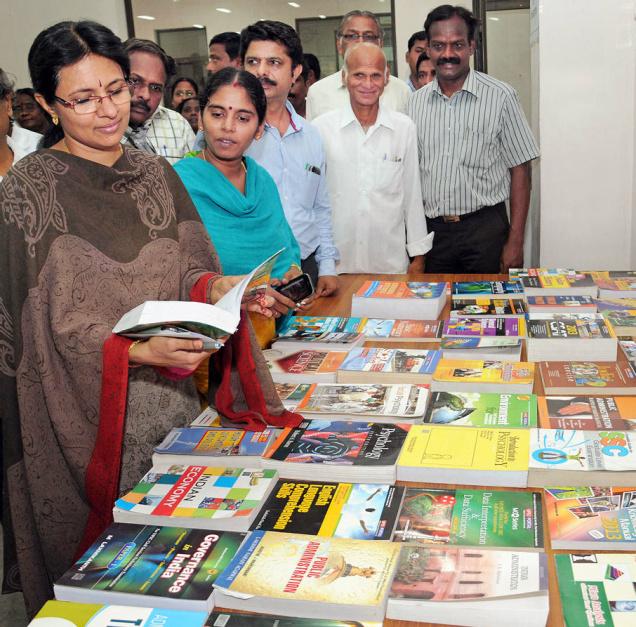
Collector Jayashree Muralidharan going through the books at Central Library in Tiruchi on Thursday. — PHOTO: M. MOORTHY / The Hindu
The books were handed over to Collector Jayashree Muralidharan by Managing Director of the Tiruchi District Central Cooperative Bank.
Civil service and other competitive examination books estimated at Rs. 72,000 and Rs. 67,000 were donated by the District Welfare Committee and the District Central Cooperative Bank respectively to the District Central Library here on Thursday.
The books were handed over to Collector Jayashree Muralidharan by Managing Director of the Tiruchi District Central Cooperative Bank. The event was organised for the benefit of book readers and members of the library.
The library currently has an enviable number of 1,52,665 books and 33,360 members.
An average of 750 people visit the library on a daily basis and 350 books are issued per day. Rs. 28,79,299 was spent for infrastructure and Rs. 6,84,375 for purchasing computers.
The library has received donations of Rs. 1,000 each from 273 patrons and Rs. 3,000 each from nine major patrons.
source: http://www.thehindu.com / The Hindu / Home> News> Cities> Tiruchirapalli / by Deepika Muralidharan / Tiruchi – October 18th, 2013
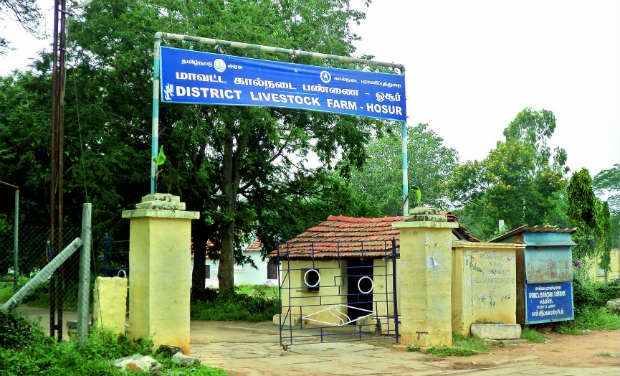
District livestock farm in Hosur where the cricket ground was developed by Lt Col T. Murari. —DC
Krishnagiri:
Hosur is known for its salubrious climate and rapid industrial growth; but how many of us know that cricket in the southern part of India started from the cattle farm here, asked B. Venkatasami, 80, elaborating on the history of cricket in Hosur, 55 km from Krishnagiri on the Chennai-Bengaluru national highway.
Venkatasami, former MLA of the Swatantra Party of Rajagopalachari – the first Indian to become governor general of India – added that “Cricket was first introduced here by Lt Col T. Murari following his appointment as superintendent of the livestock research centre formed in Hosur as army remount centre.”
The octogenarian continued, “Murari, prior to his appointment at the Hosur cattle farm, served in the Second World War under king’s commission and later rose to the rank of a major.”
He has several firsts to his credit like the first Indian to become officer for the veterinary department and the first Indian to become member of the Marylebone Cricket Club and Madras cricket club during British rule.
Venkatasami recalled the history as narrated to him by his father late M. Beere Gowda. “The lieutenant colonel, while studying veterinary science in Oxford University, was approached by Hilson, director of agriculture department, asking him to join the department as officer.”
Following his consent, the British appointed Murari as superintendent of the livestock research station in Hosur, the first Indian to become officer of the veterinary department following the formation of Madras Veterinary College.
Murari, while in Hosur, formed a cricket team by training people who did menial jobs in the cattle farm. The team regularly played matches against teams in Bengaluru and Mysore.
He was also the first Indian to become member of the prestigious United Services Club in Bengaluru and was a founder-member of the Karnataka state cricket association, formerly known as Mysore cricket association.
Venkatasami was concerned about the status of the historical cricket ground formed by Murari. “A ground with a small visitors gallery to watch the game was there for some time after Independence, but the historical monument was removed for development works,” he rued.
source: http://www.deccanchronicle.com / Deccan Chronicle / Home> News> Current Affairs / DC / by Sanjeevi Anandan / October 21st, 2013
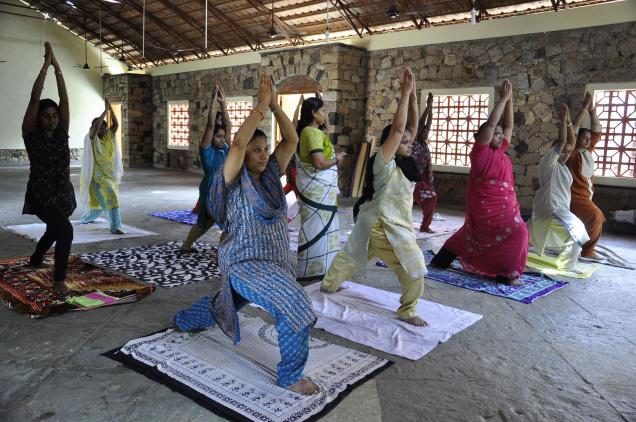
INVIGORATING EXERCISE: Yoga session under way at Gandhi Memorial Museum./ Photos: G. Moorthy / The Hindu
True to the Gandhian ideology of empowering women, Gandhi Memorial Museum offers vocational training programmes
Thamilmozhi Jeyaseelan, a former software engineer, is a busy entrepreneur today. The success story of Mrs. Jeyaseelan, the mother of a four-year-old-girl, is awe-inspiring.
She had enrolled her child in a personality development course conducted by the education wing of the Gandhi Memorial Museum in April. To while away her time, she joined the self-employment course organised by the museum and underwent training in the manufacture of 15 household items such as floor cleaners, ink, ‘oma’ water, phenyl, washing and dish-wash powders. “The seven-hour training was a turning point in my life. It gave me the confidence to leave my job as a software engineer in a private hospital and start a business venture. Today, I am able to spend more time with my family and provide employment to six poor women,” Mrs. Jeyaseelan says. She is manufacturing and marketing phenyl, dish-wash powders and ‘oma’ water. “The ‘oma’ water has become an instant hit in the market. The profits are good and I am glad to provide employment and empower womenfolk,” she adds.
True to the Gandhian ideology of empowering women, the Gandhi Memorial Museum offers a slew of vocational training programmes, besides offering summer classes for school students, yoga and spoken Hindi classes throughout the year.
The museum, housed on the premises of the historic summer palace of Rani Mangammal, is one of the major tourist attractions in Madurai. As per its 2011-2012 annual report, the museum attracted more number of visitors than the National Gandhi Museum in Delhi. From the 2013 fiscal, the museum had drawn 1,94,846 visitors, of which 14,135 were foreign tourists. The museum has not restricted itself to just enthral the visitors, but has been indulging in activities that are fruitful to many. With an extensive library, a research and publication section, an Institute of Gandhian Studies and Research (IGSR) and an education section, there is no dearth of activities in the museum.
The library draws an average of 85 readers every day and has nearly 300 registered members, according to records available in the museum.
The IGSR is probably one of the few places in the country which offers courses on Gandhian Thought. “We offer free courses such as Certificate in Gandhian Thought, Diploma in Gandhian Thought, Diploma in Inter-Religious Dialogue and PG Diploma in Peace and Value Education. The courses are affiliated to Madurai Kamaraj University. Students from Gandhigram Rural Institute and Madurai Kamaraj University undertake research works here,” says S. Jayaraj, research officer at the museum.
Several volumes of books on Gandhian Thought have been translated in the research and publication section, which also documents newspaper reports that resonate Gandhian ideologies such as non-violence and peace, he adds.
According to Mr. Jayaraj, while handing over Rani Mangammal Palace for the establishment of the museum, the State had envisioned a centre where research would flourish. The research centre was established in 1997 and became an approved institute of Madurai Kamaraj University in 2003 and has been disseminating Gandhian Thought and related subjects to the public, he adds.
NO AGE LIMIT
But for the summer courses, the others offered by the museum such as spoken Hindi class do not specify any age limit. “We have been conducting various certificate courses, especially for women, for the past five years. Mostly women attend the tailoring, jewellery-making and household item manufacturing courses and quite a few of them are successful in their business ventures,” says R. Natarajan, education officer of the museum. The education wing also conducts value education courses in schools and colleges to spread the Gandhian values of life.
D. Sridharan, a retired pharmaceutical executive, who is taking the two-month Spoken Hindi lessons in the museum, says spending time learning in the serene atmosphere of the museum is a bliss. “Unlike other centres, the Gandhi Museum charges a nominal fee and teaches us even the fundamentals of the origin of the word. The museum is one of the best places in Madurai and could be spruced up,” Mr. Sridharan says.
ORGANIC FOOD CANTEEN
With the assistance from the State and the Centre, renovation work is under way at the museum. According to M.P. Gurusamy, museum secretary, an organic food canteen will be inaugurated in January. “We are planning to convert the open-air auditorium into an indoor facility. A museum and a park for the children will be constructed,” he says.
The open-air auditorium is given on nominal rent for purposes other than political, communal and religious-oriented events, he says. “The resource persons, who provide training in skill development programmes, are those who are interested in Gandhian ideology. The museum does not pay them and they are volunteers. They only demand a nominal fee of less than Rs. 200 from the participants to meet the expenses of the core materials,” Mr. Gurusamy adds.
According to K.R. Nanda Rao, curator of the museum, the main gallery will soon be refurbished with good lighting.
The yoga training centre, approved by the Tamil Nadu Physical Education and Sports University Centre, has been functioning since 1998. “As of now, those who take part in training come on the advice of the doctors. Yoga should become a lifestyle habit,” says K. P. Gangadharan, yoga coordinator in the museum. People between the age group of 35 and 70 undergo yoga training and at least 100 students enrol for the certificate programmes in yoga every year, he says.
For people such as M. Soundararajan, a retired BSNL employee, who grew up in Madurai, the museum needs better care. “The museum needs more staff to clean the premises. When I was in school, I remember the area behind the palace having beautiful plants. Now, we have trees and more saplings could be planted. A new toilet should be constructed,” concludes Mr. Soundararajan who is now a student of Spoken Hindi.
source: http://www.thehindu.com / The Hindu / Home> News> Cities> Madurai / by M. Vandhana / Madurai – October 21st, 2013