Farming or engineering, innovation is the key

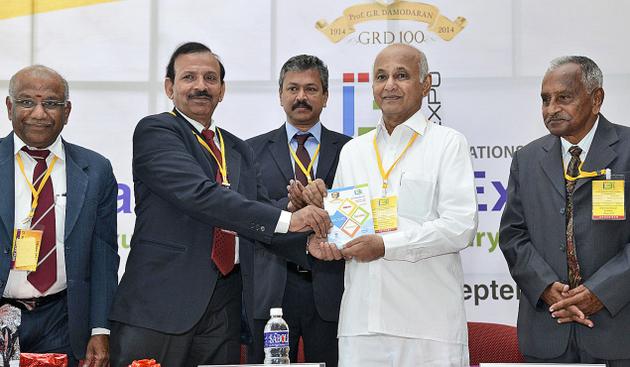
Adalat Ali (second left), Programme Director, Air Defence, DRDO- Hyderabad, releasing the 'i3 Expo' directory, which is being received by G.D. Gopal (second right), Managing Trustee, GD Naidu Charities, at the inaugural of the expo at CODISSIA Trade Fair Complex, in the city on Friday. / Photo:K.Ananthan / The Hindu
Adalat Ali (second left), Programme Director, Air Defence, DRDO- Hyderabad, releasing the ‘i3 Expo’ directory, which is being received by G.D. Gopal (second right), Managing Trustee, GD Naidu Charities, at the inaugural of the expo at CODISSIA Trade Fair Complex, in the city on Friday. / Photo:K.Ananthan / The Hindu

i3 Expo provides a platform to innovators, venture capitalists, students, farmers, scientists, and entrepreneurs

At first sight nothing seemed different in the soft silk saree. A heap of arecanut shells and its fibre kept nearby gave an indication that the saree had a touch of innovation.

G. Nivedita of Mettupalayam and her friends worked for more than a year to produce the hand-woven, silk saree blended with arecanut fibre. With raw silk costs shooting up, this saree can be an alternative, says Ms. Nivedita. About 10 kg of arecanut was used for this purpose. The fibre was removed manually, processed, spun and woven with silk. The team gave the saree to the South India Textile Research Association and tested it for colour fastness and strength.

This was one of the displays at i3 Expo, a three-day exhibition of ideas, inventions and innovations on at the CODISSIA Trade Fair Complex here from Friday.
Daniel T.Davy of Thrissur displays a 'Pit Snatcher'. / Photo:K.Ananthan / The Hindu
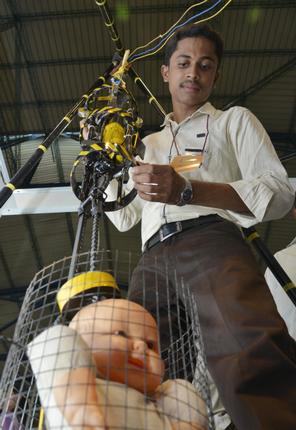
Daniel T.Davy of Thrissur displays a ‘Pit Snatcher’. / Photo:K.Ananthan / The Hindu

The organisers have given a platform through the exhibition for innovators, venture capitalists, students, farmers, scientists, and entrepreneurs to come together.

Be it a system for better traffic management, improvement in home security, value addition to an agricultural produce, tapping solar, wind or hydro energy, or making farming easier, all these have found space at the exhibition.

Many of these can make everyday life easier for consumers if the concepts are commercialised. For instance, a team from Dindigul is demonstrating how swipe card and automation can be used in public distribution outlets.

Adalat Ali, Programme Director of Air Defence of DRDO, said at the inaugural that necessity and creativity drive innovations and inventions.

According to G.D. Gopal, Managing Trustee of GD Naidu Charities, the event will showcase Coimbatore’s abilities.

L. Gopalakrishnan, Managing Trustee of PSG & Sons Charities, spoke of the efforts of founder of PSG College of Technology G.R. Damodaran for the development of the industry and education here.

A.V. Varadarajan, chairman of the expo, said innovation was the key to economic development.

R. Palanisamy, convenor of i3 Expo, said the exhibition had the encouragement of the National Innovation Council and the State councils for Science and Technology. It had 541 participants from different States and the displays were in the areas of agriculture, engineering, textiles, energy, and medicine. Nearly 102 educational institutions are participating in the expo. The best innovations will get cash awards.

The event is organised by the PSG Tech Alumni Association and presented by PSG Institutions as a concurrent event of GRD centenary year celebrations. Entry is free and the exhibition is open from 9.30 a.m. to 6.30 p.m.

The Hindu is the media partner for the event.

source: http://www.thehindu.com / The Hindu / Home> News> Cities> Coimbatore / by Special Correspondent / Coimbatore – September 28th, 2013

3-day expo showcasing student innovations begins in Coimbatore

Coimbatore :

Daniel T Davy from Thejus Engineering College in Thrissur and R C Naveen from PSG College of Technology are hopeful that they will get the much needed support for their innovations. Both students have exhibited devices that would help rescue infants trapped in bore wells. They are among the 550 creative minds who participated in the national  level I3 expo that began on Friday. Daniel has named his device ‘Pit Snatcher’ and recently demonstrated the dummy rescue operation at his college.

“Usually rescuers dig a pit near the bore well to get access to the victim, which is a time consuming process,” Daniel said. The ‘Pit Snatcher’ would rescue trapped infants by directly entering the bore well. R C Naveen, a final year student, has also featured a similar model at the expo called ‘Borebot’. Though he is yet to develop his idea into a model and demonstrate its workings, Naveen says he is confident that victims can be rescued within hours.

Another innovation featured by K Hariharasudan and S Muralidaran, first year students of PSG College of Technology attempts to aid in the rescue of earthquake victims. “Our robots can be guided through the rubbles using mobile phones to identify victims,” Hariharasudan said. The robot, controlled by a mobile phone, has sensors which can detect body heat. As many as 750 innovations by 550 students are exhibited at the expo organised by PSG Institutions in Coimbatore. Organisers say that they received more than 1300 applications from across the country but only 750 were selected. “Screening of applications was done by a team of professors, engineers and entrepreneurs to shortlist the entries,” said an organiser. Inaugurating the fair, Air Defence programme director of DRDO Adalat Ali said that the DRDO will showcase the Prahar and Aakash missiles in the upcoming Seol Air Show. The expo will end on Sunday and will be open to the public from 9.30 a.m. to 6.30 p.m.

source: http://www.articles.timesofindia.indiatimes.com / The Times of India / Home> City> Coimbatore> Snatchers / by S M Arun, TNN / September 28th, 2013

Film news personified: He made stars glitter

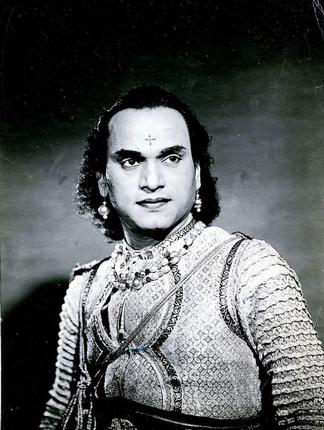
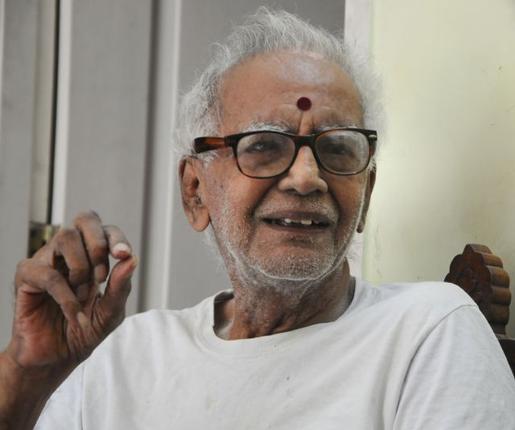
Film News Anandan /. Photo: R. Ragu / The Hindu

The glamour, glitz and crowds are elsewhere, as the celebrations for the 100 year of cinema culminate in another grand finale in the city. In contrast, it’s nearly idyllic in Film News Anandan’s flat in Mylapore. South Indian cinema’s chronicler is instead following up on the latest releases, updating his filmography.

Film News Anandan is, to use a cliché, a living encyclopaedia of Tamil cinema, and up to the 1980’s South Indian cinema. For journalists writing on film and harking back to the past, the absolute ‘go-to’ man is still this elderly person, his faculty of seeing dimmed, but his memory razor sharp even at 87. Give him a keyword, and he rattles off statistics and events, merely drawing on his memory.

A drama enthusiast and organiser, Anandan, whose parents named him Mani when he was born, entered films when he was about 25 years. Some friends of his had started the Film Fans Association and they decided to honour best performances in cinema at that time.

They asked Anandan to take pictures at the awards function, and the young man, already in love with cinema, swung by, with his Rs. 12 box camera. “It was too dark to shoot inside the Gaiety Theatre complex where the function was taking place. So I took pictures of the best actor B. Nagaiah, and best heroine Padmini when they came out,” he recollects.

It was in 1954 that Anandan acquired ‘Film News’ to his name, when he joined one of the early magazines to focus on cinema in the region as a photographer. By then, he had also wandered serendipitously into the office of the South Indian Film Chamber of Commerce and found himself a job with their journal. “I was asked to compile, every month, details about films releasing in all four south Indian languages. That is how everything began.”

Haridas, starring M.K. Thiagaraja Bhagavathar (pic) had the longest run ever. It released one Diwali, and ran through the second and third Diwali too.

He went from studio to studio gathering this information, driving his father’s car. Striking up friendships at the studios, he managed to get stills, memorabilia, and song books. That grew into a collection – piling up to an awe-inspiring 6,000 films – dating from the 1930’s talkies. With his collection of photos, he grew famous for preparing 100-film albums of the stars of those days – Sivaji Ganesan, MGR, K.R. Vijaya, Jayalalithaa, Sivakumar, even Kamal Haasan. These albums, that contained 100 stills, one from each of the films, were exhibited during the launch of their 100 films, to much applause.

These stills are today stored in two of his children’s homes. “I don’t think anyone else has this kind of database, in any of the languages,” he says, as a matter of fact but tinged with faint pride.

He fills up a sheet painstakingly, listing out key facts about films, even those that are being released today. “I can’t see any more, so my family helps me.” He’s also learnt the power of the net, and finds it easy to download stills of the newer films. In 2003, Chief Minister Jayalalithaa financed one of his long-pending dreams: she funded the publication of a book, which, arguably, is the most comprehensive filmography of Tamil cinema since 1930, till that date.

Film News Anandan is not a very happy man today, he feels ignored by the industry that he has helped chronicle. Regret is trying to peek in, held in restraint only by his love for cinema. “I loved it so much. I spent my entire time and money on my passion, even ignoring my family.” Even today, the meagre sum that he earns is spent on buying stills of films. “I don’t let a single still go, if I know about it,” he says, pride forcing its way back in.

source: http://www.thehindu.com / The Hindu / Home> Features> CinemaPlus / by Ramya Kannan / Chennai – September 30th, 2013

Glimpses into ancient Tuticorin craftsmanship

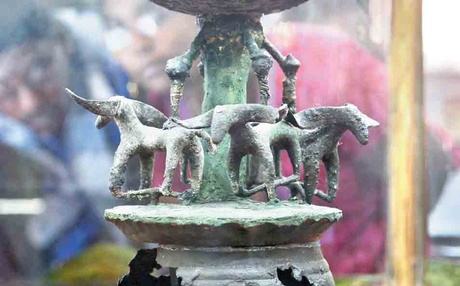
The bronze vase stand will be on display till October 10 | P Jawahar

A bronze vase stand that shows the master craftsmanship of the Tamil people, who lived in Adhichanallur in Thoothukudi decades ago, has been displayed at the Government Museum. The exhibition will be on for a fortnight till October 10 at the anthropology section.

Officials said the vase, which was excavated from Adhichanallur, belonged to the megalithic period. Decorated with four rams with twisted long horns, the heavy vase stand has rods that are bent towards a ring, which holds a plate. Archeologists believe that it was used as a stand for large jars and bowls.

Adhichanallur has been an archeological site in Thoothukudi district for very important archeological finds. The megalithic site was first noticed in 1876, when it was visited by Jagor of Berlin, Germany who secured a considerable number of megalithic antiquities for the Berlin Museum at Volkerkunde.

Explorations were further done in the winter of 1903-03 by M Louis Lapique of Paris, which resulted in additional collections and following an examination Lapique concluded that the remains belonged to a proto-Dravidian race.

A large number of objects that belong to the present collection were obtained during a detailed investigation conducted at intervals by Alexander Rea from 1899 to 1905.

Funeral urns were excavated from the solid rock soil of the burial sites that covered an area of about 114 acres.

The most interesting finds of the megalithic Adhichanallur are those objects made from metals- iron and bronze.

These objects show that considerable amount of skill had been used in making them. Iron items include weapons — equestrian swords, mid-rid swords, daggers, spearheads and arrowheads, tools like axes and fruit hooks as well as appliances like saucer lamps, lamp hangers, spindles, chisels and fire pistons.

source: http://www.newindianexpress.com / The New Indian Express / Home> Cities> Chennai / by Express News Service – Chennai / September 25th, 2013

Southern Railway deploys women to pilot goods train

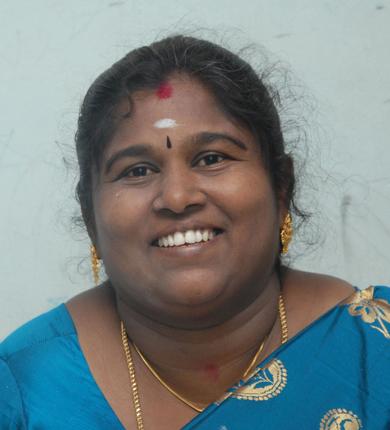
Narayana Vadivu./  Photo: A. Muralitharan / The Hindu
Narayana Vadivu./ Photo: A. Muralitharan / The Hindu

When 39-year-old Narayana Vadivu cranked the diesel locomotive to haul a goods train on Friday morning assisted by her deputy Jhansi Rani, it was indeed a moment to cherish for both women.

It was the first time in the history of Southern Railway that an “all-women loco crew” was deployed to pilot an empty freight train on the 55-km stretch from Vriddhachalam to Ariyalur falling within the Villupuram–Tiruchi chord line section.

Hours later, the same crew was deployed to pilot another ‘Alco’ type broadgauge diesel loco, this time to haul a fully loaded goods train, transporting cement, from Ichchangadu to Vriddhachalam (24 km) in the same section.

Upon accomplishing both assignments, the two women returned to Tiruchi from Vriddhachalam piloting a triple light engine (wherein one loco will pull two engines).

Appointed initially as a Track Woman in 2004, Ms. Vadivu became an Assistant Loco Pilot in 2006 assisting Loco Pilots in goods, passenger, and express trains. It was in 2011 that she rose to become a diesel shunter piloting shunting locos individually from the Tiruchi coaching yard to the platform and back.

The new assignment of piloting a goods train was entrusted to her for the first time after she was elevated to the category of “Goods Loco Pilot” recently. “Although my earlier stint as a diesel shunter gave me enough experience to operate a diesel locomotive, the new task of piloting a goods train carrying heavy load with greater speed and to a longer distance was really exciting,” said Ms. Vadivu, a mother of two.

“I felt really elated while piloting a goods train single handed in an open line although a Loco Inspector travelled along with us on the first day to guide us on the section,” added Ms. Vadivu, a native of Ramchandra Nagar village near Vadakkankulam in Tirunelveli district.

As a diesel shunter, Ms. Vadivu says, she can pilot the loco at a slow speed of 15 km per hour. But being a loco pilot of a goods train is different.

It is essential to know complete details of the section that you are assigned, including the number of signals it has and its gradient to increase and reduce the sectional speed accordingly, she said.

However, the transition from piloting a shunting loco to a goods train was smooth for Ms. Vadivu.

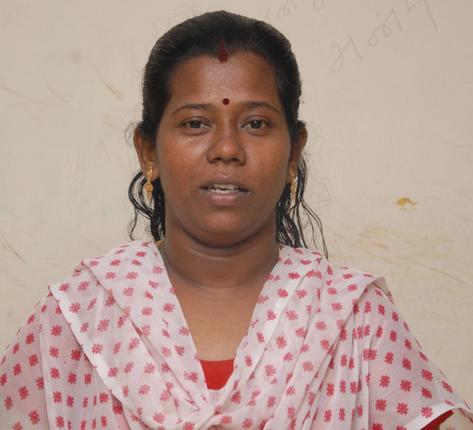
Jhansi Rani. / Photo: A. Muralitharan / The Hindu

For Jhansi Rani, fresh out of induction training at the Diesel Traction Training Centre (DTTC) and at the Zonal Railway Training Institute (ZRTI) both in Tiruchi, it was her maiden mission as an Assistant Loco Pilot on board a diesel loco with the loco pilot also being a woman.

A senior railway officer here said Ms. Vadivu was put on the new job after she underwent hands-on training in learning the “roads” in the entire division and after requisite preparations. This is the first time in the history of Southern Railway that an “all-women loco crew” was deployed to pilot a goods train, the officer said.

Since it was the crew’s first assignment, a Loco Inspector was deputed to travel along with them in the ‘Alco’ type diesel engine to guide them in the section, the officer said.

Ms. Vadivu would henceforth be deployed for piloting goods trains regularly in different sections falling within the Tiruchi Division.

The officer said all Assistant Loco Pilots recruited in the Southern Railway zone are trained at the DTTC that is equipped with a diesel loco simulator and the ZRTI.

Refresher courses are conducted both for loco pilots and assistant loco pilots at periodic intervals to enhance their driving skills.

source: http://www.thehindu.com / The Hindu / Home> News> Cities> Tiruchirapalli / by R. Rajaram / Tiruchi – September 30th, 2013

Fragrance everywhere!

TholavaiCF02oct2013

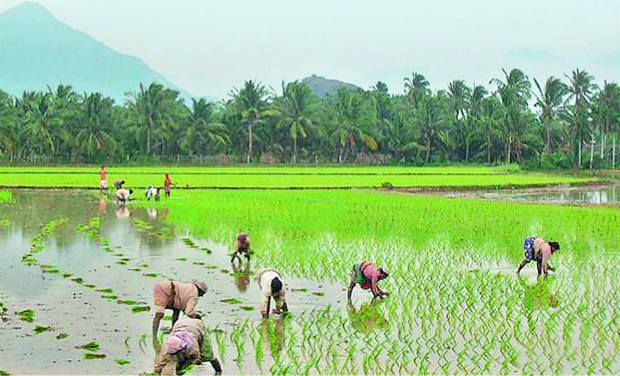
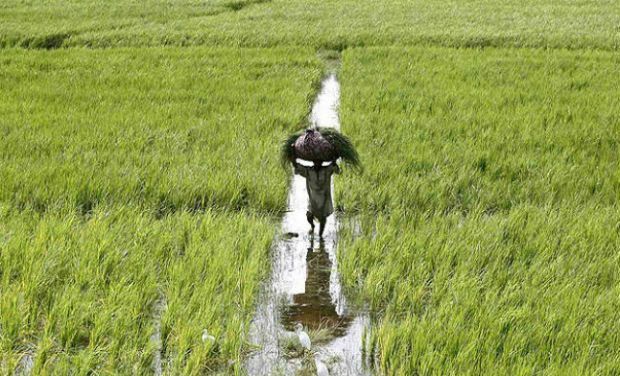
Thovalai, also known as Thovalai Vadakur, is a taluk located on the border of Kanyakumari and Tirunelveli districts near Nagercoil. Situated near Aramboly gap, a natural depression running through the Western Ghats, it connects Kanyakumari with the rest of Tamil Nadu. Thovalai is famed all over south India for its vast stretches of flower fields and the flower market. Due to the availability of all varieties of flowers in good quality at cheap rates, the demand for flowers from Thovalai is very high, especially during the festival seasons. Besides flowers, vast stretches of paddy fields and coconut groves can be sighted in and around Thovalai.

THOVALAI FLOWER FIELDS

LotusCF02oct2013

The village of Thovalai and its surrounding areas boast of extensive stretches of flower fields. Travelling from Nagercoil to Tirunelveli, one can see flower fields even adjacent to the road.

The region around Thovalai taluk cultivates a wide variety of flowers ranging from indigenous to alien ones. Conventional flowers like jasmine, kanagambaram and others are cultivated in various regions around Thovalai. Kerala is one of the major markets for the flowers of Thovalai during Onam festival. Besides Kerala, flowers are in high demand in other towns and cities of Tamil Nadu.

Years ago, Thovalai only had vast stretches of paddy fields and not many flower fields. The reason for the shift from paddy to flower cultivation was due to lack of adequate rains. Thovalai receives a meagre rainfall throughout the year. The agro-climatic conditions existing in the hill ranges, valleys and plains of the Kanyakumari district are ideal to nurture flowers.

The flowers are cultivated throughout the year, but the demand for flowers is very high during August and September.

Hence, June/July is preferred for cultivation as the region receives slight monsoon rains then. A small water body called the Thovalai channel starting from the Pechiparai dam flows through this village catering to the requirements of flower farmers. Otherwise, this villagers depend on water from wells.

The writer is a faculty at School of Tourism Studies, Mahatma Gandhi University, Kottayam.

Million dollar business

The prime tourist attraction of Thovalai is the Thovalai flower market. A wide range of flowers cultivated in adjoining areas like Radhapuram, Nanguneri, Sankarankoil, Palayamkottai and Tenkasi of the neighbouring Tirunelveli district find their way to the Middle East through the flower market.

The market opens as early as 5.30 am, closes by 11.30 am and is busy with vendors and buyers throughout the day. Within a few hours, flowers of various varieties worth lakhs are sold, with major buyers coming from faraway places like Thiruvananthapuram and Madurai. The flowers sold here range from Rs 20 per kg to Rs 200 per kg and above depending on the supply, demand, size and variety of the flowers.

The conventional flower market is not a regulated one with private parties conducting business with their own contacts and on their own terms and conditions.

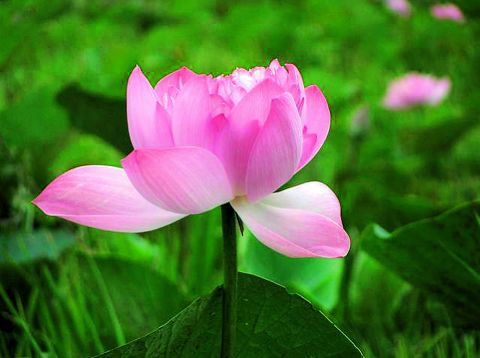
The major flowers exported from Thovalai are malligai, pichi, kaakadai, kanagamparam, kenthi, sampangi, vaadamalli, rose, kozhipoo and chevanthi etc. The rates are varied based on the demand and supply with prices soaring during festival and marriage season in particular. Chrysanthemums, jasmine, malligai, arali, thovalai pacha and pichi are the main varieties having excessive demand during the festivals. Red lotus and white lotus are cultivated in the ponds, lakes and other water bodies of Thovalai. Even though flowers are exported in large quantities to different places from Thovalai, many varieties reach here from faraway places like Madurai and Cholavandan and roses, in particular, are coming from Bangalore.

source: http://www.deccanchronicle.com / Deccan Chronicle / Home> Lifestyle> Travel / by Abin K, DC / September 13th, 2013

Maruthi, Anand top in Nashik Rally

Erode’s Karthick Maruthi  and co-driver Shankar Anand won the Express Inn Rally of Nashik, the first round of FMSCI Indian National TSD Rally championship here Sunday.

The winning combination received a penalty of 54 seconds while Babno Machian and Rajanna Natrajan finished behind the Erode pair, some 56 seconds adrift while the experienced Girijashankar Joshy and Shrikant Gowda were third with 2:03.

Last year’s championship winners Satish Gopalkrishnan and Savera D’Souza, the husband-wife duo from Bangalore, were among 10 pairs who were excluded for finishing the rally outside the maximum permitted lateness.

There were no finishers in the Stock pro category while Paritosh Kohok and Nitin Nagar bagged the title in the two-wheeler section with a penalty of 37:27.

source: http://www.business-standard.com / Business Standard / Home> News-IANS> Sports / by IANS / Nashik – September 29th, 2013

15-yr pan-Indian research yields riches


Picture for representational purpose only.

Coimbatore: 

After conducting pan India research, the Forest College and Research Institute (FC&RI) in Mettupalayam, near Coimbatore, has come out with a slew of traditi­onal and under-utilised cr­op varieties with high-nu­tritional value that are suita­ble for cultivation in Tamil Nadu.

The FC&RI, in collaboration with the Indian Co­u­­n­cil of Agricultural and Res­ea­rch, undertook a national-level co-ordinated res­ea­r­ch network on under-uti­li­sed crops since 1982 to promote such under-utilised and traditional crops for human use in Tamil Nadu.

“After an intensive 15 ye­ars of study, we have found a high-yielding variety of the grain, amaranth, which has immense health benefi­ts and is suitable for cultivation in Tamil Nadu’s con­dit­ions,” said A. Balas­ubramanian, professor and researcher at FC&RI.

Amaranth can be used as porridge, like popcorn and to manufacture biscuit. “This grain contains components like lyseme and squalene, which is utilised for preparation of medicines meant to cure cancer and reduce cholesterol. It can also be preferred as a low-sugar food,” Prof Balasubramanian said.

Amaranth, which was cultivated in the Kolli Hills and the Nilgiris, was the ma­in food crop centuries ago. “The crop variant has now been brought from Gu­j­a­rat, where it is sown for ex­port to international ma­rkets,” the researcher said.

Like in the case of amaranth, FC&RI has also bro­ught out crops like rice be­an, an intercrop, and sim­ar­ouba, a tree variety from So­uth America, with high he­alth benefits, and which can be grown in TN.

“These few varieties of crops were found suitable for our state after research on hundreds of crops which have been proved successful. While the rice bean has high pro­te­in content, simarouba can be used to produce edi­b­le oil, which has low melti­ng point and can be used for ma­king chocolates. The de­sired varieties of amaranth are capable of yielding ei­ght quintals per acre if rai­sed during the kharif and la­te rabi season,” said Prof Bal­asubramanian, adding th­at efforts would now be ta­ken to promote these crops among farmers.

source: http://www.deccanchronicle.com / Deccan Chronicle / Home> News> Current Affairs / DC / by V. Ashok Kumar / September 29th, 2013

Pachamalai set to be new weekend destination

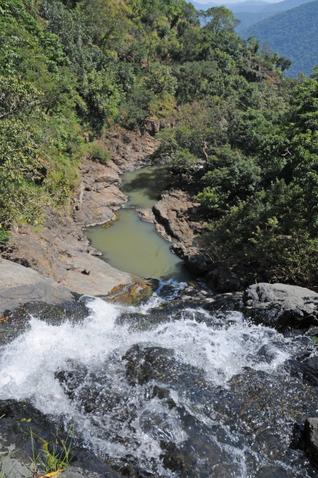
One of the two major waterfalls at Pachamalai hills near Tiruchi./ Photo: R. V. Moorthy / The Hindu

New guest houses and tree houses to be set up in the picturesque hills

Situated 80 km from Tiruchi, at 1,200 metres above the sea level, Pachamalai will soon become an ideal weekend destination.

Blessed with a pleasant climate with temperatures ranging from 25 to 30 degrees Celsius and home to rare plant species, the hills presents a picturesque landscape with natural forests, agricultural lands, hill tops, ridges, and valleys.

The hills are also home to the ‘Malayali’ tribe, a Tamil-speaking community with a population of 7,000. Periapakkalam and Korayaru waterfalls, along with some viewpoints, are a major attraction.

Chief Minister Jayalalithaa recently announced a Rs. 2.30-crore the community based eco-tourism development project in the hills. It is aimed at socio-economic uplift of local communities by creating community assets and facilities and group entrepreneurship programmes through the funds generated from eco-tourism.

According to N. Sathish, District Forest Officer, development would be at two levels — infrastructure and culture-based tourism. Plans are on to improve accommodation and catering and also improve facilities at the places of interest.

The Forest Department will set up new guest houses and tree houses, beautify natural walking trails, promote traditional therukoothu by Malayali tribe, and establish an eco medicinal park. Joint Forest Management Committees (JFMCs), instead of private tour operators, would be formed for running the project by employing interested people from 54 villages in three Panchayats — Thenparanadu, Vallanadu, and Kombainadu.

Eco-tourism is targeted at nature and wildlife enthusiasts, who look for a break from the hustle and bustle of a city. They can enjoy natural walking trails which will have boards explaining the significance of trees, birds, and other existent biodiversity.

Foreign tourists will be allowed to take bullock cart rides.

“Unlike usual tourism, eco-tourism will cause zero to minimal damage to forest areas.

“Some people have protested against this project by saying that this will affect the tradition and habitat of local people, but they are mistaken.

“This project is aimed at improving the living standard of the local people,” said Mr. Sathish.

Nodal officers and range officers would only supervise and the local people would maintain the area. Bookings would be done online through a separate website, giving no chance for private operators to enter the scene, said Mr. Sathish.

“It has been planned to complete the eco-tourism package by March 2014, so as to facilitate full-fledged tourism from May 2014,” he added.

source: http://www.thehindu.com / The Hindu / Home> News> Cities> Tiruchirapalli / by Deepak Muralidharan / Tiruchi – September 26th, 2013

On the origins and rich history of Anglo-Indians

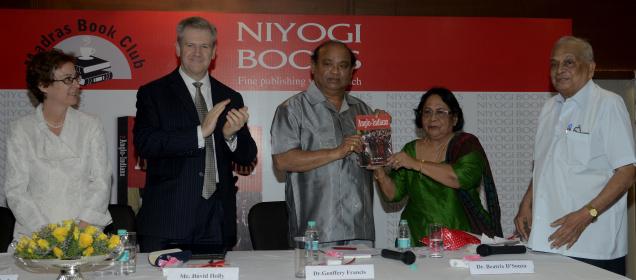
Beatrix D'Souza, former MP (second from right) releases ‘The Anglo-Indians: A 500-Year History’, written by S. Muthiah and Harry MacLure. Others in the picture, (from left) Jennifer McIntyre, US Consul General; David Holly, Consul General, Australia; Geoffrey K. Francis, former MLA and writer S. Muthiah — Photo: S.R. Raghunathan / The Hindu
Beatrix D’Souza, former MP (second from right) releases ‘The Anglo-Indians: A 500-Year History’, written by S. Muthiah and Harry MacLure. Others in the picture, (from left) Jennifer McIntyre, US Consul General; David Holly, Consul General, Australia; Geoffrey K. Francis, former MLA and writer S. Muthiah — Photo: S.R. Raghunathan / The Hindu

It is easy to write off a community by stereotyping its members. But to learn about them – and their contributions to the country they have made their home, is a difficult but rewarding job.

S. Muthiah decided to do the latter and thus brought forth a book tracing the origin and developments of the Anglo-Indian community, which has a 500-year-old history in India.

Mr. Muthiah and Harry MacLure, have jointly co-authored the book ‘The Anglo-Indians: A 500-Year History’, which was released on Tuesday.

Richard O’Connor, a customs officer has also contributed to the book. At a function organised by publisher Niyogi Books and The Madras Book Club, the book was launched by Beatrix D’Souza, former member of Parliament. It was received by Geoffrey K. Francis, former MLA.

Mr. Muthaiah, who introduced the book, said his association with the community began 80 years ago, when he was three years old. Since then, he had made friends, had had colleagues at work and that had prompted him to consider writing a book on Anglo-Indians.

By definition a person born of male European descent who has made India his or her home is an Anglo-Indian. The Indian Constitution has also accepted this definition. At the time of Independence, there were 5 lakh Anglo-Indians, but two thirds migrated to Australia, UK, Canada and US. Today, the community is 1.5 lakh strong in India.

Dr. D’Souza and Dr. Francis urged the community to take pride in its achievements and contributions to India. Consul Generals of the UK, the United States and Australia who commended the book said the community had assimilated the culture of the host land they inhabited and had richly contributed to it.

source:  http://www.thehindu.com / The Hindu / Home> News> Cities> Chennai / by Special Correspondent / Chennai – August 08th, 2013