Serving success from a court in Kovai

Coimbatore :

Nirupama Vaidyanathan Sanjeev, one of India’s finest tennis players ever, still remembers that afternoon two decades ago in Japan when she lost a match from a winning position. She was done in by a sudden spell of cold weather. “I was totally unprepared as I was facing the extreme cold after coming from Chennai where the temperature was 42 degree. Internet was not so prevalent then for me to check the temperature level before leaving for Japan. The temperature there was sub-zero and I had just a light jacket,” said Nirupama, who was at her parents’ home in Race Course in Coimbatore on Wednesday, after releasing her memoirs, ‘The Moonballer’, in Chennai on Tuesday.

Presently settled in the US with husband and daughter, Nirupama calls Coimbatore her home, the city where her self-trained father taught her to play tennis. It was the Cosmopolitan Club at Race Course where she served and volleyed first. At Perks Matriculation School, she learned to be a winner. “The atmosphere at the school helped me a lot to hone my skills when I was a student there in the early 1990s”, she says.

Her father was her first coach. “I was from a modest background with no sponsors. It was my father’s effort that made me India’s number 1 tennis player at the age of 14 and the first Indian woman ever to win a round in a Grand Slam tournament,” she said.

Though tennis has a long history in India, women have had an insignificant presence. The Krishnans and the Amrithraj brothers at their peak figured in the top 25 ranks. The men did well in Davis Cup. So, when Nirupama started winning international matches, she was breaking new ground. “At a time when no one knew of professional Indian women tennis players, I ventured into this uncharted territory and scripted a path for youngsters to follow. I represented the country in SAF Games, Commonwealth Games, Asian Games and the Sydney Olympics apart from the Federation Cup. I have penned the book to inspire girls to take up tennis,” she said. Like Nirupama, her daughter Sahana, 7, too wants to play tennis at the international level.

The title of Nirupama’s book recalls her modest beginning. “I had beaten the best in India with the Moonball style,” she said. “I realised that I had a lot of stories to tell. The attempt is to inspire youngsters that where there is a will, there is a way,” she adds.

Cherishing her formative years as a budding tennis player in Coimbatore, Nirupama credits Perks Matriculation School for making her a winner. “The school’s impact on my sporting career is irrefutable. I joined Perks in February 1991, and in March 1991, I won the national women’s title,” she said.

“The Moonballer’, Nirupama says, is just the beginning. “My next book will be on parenting a Wimbledon champion and it will be a step-by-step guide for both the parents as well as the aspirants,” she said. Right from choosing a tennis racquet to identifying the right coach, she says the book will break down the entire process of becoming a winner into simple steps.

She should know. For the past eight years, Nirupama has been running Nirus Tennis Academy in the US with her brother, K V Ganesh. “It is a revealing experience to be a coach and many of my students are playing at university levels in the US,” she said. And, she continues to follow the scene in India. “A couple of players in India are doing ok, but the real problem is the difficulty in conceiving a team beyond them,” she says. For that, she thinks, more people needs to take up tennis or the game needs to be made more accessible to the public.

source: http://www.articles.timesofindia.indiatimes.com / The Times of India / Home> City> Coimbatore / by TNN / August 08th, 2013

HIDDEN HISTORIES : To sing like Mastan Sahib

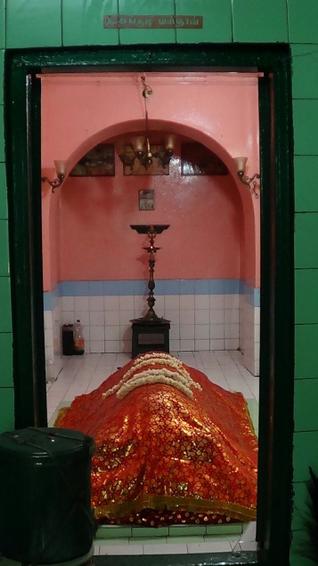
Mastan Sahib’s dargah in Royapuram./ by Special Arrangement / The Hindu

Mastan Sahib’s songs greatly enriched Tamil poetry, in particular the Islamic genre.

That is a wish expressed in a film song. Ever since then, the musical mystic has intrigued me. Planning for a heritage tour of Royapuram, Karthik Bhatt and I are standing in front of the Rajah Sir Savalai Ramaswami Mudaliar Lying in Hospital. We have been told by our good friend Anwar that the Kunangudi Mastan Sahib Dargah is nearby. After asking around quite a bit, we go into Raman (earlier Rama Naicken) Street. It is a thoroughfare of indescribable filth but we trudge along.

We cross a St Mary’s School. The next big landmark is the Renukadevi temple. We pause to ask again and are told we have crossed the dargah. We retrace our steps to find it in a vast, unkempt compound. But once inside, it is a haven of peace and remarkably clean. The structure is simple; a verandah with rounded pillars fronts a vestibule behind which, are chambers with sepulchres. The principal one, facing the entrance, is that of Kunangudi Mastan. On either side are those of his disciples – Pulavar Nayagangal (Hazrath Sheikh Abdul Qadir), Hazrath Qadir Mastan Sahib, Madhar Bibi and Hazrath Ibrahim Sahib.

Kunangudi Mastan Sahib, who was given that name owing to his ever being steeped in spiritual bliss, is believed to have lived between 1792 and 1838. Born at Kunangudi near Thondi in Ramanathapuram district, he was named Sultan Abdul Qadir at birth. His parents, Nainar Mohammed and Fathima Bibi were wealthy but the son chose to give it all up, seeking the supreme truth. He became a Sufi, taking to the Qadariya order. His love for God he expressed in the form of songs. To him, God was the beloved and in some of the songs, in keeping with the Sufi tradition, he depicts the supreme being as feminine.

Songs of his songs such as ‘Manonmani Kanni’ and ‘Rehman Kanni’ could have been the inspiration for Subramania Bharati in depicting God as his Kannamma. Mastan Sahib’s songs greatly enriched Tamil poetry, in particular the Islamic genre. The 20th century veena artiste VS Gomathisankara Iyer even set them to Carnatic tunes, making them suitable for concerts. A compilation was published by Professor Abul Rahman in 1980.

At the dargah, an aged servitor welcomes us in. We pray in silence and just as we are leaving, are asked if we saw the subterranean chamber. An opening in one corner of Mastan Sahib’s shrine accesses this. You need to crawl and then literally fall into it. The space, where you can only squat, can accommodate just about two people. Mastan Sahib is said to have meditated there. Local legend has it that it was once an underground passage leading to Tondiarpet. It is believed that Mastan Sahib was referred to as Tondiar owing to his having come from Thondi. The area of Tondiarpet is therefore said to be named after him.

Despite the squalid surroundings, and the difficulties in getting there, Mastan Sahib’s dargah is well worth a visit.

source: http://www.thehindu.com / The Hindu / Home> News> Cities> Chennai> Hidden Histories / by  Sriram V / September 03rd, 2013

City researcher identifies raft of medicinal plants

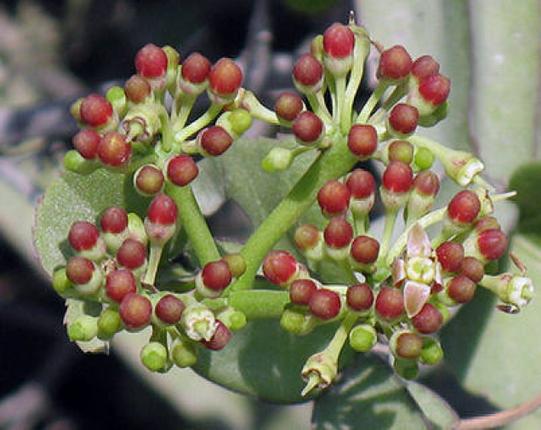
Senkaanthal flower, the State flower is one of the important medicinal plants found in the forests within the city./ by Special Arrangement / The Hindu

 The forest tracts around Chennai abound in herbs that were once commonly used to treat medical conditions. P. Oppili reports

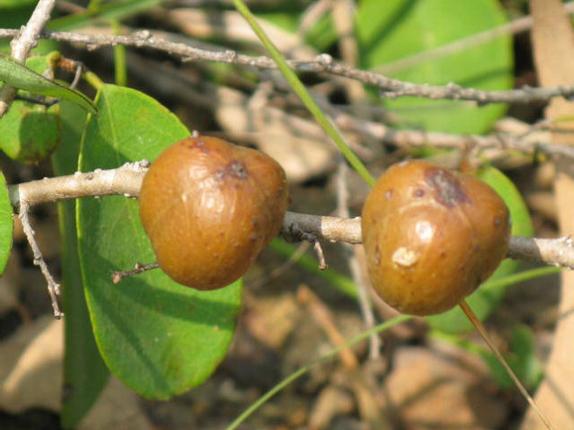
Beyond the Guindy National Park (GNP), the IIT-M campus and Nanmangalam forest, the city has forested tracts that support around 30 species of plants known for their medicinal values. N. Muthu Karthick, a researcher with CareEarth, a Chennai-based biodiversity organisation, has identified these plants. And his research has brought surprising facts to light. For example, these plants were commonly used in the day-to-day diet.

Cissus Quadrangularis / by Special Arrangement / The Hindu

Over 100 species of medicinal plants were found at Trisoolam hills, Vandalur Reserved Forest, Unamancheri and other forest tracts in and around Chennai. Those who stayed near these forest areas utilised the medicinal plants for minor ailments, skin allergies and common infections.

D. Narasimhan, Associate Professor, Botany Department, Madras Christian College, Tambaram, said 60 per cent of the flora found in the city were said to contain medicinal properties in them.

Cleisanthus Collinus / by Special Arrangement / The Hindu

Primary Health Centres (PHC) in the city had a Siddha medical practitioner, who used to prescribe extracts from these plants for simple ailments.

Apart from a Siddha clinic, the civic authorities also created medicinal plant gardens within the PHCs, he said. P. Sudhakar of CPR Environmental Education Centre, who studied the flora in the parks in the city said about 50 per cent of flora in the public parks were ornamental flowers, while another 50 per cent were medicinal plants. Apart from this, a 28 per cent of weeds were also found in the parks.

The study revealed that the weeds also contained medicinal properties, Sudhakar added.

source: http://www.thehindu.com / The Hindu / Home> News> Cities> Chennai> DownTown / by P.Oppli / Chennai – August 12th, 2013

Manufacturing can transform India: APJ Abdul Kalam

Gurgaon:

Former president APJ Abdul Kalam Tuesday highlighted the critical importance of manufacturing and technology in transforming India into a developed nation.

India is witnessing a wave of growth in manufacturing after its decline in the late 1990s. The current surge in the sector is touted to be much more promising than the first wave. But as this is slated to be more skills-intensive, technology and innovation would play a crucial role, Kalam said.

He was speaking before engineers and industry leaders on the role of manufacturing in India’s transformation to a developed nation at the Rockwell Automation On the Move 2013 (RAOTM-2013) exposition-cum-conference here.

Kalam outlined how the phenomenon of sustainable competitiveness, convergence of technologies and culture of excellence had assumed a pivotal role and stressed the need for creative leadership and ethical practices.

Industry leaders like Dilip Sawhney, regional director of Rockwell, said India was well poised to take advantage of this shift.

Frank Kulaszewicz, senior vice president, RA Global Operations, said Rockwell was focused on the biggest emerging markets such as India where there was a rapid growth due to the increased rate of urbanization and this had opened huge prospects for Rockwell’s products and solutions.

“Rockwell expects 60 per cent of its global revenues to flow from non-US markets, especially the emerging markets, by 2013-14,” he said.

Tom O’ Reilly, president, Asia-Pacific, Rockwell Automation, said the US-based company planned to put in some investments in the Research and Development sector and expand its tie-up with partners as India has “an immense potential in the industrial automation market”.

IANS

source: http://www.zeenews.india.com  / Zee News / Home> Sci-Tech> Science / Tuesday – August 13th, 2013

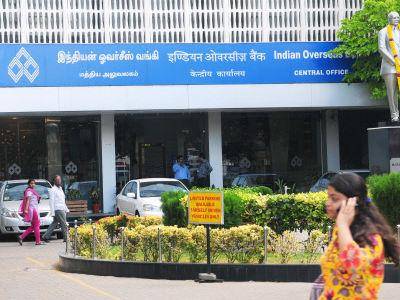
FM inaugurates Indian Overseas Bank’s 3000th branch

(The 3,000th branch of public…)

Chennai :

The 3,000th branch of public sector Indian Overseas Bank was inaugurated in Tamil Nadu  by Union  Finance Minister  P Chidambaram.

The branch, which is the 1,063rd in the state, was inaugurated at Vaniangudi in Sivaganga district, a bank statement said.

source: http://www.articles.economictimes.indiatimes.com  / The Economic Times / Home> Banking> Collections> Tamil Nadu / by PTI / August 17th, 013

15th century paintings found hidden in Tiruvarur temple

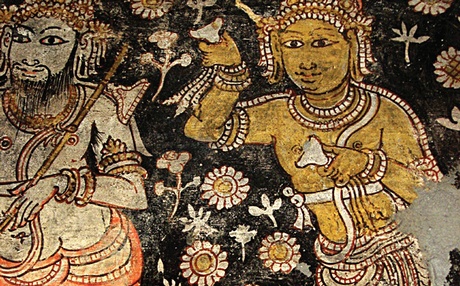
A painting depicting Narada found inside Sri Kalyana Sundareswarar Temple at Nallur village in Tiruvarur district | Express

Rare paintings of the Vijayanagar period, said to be date between the 15th and 16th century were discovered in the sanctum sanctorum of a temple recently.

The paintings came to light when renovation works in the Sri Kalyana Sundareswarar temple in Nallur village of Tiruvarur district was taken up ahead of the Maha Kumbabisekam of the temple, slated for August 30.

Kudvayil Balasubramanian, noted historian and archaeologist, who was informed about the historic find, visited the temple and made a study on the painting.

Based on his analysis, he said the temple is located near the ancient city of Pazhayarai, the capital city of Cholas. He also said the temple finds specific mention in the hagiographies of Tirunavukkarasar and Amarniti Nayanar. There was evidence to show the temple was renovated and consecrated by Chola queen Sembian Mahadevi.

The paintings in the sanctum sanctorum were done during the period of the Vijayanagara kings. Though many of the paintings have faded, four figures are still clearly visible, Kudvayil Balasubramanian said.

The paintings depict Naradar who plays Veena, an artiste who keeps a pair of cymbals and child Skanda holding the lotus flower. The paintings have been done with natural colours. He also appealed to the authorities that these paintings should be preserved, as they are vital to write the history of the paintings of Tamil Nadu.

source: http://www.newindianexpress.com / The New Indian Express / Home> States> Tamil Nadu / by Express News Service – Thanjavur / August 19th, 2013

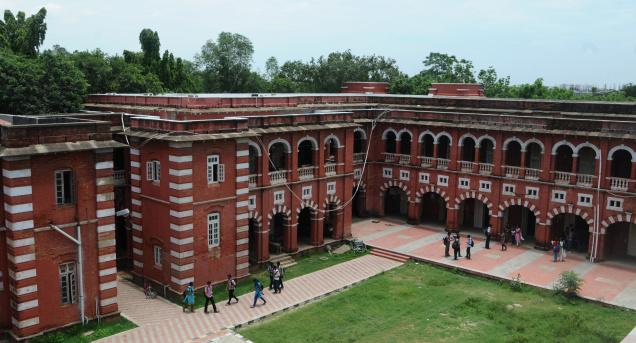
MADRAS 374 – College of Engineering, Guindy, a 219-year journey

The College of Engineering moved to its current location in 1920 / Photo: R. Ragu / The Hindu

Unlike many heritage buildings in the city, the stately, yet functional arches and corridors of the college do not seem like an anachronism

Unlike many heritage buildings in the city, the stately, yet functional arches and corridors of the College of Engineering, Guindy do not seem like an anachronism. The rectangular scarlet structure of one of the country’s oldest technical institute effectively encases not just an architecturally fine courtyard and corridors, but also the evolution of technical education in the city.

On a brisk Monday morning, this busy institution, it seemed, had no time for nostalgia. Under the high ceilings, and arched passageways, students huddled in groups with books, and professors stood on pedestals in classrooms naturally lit by the spacious windows.

What started as a survey school with eight students in 1794 at Fort St. George, shifted to several campuses including Kalas Mahal in Chepauk before moving to its current premises on what is today the Anna University campus in 1920, according to ‘Glimpses of 200 years of history of the College of Engineering, Guindy’ by Er. C.S. Kuppuraj. Today, nearly 10,000, students study here, said dean, C. Chellappan. The original survey school became a civil engineering school, civil engineering college and an engineering college before becoming the College of Engineering, Guindy.

The active alumni of the college take heart in the fact that the main building still retains its heritage character. B. Karunakaran, secretary, Alumni Association, College of Engineering Guindy who passed out in 1969, said that as students, they loved the spacious campus. A lot of things have changed too, he noted. “For instance, there was only one girl in my batch. Now, of course the ratio has drastically changed,” he said.

Mr. Chellappan, said that maintaining the heritage nature of the building was a top priority and they planned to convert the clock tower into a heritage centre. “The college has a rich history and has produced notable alumni. We want to showcase the evolution of the college to the students,” he said.

82-year old N. T. Swaminathan, who passed out in 1955, said the clock tower was the main time-keeper for students. “Few wore watches and when we heard the bell toll, we rushed to class, which began at 7 am. Back then, there was a tennis court very close to the main building. As it was far away from the city, it used to be calm and green,” he recalled.

“The masonry arches, interspersed with stone and brick, are identical. Even with modern equipment, it would be difficult to construct something similar.,” said M. Sekar, former dean and president of the alumni association.

Chennai Central at The Hindu celebrates Madras Week

Follow us:

Microsite: http://thne.ws/madras-week

Facebook: www.facebook.com/chennaicentral

Twitter: www.twitter.com/chennaicentral

Hashtag: #madrasweek #madras374

Photos: www.thehindushutterbug.com

source: http://www.thehindu.com / The Hindu / Home> News> Cities> Chennai / by Asha Sridhar / Chennai – August 20th, 2013

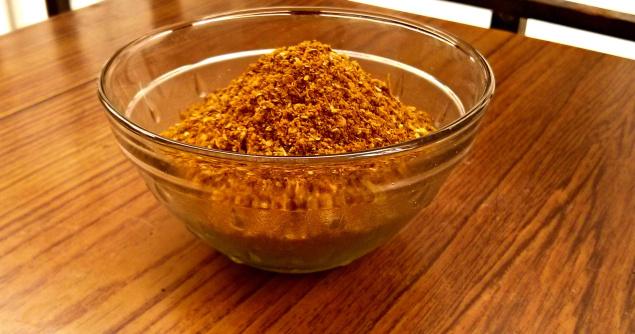
MADRAS 374- A taste of Madras in curry powder


Madras curry powder -- Photo: Apoorva Sripathi / The Hindu
Madras curry powder — Photo: Apoorva Sripathi / The Hindu

Who would’ve imagined Madras curry powder would eventually turn out to be one of England’s best-loved spice mixes?

Comprising humble ingredients such as turmeric, cumin seeds, coriander seeds, fenugreek, black pepper, red chillies and others, the spice blend first travelled all the way to London from Fort St. George in Madras.

According to ‘Notes from Madras’ by Arthur Robert K. Wyvern, Madras curry powder (as well as mulligatawny paste) was first sold by Barrie’s in Leicester Square. By corollary, any dish that included the above-mentioned curry powder was duly named as ‘Madras’ something.

In the 1890s, P.V. Condiments’ brand of curry powder became famous in England thanks to a Mr. Sharwood. So famous that even the Buckingham Palace purchased it from them.

Believed to have originated from the Tamil word kari meaning sauce or relish, the frangrant Madars curry powder now has many variations.

Chennai Central at The Hindu celebrates Madras Week

source: http://www.thehindu.com / The Hindu / Home> News> Cities> Chennai / by Apoorva Sripathi / Chennai – August 19th, 2013

Madurai women storm male bastions in business

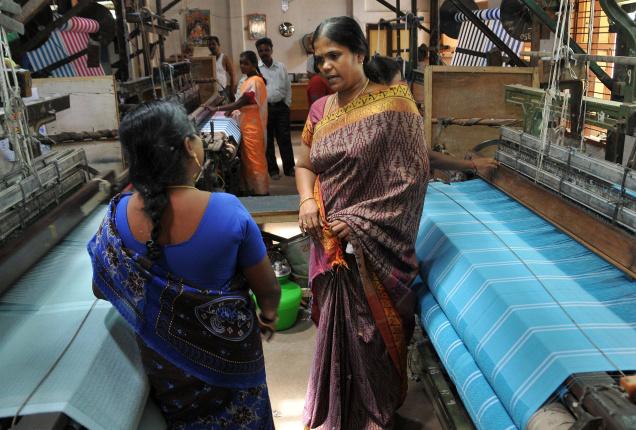
Woman entrepreneur Thenmozhi Meenakshisundaram interacting with a weaver at her loom in Sellur, Madurai. /  Photo: S. James / The Hindu
Woman entrepreneur Thenmozhi Meenakshisundaram interacting with a weaver at her loom in Sellur, Madurai. / Photo: S. James / The Hindu

A typical Madurai woman is perceived by many to be a rustic and timid person forced to live amidst social evils such as denial of equal rights, female infanticide, child marriage, caste prejudices and so on. She is often depicted as someone who seldom protests or tries to break out of the shackles. Such stereotyping for long has overshadowed her other dimension of being a ‘go-getter.’

M. Thenmozhi, a 45-year-old mother of two engineering graduates and Chief Executive Officer of T.M. International, exporter of designer home furnishing materials to Europe, Australia and other continents and 40-year-old S. Josephine, co-owner of Vibi’s brand of honey are among women who have risen to great heights despite possessing a modest educational and economic background.

What creates a common bond between the two is that both of them were given in marriage immediately after completing their schooling at the age of 18, they were involved in household chores until their children attained teenage, they completed their graduation through distance education, started doing business as novices and learnt its nuances from scratch.

“I am the eldest of five girl children born to my parents. Though all my four sisters were educated well and are now comfortably placed in the United States and other countries, I alone was given in marriage immediately after Plus Two because my parents did not want to lose a good groom,” Ms. Thenmozhi chuckles referring to her husband whom she commends as a rare non-egoistic man she had ever met.

An hotelier by profession, he gave her full freedom to pursue her passion right from the day of their marriage. But Ms. Thenmozhi chose to fulfill her commitments at the domestic front and concentrate on raising her children up to high school level before taking a plunge into export business considered to be one of the most risky ventures besides being a male dominion.

“I got married in 1986, but started the business only in 2005 after attending a short term training programme in textile exports. The immediate reaction from my own relatives was one that of ridicule. ‘Oh she is gone mad, she does not behave like a family woman, she is up to some nonsense, business is not a joke’ are some of the comments that I had to put up with,” she recalls with a smile.

If such was the case at home, it was no different outside. “Even now, whenever I go through Indian airports to visit international textile fairs, I continue to encounter cynical men who take a look at my business visa and still ask if I am going on a tour. I really get enraged when men make fun of women,” she says with anger sparkling in her eyes.

On the other hand, she finds foreigners to be courteous and encouraging. “It is so soothing when I get to hear a customs official at a foreign airport wishing me a great business. This one characteristic is enough to demonstrate the difference between how Indian men perceive the capabilities of a woman compared to their foreign counterparts,” she adds.

Ms. Josephine also shares similar views. Her nature of work involves transporting from forest areas hundreds of boxes of honey bees when the bees are asleep during night time. She says male business rivals try to create all sorts of problems like stealing the boxes, creating hurdles in their transportation and so on. Yet, she has fought her way up to emerge as a successful entrepreneur.

To avoid the irritants during night hours, she has created new kinds of boxes that could be transported even during day time without agitating the bees. The boxes, she says, would hit the market by the end of September. “Competition and jealousy makes people do all sorts of crooked things. And businessmen get agitated more when their competitor is a woman. They just cannot digest it,” she adds.

So far she has been tackling them successfully because facing adversities in life has become a routine for her ever since she lost her only daughter to bone cancer in 2007, a year after she plunged into the business of setting up bee farms for augmenting her family income. The girl was 16-years-old and pursuing her studies in Class XI at the time of her death.

Five years from thereon, Josephine lost her husband K. Selvaraj last year. “There cannot be a bigger tragedy in life than losing your child when you are alive. I have undergone that. Yet, I have been able to move on in life because I want to be like a bee — energetic and hardworking. Women should never cow down whatever be the problem they are forced to face,” she asserts.

source: http://www.thehindu.com / The Hindu / Home> News> Cities> Madurai / by Mohamed Imranullah S. / Madurai – August 26th, 2013

Cotton federation to hold annual meet next month

Coimbatore : 

The Indian Cotton Federation’s (ICF) annual conference is slated for September 13th and 14th at Le Meridien in Coimbatore.

ICF (formerly The South India Cotton Association), at its conference last year, had called upon the industry stakeholders to discuss the challenges facing the cotton trade and industry.

The year though, the season seems to have begun well, and as a policy initiative Cotton Corporation of India could procure almost 8 per cent of the production for stabilising the price levels, said ICF President J. Thulasidaran.

Yet, there are a host of problems confronting the sector such as competition from China, Bangladesh and Thailand and the Government’s textile export target of $50 billion, which is putting pressure on the industry to gear up to meet the challenge.

“A transparent policy initiative needs collective thinking,’’ said Mr Thulasidaran, urging industry stakeholders to take part in the discussion.

source: http://www.thehindubusinessline.com / Business Line / Home> Industry> Agri-Biz / by L N Revathy / Coimbatore – August 09th, 2013