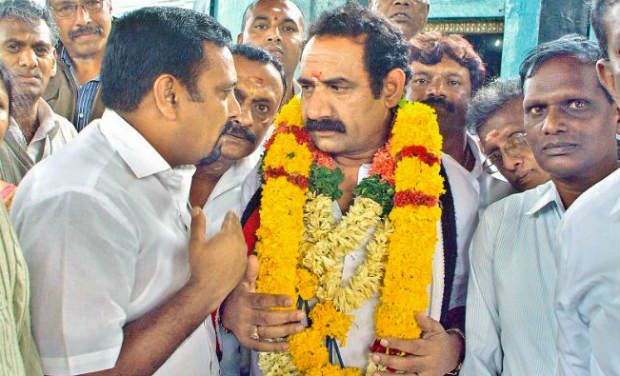
K.R.Arjunan, a candidate to the Rajya Sabha elections, being greeted by AIADMK cadres in Ooty. —DC
Ooty:
The Badagas , who constitute the single largest community in the hills and other tribes have not been able to contest parliamentary polls since 2009 when the Nilgiris parliamentary constituency became a reserved one.
So the announcement by the AIADMK that K.R.Arjunan, its Nilgiris district secretary and a Badaga, will be representing the hills in the Rajya Sabha has come has a huge shot in the arm for the community,which has fervently thanked the party for its gesture.
From Ketti village, Arjunan, who was made district secretary in January 2012, has held various party posts in the past and was chairman of the Ketti town panchayat in 2001-06.
Thanking the CM for having chosen to send a Badaga for the first time to the Rajya Sabha, community chieftain R.Iyaaroo said it was an honour for the tribals that she had opted for a man from amongst them for parliament.
Chairman of the Academy for Badaga Culture Trust, Manjai Mohan, said the chief minister had made the Badaga community proud by sending Arjunan to the Rajya Sabha and her gesture would “stay in the hearts of the Badagas forever.”
The hills were represented in RS last in 1952-58 by Surendra Ram of the Congress party.
source: http://www.deccanchronicle.com / Deccan Chronicle / Home> News> Current Affairs / by B. Ravichandran, DC / June 11th, 2013
Kurangani Hills near Bodinayakanur in Theni district is a perfect place for trekking fans as well as nature enthus. The 12 km walk from Kurangani village to Top Station through Central village is a journey to be cherished. Those who visit Munnar in Kerala can also enter the trekking route here by walking down the dense woods and plain grasslands of Kurangani Hills. By reaching Top Station, border of Theni district, from Munnar after 35 km travel, one can start trekking down the hills.
Although, Kurangani Hills is near the famous Munnar Hills and Kolukkumalai Hills — the highest hills for tea plantation in the world at an altitude close to 8,000 feet — the place is still not known in the tourism circuit. However, several foreign tourists do come here. Some nature lovers within the state also frequently visit Kurangani Hills. Film-makers too have been charmed by the nature here. Films Alagar Samiyin Kuthurai, Myna and Kumki were shot on the Hills. The best months to explore the Hills are between August to December.
Frequently changing weather, low-hanging clouds, chilly atmosphere and strong winds coupled with wide range of flora and fauna are the things to enjoy in the hills. It takes four to five hours to complete the trekking from Kurangani village, the foothills of the Hills to reach Top station, whereas two-and-a-half hours is enough for the return trip. Trekkers can find Samabalaru falls, the source of Kottakudi river which serves the drinking water needs of Bodinayakanur town, while wading through here. Central Village, with a population of 200 people and 50 houses, is four more kilometres from the Falls. A couple of cottages are available in here to provide accommodation for the visitors. Foreigners, who come prepared with tents, prefer to stay under the open sky. Guides can take you through unexplored thick woods.
The villagers say that tourists frequently spot Indian guars, barking deer, langurs, wild cats and. However, the villagers warn about the presence of leopards and tigers.
REACHING THERE
* Bodinayakanur is 16 km away from Theni, connected by frequent bus service
* 15 km road connecting Kurangani and Bodinayakanur
* Via Munnar one can reach 100 km distance Road facility connecting Bodinayakanur and Top Station- Around
* Buses, jeeps and autos available from Bodinayakanur
* 12 km — trekking distance between Kurangani village and Top Station
* Central village is the half-way point between Kurangani village and Top Station
* Best time to visit: August and December
* Lodges available in Top Station, Bodinayakanur and Munnar. Only two cottages available in Central Village
source: http://www.articles.timesofindia.indiatimes.com / The Times of India / Home> City> Madurai> Nature / by V. Devanathan, TNN / June 10th, 2013
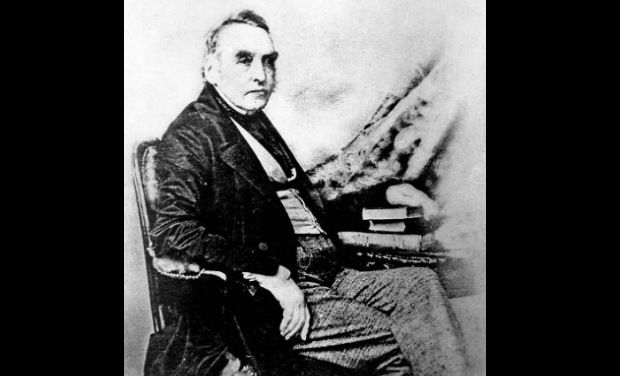
Today is 225th birth anniversary of John Sullivan, the founder of modern Nilgiris —DC
Ooty:
As tourism, nature and Nilgiris are inseperable, so is John Sullivan and Nilgiris, especilly Ooty- the queen of hills. Those who enjoy living in modern Nilgiris and tourists who visit the hills have an obligation to remember John Sullivan, called the founder of modern Nilgiris, especially Ooty, as his 225th birth anniversary falls on June 15.
This British-India collector would not have envisaged that the hills, which he loved passionately and started developing it, which changed the face of the Nilgiris in early 1800s, will become a world famous tourist destination in future.
But, certainly, he was the administrator who sowed the seeds for modern Nilgiris. The write-ups documented in the Nilgiris district gazetteer and few other such books, showed the role of Sullivan in developing the Nilgiris and showcase how the Nilgiris, once an unknown place on earth, growing to become a a well-known place in the world.
Born in London on June 15, 1788, Sullivan joined the East Indian Company at Madras and rose to become the collector of Coimbatore, which included the Nilgiris then, in 1815.
As collector he took out an adventurous expedition to reach the Dimhatti valley in Kotagiri, in the Nilgiris, in January 1819.
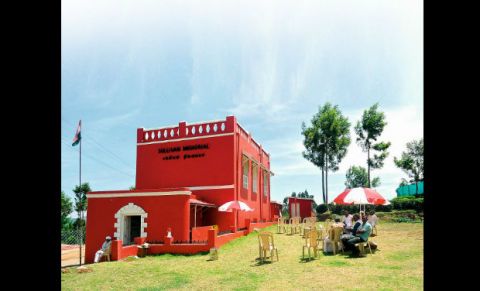
During his second visit to Kotagiri in May 1819, he built the first-ever modern builing in the hills at Kannerimukku village, from where he used to administer the hills for a while. This house, called Pethakal bunglow by the locals, was resorted a decade ago and now serves as a memorial to Sullivan.
View of the Sullivan Memorial at Kannerimukku in Kotagiri. —DC
It is said probably on February 22, 1821, he visited Ooty with the help of a Badaga guide. Then he built the stone house, first-ever modern building in Ooty, and stated living there from 1823. This building is now a portion of the government arts college. It is not an exaggeration to state that Sullivan was the brain behind the hill residents witnessing a revolution in their lifestyle and enjoying the fruits of modernity.
He was learnt to have introduced horticulture crops and hill vegetables to the Nilgiris and planned the establishment of Ooty lake along with other road connectivity facilities to help the development and economy of the hills.
Sullivan, who lost his wife, son and a daughter in Ooty, as they died in the hills, retired to England in 1841, where he died on January 16, 1855. Besides the stone house in Ooty, a portion of the oak tree which Sullivan planted in 1823 at Stone House, is still seen there.
2-day trek to retrace Sullivan’s trail
B. Ravichandran | DC
Ooty:
The name of D. Venugopal, the director of Nilgiris Documentation Centre(NDC), which maintains the Sullivan Memorial at Kotagiri, would be etched in Nilgiris history as it was his interest, affection and sense of gratitude to John Sullivan saw him take genealogical research on the founder of the Nilgiris which helped him discover Sullivan’s grave at Upton, London, and his great-grandson later on in 2009.
]
Mr Venugopal’s efforts now help modern-man get an insight into the history and genesis of modern Nilgiris through photographs and other documentaries display at Sullivan Memorial.
Speaking to DC on the celebration of the 225th birth anniversary of John Sullivan, Mr Venugopal said the NDC and Association of British Scholars at Coimbatore will organise a two-day trek on June 15-16 to retrace the Sullivan trail, starting from Sirumugai to Kotagiri.
On the tale behind the trail, he said Sullivan organised an expedition on January 2 in 1819 having at his disposal an entire contingent consisting of army-men, several dozen war elephants, hundreds of dogs and ponies. The rear guard was made up of two dozen English huntsmen.
They began the ascent of the mountain from the side of Denaigoukot (now Sirumugai). After having reached a level of 1,000 feet, the expedition was compelled to abandon its elephants and throw away nearly all its baggage as they had to climb higher and higher.
source: http://www.deccanchronicle.com / Deccan Chronicle / Home> News> Current Affairs / by B. Ravichandran, DC / June 15th, 2013
India’s diverse artistic culture has now converged in one place, bringing the city the finest exquisite jewel works from the artisans of various states of this country at the Poompuhar – Artistic and Artificial jewel exhibition that was inaugurated here on Wednesday.
Like every year, the exhibition is slowly starting to make its mark by grabbing attention of the crowd, especially the ladies, who have been flocking to the exhibition since its inauguration. ‘We eagerly expect this exhibition every year as they have a huge collection,’ says Jayalakshmi, who had come along with her friend to purchase ornaments.
The exhibition has an assortment of every state’s artistic work to enchant the buyers of various age groups. From Impon jewellery, temple ornaments and antique jewellery to Jaipur’s stone jewellery, Hyderabad’s pearls and gold plated ornaments, the bling is fast disappearing. In addition, wooden jewels, tribal jewellery, jute-made ornaments, silver filigree, crystal chains, Rajasthani bangles and meenakari earrings seem to be the popular choices for the younger generation.
Just few days into the fair, the exhibition has already seen phenomenal sales with products worth between `50,000 – 60,000 being sold each day. And it is expected to increase in the days to come.
But it is not only the local crowd that is grabbing the bling – the exhibition has also caught the eye of foreigners. According to the Bose, manager trainee, Chennai’s foreigners are a huge fan of the jewellery. “They love the variety here, they feel the jewellery is very colorful and unique,” says Bose. This can be very well seen from the sight of a foreign visitor who carefully scans through all the stalls. ‘I totally love this place. I am seeing every variety that I can think of,’ says Ken Smith, a visitor from Canada.
The artisans from different places find this as a perfect platform to exhibit their works to people.
Sometimes they get huge orders after displaying their products here, while others feel quite disappointed to see people hesitating to buy original quality crystals and stones, instead opting for duplicate low quality crystals outside.
This is inspite of the huge profit margin they gain.
But the buzz is still on and the excitement is sure to go on for few more weeks, as the exhibition ends only on June 29. After all, there is no end for shopping in a city like Chennai.
source: http://www.newindianexpress.com / The New Indian Express / Home> Cities> Chennai / by Express News Service – Chennai / June 08th, 2013
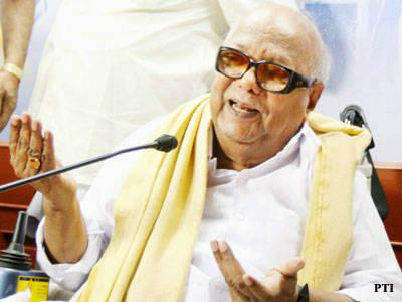
As a 14-year-old during the anti-Hindi agitation, he walked alongside Periyar as E V Ramasamy was called, with a spring in his step and vigour in his heart. Breaking away from a traditional family of temple musicians, he made politics his domain.
His fledgling party formed as a breakaway faction from the original DK in 1949, soon went on to shape national politics in the post-emergency era. Today, 10 years short of his centenary, Muthuvel Karunanidhi is the oldest surviving active political leader of stature hi n the country with lakhs of party functionaries under his command for the past 44 years. Only his party general secretary K Anbazhagan is older than him. Karunanidhi enters his 90th year on Monday.
(Karunanidhi enters his…)
Facing a succession war, 2G scam charges and political isolation after the recent pullout from the UPA II regime, the DMK veteran is still a fighter strategizing at party conclaves. A five-time chief minister of Tamil Nadu taking over the reins of CM at a relatively young age of 44 years succeeding C N Annadurai, and 12- time MLA, Karunanidhi has been meeting party cadres and writing for them in the party organ almost every day.
Karunanidhi is the first Dravidian leader to set his sight on national politics, say analysts. “Till his mentor Anna’s period, the DMK had focussed on state politics. But Karunanidhi adopted a different strategy. He has been concentrating on national politics since 1971. He was planning to get more projects and funds for the state with the support of the Centre. Though, there was a strong anti-Congress mood in the party, he aligned with the Indira Gandhi-led Congress in the 1971 Lok Sabha elections,” Dravidian writer and historian ‘Sangoli’ K Thirunavukkarasu told TOI.
The DMK was the first party to pass a strong resolution against the Emergency. The Karunanidhi-led government was dissolved in 1976 following the Emergency. “He played a vital role in the formation of the National Front in 1988. He had organised a big event for the National Front and leaders like V P Singh, N T Rama Rao and others participated. DMK became a constituent of the Union government for the first time when V P Singh formed the government in 1989. The DMK has had a strong hold at the Centre for the past 15 years with its representatives a part of the Centre,” he said.
Commentators say that Karunanidhi never gave up his basic ideologies like justice and the interest of Tamil language. “Karunanidhi has been following his ideologies from the time of the Justice Party,” Thirunavukkarasu said.
Though Karunanidhi dropped out of schools unlike his colleagues in the party, R Nedunchezhian and EVK Sampath, he managed to succeed Anna. “Others acted like leaders. But, Karunanidhi acted as a party worker. When he was a treasurer of the party during the Anna years, he had travelled across the state and consolidated his support base,” party seniors recalled.
Karunanidhi not only attracted the cadres but also impressed his mentors Anna and Periyar. “The other leaders in the party only knew about me, but Karunanidhi was the only one who knew the real me,” Anna once said. In fact, it was Periyar who proposed Karunanidhi’s name for DMK’s top post.
Political observers say that Karunanidhi’s hard work is the key factor for his consistent success. “He is still reacting to all the important issues. He has been writing letters and statements on a daily basis. Once he had said he would feel bad if he was not writing anything on any given day,” writer and politician D Ravikumar said. The Karunanidhi government had initiated many schemes and projects for the marginalised people like beggars, transgenders and the disabled.
The big challenge for the patriarch is to regain power in the state and and his ‘World Tamil Leader’ title. “Pulling out from the UPA government after enjoying nine years of power at the Centre, DMK has no allies now except the VCK. With not in power in the state, the party has been facing a serious crisis,” said a senior leader.
But, they are confident that their leader can come back to power with his commitment. “We were not in power for 13 years during the MGR period. We got only two seats in the 1991 assembly elections in the wake of Rajiv Gandhi’s assassination. But we bounced back with Kalaignar’s efforts and strategies,” said another leader.
source: http://www.articles.timesofindia.indiatimes.com / The Times of India / Home> India / by Karthick S, TNN / June 03rd, 2013
Angkor Wat is a temple complex at Angkor, Cambodia, built by King Suryavarman II in the early 12th century as his state temple and capital city. As the best-preserved temple at the site, it is the only one to have remained a significant religious centre since its foundation — first Hindu, dedicated to the god Vishnu, then Buddhist. The temple is at the top of the high classical style of Khmer architecture.
Angkor Wat combines two basic plans of Khmer temple architecture: the temple mountain and the later galleried temple, based on early South Indian Hindu architecture, with key features such as the Jagati. It is designed to represent Mount Meru, home of the devas in Hindu mythology: within a moat and an outer wall 3.6 kilometres (2.2 mi) long are three rectangular galleries, each raised above the next. At the centre of the temple stands a quincunx of towers.
The initial design and construction of the temple took place in the first half of the 12th century, during the reign of Suryavarman II (ruled 1113 — c. 1150). Dedicated to Vishnu, it was built as the king’s state temple and capital city. In the late 13th century, Angkor Wat gradually moved from Hindu to Theravada Buddhist use, which continues to the present day.
source: http://www.phannarith.com / Home / May 31st, 2013
Chennai Corporation run schools recorded a pass percentage of 91.47% in the SSLC examinations, 4.5% higher than last year. Out of the 8,788 students, 8036 passed in the 72 schools.
The results were declared today.
Salma Haseena, a student of the Chennai Higher Secondary School (CHSS) at Market Street in Perambur, became topper among corporation schools scoring 491 out of 500. She was closely followed by K Yuvarani of Chennai Girls Higher Secondary School in Nungambakkam and Nissi Mariam of Chennai Girls Higher Secondary School in Saidapet. They scored 490 out of 500. Four students tied for third position with a score of 488 out 500. The students are D Mercy Jebarani and Jebaselvi from the school in Market Street, B Bhoopalan from the CHSS, Seven Wells and M Vijay from CHSS, Maduvankarai.
Corporation schools’ performance in the class 10 examinations seemed to have improved to a large extent compared to last year.
Twelve schools managed to achieve 100% pass compared to only two schools that managed the feat last year.
This year 258 students scored centum in various subjects compared to only 18 students last year. Around 1,558 students scored above 400 out of 500 this year when compared to only 400 students who achieved this last year.
Sticking to the annual trend, girls outshone boys with a pass percentage of 93.77%. The boys achieved a success rate of 88.9%.
source: http://www.articles.timesofindia.indiatimes.com / The Times of India / Home> Education> Schools / by V. Aiyappan, TNN / May 31st, 2013
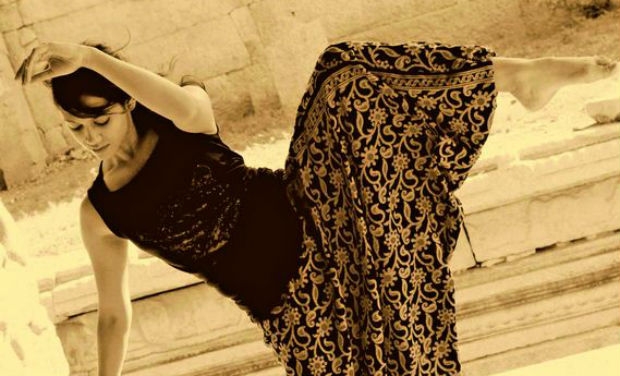
She’s been one of the bright spots this Margazhi season, her graceful exuberance lighting up the stage, perhaps a mark of her tutelage under Priyadarshini Govind. Currently based in Chennai, Shweta Prachande has performed all over India and represented the country at several international festivals.
Originally from Pune, Shweta did a post graduate diploma in Contemporary Dance Studies at Trinity Laban Conservatoire of Music and Dance, London. “One of the initial challenges I faced was my lack of training in ballet, but that didn’t hinder my learning process as we had other subjects like Choreography, Contemporary Jazz, History of Dance etc.
Choreological Studies definitely changed the way I view movement in dance. In Bharatanatyam, we learn mostly by watching our teachers or following the verbal instructions in class, but understanding the source of the movement and using it effectively, is something I comprehend more easily now,” she explains, adding that she practices yoga and the martial art of Kalaripayattu to stay fit.
Having studied contemporary dance while in London, Shweta feels that it’s quite a challenge to be proficient in more than one art form. She has also dabbled in acting, having bagged the lead role in the short film, Notes of Silence, which was screened at the LA Women’s International Film Festival and The NY Indian Film Festival.
Having had the ability to pan out and excel in different performing arts, she also possessed the stamina to embrace a different discipline altogether: rugby. Shweta has played rugby for India, making it to the first Women’s 7 team in 2009, when they travelled to Thailand for the Asian Women’s Championship. She’s also a certified International rugby level 1 coach and referee.
“Rugby happened by chance, on a summer vacation, back home in Pune. I took up the sport for its hardcore fitness, discipline and team spirit. Contrary to popular opinion, in spite of the demanding nature of the game, rugby’s also quite flexible, and we’re trained to deal with its physicality.
Being Indian, we don’t have the same genes that other heftily built foreign players do, but we match their levels by practicing and maintaining fitness. Injuries do happen, but we can control the impact. There’s so much of strength and honour involved in playing for the country. It really was an amazing experience,” muses
Shweta, who also played for an amateur London club during her time in England.
It’s an unusual combination, the grace of dance and the toughness of rugby, each a discipline with lots to impart to the practitioner. Next, Shweta wants to be a Bharatanatyam soloist and a teacher of dance too.
source: http://www.deccanchronicle.com / Deccan Chronicle / Home> Entertainment / TV-Music / by Gautam Sunder, DC / January 10th, 2013
*Referring to my piece on Dr. S. Gopal, that outstanding modern Indian historian (Miscellany, April 22), V.C. Srikumar, an advocate, tells me that Gopal could have been an equally outstanding advocate if only he had chosen the Law as a profession. Gopal took his Law degree from the University of Madras in 1944. The previous year, he was awarded the University Gold Medal for Constitutional Law. But instead of following the example of two of his brothers-in-law, Kasturi Seshagiri Rao and M. Seshachalapathy of the Madras Bar — the latter went on to become a Judge of the Andhra Pradesh High Court — he chose to go to Oxford to improve on his Master’s in History which he had obtained in Madras. The Law’s loss was History’s gain thereafter.
*P. Krishnan, who on a recent visit to the Marina caught up with the Tilak Ghat memorial that was installed after years of appeal, tells me that it’s yet another forgotten landmark in the city: “no one pays any attention to it”. But, he continues, the authorities constantly keep speaking of new plans for the Marina. And there are also now plans for the San Thomé beach, he adds. Perhaps they’d like to add markers at both sites to a historic event — and find them as ignored by the public as the event itself has been forgotten. The event he refers to is the Madras Salt Satyagraha in 1930, following on the heels of the Dandi and Vedaranyam marches. The march to the sea at the Triplicane Beach (later called Tilak Ghat) was led by T. Prakasam, S. Satyamurti and others. At San Thomé Beach, many from the film world were in the forefront. As usual, my correspondent adds, arrests were made followed by releases after brief detentions. And that was that.
*My New South Wales correspondent, Dr. A. Raman, sends me yet another tidbit and I wonder whether the Meteorological Department will have anything to add to these bits of information relating to a Dr. Alexander Turnbull Christie, who was an Assistant Surgeon in the Madras medical establishment until 1828 and who wrote a treatise on “Epidemic Cholera”. When he returned to Scotland on furlough that year, he got interested in Geology and Meteorology and got down to studying them. This academic pursuit of his led to Christie being appointed Geological Surveyor, Government of Madras, in 1830. When he returned to Madras in 1831, he brought with him several meteorological instruments bought from “Robinson, Optician, Portland Place” (London or Edinburgh?). These included a thermometer, a barometer, an oethrioscope, a photometer, an electroscope, a hygrometer, an ombrometer (rain gauge) and an atmometer. Fort St. George thereupon ordered 20-30 sets of this equipment for the Presidency. Dr. Raman, in a footnote adds that “it is interesting to note that Christie speaks highly of (in the Madras Journal of Literature and Science) Centigrade measurements of temperature as against Fahrenheit readings even as early as 1832, when Fahrenheit measurements were followed religiously in the U.K.!”
source: http://www.thehindu.com / The Hindu / Home> News> Cities> Chennai> Columns / Madras Miscellany / by S. Muthiah / June 02nd, 2013
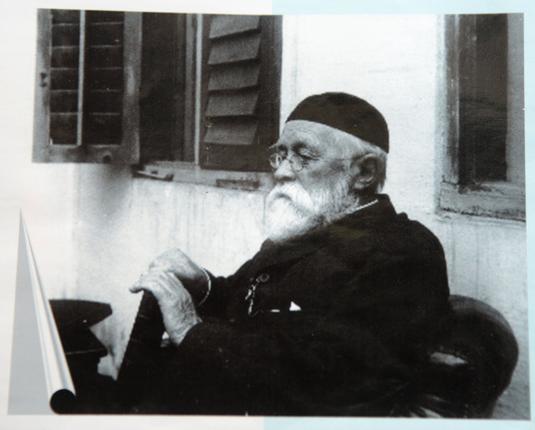
Robert Bruce Foote. Photo at special exhibition at Government Museum, Egmore./ Photo: M. Vedhan / The Hindu
Where did Foote find them?
It was 150 years ago on May 30 that Bruce Foote unearthed those Palaeolithic (Stone Age) finds that gave India a prehistory. The generally proffered story is that he found them in “a ballast pit” in Pallavaram, ballast in this context perhaps meaning coarse stone or gravel for road-building or rail track-laying, for which the Pallavaram area is well-known. It is also reported that he made his finds near the ‘Parade Grounds’ in Pallavaram. The ‘Brigade Grounds’ are also mentioned in this connection. Now where were these grounds in Pallavaram, that southern suburb of Madras?
To the best of my knowledge, the St. Thomas’ Mount Cantonment is really the St. Thomas’ Mount-cum-Pallavaram Cantonment, stretching south from Kathipara Junction to what was the first major industrial unit in the area, once known as English Electric and now as Areva. The almost 3,200-acre cantonment once had, I’m told, three parade grounds. They were the regimental parade ground in Pallavaram, the Madras Area headquarters parade ground that is now the Officers’ Training Academy ground, and the Artillery Park and parade ground in what is now Mohite Stadium in the shadow of the Mount. In which of these or near which of them was the ballast pit that Foote delved into and achieved fame? Juxtaposing Parade Ground and Brigade Ground, the two sites mentioned, I would be inclined to point to what’s now the Mohite Stadium grounds, the only space big enough for the parade of a brigade. But can anyone offer something more than speculation?
The St. Thomas’ Mount-cum-Pallavaram Cantonment is said to be the second oldest in India. The oldest I’m told was Calcutta’s Barrackpore, established in 1772. But it got its administrative Board in 1775. St. Thomas’ Mount-cum-Pallavaram got its Board in 1774 and was a much earlier military station than Barrackpore. So I’d be inclined to claim St. Thomas’ Mount-cum-Pallavaram as the oldest cantonment — and not the second oldest as the Army would have it — in the subcontinent. But then, as many say about me, I’m prejudiced. More definite, however, is the fact that Bruce Foote’s were the first Palaeolithic finds in South Asia. And, so, he is called the ‘Father of Indian Prehistory’, according to Dr. Shanti Pappu who is tracing his life story and re-exploring his excavation sites.
source: http://www.thehindu.com / The Hindu / Home> News> Cities> Chennai> Columns / Madras Miscellany / by S. Muthiah / June 02nd, 2013