Voltech, NanoPV venture to build solar module plant near Chennai

Chennai, OCT 30:

The Voltech group of Chennai and the US-based NanoPV have joined hands to put up a 100 MW solar module manufacturing plant near Chennai and a solar park near Tuticorin.

Voltech is a medium-sized group that is into the manufacture of transformers.

Setting up a cell and module manufacturing plant may appear foolhardy at a time when global majors are being toppled by the Chinese companies’ onslaught and the slowdown in the European economy. But NanoPV’s President and CTO, Dr Anna Selvan John, says that the company has unique and patented technology that enables it to be competitive even in this market.

“NanoPV has unique technology based on amorphous and nano-crystalline silicon and proprietary light-trapping and ‘transparent conductive light-trapping oxide’ technologies,” says the company’s Web site. Because of this, compared with conventional solar cells, NanoPV’s cell manufacturing involves one-third the process and takes one-third the cost, and “300 times less amount of material consumption.”

Voltech’s Managing Director, M. Umapathi, said that the group has near Chennai a factory building where it once produced textiles. NanoPV intends to bring in plant and machinery from the US and set up a production line here.

The initial capacity would be 10 MW and would gradually be ramped up. Umapathi estimates the cost of the project to be Rs 100 crore.

Solar farm near Tuticorin

Another joint venture of Voltech and NanoPV is putting up a 100 MW solar farm near Tuticorin. The project will be implemented in phases, and work has begun on the first 10 MW.

In this venture, a UAE-based company called Arab Gulf Pearl Trading is also participating. It has taken 50 per cent of the equity. This project too would cost Rs 100 crore.

Work has commenced on the first 2 MW, which will be completed by March 2013. The other 8 MW will be ready to produce power by the end of 2013, Umapathi said.

NanoPV says that its modules can generate 1.8 million units of electricity per MW each year.

The joint venture intends to enter into power purchase agreements with industrial consumers in the state, forming a ‘group-captive’ structure.

ramesh.m@thehindu.co.in

source: http://www.TheHinduBusinessLine.com / Home> Companies / by M Ramesh / Chennai, October 30th, 2012

Capgemini opens new BPO centre in Tamil Nadu

Chennai:

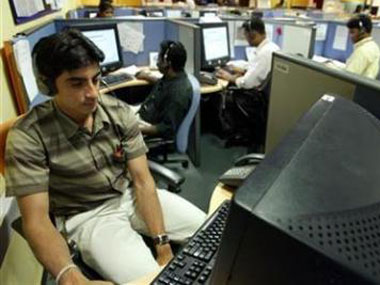
 French IT major Capgemini on Wednesday  announced commissioning of a 300-seat BPO facility in  Tiruchirappalli in Tamil Nadu.

Photo: Reuters

Spread across an area of 18,000 sq ft, the new facility would increase Capgemini’s BPO strength in India where more than 6,500 full time staff are now employed.

Capgemini pioneered a hub-and-spoke delivery network model in India when it opened a spoke location in Salem in 2008 and based on its success, the company has now expanded its delivery network with the opening of the Tiruchirappalli centre that will serve as another spoke location for the hubs in Bangalore and Chennai, a company release said here.

“The new facility is part of Capgemini India’s ongoing expansion strategy for its BPO services,” B L Narayan, Head of BPO Capgemini, said. All operations at the new centre, like most of
Capgemini’s BPO services in India, will be non-voice based, the statement said.

PTI

source: http://www.FirstPost.com / Home> Firstpost> Fwire / PTI / Photo: Reuters  / October 25th, 2012

Aavin vouches for purity of its milk

Though the Tamil Nadu Milk Dealers Welfare Association has expressed concern over the health of the citizens in the wake of the Centre’s submission on adulterated milk, the state government owned Aavin has asserted that it is providing 100 per cent hygienic and pure pasteurised milk to consumers.

“The milk and all our products are clean and there is no scope for adulteration at any stage as the Tamil Nadu Co-operative Milk Producers’ Federa­tion Ltd (familiarly known as Aavin) procures milk in a scientific way,” a senior Aavin official said.

Apart from educating the milk producers’ societies on rearing cows, Aavin strictly conducts 19 types of tests to ascertain the quality of the milk.

Milk obtained from the societies, if found substandard, face rejection. “Since we strive to live up to our motto: No profit, no loss, Aavin does not compromise on quality.

Even the pricing is within the reach of common man,” the official maintains.

However, the Tamil Nadu Milk Dealers Welfare Asso­c­iation has called upon the state government to immediately constitute an expert committee at state level and tighten the noose on “ad­u­lterators.”

“Next to me­dicine, milk is considered as life saving food and this precious commodity should be supplied in a wholesome manner,” says S.A. Ponnusamy, state pre­sident of the association, citing the Centre’s submission before the Supreme Court.

Although, the private producers do not permit public to view their dairy activities, Aavin conducts educative trips to its dairies for the benefit of school and college students.

source: http://www.DeccanChronicle.com / Home> Channels> Cities> Chennai / by J. V. Siva Prasanna Kumar, DC, Chennai / October 23rd, 2012

Foldable vehicles dominate design expo

An effort to transform future of surface transport

Will ‘foldable, transformable’ vehicles revolutionise the road surface transport scene for passengers in the years to come?

The answers seems ‘Yes’, going by three young Engineering students teams from across the country stealing the show at the just concluded ‘India Inventor Student Design Competition’ at Indian Institute of Technology (IIT)-Madras here.Varad Patil and Ameya Ganapatye of the Fr C Rodrigues Institute of Technology, Vashi, Navi Mumbai, walked away with the first prize for innovatively designing a ‘foldable bicycle’, amid global concerns to go green by reduction of carbon monoxide (a greenhouse gas) releases into the atmosphere.

A digitalized 3-D model of a ‘foldable three wheeler’ by three students of PSG College of Technology Coimbatore, – Messrs L P A Shanmuganathan, T Manojkumar and B Aravind-, grabbed the second prize in the All-India competition.Not to be left behind was a two-member students team from the Indian Institute of Technology, Gandhinagar,- Messrs.

Shashank Agarwal and Dhwanil Shukla-,  who were adjudged the third prize for their innovative design of a ‘transformable car’, namely a four-wheeler that can be made into a two-wheeler.

The competition was organized by IIT-Madras and the National Skill Development Corporation (NSDC) in association with engineering design software maker Autodesk, B Nagarajan, Deputy Registrar, IIT-Madras said.

Competition

While over 1100 teams from various Engineering colleges in India registered for the competition, more than 400 designs were received for the meet, he said.

The participating ‘student teams’ this year “digitally designed a futuristic or innovative foldable / transformable vehicle using Autodesk products.”

A renowned five-member Jury comprising industry and academic experts evaluated the new designs submitted by the student teams, from among whom the top 12 teams were short-listed in an intensely creative competition.

The three top winners were chosen from that list, pointed out Nagarajan.

Vision

The objective of this All-India competition was to “sensitize young minds to India’s Design requirements and engaged them in developing innovative solutions. In doing so, we hope to nurture budding talent in our country with a focus on the design needs of the Nation,” said Prof M Ramanathan, Department of Engineering Design, IIT-Madras.

While the selected National finalists will take part in a four-day ‘boot camp’ to be held at Singapore from Nov 5, the winners will compete for ‘World Skills India In Mechanical Engineering Design (CAD – Computer Aided Designing)’ at the forthcoming ‘World Skills Competition (WSC)’ the largest skills competition, to be held in Germany in July 2013, Nagarajan said.

source: http://www.DeccanHerald.com / Home> National / Chennai, DHNS / October 23rd, 2012

Drip irrigation helps Dindigul farmer reap bumper harvest

Madurai:

A farmer in Dindigul says he has achieved a bumper harvest by reaping an additional tonne of maize per acre, by adopting the drip irrigation system.

Chinnasamy, of Semmadaipatti in Reddiyarchathiram is a happy man as he has made a profit even after investing a lesser amount. Chinnasamy’s farm lies in a dry and drought-prone region and he feels that drip irrigation is the answer to their problems. “Most of us here have been using drip irrigation for various horticultural crops, like gooseberry and pomegranate, but I was the first to try it on corn in Reddiyarchathiram union,” he says.

Usually, drip irrigation is successful in crops where the plants are spaced apart at a distance of five to 10 feet. In the case of maize, the plants are seen close to one another and Chinnasamy had approached the department of agriculture, seeking subsidy for setting up a drip irrigation system in his farm. His success in reaping a good harvest this year has set an example for others in the region.

Chinnasamy says that he was able to use the water meant for irrigation in one acre in an additional one and a half acres using the drip irrigation system. According to agriculture officials, Chinnasamy has been able to reap four tonnes of maize this year against three tonnes last year. Joint director for agriculture, Dindigul N T Sampathkumar and other officers visited the farm on Friday and inspected it. Farmers in the area were also advised to add specific nutrients as some plants showed signs of needing additional iron supplements.

source: http://www.articles.timesofindia.indiatimes.com / by Padmini Sivarajah, TNN / October 21st, 2012

Solar plant project takes off

A one megawatt scale grid-connected solar power plant commissioned by Swelect Energy Systems Limited under REC scheme at Kuppaepalayam near Coimbatore. The solar arrays are ground mounted with light sensing tracking systems for increasing output. / Photo: K. Ananthan / The Hindu

The plant has been set up under REC

Coimbatore district, which is known for the large number of wind mills, is getting into solar power plants. The district’s renewable energy initiatives now cover solar energy too. A one MW solar power plant has been set up in Coimbatore and the energy generated is supplied to the grid.

Nearly 25 km away from Coimbatore city, at Kuppepalayam near Annur, rows of solar panels placed on a seven acre site are part of the solar energy plant established by Swelect Energy Systems, which was earlier known as Numeric Power Systems.

The plant has both, fixed and tilting solar panels. Swelect has imported the technology from Spain and the panels tilt to capture maximum solar radiation and thus, have optimum energy generation. The company has also established a High Tension line to the nearest sub-station (3.5 km away) to supply the energy generated to the grid.

It took about six months to install and the plant was commissioned in May this year. The plant has been set up under the REC (Renewable Energy Certificate) scheme and the total investment is about Rs. 10 crore.

The plant functions from 6.30 a.m. to 6.30 p.m. and, on an average, 4,000 units of electricity are supplied to the grid every day. “The maximum generation is between 11 a.m. and 3 p.m. There is generation even when there are rains,” says U. Arunachalam of Swelect.

N. Ananthakrishnan, Superintending Engineer of Tamil Nadu Generation and Distribution Corporation, says this is the first large-scale solar power plant in Coimbatore region. Larger supply of solar energy to the grid will give voltage stabilisation.

Mr. Arunachalam adds that solar plants can be established anywhere in the State. Smaller capacity plants on rooftops are also becoming popular.

Swelect is in the process of setting up 1.5 kw solar systems for all the branches of a co-operative sector bank in the State, including the branches in Coimbatore and Erode districts.

Managing Director of Swelect, R. Chellappan, told The Hindu the company has established another one MW solar plant in Sivaganga district. It is looking at setting up 10 MW of solar plants every year across the country.

“We are also actively involved in rooftop installations and have completed more than 1,000 such installations in the country,” he says.

These are mostly for educational institutions, industries and commercial establishments. Power cuts are higher in rural areas of the State. Houses in rural areas with Uninterrupted Power Supply (UPS) systems have potential for solar installations, he adds.

source: http://www.TheHindu.com / Home> News> Cities / by M. Soundariya Preetha / October 22nd, 2012

Inter school quiz competition held

NSN Matriculation Higher Secondary School, Chitlapakkam, won an inter-school quiz competition held at Lakshmiammal Matriculation Higher Secondary School, Chromepet. It was conducted by Srividya Madar Sangam, New Colony, Chrompet, on September 29. After the preliminary written test, top five schools qualified for the finals. A wide range of question related to current affairs, science and technology, art and literature, general knowledge, audio round and rapid fire round were posed by quiz masters Gopi, Sumathi and Savithiri.

Radha Badrinath, Assistant Professor of Commerce, Ethiraj College for Women, presided and distributed the trophy and cash award to the winner NSN Matriculation School, Chitlapakkam, represented by Harshan Shyam, A. Muthusamy and R. Gowtham. SRDF Vivekananda Vidyalaya, Chrompet, represented by Navin Sridhar and Sai Prakash, were the runners-up. Vel’s Vidyashram, Pallavaram, secured the third spot.

Vasantha Ramaswamy, president of the Madar Sangam, welcomed the students and guests.

Gomathy Sugritham of the Sangam thanked the gathering.

source: http://www.TheHindu.com / Home> News> Cities> Chennai / October 20th, 2012

Madras chunam and other finds

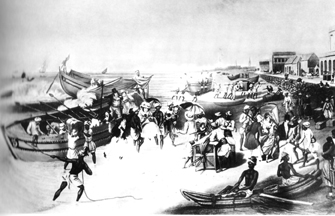
        The mussoolah boats of old Madras. 

Known better as the ‘Blind Traveller’, James Holman is a 19th Century writer whose travelogues offer fascinating details about southern India and Ceylon: e.g. ‘Panvarypank tank, one of the largest in the Carnatic’, ‘the dilapidated palace of Nabob of Arcot’, ‘a tour of Vollore Fort which housed the King of Kandy’, ‘the remaining relatives of Tippoo Saib, consisting of one of his wives, and several children’, ‘oranging gardens at Laulpett’, ‘detailed record of the Moharram festivities running into many pages with a bit of history outlining the origins of Moharram’, etc.

Holman was born in Exeter, England, in 1786 and volunteered to serve in the Royal Navy in 1798. Although he turned fully blind by 1811, due to an illness affecting his joints first and, later, his vision, Holman disliked leading an inactive life. He toured on the pretext of health and higher studies between 1819 and 1832. It is said that Holman’s notes inspired Charles Darwin to study the flora of the Indian Ocean region. Holman was elected a Fellow of the Royal Society. He died on July 29, 1857.

The following jottings are from one of four volumes that were intended for publication as a series. Holman’s travels to and in Madras are described in Volume III: Travels in Madras, Ceylon, Mauritius, Cormoro Islands, Zanzibar, Calcutta, etc. etc. (1840; George Routledge, London).

Holman in this volume provides “a most accurate and complete description of the whole process of making the chunam“, which Madras has been famed for. Much of what Holman has published is based on hearsay, as his vision was impaired; however, he neither permits this disability to impede his travel nor his experiences. Chunam is a mixture of burnt-lime and river sand with sufficient quantity of water. Burnt-lime is derived from sea-shells that are well washed and cleansed, after which their sulphur compounds are removed using charcoal.

Writing about the chunam production methods for single and multiple wall coatings, Holman explains it all in detail: process of preparing chunam with river sand and water, “wooden stick shod with iron” (similar to the ulakkai used in separating rice from husk) to beat this mixture, flat wooden rule to level the coating, crystal or smooth stone rubber to smoothen the surface, Bellapum powder (soapstone or steatite, the mineral lapis ollaris, popularly known as the talc) sprinkled “to increase . . . whiteness and lustre.” We come across the traditional curd [tayir], while he lists the ingredients for the three coats: a mixture of four parts of lime with one part of white sand and “white eggs, tayir, and ghee (butter)…”.

Speaking highly of the chunam produced in Madras, Dr. James Anderson, founder of the Saidapet Nopalry and Anderson’s Garden in Nungambakam, claims, in a series of letters to the Editor of Recreations in Agriculture, Natural History, Arts and Miscellaneous Literature (1799), that “… it is universally admitted the chunam of Madras is of a superior quality to any other in India.” Running to 12 pages, Dr. Anderson responds to several questions, raised by one Dr. Scott of Bombay, on Madras chunam. In one explanation, Anderson refers to talc material as “balpum of the Tamuls” – balpum or bellapum – a term very much in vogue among primary school children of rural Tamil Nadu.

No wonder Holman was so fascinated, amongst other things, with Madras chunam. Long famed for its marble-like finish, chunam plaster (made from either limestone or sea shells), preferred for its durability, was used to whitewash the house walls. With the arrival of modern paints and painting methods, this long tradition has lost many ardent supporters as the preparation of chunam, depending on the application, is a time-consuming and resource-intensive process.

Holman’s voyage to Madras recorded in Volume III starts with his setting sail from Trincomalee, Ceylon, on May 13, 1830, crossing Negapatam and Cuddalore before anchoring in Pondicherry on May 15th. On the merchandise exported, he notes: “The principal articles are … indigo and blue cotton cloth …, the latter is sent in great quantities to Bordeaux, from where it is taken to Senegal, and the West Indies islands for the use of the negroes.” He goes on to outline the “native mode of dyeing blue cloth as practised at Pondicherry,” and the “several sugar plantations,” which were laid out about three years before his visit and which “have proved very successful.”

Having reached Madras by the Brigate Margaret, to get to the shore he had to take amussoolah boat that is used for landing on the beach. “These boats possess a flat bottom, sewn together with coir-yarns, and the seams are crossed with a wadding of coir.” He mentions that he was pursued by the boatmen shouting “boxis sahib” (boxis =baksheesh).

On June 2, 1830, he travels to Bangalore in a palanquin lent by Mr. Dunlop, a Madras Magistrate. On his way to Bangalore, near Conjeevaram, Holman and the Collector (of Conjeevaram?) Mr. Cotton join the “grand procession from the great pagoda in Little Conjeevaram to the resting place for the idol at the further end of Great Conjeevaram.” Greeted with a “chaplet of flowers”, Holman was permitted to “examine their musical instruments, as well as the costume of one of the young dancing girls”. A week’s sojourn in Bangalore proved a relief to Holman because of the salubrious climate: “[the climate] was so like that of our own country that with closed curtain (it was easy) to believe ourselves at home in ‘merry’ England.”

Back in Madras, Holman comes under the magical spell of “fine Mulligatawny soup for the internal coat of the stomach”, but regrets that he could not get its recipe. Holman’s itinerary is such that he finds himself in Madras in peak summer and the sweltering heat does not escape his attention either. In his journal, dated June 30, 1830, Holman states: “Weather was so hot that no one thought of going out of doors except upon urgent business… apartments were spacious and kept cool with tatties (possibly made from vetiver roots and hung along windows as curtains), so that a very comfortable temperature was maintained within doors during the heat of the day…”

He writes of the introduction of punkahs to Madras: “… said to be the invention of Mr. Speke, a Bengal civilian, about fifty years ago, and was first introduced at Madras in 1803 by two gentlemen from Calcutta.”

On Fort St.George and its neighbourhood, Holman refers to Black Town, known to the natives as ‘Motel Pettah‘ (Muthialpet), Thieving Bazaar (Holman refers to it so because“every article that is stolen in Madras being brought here for sale… any particular robbery takes place, the government peons are sent there…”), two ‘respectable hotels’ (TheReston’s on the Esplanade, and the Nirden), the three gates leading out of the Fort, the ‘delightful village’ of Ennore, public establishments, and government buildings on First Line Beach; also, the numerous churches of established religions, and pagodas. He concludes his tour of Madras with a note on how one Colonel Boardman, in 1827, with Munro’s permission, built a bazaar near Palavarum and “the subsequent event of this market and surrounding area being known after this colonel.” I wonder whether this area is still known after Boardman!

source: http://www.MadrasMusings.com / by M. Ramanathan / Vol. xx11, no.13 / October 16-31, 2012
Hindustan Motors starts local assembly of Pajero Sport

New Delhi:

Hindustan Motors on Friday said it has started local assembly of sports utility vehicle Pajero Sport from its Japanese partner Mitsubishi’s stable, making the vehicle cheaper by Rs 1.87 lakh.

The Pajero Sport will now carry a price tag of Rs 22.56 lakh compared to Rs 24.43 lakh (ex-showroom, Delhi) earlier.

“We are pleased to announce our start of production of the Pajero Sport in our Tiruvallur plant and are happy to extend the price benefit to our customers... Pajero Sport will look at capturing 20 percent of the premium SUV segment in the country,” Hindustan Motors Managing Director Uttam Bose said in a statement.

With the vehicle being locally produced, the company will increase the output to over 400 units. The plant has capacity to scale up operations based on market requirements, he added.

“India has in the recent past seen an increased desire for SUVs. Pajero Sport will further consolidate its position in the Indian market,” Bose said.

At present, about 14 percent of the components of the SUV are localised and the company “will look at improving localisation by upto 30 percent by next fiscal year”.

“Currently, components like tyre, battery, window glass, seat belts, lamps, wiper assembly, alloy wheels and headlining are the major items, which are being localised at its Tiruvallur plant,” the company said.

The CKD Pajero Sport comes with the same 2.5 litre engine, it added.

Talking about dealerships, the company said: “Hindustan Motors also have its Mitsubishi range of dealerships across 40 locations with four service outlets and three show windows. The company will look at fortifying its dealerships to 55 points by end of 2012”.

source: http://www.zeenews.india.com / Home> News / PTI / Friday, October 19th, 2012

Looking back in time

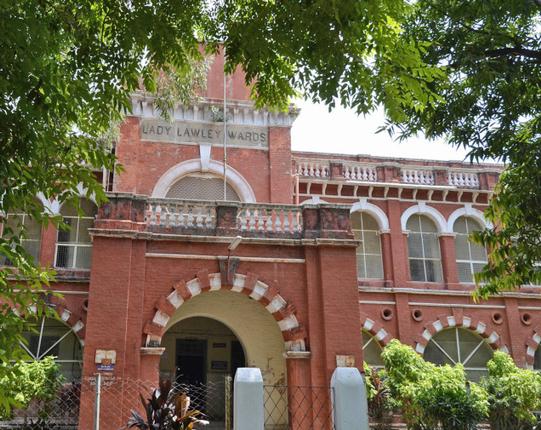
Government Ophthalmic Hospital / Photo: R. Shivaji Rao / The Hindu

ANUSHA PARTHASARATHY scans through the records of the Regional Institute of Opthamology and Government Ophthalmic Hospital, the second oldest eye hospital in the world

he sheltered verandahs and roofed passages that connect an entire campus of red-brick buildings echo the story behind the second oldest eye hospital in the world. Started in 1819, many pieces of the Regional Institute of Opthamology and Government Ophthalmic Hospital’s history lie in the arched corridors of Elliot’s Museum and a black plaque outside its Egmore premises; ‘Government Infirmary for gratuitous treatment of diseases of the eye’.

A board in the garden at the entrance of the hospital clearly mentions the year of founding, second only to Moorfields Eye Hospital in London (established in 1818). On the other side of the road, in the newer campus is director Dr. K. Vasantha’s office. A long wooden board with a list of the names of the hospital’s directors and superintendents hangs on the wall next to her chair.

Dr. Travers, a surgeon in London with the East India Company, was one of the reasons for the setting up of the Madras Eye Infirmary. And Dr. Robert Richardson, another surgeon, came to Madras to establish it in July 1819. It began in Royapettah, on the grounds where the Wesley Church now stands. “It was later somewhere near the Dina Thanthi office, after which it was shifted here,” says Dr. Vasantha. It was a tram shed that it occupied in Egmore from 1820 onwards. The infirmary came to its present location in 1884. In 1888, the infirmary came to be the Government Ophthalmic Hospital.

Lieutenant Colonel R.H. Elliot, who was the superintendent between 1904 and 1913 is a rather popular figure even today. He is credited for the ‘Elliot’s Trephine’, an instrument used in glaucoma surgery. The hospital too was expanded during his tenure, with the Lawley Ward coming into place at its centre. “The hospital started with a couple of buildings and now we have a department for everything related to the eye. The Lawley Ward has been declared a Heritage Building by the Archaeological Department of India,” she says.

Lieutenant Colonel Kirkpatric succeeded Elliot and a school was opened inside the premises in 1919. This block was then called ‘Elliot’s School of Ophthamology’. The ‘Museum of Elliot’ was conceived and opened by Kirkpatric’s successor, Lieutenant Colonel R.E. Wright and has manuscripts dating back to 1819. There are specimens, different models of diseases of the eye and sketches of tropical eye diseases by earlier doctors. These sketches were drawn by a professional artist in a time when cameras were unknown, to document the various symptoms and effects.

“Doctors at this hospital were performing all the surgeries we do today even in those days but only their methods were different,” says Dr. Vasantha, “What has changed is that our incisions are smaller and methods have advanced with better technology.”

The first Indian superintendent, Dr. K. Koman Nayar, assumed charge in 1940. In 1942, the school started offering a Post Graduate Diploma in Ophthamology. Koman Nayar is also remembered for the Iris Repositor that he built.

Dr. R.E.S. Muthayya, the next superintendent, opened the first ‘Eye Bank’ within the premises in 1948. “We now have an entire block that’s just the eye bank,” says Dr. Vasantha. “And the last 30 years has seen a partnership between the Lion’s Club and our hospital, with reference to the eye bank. They maintain the vans which we take around to collect eyes. Dr. Muthayya was also the first to perform a keratoplasty but for some reason, this went unrecorded.”

In 1960, the premises opposite the old campus were acquired for expansion. “It was a garden house which was used as the nurses’ quarter,” Dr. Vasantha explains. In 1962, the School of Optometry was started inside this campus.

The next in line was Dr. E.T. Selvam, who bought the hospital’s first microscope. “We now use these microscopes for all surgeries,” she adds. In 1985, the hospital became a Regional Institute under the National Programme for Control of Blindness. “It was recognised by the Central Government as a centre of excellence. Government Ophthalmologists from all over the country are sent here for training.”

The maze-like passages in the old campus lead to the grand old staircase of the Elliot Building. Beside it is a room from which muffled voices escape through the gaps in the doors. Open them, and the school’s old classroom is still in use but with hand-held microphones and air conditioners. “We’re trying to make sure even the older parts of the building are still in use so that they are maintained and continue to be a part of this hospital,” says a doctor on duty.

source: http://www.TheHindu.com / Home> Arts> History / by Anusha Parthasarathy / October 16th, 2012