DISH Launches Four South Indian Channels from SUN TV Network

Englewood, Colorado: 

DISH Network L.L.C. (NASDAQ: DISH), the nation’s third largest pay-TV provider announced the launch of four more South Indian channels from SUN TV Network. Adithya TV, Gemini Comedy, Kiran TV and SUN Music bolster DISH’s rank as the leader in international programming with more than 240 ethnic channels in 29 languages.

“We are a leader in delivering TV channels from across India to those in the U.S. seeking news, music and entertainment from their home country,” said Chris Kuelling, vice president of International Programming at DISH. “DISH currently offers 92 South Indian channels, and the launch of additional SUN TV Network programming shows our continued commitment to serve the South Indian community.”

With presence in more than 27 countries, SUN TV Network’s CEO K. Vijay Kumar said this partnership will allow the company to further expand its reach in the international market.

“Millions of people around the world watch SUN TV Network channels,” said Kumar. “DISH dominates the South Indian market in the U.S., and we are thrilled to have the opportunity to bring our content to an even wider audience.”

Channel descriptions and DISH programming package availability are listed below.

Adithya TV: A Tamil channel with a lineup of rib-tickling comedy and call-in music request shows. Popular programs include “Anandam Anandame,” “Konjam Kapi Niraya Comedy,” “Kalakkal Comedy,” “Sarigama Padhani,” “Vaanga Sirikkalam,” “Jokaddi,” “Comedy Galata,” “Adra Sakka,” “Vaivittu Siringa,” “Sirikka Sirikka Sirippu,” “Jillinu Oru kadi” and “Idhu Thanda Sirippu.” Adithya TV is available on channel 693 in DISH’s Tamil Mosaic Pack and SUN Pack.

Gemini Comedy: A Telugu channel tailored to tickle the funny bone, Gemini Comedy broadcasts a variety of Telugu movies and comedy series including “Comedy Talkies,” “Kita Kitalu,” “Smile Raja Smile (with Rani’s),” “Kevvu Comedy,” “Navvandehe,” “Havva Ente Navva,” “Fun Bomb” and “Appam Bappam.” Gemini Comedy is available on channel 591 in DISH’s Telugu Pack at no additional cost.

Kiran TV: A Malayalam music channel that features a variety of song sequences and films, such as “Kiran Morning,” “Kiran Wishes,” “Darling Darling,” “Ningalakku Areyamo” and “Kiran Classics.” Kiran TV is available on channel 593 in DISH’s Malayalam Mega Pack at no additional cost.

SUN Music: A dedicated Tamil music channel, SUN Music captures the essence of song-based sequences from a vast library of Tamil movies and features a variety of popular programming like “Hi Kutties,” “Anbe Anbe,” “Vaazhthalam Vaanga,” “Star Times,” “Ladies Choice” and “Yendrum Iniavai.” SUN Music is available on channel 692 in DISH’s Tamil Mosaic Pack and SUN Pack.

source: http://www.IndoAmerican-News.com / Entertainment / April 12th, 2012

Short URL: http://www.indoamerican-news.com/?p=6368
Janarthanan charts path to glory

When Narain Karthikeyan became the first Indian to secure a Formula One ride, the news evoked passionate celebrations from a section and nods of joyous approval from the masses.

When fellow Coimbatore native Sureshbabu Janarthanan becomes the first Indian to compete in an International Motorcycling  Federation (FIM) cross-country world championship rally, it won’t generate anywhere as much buzz as Karthikeyan’s entrance into F1. The task that awaits him, however, will be very much as challenging as the one Karthikeyan faced.

The 37-year-old will pilot his Suzuki RMX 450Z off-road bike in the Qatar Sealine cross-country rally, the second round of this year’s championship, next week. The world championship is the most prestigious event in the calendar after the most popular of all cross-country rallies – the Dakar rally.

Pleasant surprise

Having competed in three Raid de Himalayas, Janarthanan was looking to take his motorsport participation to the next level when friend and Dubai-based ace bike tuner Aldrin Samuel, who’s prepared and tuned bikes for many world cross-country rally riders, entered his name for the second round of this season’s championship in Qatar.

“My friend Aldrin entered my name, and only told me about it after my name was approved. I talked with my sponsors and decided to give it a shot,” he told HT over phone from Dubai, where he is currently training for the April 15-21 event.

With his dream of competing in the world championship coming to fruition, he has now set his sights on the ultimate off-road challenge — the Dakar Rally. Even though critics feel it isn’t nearly as challenging since its move from the African deserts to South America, Janarthanan says, “I want to compete in the Dakar Rally, from the time I first did the raid, that’s the goal I’ve set for myself.”

source: http://www.HindustanTimes.com / Motor Sports / by Rohit Bhaskar /’ Hindustan Times / New Delhi, April 13th, 2012

Of ragas and rhythm

Trichy Sankaran, faculty of fine arts, York University, Canada, speaks to Diptiman Dewan about the Indian music studies programme

It was back in 1971 that Trichy Sankaran, faculty of fine arts, and the late Jon Higgins, started the South Indian music programme at the University of York, Canada.

On how it all started, Sankaran says, “Higgins invited me to join him to teach courses in rhythm, performance, theory, and also perform with him in concerts. The Higgins-Sankaran duo continued until 1978 when Higgins left York University and I took over the South Indian music programme as the chief director.”

Over the years, the holistic approach in teaching the programme has made a positive impact on the approach and understanding of rhythm of western performers, says Sankaran. Further, the introduction of adaptation techniques and concepts in the programme enabled western drummers (Jazz drummers in particular) to adapt to their own instruments.

According to Sankaran, the pedagogical style of teaching combines the best of both East and the West to create a holistic blend. His collaborations with Western musicians in performance, particularly with groups like Nexus, World Drums and Gamelan, among others, and contemporary world music ensembles have had far-reaching effects in the deepening of the understanding of Indian culture in Canada as well as in the evolution of the programme.

A course on Solkattu studies (spoken rhythms and patterns of hand-clapping used by classical South Indian dancers and musicians) created by him has influenced students from the undergraduate to graduate level over the years to take up teaching, performance, and research.

Says Sankaran, Indian music in general has attracted westerners for its melodic varieties, use of drone, rhythmic sophistication and improvising qualities while Carnatic music in particular, has been appreciated for its rhythmic character, enchanting melodies, and drum improvisation besides compositional structures.

Courtesy: http://www.Myeducationtimes.com

source: http://www.timesofindia.indiatimes.com / Home> Education> News / by Diptiman Dewan / April 11th, 2012

Karunanidhi criticises AIADMK

Chennai:

DMK chief M Karunanidhi on Sunday criticised the AIADMK government for reversing his government’s decision to celebrate Tamil New Year on the first day of ‘Thai’ in January instead of “Chithirai” in April.

“By reversing DMK government’s decision, AIADMK government has ignored Aryans and their passion towards Tamil, including the interests of famous Tamil scholars like Maraimalai Adigal, V Kalyanasundaram and poet Bharatidasan,” he wrote in his party organ ‘Murasoli’.

“The decision of AIADMK government is an apt example for not respecting the interests of Aryans and their passion towards Tamil language,” he said.

After assuming power in April last year, Jayalalithaa government had reversed the change made by DMK government.

In 2008, the Karunanidhi government had passed a resolution in the assembly to shift the Tamil New Year to January 14, coinciding with the harvest festival of Pongal.

Karunanidhi, quoting verses of Bharatidasan said, “Tamil New Year day was celebrated on the first day of harvest festival — Pongal, as per the Aryans and not on the first day of Tamil month ‘Chithirai’.

“It is unfortunate that in the history of Tamil Nadu, there is a section of people, which is against ‘Tamil’ and even hate the word — Semmozhi.

“The AIADMK government reversed the DMK’s announcement (of changing Tamil New Year to the second week of April (instead of January). The resolution was immediately welcomed by BJP then. The intention of passing such a resolution can be understood now.”

Noting that Tamils living in Malaysia were still celebrating Tamil New Year in January, Karunanidhi said when his party passed a resolution to this effect, it was largely welcomed by many political parties including Congress, the Left, the MDMK and the PMK.

PTI

source: http://www.Zeenews.india.com / News / TamilNadu / April 09th, 2012

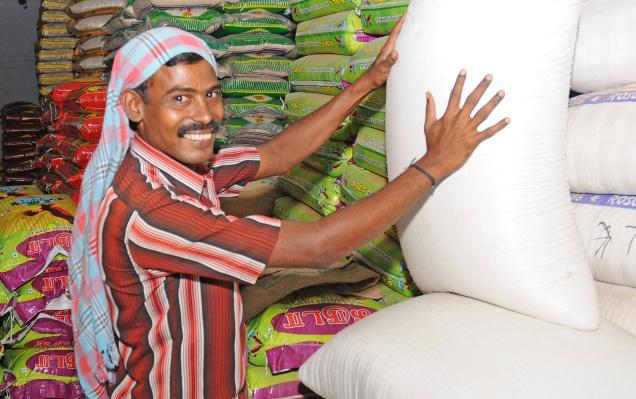
Turning a new leaf, thanks to NGO’s helping hand

 S.Palraj, a rehabilitated wandering mentally ill, now working as a load man in Tiruchi. Photo: M.Moorthy / The Hindu

After doctors treated his psychotic disorder, Palraj is a different man today

He was quite a familiar face for regulars at a tea shop on the Thanjavur Road in the city. With unkempt hair, dusty beard and soiled clothes, the haggard youth hung around the shop, mostly in the late evenings, mumbling incoherently and frequently slapping himself on the face in self-admonishment.

Though some instinctively recoiled at his sight, he never harmed anyone.

He did not beg either – content with the occasional tea and food offered by some kind-hearted soul. A typical wandering mentally ill (WMI) person, S.Palraj (29) of Gandhi Market was mostly ignored by passers-by.

But, today not many would recognise the clean shaven and smiling Palraj as he goes about his work as a ‘substitute’ loadman at the Tamil Nadu Civil Supplies Corporation godown or at the shops in the vicinity of his previous hangout.

Palraj was lucky to have been spotted a few months ago by Venkatesa Prasad, a former social worker, who took him to Anbalayam, a city-based voluntary organisation which runs a government-approved psychiatric rehabilitation home for the mentally ill in the city.

After four months at the home where doctors of ATHMA Institute of Mental Health and Social Sciences treated his psychotic disorder, Palraj is a different man today.

Though he seems to remember his days on the streets, he brushes aside the trauma. “It was just for a few months. I was in shock as my mother disappeared from home after my brother died in a road accident. She was devastated to find him dead on the road and disappeared soon after. I was worried that she too could have met with an accident,” he explains.

A Standard IX dropout, Palraj, who lost his father about 10 years ago, has been doing odd jobs, working as an assistant in a lottery shop and a load man earlier. His only aspiration now is to secure a “token” as a regular load man at the TNCSC godown.

“Palraj’s case just goes to show that many of the WMIs that we find on the streets can be rehabilitated and mainstreamed with the society,” says T.K.S.Senthil Kumar, founder, Anbalayam.

Anbalayam volunteers fan out to provide lunch, provided by sponsors, to quite a few WMIs in the city every day.

source: http://www.TheHindu.com / Home> News> Cities> Tiruchirapalli /  by S. Ganesan / Trichy, April 08th, 2012

TN inching further to match State in software exports

Software exports from the state of Tamil Nadu to witness a growth of 17 per cent in 2011-12, by reporting around Rs 48,000 crore exports as compared to Rs 42,100 crore, a year ago. The industry added 60,000 people during the fiscal. While the industry is cheering up about the growth, representatives from the industry are also worried about infrastructure issue, mainly lack of electricity.

O Panneerselvam, minister for finance, Tamil Nadu said that the challenge before the government is to sustain this momentum and also to spur growth in untapped sectors like hardware development. Electronics Corporation of Tamil Nadu Limited (ELCOT), a state government promotional agency for IT industries, has promoted special economic zones called ELCOSEZ at Chennai, Trichy, Coimbatore, Madurai, Thirunelvei, Salem and Hosur. “We will take all steps to attract entrepreneurs to occupy the available space in ELCOSEZs and in the IT parks at Trichy, Madurai and Thirunelvei. We also proposed to have incubation and training centres exclusively for small and medium industries in such spaces”.

The sector currently employs around 3,50,000 people, making it as second largest IT cluster in the country. While the industry is cheering up the growth, the major challenge is power cut which is around four hours in a day in Chennai, and 6-12 hours in smaller cities and towns and there is also a compulsory power holiday on Tuesdays and Sundays. Industry sources says this means companies have to incur additional cost for power, due to the usage of generators.

“While cost of the power from the grid is around Rs 4 a unit, now the companies have to shell out Rs 13-15 per unit since we have to use diesel generators,” said a senior administration manager from one of the top IT companies.

K Purushothaman, regional director, NASSCOM says “its real pain in running our process day in and day out which is a 24ô7 working industry. There are 312 hrs of power cuts in a month,” he added.

source: http://www.Business-Standard.com / Home> Economy & Policy / by BS Reporter / Chennai, April 06th, 2012

Festival of fine arts

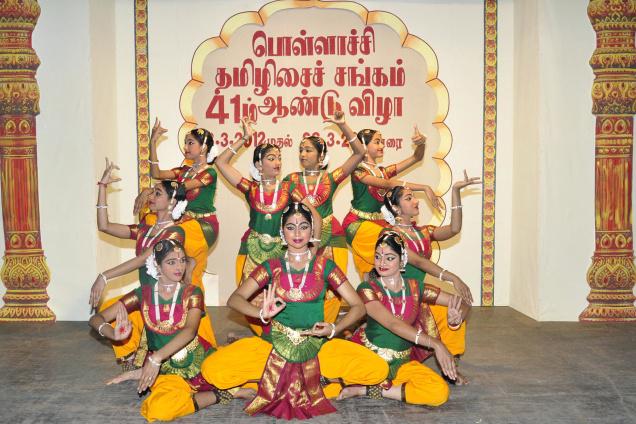
 ‘Vandhe Shambhum’ by the disciples of Sheela Unnikrishnan. Photo:Special Arrangement.

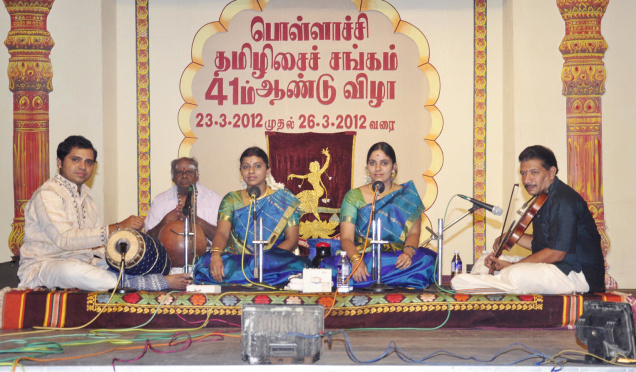
Rasikas at the 41st annual day of Pollachi Tamizhisai Sangam were treated with an exciting line-up comprising Tamil plays, dance and vocal recitals.

Veteran nagaswaram artist Sembanar Koil S.R.G. Rajanna, the surviving member of the Sembanar koil Brothers duo, was honoured with the title, ‘Kuzhalisai Perarasu’ at the 41st annual day of Pollachi Tamizhisai Sangam at Mahatma Gandhi Mandapam, Pollachi. Their rakti melam and mallari are remembered with joy even today by rasikas of nagaswaram.

In ‘Vande Shambhum,’ a traditional dance form dedicated to Lord Siva, Sheela Unnikrishnan’s aesthetic choreography was brought to life by well-trained and cheerful dancers in bright costumes. They flitted across the stage with nimble footwork and admirable abhinayas.

The programme began with ‘Vighnaraja Mallari’ followed by Natesha kavuthuvam. The artists introduced the items, and little Mrinalini Sivakumar, all of seven years, scored with her excellent performance and endearing introduction. The varnam, ‘Swami Naanundhan Adimai’ in Nattakurinji, presented by nine dancers with lovely formations and picturesque postures, offered a feast to the eyes. Archana Raja transformed into the quintessential ‘Virahotkantitha Nayika’ (the heroine undergoing the pangs of separation) during her solo performance for the padam ‘Gaana Reengaaram Seyyum Karuvande.’ The Nataraja stotram by Patanjali was impressive with skilfully incorporated karanas and yogasanas.

Chitrambari Krishna Kumar, whose voice had a unique blend of majesty and melody, led the impressive orchestra. Sheela’s efficient nattuvangam, Ramesh’s mellifluous notes on the flute and guru Bharadhwaj’s sparkling beats on the mridangam added to the effect.

Ragam’ sisters Sivaranjani and Nalinakanthi Photo:Special Arrangement

Popular Tamil songs, old and new, were presented in the vocal concert by Ragam Sisters – Shivaranjani and Nalinakanthi. ‘Tharunam Idhammaa’ by Syama Sastri (Gowli Panthu), ‘Kapali’ (Mohanam) and ‘Sivagama Sundari’ (Jaganmohini) set the pace in the first half. After an elaborate alapana of Harikhambodi, they sang, ‘Enadhu Manam Kavalai Enum Irul Soozhnthaal.’ Their voices blended smoothly and the swaraprastara session was quite lively. ‘Maruntheeswarane Sivashankarane’ on the Lord of Thiruvanmiyur was the centrepiece.

The unusual composition in Kapi comprising verses from the ‘Thirukkural’ set to tune by their grandfather MayuramViswanatha Iyer, was remarkable. The meaningful words of Valluvar reached the audience more easily through their powerful rendering. There was rich variety in the latter half as they included favourites such as ‘Nithiraiyil Vandhu Nenjil Idam Konda,’ ‘Vara Vendum Vara Vendum Thaaye’ and ‘Paayum Oli Nee Enakku.’ Kovai Chandran gave excellent support on the violin. So did Arjun Ganesh on the mridangam and Ernakulam Ramakrishnan on the ghatam.

Two Tamil plays, ‘Naarkaalikku Idamillai’ by Madhava Boovaraaha Murthy (The Original Boys Company 95) and ‘Karuppu Aadugal’ by Radhakrishnan (Sowmya Group, Chennai) were staged on the last two days.

source: http://www.TheHindu.com / Arts> Music / by B. Ramadevi / April 05th, 2012

Memories of Coimbatore: Women in action

Shashi Ghulati on the Coimbatore of the 60s, and the slew of welfare activities she and other ladies undertook in the city

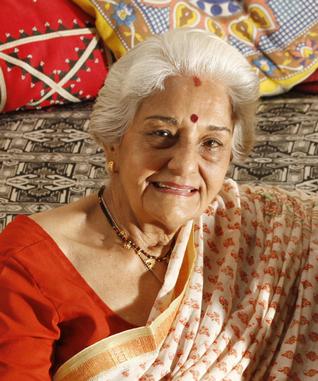
                         Shashi Ghulati during a photoshoot Photo: K. Ananthan 

I migrated from Calcutta to Coimbatore in 1964 after my husband Sagar decided to quit Hooghly Pilot Service to start his own business. Since I grew up in Madras in the 40s and 50s, moving to Coimbatore was a sort of homecoming for me. The city was an overgrown village back then. The hills in the periphery of the city gave one a feeling of being in a hill station. And yes, the salubrious climate! It was one of the major reasons why we chose to settle down in Coimbatore even after experiencing the exciting lifestyle of Calcutta.

I distinctly remember the level crossings on Avanashi Road and Cross Cut Road. The flyovers did not exist then. These crossings tested our patience especially when we had to get our kids to school on time!

When we moved to our first home at Siddhanaidu Layout, I would drive past the Kamarajapuram sweeper colony. The area housed municipal workers and cobblers. The roads were lined with numerous huts and they were very badly maintained. I wanted to do something about it. I became a member of YWCA and proposed an idea of starting a community centre at Kamarajapuram. The then President of YWCA, Dr. Rangala and Secretary Hepzibah were receptive to it.

Literacy drive

With the municipality’s support, we restored a dilapidated reading room in the locality and started a crèche, nursery and a tailoring unit. Adult literacy classes were started for women in Kamarajapuram and they are functioning even today.

The very first Ladies Circle in India was founded in Coimbatore in 1968. The wives of members of Round Table No. 9 in the city formed it. I was the Founder President. The Ladies Circle helped organise recreational activities for children in Kamarajapuram, set up kitchen gardens and volleyball training sessions.

I remember the time I visited Stanes School to enrol my son there. The school had an expanse of open land. There were not many trees. Strong gusts of wind raised waves of dust in the school. Reverend H.O. Fowler of Stanes was a very genial man. His wife, Alda Fowler and V. Amritham didn’t let me miss Calcutta at all.

In 1966, the members of the Society for the Aid of Handicapped Children started the Coimbatore Orthopaedic and Rehabilitation Centre at Krishnasamy Mudaliar Road. Alda, Amritham, Dotty Boppayya and I were the first office bearers of this centre, which is now ‘Amrit Centre for Special Needs’ on Mettupalayam Road.

In January 1984, the Indian National Trust for Art and Cultural Heritage (INTACH) was founded in New Delhi. In November 1985, Dr. Deborah Thiagarajan, then State Convenor of INTACH, Tamil Nadu, invited me to found a chapter at Coimbatore. In August 1986, this chapter was formed. Till 1995, our initiatives included documenting and listing several public structures in the city. We fought for the restoration of the Victoria Town Hall, which was being used as a godown.

Awareness campaigns

In 1987, 88, 90 and 92, National Environment Awareness Campaigns were held for a period of four months each. These addressed issues involving pollution of rivers Bhavani and Cauvery, the Noyyal tank, and the ground waters of Tirupur due to industrial and sewage effluents.

INTACH Coimbatore pioneered legal action to save the Bhavani River with a PIL in the Supreme Court.

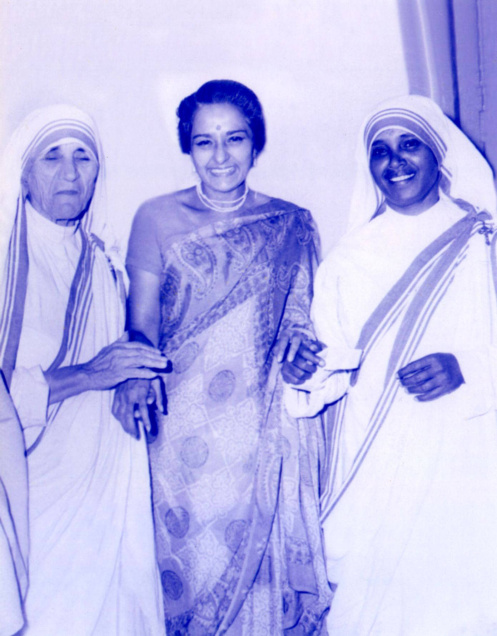
In the early 70s, Coimbatore had the privilege of playing host to Mother Teresa twice. During her first visit, I had the opportunity to meet her. She expressed her desire to do something for the homeless in the city. She wasn’t ready for any sort of civic reception then.

In Divine Company Shashi Ghulati (centre) with Mother Teresa Photo: Special Arrangement

Nuns from the Missionaries of Charities came down to Coimbatore to set up Nirmal Hriday and Sishu Bhavan near Carmel Garden School. As members of Ladies Circle No. 1, we invited the nuns to volunteer at a home for juvenile delinquents near Lakshmi Mills.

During Mother’s second visit, a huge gathering was organised for her at the grounds in Carmel Garden. But the most exciting thing for me was that I got to be her chauffeur!

(As told to NITHYA SIVASHANKAR)


BIO

SHASHI GHULATI Born in 1934 in Chennai, she made Coimbatore her home in 1964. She was the first President of the Ladies Circle India. As part of her work with Women’s Voluntary Services in Calcutta, she worked with refugees from East Bengal. Her interests include music, writing, reading and drama. Shashi is the secretary of the Coimbatore Book Club Theatre Group and she regularly directs plays in the city.

I REMEMBER

Sessions with a group of us sitting down and reading out of favourite books and plays. We would have these meetings at home. These sowed the seeds of the Coimbatore Book Club.

source: http://www.TheHindu.com / Life & Style> MetroPlus / by Nithya SivaShankar / Coimbatore, April 03rd, 2012

Buy sugarcane in powder form, enjoy juice at leisure

Coimbatore:

There’s good news for those who crave for sugarcane juice, but don’t want to have it from roadside shacks with suspect hygiene standards. Coimbatore-based Sugarcane Breeding Institute has developed a technology to make sugarcane powder. Mix the powder with cold water, you have sugarcane juice.

“Sugarcane powder would look like milk powder and it can be used to quench thirst,” says K Sivaraman, a principal scientist at the Institute. “The powder can be produced by a slight modification in the machines used to make milk powder. It can be mixed with water, the same way milk powder is mixed with water. Sugarcane juice is ‘spray dried’ to make sugarcane powder,” he said.

Spray drying is a complex process used to turn liquid food particles into solid form. Milk powder is made using this process. Sugarcane juice though popular has a short shelf-life. Due to the high content of sugar, the juice gets spoilt in six hours. K Hari, the principal investigator on the project, said the sugarcane powder would solve this problem. “It would solve the problem of storage of sugarcane juice. And, the juice could be available in various flavours like lemon, ginger etc,” said Hari.

The powder could also be used as a substitute for sugar. “Use of white sugar is not a healthy option. But the powder extracted from sugarcane retains the mineral content in almost the same way as it is present in sugarcane juice. This can be even used as a substitute to sugar in food or even in ayurvedic medicines. The flavour will be different, but is a healthy option,” Hari added.

Sivaraman said the powder would be introduced in the market soon. “A Gujarat entrepreneur has bought the technology. They are contemplating about various products and flavours, which could be developed from this. However, others interested in the product could approach the institute as we do not sell the rights exclusively for any single party,” he said.

Coimbatore-based Sugarcane Breeding Institute has developed a technology to make sugarcane powder. Mix the powder with cold water, you have sugarcane juice.

source: http://www.articles.timesofindia.indiatimes.com / Home> City> Coimbatore / by Arun P Mathew / TNN / April 03rd, 2012

State’s largest temple bell to chime in Trichy soon

Erode:

The largest temple bell in the state, weighing more than 1.5 tonnes, will be ready to ring in two months from the premises of Ugrakaliamman Temple at Thennur near Trichy. The brass bell’s sound will reportedly be heard within a 20km radius. Over two dozen artisans from Kumbakonam and Thanjavur will work with award winning sculptor L Radhakrishnan in Erode city round the clock to get the bell ready by the last week of May.

The wooden mold has already been made and works regarding its replica was completed on Monday. Sculpting of the brass bell will begin on Tuesday. It will be transported to Trichy by the first week of June.

According to Radhakrishnan, the bell will be six feet in length and the estimated cost is more than Rs 20 lakh. “Most temple bells in the state weigh less than a tonne. It has been my long cherished dream to make the state’s largest bell,” says Radhakrishnan, who has made more than 300 huge temple bells so far.

His workplace is located inside Edissia Industrial Estate in Kangayam Bypass and residents are starting to trickle in to view the finished clay model. “Though most temples in Tamil Nadu are located in the Thanjavur-Kumbhakonam belt, the bell manufacturing business has remained in Erode for the last several centuries. However, due to manpower shortage I had to depute artisans from Kumbakonam and Thanjavur,” says Radhakrishnan. Winner of the National Award for the best sculptor in 2002 and Shilpa Guru Award of Union Government in 2007, Radhakrishnan also won Tamil Nadu state award for sculptor in 1979 and 1981.

He won Erode Jaycee’s young person award in 1988 and Rashtriya Nirman Rattan Award in 1999. He had also won Gowri Shankar Stapathiyar Award in 1999 and Tamil Nadu Kalainanmani Award in 2002. “I am very passionate about sculpting temple bells. When the Thennur temple committee approached me with the project, I instantly agreed to do it as they were able to afford the cost,” says Radhakrishnan, who is also making bronze statues of Radha and Krishna for a Coimbatore temple. “More than the job satisfaction and the money in it, what motivates me to keep going is my desire to keep the art of sculpting alive,” he added.

source: http;//www.timesofindia.indiatimes.com / Home> City> Coimbatore / by K A Shaji , TNN / April 03rd, 2012