Black tea exports to China soar

Chennai/Kolkata, APRIL 24:

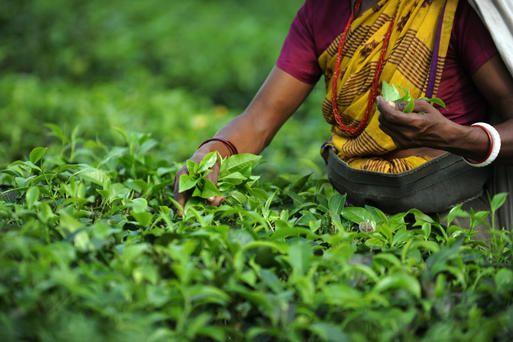
India’s black tea exports have begun scaling the Great Wall. Shipments of black tea to China have increased 10-fold since the 2008-09 fiscal.

“Black tea exports to China have recorded the highest rate of growth. There is a great potential for it,” said Ms Roshni Sen, Deputy Chairperson of the Tea Board.

According to Tea Board data, shipments of black tea increased to 1.27 million kg (mkg) during 2010-11 from 0.10 mkg during 2008-09.

According to trade sources, exports during the last fiscal crossed 2 mkg.

“China is basically a green tea consumer. But what I have also seen is black tea is getting imported for the ready-to-drink or instant tea for the younger population,” said Mr Aditya Khaitan, Managing Director of McLeod Russell.

“It is mainly tea from North India that is being exported to China. The younger generation there needs a stronger cup of tea,” said Mr N. Sriram, Director of Coonoor-based Contemporary Tea Brokers.

Though China is the largest producer of tea, production of black tea there is declining. India, on the other hand, is the largest producer of black tea in the world. Production in 2011 is estimated at a record 988.33 million kg. Exports are hovering around 200 mkg during the last couple of years.

Pakistan and China are seen as sources that can help perk up black tea shipments.

The rise in Chinese black tea consumption is likely to put pressure on prices, according to Mr Khaitan.

mrsubramani@thehindu.co.in

Pratim@thehindu.co.in

source: http://www.TheHinduBusinessLine.com / Home> Markets> Commodities / by Hindu Bureau / April 24th, 2012

Cauvery turns Trichy’s beach

Trichy:

If Chennaiites have a Marina beach to chill out, people of Trichy have the banks of the Cauvery at Ammamandapam in Srirangam. For the first time in the history of the Fort city, a km length of the stretch on the banks of the Cauvery between what is known as Karudamandapam Padithurai (stone steps) and the famous Cauvery bridge (linking Srirangam island to mainland Trichy) has been converted into a ‘beach’ for the convenience of the public and tourists.

“I had not the faintest idea that the concept would click into a huge hit with the people,” corporation commissioner K R Selvaraj told TOI. Just as the summer holidays are beginning, the tourist attraction was thrown open to the public on Sunday evening by minister N R Sivapathy.

Selvaraj recalled that Sivapathy had told him about converting the dry Cauvery in the upstream of Cauvery bridge up to Karudamandpam Padithurai into a tourist attraction. However, the corporation did not pay much heed to the idea as it was right in the middle of the stream. That the Cauvery had become completely dry made the officials rethink the matter. Meanwhile, the minister asked the Commissioner again as to what arrangements had been made on Friday last. “It was at this point that I realized that Sivapathy was very determined about it,” Selvaraj said. Furthermore, the Minister visited the site twice on Saturday, and on Sunday evening, he officially threw the ‘beach’ open to the public, much to the jubilation of children and womenfolk.

“We were indeed moved by the sight of the people, both youngsters and the elderly, standing right on the platform of the Cauvery bridge in the late evenings to chill out. They were risking their lives sometimes in the poor visibility, and had to be given some alternative site for recreation,” Trichy (East) MLA R Manoharan, in whose jurisdiction the beach falls, told TOI. In fact, the traffic department had taken strong exception to a large number of people flooding the bridge after dusk, and the scenario increased the likelihood of road accidents on the bridge. “Unless we give them some alternative, it will not be proper to chase them away from the bridge,” said Manoharan. And, the idea was hurriedly given a final shape on Sunday without any official invitation. “Let the people recreate at least for a month, now that the board examination is over today,” Manoharan added.

Selvaraj, however, said the beach phenomenon would not last beyond the first week of June, when water would be released from the Mettur dam.

source: http://www.timesofindia.indiatimes.com / Home> City> Madurai / by Dennis Selvan / TNN, April 24th, 2012

Narain Karthikeyan may become the brand ambassador of Incredible India

New Delhi:

As India tries to increase its share in the world tourism market, the tourism ministry is looking for a brand ambassador for its flagship logo Incredible India. The ministry is in talks with India’s first Formula One driver Narain Karthikeyan for the job.

Though Bollywood actor Aamir Khan has been the face of Incredible India spreading the social message of cleanliness and Atithi Devo Bhava in India, the ministry needs a global brand ambassador.

After seriously considering Bollywood actors, the ministry has zeroed in on sportspersons to do the job. Speaking to ET, tourism minister Subodh Kant Sahai said: “India needs a brand ambassador to promote Incredible India in the overseas market. A world-renowned sportsperson would be the ideal choice for this.”

According to highly-placed sources, Karthikeyan met Sahai earlier this week and gave a presentation on how he could promote Brand India globally. This includes plans of sporting Incredible India logo with visuals of  Taj Mahal on his racing car and making appearances at India roadshows abroad.

The ministry is showing keen interest as Formula One racing has the second-largest viewership after FIFA World Cup. The ministry had also considered cricketers like MS Dhoni but realised that cricket is not followed in Europe and United States and it could mean leaving out big international tourist markets.

source: http://www.economictimes.indiatimes.com / News> News by Industry> Services / by Nidhi Sharma, ET Bureau / April 21st, 2012

Coromandel International raises stake in Sabero Organics

Chennai:

Coromandel International, the flagship company of the Chennai-based Murugappa Group, has upped its stake in agrochemical manufacturer Sabero Organics by over 5 percentage points to just below 75% in the March quarter.

Coromandel bought about 18.53 lakh shares or 5.47% stake from the existing promoters, said a Sabero footnote to its Q4 earnings.

The Murugappa Group company acquired Sabero last year and after an open offer it held a 69.1% stake. The company spent over Rs 400 crore on the acquisition.

Sabero posted a Q4 standalone net loss of just over Rs 11 crore, compared to a loss of Rs 7.52 crore in the same quarter the year before. This is its sixth straight quarterly loss. Sales, however, rose to Rs 94 crore from Rs 88 crore.

In the company’s third quarter conference call, Kapil Mehan, managing director of Coromandel, had said he expects Sabero to return to normalcy and healthy growth in the next two to three quarters.

source: http://www.economictimes.indiatimes.com / ET Home> Markets> Stocks> Stocks in News / ET Bureau / April 19th, 2012

Smashing all records as he reaches for the kill

                           R.Badri Narayanan.   Photo: G. Moorthy / The Hindu 

Determination to succeed drives this man to raise the bar each time he wins a medal either in India or abroad. This time, R. Badri Narayanan, son of a temple priest in suburban Othakadai, has returned home with a bronze medal in the men’s singles at the Second France International Para Badminton Tournament, held in Rodez, France. This is not just one more addition to his kitty, but a reminder that he should scale new heights.

The left-handed Badri, who cannot use his right hand due to a congenital deformity, now wants to win more medals in the upcoming Asia Cup tournament. “I know I have to improve my skills. That is why I practise with normal players. My practice helps me react quickly while taking on the disabled players,” says Badri. He took to sports to overcome his predicament.

As an athlete, initially, he won several medals in State and national events. When he broke into badminton, it has been a shower of medals. His success stories were scripted in several tournaments, including in England, Israel and Malaysia. But every time he embarks on a medal mission he experiences starting trouble. He is not in a position to undertake a foreign trip on his own. Badri has to depend on sponsors for participation in any tournament. There have been many local sponsors who have lent a helping hand to Badri. He has recently written to the Chief Minister, Jayalalithaa, seeking her good wishes and support. At present, his aim is to win the Asia Cup tournament, wherever it is held.

source: http://www.TheHindu.com / News> Cities> Madurai / by S. Annamalai / April 17th, 2012


Ulster Academic to Lead £10 Million India-UK ICT Research Collaboration

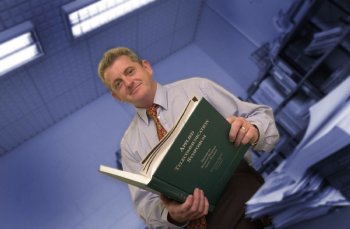
                                                                Professor Gerard Parr
A University of Ulster academic is spearheading the latest phase of a multi-million pound joint UK and Indian research project to boost India’s Internet capabilities.Professor Gerard Parr, who is Chair in Telecommunications Engineering on the University’s Coleraine campus, is the UK’s principal investigator for a £10 million India-UK ICT research consortium of nine research-leading UK universities.The £10 million project – the largest between the two countries and which will employ 200 scientists – will help improve the quality of millions of lives in India and the UK.UK’s Minister for Universities and Science David Willetts announced the £10 million funding boost for the project during a meeting with Indian Science and Technology Minister Vilasrao Deshmukh in London today (Wednesday April 18).

The £10 million investment will support the second phase of research into next generation Telecommunications networks – the development of state-of-the-art platforms and applications that will carry voice, video and data in the future on the Internet.

The research is a key part of the work of the India-UK Advanced Technology Centre (IU-ATC), a collaborative programme funded by the UK’s Engineering and Physical Sciences Research Council (EPSRC), the Government of India’s Department of Science & Technology (DST) and industrial partners in both countries.

The funding announcement came after months of hard work leading up to a joint panel meeting of UK and Indian scientific experts, co-ordinated by Research Councils UK (RCUK) India, a representative office for EPSRC in India.

On behalf of EPSRC, RCUK India has been working with DST, since the start of the first phase of this collaborative project in 2009. This latest funding will allow the Centre to focus its efforts on developing low-cost solutions for rural access to broadband, improved use of available spectrum as well as applications for rural health monitoring, emergency and disaster communications, social TV-Virtual Classrooms and other services.

Professor Parr, who is based in the School of Computing and Information Engineering in the Faculty of Computing and Engineering at Ulster’s Coleraine campus and Professor Ashok Jhunjhunwala from the Indian Institute of Technology, Madras are the UK and Indian principal investigators for this major joint research initiative, the ultimate aim of which is to develop solutions that will benefit the lives of millions of users in the future Digital Economy.

Welcoming the funding success Professor Parr said: “I am delighted that EPSRC and DST have given our team the opportunity to further develop our plans and focus our efforts in order to derive maximum impact and benefit from our research activities.

“This is a very significan initiative representing over £20 million of investment from government, industry and academic partners in both countries for both phases.  We intend to work closely with our funders and industry to ensure we fully exploit the promise of technological advances in Next Generation Networks.  The IU-ATC represents an internationally renowned research and innovation eco-system which we intend to grow over the coming years.”

Ulster is the lead UK institution in a consortium of nine research-leading UK universities including the University of Surrey, Lancaster University, Queen Mary, University of London, Southampton University, University of St Andrews, University College London, University of Bristol, and the University of Cambridge.

They are joined by seven top Institutes of Technology (IITs) in India: IIT Madras (Lead), IIT Delhi, IIT Mumbai, IIT Mandi, IIT Kanpur, IIT Hyderabad, and IISc Bangalore.

In recent years, Ulster academics have responded to the growing global demand for affordable and energy efficient broadband applications and services by researching new technologies to meet the needs of the emerging digital economy in the UK and India. Such solutions will also apply to other countries such as Brazil, China and the Middle East, said Professor Parr.

Announcing details of the funding boost at the high-level  India-UK Ministerial Science and Innovation Council, David Willetts said: “This £10 million investment will build on the UK’s excellent record of research collaboration with India. It will bring together leading universities and institutes from both countries to develop technological solutions to a range of important issues, from rural health to disaster response.”

Dr Liam Blackwell, Head of EPSRC’s ICT Theme said: “This next phase of the India-UK Advanced Technology Centre project is expected to contribute to leading edge international collaboration in ICT research which will benefit both countries and develop their capabilities.” The three high level research activity areas within the IU-ATC are:-

  • Applications and Services;
  • Core Network Systems and Protocols;
  • Heterogeneous Wireless Access Networks;

Each research area has a UK-India Chief Monitor that reports to an Executive Board. Additionally, a group of major ICT companies in both countries will collaborate with the consortium on the research agenda.

Lead UK industrial partner, BT Innovate and Design, is joined by Toshiba Research Laboratories Europe. In India there is direct engagement from companies such as Infosys, Wipro and Sasken together with SMEs.

The first phase of the joint research initiative started in June 2009 with £5 million funding from EPSRC-DST and £4.2 million co-funding from industry and academic partners in both countries.

During this phase methods and templates for collaboration, governance agreements and Intellectual Property Rights management frameworks have been adopted by EPSRC, the British Council and the Intellectual Property Office of the UK Government. Significant outputs have already been generated by the team in terms of scientific publications, technology demonstrators and patents.
For further information, please contact:

Patti Holly
Telephone: 028 71675511
Email: Patti Holly

source: http://www.news.ulster.ac.uk / University of Ulster / April 18th, 2012

Daimler sets up truck factory in TN

German auto maker Daimler AG has decided to consolidate its truck manufacturing operations in India. As part of the plan, it will shift the production of Actros from Pune to Oragadam in Tamil Nadu.

The company launched the facility in Oragadam on Wednesday. It will manufacture the BharatBenz trucks and all commercial vehicles there.

The Rs 4,400-crore facility will have an initial capacity of 36,000 units, including 24,000 units for heavy duty trucks and 12,000 for light duty trucks under the BharatBenz brand.

The capacity could be raised to 70,000 units per annum, said Dieter Zetsche, chairman of the board of management of Daimler AG and head of Mercedes-Benz cars. The facility is spread over 400 acres.

Zetsche said India was not just emerging, but thriving. The exceptional role of the economy was a matter of fact — not next decade, not next year, but today. “If India’s economy were in Mercedes, it would have to be an SLS AMG super sports car.

“If you don’t make it here, you won’t make it at all. Because a strong position in the global market requires a strong position in India and at Daimler, we always go for the leading position in our industry. That’s why India will play an increasingly important role in our business”.

The company said it could join hands with the Renault-Nissan alliance for commercial vehicles in India, although there was no immediate plan.

Zetsche said, “Though we don’t have any plan now, we don’t rule out the possibility. Our partnership is not restricted to any region. It is possible to do something together in India as well”.

Daimler and Renault-Nissan build commercial vehicles together in Europe.

The Oragadam facility can roll out one heavy duty vehicle every 11 minutes and one light duty vehicle every 22 minutes. The new plant will make light and heavy duty trucks in the 7-49-tonne range and is meant for both domestic and international markets, including Asean and Africa.

“Our priority is the domestic market, once we address the domestic market, we will look at exports,” said Andres Renschler, member of the board of management at Daimler AG and head of Daimler Trucks and Daimler Buses.

The first of these trucks, used in construction, mining and on highways, will be rolled out in September, he added.

According to compay sources, the vehicles will have 85 per cent localisation. Besides assembling, the facility will also have a power train facility to cater to heavy duty trucks, with a capacity of 24,000 engines. For light duty vehciles, the engines will be manufactured at Pithampur in Madhya Pradesh.

A separate facility, within the Oragdam plant, will be created to manufacture the Actros trucks, which are high-end heavy duty trucks and the largest-selling truck model worldwide.

According to a Daimler India Commercial Vehicles (DICV) official, the company wants to have all truck manufacturing in one location while cars will be rolled out of the Pune plant.

DICV will also shift its research and development (R&D) team to the plant site though from a different location in Oragadam. Currently, the auto major employees around 1,000 people in its R&D unit.

The official said 85 per cent of the components were locally sourced.

source: http://www.Business-Standard.com / Home> Companies & Industry / by BS Reporter / Chennai, April 19th, 2012

College helps deprived fulfil dreams

Two years ago, 23-year-old E. Ramu worked as an office assistant in the Mayajal movie complex in Chennai. Now he is the top-scoring II B.Sc. Maths student in Swami Dayananda College of Arts and Science at Manjakudi village in Kumbakonam.

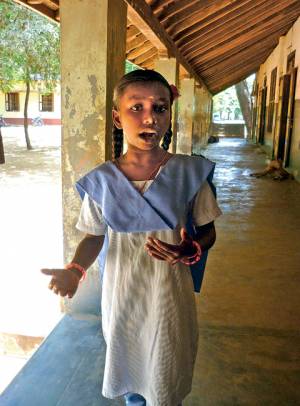
Little, R. Janani, talks about her experience of being on a TV talk show. — DC

His parents, farm coolies in Tiruvannamalai, couldn’t dream of sending Ramu to college. But with the help of the Swami Dayananda education and charitable trust, which runs the college, Ramu is able to continue his studies. This college has opened its doors for learning to scores of other students like Ramu– majority of them first generation learners.

“I paid only Rs 2,000 to join the college. Though my course fee was Rs 6,000, the management accepted what I gave for the seat, understanding my financial background. I will complete my B.Ed. and work as a teacher, helping other poor children like me,” said Ramu.

His juniors R. Priyadharshini and B. Suganya, residing in the hostel managed by the trust, are proud of their institution. “Our college provides seats to underprivileged students. Actually, those with fewer marks are accommodated first because poverty could have debilitated their performance. But with the coaching here, we improve fast and score big”, they said.

Correspondent G. Ramachandran said many students found jobs in big firms such as WIPRO, which runs a rural BPO within the campus. “Rajagopal, who completed his schooling here and even worked in our college, is now heading the BPO. We are proud that half of the employees in the BPO, who belong to downtrodden families and studied in our college, have got good jobs”, he said.

R. Janani and her sister Suveetha, students of Swami Dayananda government-aided school are popular; one is an orator and the other a sportsperson. “We teach not just textbook lessons but also values to be followed right from childhood,” said K. Muthulakhsmi, school principal.

“What we like to give the children is a life, not just education. We look after their health as well as their personality when they are in our chatralayas and other institutions and hope they will become very good citizens,” says Sheila Balaji, trustee, AIM for Seva that is central to Swami Dayananda organizations.

source: http://www.DeccanChronicle.com / Home> Channels> Cities> Chennai / by Pramila Krishnan / DC, Chennai / April 15th, 2012

Playing a star called krar

Michael Patrao

Instrumental

Music festivals throw up surprises to connoisseurs of music. It may be experimental music, blend of diverse forms of music, prodigies or ethnic music and musical instruments.

Jimi Hendrix, for instance, came into limelight at the Woodstock festival of music and arts in New York in 1969.

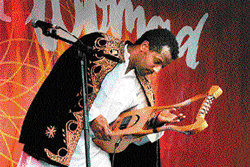
Music lovers who assembled at the Music Arts and Drama (MAD) Festival held at the Fernhill Palace in Ooty from April 5 to 7 were treated to some eclectic music. Among them was the Krar Collective, the London-based trio which performed traditional Ethiopian music. The Krar Collective comprises Temesegen Tareken (Krar player), Genet Asefa (singer) and Amare (drummer). The star of the show was krar, an ethnic musical instrument from Ethiopia. It was wired to an amplifier in its modern version.

“Krar is one of the oldest instruments in the world that is still played today like it was thousands of years ago. Some people say it comes from the harp of King David that is mentioned in the Bible,” Temesegen Tareken said in an interview.

Describing the instrument, he said, “Krar is a lyre and harp with five or six strings. The very traditional ones are made with a bowl covered with animal skin with two wooden arms to hold the strings, but the modern krar has a wooden body and an electric pick up. We can pluck the strings or strum them like a guitar. We don’t press our fingers on something like a guitar neck but just open or close the strings by touching them.”

The Krar Collective are musicians from Ethiopia, but met in London and played in many shows and festivals in the Ethiopian community and around UK. They focus on dynamic roots music from different parts of Ethiopia and different traditions, though also look to add a contemporary edge.

In 2011, they were selected from 750 bands to perform at the international world music showcase, Womex in Copenhagen. “That was really good for us. After that suddenly we have emails each week inviting us to play in different countries like Finland, Canada, Germany, Switzerland and so on,” recalls Tareken.

The MAD festival in Ooty was their first show this year on their first world tour. They have recorded an album on Riverboat Records and this will be released internationally in September. They are excited about sharing Ethiopian culture all over the world.

Says Tereken, “We mostly sing traditional songs from different places in Ethiopia and different tribes. Also, some of the songs are in different languages. We have 90 languages in our country.

The songs have different styles of dance and costume too. Because we use electric krar with traditional kebero drums, we are able to give them a modern way of playing and people can dance. We are just three people, but we think we make a big sound!”

“We never dreamt we would come to India, so this is a real adventure for us, and maybe it will open doors to many more of such visits,” says Tereken.

source: http://www.DeccanHerald.com / Home> Supplements> Sunday Herald arts & culture / Sunday, April 15th, 2012

Tamil Isai Kalluri celebrates Chithirai Vizha

Chennai:

Tamil New Year, commonly known as Chithirai Vizha, was celebrated at Raja Annamalai Mandram by Tamil Isai Kalluri (Tamil Music College) on Friday.

This event was organised for the Consul Generals of the many foreign consulates in Chennai. Consul Generals of the United States, Australia, Russia, Thailand, Japan, Sri Lanka and Mauritius were present on the occasion.

Students from the college presented various traditional dances of Tamil Nadu. The described the origins of each dance, and through the dances explained the different cultural implications.

There was the kummi, a Chettinad speciality; oyilattam and thappattam from Nammakkal and Dharmapuri respectively; kollatam from Tirunelveli; meenavar nadanam from Kanyakumari; udukkaiattam and kathiattam from Tanjore; pavaiattam and therukoothu from Thiruvannamalai; kavadiattam, mayilattam and poikal kuthirai from Palani and Coimbatore. A must mention is the performance where students danced the karagattam with candles on their heads.

David Holly, Australian Consul General, said, “I was really amazed by the performances that portrayed the culture and tradition of Tamil Nadu. And I wish all Tamilians across the Indian Ocean a happy and prosperous New Year.”

The event was presided over by industrialist A C Muthiah and his wife Devaki Muthiah and was organised by their daughter Valli Arun.

A C Muthiah said, “It is quite hard for foreigners to realise the diveristy of Tamil culture. But today we gave them an opportunity to enjoy it all on a single stage.”

source: http://www.ibnlive.in.com / South> Southern News> Chennai / The New Indian Express , Express News Service / April 16th, 2012