2-day rose show begins in Ooty

Udhagamandalam, May 12 (PTI)

A 15-feet tall Indian Parakeet made of roses is the major highlight of the 11th two-day Ooty Rose Show which began here today. The Parakeet, with 12 feet width, is made of 8,000 roses and drawing huge crowds at the show in which more than 3,500 varieties of roses are on display.

Inaugurated by Nilgiris District Collector Archana Patnaik, other attractions at the show include 10-foot tall Panda made of 4,000 red and white roses, 10-foot Giraffe made of 6,000 roses and Rose Bull, with 12,000 roses, Santosh Babu, Commissioner, Horticulture and Plantation Crops, said.

PTI Cor NVM

source: http://www.ibnlive.in.com / Wires / Home> Wires> Latest News / PTI, May 12th, 2012

Balancing Act

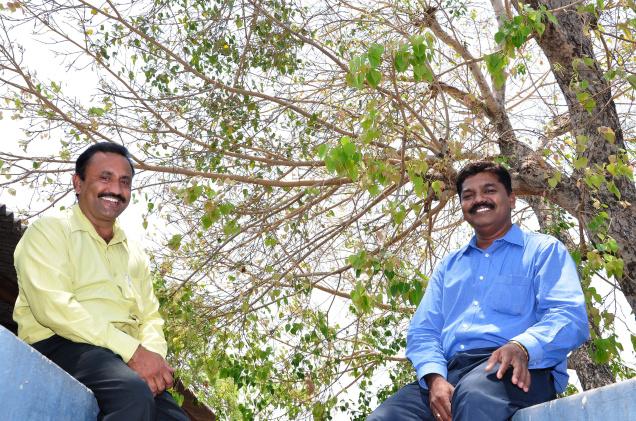
SPEAKING THROUGH KARAGATTAM: M.A. Zaffar Hussain and T. Thavamani Photo: S. James / The Hindu

Karagattam dancers T. ThavamaniM. A. Zaffar Hussain tell Soma Basu their performance is an art form to be enjoyed by all

During the annual Chithirai festival at the Police Grounds recently, Zaffar Thavamani set the stage on fire. Those in the audience who thought the name belonged to one person were surprised to see two karagattam performers. In their traditional costumes, make-up and matching steps, the pair delightfully introduced innovations in their performance, playing with fire, dancing on stilts, doing stunts with bamboo sticks and displaying other acrobatics even as they balanced on their heads intricately decorated pots filled with sand and water.

At the end of the hour’s performance, the spectators realised art has no religion. Some curious minds enquired which of the two was Zaffar. A few wanted to touch his feet, so impressed were they with his serene looks and graceful performance. As always, Thavamani received encomiums for his brilliant display of skills.

Chartered accountant T. Thavamani and businessman M.A. Zaffar Hussain are the unlikeliest of birds to flock together given their respective family, educational and professional backgrounds. But karagattam binds them like Siamese twins.

Says Thavamani, “We were batchmates in school but only after joining college, we bonded.” “The connection happened accidentally,” adds Zaffar.

In 1986, both responded to an announcement for participating in a folk dance competition at the Madurai Kamaraj University Youth Festival.

“None of the existing performers wanted to register in folk,” recalls Thavamani. “That helped us to team up though neither of us was a dancer.” “Our college was interested in promoting traditional and folk arts and both of us wanted to contribute in some way,” says Zaffar. Both were trained in kavadiattam, poikkal kudirai, and mayilattam. They do not remember how or why Karagattam and they clicked, but both believe in divine blessing. That maiden performance was not just about representing the college or returning with a prize, which, of course, they did. It was more about understanding a dance form whose popularity was on the wane.

Thavamani points out, “Karagattam is restricted mostly to rural areas as temple functions to invoke the Amman.” Zaffar continues, “We felt the need to mainstream the dance and focussed on energetic performance based totally on skills.”
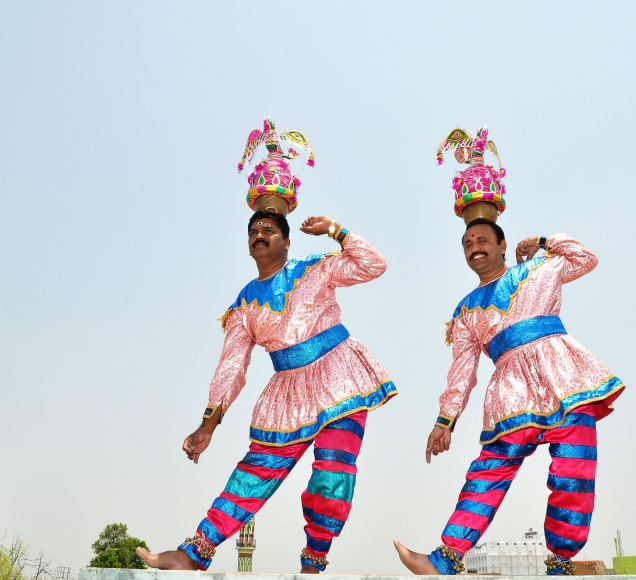
SPEAKING THROUGH KARAGATTAM: M.A. Zaffar Hussain and T. Thavamani Photo: S. James / The Hindu

No looking back

Today, the duo has taken the open-air dance form to closed auditoria. With more than 1,000 shows behind them, besides 100-odd temple functions, they are now sought after not only as artists but also as teachers.

For karagattam’s sake, they do everything free of cost. They take only travel expenses for their shows and some negligible payment for the accompanists. Both take time from their respective work schedules and performances and voluntarily train school and college students in karagattam.

“In the initial years, we learnt and chiselled our skills with every performance,” says Thavamani. “Today, we enjoy our performances more as a recreation. Awards and appreciation motivated us to keep going.” Zaffar adds, “Our audiences are elated with the chemistry we share on stage, the element of humour we impart to our shows and the way we are able to educate the people.”

Rising popularity

Their name and fame has crossed geographical boundaries. Apart from participating in cultural programmes, they are also invited to give private performances at birthday parties, weddings, sashti- and ashtapurti ceremonies. Thavamani’s job profile fetches them opportunities to showcase their artistry in other States and countries during national and international conferences of chartered accountants. “The response has always been overwhelming and we keep gaining confidence,” he says.

What troubles them is the travel. “We need a lot of accessories for our performances,” says Zaffar. “Transporting them often turns out to be a big problem as we ourselves like to carry our things for safety. If even one item gets misplaced, it upsets our performance. It is always a lot of hard work before the show. When people praise us, we forget the labour.”

Thavamani recalls an incident when they put all their things in a cycle rickshaw but the rickshaw puller refused to drive the vehicle because of the weight. The two dancers drove in turns to reach the venue. Another time they missed a flight after arguing for hours with the airport authorities for permission to check in a ladder!

Their friendship goes beyond the stage. The dancers tease one another for helping to choose and approving each other’s spouses. And with much success to smile at, Thavamani and Zaffar are daring to dream again. “We want to create a record with a non-stop 36 hour performance. We have the determination and family support. All we need is a sponsor who will take us closer to our dream.”

To unite

Zaffar, performs Karagattm with passion to “unite people”, but he is also an established pattimandram speaker, a hobby he started pursuing from 2000. He and his wife, a school teacher, together have done over 500 programmes at public functions and on television. He has also trained his daughter in karagattam, and she gives performances in her school functions.

FRIENDSPEAK: Thavamani says Zaffar is “cool” and rings in laughter wherever he goes.

Time Management

Thavamani knows how he manages his time. “I have a supportive wife who with a smile let me stick to part-time consultancy while she continued with her bank job to run the family.” As a child, he wanted to become an IPS officer. Since that did not happen, Thavamani volunteers as a traffic warden for Tamil Nadu Police, controlling traffic at assigned intersections four hours a week.

FRIENDSPEAK: Zaffar says Thavamani “has a solution for every problem.” “He is a very balanced person with leadership qualities”.

source: http://www.TheHindu.com / Arts> Dance / by Soma Basu / Madurai, May 10th, 2012
Mahabharata Mela at Kumbakonam in July

Mahabharata Mela, a dance programme in which 1,500 artistes would take part to create the Guinness record, would be held at the end of July at Kumbakonam.

The programme would be organised by Sri Abhinaya Kalai Kuzhumam of Kumbakonam under the Dasasahitya scheme of Tirupathi Tirumala Devasthanam (TTD).

The dance programme would be overseen by the officials of TTD and those who take part in the programme would be taken to Tirumala for a three-day dance programme during Purattasi Brahmotsavam in September, said a press release issued by the Kalai Kuzhumam on Sunday.

TTD has approved the Kalai Kuzhumam to conduct the programme as the Kuzhumam has been taking part in the Sri Vari Brahmotsavam and Padmavathi Thayar Brahmotsavam. Dikshithachariyar, special officer of TTD, has issued the orders approving the Kuzhumam to organise the Mahabharata Mela, said the release. Dikshithachariyar and Shanthi Sarvothaman, Tamil Nadu coordinator of TTD, would oversee the programme in July.

Interested artistes, who have completed the salangai puja and is above 12 years, could contact 8883143777 and 9791797373 to take part in the programme. Artistes from all over Tamil Nadu could take part in the programme.

Arrangements for the Mahabharata Mela are done by Suryanarayana, senior auditor of Kumbakonam, Balasubramaniam of Kumbakonam Paraspara Sahaya Nidhi Ltd, S.Ganesan, Director of V.G.Homes, S.M.Martin of Star Manitha Neya sangamam, and dance teachers Vijaya Sarathy and Guna .

source: http://www.TheHindu.com / National> TamilNadu / by Special Correspondent / Kumbakonam, May 07th, 2012

Two success stories with a message for IAS aspirants

Rank-holders prove medium of instruction and coaching centres don’t matter

It is a tale of two candidates who overcame different odds to emerge successful in the all-important Civil Services examinations, whose results were announced on Friday. While one has proved that poverty is not an impediment to success, the other has shown that there is absolutely no need for coaching centres to clear the country’s top examinations.

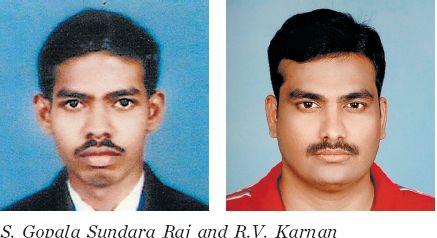
Both of them have brought pride to their families. Gopala Sundara Raj of Ramanathapuram secured the 5th place at the all-India level and the first place at the State level and R.V. Karnan of Sri Ram Nagar in Karaikudi in Sivaganga got the 158th rank.

Mr. Raj comes from Mavila Thoppu, a tiny village near Kilakarai. His mother S. Rajammal and father S. Shanmugavel could not study beyond standards III and V respectively.

Though they thought of putting him in English medium school since the early stage, their abject poverty did not allow them to do so.

However, the perceived disadvantages of having studied in the Tamil medium in no way affected his performance in the Civil Services examinations.

“I have no words to describe my happiness. Raj has not studied in a sophisticated atmosphere. He has brought meaning to our life. The hard work, sheer determination, dedication and sincerity have made him so special in our life. My pain is that his father is no more to hear the happiest news in our lifetime,” says S. Rajammal.

Her family owns no land or house and she is residing in a portion of her brother Mariappan’s house, a retired school headmaster.

His moral support and motivation helped Mr. Raj, who is currently an agricultural scientist in Rajasthan, in his endeavour. His sister, Sundara Yoga Lakshmi, is working with Infosys in Chennai.

Mr Karnan (27) was the all-India topper in the Indian Forest Service examinations in 2007.

His father R. Veeraragavan (56) is working as a librarian at Alagappa Arts College and his mother V. Vijayalakshmi is a sub-registrar in Karaikudi.

“My dream has come true. The Civil Services examinations are all about clearly understanding the methods and patterns well. I didn’t join any coaching classes for the preparations,” Mr. Karnan told The Hindu over phone from Maharashtra, where he is working as Assistant Conservator of Forests.

source: http://www.TheHindu.com / News> States> TamilNadu / by C. Jaishankar / Ramanathapuram, May 05th, 2012

Mangoes, Mambalam, Mylapore

PERFECT FOR PICKLING Green mangoes

Don’t get in a pickle over raw mangoes. Just pickle them

“Excuse me, where can I find raw mangoes in the market?’ I politely asked the onion-garlic seller. He shaded his eyes against the fierce sun, looked me up and down, and said: ‘Vandutaanga da, cooling glasses potindu, vadu-maanga vaangarathikku‘. Well, that cut deep; but having braved many elbow jabs and painfully-trodden toes to get to the chaotically crowded Mambalam market, I wasn’t going to let one sarcastic comment stop me. So I decided to hunt them down myself. Several terribly jostled, sweaty minutes later, I stood in front of a sack of raw mangoes. Meenakshi, who owned that shop outside door No. 8 openly laughed when I asked if I could talk to her about raw mango pickle. “But I have never made pickle in my life, though I’ve sold raw mangoes for 25 years. I buy my mango pickle from the shop.” I tell her I’m no different and ask her about her goods and customers. “Oh, first-class raw mangoes,” she says, holding out one the size of a coconut. ‘It’s from Andhra, great for pickle. People come from all over Chennai and India to buy from me; there’s just one other big raw mango shop here, so lots of mamis from West Mambalam are my regulars. Yesterday, a sackful of my raw mangoes went to Singapore. 80 kg, best quality!”

Destinations for raw mangoes

She’s rightly proud of her reputation. When I ask around, Mambalam and Mylapore markets are on everybody’s lips as ‘the’ destinations for raw mangoes and vadu maangas; nobody but the sellers mention Koyambedu. Suseela Sundaraman, a fan of both markets, has been making avakkai at home for over a decade. “The avakkai, in some ways, is the easiest pickle to make, as it involves no actual cooking. You just have to get the proportion of the salt-chilli-mustard-oil right. I follow my mother-in-law’s recipe, she always preferred hand-pounded rock-salt and chilli.” As for the vadu maanga, Suseela likes the ones from Kumbakonam. “They’re bite-sized, tiny but tasty. Madurai vadu is also lovely, very fragrant, but with vadu maanga, it’s important to choose the ones with a stalk, if not, they tend to spoil very quickly.”

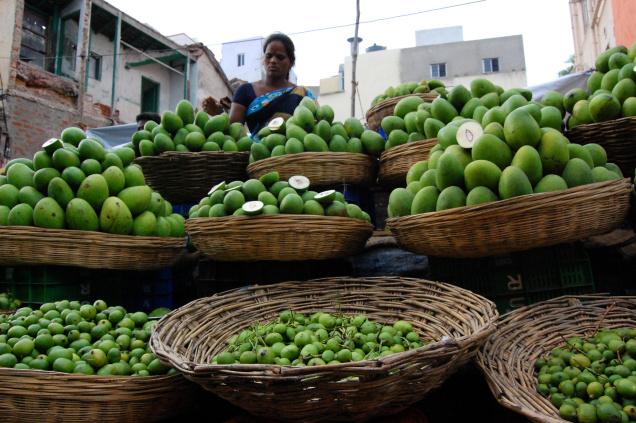
Agrees Saroja Krishnamurthy, who buys her maavadu from the South Maada street market, Mylapore. “The stalked-ones are more expensive, costing Rs. 150 a kilo. Size too matters, very small ones tend to be bitter and the very large ones are insipid. It’s important to choose firm, medium-sized vadus.” The sellers, surprisingly, seem happy to indulge the finicky buyers. Susi, a raw mango and vadu maanga seller in Mylapore has a tidy mountain of fragrant raw mangoes artistically arranged on wicker trays. A middle-aged lady in salwar-kameez fusses over her purchase, choosing one from this pile, only to discard it and ask for another. Susi is patient, and even a touch amused. While they’re being cut to the buyer’s exacting specification, she tells me that her raw mangoes are as good as gold. “Good pickle mangoes should be sour and have some fibre. I should know; I’ve been selling manga for forty years. Maamis from Mylapore and all over Chennai come looking for the vadu maanga; from mid-March, they start calling me, and as soon as I get new stock, they come immediately and get it. Avakkai manga used to be an Andhra favourite, but now others are also buying it.” This year, she says, thanks to lower stocks, raw mango prices are steeper.

Making avakkai

Sarasa Krishnamurthy, who, incidentally, has just pickled raw mangoes for the year, talks about her experience of making avakkai for nearly four decades. “When we lived in a joint family, it was a big process, since we pickled 70 to 80 raw mangoes, which we cut at home using a rudimentary machine. The avakkai was preserved in large porcelain jaadis — no fridge then — with a white muslin cloth tied on the lid, to keep it airtight. But this year, my batch is made with just 5 big raw mangoes from Mambalam. For a good pickle, the manga has to be mature; it’s important to cut it with a piece of shell at the inner edge, so that the manga does not turn soft and squish into the pickle.” She then quickly gives me her recipe for avakkai, making it sound fairly straightforward. A few hours effort, I think to myself, and I too can smugly tell guests, “Oh, that’s homemade, it’s quite simple you know…”

source: http://www.TheHindu.com / Home> Arts> History & Culture / by Aparna Karthikeyan / May 03rd, 2012

IIT-M aims at 2,000 Ph.Ds

The Indian Institute of Technology, Madras (IIT-M) plans to increase the number of Ph.Ds to 2,000 in five years.

Speaking to Deccan Chronicle, Prof. Bhaskar Ramamurthi, director of the institute, said the institute had always focussed on developing research output, including students and faculty.

“We hade always wanted to increase Ph.D intake in this institute and the committee headed by former atomic energy commission (AEC) chairman Anil Kakodkar too reiterated it” he said.

Kakodkar committee recommended that IITs be rebranded as primary research institutes and increase PhD students from less than 1, 000 students to 10,000 by 2020-25, and the number of IITs from 15 to 20.

Prof. Ramamurthi said last year IIT-M admitted 300 students for the Ph.D programme but this year they had increased the number to 400 to produce 2,000 doctorates in five years.


“In the next few years we will increase our annual Ph.D intake to 700 per year provided we recruit more faculty to have 700 faculty on campus,” he added.

When asked about the institute’s plan for physical expansion, the director said last year the institute framed a master plan, according to which the institute could construct additional buildings in the remaining six acres.

“If the government wants us to increase student enrolment by another 50 per cent we need more land. Also for doing bigger projects we need more land,” he added.

source: http://www.AsianAge.com / Home> Metros> Chennai / DC, Chennai / May 02nd, 2012

With upgrades, India to reopen 3 vaccine plants

HLL, a company that made its name in condom manufacturing, has contract for work

An Indian company known for making condoms has completed upgrades on a vaccine plant there and is nearing completion on two others.

It has only recently been disclosed that HLL Lifecare, formerly Hindustan Latex, has been overseeing the work, reports rediff business, a disclosure it says has been a surprise to some. HLL still makes condoms but also operates hospital chains, diagnostic clinics and MRI centers in India.

The plants all had their licenses pulled in 2008 because of quality problems, leading to a shortage of some vaccines at the time, according to in-PharmaTechnologist.

The government is investing about $37 million in the project. That is about half the cost of the upgrades at the Central Research Institute in Kasauli, the Bacillus Calmette-Guerin Vaccine Laboratory in Guindy, and the Pasteur Institute of India, in Coonoor, rediff reports. Additional funds will come from institutional investors. And while government-owned facilities usually stick to common vaccines like DPT, the plan is for the reopened plants to manufacture a variety of vaccines, including those for hepatitis B, influenza. and rabies.

While strides have been made in recent years in the development and manufacturing of vaccines, the world continues to have huge unmet needs in many areas.

– read the rediff business story
– get the in-PharmaTechnologist story

source: http://www.fiercepharmamanufacturing.com / Home> Topics: Emerging Markests , Facilities / by Eric Palmer / May o3rd, 2012

Plan to put Pollachi on farm tourism map

Taking a cue from its Punjab counterpart about successful ‘rice tours’, the State Tourism Department plans to promote farm tourism in a big way in and around Pollachi and Thanjavur towns.

Currently, the Tourism Department focusses on pilgrimage tourism, heritage tourism, eco-tourism, beach tourism, rural tourism, medical tourism, adventure tourism and cultural tourism, besides promoting hill stations. It also plans to promote heli-tourism and cruises.

More areas and different types of tourism are being contemplated to prolong the stay of foreign tourists.

While Thanjavur, the rice bowl of Tamil Nadu, has been on the radar of the State Tourism department for a long time through heritage tourism, Pollachi, a picture perfect location for films, is an unexplored region. Nestled in the middle of the Coimbatore, Udumalpet, Valparai and Palakkad belt, Pollachi provides an ideal resting place for tourists, said tourism officials.

Talking to The Hindu , a top government official said, “Pollachi and Thanjavur offer more scope for tourism. As more and more people are constructing farm houses, we plan to make use of these facilities to provide a different experience to tourists by acting as a facilitator. We will be initiating a dialogue with prominent persons and businessmen in the area to give wide publicity.”

According to industry sources, Pollachi has been gaining momentum in farm tourism as many plantation owners had started letting out their farm houses to domestic tourists, following a severe drop in the number of movies shot in that location. Besides, farm tourism fetched more income in addition to their agricultural activities.

“The mere presence of a sanctuary, reservoirs, water sports and boat riding in places such as Valparai, Aliyar Dam, Top Slip, Parambikulam Tiger Reserve and Amaravathy Dam can provide the much-needed entertainment and relaxation to tourists. The Thanjavur Brihadeswara Temple will provide an altogether different experience. Apart from watching farmers working in the lush green paddy fields, tourists can also get their feet muddy there,” the official said.

source: http://www.TheHindu.com / National / by N. Anand / Chennai, May 01st, 2012

Jeevan Nedunchezhiyan corners glory

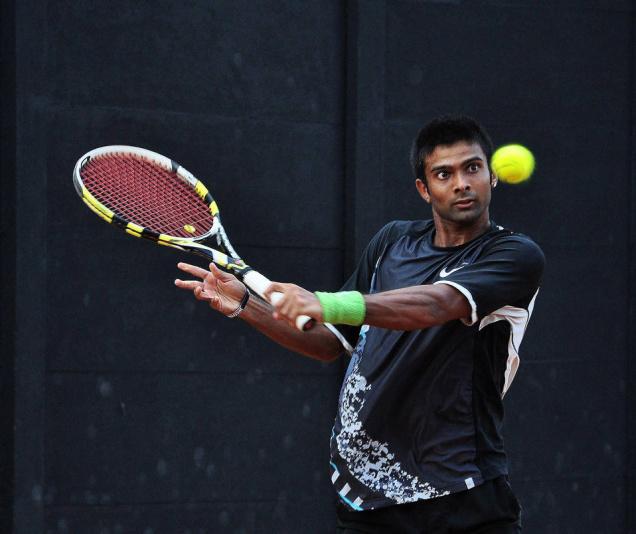
FOCUSED: Jeevan Nedunchezhiyan came back strongly after losing the first set to clinch the title at Madurai on Saturday. Photo: S. James / The Hindu

Fourth-seeded Jeevan Nedunchezhiyan of India scored a hard fought 4-6, 6-1, 7-6(4) win over second seed Marc Giner of Spain and clinched the title in the TVS $10,000 ITF men’s Futures tennis tournament at the Madurai Union Club here on Saturday.

The first set went on serve till 3-3. The Spaniard started hitting some powerful winners from the baseline and went up 40-0 on Jeevan’s serve in the seventh game. The Indian saved three break points before Giner won the next two to go 4-3 up.

Missed opportunity

Jeevan had a chance to break back in the 10th game, when Giner was serving 5-4, 30-40. But the second seed staved off the break point with a big serve and followed it up with a couple of forehand winners to take the set 6-4.

Jeevan came back strongly in the second set and broke his opponent in the fourth and sixth games and closed out the set at 6-1. Both the players used their big serves to good effect in the third set.

With no break of serves till the 12th game, the decider moved to the tiebreaker, which the Indian won 7-4.

Jeevan won a cash award of $1300 and 18 ATP points, while the runner-up received $900 and 10 points.

Meanwhile in the doubles final, N. Sriram Balaji and P.C. Vignesh of India defeated Andre Gaspar Murta of Portugal and Matthieu Vierin of Italy 7-6(4), 7-6(5).

Madurai Kamaraj University Vice-Chancellor Kalyani Mathivanan gave away the prizes.

The results (Indians unless mentioned):

Singles: Final: Jeevan Nedunchezhiyan bt Marc Giner (ESP) 4-6, 6-1, 7-6(4).Semifinals: Jeevan bt Vijayant Malik 6-2, 6-3; Giner bt Yannick Vandenbulcke (Bel) 7-6(3), 6-3

Doubles: Final: N. Sriram Balaji & P.C. Vignesh bt Andre Gaspar Murta (Por) & Matthieu Vierin (Ita) 7-6(4), 7-6(5). Semifinals: Sriram & Vignesh bt Rupesh Roy & Vivek Shokeen 6-4, 6-3; Murta & Vierin bt Elwin Antony & Mohammed Fariz 7-5, 6-3.

source: http://www.TheHindu.com / Home> Sports> Tennis / by Principal Correspondent / Madurai, April 29th, 2012

Indiscriminate use of pesticides posing a threat to vultures

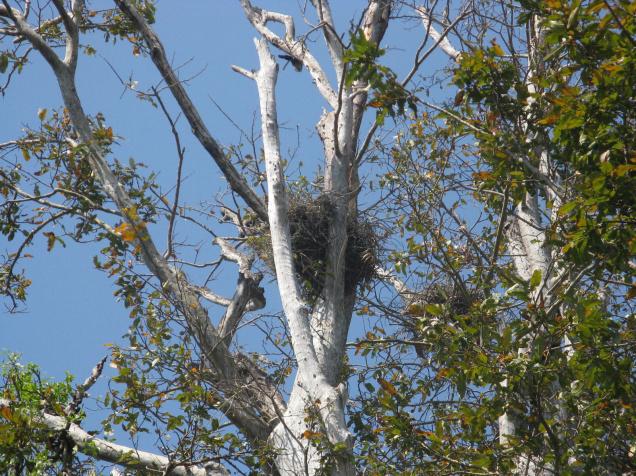
A picture of a vulture’s nest at Siriyur in the Nilgiris North forest division. Photo: Special Arrangement

Study in the wild to create awareness of conservation

The last significant vulture population in the Western and Eastern Ghats are threatened by the indiscriminate use of pesticides, say researchers watching vulture habitats.

A team of researchers from CareEarth Arulagam has taken up a detailed study in the wild and creating awareness of conservation of these forest scavengers. The organisation has its field station located within the vulture habitat at Bhavanisagar in Erode district.

Patrick David, Project Co-ordinator, CareEarth Arulagam, said he, along with his team members, were studying the landscape for nearly three years.

The vulture project was taken up in December last year.

A 180-sqkm area is being monitored under this programme. Semmanatham, Avaralla and Siriyur in the Nilgiris North Forest Division are some of the places where vulture nests were sighted by the team. Apart from this, the scavengers were sighted all along the Moyar valley, Mr. Patrick said.

Talking about the study, he said it had two components: ecology and conservation. In the ecology part, the team is identifying nesting sites of vultures and studying their site characteristics.

Under the conservation component, the team is educating Forest Department staff and villagers in the vicinity of the vulture habitat about different species of vultures, as most of them are unaware of the number of vulture species in existence or about how to identify them. And few were aware that vultures are found only in these parts in Tamil Nadu.

Mr. Patrick said: “We are also working with veterinary doctors, pharmacists, and Animal Husbandry Department officials to phase out the banned drug, diclofenac. We have also requested the Forest Department to ensure that dead animals are not buried as it will deny food for these scavengers.”

Diclofenac is the main reason for the decline in vulture population. It is an anti-inflammatory veterinary drug and if the vultures eat the carcass of any animal which the drug had been administered to, it would affect the kidney of vultures, leading to their death. Another threat is a pesticide used by farmers, he said.

Mr. Patrick said if these threats were addressed, the present population of vultures in the Western and Eastern Ghats could be sustained. A good habitat — open areas with sparse trees to locate dead animals and substantial wild herbivore population — is essential for their survival, he said.

Four species of vultures are found in Tamil Nadu — white-backed vulture, long-billed vulture, Egyptian vulture and red-headed vulture.

Apart from that, the research team is also working with the youth of this region to develop vulture brigades. The youth would be custodians of the bird in the region. They will report vulture sightings and nest sites and also help in preventing carcass poisoning, Mr. Patrick said

source: http://www.TheHindu.com / Home> News> States> TamilNadu / by P. Oppili / Chennai, April 27thy, 2012