Farmers on Bargur hills are gradually warming up to the idea of cultivating Rosemary herb, which, besides ensuring profitable returns, also keep wild animals at bay.
The farmers in 33 hamlets surrounded by reserve forest find the altitude of about 1,000 metres above sea level suitable for cultivation of the aromatic herb. The crop was promoted a few years ago by MYRADA Krishi Vigyan Kendra based in Gobichettipalayam.
Farmers on the hills have traditionally been cultivating ragi, onion, and beans, and have been suffering losses due to damage caused to the fields by wild boars, deer and elephants. The KVK introduced Rosemary as an alternative crop to reverse the trend of migration of the people towards urban areas.
There is good market worldwide for the oil extracted from the herb that grows as a perennial evergreen shrub to a height of up to one metre, according to a documentation by MYRADA KVK.
The oil is used as component in pharmaceutical and cosmetic products. According to Horticulture Department officials, though gradual, Rosemary is gaining attention of farmers as a dependable crop.
‘There is good market worldwide for the oil extracted from the aromatic herb’
source: http://www.thehindu.com / The Hindu / Home> National> Tamil Nadu / by R. Krishnamoorthy / Erode – April 12th, 2016
The state’s first synthetic skating track was inaugurated at the Svastika International Roller Sports Complex located on Kanuvai-Maruthamalai Link Road in Coimbatore on Monday. Set up by parents of children who represent the sport at state and national level and skating enthusiasts, the 200m synthetic track would now allow budding skaters to get training at home turf itself. The stadium is, however, still under construction.
The parents recalled how their children had to travel to neighbouring states such as Karnataka to practise on synthetic track, as both national and international competitions were held on such tracks. The state so far had only one cement track and one coata stone track. G Sreedhar, a parent involved in setting up the synthetic turf in the city, said, “My son has won at the national level. Since the city lacked enough infrastructure, we often had to travel to Pune or Bangalore for his training. So, we wanted an international-level facility for our children here in our own city.”
To realise this dream, parents and skating enthusiasts came together and formed a trust, Svastika trust, and collected funds for the same. The result is track called synthetic roller rink that was inaugurated on Monday.
N Sathyamoorthy, a professional skater who had represented the country at various international meets since 2006, would impart training to kids at this turf. “Our state has immense talent, but when it comes to national or international level meets, our children lack confidence as they have to skate on synthetic tracks over there. Having mostly practised on cement tracks, when they skate on synthetic tracks at these meets, the speed surprises them and they often under-perform. So, we wanted to give them infrastructure to ensure better performance,” said Sathyamoorthy. He would also train budding talents in the city.
Ganesh, whose son has represented the country at junior-level in various international meets, said taking his son to various cities for training wasn’t always affordable. “It will be easier for our children to train now. This was much needed for the development of the sport in the state,” Ganesh said.
source: http://www.timesofindia.indiatimes.com / The Times of India / News Home> City> Coimbatore / TNN / April 12th, 2016
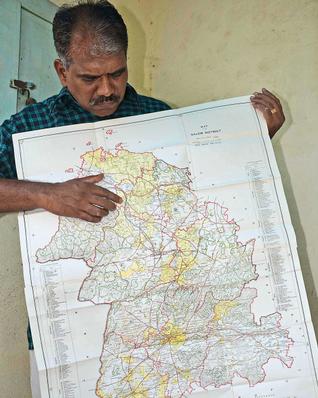
Salem Historical Society that works for the cause of protecting historical monuments in and around the district got a 100-year-old map of the district. At a function organised by Salem Historical Society and YMCA, SALEM 225, to mark the 225th year of establishing Salem district, the map was presented by Philip K. Mulley of Kotagiri in The Nilgiris who is a writer and historian, to J. Barnabas, general secretary of the society. The map prepared by Helio-Zinco Survey Office, Madras in 1916 depicts the boundaries of the Salem district which was one of the biggest district in the country and the first district to be formed in South India in April 4, 1792.
J. Barnabas, general secretary of the Salem Historical Society displays the century-old map of Salem district.– Photo: E. Lakshmi narayanan
The district that spread over 7,530 sq m comprised Salem, Namakkal, Dharmapuri, and Krishnagiri and was divided into three broad zones.
Mr. Mulley said that Malabar and Coimbatore were formed only after Salem district was formed.
He said that Alexander Reed was the first Collector of the district who served between 1792 and 1799.
David Cockburn, the Scottish Collector and who is known as ‘Father of Yercaud’ constructed five schools in the city during his period of service (1820-1829) at his own cost.
Robert Bruce Foote known as ‘Father of Indian Paleoarchaeology’ excavated tools used during Neolithic and Iron Age in Yercaud.
“They served for the development of the district and hence they were remembered till now,” he added.
Mr. Barnabas told The Hindu that 620 copies of the map were printed in 1916, and the century-old map available with the society was a rare collection.
He said that the map brought alive the erstwhile district and would help the youngsters know the past.
“The map would be laminated and placed in the society’s office,”Mr. Barnabas added.
During the celebration, the war medal of M. Israel, war veteran of First World Ward (1914-1919), group photo of intermediate class (1939-1941) of The Salem Municipal College and few rare pictures were on display.
source: http://www.thehindu.com / The Hindu / Home> National> Tamil Nadu / by S.P. Saravanan / Salem – April 10th, 2016
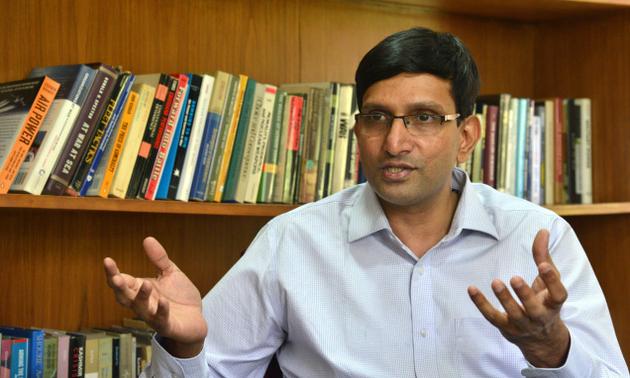
Forgotten Past: “I am most satisfied about discovering the voice of the Indian soldier.” Raghavan in his New Delhi office. Photo: R.V. Moorthy / The Hindu
India was an unwilling participant in World War II, but those years provided the foundation for the Independence struggle.
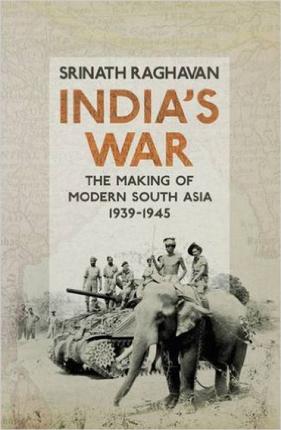
Historian Srinath Raghavan in his latest book, India’s War: The Making of Modern South Asia, 1939-1945 (Allen Lane), details India’s contribution to World War II. The book explores the war’s impact on the Independence movement, how it was during this period that the Army saw its biggest expansion, and why this inquiry is important from a military history point of view.
Excerpts:
The book is called India’s war. Yet, not one Indian was consulted before Viceroy Linlithgow’s decision to enlist the Indian Army.
Even if India was an unwilling participant in the conflict, the conflict had huge implications for India. So, even if we were dragged into it kicking and screaming, those years turned out to be foundational for India in the Independence movement.
But still not India’s war. The Army was treated like bonded labourers, bundled off to fight without any say…
That’s not entirely the case. The Congress certainly opposed India’s participation because it wasn’t consulted, but others saw it as an opportunity. You had people like Ambedkar, who realised that for the Dalits, this was an opportunity for social mobility, to have their voices out. You also had Savarkar who said that this was a great opportunity for the Hindu community to get into the Army, which was dominated by the Sikhs and the Muslims.
Are you saying it was the war that gave these leaders and their ideologies their original prominence?
I think many of the ideological fault lines that we associate with 1947, in some sense, came to the fore during the war years, and that’s why we need to study them more closely. Because of what happens in the period 1935-1939 — you have the first elections under the Government of India Act, and Congress ministries are formed. It seemed as if the Congress was the most dominant force, and only Congress versus the British Raj played out. But then you had the war; the Congress was sidelined, and that cracked open the scenario for others who wanted their voices heard. So you had Jinnah coming into prominence with his demand, you had Ambedkar, you had Savarkar, and a number of others.
If you look at the books about India’s participation in World War II, especially Northeast India and the Malacca frontlines, they are titled the ‘forgotten war’ or the ‘forgotten Army’. Why is it important that they are not forgotten?
If you look at much of the way our history is taught, and the way the public imagines the 1940s, it is basically about the Congress party resigning, the Cripps Mission failing, and then you talk about post-war developments leading up to Independence. So the 1940s are remembered for this march to Independence and Partition that came as a cost of it. The war never really comes into focus. What I wanted to do was say, if you put the war in the front and at the centre and study its impact, then much of the 1940s becomes much clearer and explains why we ended up with what happened on August 15, 1947. Without the war, it is unlikely that the Muslim League would have gained prominence vis-a-vis the Congress in order to push through their demand for a separate country.
You don’t often refer to yourself in your books, but here you speak of your own regiment and how it fought. Do you think there is a bigger need to acknowledge this part of World War II as India’s war, for the Army’s sake?
To begin with, it is important from a military history point of view. This period marked the biggest expansion the Indian Army saw. For a generation of people, now forgotten, the war was foundational for their lives. They travelled abroad for the first time, served in very difficult conditions. I don’t think I would have even got into the subject but for my own military background; I may not have written it but for the fact that I served in the Rajputana Rifles regiment that features prominently in the book. When you have two and a half million Indians in uniform and many more millions recruited for war-related activity, how can we just forget that story? The Indian Army has got caught in the middle of this. If you are a ‘nationalist’, you will see the Army as an instrument of British control; a force of collaborators. But most of the Army was deeply nationalist. Others want to portray the anti-British movement as a subaltern revolution led by the peasantry, yet what was the Indian Army if not made up of the peasants and poorer classes? So, why ignore this side?
Finally, let’s remember that along with Partition, the Indian Army was partitioned as well. Companies that fought together in those wars were subsequently made to fight each other, beginning with the first Kashmir war. As a result, World War II dropped out of the picture. Because now both the Indian and Pakistani armies wanted to play up the stories of their valour against each other, to suit their independent national interests, and not some war that was a collaborative effort. One of the things I mention in the book is that there is a 25-volume official history of the war, and it had to be compiled by a combined inter-services effort from both India and Pakistan, right? But acknowledging this joint history has become very difficult, and very inconvenient, to both countries.
In his memoirs, President Pranab Mukherjee writes that he was against attending commemorations for World War II because it was an insult to the Independence movement, and particularly to Netaji Subhas Chandra Bose, whose Indian National Army fought against British forces.
I very strongly disagree with that view. Netaji and the INA’s effort were quite important, no doubt. I do bring out in the book that the INA’s importance was not really about military contribution, but political impact. It had about 25,000 soldiers, prisoners of war captured by the Japanese, who went over to form Netaji’s Army. The Indian Army was about a hundred times larger, 2.5 million Indians. So why should we only valorise 25,000 people and try to say that recognising the others is somehow a denigration of national history? That’s the lens I am trying to move beyond. Just because some people were in the Army doesn’t mean they wanted British rule. Many fought simply because it was a job; others needed access to food.
There’s an interesting point in the book when Chiang Kai-shek comes to meet the Indian leadership and asks them to support the war because the soldiers won’t be able to fight if they feel they do not have the country’s backing. Why was that significant?
One of the other forgotten parts of our history is that one of the biggest alliances was that of the Indian and Chinese armies during the war. Once the Japanese captured Burma, the land routes were cut off, much of the Indian Army’s mandate was to enable the nationalist Chinese Army to be supplied to fight. Much of the aerodrome-building across Northeast India was to supply the nationalist Chinese. Given the turn we took later, we must realise there is a pre-history too. India and China both emerged from the crucible of World War II. The idea that Asian nations which have come out of colonialism will have a shared future goes back to then. Of course, things didn’t work out that way, and we tend to forget this.
Most wars end the empire of the defeated side. Would you say that World War II was unique because it ended the empire of the winning side, the British?
I think it was clear even at the time that World War II would change the world forever… I think the key point is that the British lost the empire not just because they were weakened by the war, but because they lost the Indian Army’s support by the end of it, which was their instrument of control. That’s what the impact of the INA mutiny was, to show that the British could raise this massive Army, but that it could turn on them too. People like Churchill had even questioned the expansion of the Indian Army and said: “Someday it is going to shoot us in the back”.
You are now seen as a master of the archives through each of your books. What was the biggest challenge during your research for India’s war?
To be honest, I began this book thinking I could do most of my research in India itself. Unfortunately, that’s not the case. I found that the National Archives don’t even have a clear record of the war period. They don’t even have a catalogue for the military department during the war, so a lot of the military details came from the British Library and other archives. But what I feel most satisfied about was my effort to discover the voice of the Indian soldier.
suhasini.h@thehindu.co.in
source: http://www.thehindu.com / The Hindu / Home> Opinion> Comments / by Suhasini Haidar / April 10th, 2016
The first project director of the erstwhile Madras Atomic Power Project (now Madras Atomic Power Station) Myneni Hari Prasad Rao passed away at a private hospital on Tuesday.
He was 88.
A recipient of the Padma Shri award in 1984 for his outstanding contributions to the field of Science and Technology, Rao is survived by three daughters and a son.
Rao served three decades in the Department of Atomic Energy.
He was specially appointed by the then Nuclear Power Board for the Construction and Commissioning of Madras Atomic Power Station and he was the pioneer in Construction and Commissioning of both the units of Madras Atomic Power Project.
Later he served as Executive Director of Nuclear Power Board for three years.
source: http://www.newindianexpress.com / The New Indian Express / Home> States> Tamil Nadu / by Express News Service / April 06th, 2016
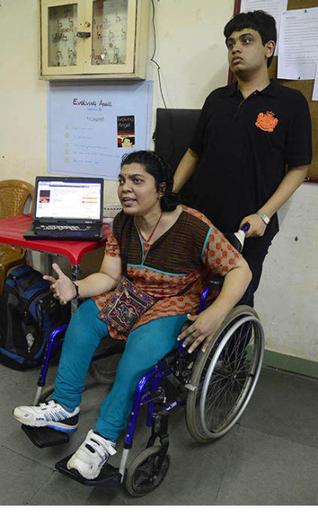
V.S. Anjana, with K. Tejaswi, who has illustrated the book.Photo: M. Vedhan
Using text-to-type software, the author focusses on disability as a theme
A boy with a hearing impairment who wants to play football, a girl with dyslexia who prompts her teachers to think about a practical approach to education and a woman with cerebral palsy looking for inclusive workplaces. They are a few of the protagonists from V.S. Anjana’s first book featuring a collection of short stories for children titled ‘Evolving Angel’.
The thirty-year-old author, who has cerebral palsy, finished her schooling in Vidyasagar and went on to do her Bachelors in Communicative English in Chennai. Using a text-to-type software, Anjana wrote her stories by dictating them to a machine, as her vision has been partially impaired.
“I have always wanted to write and tell stories about people who have overcome their disabilities and have been included in society. Through the book, I have attempted to highlight them in an easy and interesting way, purely meant for children,” Ms Anjana said.
Her book is a collection of nine short stories, with the common theme of disability and each story tackles different disabilities which include dyslexia, hearing impairment, cerebral palsy, autism, and colour blindness.
Explaining the process of how the book came about, a faculty member from Vidyasagar said tools that converted speech to text had been used to write the book. “Since Anjana’s vision had been affected partially, it was easier to write this way without having to type,” he said. The book, which was self-published, is available in Kindle format on Amazon.
Real-life influences
“Some of the stories have been based on real-life incidents and my experiences, while I have also drawn on some imaginary elements to make the stories appealing to children as well as make them aware,” said Anjana, who wants to write another book in a different genre soon. Anjana said she strongly supported accessibility and inclusion for people on wheelchairs, (she herself is on one), as well as creation of job opportunities.
Apart from the cover illustration, every short story is accompanied by an illustration, which were done by K. Tejaswi, a 22-year-old artist and comic creator.
Tejaswi has participated and showcased his works in the World Autism Day celebrations in New Delhi and has been showcasing and selling his artwork across the country.
source: http://www.thehindu.com / The Hindu / Home> News> Cities> Chennai / by S. Poorvaja / Chennai – April 08th, 2016
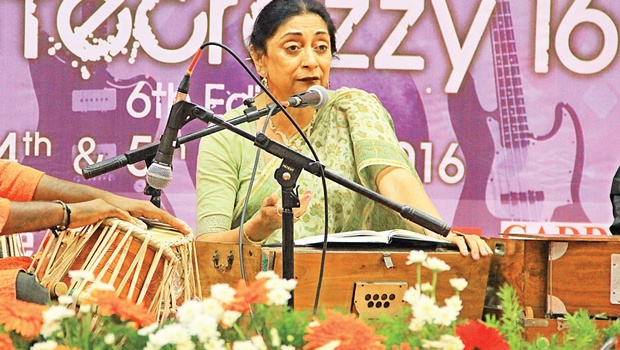
Jyothi Nair Belliappa performing at the Glittecrazzy’16 fest, MGR University Express
Chennai :
In a recently concluded Music and Literary fest by MGR University, a voice with layers of poetry grabbed the attention of over 300 students in the auditorium. Jyothi Nair Belliappa, a qualified academician and Ghazal singer captivated the audience with her soothing ghazals and Sufiana qawwali.
“Ghazal is a very representative art form and I am lucky to have had a strong connection with it,” shared the singer.
As she began performing with Munna Shaokath Ali and Rajesh Dhavale (tabla), her ghazal Ulfat Ki Nahin received a thunderous applause from the audience with a ‘Vah! Vah!’ (A typical way of acknowledging/appreciating a poetry).
“I was glad that everyone understood the essence of what I sang. This is a type of music where you feel the words,” she said. Her meditative rendition of the Ghazal Aaj Jane Ki Zid na Karo and her projection of Yaar tha Dil were some of the key songs of her performance.
Jyothi began singing as a child and credits her parents for instilling this undying passion in her. “I am from Delhi and my parents were from Pakistan (before the partition). I was always stuck to the Urdu language, it has a different effect on me,” explained the recipient of a National Scholarship for post-graduate studies in English Literature.
Mushairas, poetry and music was always a part of her life and she decided to never let go of her passion. “Initially my parents were my only spectators, then my audience grew. Today, I don’t miss an opportunity to perform and I sing whenever and wherever possible,” shared the preparatory head of KM Music conservatory.
Jyothi not only has a diverse music background, but also has diverse specialisations in education. She studied Psychology, Hindustani classical music and has an MPhil and PhD in English Literature from the University of Madras. “I have been singing in Chennai since 1996. Many people ask me how I’m good at Ghazals. Well if you understand the language everything is easy isn’t it?” she smiles.
“Love, death, beauty, life, immortality and more can be conveyed through it. A painful wail of a deer can be dressed with poetic embellishments to portray the pain aesthetically,” explained Jyothi.
So, what does she think about the present music trends? “I am very open-minded and don’t mind children venturing new paths. They are very well-informed and want to try everything,” she said pointing to the recent fad of fusing different genres of music.
Idolising renowned Ghazal singers Munni Begum and Nayyara Noor, she said, “I want to keep practicing, learn more and keep getting better.” She calls herself a person having her fingers in too many pies. “I do too many things but, I am grateful that I have also been able to strike a balance.”
source: http://www.newindianexpress.com / The New Indian Express / Home> Cities> Chennai / by Roshne B / April 07th, 2016
It was a visual treat for all those who had gathered at the Kumaraguru College of Technology last weekend. Around 1,000 silambam practitioners from across the state congregated at the campus on Sunday for a synchronized performance of the traditional Dravidian warfare silambam and showcased the intricacies of the art.
The man behind the Silambam Sangamam, Shankar Vanavarayar, says that it’s time we considered the martial art as a sport and that the mass congregation of silambam practitioners was just a baby step toward the idea.” This was an effort to promote the ancient martial art, fitness and tradition among the youth. We had experts from across the state coming together for the event. However, the majority of the performers hailed from the city itself, who were trained well in the martial art form. Silambam is a martial form, where you discipline your mind through your body and this gathering was a platform to propagate the art and inspire young people to take it up.”
Interestingly, a lot of youngsters have started taking up silambam as a form of fitness activity in the city. “Earlier, silambam was performed predominantly in temple thiruvizhas in villages. But now, they have made inroads in the city as well. It’s heartening to see young girls showing interest in the form,” says trainer G Gunasekaran, who has been doing silambam for the last 50 years in Vysial Street.
“I started when I was just 15 years old. My master had trouble with his leg and I had to take over during some of the sessions. Eventually, I became the master. I teach around 500- 600 students in the city,” says the 65-year-old expert. Today, his students have become teachers themselves, who have taken many silambam enthusiasts under their wings.
Seconding him is silambam coach Mani Sathyamoorthy, who conducts classes at Lawley Road. “Out of the 50 students in my class, 25 are girls. That’s a very good sign. Some of them have been training for seven years. Though a majority of them join out of compulsion from their parents, they soon develop interest in the martial art. One needs to undergo training for two years to learn the basics of silambam. But there is always scope for coming up with new moves as you practice more. When I started teaching 8 years ago, I used to conduct free classes as there were very few participants. But now, silambam has become a popular workout form among youngsters.”
Mani adds that one can start doing silambam at the age of 4. “There is no upper age limit. In fact, some of the parents, who drop their children at the class, have also started spinning the kambu (stick). We always conduct a warmup session before silambam. Fitness and discipline improves over a period of time.” Gunasekaran too emphasizes it’s better to start young. “There is no age barrier to learn silambam. Since the body needs to be immensely flexible to spin the silambam, it’s ideal to start early so that body gets adapted to the moves. There are four basic stick rotations and seven moves. These in turn, are combined to come up with the other moves. Unlike karate, where one trainer can teach more than 100 people at a time, Silambam needs to be supervised carefully, because there is a high risk of hurting your opponent’s eye while you spin the kambu (stick). This martial art involves every muscle in the body.”
Maria Shanthi, physical director of a private school in the city, has been active in propagating the art among her students, so much so that her students have been undergoing regular training in the warfare art. “It was during a chance encounter with silambam performers at one of the school tournaments that I developed an interest in the art. Now, we have been teaching the form in the school and some of our students have excelled at the state level. We have also set aside an hour’s time every morning in school to practice the art.” Shankar Vanavarayar, on the other hand, wants to take the art to the next level in future. “We are planning to take this forward through seminars and silambam sessions; and explore the possibility of making this a national and international sport.”
Health Benefits 1. A good cardio workout; improves blood circulation and burns calories 2. Improves memory; mental strength & agility 3. Relieves stress and fatigue; improves body flexibility 4. Improves hand-muscle co-ordination & handwriting 5. Prevents practitioners from taking up smoking or drinking
source: http://www.timesofindia.indiatimes.com / The Times of India / News Home> City> Coimbatore / P. Sangeetha / TNN / March 23rd, 2016
P. Selvam, a faculty member of the International Research Centre, Kalasalingam University, Krishnankoil, has been made a Fellow of International Society for Noni Sciences by International Society for Noni Sciences.
The fellowship is in recognition of Dr. Selvam’s contribution to research in medicinal plant Morinda Citrifolia L Noni and its ability to cure cancer.
Chancellor K. Sridharan, Director Sasi Anand and Vice- Chancellor S. Saravana Sankar congratulated him for the recognition, according to a release.
source: http://www.thehindu.com / The Hindu / Home> National> Tamil Nadu / by Special Correspondent / Virudhunagar – April 07th, 2016
Members of various political parties paid homage at the Perungamanallur memorial near Usilampatti in Madurai on Sunday, apparently with an eye on the Thevar vote bank. Later in the day, film director Bharathiraja performed a pooja for his next film in memory of the people who were designated as criminal tribes by the British, after paying homage at the memorial.
The Perungamanallur pillar with the burning torch was established in memory of 16 people from the region who were killed by the British on April 3, 1920 because they retaliated against the Criminal Tribes Act. The incident is referred to as the Jallianwala of south India.
Members of the Piramalai Kallar community were brought under the Criminal Tribes Act by the British and they had to submit their finger prints on a daily basis at the local police station so that the police could keep track of their movements. But they decided to fight against this Act and ended up being killed by the British. Many pay homage on this day at the memorial, but this year saw a bigger representation from the political parties as elections are round the corner, and the Kallar form a major portion of the vote bank of this region.
Minister Sellur K Raju, rural district secretary and Madurai mayor V V Rajan Chellappa, MLAs Muthuramalingam, Tamilarasan and Karuppiah, were among the first to visit the memorial at Sedapatti and pay homage.
DMK members led by former assembly speaker Sedapatti Muthiah paid tributes at the memorial.
MDMK leader Vaiko, who paid tributes at the memorial, said he always wanted to respect the acts of valour and people who fought social oppression.
Five members of the All India Forward Bloc (Vallarasu faction), led by their general secretary Ilaiyarasu, who had undertaken a 16-day fast, ended their fast by visiting the memorial on Sunday. Members of the Forward Bloc led by Usilampatti MLA Kathiravan also paid tributes.
The CPM’s urban district secretary Ramakrishnan, members Devaraj, Sellakannu, women’s wing member Muthurani and others visited the memorial. The Congress also had its local representatives, including Usilampatti town president Deepa Pandi, and Murugan paying tributes.
Bharathiraja performed the pooja for his movie ‘Kuttraparambarai’ (criminal tribe) in Usilampatti at a function that was attended by many from the film industry. Tight security arrangements had been made at the venue.
source: http://www.timesofindia.indiatimes.com / The Times of India / News Home> City> Madurai / TNN / April 04th, 2016