Heroes of Heritage

Pradeep Chakravarthy, a London School of Economics graduate, has been organising heritage tours in Tamil Nadu since 2014. | Ratheesh Sundaram

When President Pranab Mukherjee inaugurated the Muziris Heritage Project (MHP) in February in Thrissur district’s Kodungaloor, he called it the largest conservation effort in the country. The project was initiated by Kerala Department of Tourism to conserve historical monuments and museums, and to boost tourism. In Chennai, Abhimanyu Prakashrao—representing eight generations of the Buchi Babu family, the first family of Madras cricket—upheld the legacy by restoring the colonial 250-year-old Luz House, owned by Buchi Babu’s father Moddaverapu Dera Venkataswami Naidu, dubash to Parry & Co in the 19th century. In neighbouring Puducherry, the state government joined hands with the Indian National Trust for Art and Cultural Heritage (INTACH) in 2014 to restore 21 heritage buildings in the city. From February 5-7, the former French colony also witnessed the second edition of the Pondicherry Heritage Festival.

MHP was launched in 2006 as a heritage conservation initiative. Muziris Muziris, or Muchiri Pattanam, was one of the earliest ports in India, an entry point of varied cultures to India and finds mention in the Sangam literature. P J Cherian, chairman of the Kerala Council for Historical Research (KCHR), who led the excavation of the port, says it is time that historians studied Muziris as a Periyar Valley Civilisation. The Spice Route project is another heritage tourism initiative by the Kerala government.

Other stakeholders in the legacy pie are keeping the momentum going with heritage hotels in offbeat places such as Tranquebar aka Taramgambadi into Tamil Nadu. Heritage tours are tapping unexplored places that are teeming with history.

Heritage is slowly getting its due in south India, and leading from the front are Tamil Nadu and Puducherry, the twin citadels of history, art and culture.
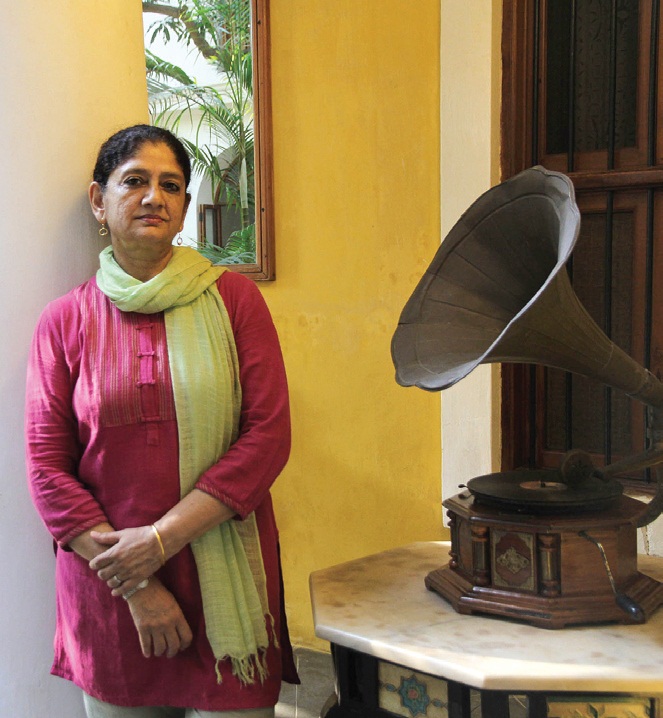
Sunaina Mandeen co-founded People for Pondicherry Heritage to preserve and protect the town’s architectural and cultural heritage. | G Pattabiraman

Last year, under the Ministry of Urban Development’s National Heritage Development Augmentation Yojana (Hriday), the Centre had sanctioned Rs.23 crore for Kancheepuram and Rs.22.3 crore for Velankanni for development and improvement of heritage sites over the next two years. In 2014, Tamil Nadu Chief Minister J Jayalalithaa had announced a subsidy of Rs.16.82 crore for 60 of the 64 heritage towns in the state.

In Puducherry, fondly called Pondy, which boasts of a unique Franco-Tamil heritage, attempts towards heritage conservation have been ongoing with some heritage homes being converted into cafés, restaurants and hotels. But it was the collapse of the 144-year-old Marie town hall building in 2014 that made the townspeople aware that all was not well with their famed heritage. “After the Marie building came down, people got together and a spontaneous movement was formed, called ‘People for Pondicherry Heritage’. A week after the collapse, a candle-lit tribute to Marie was organised,” says 63-year-old Sunaina Mandeen, co-founder of People for Pondicherry Heritage.
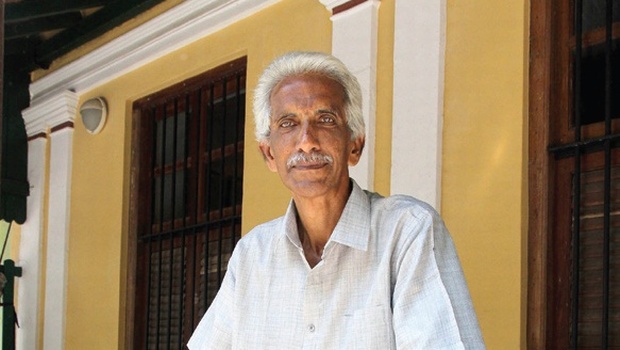
Ashok Panda, co-convener of INTACH, Puducherry chapter, has helped convert homes and buildings into heritage hotels. | G Pattabiraman

Conserving the heritage of this beautiful sea-side town is high on the Puducherry government’s agenda. “Two years ago, the government, which owns 30 heritage buildings, agreed to partner with INTACH to restore 21 buildings. Five or six buildings have been restored, with two to be restored this year,” says Ashok Panda, co-convener of INTACH, Puducherry chapter. With its team of 10 architects and restoration experts, INTACH has converted homes and buildings into heritage hotels such as Hotel Orient, Hotel Gratitude, Maison Perumal and La Maison Tamoule, and has restored 25 Tamil homes on Vysial Street. Hotel Orient was restored at a cost of `60 lakh and Hotel Gratitude for Rs.1 crore. For Maison Perumal and La Maison Tamoule, INTACH suggested the design.

Private players, especially those who endorse heritage preservation, are making a beeline for Puducherry, with many of them taking over  ancient places and converting them into heritage hotels. Palais de Mahe on Rue de Bussy, a shining example of French colonial architecture with high ceilings and a yellow-white facade, owes its existence as a heritage hotel since 2013 to CGH Earth. In 2009, the group had restored an old Tamil house, Maison Perumal, at a cost of `2 crore. “Each of our properties has its own special charm and character. Palais de Mahe in the French quarter is very French, while Maison Perumal has a distinct Tamil character,” says Sam John, manager of Maison Perumal.

A hundred km away from the former French enclave, pioneers in the heritage architectural-restoration-for-reuse Neemrana Hotels honed in on Tharangambadi, which housed a Danish colony from 1620 to 1845. In Tamil Nadu, Neemrana’s 2004 project was the Bungalow on the Beach, an 18th-century Danish colonial house that belonged to the governor of Danish India, followed by Naik House and Gate House. On the Neemrana cards is another heritage hotel, Thamgam House.

In the neighbouring capital, a bit of Chennai’s vast architectural heritage was saved when the 17th century Luz House opened its doors to the public in 2014. “Luz House was in ruins for 40 years, except when it functioned as a L’Oreal heritage spa. I suggested to my father that we could transform Luz House to earn revenue,” says Abhimanyu Prakashrao, whose family owns the Dutch colonial bungalow. With an investment of Rs.50 lakh for restoration, the risk paid off for this MBA graduate. They have been doing well by letting it out for events and weddings. “We plan to start a small café, an eight- or 10-roomed hotel next. So far, only a third of the house is open to the public,” says Prakashrao.
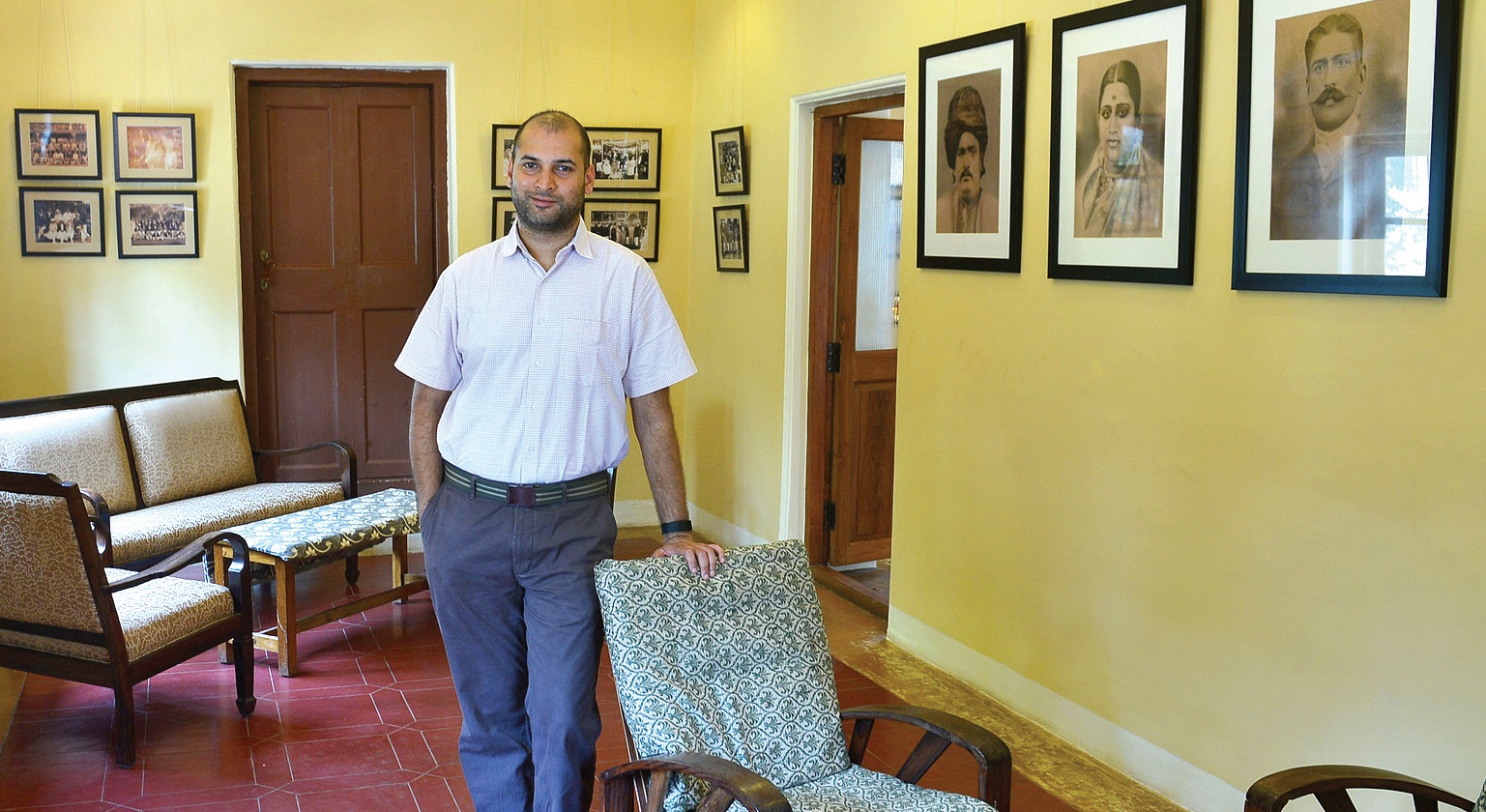
Abhimanyu Prakashrao upheld the family legacy by restoring the 17th century Luz House in one of Chennai’s oldest areas, Mylapore, in 2014. | R Satish Babu

Bengaluru has its share of old bungalows, with many remodelled to create a new entity. The late 19th century colonial structure in Basavanagudi houses an antique home-furnishing boutique, Basava Ambara. When Venkataram Reddy heard in 2009 that the outhouse and a section of the mansion owned by the M Mahadevan family was available for rent, he took it. The bungalow is home to the Mahadevan family, and houses The Rogue Elephant, a café integrated into the boutique.

What separates Karnataka’s capital from the capital of the Vijayanagara kings, Hampi, is 350 km. Known for its beautiful ruins, Hampi and its surrounding areas—such as Anegundi—get many tourists. Shama Pawar, founder of the Kishkinda Trust, has been restoring the ruins of Anegundi and promoting its art and culture for the last two decades. “We have done lot of documentation about the ruins and monuments that are not covered under the government agencies. There is a mantapa with 64 pillars in the Tungabhadra river, with each showing 64 kinds of skills. The mantapa surfaces only during summer when the river water is low,” she says.

That heritage is an invaluable asset has manifested in people getting together and working towards its preservation. Sharmila Ganesan, co-convener of INTACH, Tamil Nadu, started Friends of Heritage Sites (FOHS) in 2014. “We wanted to involve the local community for they are stakeholders too, and often resort to vandalising properties,” says Ganesan. For their pilot project in 2015, they honed in on Mamallapuram to revive the ancient Pallava art and train local sculptors. “We commissioned six garden sculptures adhering to Pallava art and conducted a heritage workshop for middle-school kids,” she says. The organisation also conducts heritage tours every year.

Tamil Nadu’s heritage lies in its 36,000 temples. Chennai-based author and historian Pradeep Chakravarthy, says, “As a seven-year-old I used to visit temples and that impacted me.” Chakravarthy began organising heritage tours in 2014 on a friend’s suggestion. “We picked Tirunelveli as I knew the lay of the land. During the trip, we visited the house of an old zamindar family,” says the London School of Economics graduate. Trips to Vellore and Pudukottai have been planned for this year. “I am looking for a Tamil Jain family in Vellore to host us for an ‘ahimsa’ lunch,” he adds.
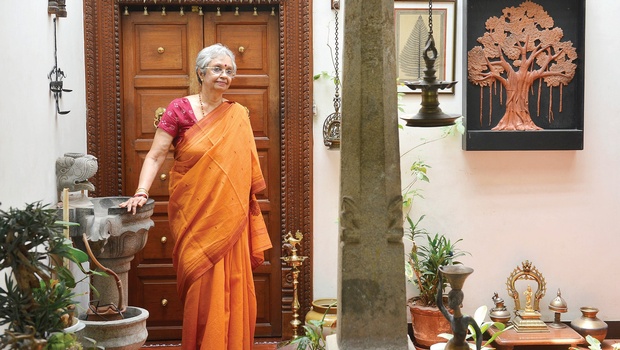
Sabita Radhakrishna revived the 1,000-year-old Kodalli Karuppur sari worn by the ranis of Thanjavur up to the 19th century. | R Satish Babu

Not just architectural heritage, the revival of textile and arts heritage has come in for scrutiny. Writer, columnist, foodie and playwright Sabita Radhakrishna, who has worked with textiles for the last 30 years, says, “I wanted to revive the Kodalli Karuppur sari, which has 1,000 years of history. It was made exclusively for the ranis of Thanjavur up to the 19th century. With government support and help of a master weaver and a painter from Kalahasti, Andhra Pradesh, we spearheaded the revival campaign last year.” In June 2015, Radhakrishna started the 60 handloom sari pact in which one wore only handloom sarees 60 times.
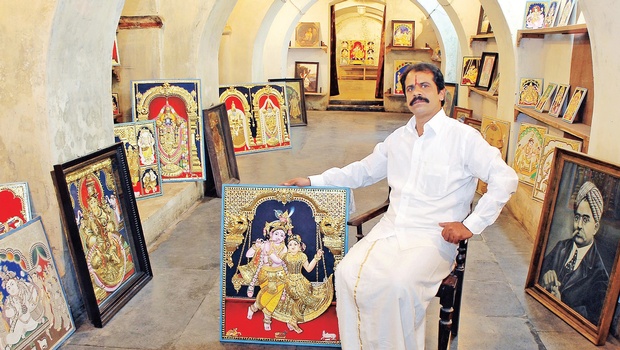
Sambaji Rajah Bhonsale, a royal descendant of the Maratha rulers and a Thanjavur painting expert, imparted training to 100 women in the art. | Ratheesh Sundaram

Heritage art such as the Tanjore (Thanjavur) paintings has also got a shot in the arm. Last year, along with a few other painting experts, B Sambaji Rajah Bhonsale, a royal descendant of the Maratha rulers and a Thanjavur painting expert, imparted training to 100 women on an initiative by CM Jayalalithaa. The women  were paid Rs.2,000 each as stipend.

Thanjavur’s rich cultural past is also being revived by Prakriti Foundation, an organisation started by Chennai-based businessman-turned-culture czar Ranvir Shah.
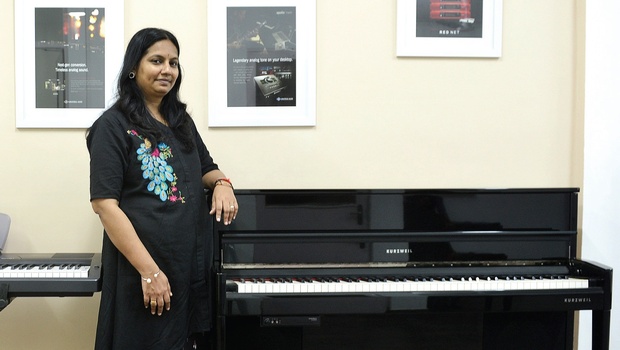
Meera Krishnan of Prakriti Foundation has restored 50 panels at Devashriya Mandapam in the Thyagarajaswamy temple in Thiruvarur. | R Satish Babu

“We are looking to restore the Kalyana Mahal Chhatram at Thiruvaiyaru into a heritage centre,” says Meera Krishnan, programme coordinator for Prakriti Foundation. Its first project in 2008 was to restore 50 panels at the Devashriya Mandapam in the Thyagarajaswamy temple in Thiruvarur. Each year in March, Prakriti organises the Sacred Music Festival on the banks of the Cauvery river at Thiruvaiyaru, 12 km away from Thanjavur and the birth place of the legendary poet-saint Thyagaraja. Next on their agenda is to build a hostel for students of the music college there.

Tombs are as much part of the southern heritage as temples, and the Qutb Shahi tombs in Hyderabad representing a blend of Persian, Pashtun and Hindi architecture, are the only necropolis in the world where the members of seven generations of one royal dynasty are buried. They are also Hyderabad’s oldest heritage structures. In 2013, Agha Khan Trust for Culture (AKTC) took up the task of their restoration at a cost of `100 crore over a 10-year period. Conservationist architect and project director of AKTC Ratish Nanda says, “Our ambition is long-term preservation of this 450-year-old heritage structure.”

Chennai celebrates its heritage and 377-year-old history with the Madras Day celebration since 2004. Journalist and historian Vincent D’souza, who ideated the festival, keeps it pithy when it comes to heritage conservation. “If you are proud of your heritage, you will treat it with respect, not vandalise or spit on it,” he says.

With inputs from Saumesh Thimbath,Chetana Divya Vasudev, Amit S Upadhye and Saima Afreen

source: http://www.newindianexpress.com / The New Indian Express / Home> Magazine / by Sunita Raghu / April 02nd, 2016
Women Craft A Better Pulicat

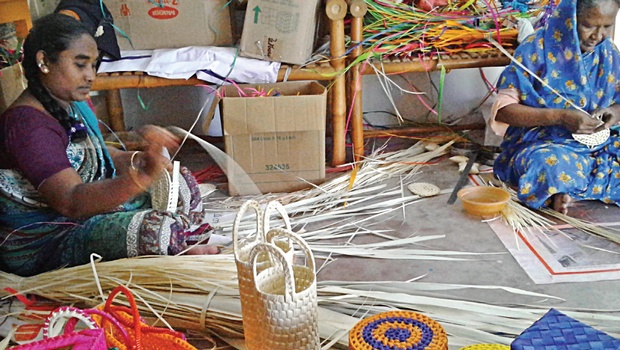
The women weave about two baskets a day; everything from cutting to colouring is done by hand.

Chennai  :

What do a handwoven palm-leaf basket and issues of deep-seated negligence and heritage have in common? In this case, it is the small hamlet of Pulicat, where these baskets are made. The baskets are woven by local women and marketed in the city by organisations like AARDE Foundation, an NGO working towards the conservation of natural and built heritage in Pulicat.

What’s interesting is the two-fold purpose of these colourful handicrafts:  besides being an important form of livelihood for the town, AARDE founder Xavier Benedict’s goal is to draw attention to the issues facing Pulicat through these handicrafts.

“Pulicat is a unique place and has three kinds of heritage — cultural, manmade and the natural heritage. Though all are important, cultural heritage, including crafts, is the only factor that can easily be made attractive to visitors and marketed to improve the economy, ” explains Xavier. “Most of them rely on fishing and boat-making. Boating for tourists used to be an additional source but it was banned after a boat capsized. Alcoholism is also a problem. So women are the crucial link to improving livelihood.”

The journey began with post-tsunami relief work at Pulicat. Performing arts like kattaikoothu and textiles like kalamkari, muslin and palm-leaf weaving were a part of the vanishing cultural heritage. Besides, this is the built heritage. “There are lakhs of monuments that are not protected by the Archeological Survey of India. When we went to Pulicat, we saw the numerous abandoned structures that are dilapidated. So we began working on documenting and raising awareness,” says Benedict.

Sadly, even as such attempts were going on, one of the structures, Our Lady of Glory Church, built in 1515 AD by the Portugese, was demolished in 2009 to be replaced by a new church. A few years later, another beautiful temple, the Adi Narayanana Perumal Temple was also demolished to make way for a new temple. “The temple had a unique construction style that was uncommon in South India. Today, it is gone,” he says. “The protection is often arbitrary — some structures are protected under the ASI but some are being destroyed. We are asking for the entire town to be made into a heritage site.”

Natural heritage is equally important, with the Pulicat Lake being the second largest brackish water lake in India, supporting lakhs of migratory birds and also crucial for draining of excess water during rains.

The lake is under threat from pollution and development, and activists like Benedict are trying to petition to protect it under an inter-governmental treaty for wetlands called Ramsar. Since such concepts of conservation are not easy to convey, he believes that tapping a craft like palm-leaf weaving, can help especially when you add colours and make new designs, and market the product.

Around 85 women between ages 25 to 60 years are employed by AARDE, and work every day at a workshop in the town. “Initially, some of the women, most of them Muslims, were hesitant to come out. But now, many come. Last week, we even had our first set of products woven by a man,” says Sophie, Benedict’s wife, who handles the marketing.

The women are paid a monthly wage, and all proceeds go to the women except overheads like transport and raw material. Usually, the women make one or two baskets a day depending on the complexity. Everything is done by hand, from cutting to colouring. “One woman is now 70 and says she will not reveal her special technique even to her daughter until she retires. The women have also taken to technology, and send me pictures from their children’s phones every night through WhatsApp,” she smiles.

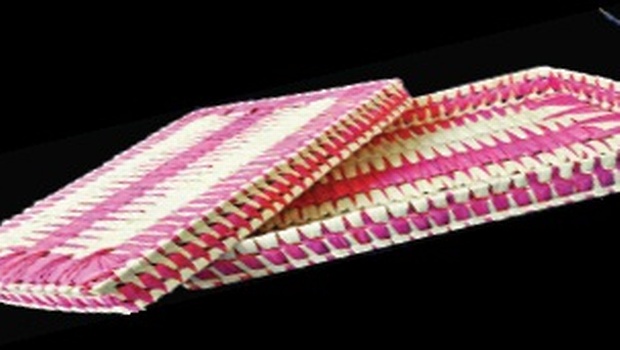
TraysCF02apr2016

Baskets, boxes and trays 

Palm-leaf weaving is a part of cultural heritage in Pulicat. It is marketed by AARDE and the profits go directly to the women. The range includes baskets, boxes, pouches and trays. Bulk orders for functions are also taken. For details, visit www.aarde.in

source: http://www.newindianexpress.com / The New Indian Express / Home> Cities> Chennai / by Archita Suryanarayanan / April 02nd, 2016

TN chapter of Parkinson’s treatment centre launched

Coimbatore:

Six neurologists in the city have come together to launch the Tamil Nadu chapter of Parkinson’s Disease and Movement Disorder Society. The society, launched on Wednesday, will offer supportive medical care and free counselling to patients suffering from the disorder. The society which will be located in Ramnagar is expected to be operational in three months. Tamil poet and lyricist Vairamuthu was present at the inaugural programme.

Parkinson’s disease is a condition that affects the nerve cells in the brain that produces dopamine, an organic chemical that controls the body’s movement. The disease’s symptoms include muscle rigidity, tremors and change in speech and gait.

The chapter will be called Park-in Nest and will provide Parkinson’s patients with the best of facilities and neurologists, philanthropists and social workers. “We aim to create a society to serve people suffering from the disease,” said Dr V Arulselvan, one of the founders of the society and neurosurgeon at the Kovai Medical Centre and Hospital. “The centre will provide physiotherapy, occupational therapy, psychological counselling, try to spread awareness about the disease and keep families updated with newer treatment options,” he said.

Neurologists say such centre’s are necessary as on many occasions neurologists don’t have enough time to talk freely about the disease and give them a more holistic treatment. “Many patients have a lot of doubts about their nutrition and food intake and even exercises, but on many occasions we don’t get enough time to sit them down and explain it to them,” said Dr Arulselvan.

“Physiotherapy is also a very important aspect of the treatment, as it helps them maintain balance, walk better and raises their confidence levels,” said Dr M B Pranesh, neurology professor at PSG Hospitals.

Doctors say they each see around 100 to 200 Parkinson’s patients. “There has been no survey to check on the exact number of patients suffering from the disorder or its incidence in the district or region,” said Dr Pranesh. “Our patients come from a huge geographic range which spreads from Nilgiris right up to Erode and even Salem,” he said. “But we will start collecting details in the centre,” he said.

source: http://www.timesofindia.indiatimes.com / The Times of India / News Home> City> Coimbatore / TNN / March 31st, 2016

ICF-manufactured airconditioned EMU flagged off

Chennai  :

The first indigenous airconditioned 12-car rake (EMU) designed and manufactured for Mumbai suburban network at the Integral Coach Factory, Perambur, was flagged off on Thursday. The train was flagged off by the general manager Ashok Agarwal in the furnishing division of the factory at 5.30pm.

He also flagged off a conventional coach – one of the eight that was turned out today – to mark manufacture of 2000th coach by the factory in the financial year 2015-16. ICF manufactured a record 2005 coaches this year.

An official said, “The airconditioned suburban rake will be moved to Southern Railway’s yard probably on Monday for checks and certification required to attach it to a locomotive for shifting to Mumbai. The rake shows that we are ready to make airconditioned suburban trains which can be on a par with metro rail rakes made by foreign companies.”

The first rake with two driver motor cars and 2 non-driver motor cars with eight trailers will be put up for trials on Western Railway. Green signal will be given only after observing rake in service for three months. If the trials are successful in Mumbai, production of the remaining nine airconditioned rakes will begin.

The EMU train set has several features, including a 15-tonne roof-mounted package units for air and a 15-tonne AC will provide cooling in six coaches. A/C will cut off when temperature reaches 23 degrees Celsius and switch on at 25degree centigrade. Fans are also provided.

The stainless steel body coach has electrically operated automatic sliding doors, air-tight gangways in all trailer coaches, wide and large double-seated glass windows for panoramic view and GPS-based LED display for passenger information and announcement system.

source: http://www.timesofindia.indiatimes.com / The Times of India /News Home> City> Chennai / by U. Tejonmayam / TNN / March 31st, 2016

Scrap recycled into desks and shelves

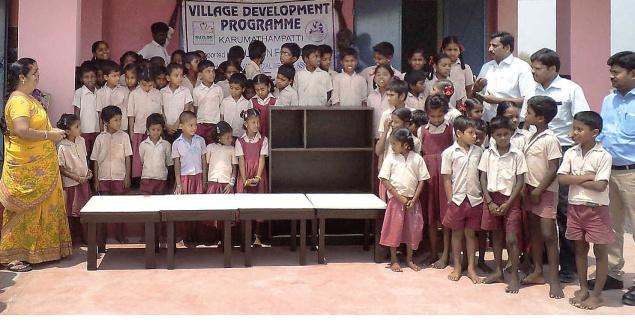
Desks and shelf made from scrap by Suzlon was donated to a primary school in Coimbatore district recently.

Large quantities of packaging material that goes as scrap has been recycled by Suzlon here and made into desks and shelves and distributed to schools in five villages in the district.

Recycled

According to a spokesperson of Suzlon, which has installed 2,000 MW of wind turbines in the State, 1,240 kg of wooden scrap was recycled into 40 desks and 20 shelves.

Suzlon group has a panel manufacturing unit in Coimbatore district.

The packaging material used at the panel unit usually goes as scrap after use.

These have been made into school furniture with resources available in-house and distributed to schools as part of the Corporate Social Responsibility (CSR) activity.

Good response

The spokesperson said that since the response from the schools was also good, the group plans to make more school furniture using the material.

It distributed 20 desks and five shelves so far to five elementary schools so that children can sit around the desk and take up learning activities.

Activities

Suzlon foundation conducts CSR activities such as health camp, skill training, developing kitchen garden, and cleaning of overhead tanks in select villages in the district.

“This is the first time that we have tried recycling the scrap material and we plan to do more of if,” the spokesperson said.

source: http://www.thehindu.com / The Hindu / Home> News> Cities> Coimbatore / by M. Soundariya Preetha / Coimbatore – March 30th, 2016

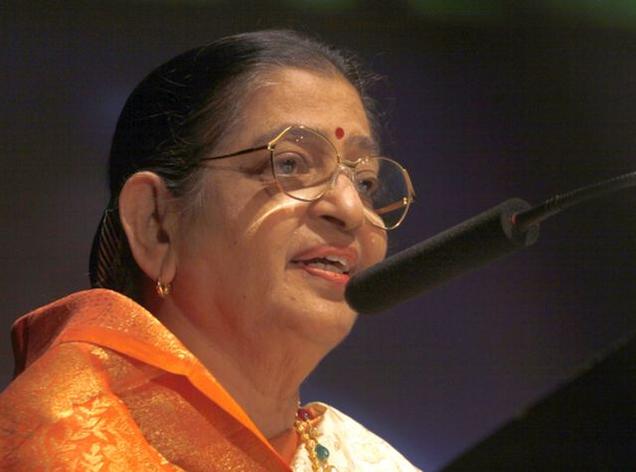
P. Susheela enters Guinness World Records

Veteran playback singer P. Susheela. File photo: Thulasi Kakkat / The Hindu

‘The queen of melodies’ has been officially credited by Guinness Book of Records for singing 17, 695 songs in 12 Indian languages.

Renowned playback singer P. Susheela Mohan, who has won many awards and earned accolades in a career spanning five decades, has added two more to her awards cabinet.

She has now been recognised by both the Guinness Book of World Records and Asia Book of Records for singing most number of songs in Indian languages. The usually reticent singer met journalists in Chennai on Tuesday to celebrate her new award.

While Guinness Book of Records has officially credited her for singing 17, 695 songs (solo, duet and chorus backed songs) in twelve Indian languages, Asia Book of Records has recognised her for singing close to 17, 330 songs.

Speaking about the awards, P. Susheela reminded everyone present that the adjudicators had only considered songs she had song from 1960s. “Please remember that I started singing from 1951,” she said.

None of this would have been possible without the work of her fans, who, by setting up psusheela.org, painstakingly catalogued the songs that she has sung over the last few decades and sent it to the adjudicators of the award.

Reflecting on the recognition, the singer said that she views it as an acknowledgement of her hard work. “There is a lot of hard work that has gone behind this achievement. Today, with so many television channels and newspapers, a talented singer can shine through quickly. But when I was singing, it was very slow and I had work my way up , step by step,” she said.

Crediting her husband for her success, she said that her husband, a doctor, was a corner stone in her life. “He fell in love with my voice and sacrificed his life so that I have a great career in playback singing,” she said.

She was candid in her response when asked why she had never considered a career in acting. “I was offered a chance to act by several directors, but I refused saying that I wouldn’t want to act even if I was paid a crore,” she said, adding, “My heart was in music.”

When asked why she is not singing anymore, the singer said that she would love to sing in movies if someone offered a good song. When she was nudged by journalists to sing her favourite song, she ended the press conference by singing Ennai pada sonnal, enna paada thondrum from Pudhiya Paravai, a hit song of 1964.

source: http://www.thehindu.com / The Hindu / Home> Entertainment / by Udhav Naig / Chennai – March 29th, 2016

Documentary maker from Chennai bags national award

Chennai:

Chennai-based filmmaker Amshan Kumar’s ‘Yazhpanam Thedchanamoorthy Music Beyond Boundaries, won the National Award under the art/culture documentary category. The filmmaker who has made more than 20 documentaries such as Third Theatre and Subramania Bharati, was also director of the feature film ‘Oruthi’ (2003) which was picked to be showcased in the Indian Panorama.

He hopes the recognition will enthuse documentary filmmakers in the state. Kumar said, “There is no institutional support from the state government or any corporate bodies when it comes to documentary filmmaking. There is a severe lack of forums to exhibit them.”

source: http://www.timesofindia.indiatimes.com / The Times of India / News Home> City> Chennai / TNN / March 30th, 2016

ASI opens museum of estampages from across India

K. Karuppiah, Deputy Superintending Epigraphist, at the exhibition on Sunday —Photo: S.R. Raghunathan

Permanent museum-cum-exhibition named after Indologist E. Hultzsch

Lovers of heritage and students of history can now head to Fort St. George and visit a newly-created centre that has impressions of inscriptions from all over India on display.

Estampages, as these impressions of inscriptions are called, are displayed at the newly-created Eugen Julius Theodor Hultzsch Memorial Museum-cum-Epigraphical Photo Exhibition at the historic fort. The permanent museum-cum-exhibition has been named after E. Hultzsch, a German Indologist and epigraphist, known for his work in deciphering the inscriptions of Ashoka, officials said.

The museum has been created by the Epigraphy branch of Archaeological Survey of India (ASI), Southern Zone, as part of its cultural awareness programmes on the occasion of the 159th birth anniversary celebrations of Dr. Hultzsch and also the silver jubilee year (1990-2015) celebrations of ASI, Southern Zone.

“We have displayed the estampages of Tamil-Brahmi inscriptions from across the nation,” K. Karuppiah, Deputy Superintending Epigraphist, ASI, told The Hindu . The inscriptions are from the period between the third century B.C. and second century A.D. “They are in Tamil, Telugu, Malayalam, Kannada, Sanskrit, and Prakrit. The nature of these inscriptions is donative records and hero worship. The staff of the Epigraphy branch visit villages across India, copy the inscriptions and decipher them. The most important deciphered inscriptions are highlighted in Epigraphia Indica, a quarterly journal of the ASI,” he said.

Through Tamil-Brahmi inscriptions, ASI gets a lot of information about Chera, Chola, and Pandya kings, he added.

The exhibition will be formally inaugurated at the ASI Office, Clive Building, Fort St. George, on Tuesday.

It will remain open on all working days and entry is free. For details, contact the ASI on Ph: 25675783

source: http://www.thehindu.com / The Hindu / Home> News> Cities> Chennai / by T.S.Atul Swaminathan / Chennai – March 29th, 2016

A Chennai City Woman Turns Organic Farmer

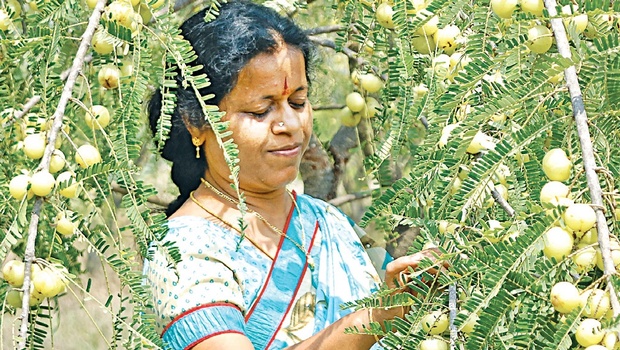
Anuradha Balaji at her farm in Thiruvallur district D Sampath Kumar

Chennai :

When we talk of women breaking social barriers, we hardly think of them as farmers. But that’s what Anuradha Balaji of Villivakkam has done. She bought a piece of land in neighbouring Tiruvallur district, set up a farm there, and manages it almost single-handedly. She travels an hour every day to the farm at Periyapalayam and supervises the workers.

“Many people in this locality thought I’m a soft-spoken Brahmin woman who would be scared of problems and soon sell the land. But I chose to fight and asked thorough questions to get the benefits,” Anuradha Balaji tells City Express. She narrates an incident when officials asked for unnecessary documents to provide benefits to farmers. “I realised that being a woman farmer is not easy. But I fought the discrimination with support from my husband and family,” she says.

Anuradha02CF29mar2016

Even as she speaks to the reporter, she instructs the farm workers to stop the flow of water. “It’s afternoon; don’t water plants and trees now,” she tells them and adds that her farm (eight acres of land) is an organic farm.

“We use organic ingredients for manure, including a mix of cow urine, dung and dry leaves,” she says. How did the 43-year-old with a masters degree in library and information science and a career as a librarian in Saudi Arabia take up farming?

“I worked there for 10 years. But when I got back, the first thing I wanted to do was farming. With my husband’s help, I bought the land near Vadamadurai. My uncle too encouraged me and I finally set up this farm in 2008,” she recalls.

“Both of us were interested in organic farming for several years. My wife decided to start doing what we always wished to. I support her financially,” says Balaji, adding that he might be able to help her even more when he returns from Saudi Arabia, where he now works.

But Anuradha doesn’t depend on her husband alone. She works in such a way that the farm sustains itself. She does inter-crop cultivation, so if one crop fails, the other crop would her make ends meet. She also makes value-added products from farm produce.

“If the market for gooseberries is poor, we make candy and pickle. We also grow rice and other grains and vegetables. We also plan to grow herbal plants for medicinal use. Right now, we are laying the foundation. My failures have taught me how to manage a farm. Without my family’s support, I wouldn’t be able to do what I had always dreamed of,” she smiles.

Shankar, a chemical engineer who quit his job to assist her, explains, “We want to do integrated farming. We plan to bring in native cows also, which will help in farming and (provide) manure. Man, land and animals are interconnected and we should preserve them.”

Couple share the same passion

“Both of us were interested in organic farming for several years. My wife decided to start doing what we always wished to. I support her financially,” says Balaji, adding that he might be able to help her even more when he returns from Saudi Arabia, where he now works.

source: http://www.newindianexpress.com / The New Indian Express / Home> Cities> Chennai / by Sremathi M / March 29th, 2016

The man who made Rajinikanth

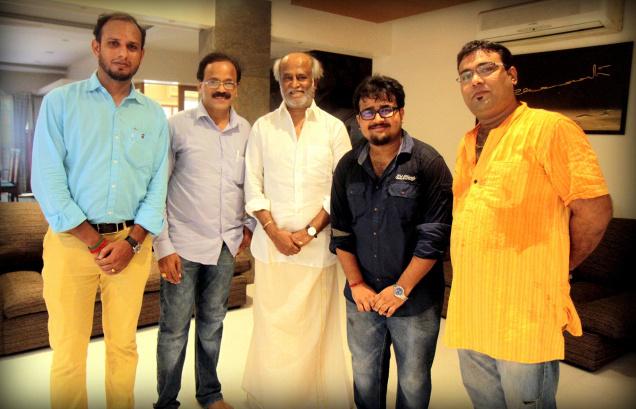
The crew with Superstar Rajinikanth / Special Arrangement / The Hindu

Sudhir Srinivasan talks to writer-producer Dhananjayan about his documentary on veteran screenwriter and producer, Panchu Arunachalam

The censor board wasn’t pleased when they learned they had to certify A Creator with Midas Touch, writer-producer Dhananjayan’s documentary on Panchu Arunachalam. For one, the screening was scheduled on New Year’s eve. Two, it was a documentary, over two hours long. But according to Dhananjayan, when the film ended at 10:30 that night, the officials were unanimous in expressing that they couldn’t have ended 2015 in a better way. “It turns out even they were unaware of the extent of Panchu’s contribution to Tamil cinema.”

Panchu Arunachalam has written close to 100 films, including Murattu Kaalai, Sakalakala Vallavanand Apoorva Sagodharargal, “of which at least 70 turned out to be profitable.” A nephew of celebrated lyricist Kannadasan, he is also known for introducing Ilaiyaraaja, and taking Kamal Haasan and Rajinikanth to the masses. “Balachander may have introduced me, but Panchu made me an artist,” says Rajinikanth. Dhananjayan’s original plan was to make a documentary about Balachander, but it didn’t happen “due to financial reasons”. He was then approached by two financiers to make a documentary about Panchu, an opportunity he jumped at. “India recognises Salim-Javed’s contribution to cinema, but not Panchu’s, even though he has written at least twice the number of films they did.”

Dhananjayan’s film has many film personalities—Rajinikanth, S. P. Muthuraman, Bharathiraja, Mahendran—talking about their experiences with the veteran scriptwriter. Dhananjayan is disheartened that Kamal Haasan couldn’t be convinced to feature in the documentary. “I don’t want to speculate on his reasons for deciding not to participate. We were also this close to getting M. S. Viswanathan and K. S. Gopalakrishnan, but the veterans sadly passed away before we could fix up a meeting.”

Dhananjeyan with Legendary Paanchu

Made at a budget of Rs. 15 lakh, the documentary traces Panchu’s childhood at Karaikudi, his apprenticeship under uncle Kannadasan, and his rise in Tamil cinema. The film ends on a tragic note, when it notes that the Panchu family has suffered many losses during the last two decades. “There’s a lesson to be learnt here. If your trust is misplaced, you will end up losing everything,” says Dhananjayan. In the case of Panchu, an independent house has now been reduced to a two-bedroom apartment. “His family has no fancy car, even though he was instrumental in many actors becoming crorepatis. We have plenty of footage that explains how Panchu trusted certain actors and directors in vain. But I wasn’t sure if we needed to stir trouble, and so ended up not using it.”

After some coaxing, Dhananjayan reveals that chief among the films that caused severe losses to the Panchu family is Vasanth’s Poovellam Kettuppar. “The movie overshot its budget by at least four-five times. But Panchu wouldn’t stop the project midway. ‘What would happen to Sivakumar’s son? What would happen to Ilaiyaraaja’s son?’ he’d ask. He cared about people far too much to be a good businessman.” Dhananjayan, of course, admits that this information is anecdotal, and that the directors could well have their own version of these stories. “That’s why I thought it best not to retain these bits in the film.”

It wasn’t always so bleak for Panchu. His Veera was the first Tamil film to collect Rs. 1 crore in the NSC area (North Arcot, South Arcot and Chengalpattu). Rajini wanted to remake his dear friend Mohan Babu’s Telugu film, Allari Mogudu. But Suresh Krissna didn’t think the Telugu film was even half decent. “Panchu redeemed the script. He asked Suresh Krissna for a couple of days, and gave him a modified script he couldn’t refuse. He could see the good in the bad… even in scripts.”

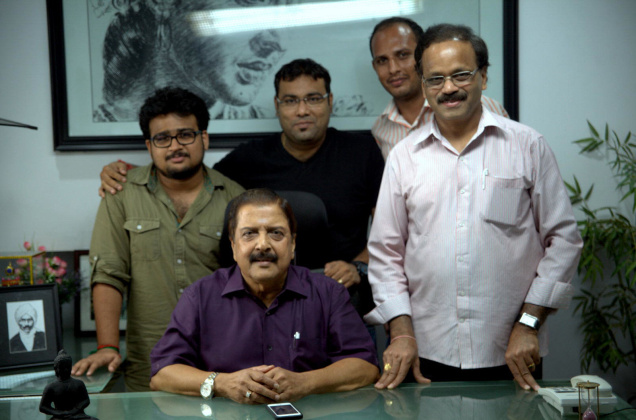
Our Team with Shiva Kumar

Dhananjayan disagrees that Panchu Arunachalam is mainly known for his work in commercial films likeVeera. “What about films like Bhuvana Oru Kelvi Kuri, Aarilirunthu Arubathu Varai, Engeyo Ketta Kural and Mayangukiral Oru Maadhu? He was capable of writing such sensible stories too.” But Panchu was ever the producer’s writer. “If they insisted that he change parts of his story, he would happily oblige. He was all for the producers making a profit.” Dhananjayan calls Panchu a rare variety of writer: one without ego. “After he wrote Niram Maaratha Pookkal, Bharathiraja approached his close friend Bhagyaraj for advice. The latter rewrote the screenplay. Another writer would have been offended, but when Panchu learned of this, he read Bhagyaraj’s version and recommended that it be made into a film.”

Dhananjayan, who plans to make a feature film next year, intends to submit this documentary for the National Awards. “I hope that it will get Panchu some much-needed recognition.” A few television channels are already vying for the documentary’s rights, and you can see why. “I have sixteen hours of footage, with lots of controversial anecdotes.” The television channels are eager to air the portions that he has removed from his documentary. But Dhananjayan doesn’t mind. “Whatever it takes for people to recognise the immeasurable contributions Panchu has made to Tamil cinema.”

source: http://www.thehindu.com / The Hindu / Home> Features> Cinema / by Sudhir Srinivasan / March 26th, 2016