Back to basics

Study of homes

RohiniShankarCF19jun2015

She has pored over curvilinear walled houses in Upper Volta; shell-decorated chieftain’s houses in the villages of Fijian Islands; dome-shaped huts with stilt legs in Samoa Islands, Polynesia; huts with pitched roofs and a front porch in fortified Maori villages (New Zealand); castle-style  farmhouses in the Taiaakon region (Dahomey); the large togunas (public buildings) supported by carved pillars in Mali; the diverse structures of Morocco; dwellings in British Columbia with free-standing totem poles in front of them; the log huts of Lapps in Scandinavia, and the huts of Naga Angamis.

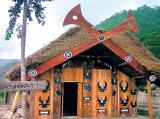
There is more: the cusped roof structures with horns as insignia of rank in interior Assam; huts with saddleback roofs in New Guinea; dwellings with geometrically decorated walls in Mangbettu (Zaire); temporary shelters made from branches and pandanus leaves in Solomon Islands, Melanesia; keel-shaped tents of Ethiopian nomads; huts covered by mats and bent branches in eastern Madagascar, aboriginal cave dwellings in Australia…
And yes, she has been to Timbuktu!

Well, for Chennai-based Rohini Shanker, the study of primitive architecture around the globe has been a relentless, fascinating and satisfying three-decade odyssey. The charm never seems to wear off.

It sparked off when she first set foot in interior Alaska. Conical tents greeted her. “It was a shock. I had seen the same kind of structures in Mongolia on the other side of the globe,” reminisces the architect and designer. For Rohini, this exploration grew as a casual offshoot of her frequent travels abroad to attend conferences. She began to take a day or two to travel beyond the tourist spots. “It’s beautiful that tribal people see the entire land as their abode, their architecture. They are gentle and sociable, there is nothing aggressive about them. If they are afraid of you, they will keep away from you,” shares Rohini.

Giving it a skip

Strange as it seems, primitive architecture is a realm that has been overlooked by everyone — archaeologists, historians, and even art enthusiasts. Most architecture pundits tend to give primitive architecture short shrift, considering it to be a temporary solution to an existential challenge, and a dead end that really didn’t evolve into much. But that may not be the case, as pointed out by the architectural theorist Marc-Antoine Laugier.

Recall that as early as in 1755, Laugier had elucidated in his seminal but overlooked essay, Essay on Architecture, that the aesthetics and architecture of ancient Greek temples were drawn from the plan of the primitive hut, which is considered the oldest of habitations built by man. As he pointed out, the basic Doric style of architecture was inspired by the hut’s format in which a horizontal beam was supported by vertical tree trunks embedded into the ground, with a sloping roof to channel rainwater into the ground.

Considering the range of architectural features that come alive in the ancient primitive dwellings that Rohini Shanker has documented, it would be interesting if someone were to study them in depth.

While some of the features are quite apparent, others don’t hit the eye straightaway, and some other similarities are downright puzzling.

For instance, the pagodas of Buddhist temples bear something in common with the saddlebacked roofs in New Guinea, though the geographical and cultural distance between the sites dissuade the speculation. Likewise, the dome-shaped huts of the Polynesian islands show a definite resemblance to the domes of Islamic architecture. Nevertheless, leaving aside the road taken by primitive architecture, some of these structures are marvels by themselves.

Consider the case of the primitive tribes who live in Andaman Islands. “With just poles and leaves they build such simple and sturdy structures that bear the brunt of the sun, wind and of course, the islands’ spectacular and notorious monsoons. They manage this miracle because the structure is built in a way that allows the wind to blow through it rather than blow on it. I saw similar structures in Congo, but the foliage used for the roofing was different,” recalls Rohini.

Of course, primitive architecture cannot be viewed in isolation. Like other aspects of art and culture, it reflects a certain attitude towards life. Chiefly, a reverent and non-disruptive attitude towards nature. This is something that gets confirmed over and over again with any and every primitive dwelling that you consider.

Let live 

Rohini points out to the aboriginal settlements in Uluru in Australia, which is an annual visit that she hasn’t missed for the last 30 years. “Without gadgets they know exactly where to find food and water, the raw materials to build their shelter, the mineral-rock pigments to make their dot-paintings, and the reeds to make their musical instruments (like didgeridoo). Their culture and attitude towards  our planet is wonderful. Though this land is so tough to live in, they leave no footprint of themselves there. Not for building their homes, not for meeting their other needs,” remarks Rohini.

This is one of the reasons she reckons that we shouldn’t rush to ‘civilise’ the tribes who live in their own ‘archaic’ ways. “They continue to lead a happy life, without our lifestyle diseases. We shouldn’t enforce their culture, unless they ask for it,” is Rohini’s explanation.

The needs of primitive people by way of habitable structures were limited — a hut for home, a shrine for worship, a granary for storage, a stockade for defence, a cairn/mound as a grave marker of the shaman, chieftain and priest. But within the limitations of their needs, as also the limitations of the resources and the technology they have at hand, primitive architecture holds some elegant and fundamental solutions for architectural challenges, which is something that modern architects might ponder upon.

“I once asked a little child to draw houses, and I was amazed to see her come back with just rectangles. The child has seen nothing but our cuboidal blocks, towers and tenements. Well, that is the state of our architecture today, with most urban buildings tending to be just blocks. In this context, nobody realises just how exciting, interesting and rewarding studying primitive architecture can be,” remarks the architect.

source: http://www.deccanherald.com / Deccan Herald / Home> Supplements> Sunday Herald / by Hema Vijay, DHNS / June 14th, 2015
This SHG thrives on betel cultivation

Coimbatore :

In an effort to encourage self-help groups (SHG) to organize themselves to facilitate business, district collector Archana Patnaik visited Thenchittur village near Pollachi last week and inspected the betel leaf fields cultivated by a 21-member SHG. She interacted with the group members, talking to them about the cultivation process.

Their efforts yield 6,000kg of betel leaves each month. Keeping environmental concerns in mind, they use organic manure. To encourage their green initiative, the collector ordered the officials to help them get organic certification, which would allow them to sell their produce at higher prices.

“We would get the certification for organic betel leaves and develop the marketing strategy,” said collector Archana Patnaik.

“We used to pick betel leaves in our village. We decided to form an SHG (Thenchittur betel producers). We leased eight acres from a farmer and availed funds through the Pudhu Vazhvu Thittam, a government scheme that provides funds to self-help-groups to start small businesses, with assistance from World bank. They were given funds worth 77,800 in 2011. Our first yield came after three months and we were able to produce 6000kg monthly after that,” said G Latha, an SHG member.

The women from the SHG were involved in irrigation and plucking of betel leaves. “We planted brinjal, spinach and banana as intercrops, for additional revenue,” she added. They market their produce in Valparai and Palani, selling 1kg for 120. Cost of production including wages works out to 70 per kg.

Collector, Archana Patnaik and District Rural Development Agency (DRDA) project director Tha Murugan visited Thamaraikulam village near Kinathukadavu and inspected the coir rope manufacturing unit. Five SHGs have been engaged in the production of coir ropes. The district administration has planned to provide transport facility for the SHGs to boost business.

source: http://www.timesofindia.indiatimes.com / The Times of India / Home> City> Coimbatore / A. Subburaj, TNN / June 15th, 2015

Get Set for Madras Week From August 16

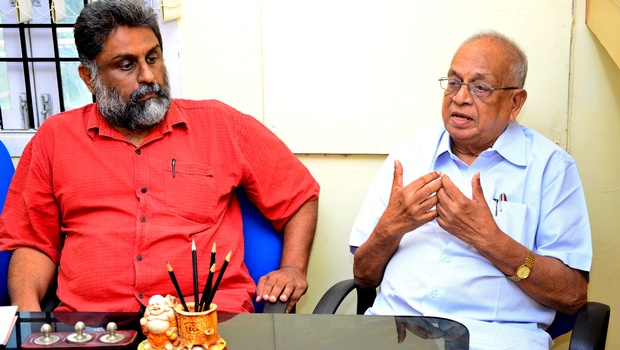
Journalist Vincent D’souza and historian S Muthiah | R Bavithraganesh

Chennai :

The city will witness a tribute to its heritage and culture at the annual week-long ‘Madras Week’ beginning on August 16.

Expectation has soared this time following last year’s success of the event, which had almost 200 and odd groups.

Programmes like group-walks with special focus on food, photography, history etc were a hit in the previous edition which drew in a swarm of people taking renewed interest in the city. This time, the idea is to encourage a localised approach, by helping organise area-wise activities. For example, the Fort St George trip last time was conducted by Heritage Club of schools taking students to the oldest landmark (375 years) from where the city came to grow. “We would even like to have a Kutthupaatu event. It is such a Madras thing isn’t it,” says Vincent D’Souza, one of the key organisers of Madras Week.

“There is an upsurge of citizen-driven programmes of late. This Madras Week is an unique movement to celebrate them” says S R Madhu of Rotary Club (Madras South), member of the Madras Week team. Whether it’s a walk to identify 70 types of trees or a gallery show, the essence of Madras Week is ultimately to bring realisation on the cultural value of this city.

Founded by historian S Muthiah, the board of  Madras Week, comprises journalists, members of Indian National Trust for Art and Heritage (INTACH) and the Rotary Club of Madras.

The web page www.madrasweek.in is the official platform for all updates and an updated version of the Madras Week app is also in the pipeline. Simultaneously, those interested in planning group activities or events to celebrate or experience Madras, could write to editor@madrasmusings.com and themadrasday@gmail.com and they would serve as the networking platform and the go-to people for anyone with an idea.

source: http://www.newindianexpress.com / The New Indian Express / Home> States> Tamil Nadu / by Express News Service / June 16th, 2015

Chennai doctors perform novel procedure to fix woman who had trouble swallowing food

Chennai :

Three decades ago when Ponni, 48, from Kancheepuram had minor discomfort while swallowing her food, she did not take it seriously. When the problem persisted, she checked with several doctors assuming that it was a problem with her throat.

However, panic began to set in when the woman began to lose weight rapidly over the past few years. Luckily, a tricky procedure performed at hospital in Chennai helped the woman eat normally.

When Ponni recently underwent a thorough checkup at Global Hospitals, doctors found that she was suffering from a rare condition called esophegal achalasia which is characterized by incomplete relaxation of the food pipe which was causing trouble while swallowing. As a consequence, the patient had regurgitation, chest pressure and heartburn.

Dr R Ravi, who was part of the treating team, said that conventional treatment options for the disorder included surgery and medication. However, after evaluating her conditions, the team decided to perform Peroral Endoscopic Myotomy (POEM) – a new technique which had a positive outcome.

“POEM is a minimally invasive, scarless technique where precise cutting of muscle is performed through the mouth. It is a virtually non-surgical as no external cut is made on the body and the blood loss is very minimal,” said the doctor.

After the procedure, doctors said that the patient recovered rapidly and was able to talk and walk the following day. “More importantly, after a gap of about four decades, Ponni could finally start eating and swallowing without any difficulty,” said Dr Ravi.

source: http://www.timesofindia.indiatimes.com / The Times of India / Home> City> Chennai / by Janani Sampath, TNN / January 16th, 2015

Veteran AIADMK leader Sulochana Sampath dead

Chennai :

AIADMK organising secretary EVK Sulochana Sampath, mother of TNCC chief EVKS Elangovan, died on Saturday morning. She was 86. She is survived by four sons, EVKS Elangovan, EVKS Gowthaman, Iniyan Sampath and Mathivanan, and a daughter, Anbezhil. Another daughter had died earlier. She was under treatment for age-related ailments for the past few months.

“She was discharged from hospital yesterday after undergoing treatment for 10 days. She breathed her last on Saturday morning around 6.30am,” one of the relatives of Sampath said. She was living alone in her Vepery residence.

Her husband EVK Sampath was one of the senior leaders of Dravidian movement and a close associate of DMK founder C N Annadurai.

He left DMK and formed Tamil National Party and later merged it with Tamil Nadu Congress. He was a nephew of rationalist leader E V Ramasamy, popularly known as Periyar. Sulochana Sampath was awarded Periyar award by the Tamil Nadu government last year.

She joined AIADMK after her husband Sampath’s death in 1977. “She had been maintaining a good rapport with Amma (Jayalalithaa). Even when EVKS Elangovan criticized Amma, his mother Sulochana used to issue counter statements. Amma treated her like an elder sister,” a senior AIADMK leader recalled.

Chief minister J Jayalalithaa visited Sulochana’s residence and offered condolences to the family members. Elangovan was among those who received her.

“Her death is a huge loss for me and AIADMK to which she dedicated herself fully. She worked for women’s equal rights,” Jayalalithaa said in her condolence message. She has held various positions in AIADMK including that of women’s wing secretary. Also, she had held several positions in state-run bodies like Tamil Nadu Textbook Corporation.

In his condolence message to Elangovan, Tamil Nadu governor K Rosaiah said she had dedicated herself to the cause of the poor and upliftment of women. “I convey my sincere condolences to you and to the bereaved members of the family,” he said.

In a release, Tamil Nadu Congress Committee (TNCC) expressed grief and said Congress president Sonia Gandhi, vice-president Rahul Gandhi and senior leader Mukul Wasnik have conveyed their condolences.

DMK treasurer M K Stalin also paid homage. DMK chief M Karunanidhi, MDMK general secretary Vaiko and PMK chief Ramadoss were among others who condoled the death of the veteran AIADMK leader. Her family members said the final rites would take place on Sunday morning.

source: http://www.timesofindia.indiatimes.com / The Times of India / Home> City> Chennai / TNN / June 07th, 2015

A journey in search of Mahabs before Pallavas

Chennai :

Many have written about Mamallapuram, but no one account is final when it comes to the ancient port town of the Pallavas. Arguments on its architecture, inscriptions and style still rage on. On the famous ‘Arjuna’s Penance’ in Mamallapuram, heritage expert R Gopu mentions Chicago-based art historian Michael D Rabe’s view that the great piece of art also means ‘the descent of the Ganges’. “If you look at it closely you will know there are a number of events based on various themes. That’s why scholars like Rabe say it is both ‘Arjuna’s Penance’ and ‘the descent of the Ganges’,” said Gopu, a software engineer.

From being a remote village with monuments buried under the sand to its revelation as a gallery of Pallava art, launching an era of historical fiction in Tamil and still concealing mysteries, the history of Mamallapuram’s rediscovery is as fascinating as the history of its construction, said Gopu on Saturday. He was speaking on ‘2000 years of Mamallapuram’ as part of Tamil Heritage Trust’s monthly lecture in the city.

The speech was, in fact, a journey in search of the history of the port town before it became kingdom of the Pallavas. “Ancient manuscripts like ‘Periplus’ (a 1st century AD document that lists the ports and coastal landmarks) talk about this port town. Astronomer Claudius Ptolemy (140 AD) also mentioned it in his work. Many ancient records also show it was a flourishing port town. So Mamallapuram was a great town even before the Pallavas,” he said.

Gopu used British surveyor general Colin Mackenzie’s maps and sketches to show how the port town was rediscovered by experts, poets and artists. “The map that Mackenzie prepared can even beat our satellite map today. It’s so clear and made creatively to suit the port town. We can say it was a satellite map during the time when there were no satellites,” he said. Veteran landscape painter Thomas Daniell’s sketches of Mamallapuram, during the time he toured India in 1784, still provide an old world charm of the port town. “The paintings of Daniell show some towers and landscape which are not seen today. It gives a clear idea of the old structures and towers. So it’s through these artists, scholars and poets, we should look at Mamallapuram. If not, the picture of this great historic town will be incomplete,” said Gopu.

source: http://www.timesofindia.indiatimes.com / The Times of India / Home> City> Chennai / TNN /June 07th, 2015

Coimbatore sees first lung transplant

Coimbatore :

Although the city is yet to witness a lung transplant, it saw its first lung donation late on Friday night. The lung, which belonged to a 44-year-old tailor, was allotted to and retrieved by Chennai-based Fortis Malar Hospital. It airlifted the organ to the hospital the same night. The tailor, who died on Friday after intense bleeding in the brain, had donated five of his organs.

The Tirupur-based tailor suddenly fainted while working on June 11. He was rushed to a private hospital in Tirupur, where a severe issues in his brain was detected. He was moved to G Kuppusamy Naidu Memorial Hospital on Friday morning. The doctors at GKNM found there was severe bleeding in his brain. “Though he was given intensive care to control the bleeding, his brain functions began worsening. Over a few hours it began showing features of a brain stem dysfunction,” said a press statement from the hospital. Four different medical officers confirmed brain death.

Doctors were surprised because his condition looked like a hypertensive bleeding but the man did not have any history of illness. The patient’s family was counselled about his condition on Friday afternoon and they agreed to donate his organs. The Transplant Authority of Tamil Nadu was informed and they allotted his lung to Fortis Malar Hospital, his liver to Gem Hospital, the kidneys to PSG and SPT hospital, eyes to Aravind Eye Hospital and skin to Ganga Hospital.

While Coimbatore has seen donation and transplants of all other organs like the heart, kidneys, liver, skin and eyes, they were yet to donate lungs. The city has also not donated pancreas and small bowels yet. Tamil Nadu has seen 63 lung transplants so far.

source: http://www.timesofindia.indiatimes.com / The Times of India / Home> City> Coimbatore / TNN / June 14th, 2015

Helping out at a hosp, these youngsters show the way

Madurai :

J Prasannakumar, a delivery executive at a telemarketing company, grew up in the neighbourhood of the Government Rajaji Hospital. During his many visits to the hospital, he noticed that there were people who were in need of dire help. Touched, he began helping them out in what ways he could. Initially, he would help them locate their wards but as he became more involved, his activities widened.

Today, the 28-year-old graduate in business economics and his two friends arrange blood for the needy, buy them food, counsel them and admit helpless elderly people to homes, among other things. His friends N N Ajmal Hussain, a BCA graduate and C Vinoth, an MCA degree holder, joined him seven years after he began helping out at the hospital. For the past three years, the three have been spending at least five hours in the hospital everyday. Ajmal, who is a website designer, Vinoth, who is preparing for bank exams and Prasannakumar find time between work to help out patients.

Recently, when the summer vacations were going on for colleges, the hospital faced a shortage of blood donors as most of the contributions to blood banks usually came from students. The three youngsters arranged blood for the patients, and their efforts were much appreciated.

“We arrange blood for those who need it urgently. Anybody we know who needs help inside the hospital premises will get our support. Many patients need food and money to buy medicines from outside. If we have money, we help them. Otherwise, we connect the needy and the donors. We usually ask the donors to help directly and avoid mediation. However, some prefer to do it through us as they do not have time to spare,” Ajmal said.

“We are not an NGO. We have not kept a name for the group. We are friends and do it purely for the satisfaction of helping someone in need,” he added.

The hospital deals with about 10, 000 outpatients and 3000 inpatients every day.

“They are favourites among people in the hospital. From arranging blood to helping the patients and their attenders, they do a lot on the premises,” said a senior doctor from the hospital.

source: http://www.timesofindia.indiatimes.com / The Times of India / Home> City> Madurai / by Devanathan Veerappan, TNN / June 13th, 2015

Fusion puts Tamil bhakti music on global stage

When Susheela Raman sings ‘Paalum Thelithenum’ (milk and pure honey), an Avvaiyar prayer to Vinayaka recited everyday by millions of Tamil children, with a twang in her velvety voice, the invitation is surely compelling. What is to be lisped with childish innocence, however, assumes a husky edge in Susheela’s beginning line. When she repeats the word ‘thunga’ (elephant trunk) unnecessarily and distorts and elongates ‘thoo’ in the word ‘thoomaniye” (pure and precious treasure), ‘maniye’ is completely lost on us. Tamil listeners may now feel far removed from the prayer they learned in childhood.

We have already forgiven her for mispronouncing the word ‘theli’ in ‘thelithenum’ with a lighter ‘l’ which is a common mistake television newsreaders in Tamil Nadu commit. But Tamils would wonder why the line offering four eatables to Vinayaka invites a swaying of the hips from Susheela. And even before we come out of our wonder Susheela makes the gesture of spinning a top and lifts her hand like a cricket umpire while praying to Vinayaka for proficiency in Tamil. She doesn’t stop there. Ecstatic gyrations, eyes-shut trances, and wild hair whippings follow, accompanied by electric guitar riffs.

For the traditional Tamil, Susheela Raman’s sound, gestures and gyrations may be controversial. But, in taking the genre of Tamil bhakti to a global audience, UK-born Susheela, a major star of world music, in her own way communicates the essence of the genre — invoking ecstasy. She declares on her website: “I don’t want to respect artificial barriers between music, I want to channel everything into the experience. Music is like a goddess that is always changing its mind, never straightforward. To earn her blessings and stay close to her, musicians have to try new things.”

For Susheela, the ecstasy that Tamil bhakti music seeks to provide is not to be achieved through slow ascendance. She simply plunges into it in the very first opening line as she does in the album ‘Vel’. K B Sunderambal, Madurai Somasundram, and Bangalore Ramani Amma would have also begun their first line of their Murugan bhakti song in a high pitch and gone for a higher pitch as the song progressed. Susheela has no such compulsions and her European audience would not have cared less had she opted for a more sober opening. However, Susheela’s first leap into ecstasy facilitates her fusion, like in her rendering of Madurai Somu’s ‘Marudamalai maamaniye murugaiyya’.

In the song, Somu ascends into emotional heights only after a few syllables. Kunnakudi Vaidhyanathan’s violin accentuates Somu’s climb and the ecstatic bursts come nearly at the end. What Susheela does is to begin in the second half of the original Tamil song, and replace the native morsing, ghatam, and violin interlude with the singing of Mian Miri Qawwals from Lahore. Followed by the tabla, Susheela launches her ‘Marudamalai maamaniye’ from a still higher pitch with a faster rhythm.

The effect is terrific because of the newness of the Qawwali singing merging perfectly with the high singing of Tamil bhakti music. The faster rhythm does not allow Susheela to distort words as she does in other songs. When she hands over the mantle back to the Quwwali chorus the similarity of rhythms smoothens the transition. Susheela’s frenzied whipping of the hair does add its visual quality to the orgasmic outbursts. In a way Susheela discovers and demonstrates the inner flow and the connectivity that exists between Qawwali singing and Tamil bhakti music.

When she sings ‘Velundu mayilundu’ with the interceptions from Quwwali musicians singing ‘Nuri Nuri’, the mixture already feels like a natural flow. It also becomes clear that the meanings of the words no longer matter to anyone except the singers themselves. For the audience, it’s all pure rhythmic sounds and bodily gestures.

Tamil bhakti music is at the centre of her three albums: Salt Rain, Music For Crocodiles, and 331/3. In Tamil Nadu, bhakti music is a vehicle for devotees to achieve communion with their gods guided through the meaning of words. The ecstatic experience is supposed to be the result of such a communion. In the Susheela Raman variety of world music, the ecstasy and emotional heights are already there as rhythms, sounds, gestures, and ambience. Devoid of meanings delivered by words, we experience words mingling with other sounds to create pure music. Perhaps only through such channels and loss of ‘word meaning’, native Tamil bhakti music could reach out and achieve a universal appeal.

For Tamil bhakti music is both ancient and contemporary and is deeply ingrained in the consciousness of Tamils living worldwide. For instance, while the poem ‘Paalum thelithenum’ is a Sangam-age composition attributed to Avvaiyar, the grand old lady of Tamil poetry, ‘Marudamalai maamaniye murugaiyya’ is a film song written by Kannadasan. Along with the Saivite and Vaishnavite bhakti movements, Murugan worship had seeped through Tamil history from ancient times, and it achieved canonical status in the 15th century as evidenced by the corpus of songs by Arunagirinathar. Trance behavior and Tamil Murugan bhakti are intimately intertwined, and it takes a Susheela Raman to identify its potential to sync with the ecstasy of Sufi Quwaali music of Pakistan.

(The author is a writer and folklorist who heads the National Folklore Support Centre, Chennai)

source: http://www.timesofindia.indiatimes.com / The Times of India / Home> City> Chennai / by M D Muthukumaraswamy, TNN / June 13th, 2015

Jaya’s Bid to Spread Glory of Tamil Resonates in Australia

Chennai :
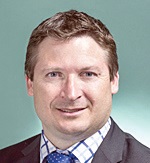
Australian MP, Williams Matti and the Adelaide Tamil Association have heaped praise on Chief Minister J Jayalalithaa for her strenuous and unceasing efforts to spread the glory of the Tamil language across the globe.

The Australian MP, while speaking in the Australian Parliament on June 4, hailed the International Tamil Conference and Seminar, organised recently by the Tamil Development Department of the Tamil Nadu government. He said it was the first of its kind to be hosted in Australia for the Tamil people living there.

“It was great that the Tamil Nadu government and the World Tamil Association chose Torrensville Primary School in my electorate to facilitate the event. The two-day seminar and workshop covered teaching, education and development of Tamil language and culture for communities outside India.

Williams MattiCF12jun2015

Lawrence Annadurai, president of Adelaide Tamil Association, in his letter to Chief Minister J Jayalalithaa, congratulated her on taking over the reigns of the State government for the fifth time and expressed confidence that Tamils across the globe were praising her measures for the welfare of the people of Tamil Nadu and those living abroad.

He said the international Tamil conference, held recently was highly praised by many personalities in Australia.  Zoe Bettison, Minister for Communities and Social Inclusion, Grace Portolesi, Minister for Multicultural Affairs and Chair of South Australian Multicultural Ethnic Affairs Commission, Angela Keneally, Mayor, City of Charles Sturt and many other invitees from Australian Government who attended the conference lauded the conference.

When traditional Tamil music was played, they danced to the tunes happily, he added.

source: http://www.newindianexpress.com / The New Indian Express / Home> States> Tamil Nadu / by Express News Service / June 11th, 2015