New CEO writes poetry, likes to read about archaeology

Coimbatore :

N Arul Murugan, city’s new chief educational officer is more than a former government school teacher. While he spends all day attending to administrative matters of the school education department, the officer likes to dedicate some time every weekend to write poetry.

Murugan assumed office on Thursday morning, taking charge from his predecessor A Gnana Gowri. As Gowri was transferred to Salem as the chief educational officer (CEO), Murugan has moved from Pudukkottai.

The 43-year-old officer has published three of his poetry books and two prose books till now. Murugan, who has completed his PhD in Tamil Grammar from Annamalai University, also likes to know about archaeological findings. “While I write literature, I love to read about archaeological findings, and related matters,” said Arul Murugan.

A native of Karur, Murugan started his career as a secondary grade Tamil teacher in a government-aided school in Karur in 1992. In 2002, Murugan became a government school teacher, and then in 2009, he successfully cleared the Tamil Nadu Public Service Commission exam, and became an officer of the school education department. A batch mate of the former CEO Gnana Gowri, Arul Murugan started his service in the school education department as the district education officer, Kanniyakumari.

Arul Murugan, however, said that Coimbatore is a developed district when it comes to school education. “I personally like Coimbatore, both as a city to live in and as an educational district. My aim is to further improve the enrolment in government and government aided schools,” he said.

source: http://www.timesofindia.indiatimes.com / The Times of India / Home> City> Coimbatore / by Adarsh Jain, TNN / June 05th, 2015
Bikers go on epic journey

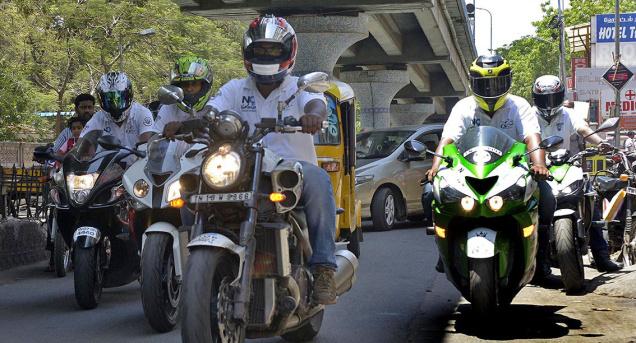
Members of Chennai Superbiker’s Club went as far as Delhi during their 5-day ride and interacted with various NGOs —Photo: V. Ganesan

Four bikers rode across 8,000 km in 14 states, over 15 days to rollback to Chennai carrying a social message.

Meet members of the Chennai Superbiker’s Club, a bunch of enthusiasts who bond over superbikes and are popular for their macho machines on city roads. Launched in January 2014, the Club has over 40 members flaunting a stable of super sports and adventure models including Yamahas, Aprilias, Suzukis, Kawasakis and Hondas.

With the aim of spread ‘biker camaraderie’ across State boundaries by meeting fellow enthusiasts and also to spread awareness on the escalating violence against Indian women, seven club members rolled on a road trip from Nungambakkam on May 25. Mounted on four eye-catchy rides — Yamaha Vmax, Aprilia Caponord, Kawasaki Z1000 and the Kawasaki ZX 14R — the riders roared on towards Rajahmundry in Andhra Pradesh in the first leg.

The riders then headed off to Kolkata, passed New Delhi, Jaipur, Surat, Mumbai, Pune, Hubli, Mangalore, Kovalam, Kanyakumari, Madurai, Tiruchi and finally completed the last lap of their 15-day journey early on Wednesday.

Speaking to media persons, the riders were clearly weary, but stood proudly beside their rides that did all the miles. One of the riders Hariharan recalled interacting with fellow bikers at the cities they passed and stopping their machines for interactions with local NGO representatives working on issues related to violence against women. “We visited some affected women who are now protected by NGOs. This road trip was no way like cliché rides, but the one with a purpose,” added a young rider.

Club members carried out the ride with a cause in association with Indian Community Welfare Organisation, Chennai. The bikers plan to organise a helmet awareness ride soon.

Seven enthusiasts travelled over 8,000 km in 14 States to spread awareness on escalating violence against women

source: http://www.thehindu.com / The Hindu / Home> News> Cities> Chennai / by Petlee Peter / Chennai – June 11th, 2015

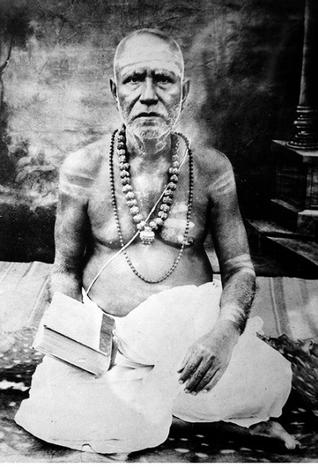
Lasting regret of Tamil thatha

Portrait of U. Ve. Swaminatha Iyer

He could not meet the man who sent him palm leaf manuscript of Tamilvidu Thoothu

It may sound like a tragic romantic story in which the lovers never get to meet each other.

U. Ve. Swaminatha Iyer, the grand old man of Tamil, had a lasting regret that he never got to meet a man who had sent him a rare palm leaf manuscript of Tamilvidu Thoothu , an anonymous Tamil literary work in 264 stanzas.

In an essay, ‘Innum ariyen’, Iyer narrated his failure to meet the man who had brought the manuscript. Apparently, the man was in financial trouble and was hiding from his creditors. He was not able to preserve the manuscripts and sent them through Swaminatha Iyer’s student Sambasivam Chettiyar in 1900 in Kumbakonam.

“Iyer’s regret was that not only was the author ofTamividu Thoothu unknown, he could not meet even the person who preserved the manuscripts,” said P. Saravanan, who is compiling 165 articles written by Swaminatha Iyer during various periods.

Most of these articles had appeared inSwadesamitran , Kalaimagal , Ananda Vikatan ,Kalki and little known journals such as Darul Islam , Aadal Paadal and Silpasree . Twenty of these were never published.

Book release in August

Mr. Saravanan, a postgraduate Tamil teacher at the Chennai Corporation School, said the book would run into 1,000 pages and ‘Kalachuvadu’, the publisher, had plans to bring it out in three volumes .

It will be published in August with a preface by Professor A.R. Venkatachalapathy of Madras Institute of Development Studies (MIDS), who encouraged Mr. Saravanan to take up this venture.

“While compiling the book, I have depended on the first edition, and the second edition that contained corrections carried out by Swaminatha Iyer himself. I am saying this because subsequent editions are rampant with errors,” said Mr. Saravanan, who has already published the prefaces of Swaminathan Iyer titled Saminatham.

In search of

missing flowers

In Uthirntha Malar , Iyer had explained his journey in search of three flowers mentioned inKurinjipattu .

Nilavil Malarntha Mullai talks about the surprise discovery of a work called Mullaipattu .

Mr. Saravanan said Swaminatha Iyer had also reviewed Sangakaalathil Chera Mannargal , a book penned by Raghava Iyengar in 1937. Sanga Tamizhum Pirkala Tamizhum , originally delivered as a 10-day lecture at the Madras University, runs into 200 pages.

“A news reporter in Swaminatha Iyer can be spotted in the essay he wrote in 1904 about Tiruvidaimarudhur Vasantha Mahotsavam,” said Mr. Saravanan.

source: http://www.thehindu.com / The Hindu / Home> News> Cities> Chennai / by B. Kolappan / Chennai – June 02nd, 2015

Once TN’s Hockey Hub, Today Victim of Multiple Self-goals

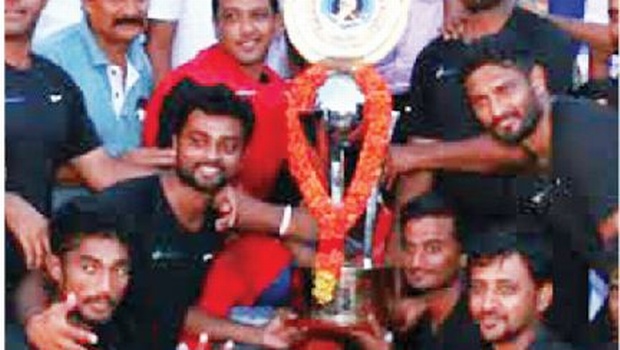
Members of Kovilpatti Sports Club posing with the trophy in Thoothukudi on Sunday | Express

Thoothukudi :

If you think Kovilpatti is only about matchsticks and crunchy ground nut candies, then you are not all that right. The quaint little town in Thoothukudi district plays a significant role in the evolution of the country’s national game, hockey. Sadly, the buzz is waning, because of dwindling matches and sponsors.

Hockey was introduced in Kovilpatti in the pre-Independence days, largely due to the efforts of a doctor, Durairaj, who was a player himself. It was because of his untiring efforts that the Kovilpatti Sports Club was formed in the year 1944 and State-level matches were conducted from 1946. Soon the game spread to all parts of the State and several talents started to emerge. In 1960, Durairaj purchased a piece of land and constructed a hockey stadium with contribution from Lakshmi Mills, where he worked as medical officer. Later, a trust named Kuppusamy Naidu Memorial Trust was formed and the State tournament was converted to national tournament under the banner Kuppusamy Naidu Memorial Tournament. A local team was formed in the year 1962 and was coached by legendary Dhyan Chand. Star players like Olympians Baskar and Peter have also played for the Kovilpatti team.

However, contemporary players feel that sport of 60 years has hit a low that it needs government intervention and private sponsors to conduct matches again.

Mathiah, who played several club matches in Mumbai and Bangalore, points out that the frequency of hockey tournaments has reduced drastically in the last five years. “Hockey players were assured of central government jobs earlier but now that the government has stopped recruiting sports persons, budding talents prefer to focus on other professions. Apart from this, private sponsors have declined and the rural clubs are in no position to generate resources to conduct tournaments,” he said. “The past glory of Kovilpatti could be restored only if Sports Development Authority of Tamil Nadu (SDAT) conducts hockey competitions here,” said Mathiah.

source: http://www.newindianexpress.com / The New Indian Express / Home> States> Tamil Nadu / by Yazhiniyan / June 01st, 2015

Leftover food fills hungry tummies, thanks to these three youths

Coimbatore :

A two-wheeler fitted with a cardboard box is used to transport extra food from various marriage halls, association functions and hotels by a group of three youngsters aged between 22 and 24. Started as a small pilot project to collect and distribute extra food, they have now converted it into an organized effort over the past five months. The food is passed on to the needy at various slums, orphanages and ashrams in the city. They have also created a helpline number through which public could inform them about extra food.

A G Padmanaban, M Sudhakar and M Dinesh who have been roommates since their second year of college, bonded over developing innovative projects and apps initially. “As production engineering graduates, we were keen on developing new devices. Thought we have all got placements, we were more interested in doing something that would contribute towards sustainable living,” said Padmanaban. Thus, they started the Spice Foundation.

Sudhakar’s father is a lorry driver, Dinesh’s, a textile weaver and Padmanaban’s father is a central government employee. “We divided the work based on our interests and skills. Dinesh and I take care of school education and Sudhakar takes care of solid waste management projects,” said Padmanaban.

So far this year, they have fed 4,350 people with quality food worth Rs1.74lakh. “We calculated the cost per person to be Rs40 but it could be more than that,” said Sudhakar. They aim to feed 2000 people daily. The group is currently looking to launch an application created by them to organize their ‘no food waste’ project. “We plan to launch the app after it is tested. When we receive a call from a hotel, the app immediately sends a message to one of our volunteers, that would include the name, location and phone number of the hotel. The receiver also gets directions,” said Padmanaban.

The group has identified 30 marriage halls, three hotels and a few other associations where they could collect left-over food. “We distribute it at several orphanages and slum areas,” said Padmanaban. As of now, the only advertisement is through social media.

Though food collection and distribution sounds simple, they face several challenges, they said. “Most of the caterers dislike us as they would have sold the food instead. So they are not very helpful. We pack the food in banana leaf and paper,” said Sudhakar. Besides, since they get calls round-the-clock, they have to coordinate with the donors in such a way that the food does not spoil. “As per our pilot study, 60% of the food wasted is during lunch and 20% each during breakfast and dinner,” said Padmanaban. They hope to get some grants to support their project. “We earn around Rs7000 per month from other projects and continue to work on creating apps and e-commerce portals during our free time,” said Sudhakar who is also involved in segregating and selling recyclable waste in two areas in Kovai Pudur.

source: http://www.timesofindia.indiatimes.com / The Times of India / Home> City> Coimbatore / by Komal Gautham, TNN / June 02nd, 2015

Thanjavur college gets its first medical super speciality course

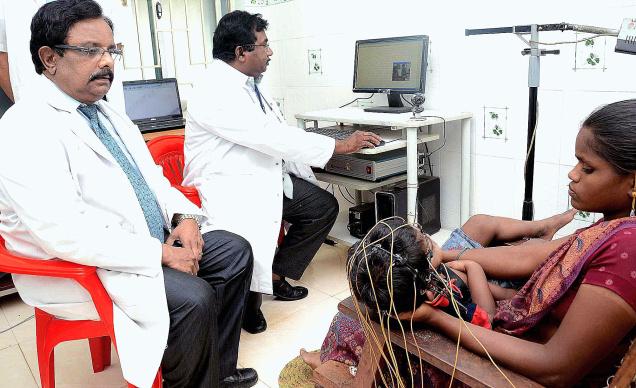
A patient being examined at the Department of Neurology at Thanjavur Medical College on Tuesday.— Photo: R.M. Rajarathinam

The Thanjavur Medical College has been granted its first Medical Super Speciality Course – DM Neurology.

The Medical Council of India (MCI) has permitted one seat of three-year DM Neurology course from the 2015-16 academic year.

Already the college has three surgical super speciality courses .

Disclosing this to The Hindu , TMC Dean P.G.Sankaranarayanan said the MCI gave its nod after approving faculty, special equipment and infrastructure for the department. Candidates who have completed MD General Medicine and MD Paediatrics are eligible for selection through entrance examination for the course.

Apart from addressing the neurological care needs of poor patients, particularly from rural and semi-urban areas, the course would usher in a definite improvement in the teaching component in the medical colleges in the zone, Dr.Sankaranarayanan said. Treatment for brain and spinal chord conditions such as stroke, myelitis and demyelinating disorders would see significant improvement.

The Thanjavur Medical College was started in 1959 and at present offers postgraduate courses in psychiatry, orthopaedics, general surgery, general medicine, anaesthesia, dermatology, chest medicine, anatomy, physiology, biochemistry, microbiology, paediatrics, ophthalmology, and surgical super specialty courses such as neurosurgery, plastic surgery and paediatric surgery apart from the staple 150 MBBS seats every year.

Candidates who have completed MD General Medicine and MD Paediatrics are eligible for the course

source: http://www.thehindu.com / The Hindu / Home> News> National / by L. Renganathan / Thanjavur – May 30th, 2015

Doctors use Transplant-Bridge Machine to Mend Lungs of Young Swine Flu Patient

Chennai : ‎

In India, up to 7 of every 100 people contracting swine flu, succumb to it. On their death certificates, the cause of death is usually attributed to ‘respiratory failure’. To cut down on this margin, doctors at Apollo Hospitals attempted to give a 12-year-old patient with H1N1 a shot at improving their lung function, by putting her on an ECMO machine. Luckily for little Soubashree, after 19 days of intense treatment while on the ECMO, it worked like a charm. The child was kept on ECMO after being brought in with pneumonia on February 27, her lungs having failed even before she was brought to the Apollo Children’s Hospital.

Shifted from Pondicherry in a critical state – where her O2 levels were hovering under 50% despite getting 100% supply externally. While on the road, her heart began to sink along with the lungs and the intensivist had his hands full trying to keep her alive with cardiac drugs. “He made a call and said ‘she needs ECMO asap’, and we agreed,” said Dr Indira Jayakumar, Paediatric ECMO Coordinator‎ and Consultant Emergency and Intensive Care, Apollo Children’s Hospital.

Her father Balakumar recounted how there had been little hope while In Pondicherry, “For one week, we had been going to a local doctor who just said it was fever and gave her tablets. After she began fainting, we took her to the Children’s Hospital there, where nobody was helping us. Finally, one of them saw her and asked why we’d brought her in such a critical state. They said there was no hope. A local MLA there suggested that we contact Apollo in Chennai and though we didn’t have too much hope, we called. I was skeptical whether anyone would come at 2 am, but a whole team landed up,” he said, emotion writ large on his face.

ECMO (Extra Corporeal Membrane Oxygenation) is essentially a device that acts as an external heart-lung device, that takes the stress of both major organs. Usually used as a bridge for patients with end-stage heart or lung failure till a viable donor organ is available for transplant, the ECMO is now being looked at as a viable option for patients with acute respiratory failure with H1N1. “As soon as we put the patient on ECMO, the load is taken off the heart and the lungs. During this time, we aggressively target infections in the lung and get it to improve as soon as possible,” said Dr K Madhan Kumar, ECMO specialist and Heart and Lung Transplant Surgeon, Apollo Hospitals. ‎Apollo’s Chairman Dr Prathap C Reddy and Vice Chairperson Dr Preetha Reddy were present to celebrate the occasion with the family.

The machine takes in dark, oxygenless blood from the body of the patient and oxygenates it outside, before sending it into the body again. It can be used on a patient for up to 90 days, though patient conditions have been known to deteriorate after the 35 day mark. Expensive to the extent where it costs upwards of Rs 1 lakh a day, Apollo Is planning a paediatric programme for children who need ECMO at subsidised costs, called CARES, “What we’re looking to do is set up a trust so that children under the age of 16, who are quite at risk for respiratory trouble, can have access to lifesaving technology like ECMO at a subsidised cost. This will save plenty of lives, especially patients who are on the brink of death,” said Dr Paul Ramesh, ECMO Director and Heart and Lung Transplant Surgeon.

source: http://www.newindianexpress.com / The New Indian Express / Home> Cities> Chennai / by Express News Service / May 29th, 2015

Ooty city sports an imperial look as vintage cars rally with style

Udhagamandalam :

The tenth consecutive year of the annual vintage car rally was held in style as about seventy vintage and classic cars trundled at Ooty’s main square on Saturday. The participants along with the audience thronged to gaze the old beauties. The rally organized by the Nilgiri Vintage and Classic Cars Association is being held in the hill resort.
The city sported an imperial look with 70 cars and 20 two-wheelers of the vintage era majestically toured across the town to YWCA Anandhagiri ground near Ooty main bus stand.

The number of cars witnessed this year at the show rose from 50 last year. Exclusives of the show included 1931 Baby Austin, 1946 make Wolsley, Austin, Dodge, Cowley, an American Ford Jeep, ‘Low Bonnet’ which was a part of the World War II, and MG TB make of 1939.

While Low Bonnet appeared in Vijai’s ‘Kuruvi’, MG TB, owned by AVM production, appeared in Rajini’s ‘Shivaji’. Out of seventy, over thirty-five vintage participants drove from Chennai, Tiruppur, Coimbatore, Namakkal and Erode and the rest from Bangalore and Cochin.

1946 make Wolsley which was on display once belonged to the Mysore Maharaja. His collection also includes a 1954 Plymouth and a 1954 Austin both once owned by J R D Tata of which Plymouth was the car Tata used for his personal use.

R Rajnikanth, president of the Nilgiri Vintage Car Association, who has an alluring collection of 9 cars, including a van, Dodge Kingsway and Austin said, “Maintaining vintage cars is not expensive. It can run around 50 to 60km per month,” adding that only the tyres are to be imported as other parts of the car are in good condition.

Among the members in the Nilgiris Vintage and Classic Car Association, he has the highest number of cars.

Conversing further about his passion, he added, “Vintage cars can run for about 100 years. The oldest I have is ‘Baby Austin’ which is 79 years old. It can run comfortably for another 25 years.”

Apart from individual collectors, the Defence Service Staff College (DSSC), Wellington too owns high end vintage luxury cars such as Plymouth Savoy (1957) and a Mercedes Benz 200 (1967) which served many dignitaries including Prime Minister Dr Manmohan Singh and former President Abdul Kalam during their visit to the summer retreat and still continues to serve the top officials of the DSSC.

The vintage car association awards its winners. The show is partially sponsored by TaxiTaxi, a rental car concern.

source: http://www.timesofindia.indiatimes.com / The Times of India / Home> City> Coimbatore / TNN / May 27th, 2015

All set for the long ride

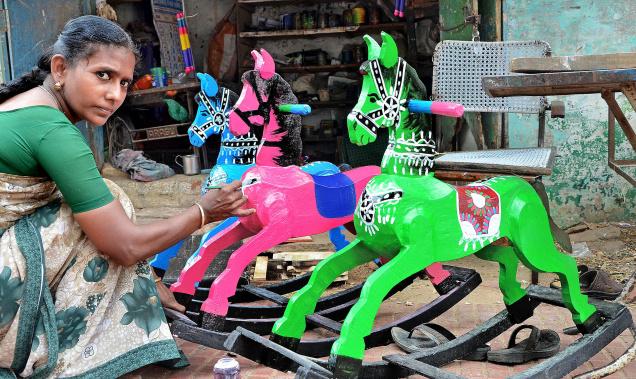
Pushpalatha puts the finishing touch on her rocking horses at her workshop in Thanjavur. Photo: B. VELANKANNI RAJ / The Hindu

Pushpalatha and her husband have been crafting wooden rocking horses for 15 years

On the busy Moopanar Road opposite the head post office in Thanjavur, where the vehicular traffic roars up and down, making conversations difficult, J. Pushpalatha and her husband F. Joseph have been engaged in the craft of making rocking horses for the past 15 years.

An errant head carpenter who vanished with the money to buy mango wood for a big order angered Pushpalatha so much that she decided to learn the art herself. “My husband was initially afraid of losing business and supported the carpenter, but when he ran away, and I decided to try my hand at making the rocking horses myself, he started to help me,” says Pushpalatha, 49, who has done a certificate course in carpentry and upholstery.

The couple’s 10 feet by 20 feet shop has no electricity, and no room for anything else except the stock of mango wood planks used for creating these toys, but they are not complaining. “We spend Rs.3,300 on one rocking horse, but we sell it for Rs.1,300 only, as we’d like more children to be able to play with them,” says Pushpalatha. “This used to be a toy for children from rich families, but we are now supplying this, and the rocking swan, to schools as well.”

Joseph, a former administrative worker at the Khadi and Village Industries Commission, also helps out with procuring the materials.

Pushpalatha admits her first samples were rather disappointing. “But I picked up slowly through trial and error. It takes me a whole day to saw the different parts and assemble them, and around three days to paint the rocking horse,” she says. “We use seasoned mango wood because it’s the safest for children, and eucalyptus for the handles.”

Each piece is individually measured and fitted into notches.

Once the skeletal structure is nailed together, the entire toy is coated with ‘matti’ – a thick paste of chalk powder and plaster of Paris – and allowed to dry. A coating of red oxide follows next. This allows the toy’s sharper edges to be moulded.

The horse is then sandpapered and smoothened to remove any stray splinters. “Since this will be used by many children, we have to be very careful about each part, especially the seat area,” says Pushpalatha. The horses assume their final shape with their caparisons painted on in bright colours.

The toys, made in batches of 12, are available only at their humble premises (at an advance notice of 15 days) for now. “Many toy stores have approached us, but they want a higher price tag, which could hit business,” says Pushpalatha.

Except the basic planks that are machine-sawn at the mill, everything else is assembled by hand at the Moopanar Road workshop.

Pushpalatha and Joseph are proud to say that these toys helped them to put their son and daughter through college and become engineers. But they do worry about who will take over next. “We are ready to train anyone, but don’t have the facilities for it. If the government can provide artisans like us with a centre, we can easily conduct classes,” says Pushpalatha. “Otherwise this art will die.”

source: http://www.thehindu.com / The Hindu / Home> Features> MetroPlus / by Nahla Nainar / May 29th, 2015

70 solar-powered pump sets established in Sivaganga district

Move to facilitate cultivation of crops in summer

Giving some relief to the Tamil Nadu Generation and Distribution Corporation (Tangedco), which found it difficult to provide power connections to farm pump sets, the Department of Agricultural Engineering has established 70 solar-powered pump sets in the district, , which could produce 2,800 kw of green energy per day.

The solar-powered pumping system, with 80 per cent subsidy, will provide farmers energy security for irrigation throughout the year. Farmers in the district have taken a lead in setting up solar pump sets as they havewater sources such as open and bore wells, suitable for erecting 5 HP AC solar pump sets.

The solar pump sets were operated for about eight hours a day, M. Yuvaraj, Executive Engineer, in-charge (Agricultural Engineering), said, while demonstrating their prowess during a press tour on Tuesday.

He said the 70 solar pump sets would generate 8.40 lakh kw of energy a year.

M. Sellamuthu, a farmer in Manakarai, had an open well but irrigation became expensive as his oil engine consumed a minimum of five litres of diesel a day. He had three and a half acres of land but cultivated just one crop in an acre all these days.

“I never imagined that I could cultivate in summer,” an elated Sellamuthu said. He operated the newly established solar pump set for eight hours a day and was cultivating groundnut, pulses and vegetables in two and a half acres now. The recent summer rain has raised water level in the well and he is set to expand cultivation area by another acre.

Mr. Yuvaraj said that the department had formed a group of 16 farmers of Scheduled Castes and backward classes and helped them rejuvenate a bore well and lay pipelines at a cost of Rs. 6 lakh under the State Balance Growth Fund with 90 per cent subsidy.

Similarly, under the National Agriculture Development Programme, it had been proposed to dig community irrigation bore wells by forming 150 groups of 10 farmers each with total land holding of 25 acres this year.

Each bore well with pipeline facilities would be established at an estimated cost of Rs. 7 lakh for a group with 50 per cent subsidy, he added.

source: http://www.thehindu.com / The Hindu / Home> News> National> Tamil Nadu / by D. J. Walter Scott / Sivaganga – May 28th, 2015