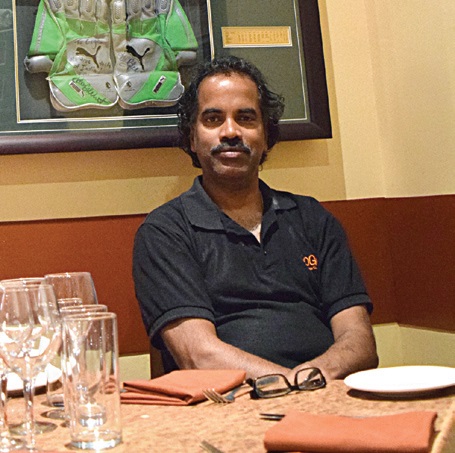
Arun Pudur: From Bengaluru to billions

ArunPudurBF17mar2015

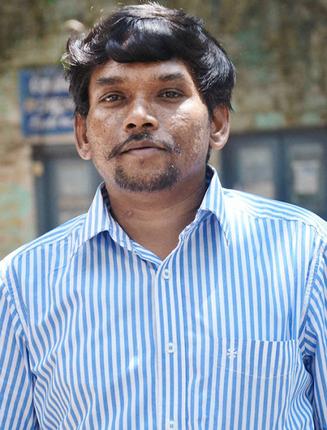
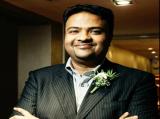
Recently, Wealth-X listed Indian businessman Arun Pudur as the world’s 10th richest individual under 40; top on the list was Mark Zuckerberg of Facebook.
Arun Pudur, whose net worth is estimated at over four billion dollars, is the CEO of Celframe, which makes world’s second most popular word processor after Microsoft, among other things. Based in Kuala Lumpur, Arun Pudur has diversified into several sectors including mining and real estate.

In an exclusive interaction with Tarannum Khan of Deccan Herald, the reclusive billionaire, who says he does not give interviews as they intrude into his personal space, opens up.

He talks about his humble beginnings in Bengaluru, the milestones in his sensational success, the city which made him, his parents and the qualities that propelled him to the top.

A shorter version the interview appeared in the Panorama section of the Deccan Herald.

You were born in Chennai, when did you shift to Bengaluru?

When I was in my sixth standard, my family decided to move to Bengaluru as my father spent nearly seven to eight months in a year there. When we came to Bangalore, we stayed in Rajajinagar and then moved to Basaveshwarnagar before buying a place in HBR Layout. I stayed there till 2003, when I shifted overseas.

When I lived there, there was nothing in HBR Layout. Now I am told it’s a central part of the city.

When you were born, your family felt, you had a great destiny to fulfil…

My father always used to talk about us being Tirupathi Iyengars, one of the three families, who were the high priests at Tirumala. Though we never managed the temple, we always knew greatness was within us.

My mother always used to say that I was the lucky one in the family. After I was born, my father’s career skyrocketed. He passed away just three months ago. My mother always instilled in me that I was born for greatness.

Your parents wielded a considerable influence on your growth…

My father Sri Ranga, was a cinematographer, who was known for his work in the 16 mm movies, which typically tend to be artsy and low-budget movies. He had built quite a reputation in Kannada and Tulu industries and thanks to him I knew everyone in the industry – be it Vishnu uncle, Ambareesh uncle, even Dr Rajkumar and his sons.
I remember when Shivrajkumar stopped his car on a road and touched the feet of my father. I was shocked that my father, who was just a normal guy at home, commanded that kind of respect in the industry.

He did produce a few movies and television serials. But I asked him to retire early as the movie industry is a really tough business and every Friday fortunes are made and lost. I didn’t want him to be stressed out.

My mom was a housewife, who was my teacher as well. She was a disciplinarian, who made sure that we did our chores ourselves, including washing clothes and utensils.
But she was there 24×7 for me and now, I understand, the value she brought to my life. She taught me the way I should grow.
Now I have chefs, cleaners and a dozen people helping me run the house. But my mom used to do everything on her own.

I have a brother as well, who runs his own consulting business.

While stuyding in Bengaluru, you seemed to have stayed away from well-known schools…

When we moved to Bengalurufor my sixth standard, it was already August. So my father had to scramble to find a school.

Though I was supposed to go to National School in Rajajinagar, the cut off date to transfer had passed. So I joined St Anns Matriculation School. I had never been in a co-ed before, so it was a shock when I saw girls sitting in the classroom.

I had to learn Kannada as well. I think in my entire life it was the only time I failed in a subject.  I am very proud to say that in a matter of six to seven months, before the end of annual exams, I had mastered Kannada, and scored my usual, between 80 to 95 per cent.

The choice of college was also unconventional…
In SSLC, my results were fantastic, so I could have picked any course or college. Typically for Bangalore, everybody was pushing me to take science. But the entrepreneur bug had already bitten me and I wanted to do commerce instead of science.

While I was looking at St Joseph’s and other colleges, my mother wanted me to come home for lunch everyday as we were not allowed to eat outside.

So, I joined the Nijalingappa College in Rajajinagar, which was nearby. Though everyone said it was notorious, the year I joined, a new principal took over and he turned my college years into the strictest time of my life.

Literally, we were not allowed to do anything at all; only in the last year, that is when I was in the third year of B com, we could have a college day.

I was pretty studious and attendance was very important for me. I would sit right on the front bench everyday. College days are the best memories one has in a life and my longest-lasting friends are from this college.
You have been away from Bengaluru for a long time; what are your memories of the city…

It brings joy whenever I think of my days in Bangalore. The City was extremely cold until early 2000. Coming from Madras in the ’80s, where it was scorching hot, I took to wearing sweaters in Bangalore.

Whenever I travel overseas, and whenever I wear a sweater, the first thing that comes into my mind is Bangalore. If anyone asks me where I am from, my immediate answer is not Malaysia, not Chennai, but it’s Bangalore, India.

I remember the time with my friends when we used to ride in our kinetic Honda and drive down to Bannerghatta or the Tumkur road.

And of course, the one-by-two coffee or tea… Though I was not allowed to have tea or coffee at home, when I was out with my friends, we used to have by-two tea, and I think that’s a very Bengaluruthing to have.

There were some bad experiences as well; when we were staying at Rajajinagar, the Cauvery riots happened. We saw how the National School was looted.

I have not visited Bengalurufor a very long time. My parents went back to Chennai as that was where they were born and brought up. But I am in touch with few of my closest friends through Whats App and Viber.

What turned you into an entrepreneur?

I think curiosity, the zeal to solve problems and take on challenges. If you ask any of my school or college mates, they will tell you that I used to look forward to examinations, which may sound very funny, but that’s true.

I never wanted to work for anybody. In my entire life I have spent just one year working for a company in Jayanager. It was a training company. When I had joined the company they had a turnover of five to six lakhs a year. When I left after nine months, I had brought up the turnover to one crore a year.

I was working to open franchises for this training centre. That guy had promised to pay me for every few centres set up, but he did not keep his word.

I have seen top CEOs of multinational companies, who retired with very little to their name. They were running 120 and 130 billion dollar companies and now may have a personal fortune of 30 to 40 million dollars. And that was what I didn’t want to be.

You began your career at the age of 13 in a garage, fixing kinetic Hondas…

We opened the garage for a guy who was working for a shop near our house; he became a friend of us. He was from Tamil Nadu and could not speak Kannada. As we could speak Tamil, though we are Telugus, he became close to us.

He told me there was good money in garage. So we coaxed our mother and borrowed a few thousands to fund the garage at Rajajinagar, just a stone’s throw away from National school. But he disappeared after five or six months and we were stuck with the garage.

When I began my career in the garage, we had no training.  There was no Google at that time or any no manual. I had just had observed how this guy used to fix bikes and picked up from there.

But whenever a bike or a scooter used to come with a problem, I was on my own.

We used to solve problems on the fly and became good at that. I really loved it. I could open and fix back the engine, almost the entire vehicle, in about one hour and fifteen minutes, without any specialised tools.
Sai scooter garage became famous and even scientists from ISRO started coming to us. That is where I think I got the taste of business. That is where I learnt sales, marketing, customer handling, problem solving, managing human resources and financial management.

Running the garage was not a financial necessity to our upper middle class family. But I still ran it till my first year or second year PUC.

I would come back from school, finish homework and then open the garage. On Saturday and Sunday we were open full. It helped me not to get into wrong company, wasting my time, or you can say, chasing girls.

My priority was to show much business I could generate, how much money I could give my mother. My mother, who managed the finances of the house, would keep all the money. We would consider ourselves lucky to even get 10 rupees from her. But I loved the business. That’s why I went into it.
But we decided to close the garage because of my studies; my father wanted me to perform very well in college.

But you started breeding dogs after that…

From my aunt in Chennai, I found out about breeding dogs, and she gave me a Boxer to kick start my business. I started breeding boxers and Rottweilers. I have delivered hundreds of puppies, cut their umbilical cord and taken care of them. Though there was no formal training, I learnt how to manage them. Any dog lover would tell you that a dog will not allow anyone near the puppies unless she trusts you with her life.

Then I used my marketing skills to sell the puppies for up to Rs   20,000, which was good money in the mid ’90s. I was in this business till the end of my final degree.

You started Celframe after graduating; how difficult were the early days…

We opened the first office of Celframe at Lalbagh road. Prior to it, I had done one venture with my brother, which had failed.

Funding is a problem when you are not a big brand or don’t have a big family name behind you. Because of my age, I worked with wrong people, who took advantage of my naivety. I lost quite a bit of money – my own money and also the money of some of my initial backers. But I bounced back and it made me understand people better.

What were the major turning points in your career?

Everything was a turning point – opening the garage, breeding dogs, starting a technology company. But the biggest jump or spike in my revenue happened – if you consider money to be metric of success – when we released our first product called Celframe office.

It is now considered to be the Number 2 office suite in the world by way of sales. Not many people know that Microsoft office makes more than 60 billion dollars annually. When I launched my office suite, companies like Sun had failed in this product category. Even IBM’s Lotus notes had not made a big impact. Coral is still there but its sales are very small.

It is said you were one of the few people the Redmond giant could not smother…

It was more of a David and Goliath kind of situation. Being a monopoly Microsoft used every tool in its arsenal to bring us down. They made sure that no Original Equipment Manufacturer like Dell, HP or IBM would ever buy our products and pre-load them on their PCs.

I will not use the word bully but that is the word everybody uses when it comes to dealing with American tech firms. They use patent, money and media to bring down any small company that may look like a threat.

How did you survive that?

In this industry, partners and distributors get one or two per cent on every deal they make. I decided to give away 40 percent of my revenue and make them partners in success. We treat customers with respect and customise the way they want.

I focused my business more on the public sector as private companies cannot bully the government.  We managed to implement our product in several governments in Asian and African regions.

We made it a policy to promise a 50 per cent reduction in the tech cost of customers using our products. That is, if they are paying 100 million dollars to a competitor, we would deploy our software for just 50 million. We would increase the price over three to four years and by this time they would have realised that we were a fantastic company to work with. We also supported them very well.

That was the biggest hurdle I crossed in business. But now with the mobile ending the old monopolies, things are moving forward amazingly.

You have also made you mark as an investor…
I have diversified into gold mining, coal business, oil and gas, real estate, venturing with top companies. I am looking to build a casino and start an airlines in South Africa.

It’s said that my fortune is four billion dollars but with my diversification it has grown nearly five to six times in the last two to three years.

I am a very cautious investor. You want me in, you need to show me why should I invest money. I would like to know the entire story and the people before I do business. I turn away from a deal if the pressure is too much for me to invest money into it.

I invest only if I can get a majority control on that company. I don’t like to be a minority partner as I am very passionate about what I do. I get involved in minute details from the start to the end. The running of the company is done by CEOs whom I trust. But I get involved in major decisions. If a problem needs solving, I am there in the front. I don’t like to sit back and let my people take the hit.

You say your upbringing taught you the value of money

There was a time when I used to buy jets like buying candies. I had eight private jets of my own. I once tried to sell one of my jets and found that I had lost about 40 percent of what I had actually paid. Then I realised that these toys, homes or yachts, do not add much value to you.

I took the hit, got rid of jets and houses, and reinvested them back into my businesses. I also turned whatever jets and yachts I was left with, into a rental business.

This lesson, appreciating the value of money, was taught by my parents. The strongest reason for my success was the foundation I had when I was young.

What are your future plans?

I am excited about several ventures we are pursuing. We started a technology company called Browsify corporation a few months ago. We are setting up one of the largest mines in South Africa.
I am looking for partners to bring Celframe products to India. It’s ironical that most of the governments use my product, but the Indian government does not. India is still reliant on the investments coming from the US. China did a phenomenal job supporting local companies such as Alibaba.
Though I am known globally for my technology company, very few people know that I have a group company called Pudur group. We are going to make the information public sometime later this year.

You left Bengalurufor Kuala Lumpur, when the whole tech world was coming here…   
I was brought here in 2002 or 2003 by someone I knew in Bangalore. Though the business with him didn’t work out, and I lost quite a bit of money, I loved the way the government was moving over here.

The quality of people, though more expensive than India at the time, was very good. The access to banking was much better; if I needed money, I could always rely on my bank without having my father to co-sign as age was not a barrier.

As I grew, I was given tax exemptions. I have not paid tax in the past eight to nine years. I do pay income tax, though a small amount.
Government is straightforward; if you need an approval, it gets done on time. Malaysia compared to Singapore is a bit slow, corruption does exist here as well.

The support from the government is phenomenal. As it is a small country, they act pretty fast. They can change rules very fast in the interest of the nation.

source: http://www.deccanherald.com / Deccan Herald / Home> Panorama / by Tarannum Khan, Bengaluru / DHNS / March 07th, 2015
Rail Heritage Centre in Trichy gets Rs 1cr boost

RailMuseumCF15mar2015

A day after the Rail Heritage Centre in Trichy was thrown open to the public, the museum received `1 crore in the railway budget announcement. The funds will be used to preserve historical records of Southern Railway . A similar heritage centre is functioning in New Delhi. “To protect and preserve the valuable historical records, including drawings, maps, commentaries, company railway records, etc, from decay it is proposed to set up a Rail Heritage Document Centre and Archives.The institute can be located at Trichy , Southern Railway and Delhi, Northern Railway .It is therefore proposed to take up this work at an anticipated cost of `2.6 crore with an outlay of `1 crore during 2015-16,” the railway budget said on Thursday .

Trichy is home to the Golden Rock workshop, which renovates and refurbishes locomotives. The workshop also manufactures steam locomotives for mountain railways, the most notable being the four X-class oil-fired steam locomo tives that are used on the Nilgiri Mountain Railway (NMR) between Mettupalayam and Coonoor.

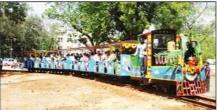
The Rail Heritage Centre is located on five acres adjacent to Trichy Junction railway station and was built at a cost of `1.5 crore. A large collection of vintage items, including century-old documents, a firefighting vehicle and a toy train, is on display .

Addressing the media after throwing open the railway museum on Wednesday , divisional railway manager Manjula Rangarajan said plans to build an extra floor for scholars to research the century-old documents are on the cards and a proposal will be sent to the railway ministry .

For a nominal fee of `5 for children and `10 for adults, the museum will be open to the public from 9.30am to 5.30pm, except on Mondays.

Railways decided to set up a heritage centre in Trichy because the town was the headquarters of South Indian Railway , which had its origins in July 1874 and succeeded the earlier Great Southern Of India and Carnatic Railway Companies. The first line from Nagappattinam to Erode was opened in May 1859 by the Great Southern of India Railway Company . It became one of the main centres of railway development in the peninsular region under the British.

source: http://www.timesofindia.indiatimes.com / The Times of India / Home> Budget 2015> Rail Budget 2015 / TNN / February 27th, 2015

The goodness of herbs

Don Bosco School, Egmore, has been organising this State level event every year. Photo: Vaishali R Venkat / The Hindu

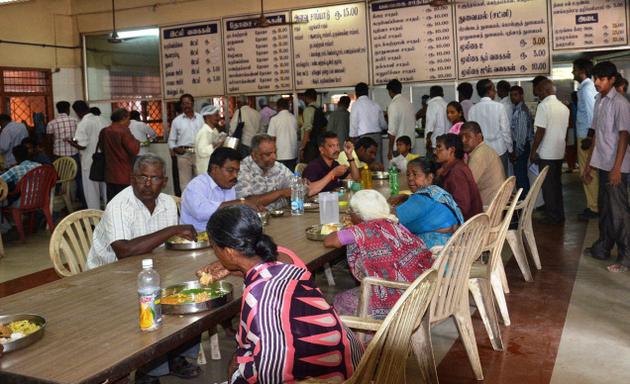
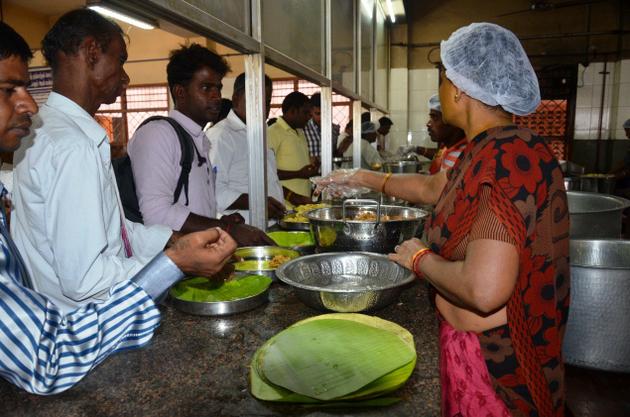
Veerababu’s herbal canteen inside Ripon Building has a loyal set of followers. K. Sarumathi reports on what keeps it going

Sridhar is paying his first visit to this canteen inside Ripon Building. And this is not going to be his last. In fact, Sridhar says this is going to be one of many visits.

“I came here for some work and heard about the canteen. The food is healthy, good and affordable. I will surely come back.” There are many others like Sridhar, including the staff of the Corporation office, who swear by the food.

The canteen at Rippon Building recieves over 500 visitors. Photo: Vaishali R Venkat / The Hindu

Three years since it was established, the herbal canteen inside the Ripon Building continues to be a hit among the health-conscious. Started by Veerababu, a final year student of Arignar Anna Government Hospital and a resident of Saligramam, the canteen receives 500 visitors from 9 a.m. to 6 p.m. on weekdays.

Photo: Vaishali R Venkat / The Hindu

A Siddha specialist, Veerababu started his first restaurant from his clinic in Saligramam. “When I found this space for my clinic, it was too big. I converted a portion into a canteen and started selling health food. I was then invited by the Mayor to start a similar canteen inside the Ripon Building,” he says.

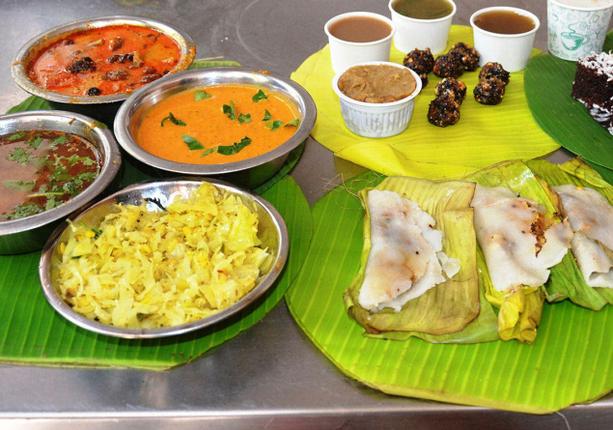
The Avaram and nilavembu juice are among the most sought-after at the canteen. “You will get it on all days, throughout the year. While Avaram is preferred by those with diabetics, Nilavembu helps deal with fever and cold. Apart from these two, we offer other health drinks on different days,” says Veerababu. Sweets and savouries on offer include thinai halwa, banana-leaf kozhukattai, ragi puttu and wheat kuli paniyaram. The canteen also offers meals with one herb in each item at Rs 15. Breakfast includes variety dosa made from mudakathan, khambu and choolan. Other preparations are priced between Rs. 5 and Rs. 15.

Mooligai Unavagam in Rippon Building. Photo: Vaishali R Venkat / The Hindu

Veerababu is now all set to launch his restaurant at 100 Feet Road in Vadapalani, which is expected to have something for both the fitness enthusiast and the carb-craver. “The work on the building is going on and it should be ready in a month. The restaurant will also sell herbal and millet products at wholesale prices,” he adds. Veerababu can be reached at 98402 78009.

source: http://www.thehindu.com / The Hindu / Home> Features> DownTown / by K. Sarumathi / March 14th, 2015

Women’s lives get recreated on fabric

Madurai :

On International Women’s Day, fashion designing students here made an attempt to recreate a woman’s life on fabric by designing a 500-foot gown illustrating the different stages in the life of a woman. The group is also hoping to enter the Limca Book of Records with the attempt.

More than 10 students from the department of fashion designing at DreamZone, an institute in the city, worked on the gown, creating elaborate embroidery on the long train of the dress. One of the pictures show women involved in household work, while another piece of cloth portrays a mother’s love for her child. In another part, a woman is shown as a doctor. The gown is made of tissue fabric and velvet. M Umeetha, 19, a student, said, “We are here to spread awareness on the many atrocities committed against women, through our simple embroidery work. ”

Three months ago, a 110-metre long gown worn at a wedding in Tripura became the longest gown in the country. These students are aiming for a fresh record. The 500-metre long gown was kept on display at a city mall on Sunday. Thereafter, a rally was conducted to spread awareness on violence against women. Men were asked to sign on the train of the gown vowing to keep the women in the city safe.

source: http://www.timesofindia.indiatimes.com / The Times of India / Home> City> Madurai / TNN / March 09th, 2015

Veteran Scientist Vijayalakshmi Bags Lifetime Achievement Award at VIT

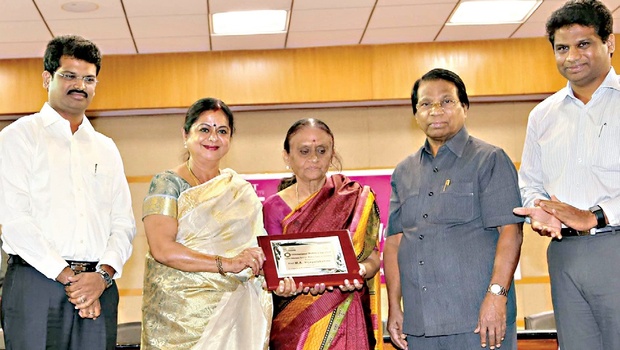
Professor Vijayalakshmi (centre) receiving the lifetime achievement award from Dr Kamala Selvaraj | Express

Vellore :

VIT University conferred the Lifetime Achievement Award on Professor M A Vijayalakshmi, Director of the Centre for Bio-separation Technologies (CBST) at the university for her contribution to research and academics in a function to mark the International Women’s Day on Monday. She received the award from the chief guest, Dr Kamala Selvaraj, a noted gynecologist, at a function held at the university campus.

72-year old veteran scientist Vijayalakshmi while dedicating the award to her colleagues and students, thanked the university for recognizing the ‘real woman’ in her that made her achieve several milestones in her long career. Her areas of expertise include ‘separation science’ and technology, molecular recognition, recombinant protein expression, immune-technology and bio-active molecules. A native of Batlagundu in Tamilnadu, she obtained her M Sc Chemistry from All India Institute of Chemistry in Calcutta, her Ph.D from the University of Burgundy in France and her D.Sc from Sweden. She was selected as one of the best young Indian scientists to meet Prime minister Indira Gandhi when the latter visited France in 1981.

Vijayalakshmi, who had evinced keen interest in separation technology, established the first molecular interaction lab at the University of Compiegne in France.

source: http://www.newindianexpress.com / The New Indian Express / Home> States> Tamil Nadu / by V NarayanaMurthi / March 11th, 2015

Over 50 years of selfless dedication to education

Julian Santi also helps youth learn printing technology —Photo: B. Jothi Ramalingam

An Italian national has helped poor children study

For the past 58 years, an Italian national living in Chennai has been bringing about a change in the lives of poor children.

Julian Santi (83), a Salesian brother who was instrumental in starting Salesian Institute of Graphic Arts (SIGA) in Kilpauk, has been adopting poor children and providing for their education and other school needs including uniforms. “In the late 60s, I was moved by the emotions of parents who wanted to educate their children, yet did not have the money to do so. So I started helping them,” says Br. Santi.

His friends in Italy and the Salesian community help raise funds for this purpose. “Their children too pool in their pocket money and send it. Even the money given by parents to buy chocolates can make a difference,” he says.

This year alone, he has been taking care of the education of 200 children. His workers say his routine is inspiring.

“His day starts at 6 a.m. and he works late into the night. He still sends hand-written letters to his friends in Italy often enquiring about their welfare and sometimes, seeking assistance in helping the poor,” says K.J. Louis, secretary of the Salesian province in Chennai.

Apart from this, Br. Santi also helps school drop-outs by imparting training on printing technology at SIGA.

The brother who landed in Chennai on March 10, 1957 has made the city his second home. “The people here have treated me as one of their own,” says Br. Santi. “However, I am still unable to adapt to the spicy food here. Mostly, I stick to soups,” he adds.

source: http://www.thehindu.com / The Hindu / Home> News> Cities> Chennai / by Vivek Narayanan / Chennai – March 14th, 2015

Two ‘iron’ ladies who chose road less travelled honoured

Coimbatore :

Eight years ago residents of tiny hamlets on Manampalli range in Valparai had to wait for days to get a mail delivered as no one came forward to work there as postman due to fear of wild animals.

That’s when R Solaikili, 36, a mother of two from Pollachi got an offer for the job. She had registered her name with the employment exchange. She readily took up the challenge and for eight years has been delivering letters to the hamlets braving rough terrain and unpredictable weather or the occasional encounters with wild animals.

Solaikili says spotting a leopard, wild elephant, bear or a bison would be a once-in-a-lifetime occasion for most. But for her it is an everyday phenomenon. “On the very first day I joined duty, a wild elephant with its calf blocked my path when I was out to deliver letters. I was too scared to go further so I returned to Valparai,” she told TOI after receiving an award in Coimbatore on Wednesday instituted by ‘Namadhu Pangu’ (Our Share), the social arm of Kumaraguru College of Technology.

Solaikilli was born in a family of seven children near Pollachi. She had to discontinue studies after Class 12 due to poverty. She pursued a few computer courses and then registered her name with the employment exchange.

She married a weaver from Coimbatore but her struggles were far from over. So when she got the job offer, she didn’t think twice. “Many of my relatives were against my taking up the offer due to the dangers involved, but my family supported me,” Solaikili said. She has been living with her two children in Manampalli and her husband visits her once a month. “Initially I was too scared to travel up to 15 km per day through deserted mountain pathways to reach the hamlets. Now I am used to it,” she smiles.

Solaikili has also convinced 15 tribal people to take up insurance policy and many others to start a savings account in the post office.

T Vijayalakshmi, 50, from Tharagampatti near Karur was also honoured at the event. Vijayalakshmi is a tractor driver from 2007. “Many people are shocked when they see me driving a tractor.” Vijayalakshmi took to driving their tractor after her son was not available one day to deliver corns.

Before beginning to drive the tractor, Vijayalakshmi assisted her husband V Thangavel who ran a cycle repair shop. Her husband met with an accident and could no longer work. The future of the family turned uncertain which made her to take to the wheel.

source: http://www.timesofindia.indiatimes.com / The Times of India / Home> City> Coimbatore / by G. Rajeswari, TNN / March 14th, 2015

Cook’s Tale: A Made in Tiruchy Tag in Western Australia

Perth :

The WACA is undoubtedly the chief cricket destination in the major city of Western Australia. If you want to combine dining with cricket, Gogo’s Madras Curry House should be the destination. While the name reveals what the place specialises in, one has to be in to find out who some of the illustrious patrons have been.

From Sunil Gavaskar and Sachin Tendulkar to Aussie legends of the last few years to Viv Richards, Wasim Akram, Alastair Cook and Kumar Sangakkara all have been here. If words of praise about the experience and autographed gear gifted by players — some of them framed and on display — are something to go by, it seems all would be happy to be back again.

Govinda Rajulu Govardhan | Atreyo Mukhopadhyay

Proprietor Govinda Rajulu Govardhan aka Gogo was born in Tiruchy and grew up at Perambur in Chennai. After abandoning a degree in engineering, he took up hotel management. On finding the administrative and hospitality front not challenging enough, he trained to become a chef. Following stints with Sheraton in different countries, he came to Perth in 1995. Since taking over this place about four years later, he has become a household in the cricket fraternity.

After running the show across cricket centres in Australia, which included supervising catering during international fixtures for over a decade, he owns three more restaurants in Perth. “Cricket memorabilia is fine, but people come here for food. The challenge is to ensure my product is good and going by what people say, it seems we’re doing a good job,” he says.

Contrary to what the name might suggest, this is no typical Indian restaurant serving traditional fare. “This is not an Udupi joint. Notice the word ‘curry’ in the name. We’re surrounded by pubs and serve wine. So the food has to go with it,” he says. Instead of sambar-rice or rava dosa, this place is known for its lamb shank and raan. Chilli paneer, egg plant dishes and mixed poriyal with coconut are what vegetarians can sample.

While Rohit Sharma, Ravichandran Ashiwn and Umesh Yadav dropped in during the World Cup, Gogo’s memorable moment came in 2008 when Anil Kumble hosted a dinner after winning the Perth Test.

Today Gogo employs 45-50 people including Asians and Australians.

There are plans to start something in India, although things are not final. Until that happens, one has to be here to find out what attracts cricketers of different hues other than a historic ground.

source: http://www.newindianexpress.com / The New Indian Express / Home> Cricket> News / by Atreyo Mukhopadhyay / Mar 08th, 2015

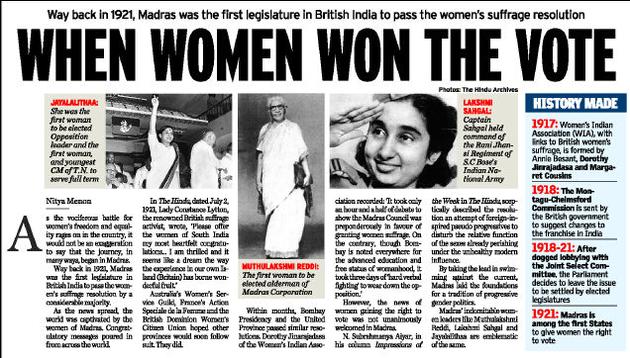
When Madras’ women won the vote

WomenCF15mar2015

Way back in 1921, Madras was the first legislature in British India to pass the women’s suffrage resolution by a considerable majority

As the vociferous battle for women’s freedom and equality rages on in the country, it would not be an exaggeration to say that the journey, in many ways, began in Madras.

Way back in 1921, Madras was the first legislature in British India to pass the women’s suffrage resolution by a considerable majority.

This meant that for the first time, women were recognised as ‘people’ by the State, thereby given the right to vote on the same condition as men.

As the news spread, the world was captivated by the women of Madras. Congratulatory messages poured in from across the world.

In The Hindu, dated July 2, 1921, Lady Constance Lytton, the renowned British suffrage activist, wrote, ‘Please offer the women of South India my most heartfelt congratulations on their winning the vote. I am thrilled and it seems like a dream the way the experience in our own Island (Britain) has borne wonderful fruit.’

Australia’s Women’s Service Guild, France’s Action Speciale de la Femme and the British Dominion Women’s Citizen Union too extended their greetings and hoped other provinces would soon follow suit. They did.

Within months, Bombay Presidency and the United Province passed similar resolutions.

Interestingly, it was the Madras Council’s resolution that reflected the most decisive mandate in comparison to others.

Of the 90-odd members present in the Council, 40 voted for the recommendation, 10 opposed it and 40 remained neutral.

Dorothy Jinarajadasa, of the Women’s Indian Association, who attended both the debates in Madras and Bombay recorded: ‘It took only an hour and a half of debate to show that the Madras Council was preponderously in favour of granting women suffrage. On the contrary, though Bombay is noted everywhere for the advanced education and free status of womanhood, it took three days of ‘hard verbal fighting’ to wear down the opposition.’

However, the news of women gaining the right to vote was not unanimously welcomed in Madras.

N. Subrahmanya Aiyar, in his column Impressions of the Week in The Hindu, sceptically described the resolution an attempt of foreign-inspired pseudo progressives to disturb the relative function of the sexes already perishing under the unhealthy modern influence.

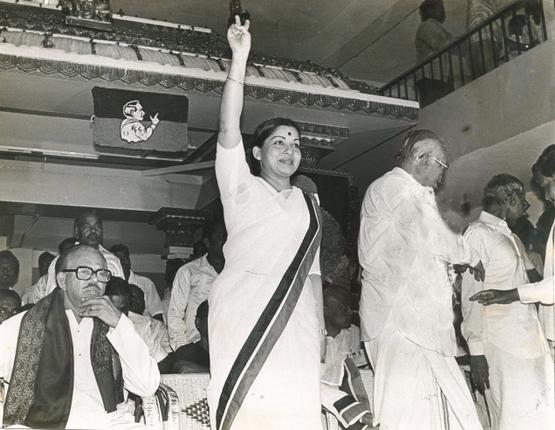
Jayalalithaa, in 1989, became the first woman to be elected the leader of the Opposition. In 1991, being re-elected to the Assembly, she became the first woman, and the youngest, Chief Minister of Tamil Nadu to serve a full term, from June 1991 to May 1996 -- Photo: The Hindu Archives
Jayalalithaa, in 1989, became the first woman to be elected the leader of the Opposition. In 1991, being re-elected to the Assembly, she became the first woman, and the youngest, Chief Minister of Tamil Nadu to serve a full term, from June 1991 to May 1996 — Photo: The Hindu Archives

Echoing similar disdain, a reader from Saidapet, in a letter to the editor, exclaimed, ‘It is not a matter of congratulations that the legislative council should have resolved to extend suffrage to Indian women. For progress, man must be both the controller in politics and civics. His sex stands for performance, conformity and therefore, for uniformity, essential for common good and justice.’

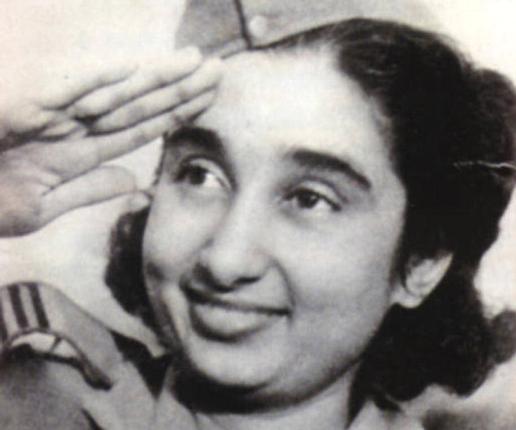
Captain (Dr.) Lakshmi Sahgal held command of the Rani Jhansi Regiment of Subhash Chandra Bose's Indian National Army. She was the first Indian woman to contest the Presidential elections, in 2002, when A.P.J. Abdul Kalam was elected -- Photo: The Hindu Archives / The Hindu
Captain (Dr.) Lakshmi Sahgal held command of the Rani Jhansi Regiment of Subhash Chandra Bose’s Indian National Army. She was the first Indian woman to contest the Presidential elections, in 2002, when A.P.J. Abdul Kalam was elected — Photo: The Hindu Archives / The Hindu

By taking the lead in swimming against the current, Madras laid the foundations for a tradition of progressive gender politics. Indomitable women leaders like Muthulakshmi Reddi, Lakshmi Sahgal, and Jayalalithaa are emblematic of the same.

Dr. Muthulakshmi Reddi was the one of the first women doctors of the country, the first woman member of the Madras Legislative Council, the first woman to be elected as its deputy chairperson, the first president of the Women’s Indian Association, and the first woman to be elected alderman of the Madras (now Chennai) Corporation -- Photo: The Hindu Archives
Dr. Muthulakshmi Reddi was the one of the first women doctors of the country, the first woman member of the Madras Legislative Council, the first woman to be elected as its deputy chairperson, the first president of the Women’s Indian Association, and the first woman to be elected alderman of the Madras (now Chennai) Corporation — Photo: The Hindu Archives

THE MAKING OF HISTORY

1917: The Women’s Indian Association (WIA), with links to the women’s suffrage movement, is formed by Annie Besant, Dorothy Jinrajadasa and Margaret Cousins

1918: The Montagu-Chelmsford commission is sent by the British government to suggest changes to the franchise in India where the WIA, led by Sarojini Naidu, petitioned for women’s right to vote

1918: The Southborough Franchise Committee tours India to gather information. After accepting women’s petitions from just two provinces, it decides Indian women do not want the right to vote

1918-21: After dogged lobbying with the Joint Select Committee, the Parliament decides to leave the issue to be settled by elected legislatures

1921: Madras is among the first States to give women the right to vote

source: http://www.thehindu.com / The Hindu / Home> News> Cities> Chennai / by Nitya Menon / Chennai – March 08th, 2015

Devadoss Gets Sahitya Akademi Award

Virudhunagar :

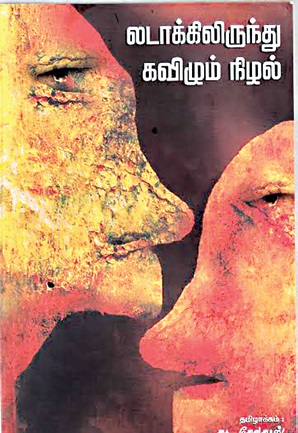
A retired government officer based in this district has bagged the latest Sahitya Akademi award for the best translated novel in Tamil. S Devadoss’ work, Ladakhilirundhu Kavizhum Nizhal is the Tamil version of an English novel, Shadow From Ladakh by Bhabani Bhattacharya.  The award was announced on Monday.

Devadoss said the novel was about a love story in Ladakh during the Sino-Indian War of 1962. He said, “The Sahitya Akademi  Award for the novel is a good recognition for me and I am very happy.”

DevadossCF12mar2015

S Devadoss, from Nadayaneri village, has settled in Rajapalayam taluk in Virudhunagar district after retiring as a deputy registrar, Cooperative Societies department.

He said he completed his MA Tamil from Madurai Kamaraj University which kindled his interest in reading novels written by authors from other countries.

While reading those novels he felt there was a need to translate them into Tamil, which is one of the oldest languages, so that our people would know the culture of the other countries when they read these novels.

He said, “Though I was working as a government employee I gave lots of importance to my literary work. I used to wake up early to work on translation.”

He began his literary pursuit in 1990 and has so far translated 25 novels, short stories and non-fictional works. “One of my best works is ‘Platerovum Naanum” which was translated from the novel Platero and I written by a Spanish writer Juan Ramón Jiménez who was awarded the Nobel Prize for Literature. This is a very simple novel and the narration style is different. This novel will be an inspiration for new writers,” said Devadoss.

He said he also translated the works of  veteran Spanish director Luis Buñuel and the works of well-known Chilean poet, Pablo Neruda.

source: http://www.newindianexpress.com / The New Indian Express / Home> States> Tamil Nadu / by Kauhik Kannan / March 12th, 2015