DJ Academy of Design and British Council will jointly organise a two-day conference on “Universal Design” here on March 13 and 14 and as many as 150 participants are expected from different parts of the country and even abroad.
Sanjay Jayavarthanavelu, chairman of the governing council of the academy, told presspersons here on Tuesday that town planners, product designers, architects, social workers and students will take part.
The objective is to sensitise the participants and the public to the need for inclusive design in public infrastructure and products.
A couple of speakers from the U.K. will also participate. There are countries that have norms, insisting on inclusive design in public places.
Awareness and the need for such design needs to improve here.
At the end of the two-day event, a resolution will be adopted and it will be sent to design institutes, Corporates and policy makers. DJ Academy plans to organise the event regularly.
Explaining the concept of universal design, Mr. Jayavarthanavelu said transport systems such as buses and facilities such as elevators need to be designed in such a way that it can be used as a common facility by those with disabilities and the public.
The requirements of the elderly and those with disabilities need to be addressed in the common infrastructure.
The demand for such designing is high in the country and the awareness should go up.
The event will also have sessions on the principles of universal design in products and an expo on products designed by the students of the academy.
DJ Academy has undergraduate and postgraduate programmes in design, he said.
source: http://www.thehindu.com / The Hindu / Home> News> Cities> Coimbatore / by Special Correspondent / Coimbatore – March 11th, 2015
A private hospital here conducted a rare artificial skull implant surgery on a five year old girl.
According to the KMCH Hospital neurosurgeon Dr M Prabhu, Thayasri, daughter of Sakthi Prakash (27) of Kalingarayanpalayam, near Bavani, met with an accident on Nov 2, 2014 while traveling on a motorcycle with Balasubramaniam, a relative.
When a van hit the motorcycle, Thayasri suffered serious head injury with skull bone fracture. Normally, a part of the skull would be removed to avoid infection from spreading to the brain and to allow space for the injured brain to heal.
As she was a child and the fractured skull was disfigured, both she and her parents had to be handled carefully. Hence there was a compelling need to consider not only corrective surgery but also cosmetic and protective aspects, said the neurosurgeon.
The specialist decided on a special type of skull bone implant called PEEK (Polyether Ether Ketone).
PEEK has several advantages. It is durable, has shape memory properties (where the material given shape under specific conditions will retain it even if were subjected to stress) and is aesthetically pleasing.
Traditional methods for reconstructing the skull anatomy involved bone grafts or other implants like metal or titanium. But the disadvantages were inaccurate fits, increased surgical time and infection risks.
Cranial implants made of PEEK (which only recently made its way into orthopaedic surgery) are stronger, lighter and bio-compatible, making it an alternative to titanium.
With precise customization and better fit these implants required less time in surgery and provided greater comfort to the patient.
Thayasri’s head was scanned to measure the contour of the broken skull accurately and the details were sent to Switzerland for fabrication of the implant.
Once the implant arrived, the girl was operated on for inserting it in place. The implant has provided the required geometry and precision to obtain appropriate skull and facial reconstruction.
She has recovered well and is back to school with a renewed life, the neurosurgeon added.
source: http://www.newindianexpress.com / The New Indian Express / Home> States> Tamil Nadu / by Express News Service / March 12th, 2015
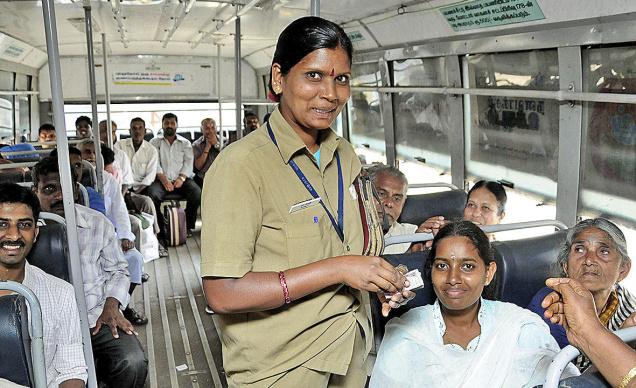
On the occasion of International Women’s Day on Sunday, M. Sumathi was happy issuing tickets to commuters, in Coimbatore. Photo: M.Periasamy
For 28-year-old M. Sumathi, work hours start at about 12.30 p.m. every day and go on till 10 p.m. She travels on the Ukkadam to Gandhipuram bus route No. 130.
Lone woman conductor
She is the lone woman conductor in the nearly 420 Government town buses in the city.
But for a trip in the evening to Chinniyampalayam, she shuttles between Ukkadam and Gandhipuram for the rest of the day. “I have to only issue tickets and this is a job I like,” she says.
She has completed Class X and she joined the Tamil Nadu State Transport Corporation (TNSTC), Coimbatore Region, about three months ago.
The mother of three wanted to join the police but she could not make it. Till she joined the TNSTC, she was at home, taking care of her family.
“I was determined to wear a khaki dress and thought why not make it come true by joining as a Government bus conductor,” she said and added that her husband A. Murugesan (39), a carpenter, has been a source of encouragement and support by taking care of their two sons and a daughter.
Dignity
Sumathi enjoys her profession and the way she is treated with dignity by her counterparts and commuters.
“Colleagues, elder or younger to me, call me Akka (elder sister). I am very comfortable working with them,” she says.
Though the trip to Chinniyampalayam is hectic as the bus is crowded, she adds that even in the crowded bus there is good cooperation from the commuters.
Even the youth who travel on the footboard come into the bus when she addresses them as thambi(younger brothers), she says.
A senior TNSTC officer said that on an average there are only three or four women conductors in the district every year.
He said that a few women applied for the post of conductor, but were rejected as they did not have the minimum required height of 160 cm.
There are two more women employed as conductors in the district – at Pollachi – and that the department was open to recruit women as conductors, the officer said.
source: http://www.thehindu.com / The Hindu / Home> News> Cities> Coimbatore / by M.K. Ananth / Coimbatore – March 09th, 2015
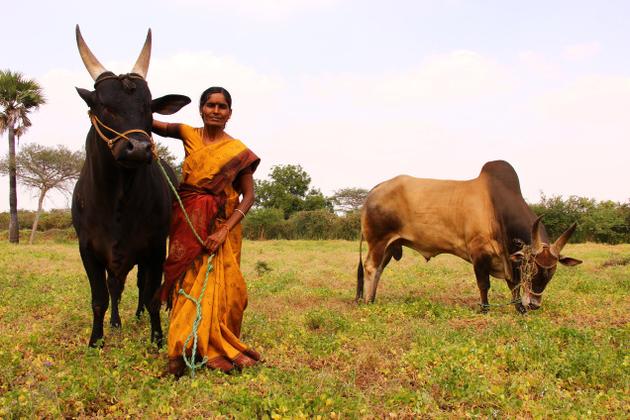
Soundaram Ramasamy holding Singaravelan while another bull grazes. / Aparna Karthikeyan
Meet Soundaram Ramasamy, the only woman bull keeper in Kangeyam, Tamil Nadu.
A small slightly built woman, wearing a mustard silk sari and roses in her hair, walks briskly up to an enormous black bull; nearly six-feet tall with a heavy-set neck, great hump and sharp horns, grazing under the shade of the acacia tree, and grabs the nose rope. Calling him ‘kannukutti’ (calf), she rubs his face and back gently, and leads him towards us with one hand.
This is Soundaram Ramasamy, a stud bull keeper, who is something of a legend in her village Kathasamipalayam and the Kangeyam region, Tiruppur district. ‘Kaalaikaramma’ (the bull-keeping woman) as she is known, is perhaps the only woman bull keeper. Besides, very few — man or woman — keep seven stud bulls. And certainly none have such fine Kangeyam specimens.
An indigenous cattle breed, the Kangeyams are native to Tamil Nadu’s Kongu region. I was there to document them with help from Karthikeya Sivasenapathy, of the Senapathy Kangayam Cattle Research Foundation. “Kangeyams,” he explained, “are ancient and handsome animals: both male and female have well-defined humps and curved horns. Both sexes can be put to plough; they can survive droughts, thrive on dry grasses and are very hardy.” But, the preference for high milk-yielders (Jersey and hybrids), prevalence of tractors in place of bullocks and, contentiously, the ban on jallikattu and reklashas savagely reduced their numbers. Karthikeya estimated a 90 per cent drop in 25 years. Today, there are less than 125,000 Kangeyams.
And that’s why 17 years ago, Soundaram and her husband Ramasamy began to breed Kangeyam cattle. They started with cows and, when one birthed an exceptionally good-looking bull calf, they decided to keep it. With Karuppan, that first bull, their stud farm was born. Slowly, the number of bulls grew. Now they have seven. Each bull was selected for its handsome features. Typically, the family rents a tempo, scours the countryside and cattle fairs, and pays between Rs.25,000-40,000 for a calf. The grown-up bulls fetch good prices. Soundaram was offered Rs.300,000 for Singaravelan, their biggest bull, in a cattle show. But she did not sell him.
Singaravelan is beautiful, but a bit of a brute. Ramasamy flatly refuses to approach him. “If I catch him, he’ll fuss. But Soundaram will easily get him.” And she does. She walks up to him, while he is flicking up mud with his horns, snorting, and pacifies him with words and pats. “I love the bulls like my sons,” she says, as Singaravelan stands next to her, massive but meek.
The couple’s careful grooming removes the menace from the animals. “When they get four teeth, (a way of telling the age of cattle) un-castrated bulls turn aggressive,” Ramasamy explains. “We train them to be docile. If not, nobody can handle them!” It is Soundaram who handles the bulls. Her day begins and ends with their upkeep. First, she takes the seven bulls out to graze on the Korangaadu (fields given over as pasture land, hosting 25 varieties of vegetation, a speciality of this region); later she fetches them their food and drink (water mixed with cattle feed, ground corn, cotton seeds, and broken urad dal) so that they are always in prime condition. Soundaram’s daily routine is so laborious and rigid that she can never travel anywhere. Her mother looks after the cooking and the kitchen. “I have no time!” she says. Her only other interest is roses. She points to the tall bushes outside her newly renovated house. “I love the flowers!”
When cows come to be serviced, Soundaram attends to that also personally. Almost everyday, she says, people come from a 150 km radius to mate their cows with her studs. The exercise can cost the cow’s owner up to Rs.4,000, including transport, food and stud-charges. (In contrast, artificial insemination costs only Rs.200-300). Each servicing nets Soundaram Rs.500. The cow’s owner gets to pick a bull of their choice. (Kangeyam bulls are usually white with black markings. But Soundaram keeps rare black-and-red specimens, as breeders and wealthy farmers prefer them).
While we are around, no cow turns up; a promise is made for the next day. Over tea, Soundaram shows me photos of the cattle mating. There’s a shot of her, her sari tucked into her waist, her hair pulled into a bun, her arms stretched to secure a rope around a visiting cow; in another, she’s right next to the bull, holding the rein, as it mounts a cow, a slip of a woman, besides the big, muscled bull. “My bulls need me beside them all the time.”
Her conservation efforts were recognised with the Breed Saviour Award in 2010. She was happy to receive it, and delighted when her relatives rang to congratulate her. “They were impressed that I went to Madras to get an award for raising bulls!”
Soundaram also has plans to expand the business, although the couple say they don’t keep the bulls for the money. “We do this because we’re passionate about keeping the Kangeyam breed alive.” Their income comes from the fields (Ramasamy grows drumsticks) and their two sons’ earnings. Soundaram’s second son, Veerasamy is now doing business in Chennai but is keen to start keeping cows to breed their own stud bulls.
In Soundaram’s farthest fields, we look at two more bulls. I beg her to name her favourite. She says she likes them all. I ask her to name the strongest. “All our bulls are strong. And they come running to me when I whistle.” She puts two fingers into her mouth and whistles; a piercing shattering noise. It startles me and the birds, but the bulls only look up enquiringly. She whistles again. They lower their heads and go back to grazing. She walks up to them, separate the horns locked in mock-fight, and strokes a bull. “He probably notices I’m wearing new clothes, and must be wondering where I went,” she says, pointing to her sari.
We don’t debate the point. Gently she rubs down the bull. I stand there, under a mid-day sun, watching a small woman and a big bull, content in each other’s company.
This article is part of the series ‘Vanishing Livelihoods of Rural Tamil Nadu’ and is supported under NFI National Media Award 2015.
source: http://www.thehindu.com / The Hindu / Home> Features> Magazine / by Aparna Karthikeyan / March 07th, 2015
In November, the Prime Minister Narendra Modi visited Australia, and it was after 28 years that an Indian prime minister visited the country. And, three months later here in Coimbatore, the Australian consul general for South India was discussing business opportunities in Australia with businessmen here.
On Thursday, the Rotary Club of Coimbatore in association with Indo-Australian Chamber of Commerce and National Association of Software and Services Companies (NASSCOM) organized an interaction between Sean Kelly, consul general, South India and the industrialists of the city.
Sarath Chandar, president of Indo-Australian Chamber of Commerce discussed the opportunities in the manufacturing and engineering sector. He, in his speech said, “The manufacturing industry is being outsourced in Australia, and India, especially Coimbatore that has global importance in the manufacturing sector can make use of the opportunity.” Sarath said that Coimbatore is also known for its engineering products and this, too was a growing market opportunity in Australia.
G Karthikeyan, president of Rotary Club of Coimbatore said, “Business in Australia was always a dream for many. But, we never dreamt of it till recently when our prime minister Narendra Modi visited Australia.”
He added, “This gives us motivation and hope that business opportunities can be made true.”
On the occasion, Sean Kelly, the Consul General for South India from Australia was conferred with the title ‘Kovai’s Grandson’. “Kelly’s grandfather was born in Coimbatore. And, this is the connection that he has with the city.
So, we decided to confer him with this title,” said G Karthikeyan, president of Rotary Club of Coimbatore to TOI.
Kelly in his interaction discussed the opportunities from different industry backgrounds. He said, “An interaction like this will help us think of business options.” He reiterated the difficulties of Australia in the manufacturing sector and hinted that the market had potential for business.
source: http://www.timesofindia.indiatimes.com / The Times of India / Home> City> Coimbatore / TNN / March 06th, 2015
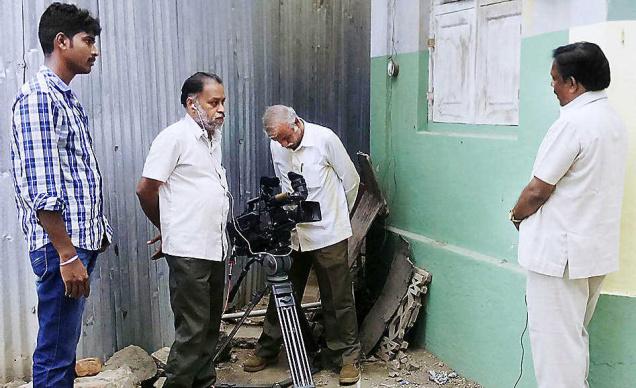
P. Rajendran, head of the production team from Doordharshan Kendra, giving an introduction about the documentary on the life of yesteryear comedian Nagercoil Sudalaimuthu Krishnan at his residence in Ozhuginasery in Nagercoil.
A team from Doordarshan Kendra, Chennai, started shooting for a documentary on the life of legendary comedian Nagercoil Sudailaimuthu Krishnan (NSK) at his residence here on Wednesday.
A team, led by P. Rajendran, Production Executive, stepped into the dilapidated NSK Madhuram Bhavan along with scriptwriter and journalist Chozha Nagarajan from Madurai in the morning.
Opportunity
Mr. Chozha Nagarajan told The Hindu that Doordarshan had given an opportunity to write the script and coordinate with the production team by providing other materials required for the documentary to be screened in Pothigai channel for 50 minutes.
The documentary will feature interviews of NSK’s relatives, film personalities, clippings from his films and photos. Mr. Nagarajan appealed to the State government to renovate the dilapidated house of NSK and nationalise part of his house as memorial, as it would help his family financially.
source: http://www.thehindu.com / The Hindu / Home> News> National / by R Arivanantham / Nagercoil – March 07th, 2015
Just as the matriarch of the Tamil household in Chennai dots her porch with a kolam at the crack of dawn every day, women of the Parsi community pretty up theirs with what they call a ‘chalk’.
“It’s just like the kolam, except we have readymade tins with holes designed in them so all we need to do is fill them with rice flour and tap them on the ground,” said Tehnaz Bahadurji, a Parsi resident of Chennai, who spoke on the history, culture and practices of her community at Alliance Francaise on Tuesday. Her lecture, which was organised by the Indian National Trust for Arts and Cultural Heritage (INTACH), traced how the Parsis migrated to India, how they trickled into Chennai and finally, how they live and, most important, dine.
While the first wave of Parsis settled in Gujarat centuries ago, the first Parsi to come to Chennai was Heerjibhai Kharas, who came here in the 1800s, said Bahadurji, who added that the government gave the community land in 1814, on which a Fire Temple was built more than a century later. The Parsi Fire Temple celebrated its centenary in the city in 2010.
Bahadurji then went on to list the famous Parsis past and present in Chennai – the most prominent among them being social activist and philanthropist Mary Clubwallah Jadhav (who died in 1975), who received the Padma Shri, Padma Bhushan and Padma Vibhushan from the government.
“The Parsis and Iranis were also involved in the cinema industry in Chennai. We built four theatres – the Elphinstone Theatre, the New Elphinstone Theatre, Wellington Theatre, and the Casino Theatre (which still stands on Anna Salai),” said Bahadurji.
When she got to the culture of the Parsi community, which has now dwindled to just 60,000 people in India, Bahadurji spoke of how several traditions were on the verge of dying out. The tradition of the ‘thoran’ for instance, which was used to decorate the doors of Parsi homes.
When she spoke of the ‘gaara’, the Parsi saree, Bahadurji talked of how in the old days women wore their sarees over their heads with only one ear exposed. “That’s the reason why you will find that Parsi jewellery sets in the old days came with only one earring. The jewelers probably figured they did not have to bother making two since the women always had one ear covered,” she said.
source: http://www.timesofindia.indiatimes.com / The Times of India / Home> City> Chennai / TNN / March 05th, 2015
On the eve of the International Women’s day, the women’s football team of the Tiruvalluvar University has brought laurels to its alma mater by winning the All India inter-university football championship for the third time in succession. A jubilant vice chancellor Dr P Gunasekaran said the team has given more visibility to the university through its consistent achievement.
Members of the team were felicitated at the university on Friday and awarded a cash prize of `5,000 each and a track suit.
Team captain V Vinitha, a student of first year MA at St Joseph College in Cuddalore, affiliated to the Tiruvalluvar University, said 16 teams from all the four zones from India had participated in the tournament, hosted by the Hindu Banaras University in Mirshabad between February 26 and March 3.
Team coach Mariappan a former National football player, said three girls — Indumathi, Sumithra and Vinitha — have been selected to play for the Indian football team.
Director of Physical Education Dr Amaldas recalled that the team won the championship for the first time in 2012-13, which helped the university achieve the much-awaited 12 B Status.
source: http://www.newindianexpress.com / The New Indian Express / Home> States> TamilNadu / by Express News Service / March 07th, 2015
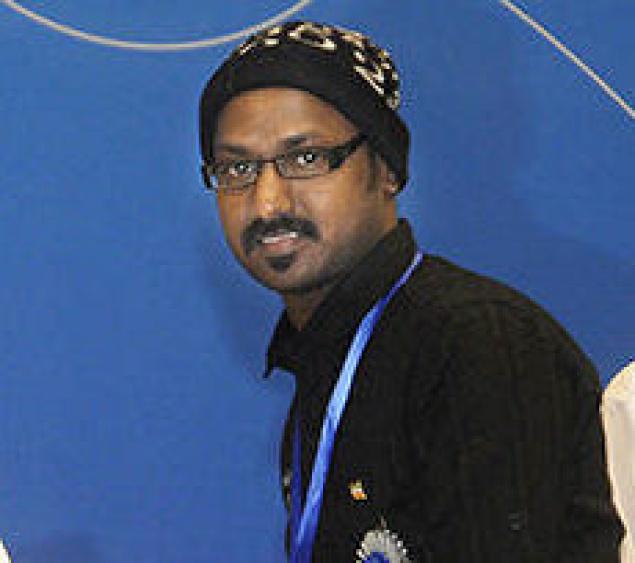
Kishore had won the national award for editing for his work in ‘Aadukalam’. (File Photo) / The Hindu
National award-winning film editor Kishore Te, who had worked in films such as Eeram, Aadukalamand Paradesi, was declared brain dead at a hospital in Vadapalani on Friday. He was 36.
He was reportedly admitted to Vijaya hospital on February 27 after he fell unconscious. Hospital sources said that an MRI scan revealed that he had suffered a stroke.
He had been facing a lot of stress at work recently and that might have led to health issues, it was said.
All efforts were taken to revive and rehabilitate Kishore, but in vain. On Friday evening, he was declared brain dead.
Soon after, Kishore’s father insisted that his organs be harvested. His corneas, kidneys, liver and heart were harvested and shared with other hospitals on the network, hospital sources said.
Kishore was among the bright emerging stars in Kollywood and was believed to have great potential. Insiders said his death was a big blow to the film industry, particularly to the discipline of editing.
source: http://www.thehindu.com / The Hindu / Home> News> Cities> Chennai / by Staff Reporter / Chennai – March 07th, 2015
Students in the apparel and design fashion technology department of Tamil Nadu Agricultural University (TNAU) are projecting almond leaves as potential sources for natural dyes.
The produce from these leaves, which have a great staining capacity, is being tried on cotton fabrics as a more eco-friendly replacement to chemical dyes.
The project was recently exhibited at the Vivasaya Thiruvizha (agricultural festival). The students explained that a component called phenol gave almond leaves a staining capacity, and they were making use of this property to propose a much more safer and eco-friendly dyeing substance.
The colour of the dye depends on the amount of phenyl present in the leaves, they said.
Colours are fixed on the fabric with the help of a ‘mordent’.
Most fabrics have chemical substances as mordants, which could prove hazardous to health. However, the students are using natural mordants like alum and ferrous sulfate. Currently, they are trying out the dyes on cushion covers and handbags.
T Padmini, professor of Textile Department, TNAU, said, “Many of these dye products are also used in dyeing fabrics like Bandhani sarees or salwars. It is called the tie-dye process, wherein the fabric is tied at various ends to leave the color on the fabric. Our idea is to try eco-friendly ways to use farm resources.”
Professors from the home science department in the university said they were planning to introduce the product in the market after related tests were conducted.
“Publishing the product in the market involves a lengthy process, since various tests need to be conducted to understand the fastness of the dye. Thereafter, dye manufacturers will be enlightened on how it is produced,” Padmini added.
The students explained that a component called phenol gave almond leaves a staining capacity, and they were making use of this property to propose a much more safer and eco-friendly dyeing substance.
source: http://www.timesofindia.indiatimes.com / The Times of India / Home> City> Madurai / by Karishma Ravindran, TNN / February 28th, 2015