Carborundum Universal Ltd (CUMI), part of the Murugappa Group , is expecting its South African plant to increase its sales by $10-million sales with the addition of new capacity.
The group had invested around 115 million Rand (Rs 63.6 crore at current currency rates) to hike capacity at the Bubble Zirconia plant to 5,000-tonne from last year’s 500-tonne. The plant produces electro minerals used in various applications in refractories for possessing thermal shock resistance.
K Srinivasan , managing director of Carborundum Universal Ltd, recently told analysts the Bubble Zirconia plant had been a big challenge for them as the production remained less than 500 tonne for the entire last year despite seeing an investment of 115 million Rand. “It took far more effort and time than what we thought it would be,” he said.
source: http://www.business-standard.com / Business Standard / Home> Companies> News / by BS Reporter / Chennai – June 06th, 2014
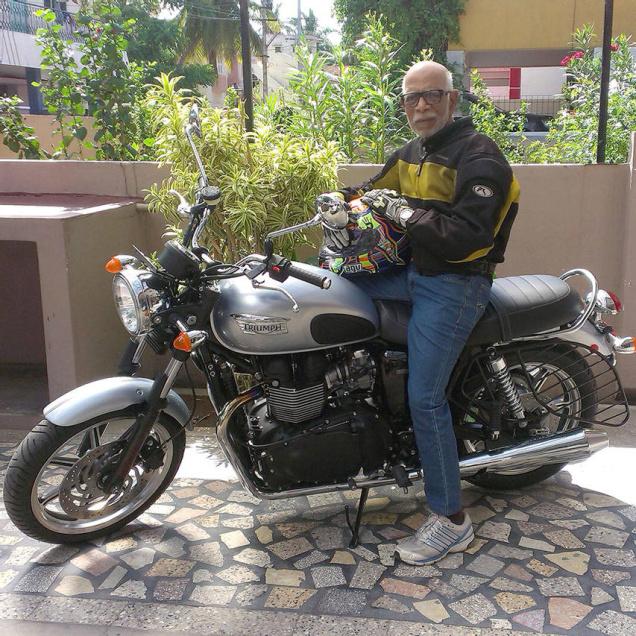
Dr. Nandakumar with his Bonneville bike./ by Special Arrangement / The Hindu
Prince Frederick talks to T.M. Nandakumar about his love for big bikes
German being something that I barely managed to cope with at college, I’m a bit amused to find myself going back to a German dictionary this week. Ironically, to look up the word for triumph. It sounds close to English: noun is der Triump and verb, triumphieren.
The phonetic similarity is not restricted to German. In French, the noun istriomphe and the verb, triompher. In Spanish, it is triunfo and triunfar.
When Triumph set up business in Britain, around 1885, as an exporter of cycles, it was named after one of its two founders, Siegfried Bettmann. The Bettmann trade name was soon replaced by Triumph, as everyone agreed that this word would be easier on lips across the globe, as many people were either using it or using something that sounded almost like it.
The name has stuck, having weathered changes and is continuing to conquer newer lips. As you must be aware, Triumph Motorcycles has entered India with dealerships in place in major cities and the latest launch having taken place in Chennai on June 6.
With the journey of Triumph motorbikes beginning in 1902, when its first motorcycle — essentially a bicycle made to feel powerful by a 1.75 hp engine with a surface carburettor — hit the roads, the brand has had a long innings, riding on the shoulders of different establishments, which include the defunct Triumph Engineering Co. Ltd., and the current Triumph Motorcycles Ltd.
At various stages of its long existence, Triumph bikes have produced many stories that could be counted among the inspiring because they signified, well, the triumph of the spirit over the flesh.
One of these inspirational stories has to do with a biking enthusiast, Basil H. Davies who wrote regularly for a British magazine The Motor Cycle, which ran from 1903 to 1983.
In 1905, Davies was signed up for a novel and daunting exercise: he would test-ride the latest Triumph, one that was fitted with an engine manufactured in-house. His ride would last six consecutive days and his daily chart included having to chalk up 200 miles. The effort was seen as the best way to market the brand and its motorcycles.
In the words of Davies himself, as he writes in The Motor Cycle, following the ride clocking 1,279 miles in six days, taking a different route from Oxford every day: “The machine used was a 1905 3h.p. Triumph with a magneto ignition, and was an absolutely standard pattern. The only special point about it was the spring fork, with which the makers are experimenting for next year.”
As he approaches the fag end of his six-day run, Davies writes, “Only one day is left. Would my luck hold? I did not mistrust the machine, but my misfortunes are proverbial among my motoring friends, and I felt positive I should split a cover or collide with a cow.”
His fears were not unfounded. He was attempting the six-day ride for the second time. He had taken up the challenge the previous week, only to abandon it on the fifth day.
The front down tubes had broken down. The engine parts had also registered considerable wear and tear, though that was not the reason for the failed attempt. Davies succeeded the second time around, and it is reported that during the course of this successful week he had to strip the engine down a few times to fit in new valves. Following this, Triumph is said to have got in touch with a metallurgist and the quality of its bikes improved considerably.
Another inspiring story, in my opinion, happened this week. It was on June 10, when the Triumph showroom on Ethiraj Salai was visited by an interesting customer. T.M. Nandakumar, a medical practitioner from Krishnagiri, was there to take delivery of his Bonneville. The sprightly 76-year-old doctor started from the showroom at 7.30 a.m., rode all the way to Krishnagiri in four hours, whch included a 30-minute halt along the way, at Walajapet.
Only around a month ago, he had had a bad fall from his 1969 Bullet, while riding alone to his farm, around 8 km from Krishnagiri.
“I fell into a ditch and sustained three fractures on the right side of my rib cage,” recalls Nandakumar, who has evidently recovered fast to be able to take home his 865 cc dream machine. “I love British vehicles. In the 1970s, I had a 1954 Triumph Thunderbird,” Nandakumar explains his decision to go in for a Triumph machine now.
The doctor, who belongs to the 1959 batch at Stanley Medical College, is a key member of Wheeled Wanderers, a biking group from Krishnagiri. Consisting mostly of twenty-year-olds, some of them from Hosur, the group does long rides, which include trips to Munnar, Kodaikanal, Ooty and Meghamalai.
Over the years, Nandakumar has had various bikes, including a Matchless, a Norton, many Bullets and a Rajdoot.
“Now, I have a Suzuki Bandit 1250S, a 1969 Bullet, a 1988 Yamaha RX-100, a Honda Dio, which I use for regular rides around the town, and, of course, the Bonneville.”
source: http://www.thehindu.com / The Hindu / Home> Features> MetroPlus / by Prince Frederick / Chennai – June 11th, 2014
Seven students belonging to a city school bagged prizes at a creative problem-solving competition involving students from kindergarten to college. The annual event called the “Odyssey of the Mind” was held at the Iowa State University in the US last month.
The students of Alpha Wisdom Vidyashram Senior Secondary School who took part in the event came 21{+s}{+t} among the 236 teams that participated in the competition.
The competition was held by Creative Competitions, Inc, based in New Jersey. During the contest, team members work together at length to solve a predefined problem. They also participate in a spontaneously held contest where in players have to generate solutions to a problem they have not encountered before. The seven-member team from the school belonged to Classes 7 to 10. The students are R M Muthumeena, 12, C Indumugi, 14, S M Nhanthini, 15, P Aditya, 14, R Sivaprasath, 13, D Akshay, 14 and S Laushiya, 14.
Seven teams from India took part in the event. The students said that they won the hands-on competition by scoring 93 points. We solved problems with ease despite difficulties, said C Indumugi. Rajeshwari Ramakrishanan, the teacher who accompanied the students to Iowa, said the team also won the floating banner competition wherein they presented a temple-like structure.
Thousands of teams from throughout the US and from about 25 other countries participate in the programme annually. The 2014 event was held from May 28 to May 31. In the contests, team members are asked to apply their creativity to solve problems that range from building mechanical devices to presenting their own interpretation of literary classics.
source: http://www.timesofindia.indiatimes.com / The Times of India / Home> City> Trichy / TNN / June 11th, 2014
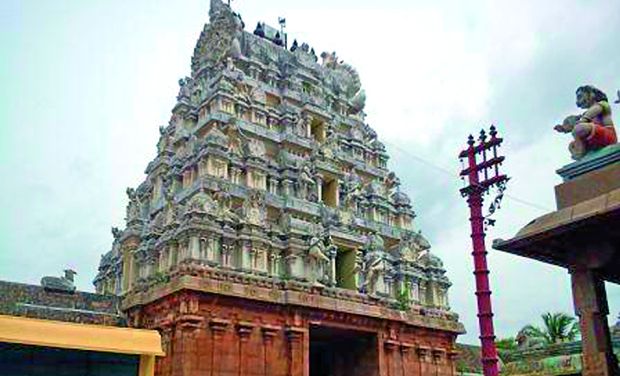
The gopuram of the ancient Sri Veerateswarar temple with the flag staff (Photo: DC)
Chennai:
Seeped in rich ancient political and religious history Thirukovilur, a temple town in Villupuram district near here, is waking up to development and is getting readied to welcome hundreds of visitors. Recently, the state government had come forward to provide more infrastructure and this initiative will ensure more amenities around the ancient Sri Veerateshwar temple. The town is also held in esteem by Vaishnavites as it houses the renowned Sri Trivikrama or Ulagalanda Perumal temple, on the southern banks of Krishnabhadra. Besides here, Lord Vishnu is worshipped as Ulagalanda Perumal at neighbouring Kanchi.
Thirukovilur, about 190 km from here, is one of the “Ashta Veeratanams” (eight places of bravery) and it is believed that Lord Shiva took various forms (incarnations) to destroy evil and establish justice manifested Himself at Thirukovilur. The goddess of the Veerateswarar temple, on the banks of river Pennar, is Brhannayaki. Legend has it that Avvayaar wrote the famous “Vinayagar Agavel” at this temple.
It is said the greatest Tamil king, Rajaraja Chola, and his brother, Chola Prince Aditya Karikalan were born in Keelaiyur, Thirukovilur. About 1,000 years ago, Thirukovilur was regarded as one of the four largest cities in the southern region almost on par with the all time famous pilgrimage towns of Kancheepuram, Madurai and Thanjavur. The Sri Raghothama Theertha Brindavanam of the famous saints of Sri Madhwa parampara, Sri Raghotamma theertharu, along the banks of river Pinakini, is located about 36 km from Tiruvannamalai and 2 km before Thirukovilur, on Tiruvannamalai — Thirukovilur highway.
According to an order issued by Mr R. Kannan, principal secretary, tourism, culture & religious endowments department, chief minister J. Jayalalithaa ordered to provide basic facilities at 14 important tourist centres, at a total cost of Rs 10.58 crore including Thirukovilur in Villupuram district. About Rs 1.27 crore would be spent to improve tourist infrastructure at Thirukovilur including establishing promenade, on Sannadhi street and sanitary complex around Sri Veerateswarar temple and water supply work.
source: http://www.deccanchronicle.com / Deccan Chronicle / Home> Nation> Current Affairs / DC / by J.V. Siva Prasanna Kumar / June 01st, 2014
Arvind Remedies , a producer of branded and generic pharmaceutical products, has entered into a memorandum of understanding ( MOU ) with SRM University in Chennai to use the university’s patent to manufacture and market drugs for type II diabetes and coronary heart disease.
These drugs will be manufactured in the form of tablets and will be launched in mid of 2015, first in the domestic market which will be followed by the global market.
“According to the International Diabetes Federation, 382 million people across world have diabetes, which is expected to rise to 592 million by 2035. The number of people with type II diabetes is increasing in every country. In order to curb this disease, we have come up with new drug that is from the botanical source which ensures zero side effects on the health of the patient. We are expecting this new drug to be available in the markets by mid 2015,” Dr B Arvind Shah, managing director and chief executive officer, Arvind Remedies.
“Coronary heart disease is also a common type of heart disease and is killing more than 385,000 people annually. We are happy to share that, we have been successful in developing a new drug, which will help in treatment of coronary heart disease,” Dr Shah added.
source: http://www.timesofindia.indiatimes.com / The Times of India / Home> Business> India Business / by Aparna Ramalingam, TNN / May 31st, 2014
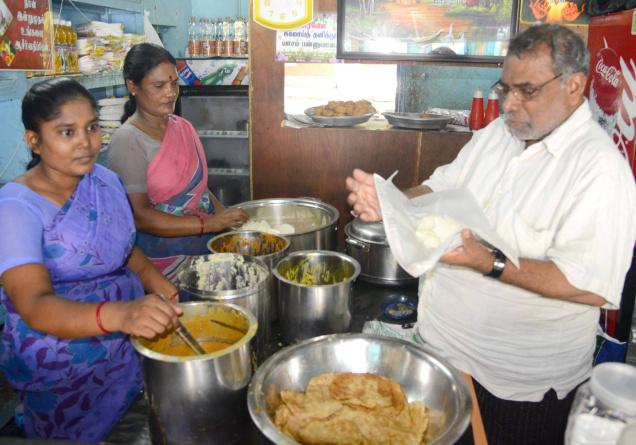
Drawing Artists – It is business as usual at the mini hotel in the Cholamandal Artists’ Village in Injambakkam. / Photo: M. Karunakaran / The Hindu
Tucked away in a corner of the Cholamandal artist village is a canteen that has been serving scrumptious food to artists and the public for more than two decades.
Sixty-five-year-old Augustin Raj had come here in 1990 from Puducherry and started selling tea and snacks in the locality. Little did he know that he would befriend some of country’s well-known artists. “At any given time, one can find artists coming here for tea and snacks. During shows, they order for food in advance,” he says.
Here, one can find dishes like puri, barota, chapatti, pongal and varieties of rice. Fish items are however the most popular, says Aughustin.
Though the canteen has been around for a while, it was only eight years ago that it was thrown open for the public.
“Now, people can make their purchases from outside. Our prices are easy on the pocket and have people from all sects coming and enjoying food here,” he says.
All the food is cooked here and the canteen is run by the family. “We start our day early in the morning and keep the food fresh. We follow authentic recipes and that is the reason we have earned some regular customers,” he says.
The best time to come here is the weekends, after a nice drive along the East Coast Road.
source: http://www.thehindu.com / The Hindu / Home> Features> DownTown / by Vipasha Sinha / Chennai – May 31st, 2014
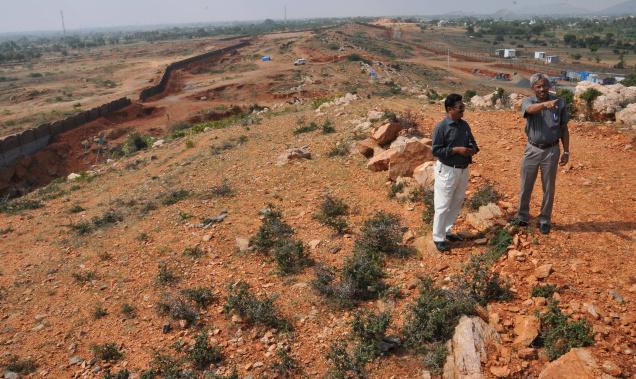
Naba K. Mondal (right), Project Director, India based Neutrino Observatory, inspecting the site for Inter Institutional Centre for Higher Energy Physics at Vadapazhanji, in Madurai. / Photo: S. James / The Hindu
The Inter Institutional Centre for High Energy Physics (IICHEP) at Vadapazhanji, near here, has completed research and development activities for the construction of a particle detector in the Neutrino Observatory (INO) coming up in a cavern in the Bodi hills in Theni district.
Though pre-project work was progressing well both in Madurai and in Theni, the construction of the main observatory in a cavern would begin only after clearance given by the Union Cabinet, INO Project Director Naba K. Mondal toldThe Hindu on Friday. “The clearance is expected soon.”
Mr. Mondal said a 66-acre site was identified at Pottipuram in Theni district for establishing ground facilities at the entrance to a two-km-long tunnel to be dug under the hills for establishing the observatory. The site had now been fenced and pipelines for supplying water to the site had been laid for construction work to begin.
Simultaneously, the IICHEP, functioning from a rented building, was carrying out research and development activities with respect to over 30,000 particle detectors required for the observatory and other allied facilities. “All parameters of the detector have been determined. Now, we have to start industrial production of the detectors and associated front-end electronics,” he added.
S. Stephen Inbanathan of American College, one of the collaborators for the project here, said the construction of a compound wall was completed around 33 acres of land, earmarked for establishing state-of-the-art facilities for the IICHEP. “Construction of buildings would commence soon, and the facility would serve as a research hub for particle physics.”
The INO is a collaborative project of 22 reputed science institutions in the country and is backed by the Departments of Atomic Energy and Science and Technology. The pre-project work started after an initial grant of Rs.83 crore sanctioned by the Centre last year.
source: http://www.thehindu.com / The Hindu / Home> news> National> Tamil Nadu / by Mohamed Imranullah S / Madurai – May 30th, 2014
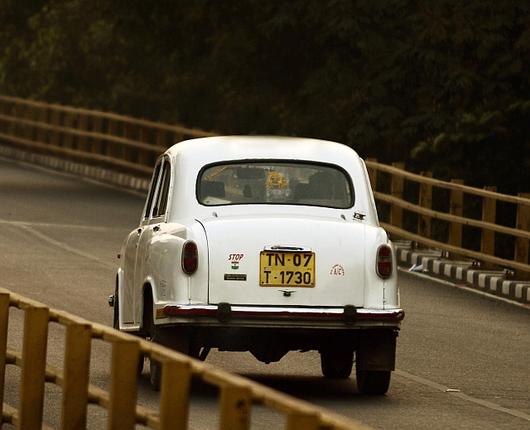
A car for all seasons: A white Ambassador with a red beacon light on top symbolised power. Painted yellow-and-black, the Ambassador also played the role of a taxi admirably./ Photo: S.R. Raghunathan / The Hindu
It once ruled our roads. It still rules our hearts
In the 1990s, Bjorn Borg cut a sorry figure as he faced younger players with his anachronistic wooden racquet. This man, who picked up Grand Slam titles with the ease of someone gathering sea shells, put up a dismal show during the comeback trail, failing to win a single match. Tennis had shifted gears from finesse to power, and Borg was too stuck in the past to make the adjustment.
The Ambassador’s story shares similarities with Borg’s. A symbol of social significance and an icon of power for decades, the Hindustan Ambassador lost its way when the field got wider allowing for more cars to compete for the buyer’s wallet. With a design that seemed to be cast in stone, the Ambassador was pitted against sleeker modern cars that were responsive to even minor shifts in buyer’s preferences. The writing was on the wall, for everyone to see, so clear that aliens in outer space could not have missed it. And therefore, the news of Hindustan Motors stopping production of Ambassadors at its Uttapara plant in West Bengal has been received with more sadness than surprise.
It is actually not so much sadness as an unsettling sense of loss. The car has been so much a part of the landscape, so us, so Indian, that it does not feel right to have it removed from us.
A white Ambassador with a red beacon light on top symbolised power for us. A politician or a bureaucrat somehow looked incomplete without an Ambassador. Painted yellow-and-black, the Amby played another role admirably, that of a taxi, gathering unlikely bands of admirers. In 2013, the Hindustan Ambassador was chosen as the world’s best taxi at Beaulieu’s World of Top Gear show. This humble car from India is reported to have made it by besting tough contenders from Britian, Russia, Germany, South Africa, America and Mexico.
The Amby has found its place among the cars of the world and has its loyal fans, which include youngsters who were born much after Maruti Suzuki 800 arrived with its impressive pick-up, compact body and attractive looks.
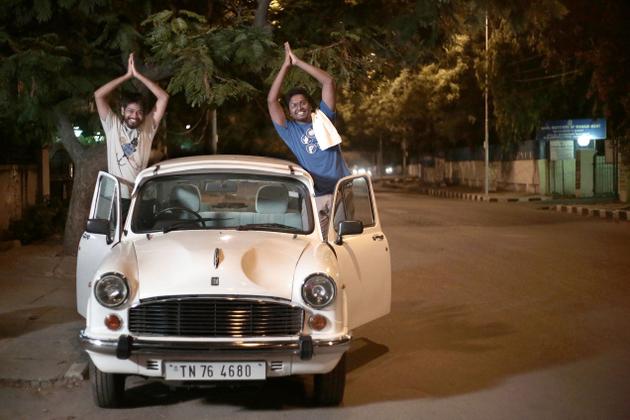
Joseph Rajini Asir (right) in his Ambassador, doing a politician’s greeting along with his friend Ram Keshav. / by Special Arrangement / The Hindu
Joseph Rajini Asir destroys the theory that only people over 35 are charmed by the Amby. All of 24, he spells out his distress over what has happened to this car, and he is not making such remarks to blend in. Five months ago, this young man became a proud owner of an Ambassador. Employed with Amazon.com and a freelance photographer, he had been putting aside money towards buying one.
“Our family has had a relationship with the Ambassador. My grandfather Durai used to drive a Landmaster,” Joseph explains what led to his purchase of an old Ambassador with a carburettor-fed engine.
Enthusiasm of this kind for the Amby is rare among those in their early-twenties. Because, from the early days of their lives, they would have had a raft of modern cars to gaze at and the Amby would have seemed very distant from their times. That is because the car did not undergo major changes for a large part of its life. Mechanics and Amby collectors would tell you that the Amby rolled out in 1990 was essentially the same as the one in 1958, with the majority of the differences just surface-deep.
“A plethora of important elements, such as the gearbox and suspension parts could be interchanged between Ambassadors in the Mark I to IV family,” says R. Gunasekar, who is employed with Popular Motor Corporation.
Others like vintage and classic car collectors Jayaram brothers — Sri Kumar and Jai Kumar — who have had Ambassadors ranging from Mark I to Mark IV, at different points of time, would agree with him.
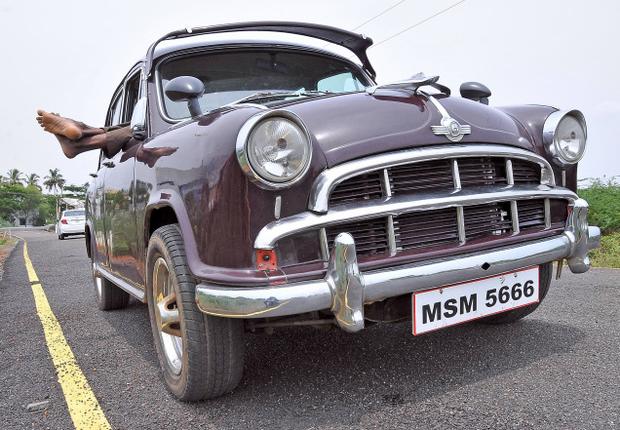
Patterned on the Morris Oxford II and the Morris Oxford III respectively, the Hindustan Landmaster and the first Ambassador model, often conveniently referred to as Mark I, were like cousins who clearly appeared to have come from a common stock, but also looked markedly different from each other, helped by factors such as dimples, deep-set eyes and the arrangement of teeth. Distinguishing features of the Ambassador included a dimpled hood, a three-spoke steering wheel (the Landmaster had a two-spoke wheel), tail fins and deep-set cowls for the headlamps.
In contrast, the Ambassadors through Mark I to IV were like children born to the same couple and were similar in many more respects and could be retrieved and grouped together even if they were lost in an ocean of humanity. The frontal section helped differentiate between these Ambassadors; other parts of the car, including the dashboard and the lamps, also underwent some changes. It was this generation of Ambassadors that established the idea that these cars had a common core that shone brightly though their dissimilarities. A path-breaking development took place in this generation: a variant of the Mark IV received a BMC B-series diesel engine and is now credited with being the first diesel car produced in India.
Beginning with the launch of the Nova, which came on the heels of the Mark series, a desperate attempt was made to infuse a sense of variety into the brand so that potential buyers did not feel starved of choices. The exercise extended to the current generation of Ambassadors (or, should it be called the last?), consisting of Classic, Grand, Avigo and Encore. Efforts were also made to bring these cars on a par with the best in their category in terms of technology and visual appeal.
From the time of Nova, attention was paid to the steering column for the sake of safety and suspension and braking system were improved considerably,” says Gunasekar.
Despite this exercise, the Ambassador continued to be seen as a brand that underwent only nominal design changes. Admirable continuity, you may call it, but the apparent sameness did not make the car popular with a generation that is spoilt for choice and is always looking for new experiences.
Families began to gravitate towards other cars entering the expanding market. However, for a long time before the canker dug its feet in, Ambassador continued to be the car of choice for politicians and bureaucrats. It also continued its grip on the taxi business. In fact, even now, when the Indica seems to dominate the scene, the Ambassador has a following.
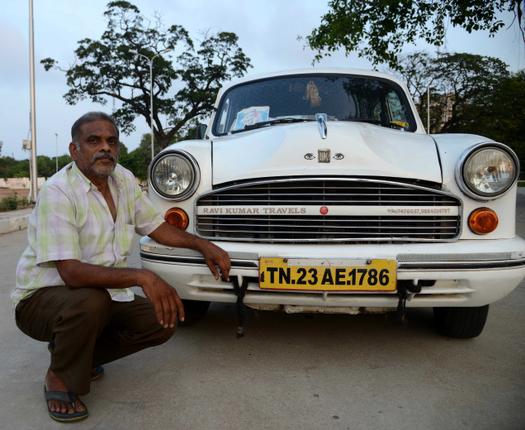
Ravi Kumar, who runs a car travel company, says he will not let go of his 2008 Ambassador. / Photo: K.V. Srinivasan / The Hindu
Ravi Kumar, who runs an eponymous car travel company in Mylapore, is known as ‘Ambassador’ Ravi. He would not let go of his 2008 Avigo because he has found regulars who would not settle for anything other than an Ambassador. “I know people from Malaysia who ask me to bring my Ambassador when they are here in Chennai,” says Ravi, who longs for the days when the Amby ruled Indian roads.
“At one point, in my travel company I was running 15 Ambassadors that were my own and 40 others that belonged to other people. The advent of the call taxi business has pushed out the Ambassadors. But, there are still people who want the Amby,” says Ravi.
Call it wishful thinking or anything you want, but this is what Joseph believes in: “The Amby is here to stay.”
source: http://www.thehindu.com / The Hindu / Home> Features> MetroPlus> Melange / by Prince Frederick / Chennai – May 30th, 2014
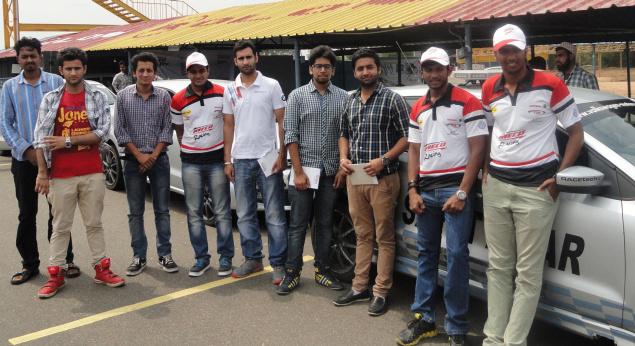
Instructors getting ready to handle the driving session for the students at the Supra SAEINDIA ’14 drivers’ training programme at the Kari Motor Speedway in Chettipalayam, Coimbatore, on Wednesday./ by Special Arrangement / The Hindu
The second phase of the training programme will be held next month
It was three days of thrills and frills for over 100 undergraduate and post-graduate engineering students in the Supra SAEINDIA ’14 drivers’ training programme, which concluded at the Kari Motor Speedway in Chettipalayam recently.
Organised for the first time by Spitfire Motorsports Pvt. Limited, in association with Meco Motorsports, the training programme turned out to a real learning experience for most of them. “It was simply amazing. We learnt a lot,” said Nehal Goudar. “It helped us to understand a racing car better,” quickly added Rahul. “Brilliant sessions but would love to have more track time in Formula and Saloon cars,” pointed out Parth Dipak.
There were many in the crowd who echoed sentiments.
But the surprising fact is that everybody, besides in-depth training programme, showed keen interest in participating in motor racing events.
“Obviously, they have reasons to be pleased. Normally these students get to design and construct their own formula cars with help from their faculties. It’s part of their curriculum but the driving part matters a lot. And, we are teaching them exactly that,” said C. Rajaram, Director, Spitfire Motorsports.
Former Formula racing driver Akbar Ebrahim of Meco Motorsports has given the task to his race boys to be the instructors.
They are Sandeep Kumar (Chennai), Chittesh Mandody (Kolhapur), Nikhil Kashyap and P.D. Nanjappa (from Bangalore).
They are national racing champions in various categories and they are handling the task given to them in an efficient manner.
“Meco Motorsports has sent us the drivers and we have provided the cars (four saloon & five Formula LGB Swift),” said J. Balamurugan, Director, Spitfire.
“It’s a unique opportunity to find whether they are good drivers. They can learn the technology and give their feedback. We can increase the motorsport base as well,” he added.
Balamurugan said the instructors had done an excellent job.
“It’s not speed that we are teaching but the right technique,” said Nanjappa. “It’s an excellent experience for us as well. They are all engineering students and they understand the concept much better. It makes our job easier,” he added.
“In fact, we have been through a lot of classes before coming here. We have been trained by Akbar Sir to train others. And, as racing drivers we are able to explain things much better,” said Sandeep.
“It’s a win-win situation for both because we get to refresh our racing knowledge,” he added.
Why Coimbatore? “It’s a natural choice because the city has both track and talent. Spitfire has got experienced people to handle the job as well,” said Balamurugan.
The second phase of the training programme will be held at the same venue next month.
source: http://www.thehindu.com / The Hindu / Home> News> Cities> Coimbatore / by Rayan Rozario / Coimbatore – May 30th, 2014
A car from the good old world – Ambassadors are still a symbol of pride. / Photo: S. James / The Hindu
The Ambassador car will remain in the hearts of the people forever even after it goes off the roads
The street opposite the bus depot on Bypass Road is no different but for the dozens of ambassador cars tightly parked along the sides. Some rusted and laden with dust wait for a coat of paint, some wait for a repair and some await a buyer. ‘Ambassador workshops’, as they are called, dot the street.
Now with the production stopped, the Ambassador may soon join the line of vintage cars.
There was a time when a car meant just Ambassadors. For its Swadeshi tag, it was sought after by the netas.
The garage of the rich too had an Ambassador parked majestically.
It was the peoples’ car too. Some years later, Ambys became synonymous with taxis.
Many owners take pride on their sturdy car and still claim that it is the best of the cars. Some see the machine as an inheritance from their fathers and grand-fathers, some even consider the Amby as a member of the family! It is a token of remembrance from the good old world.
The Amby makes a perfect car for the jugaad experiments of the desi mechanic. Mechanics praise the versatility and simplicity of its mechanism. “It’s a mechanic’s car and one can do any kind of modification in it,” says Bhoopathy, an Ambassador specialist. Private workshops like his thrived on Ambassadors. “Ninety percent of the vehicles we repaired were ambassadors. People preferred these as the maintenance cost is cheap,” says Bhoopathy, who started fitting Isuzu engines in the car even before the manufacturer introduced it. He compares the car to a quaint village inn. “It’s simple and not extravagantly luxurious. But it is still comfortable and affable.”
After vehicle owners started drifting to other sophisticated vehicles, the mechanics also tried to shift their attention to new models but found it hard. “It is extremely difficult to change. We have been servicing ambassadors for years with trained professionals. Now again we have to start from the scratch,” says Bhoopathy.
The sprawling Thanga Niranjula Automobiles, which once buzzed with Ambys and their owners is now deserted. The owners have sold a portion of the mechanic shed for survival. “Ambassadors were not like the ready-to-use modern cars, even the brand new car needed some welding to fix the front and back seats properly. Most of the mechanical parts were made of lead making the car heavy,” says N. Ashok Kumar, one of the partners of the workshop.
Businessman K. Ganesh is a die-hard ambassador fan. His maroon-coloured 1957-model Mark-I Ambassador is a car with an antique moustache grille. “We were a big joint family and nearly 10 of us kids would go to the school in the car. It so easily accommodated all of us and our school and lunch bags,” says Ganesh, who repainted the car from black to maroon. “I have so many fond memories of the car bought from a royal descendant of Ramanathapuram.”
The ambassador was once a status symbol. It was parked only at palaces, mansions and bungalows. If the Fiat was called the ‘doctor’s car’, the Amby was called the ‘family car’.
“We have shifted houses in this car,” says 25-year-old Sharath Madhav pointing to his metallic gold Amby that his father bought in 2002. “It was my grand father’s wish to buy an ambassador car,” says Sharath. “Each time we returned from our native village in Nagercoil, we used to stack coconuts in the boot. It was huge and we have transported families out of cities.” Though the Ambassador is called the ‘man’ for its masculine and sturdy appearance, it is a car that everyone in the family loved and related to. “My mother never finds any other car as comfortable as the ambassador. It’s a kid’s car too, as there is so much of space for the children to play around and have fun,” says Sharath.
To R. Prabhu, an engineer, Ambassador is a statement. “You stand out when you drive the amby. It’s bulky and big and can never go unnoticed,” he says. In the age of luxury cars, the Ambassador continues to be a fancy among people and many give the credit to its ordinariness. “It’s a very simple and ordinary car. And that’s the beauty about it,” says Prabhu.
Several Amby owners remodelled the interiors and fitted power-windows, bucket seats, air conditioners and power-steering as the car’s ordinariness is also said to have gone against it. “Innovations were hardly introduced in the car. Even basic facilities came much later in the Ambassador. And that’s the reason for the drop in sales in spite of its engine performance,” feels P. Kumarappan, a car valater.
Best Taxi
Hindustan Motors’ Ambassador was rated the world’s best taxi at the Beaulieu’s World of Top Gear motorsport show last year. It started its life in Britain as Morris Oxford and introduced here with a name change to become one of the country’s most enduring vehicles. Ambassador saw off rivals from Britain, America, Germany, South Africa, Mexico and Russia to win the award.
R. Sarathkumar, actor and a car lover:It is a durable car and it ruled Indian roads for more than half a century. Though I don’t have one, I love driving this car. The bench seats are accommodative and are comfortable offering good thigh support. It has been the car of the masses then, now and forever. It is a preferred choice even now for its spacious interiors and ability to withstand bad road conditions. Whatever is said the goodwill of the ambassador will never die.
source: http://www.thehindu.com / The Hindu / Home> Features> MetroPlus> Motoring / by T. Saravanan & Shri Kumar / Madurai – June 04th, 2014