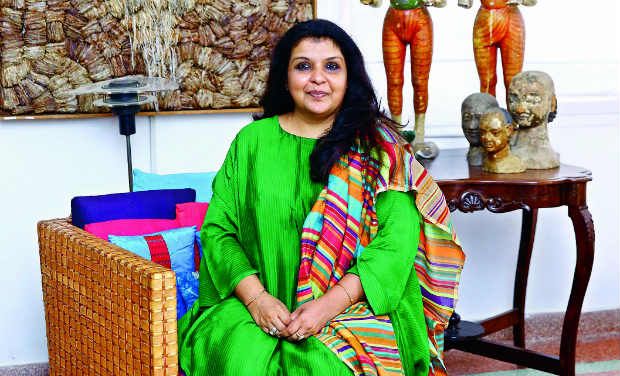
Into the collectors’ den

Sharan Apparao.
Sharan Apparao.

Destination experiences are the newest trend for the new-age traveller. It is not just about visiting tourist destinations, but also adding that touch of something special to the experience. Bespoke luxury experiences are the order of the day as more tourists are now choosing to discover the city through customised routes.

‘Captivating Chennai’ by the Taj Coromandel is one such experience, helping visitors see the many moods of our culturally inclined city — be it art or textiles. The Collector’s Eye’ (in association with Apparao Galleries) offers connoisseurs a chance to visit the homes of renowned art collectors in the city and look at art lovingly collected over a period of time. For those who love fashion (or ethnic clothes), Warp and Weft takes you to the atelier of French embroiderer, Jean Francoise Lesage, followed by a shopping trip to the market.

A motley crew of art lovers gathered at the Taj Coromandel for the Collector’s Eye tour recently. And one of the visits was to the art deco dwelling of gallerist Sharan Apparao. Her home was fringed with a garden dotted with sculptures. The modest entrance and the staircase area doubled as a forum to showcase Sharan’s love for art. We are greeted by a fibreglass sculpture of an Aravani, made by neo-realistic artist, George K.

A collection often speaks volumes about the collector. At Sharan’s house, every nook and corner is a reflection of her personality. Sharan confesses that she quite likes the pop-art-meets-political-satire approach of artist P. G. Dinesh. And this is evident from the countless pieces she has of such art. “I love pop culture and the vivid colours,” she explains.

The collection, which is a mélange of modern art and antiques, has some interesting pieces. For instance, there was a sculpture made from tea bags, done by French artist Janine Mongillat, depicting female genitalia.

“Sometimes I think in colours and sometimes I think in form,” says Sharan, as she shows us around her living space. She points out a canvas by Arpita Singh, which is her favourite. But she also likes to encourage younger artists. “I really like George K’s painting, Buddhist Man,” she adds.

On a side table, there is an enviable collection of nine Burmese baskets. Sharan says, “I  love old things. And I work with new things.” On cue, we are taken to Prajwal Chaudhary’s digital art on countless matchboxes.

Each piece of art (or furniture) has a story behind it. And Sharan is an engaging storyteller. For instance, we admire the quirky centre table and this art collector relates its genesis. “The table is made from an old name board of a finance company going back to 1906. We cut off the legs for the table from a discarded kitchen cupboard and put it all together,” she laughs. As we bid adieu, we notice a mesh of fine steel. Sharan says, “Puneet Kaushik made this dupatta, which is crocheted with stainless steel.

It weighs a ton but I wore it the other day to an art show,” she says, in parting. Our next stop is Lily Vijayaraghavan’s quiet residence. The grande dame welcomes us as we pause to admire the beautiful garden, speckled with stone sculptures. “Stones feel claustrophobic inside the house,” says Lily, who is passionate about antiques.

Her  collection is centred on the concept of Shringar (or beauty). We walk past cupboards, showcasing a massive collection of ivory combs, miniature perfume bottles and ornate foot scrubbers, adorned with swans and peacocks. Browsing through Lily’s collection was akin to going back to a time where life was much simpler.

Lily points out that most of her collection was sourced from south India. “I come from a family of collectors. It is in my blood,” she says, adding that there is a scarcity of good items to be found.

“There are a lot of fakes in the market,” she adds. The pieces of dancers in different mudras occupy a prominent place in the veranda. “I got those from a temple chariot,” explains Lily, showing us stucco figurines that are more than a thousand years old. The walls are dotted with Mysore and Tanjore paintings, depicting gods and goddesses in artistic finery.

Lily’s house is a living museum and the artifacts are a part of her  space. “It is a full-time job,” she smiles, showing us the kitchen, with Chettinad-style utensils and urns with intricate figures and carvings, all carefully arranged.

Lily shows us the Chettinad spoon rack. “It is given to a bride during the wedding,” she explains. There is also a room, housing artifacts that are for sale. “We see all the people who bought art from us. They really cherish it,” she says.

source: http://www.deccanchronicle.com / Deccan Chronicle / Home> Lifestyle> Travel / DC / by Tuba Raqshan / October 15th, 2013

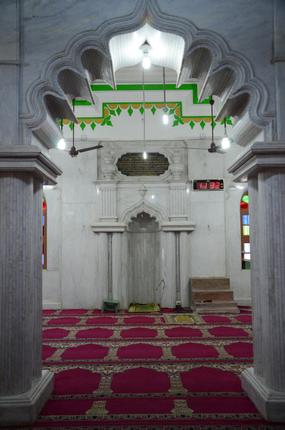
New de-addiction clinic at Indian Red Cross

The Indian Red Cross Society, chennai celebrated World Mental Health Day recently with the launch of a de-addiction clinic for alcohol and substance abuse.Dr V Kanagasabai, Dean, Madras Medical College and RGGGH, and Dr R Ponnudurai, Honorary Psychiatrist at Red Cross, presided over the meeting. More than 500 people comprising students and staff from colleges in and around the city participated in the event.

The event was conducted with the aim to create awareness on mental health among the youth in society. Psychologists at the Indian Red Cross said that many people did not know what mental health was and often there were misconceptions about the term “mental health”. Dr Ponnudurai explained that depression, dementia and other psychiatric disorders affected the mental health of an individual. He said, “Mental health of elderly people depends on mental health of the youth.”

The de-addiction centre is located on the Indian Red Cross premises in Egmore and aims to cater to people addicted to alcohol and drugs. People can avail the facilities at this centre free of cost. Group therapies and sessions with psychologists, counselors and psychiatrists are also arranged. The centre also aims to incorporate research in the future.

source: http://www.newindianexpress.com / The New Indian Express / Home> Cities> Chennai / by Express News Service – Chennai / October 16th, 2013

In remembrance of ‘an ugly old man’

We were a gang of five in Presidency College, Madras, in 1944 when we recalled the heady days of the Quit India Movement and spun and wore only khadi. We’d never met Gandhiji and were excited at the thought of being able to see and hear him at a prayer meeting. We were lucky that our classmate had a house by the side of the maidan from where we could have a ringside view of the dais and the people who had gathered.

We left college after lunch and took a bus to the Hindi Prachar Sabha grounds. Already we could see busload of people being ferried to and fro. Although it was just noon, the roads were choc-a-bloc with people walking to the venue. The prayer meeting would start only at 6pm. Such was the veneration Gandhiji was held in.

Standing on the terrace of my friend’s house we watched the crowds below. They were well behaved, patient and did not need the police to control them. Volunteers went round serving water to the thirsty as the afternoon sun was hot and relentless. Slowly evening set in. The heat became less, the clock ticked on, and just a minute before six, Gandhiji came onto the dais and bowed to the people. There were no loud, noisy claps to greet his appearance. It was as if one was in the presence of someone divine. The silence was electrifying.

Then my friend’s daughter, about 12, dressed in a pavadai and blouse, sang the prayer effortlessly and with full-throated ease. Gandhiji then started to speak. Did the crowd understand what he was saying? It did not matter. They had come all the way, borne the scorching sun just to have a darshan of him. Gandhiji spoke on, frail as he was. The setting sun cast an orange glow as he ended his speech.

What was it about Gandhiji, “an ugly old man” as Sarojini Naidu affectionately called him, that so endeared him to people? Why was he worshipped by the common man? Was it because he sacrificed his career, went to jail many times, and wasn’t afraid to give up his life for his principles, taught ahimsa? It may have been all of these. But what endeared him most to the common man was that he was like one of them, to whom they could relate. He wore the scantiest of clothes, wooden chappals and cheap rimless spectacles. He ate sparsely. If ever there had been a politician who was dear to the hearts of the common man, it was this man. No wonder they called him the Mahatma.

One could say that “the elements so mixed in him/ That nature could stand up to all the world and say This was a man”.

I am filled with nostalgia when October 2 nears. To have been ruled by the British, to have witnessed the fight for freedom, to have seen how people sacrificed their careers and even their lives, all led by one man and then to have been freed was an exhilarating experience.

“Bliss was it in that dawn to be alive,

But to be young was very Heaven.”

source: http://www.newindianexpress.com / The New Indian Express / Home> Opinion / by Radha Padmanabhan / October 05th, 2013

Indian fabric sales to double by 2016, says Exports Council

Coimbatore (Tamil Nadu) :

Indian fabrics sales are expected to double in the next three years, according to the Apparel Exports Promotion Council (AEPC).

“The Minister of Textiles, Dr. Kavuru Sambasiva Rao, is trying his level best to increase exports, and also domestic export of textiles, because it is next to agriculture in terms of revenue generating capacity. He has already talked to the government that there should be skill development, there should be some separate chapter for the interest deduction,” said A. Sakthivel, Chairman, Apparel Exports Promotion Council (AEPC).

The Indian Government is also taking all effective steps to make sure there is a surge in the textile exports by implementing different schemes and benefits for the workers working in the garment industry.

“I think all the steps have been taken. Now, 700 crores has been released two days back and the state development scheme is already announced. The Minister of Textiles is also talking with the government and the Labour Ministry for the 50 hours work. And also he is talking about the separate chapter especially for the textile export with the Finance Minister. He has met already the Prime Minister of India and in turn he met a group of ministers to recommend what are the steps can be taken by the government to increase the export as ell as the import market,” added Sakthivel.

The reasons for buyers to get attracted towards India are raw material strength and due to the rupee depreciation India has now been identified as a new market by both Japan and Australia. (ANI)

source: http://www.newstrackindia.com / News Track India / Home> Economy /by ANI / Coimbatore – Saturday 05th, 2013

Finding talent through Harmony

Chettinad Hari Shree Vidyalayam, in collaboration with Global Education and Leadership Foundation, conducted Harmony 2013, a talent quest in debate, chess and street play recently. Nine schools across South India participated in the event, with several students from PSBB, Chettinad Hari Shree Vidyalayam, PSBB and Jindal Vidya Mandir school bagging prizes.

Harmony, a regional-level event, was launched last year to encourage students to interact and bring out their talent.

source: http://www.newindianexpress.com / The New Indian Express / Home> Cities> Chennai / by Express News Service – Chennai / October 15th, 2013

Mosques in history

Striking architecture, history and faith greet K. Jeshi as she visits some old monuments

Tipu Sultan offered prayers at Kottaimedu. His soldiers prayed at the Thondamuthur mosque. On their way to battle at Palakkad, they rested at Idayarpalayam with their horses. Then in the 1800s Athar merchants from Tirunelveli made Coimbatore their home and built the Athar Jamath mosque. According to M.I. Mohammed Ali, general secretary of Coimbatore District United Jamath (that heads 193 Jamaths in Coimbatore district), there are 120 mosques within the corporation limits. “In some mosques the older structures have given way to expansion while some Jamaths have taken efforts to preserve them.”

Minarets of Athar Jamath Mosque on the Oppanakara Street in Coimbatore / Photo: K. Ananthan / The Hindu

Athar Jamath Mosque

Oppanakkara Street

A pair of silver minarets shimmer in the morning. It’s 9 a.m. and sun rays filter into the Mosque on the bustling Oppanakkara Street, one of the oldest mosques in the city. Traders stroll in one by one, some of them straight from the market with their goods, spend a few minutes in silent prayer and get going. It is not just Muslims, people from other religious communities too stop by.

At the entrance, a giant hand-crafted wrought iron gate gives way to a hauz or a water pool (where Muslims perform a ritual before offering their namaz) and then comes the prayer hall. The building has Italian and Mohammedan architecture influences. The white pillars that dot the prayer hall are Italian while the colour scheme of white and green and the multi-coloured window glasses are quintessentially Mughal. Externally, the domes are decorated with geometric designs. “It was a thatched hut in the 1830s built by our forefathers who were athar sellers from Tirunelveli district,” says Abdul Kaleel, a retired Tahsildar and muttavalli (head imam ) of the mosque. The Jamath has over 1000 members, all descendants of athar merchants. An executive committee with 15 members looks into the maintenance of the mosque. The construction, spread across 10,000 sq.ft., began in 1860 and was completed in 1904, under the supervision of 52 athar families. “Our forefathers had their homes in the area and built the mosque here,” says Kaleel. The mosque is built beside the tomb of Hazrat Jamesha Waliullah, which is now a dargah. “On the same road, we have St. Michael’s Church, Koniamman temple and the mosque. All the structures are over 100 years and they stand testimony to a time when communities beautifully co-existed. Even today, the Koniamman temple car procession halts at the mosque for a few minutes and then proceeds,” he says. Personalities including Russian premier Nikita Sergeyevich Khrushchev, Prime Minister Jawaharlal Nehru, and stalwarts such as Kamarajar and Kalaignar Karunanidhi have visited the mosque. The prayer hall easily accommodates 3000 people during prayers on Eid. “Fifty years ago, we could see the minarets of the mosque when we trekked to the Marudhamalai Hills,” says Kaleel.


Kottai Hidayathul Islam Safia Jamath Mosque

Kottaimedu

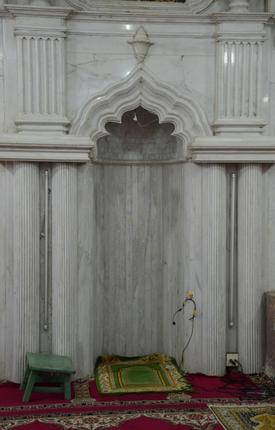
Hidayuthul Islam Shafi Jamat Mosque at Kottaimedu is one of the oldest mosques built by Tipu Sultan.in Coimbatore./  Photo: S. Siva Saravanan / The Hindu
Hidayuthul Islam Shafi Jamat Mosque at Kottaimedu is one of the oldest mosques built by Tipu Sultan.in Coimbatore./ Photo: S. Siva Saravanan / The Hindu

Kottai Hidayathul Islam Safia Jamath stands tall at Kottaimedu. It dates back to the 17th Century and is one of the biggest mosques to be built in Coimbatore during the reign of Tipu Sultan. He is supposed to have offered prayers here. “The original mosque was built in 1776 by Tipu Sultan, which was destroyed by the British,”says T.I. Abdul Wahab, general secretary of Kottai Hidayathul Islam Safia Jamath Mosque.

Hidayuthul Islam Shafi Jamat Mosque at Kottaimedu is one of the oldest mosques built by Tipu Sultan in Coimbatore./  Photo: S. Siva Saravanan / The Hindu
Hidayuthul Islam Shafi Jamat Mosque at Kottaimedu is one of the oldest mosques built by Tipu Sultan in Coimbatore./ Photo: S. Siva Saravanan / The Hindu


In 1901, Haji Mohammed Pillai Rawther raised the structure and it was completed in 1910. The inner pavement is of white marble slabs, ornamented with black borders. It is beautiful and lends coolness to the place. The white marble pillars represent Indo-Arabic styles. The floors are lined with exquisite pink carpets that came from Mysore. Traditionally, smaller size bricks were used for the construction of pillars, which were then polished with a mix of limestone and egg. The mosque also imparts education. A madrasa, a higher secondary school and an Arabic college function on its premises.


Ahle Sunnath Dakhni Jamath mosque or Tipu Sultan Mosque

Idayarpalayam

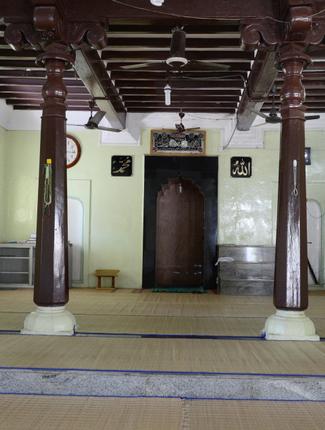
Ahle Sunnat Dakhni Jamat ( Tipu Sultan Mosque) at Idayarpalayam in Coimbatore is over 250 years old./  Photo: S. Siva Saravanan / The Hindu
Ahle Sunnat Dakhni Jamat ( Tipu Sultan Mosque) at Idayarpalayam in Coimbatore is over 250 years old./ Photo: S. Siva Saravanan / The Hindu

A muscular limestone wall, two gleaming teak pillars with intricate work, an elaborate teak wood roofing with horizontal and vertical wood panels, and a central enclosure (for the Imam) that has a semicircular arch-like entrance with delicate carvings … the Tipu Sultan mosque at Idayarpalayam is a piece of history. Built in the Mohammedan style, it is as old as 250 years. “Tipu Sultan, his horses, and his soldiers rested at Idayarpalayam on their way to Palakkad, and that’s when he built the mosque,” narrates E. Nizamuddin, president of Ahle Sunnath Dakhni Jamath Mosque. He says references to this event can be found in the book Danayakan Kottai, a history on Tipu’s reign at Dandanayakan Kottai in Sathyamangalam. “ Those days, 13 people could stand in a single line inside the prayer hall and offer namaz. A small thinnai in the front accommodated some more and totally 40 people could worship at a time. Now, after making extensions, 400 people can pray together.”

The traditional prayer enclosure is covered on three sides with a single entrance and no windows. “This was a strategy followed by Tipu to protect themselves from backdoor attack by enemies,” he says.

The Jamath has over 600 members from Idayarpalayam and the president says with considerable pride how different communities co-exist peacefully. Now, they are geared up for the grand celebrations of Hazrat Noorsha Aulia’s dargah that completes 255 years on October 19. “The celebrations begin at the house of Oor gounder P. Radhakrishnan. He leads the procession of ‘santhanakudam’ that culminates at the dargah. This is followed by night-long prayers in which everyone participates.”

This article has been corrected for a factual error.

source: http://www.thehindu.com / The Hindu / Home> Features> MetroPlus / by  K. Jeshi / October 15th, 2013


Taluk hospital achieves rare feat


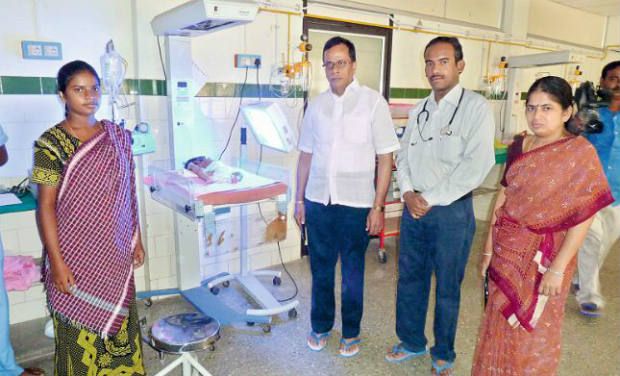
The mom and her baby along with the team of doctors at the hospital . —DC

Salem:

In a rare feat for a taluk government hospital, doctors at the Thiruchengode taluk hospital in Namakkal district performed an ABO incompatible blood transfusion procedure on a newborn successfully. The baby, suffering from severe jaundice, is now stable and recovering fast, doctors at the hospital said.

Nandakumar (30) and Shobanavalli (25) from Konniayaru village near Thiruchengode had their first child on October 5, 2013. The infant, whose blood group was different from the mother’s, had a severe attack of newborn jaundice and was in a critical condition.

The child was rushed to the Thiruchengode government hospital on October 6 and a three-hour-long blood transfusion took place at the hospital. Doctors at the GH said they had replaced 480 mg of blood from the newborn through the navel following the procedure.

“Now the child is recovering very well and is stable. The jaundice is almost cured and the baby is healthy,” said Dr Prakash from the hospital. He pointed out that while patients usually have to go to bigger cities like Salem or Coimbatore to do these transfusions in the past, government taluk hospitals were now equipped with facilities to perform such complicated procedures.

“Thanks to the insurance scheme for poor, our hospital also gets paid for the treatment given to poor through insurance companies which has helped us procure latest equipment for care of mother and child,” he said.

source: http://www.deccanchronicle.com / Deccan Chronicle / Home> News> Current affairs / DC / October 13th, 2013

Tamil Nadu Agricultural University releases 4 new maize varieties at national level

Coimbatore :

Four maize varieties have been recently released by the maize department of Tamil Nadu Agricultural University (TNAU) at the national level this year.

All of them have passed rigorous field trials held across various states. “These varieties have passed tests proving that they have a higher productivity than 4 high varieties,” said G Nallathambi, professor of maize breeding, department of millets at TNAU. These maize varieties were developed with the support of the Indian Council of Agricultural Research (ICAR). A variety tested successfully in 4 states can be released at the national level.

Nallathambi said that maize is considered to be a crop which would replace rice at the global level. “With temperature rise, paddy is becoming tough to cultivate, whereas maize is an ideal substitute,” he said. Moreover, without any support mechanisms, farmers are able to get attractive rates.

Thousands of products can be developed from maize. This includes food, poultry feed and industry products. “The uses of maize are growing. Glucose and starch can be made from maize. Maize is even used to build the outer body part of airplanes. United States is focusing on developing bio-fuels from maize. Maize takes around 75 to 110 days to mature.

In 2005-06, maize was cultivated across 2 lakh hectares in Tamil Nadu, generating an annual production of 2.41 lakh tonnes. In 2011-12, when the latest study was held, the cultivation area was 2.81 lakh hectares and productivity stood at 16.95 lakh tonnes. While in 2005-06, the average productivity was 1,189 kilos per hectare, it increased to 6,042 kilos per hectare in 2011-12. “This jump in the productivity levels can be attributed to improved varieties of crops from both the public and private sectors.

Nallathambi said that many crop varieties are in the pipeline. Meanwhile, one of their varieties released last year, CO6, which is known as CMH08-282 at the national level has begun to receive acceptance from other states. Two weeks ago they received a letter from the Gujarat State Seeds Corporation (GSSC) saying that they wanted to take up the production of CO6 variety of seeds and sought seeds from the centre. “We hope our efforts will help fulfill the food requirements of the nation,” he said.

source: http://www.articles.timesofindia.indiatimes.com / The Times of India / Home> City> Coimbatore> Maize / by Arun P. Mathew, TNN / October 07th, 2013

Hindu temple sets new Singapore record

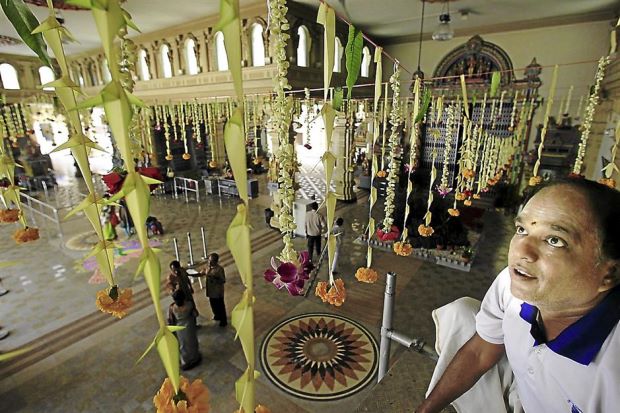
Auspicious deco: Palaniappan inspecting the raffia strings holding up the ‘thoranam’ in Sri Thendayuthapani Temple. — The Straits Times / Asia News Network

It took more than 2,200 strings of leaves and flowers to set a new record for the longest thoranam – a decoration done for auspicious Indian events.

The 371m long thoranam hanging in the hall of Sri Thendayuthapani Temple will be entered in the Singapore Records.

About 150 people took part in the “Thoranam 1000” event organised by the Chettiars’ Temple Society. They made strings of jasmine and rose flowers and coconut and mango leaves and strung them all around the temple.

The youths connected with Indian culture through learning how to make flower garlands.

Among the participants was S. Palaniappan, 54, who was seen standing on a mobile scaffold to put up the strings of flowers.

The event was held in conjunction with Navarathiri, a nine-day Hindu festival. — The Straits Times / Asia News Network

source: http://www.thestar.com.my / The Star Online / Home> News> Regional / Monday – October 07th, 2013

Stamp collector Seshadri breaks his own record

Chennai: 

P.S. Seshadri looks like any other person in their sixties, but perhaps what sets him apart from others of his age is his passionate devotion to a hobby. Seshadri has been a philatelist for the last 51 years. He is also the holder of the Limca Record for having the largest collection of commemorative stamps of a single design in the country.

Speaking of the record he says, “I made it in 2010 and am all set to break it now. Currently, I have 1,70,071 stamps of the same design.” The year was 1962 at the Don Bosco School in Salem and Seshadri was then in Class 8. “I was in the principal’s office,” he recalls, “and glancing at his table when a stamp lying there below the glass triggered my interest. It was a rare Italian stamp. Father was more than happy to part with it, and quite unwittingly, this gesture of his made a stamp collector out of me in due course.”

Seshadri’s parents too were supportive of his hobby, and his father, especially, would return with a new and rare set for him every time he visited Chennai. He kept his hobby alive through the years even as he pursued his studies with equal diligence. He sought out pen pals who could be a source of stamps, a magazine providing the avenue of making friends with like-minded interests. “And that’s how I was able to collect stamps from other countries too,” he says.

He continued to collect stamps even after taking up a job, but he thinks that at that time he did not have sufficient guidance in his task. Then a Swiss friend whom he met through his work – introduced him formally to the world of philately, and then on, there was no looking back. Ses­ha­dri’s collection was on display on Satur­d­ay at the DAV school, Velachery.

source: http://www.deccanchronicle.com / Deccan Chronicle  / Home> News> Current Affairs / DC / by Jackson Jose / August 25th, 2013