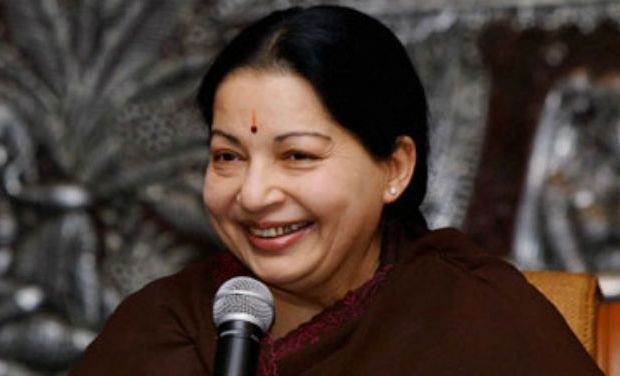
The demand of the fishermen in coastal Kanyakumari district for establishing a harbour at Colachel is decades old. Chief minister J. Jayalalithaa’s allocation of Rs 87.75 crores after approving the revised project estimates has raised hope among the fishing community that the project would fructify soon.
The issue had echoed in the state Assembly on several occasions when Congress legislators raised the issue demanding that the state government initiate steps to pave way for developing a natural harbour in the historic town of Colachel, which is in existence since 1920.
At one stage, an exasperated Congress member J. G. Prince, who could not withstand the delay in commissioning the project, stood up and appealed to Jayalalithaa to take a personal interest and ensure the project materialised.
The Chief minister promptly assured that the project would be taken up and also reminded him that the state government had to fund several major projects despite little help from the Centre on the financial front.
In the absence of good berthing facilities, over 1,500 mechanised boatmen of this tiny town on the west coast have been depending on Kerala ports and port at Rameswaram for berthing. Some of them had even switched operations to neighbouring states and this often led to territorial disputes.
source: http://www.deccanchronicle.com / Deccan Chronicle / Home> News> Current Affairs / DC / by J.V. Siva Prasanna Kumar / October 07th, 2013
Lt. Col. G.S. Gill was among the first of the prominent Punjabis who settled in the city and made important contributions./ Photo: Special Arrangement / The Hindu
Lt. Col. G.S. Gill was among the first of the prominent Punjabis who settled in the city and made important contributions
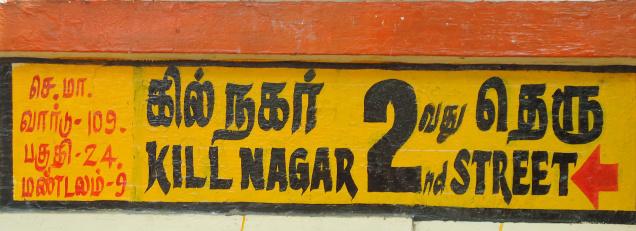
Fellow heritage enthusiast Sreemathy Mohan posted this photograph on Facebook leading to much merriment. Ironically, the ‘Gill’ who is commemorated was a doctor and therefore, technically, a giver of life.
Born on September 16, 1893, Gurdial Singh Gill was from Faridkot, Punjab. Sent to England to study law in 1912, he opted for medicine and moved to Edinburgh University from where he graduated in 1919, throwing in for good measure, a few months service in the Indian Field Ambulance Training Corps during the World War I.
Dr. Gill and his English wife Rena Lister Gill set up his practice and home at Bolton near Manchester for a while and raised a family of four sons. In 1923, they came to India where he joined the Indian Medical Service (IMS) and became Lt. Col. G.S. Gill, IMS. With the IMS being abolished in 1930, he moved to prison service and became inspector general of prisons, Madras, which meant all gaols in the presidency were under him. Most Madras-based Congress leaders arrested during the Quit India movement became his wards and there developed a close affinity between them and the warm-hearted Sikh.
Post independence, Gill opted to stay on in Madras. He and other prominent Punjabis settled here at that time were to make important contributions to the city. The Punjab Association was founded in 1937. The body was to be tested to the hilt in 1947 when scores of Partition refugees began arriving, most having no idea about the city to which they were making their way.
Lt Col. Gill would invariably meet them at the station. A ‘sharanagat rahat punarvas’ (refugee rehabilitation) committee was set up and with money obtained from donations, a colony was formed. The enterprising newcomers soon struck roots, becoming successful entrepreneurs and professionals. The colony became Gill Nagar.
Lt. Col. Gill was a close confidante of Maharani Vidyawati Devi Sahib of Vizianagaram, a princess from Keonthal near Shimla, who had married into a princely Andhra family and had, like him, been transplanted to the South. Sarvepalli Radhakrishnan had been an early protégé of hers. In her, Gill found a powerful patron and supporter. In 1951, when the Punjabis in Madras felt the need for a gurudwara, it was the Maharani who helped. Work began in 1952, with Gill personally supervising the work. When the Maharani died she left her personal properties in a Trust to be administered by Gill, the income to be used for education.
Being the founder president of the Guru Nanak Society, in 1971, he got the Trust to part-fund the Guru Nanak College. Gill Adarsh Matriculation Higher Secondary School, set up in the 1980s and managed as one of the Adarsh Vidyalaya Schools run by the Punjab Association, also commemorates him. Lt. Col. Gill died in May 1982. His son was the celebrated Lt. Gen. I.S. Gill, PVSM, MC, whose life was documented in ‘Born to Dare’ by S. Muthiah.
source: http://www.thehindu.com / The Hindu / Home> News> Cities> Chennai / by Sriram V / June 04th, 2013
On a muggy evening at Nageswara Rao Park, Malaiarasan is enacting a scene from his childhood. “‘Dei, what are you watching? Go there! Fetch that tool!’ That’s how my grandfather spoke to me when I worked as his assistant. His house, on Eldams Road, was right across my father’s. But I spent most of the time at my grandfather’s house, watching him make harmoniums. His name was Madurai N. Ponniah, very famous!” he tells me, his eyes speaking as easily as words. “I was still in school then, but wasn’t interested in studies. I used to dump my bag, and go to the beach with a friend. When I returned home, they would spot the sand on my legs and beat me.”
Malai’s heart was always tuned to music. Not surprising, given that, for three generations, their family has made, tuned and serviced musical instruments. He learnt to make harmoniums from his grandfather, the art of tuning them from his father, and the skills of cutting and placing the keys from his uncle, M. K. Ponambalam. The harmonium is made of two types of wood; the outer body is made of teak (“for show”), while the keyboard is a jaathika palaga, as it won’t bend, is easy to play and produces a nice sound. “Grandfather’s harmoniums were much sought after,” Malai says.
“The instrument which maestro Ilaiyaraja uses, was made by my grandfather in 1940s, for Ilaiyaraja’s elder brother,” says Malaiarasan with obvious pride. Many top artists have visited his shop – M.S. Viswanathan, T.M. Soundararajan, T.R. Mahalingam… the list goes on. Malai’s grandfather also made a gamaka harmonium. After a quick alapana in Khambodi ragam, Malai says the gamaka harmonium can produce that effect. “That’s the kind of musical family I come from.”
Since he took up harmonium work as a lad of 15, Malai has serviced about 10,000 harmoniums. Are there so many in the city? “Wherever they sing bhajans, there’s one,” he says, as he breaks into a bhajan. There’s a sentimental value attached to the older instruments. “People call me and say, ‘My mother used it. Can you repair it?’ The timbre of the older instruments is excellent.” Malai can also make new instruments, but he does them against orders. “A harmonium now costs Rs. 4,500. In grandfather’s time, it was just Rs.150 or Rs. 200,” smiles the 51-year-old.
A few years ago, Malai started repairing veenas as well. “I owe that to the owner of Murali Musicals. He taught me and encouraged me. I also started listening to bhajans and attending cutcheris to hone my knowledge. I do not have formal education, but I am interested in learning about music.”
Repairing a veena is a highly skilled job, says Malai, explaining how he places the 24 melams on a bed of wax, mixed with kungiliyam, sambarani and rosanam, so that it sets like stone. “That’s when the sruti stays,” he says.
Malai lives in Chrompet. His two sons are also in the musical line. One is a salesman in a musical store and the other repairs veenas. “But after my father, it is my wife who’s my right hand. I have not saved money over the years, but I’m still very keen on repairing musical instruments. I will never stop my work. You know, I just want to die, one day, over a veena or a harmonium, as I’m working on it,” and he flops his hands and hangs his head, mimicking the final act.
(A weekly column on men and women who make Chennai what it is)
source: http://www.thehindu.com / The Hindu / Home> News> Cities> Chennai> Columns / by Aparna Karthikeyan / May 12th, 2013
The Madurai District Police and HelpAge India organised a seminar on ‘Meeting critical challenges of senior citizens’ at the District Police Office here on Saturday.
Representatives of various trusts taking care of the elders, social workers, legal experts and academics took part in the seminar.
Edwin Babu, Joint Director (Programmes), Tamil Nadu and Karnataka, HelpAge India, said while the elders had their fair share of problems, they themselves were looked at as problems, particularly in the recent past. Explaining the key words in their logo, ‘Fighting isolation, poverty and neglect,’ he said, “We have placed isolation above poverty. In the last five years, the most affected have been the elders from middle and upper class families.”
Chief guest Superintendent of Police V.Balakrishnan said the old must be aware of their rights. “With an effective grievance redressal system, we should make sure that solutions are found to their problems,” he said.
Jacintha Martin, secretary, District Legal Services Authority, emphasised better implementation of laws under the Senior Citizens Act, 2007. Stressing the need to educate the young people to respect their parents in their old age, she said, “Old people in our houses yearn for love. They should not be neglected on the excuse of work burden.”
Taking questions from the audience on property disputes that affect old people, the panel reaffirmed the importance of writing will. “Wills are accepted even if written on a plain sheet of paper and the old people should be aware that they can change a will as long as they live,” said Ms.Jacintha.
District Social Welfare Officer R.Anandhavalli spoke on the challenges in rescue and rehabilitation of the abandoned elders. S.Veeraraghavan, Senior Manager, IOB, and V.S.Murugan, Manager (Sales), LIC, Madurai, were present.
source: http://www.thehindu.com / The Hindu / Home> News> Cities> Madurai / by Staff Reporter / Madurai – July 04th, 2013
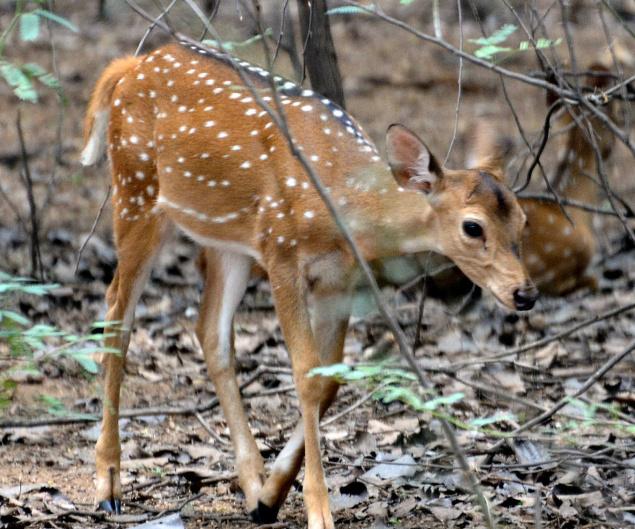
Spotted deer roaming freely at Gangaikondan reserve forest./ Photo: A. Shaikmohideen / The Hindu
Gangaikondan sanctuary in Tirunelveli notified
Tamil Nadu now has an exclusive sanctuary for spotted deer with the State government notifying the formation of Gangaikondan Spotted Deer Sanctuary.
An order from the Environment and Forests Department said this follows an announcement this May by Chief Minister Jayalalithaa in the Assembly that the sanctuary in Tirunelveli district would be formed in the current fiscal.
With this, there would be 11 wildlife sanctuaries in the State.
Subsequently, the Principal Chief Conservator of Forests and Chief Wildlife Warden sent necessary proposal for declaration of Gangaikondan Spotted Deer Sanctuary under the Wildlife (Protection) Act, 1972 and it was accepted by the government with effect from October 1.
According to the notification, the Gangaikondan reserve forest is an important habitat for spotted deer. This is the southern most habitat of spotted deer outside the Western Ghats. It is also a habitat for peafowls, mongoose, varied reptiles, avifauna.
There is adequate ecological, faunal, floral, geo-morphological, natural and other zoological significance for the purpose of protection, propagation and management of the wildlife and its environment.
Forest officials said the sanctuary is spread over in 250ha and surrounded by patta lands. Due to this a perimeter wall has to be built around the sanctuary area. The forest type is dry deciduous and scrub jungle, which is strategically located on the National Highway 7 and 10km away from the Tirunelveli town.
The department proposes to introduce eco-development activities by involving the locals. The activities included skill development for youth, asset creation and micro enterprises for livelihood, the authorities added.
source: http://www.thehindu.com / The Hindu / Home> News> National> TamilNadu / by P. Oppili / N. RaviKumar / Chennai – October 09th, 2013
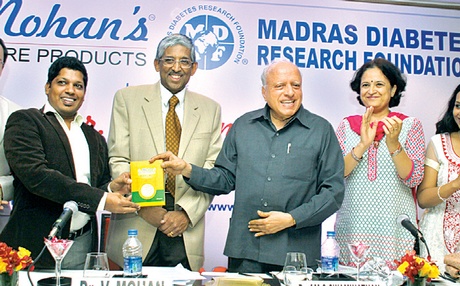
Dr Mohan’s high fibre rice could be the answer to the rice craving of diabetics. | Martin Louis/File
The first thing that your doctor will do the minute your blood sugar levels inch above 120 mg/dL, is probably look at you reproachfully, shake his head and tell you to lay off rice for lunch and dinner.
In fact, most new diabetics will admit that laying off the rice in ‘meals’ and switching to chappatis is one of the most trying things about being a ‘sugar’ patient. All that could very well change, if diabetologist Dr V Mohan’s new variety of rice lives up to its promises.
Launched in the city on Wednesday, Dr Mohan’s Jeevan Dharini High Fibre Rice and Rice Rava could be the answer for the rice craving of diabetics. Though the carbohydrate content in Dr Mohan’s rice is just a shade lower than your regular Ponni varieties, the difference is in the glycemic index and the fibre content, says the diabetologist. “Where normal varieties of rice have only 0.8 gms of dietary fibre, our rice has 8.3 gms of fibre making it an extremely healthy and safe option,” says Dr V Mohan. For daily consumption? “Of course, with a little bit of smart moderation,” he adds.
This variety of rice has been developed after years of research and researching over 200 varieties of rice, he states. “We finally found this hybrid variety that comes from a cross with the local ponni variety that is extremely tasty and yet has some great nutritional numbers,” says Dr Mohan. This is the second rice product that they have rolled out – their brown rice variety didn’t quite set the ball rolling because it wasn’t quite attractive to look at nor was it exceptionally tasty, “People need rice to appeal to their senses – it has to be white, tasty, fragrant and still be healthy. That’s the combination we’ve managed to work out here,” said Dr R M Anjana, VP of Dr Mohan’s Institutions, as she rolled out a whole bunch of recipes that were moulded around this rice.
The rice varieties were tested and perfected at their research centre in collaboration with Dr M S Swaminathan’s Research Foundation (MSSRF), explaining why he was the first to receive the rice, “There are over 1.5 lakh varieties of rice in the world,” he says, “I know because I’ve worked with lots of them. Many of them are yet to be tapped for their true medicinal properties and their dietary structure. I hope that Dr Mohan will look into some more research in this field,” said Dr M S Swaminathan. Foodking Sarathbabu E and Bindu Sharma, patent attorney were also present.
source: http://www.newindianexpress.com / The New Indian Express / Home> Cities> Chennai / by Express News Service – Chennai / July 18th, 2013
Food items like ragi paniyaram, green gram fry, fenugreek mixed salad and green gram modak were among the food items cooked by the winner of the first prize in the diabetic cookery competition, conducted by the Department of Endocrinology, Diabetes and Metabolism attached to the Christian Medical College here on Sunday.
According to Dr Nihal Thomas, head of the department, the competition was conducted to commemorate World Diabetes Day, to create awareness on the nutritional aspects of diabetes management.
A total of 10 teams presented their culinary skills in the cooking competition with the theme “Diabetic sweet and diabetic salads”. Maheshwari from the Dietary department, CMC Vellore, who prepared ragi paniyaram, green gram fry, fenugreek mixed salad and green gram modak, won the first prize. The judges for the event were Mahendri, Head of the Department of Dietetics (CMC), Dr Renu George from the Department of Dermatology (CMC) and Dr Anitha Alfred.
source: http://www.newindianexpress.com / The New Indian Express / Home> Cities> TamilNadu / by Express News Service – Vellore / October 02nd, 2013
Mylapore is one of Chennai’s oldest areas, predating the metropolis by centuries. It is this heritage that the Chennai Corporation is now seeking to highlight through a proposed redesign of the roads into a pedestrian-friendly zone. Long-time residents of Mylapore are cautious in welcoming the plan, and have expressed their burning desire for a greater planning and organisation of shops, traffic and other amenities in the area.
When he expresses his opinion about Mylapore, 83-year-old Ranganathan speaks with the comfortable reminiscence that only the thought of home can evoke. He lived in various parts of the locality, before moving to Velachery to live with his daughter. “I was born there. My uncle was a priest at the Adi Kesava Perumal Temple, so we have stayed in many houses in the area over the years,” he says.
Ranganathan recalls the idyllic air that used to hang over the area. “It isn’t calm anymore. There is a lot of activity that some people call development. But that is not necessarily all good. Also, it is impossible to get the younger generation to live in these small spaces that I grew up in. They are more affluent in their mindset,” says Ranganathan.
When people started selling off the old properties in the area – especially on North, East and South Mada Streets – in the late 1980s, Ranganathan says he was part of a group of like-minded locals who petitioned the government to freeze development in the area and compensate the residents so that the area’s heritage would be retained. But there was little response. “All this so-called development has an unstoppable nature. I understand I have become a relic from another time, but the fact of the matter is that a large part of the heritage of Mylapore has already been lost,” says Ranganathan.
But some dark clouds come with silver lining and not all clouds are dark. All the tearing change that the area has seen over the past two decades does throw up advantages, according to Meenakshi Balakrishnan, a retired teacher who has lived in Mylapore for the majority of her life. Her family lived in the area, and the household she was married into was from Mylapore too.
“We have seen this place change. We have lived in our present house alone for about 40 years now. Some of the shops are useful and some are not. After all, how often do we buy jewellery or saris?” she asks. However, the area still holds it charm for her as it has seen a growth in the amount of cultural activity happening here.
“The halls have grown. The scale of the cultural activities has increased. There are more venues in this area now. So, we are extremely comfortable here, as we are very close to the kutcheries and dance performances,” she says.
Meenakshi, however, sees a flip side to this as well. She says Mylapore could do more with a proper plan for its organisation and management than some boards that talk about its heritage. “They need to bring the hawkers and shops under control, make it easier for pedestrians to cross the road and find a way to regulate traffic. Only then can any attempt to talk about Mylapore’s heritage be relevant to the inheritors of that heritage,” she says.
source: http://www.newindianexpress.com / The New Indian Express / Home> Cities> Chennai / by Express News Service – Chennai / October 02nd, 2013
The 150th birth anniversary of V Krishnaswamy Iyer, who founded Indian Bank, was celebrated recently in a grand function at the Music Academy. The chief guest of the function was K Rosaiah, Governor, Tamil Nadu.
The Indian Bank, founded in 1906 by Krishnaswamy Iyer, was just one of the great institutions that Iyer had founded. A doyen, who propagated ayurveda, sanskrit and several other facets of Indian culture, was also the founder of Sri Venkataramana Ayurveda Dispensary, Madras Sanskrit College and Kuppuswamy Sastri Research Institute.
Rosaiah spoke about the philanthropic capacity of V Krishnaswamy Iyer and said, “For well over a century, trained, talented ayurvedic physicians have come out of institutions that he founded. And they have succeeded in propagating the rich science.” Talking about his contribution to the freedom struggle, the Governor said, “He took active part in the freedom struggle and lead the congress session held in Bombay. In 1890, he attended the Calcutta Congress as a delegate. He actively participated in the Madras session as well. He also developed close friendships with stalwarts such as Sri Gopale Krishna Gokhale, Lok Manya Tilak, Ashutosh Mukherjee, Madan Mohan Malaviya and Feroze Shah Mehta.”
Rosaiah further added that glorious tributes were paid to Krishnaswamy Iyer by the Governor of Madras Presidency and all leading public figures in India then.
source: http://www.newindianexpress.com / The New Indian Express / Home> Cities> Chennai / by Express News Service – Chennai / September 30th, 2013
BSNL Chennai Telephones held their Hindi Fortnight celebrations at the BSNL Telephone Exchange at Dams Road on Monday.
Dr Srabani Panda, the head of the Department of Hindi, Stella Maris College was the chief guest at the event. Chief general manager A Balasubramanian released BSNL’s annual Hindi magazine titled Chennai Vani. He handed over the first copy to Dr Panda.
Rajbhasa Adhikari Jayasuriya Chellam presented BSNL’s annual report while Dr Panda gave away prizes to the winners of various competitions that were held in connection with the celebrations.
Staff members and their families, who participated in the competitions, attended the event.
“If we learn Hindi and English along with our mother tongue, then the world will be in our hands,” said Dr Panda while addressing the participants and the audience. Balasubramanian delivered the presidential address. As part of the celebrations, staff members who attended the event received a copy each of the Chennai Vani magazine.
source: http://www.newindianexpress.com / The New Indian Express / Home> Cities> Chennai / by Express News Service – Chennai / October 01st, 2013