Collector K.Baskaran has appealed to the people of Thanjavur to send any rare photographs of Pattukottai Kalyanasundaram, they may have, to the Public Relations Office on Court Road in Thanjavur for being displayed at the poet’s memorial in Pattukottai.
In a press release issued here on Tuesday, the Collector said that Kalyanasundaram, born at Sengapaduthan village near Pattukottai, has revolutionised society with his poetry.
The Tamil Nadu government has raised a memorial at Pattukottai for him and rare photos of the poet are displayed at the memorial.
source: http://www.thehindu.com / The Hindu / Home> National> Tamil Nadu / by Special Correspondent / Thanjavur – July 03rd, 2013
Earned her Bachelors in physics, chemistry and mathematics from Madras Christian College in 1974. MBA, IIM-Calcutta, 1976. Master of Public and Private Management, Yale University, 1980
Married to Raj Nooyi; has two daughters, Preetha and Tara Earned $12.6 million last year
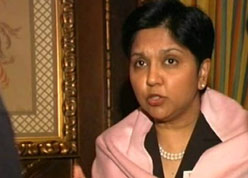
PepsiCo’s Indra Nooyi and Cisco’s Padmasree Warrior have demonstrated how women can succeed at the highest level without sacrificing their personalities.
High Point: President Obama invited her for a discussion on the economic crisis facing the US in November 2012. In 2010, there was a strong buzz that she was being considered a successor to Ratan Tata. She declined saying she was having “too much fun at PepsiCo”.
Unwinding: In an interview with CNBC’s Off-the-Cuff programme, she said she likes watching the New York Yankees play, but puts the TV on mute so she can continue working. When she “really wants to blow off steam”, she plays rummy with her kids. In an interview with Good Housekeeping, she said she likes playing games like Bridge, Scrabble and Sudoku online. “My guilty pleasures are the websites where you can look at the fashions and see how different outfits will look. You can even take a picture of yourself and download it and play with the fashions!,” she told GH.
Early years: Nooyi grew up in Chennai where her father was a bank officer. Her career path in the US began in 1980 at the Boston Consulting Group, followed by stints in Motorola and ABB. In 1994, she joined PepsiCo as senior VP, strategic planning. With annual revenues of $65 billion, PepsiCo is the world’s second largest food and beverages company.
Career graph: As the head of strategy at PepsiCo, she was responsible for much of its restructuring. During her tenure, PepsiCo sold off the restaurant business and spun off its bottling operations, and acquired new businesses like Tropicana and Quaker Oats. In 2006, she was named CEO, only the fifth in PepsiCo’s history. With her at the helm, sales have nearly doubled and earnings have gone up by 30 percent. Nooyi has pushed PepsiCo to become a healthier company by investing in R&D to make soft drinks with less calories, chips with less sodium or yoghurt with more fruit.
She has taken the company global, cut costs by consolidating facilities and laying off more than 8,000 employees last year. She has made aggressive acquisitions in the BRIC nations. (PepsiCo spent $7 billion in buying two businesses in Russia alone). She is a fierce supporter of conscious capitalism and says a lot of inspiration for her thoughts on sustainability come from the tough times in Chennai where her mother would wake up at 3 am to store water.
Last year, the market feared that her position at PepsiCo would be under pressure, when activist investor Ralph Whitworth’s hedge fund invested $600 million in PepsiCo. Her critics say her push into “good-for-you” products is taking too long to show results.
Work-life balance: Nooyi says she made several sacrifices in managing her career and her family. But, in an interview with WSJ, she says every time her kids called during work, she would stop to take those calls. Even when those were only to ask her if they could play Nintendo. Nooyi credits her husband for his support; she says he took on half of her workload at home so she could continue building her career.
Padmasree Warrior
Chief Technology and Strategy Officer, Cisco Systems
Age: 52
Educated at IIT-Delhi (chemical engineering), Cornell University (Masters in chemical engineering)
Married to IIT-Delhi college-mate Mohandas. They have a son, Karna.
Responsibilities: In her current role, Warrior is charged with aligning technology development and corporate strategy to enable the $43-billion Cisco to anticipate, shape and lead major market transitions. She has led the company through 15 acquisitions in 15 months. In a recent interview, Chairman John Chambers named her as one of the people who could get his job when he retires in 2-4 years.
Warrior sees a huge shift in technology and how it impacts our lives in the next five years. In an interview to McKinsey, she said only 1 per cent of what could be connected in this world actually is; as these connections increase it will change how consumers shop, businesses handle data and individuals grapple with the data.
Poster women of tech: Warrior is among a handful of women executives in the overwhelmingly male-dominated technology world. Chambers said in an internal memo that only 22 per cent of Cisco’s workforce are women. Warrior admits that when starting out, she was intimidated as technology was considered a man’s domain. She considered a career in academia but took up a job at Motorola’s semiconductor factory in Arizona. She had given herself one year but ended up staying 23, rising to become the CTO. She came to Cisco in 2007 after Chambers pursued her for a year.
Biggest mistake: In an interview to The Huffington Post, Warrior says the biggest mistake she made in life was saying no to opportunities when she was starting out. “I thought, ‘That’s not what my degree is in’ or ‘I don’t know about that domain’.” In retrospect, at a certain point, it’s your ability to learn and contribute quickly that matters…I always tell women that the fact that you’re different and that you’re noticed, because there are few of us in the tech industry, is something you can leverage as an advantage.”
Unfulfilled wish: In an interview with Fast Company she says, “I would have dinner with PG Wodehouse. I have read all of his books at least 10 times over. I am a great fan of his character Jeeves. His intellectual brilliance and audacious sense of humour fascinate me.”
Work-life balance: When her son was born, Warrior was in charge of a factory at Motorola. It was a 24/7 job that put enormous stress on her family and herself. At one point, she moved her treadmill into her son’s room so she could exercise while looking after him. In later years, she says she came to realise that operating like this was a big mistake. In an interview to The Take Away she says, “The important thing to remember is it’s not about balance; it’s about integration… to really focus on making sure you’re integrating all four aspects of your work, your family, your community and yourself. And it’s not about trying to spend equal amounts of time on everything you do each day on each of these things, but making sure you’re paying attention to all the things that make it up as a whole human being.”
source: http://www.ibnlive.in.com / IBN Live / Home> IBN Live> Business / by Mitu Jayashankar, Forbes India / July 01st, 2013
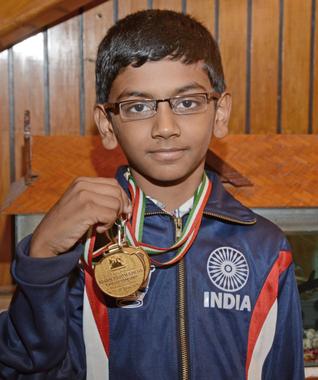
It was a sweet double for city boy L.N. Ram Aravind in the recently-concluded Asian Youth Chess Championship in Iran.
A class 6 student of Kamala Niketan Montessori School here, he pocketed the under-10 title (open category) in the standard and blitz formats.
The youngster achieved a similar feat two years ago when he bagged the under-8 title in both formats in the championship.
In the standard format, Ram Aravind, who trains at Chess Gurukul in Chennai, scored 7.5 points (six wins and three draws) from nine rounds to emerge victorious.
“The third round which I drew with G.M.H. Thilakaratne of Sri Lanka was the toughest,” said the young champion.
The FIDE master booked a berth for the event after clinching the title in the national under-9 chess tournament held in Ahmadabad in October last year.
In the blitz event, which demands quick thinking and decision making abilities, at the Asian championship, Ram Aravind won all the seven rounds to win the title.
“I just enjoy playing blitz chess,” he says.
The youngster has set his sights on the World Youth Chess Championship (standard format) to be held later this year.
Aiming for gold
He will be competing in the under-10 category for the second time in the championship. He bagged the bronze medal in Slovenia last year and secured under-8 silver medal in 2011 at Brazil.
“I am aiming for a gold medal this time,” he says confidently.
source: http://www.thehindu.com / The Hindu / Home> News> Cities> Tiruchirapally / by Staff Reporter / Tiruchi – July 01st, 2013
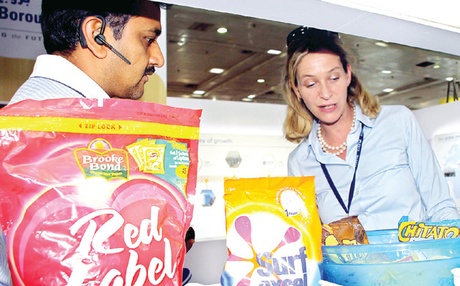
The International Plastics Exhibition is on at the Chennai Trade Center | Martin Louis
The fourth edition of South India’s biggest international plastics exhibition began at the Chennai Trade Centre here on Thursday.
The four-day exhibition was inaugurated by V K Subburaj, additional secretary and financial advisor, Department of Chemicals and Petrochemicals, Ministry of Chemicals and Fertilizers. The inaugural also saw the participation of K Dhanavel, Secretary to State Government–MSME Department, Siddharth Mitra, executive director, Petrochemicals Indian Oil Corporation Ltd and S B Dangayach, managing director of Sintex Industries Limited.
IPLEX–International Plastics Exposition was conceived jointly by the State-level Plastics Manufacturers Association in South India: Tamil Nadu, Andhra Pradesh, Kerala and Karnataka, the organisers said. CIPET–Central Institute of Plastics Engineering Technology, an autonomous institution under the aegis of Department of Chemicals and Petrochemicals, Ministry of Chemicals and Fertilisers, is also a member of the fraternity.
The objective of IPLEX was to trigger rapid growth of plastics industries in the Southern states that were lagging behind their Western counterparts, particularly Maharashtra. The plastics industry in South is set to grow by 20 per cent, the sources claimed.
The fourth edition exclusively focuses on the plastics industry’s requirements of machines, materials and technology and features over 230 exhibitors from India, Taiwan, Singapore, Japan, China, Vietnam, among others. The special feature is the live demonstration of a large number of machines to manufacture plastics articles –industrial or consumer.
Existing plastics processors, aspiring new entrepreneurs will find the expo extremely useful. The expo will facilitate the processors to adopt new technologies to cut down costs and improve productivity. A wide range of new and improved raw materials and performance additives will also be on display, the organisers pointed out.
Organisers hope that the expo will see close to 25,000 visitors from all over India and predominantly from South India. About Rs 500 crore worth of business deals are expected to be concluded during the expo, they said adding that they will soon be organising IPLEX in New Delhi in February 2016.
source: http://www.newindianexpress.com / The New Indian Express / Home> Cities> Chennai / by Express News Service – Chennai /June 29th, 2013
The Children’s Film Festival began in Krishnagiri on Wednesday.
District Revenue Officer C. Prakasam inaugurated the festival at Shanthi Theatre in the town.
The movie, Inimae Naangathan (A New World of Children) was screened on the first day of the festival.
Mr. Prakasam watched the movie along with the students.
The film was screened in 23 cinemas in the district. The films would be screened in five cinemas daily.
Circulars have been sent to all schools regarding the film festival.
Till March
In towns and villages where there are no cinemas, the films would be screened in schools through projectors. The festival would be held in the district till March next year.
Children’s Film Festival Coordinator S. Gunasekaran, and Convenor S. Devaraj, among others participated.
source: http://www.thehindu.com / The Hindu / Home> National> Tamil Nadu / by Staff Reporter / Krishnagiri – June 27th, 2013
As part of its effort to bridge the digital divide, the Rs. 300 crore project, Spoken Tutorial Project (STP), launched by the Indian Institute of Technology, and funded by the National Mission on Education through Information and Communication Technology, Ministry of Human Resource Development (MHRD), was inaugurated at the Lady Doak College on Thursday.
Logging on to Skype, senior project manager Shyama Iyer of IIT, Mumbai, inaugurated the resource centre from Mumbai. She interacted with the principal and faculty members of the LDC, which was chosen as the official resource centre of the Spoken Tutorial Project Resource Centre for south Tamil Nadu.
Mohamed Kasim, project assistant, STP, IIT Mumbai, said the project focused on providing social skill competence, and non verbal communication and general academic skill competence.
The target group were students of high school and college, working professionals, software users, developers and trainers, research scholars and the community at large, he added. The advantage of being a resource centre included having the authority to communicate with any institute in the region to promote, teach and learn about open source software.
LDC principal Mercy Pushpalatha, said that the college was going in for open source software as it would enable it not to be dependant on proprietary software where the software and hardware technology generally go hand-in-hand.
Hence, when the company upgrades the hardware, users are forced to upgrade their software and vice versa.
The ‘spoken tutorials’ appeared to be an effective tool to bridge the digital divide, increase internet literacy and was also an easy way to learn. With more spoken tutorials available in all the regional languages it was more open to the public, said Christina Singh, professor of Economics, LDC who was instrumental in bringing the project to LDC.
source: http://www.thehindu.com / The Hindu / Home> National> Tamil Nadu / by Staff Reporter / Madurai – June 29th, 2013
The Republic of Armenia is planning to organise a grand celebration in September this year in the presence of Chief Minister J Jayalalithaa, to commemorate 360 years of the Armenians’ existence in Chennai.
The Armenian presence in Chennai began to increase since 1688. The first known house of an Armenian at Fort St George is called Admirality House today.
The Marmalong Bridge now called ‘Maraimalai Adilagar Bridge’ was originally built in 1726-28 by theArmenian Merchant Mr. Cogia Petrius Uscan at his own expense.
The Armenian Church, constructed in 1712 and reconstructed in 1772, is one of the oldest churches of the Indian subcontinent.
In addition to all the works done by them, The Armenian constitution project for the Armenians named Vorogait Paratz was written in Chennai by Hakob Shah Amirian and the Madras Group.
The Armenians settled here not only for trade, but also built several historical artifacts which are famous worldwide.
source: http://www.newindianexpress.com / The New Indian Express / Home> Cities> Chennai / by Express News Service – Chennai / June 29th, 2013
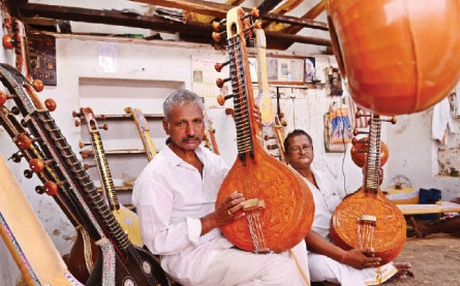
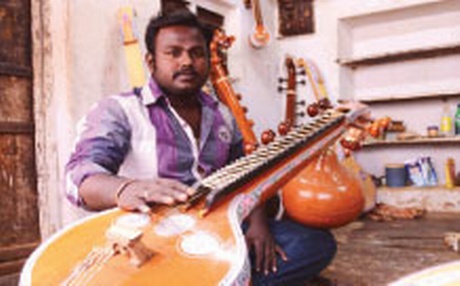
In a first, the makers of Saraswati Veena get recognition for identity, sound, technique and form. (Photos: Alock Mohanty)
The ancient Thanjavur Veena has got a fresh lease of life. Recently, the veena was accorded the Geographical Indication (GI) status by a High Court. The status recognises the musical instrument as having special characteristics unique to the region and techniques employed by artisans who live in and around Thanjavur, a historic pocket of traditional music. In Thanjavur, the birthplace of the inimitable Saraswathi Veena (Thanjavur Veena), revered as one of the three celestial musical instruments which continues to enthral music lovers, makers of the musical instrument are rejoicing at this announcement.
The GI status provides better legal protection for action of infringement, offering a respite for the few families who are still devoted to this deeply satisfying but complex craft.
Just as Carnatic music is incomplete without this Vedic instrument, the veena-makers of yore enjoyed royal patronage and high respect in the community. With traditional instruments gradually falling out of favour, the living conditions and social standing of the veena craftsmen are, sadly, on the decline. The Thanjavur Veena, unique with its functional resonator and 24 fixed-frets enabling ragas to be played on it, is crafted by master craftsmen who possess immense knowledge of music and understand the nuances of sound and tonal quality. The very instrument exudes grace and elegance.
Having been a home-based cottage industry for generations, the art does not thrive on hereditary knowledge any more. “My two sons have taken up corporate jobs after MBA. I could not press them into veena making knowing the meagre income it would fetch,” says M Narayanan, a fourth-generation veena maker from Thanjavur.
Srinivasan, a state-award winning veena-maker’s son works for a software company. But, not everyone in the younger generation wants to part ways with the art of making the veena. Craftsman Raman’s son Krishnamoorthy returned after a short stint at a private company to help his father. “There was a compelling urge within me to continue making veenas,” says the 25-year-old who started Sri Sai Musicals. Besides crafting, he exports veenas to other countries and markets them online.
Procuring wood has become a challenge. Jackfruit wood is predominantly used for veena crafting as it’s perfect for all weathers. “Earlier, Thanjavur used to house large clusters of jackfruit trees. Nowadays we buy wood from places like Panruti and Cuddalore,” says Narayanan. They used to work with stag horns, which is now legally banned.
The Thanjavur Veena is undergoing a lot of structural changes.
Srinivasan, who is familiar with modern crafting techniques aided by new tools and machines says that the motifs and symbols etched on the instrument have changed. “Earlier, it used to be figurines of Gods and motifs like the swan and peacock. Now it’s all modern designs and patterns,” he says.
Another pressing issue is the involvement of intricate workmanship and labour shortage. “We used to make the veena from scratch, including chopping the wood, carving, fixing the frets and waxing. These days, with only a few trained hands assisting us, we outsource parts from carpenters, and pay a large chunk to middlemen,” rues Narayanan. The Government-run ITIs offer training in veena craftsmanship, but there are no concessions or assistance to help artisans. The dearth of craftsmen may have a threatening impact on the quality, says a concerned Krishnamoorthy.
“Unfortunately, today’s focus is predominantly vocals; the instrument comes secondary. It’s also undergoing lots of structural changes. Anything that can be dismantled can’t be called a veena,” points out ‘Veenai’ E Gayathri, popular veena exponent and principal-director of the Tamil Nadu Government Music Colleges in Chennai, Thiruvaiyaru, Madurai and Coimbatore.
The Tamil Nadu Government has announced the setting up of a university exclusively for music. Efforts will be made to academise the craft of veena-making and providing a better platform to artisans. A good sign: the demand for the veena has not dwindled despite the popularity and influence of Western instruments. The veena’s sound has been preserved forever.
source: http://www.newindianexpress.com / The New Indian Express / Home> Magazine / by Sundari Sivasubbu / July 07th, 2013
Many people believed that Kodanad was a sleepy and isolated village overshadowed by Ooty till chief minister J Jayalalithaa made it as her second home. However, a two-part book titled ‘Blue Haven Ootty’ introduces it as the princes among hill stations as identified by Lord Erskine, then British governor of Madras presidency, about 80 years ago. To be released on Sunday, according to the authors, it would be the first and authentic travel guide on Nilgiris with detailed accounts about many hither to unknown facts about the hill station.
A product of years-long work by creative artist and writer DevarajRanganPorore and SuseelaDevaraj, the two parts book fills the void of a ready reference on the Blue Mountains and its past, present and future. “It is not just a description on places and buildings in the queen of hills. It talks about its people, their life styles, struggles, livelihood, culture and even environmental issues. There is a special section on tribes of the Nilgiris. It is not a conventional guide for routine tourists. Our aim was to give a comprehensive picture of the Nilgiris to the visitors,” said Devaraj.
What makes the book stand out is its display of more than 300 rare photographs reflecting the vibrancy of the Nilgiris. Birds, animals and even honey hunting and rock art have found place in the book. “It is a unique work. Those who write about tribes of the Nilgiris mention only the todas and badagas. The book contains information after an extensive research on the traditions of other tribes like kurumbas, kattunaikas and paniyas as well. There is a striking balance between nature, tourism and people’s struggle for survival,” said N Sadiq Ali, managing trustee of Ootty-based Wildlife and Nature Conservation Trust.
“The Nilgiris is much more than Ooty but writers and photographers focus exclusively on Ooty. Upper Bhavani, Kodanad, Kothagiri, Avelanche, Glenmorgan, Pykara, Gudalur etc are also promising a lot for the visitors. The book provides a glimpse of all these places as well. The Nilgiri’s world famous home made chocolates and even the Nilgiri tea are being detailed in it with historical background. It also contains a travel map detailing places to see and accommodations available. The book has also included a list of eateries serving unique Nilgiri food.
source: http://www.articles.timesofindia.indiatimes.com / The Times of India / Home> City> Coimbatore / TNN / July 30th, 2013
The Indian Institute of Technology, Madras, is wasting no time patenting the technologies developed by its faculty members. It plans to leverage the Intellectual Property Rights (IPRs) of technologies as revenue earners.
The institute also found that filing patents in emerging nations such as Bangladesh and Africa provide more value for the innovation than registering them in advanced countries.
This year, IIT Madras is likely to file nearly 40 patents, a 25 per cent increase over last year. Next year, the target is to reach 50, said Krishnan Balasubramanian, Dean, Centre for Industrial Consultancy & Sponsored Research.
Last year, revenue from IPRs was about Rs 2 crore. “We are negotiating a large deal this year that will double or triple revenue from IPRs. On an average, we are targeting Rs 3-4 crore annually in the near term,” he told Business Line.
TOP FIELDS
Tield of nanotechnology saw the highest number of patents, as some of the faculty in this domain are “very aggressive.” Other areas include wireless technology, air-conditioning, noise and vibration, said Subramanian, who is also a professor at the Department of Mechanical Engineering.
Faculty members also separately apply for patents for technologies they have developed in collaboration with various companies. This could be another 20 every year. Companies file the patents with the faculty’s name in it. There will a revenue sharing agreement on this, he said.
There used to be a perceived conflict between patenting and publishing. This is only a perception, but not true. If a faculty member feels that they have developed something that is patentable and publishable, they can do both, said the institute’s director, Prof Bhaskar Ramamurthi. The institute has an Intellectual Property Cell, he said.
Balasubramanian said that the IPR management involves patent process and commercialisation. Through incubation, faculty and students take up some of these technologies for formulating business propositions.
There is also an eco-system – the IIT Madras Research Park – developed over the last few years to foster incubation. The institute also work with companies to take certain scalable IPs rapidly into the market. The patent process takes a long time. “So on the date we apply for patent, its commercialisation starts simultaneously,” he said.
source: http://www.thehindubusinessline.com / Business Line / Home> Industry> Education / by T.E. Raja raja.simhan@thehindu.co.in / Chennai – June 26th, 2013